
ENERGY FLOW IN AN ECOSYSTEM Big Q How
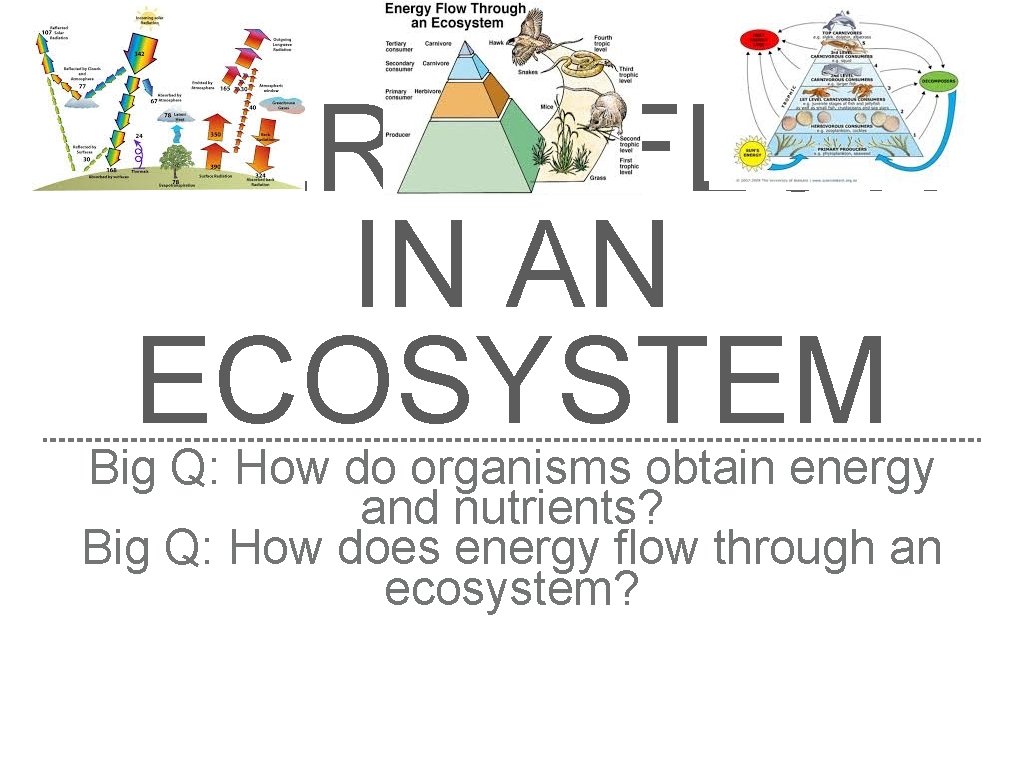
ENERGY FLOW IN AN ECOSYSTEM Big Q: How do organisms obtain energy and nutrients? Big Q: How does energy flow through an ecosystem?
ENGAGE - UNTAMED SCIENCE CHANGES INmany THE BAYto the bay’s plant and animal ➤ Why are there so changes bacteria? ➤ Could these changes be related to mud-dwelling bacteria?
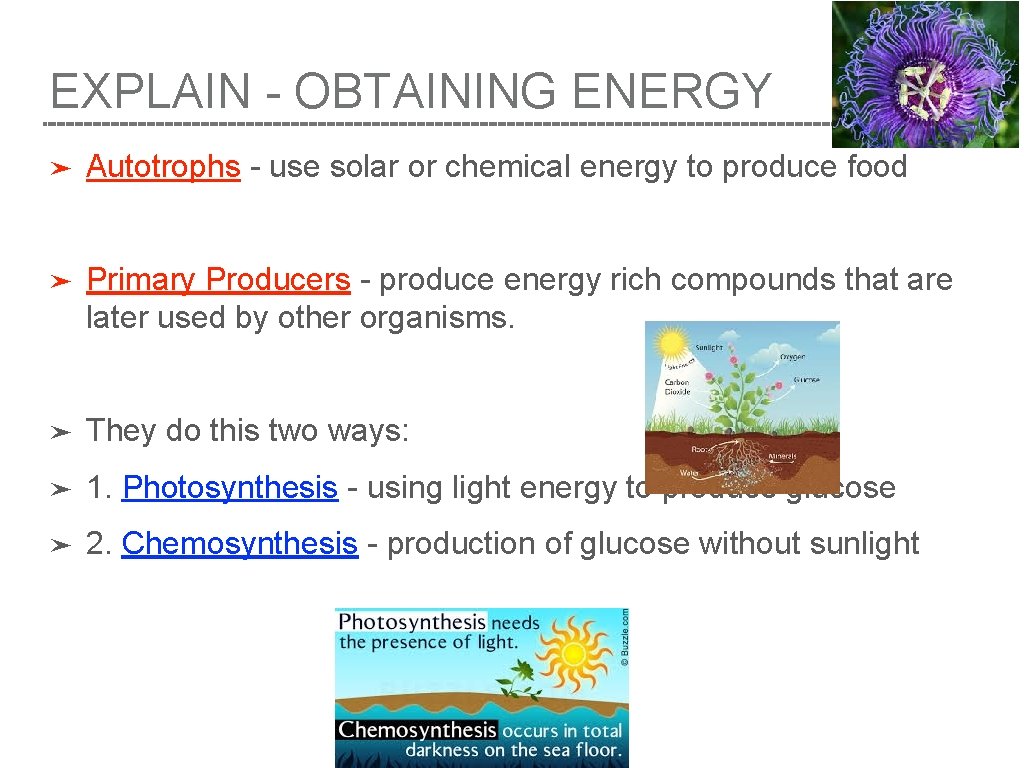
EXPLAIN - OBTAINING ENERGY ➤ Autotrophs - use solar or chemical energy to produce food ➤ Primary Producers - produce energy rich compounds that are later used by other organisms. ➤ They do this two ways: ➤ 1. Photosynthesis - using light energy to produce glucose ➤ 2. Chemosynthesis - production of glucose without sunlight
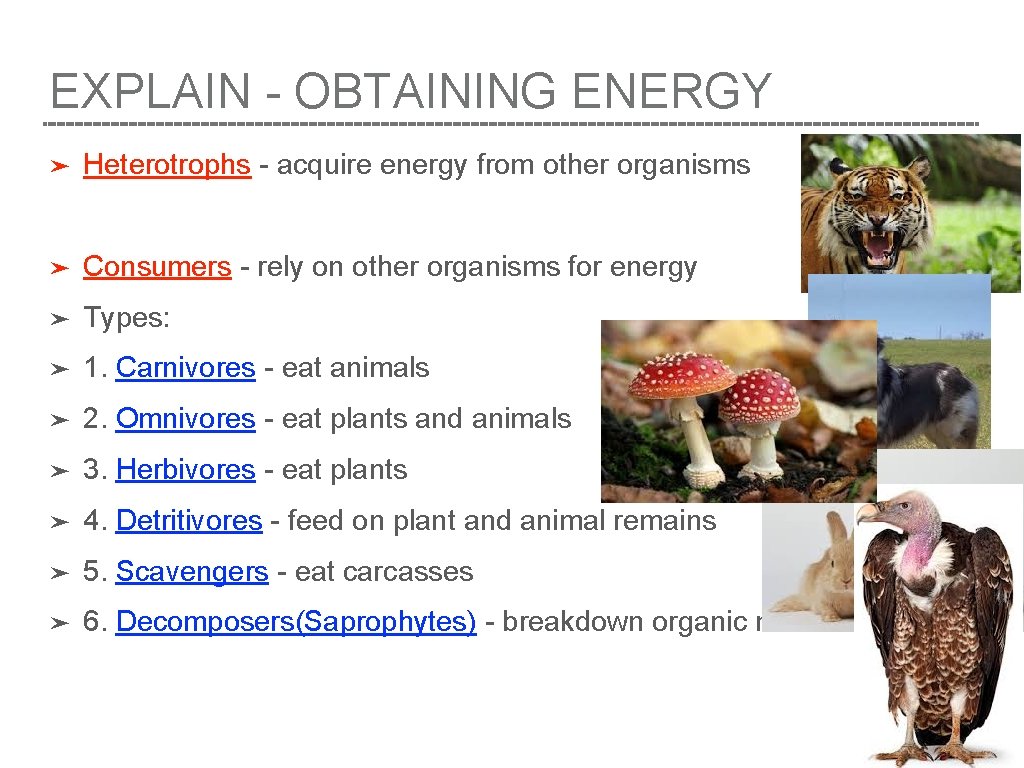
EXPLAIN - OBTAINING ENERGY ➤ Heterotrophs - acquire energy from other organisms ➤ Consumers - rely on other organisms for energy ➤ Types: ➤ 1. Carnivores - eat animals ➤ 2. Omnivores - eat plants and animals ➤ 3. Herbivores - eat plants ➤ 4. Detritivores - feed on plant and animal remains ➤ 5. Scavengers - eat carcasses ➤ 6. Decomposers(Saprophytes) - breakdown organic matter
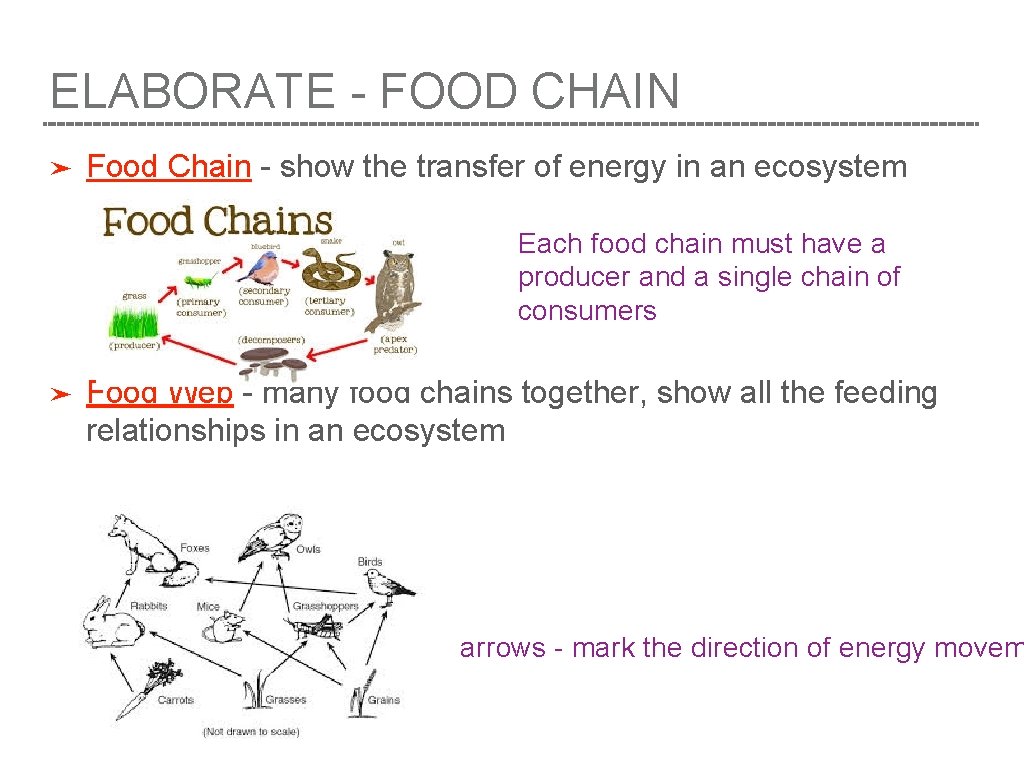
ELABORATE - FOOD CHAIN ➤ Food Chain - show the transfer of energy in an ecosystem Each food chain must have a producer and a single chain of consumers ➤ Food Web - many food chains together, show all the feeding relationships in an ecosystem arrows - mark the direction of energy movem
ELABORATE - CREATE A FOOD CHAIN ➤ With your partner, create a food chain that could exist in a pond ecosystem. You must have four organisms in it.
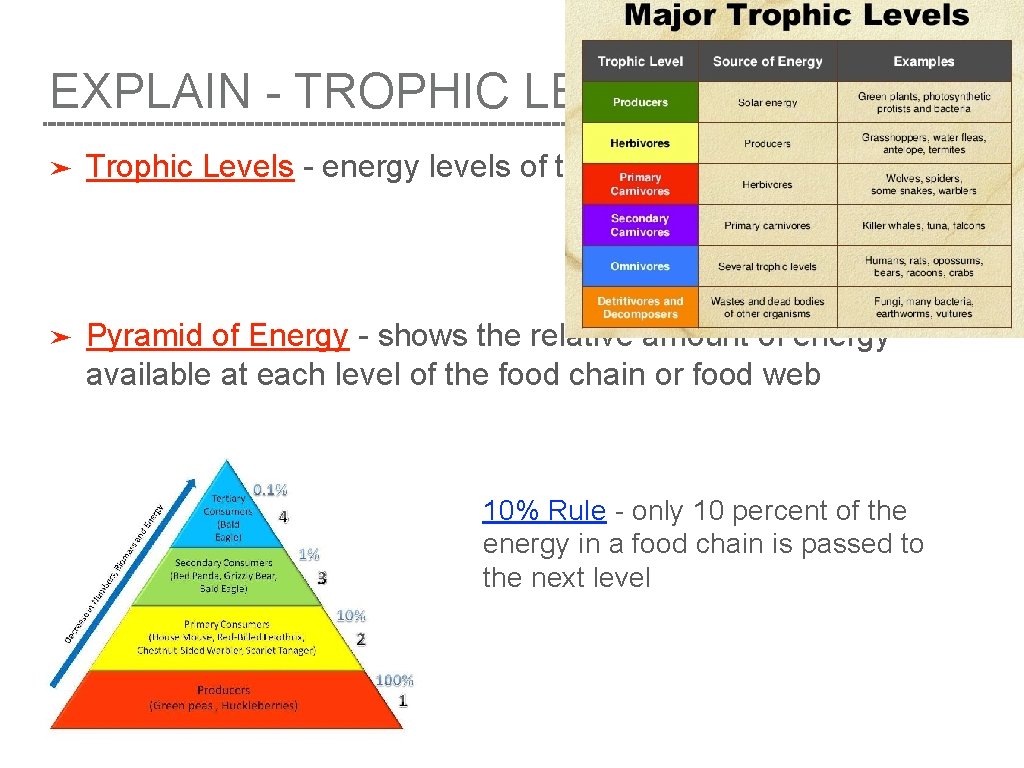
EXPLAIN - TROPHIC LEVELS ➤ Trophic Levels - energy levels of the food chain ➤ Pyramid of Energy - shows the relative amount of energy available at each level of the food chain or food web 10% Rule - only 10 percent of the energy in a food chain is passed to the next level
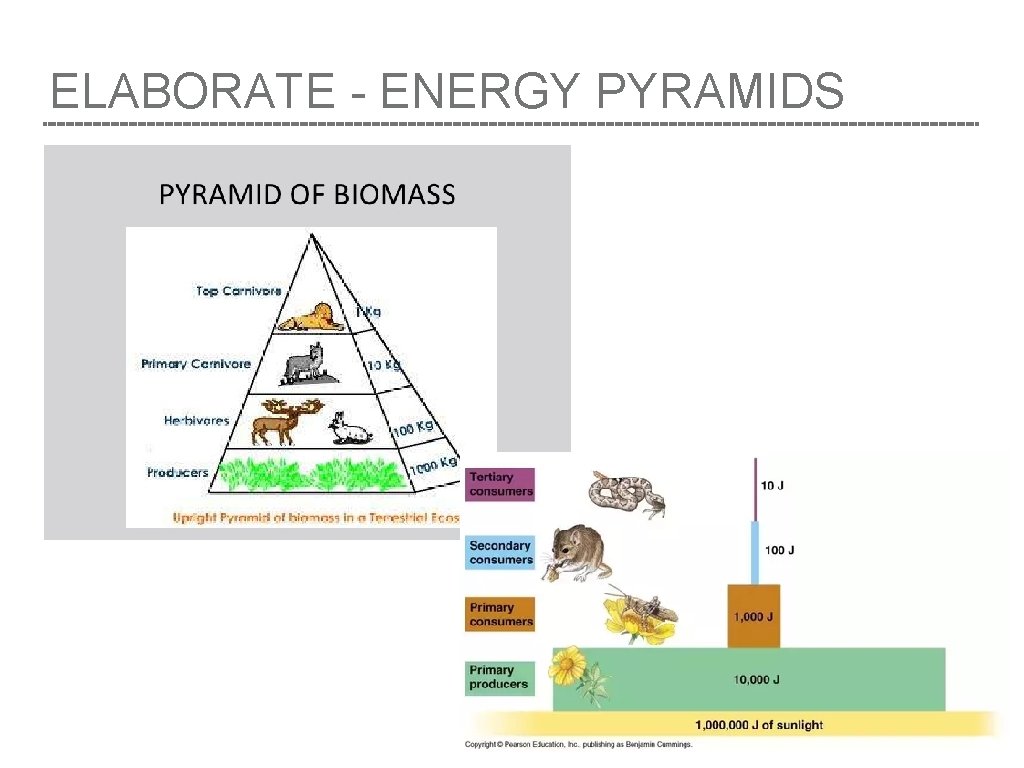
ELABORATE - ENERGY PYRAMIDS
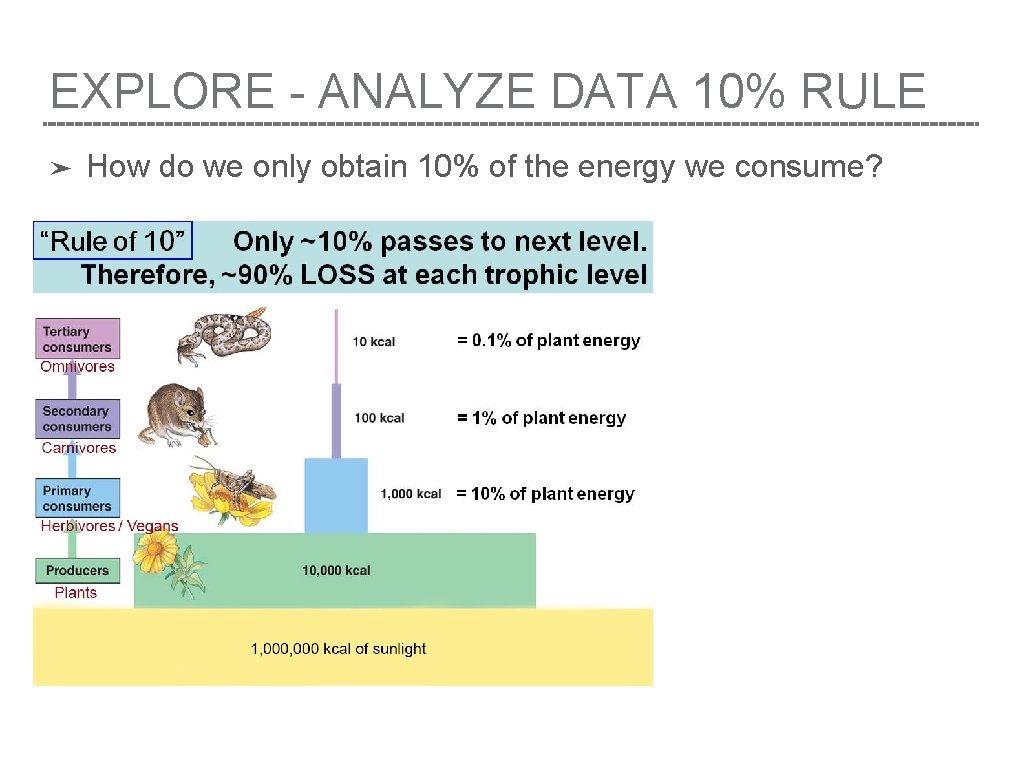
EXPLORE - ANALYZE DATA 10% RULE ➤ How do we only obtain 10% of the energy we consume?
EXPLAIN - CYCLES OF MATTER ➤ Biogeochemical Cycles - elements pass between organisms and the environment through closed loop cycles Types: 1. Water Cycle - evaporation and transpiration, condensation, precipitation, run-off 2. Carbon Cycle - Carbon dioxide is converted to glucose during photosynthesis, glucose converts back to carbon dioxide during cell respiration 3. Nitrogen Cycle - Bacteria in the soil fix nitrogen through nitrogen fixation of dead material, plants take in nitrates through roots, animals get nitrogen through consuming plants
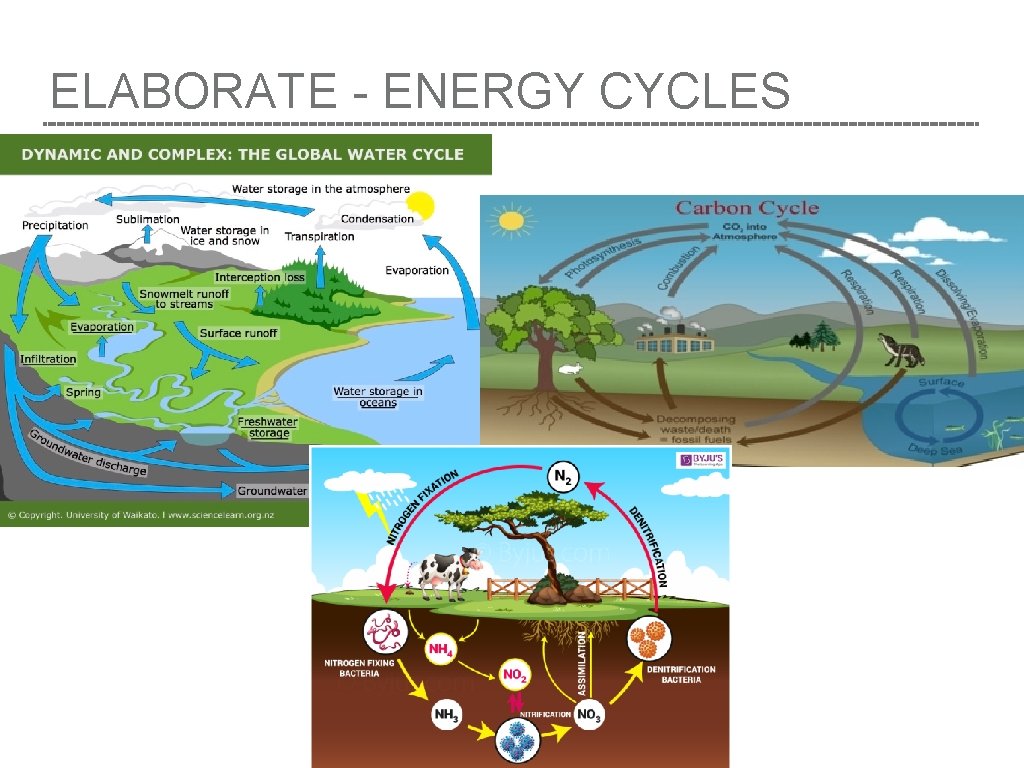
ELABORATE - ENERGY CYCLES
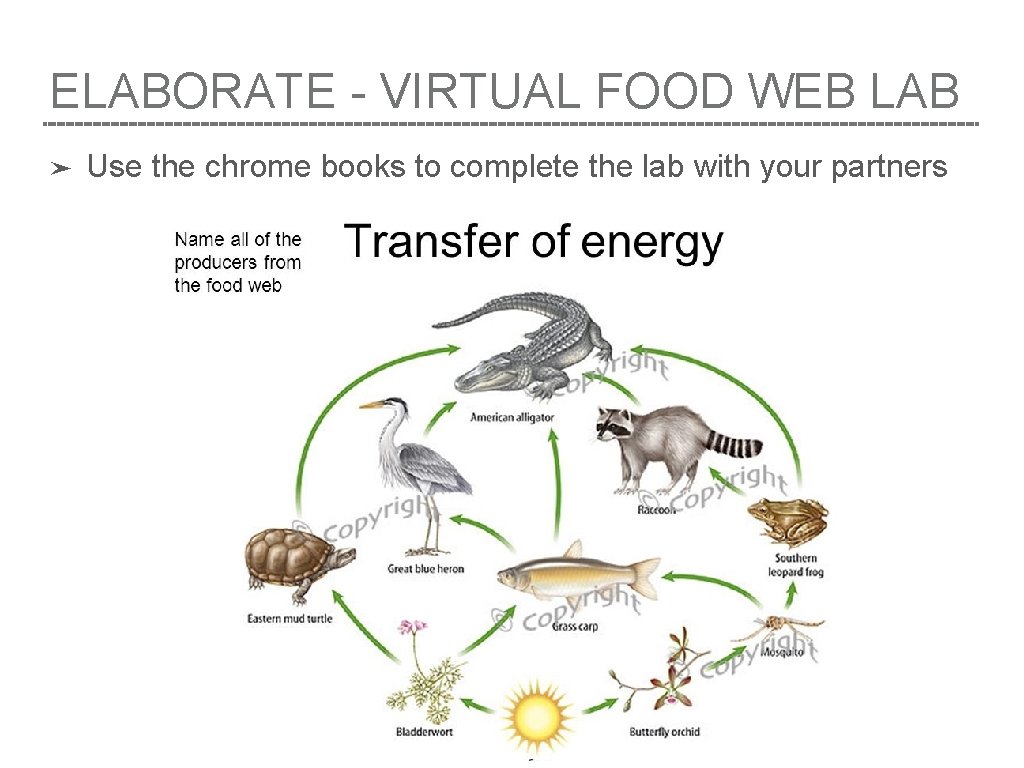
ELABORATE - VIRTUAL FOOD WEB LAB ➤ Use the chrome books to complete the lab with your partners
- Slides: 12