
Energy Flow in an Ecosystem 5 02 Analyze
- Slides: 26
Energy Flow in an Ecosystem 5. 02 Analyze the flow of energy and the cycling of matter in the ecosystem.
Why do living things need energy? All living things need energy in order to maintain homeostasis.
What is the major source of energy in our biosphere?
What are the two methods organisms use to obtain energy? Organisms use one of two methods in order to obtain their energy and nutrients. They can either be…. . 1. Autotrophs 2. Heterotrophs
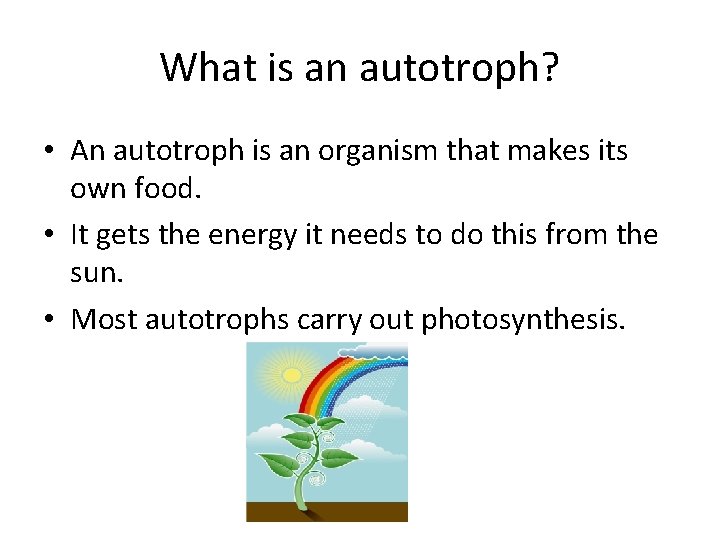
What is an autotroph? • An autotroph is an organism that makes its own food. • It gets the energy it needs to do this from the sun. • Most autotrophs carry out photosynthesis.
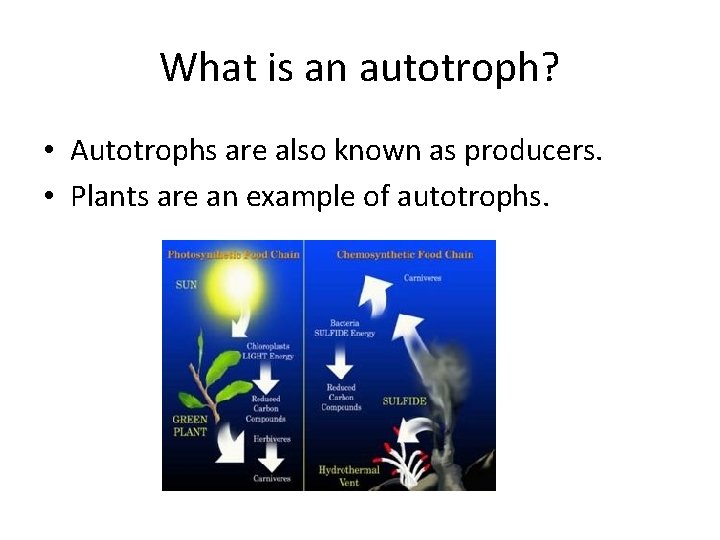
What is an autotroph? • Autotrophs are also known as producers. • Plants are an example of autotrophs.
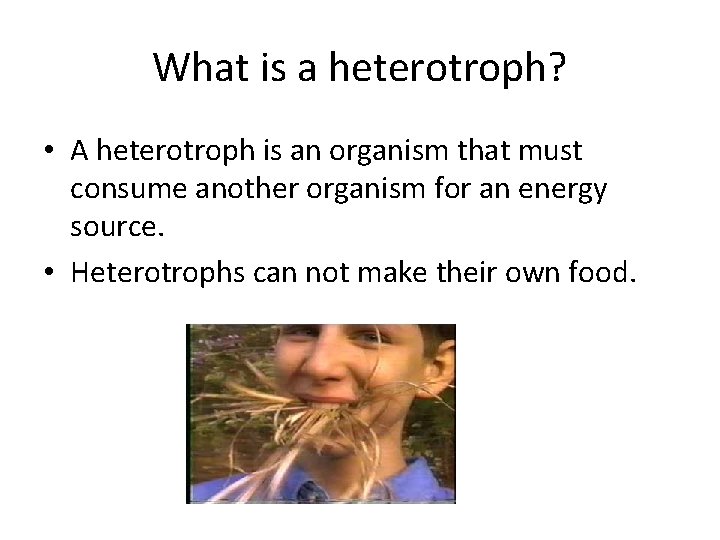
What is a heterotroph? • A heterotroph is an organism that must consume another organism for an energy source. • Heterotrophs can not make their own food.
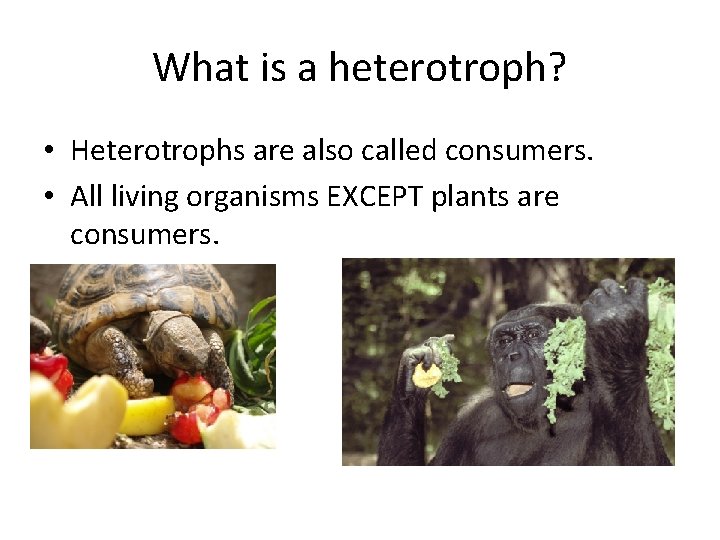
What is a heterotroph? • Heterotrophs are also called consumers. • All living organisms EXCEPT plants are consumers.
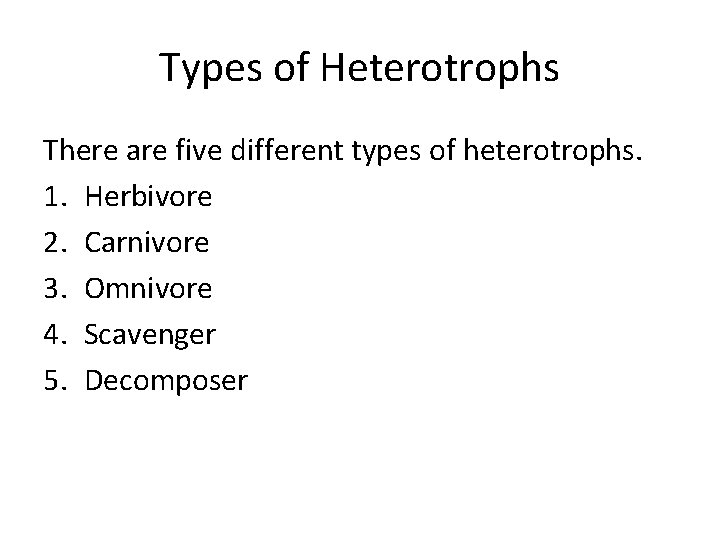
Types of Heterotrophs There are five different types of heterotrophs. 1. Herbivore 2. Carnivore 3. Omnivore 4. Scavenger 5. Decomposer
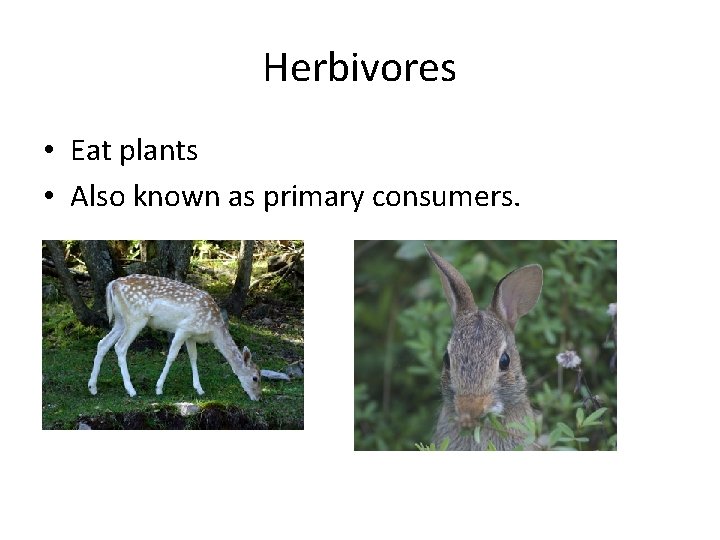
Herbivores • Eat plants • Also known as primary consumers.
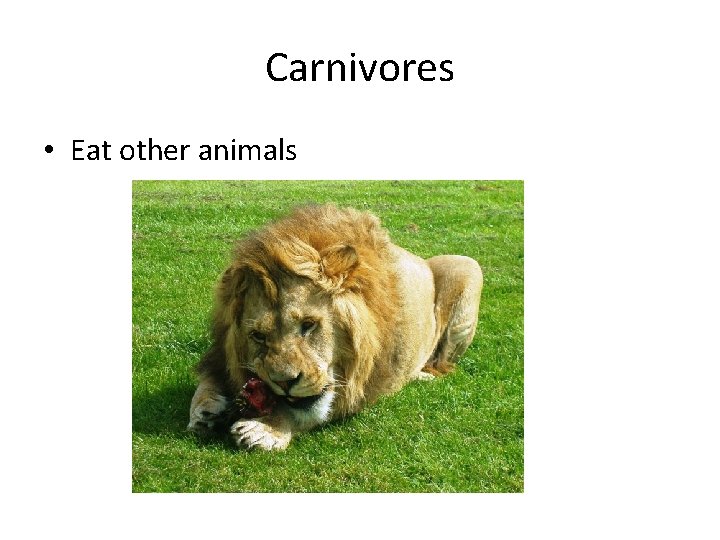
Carnivores • Eat other animals
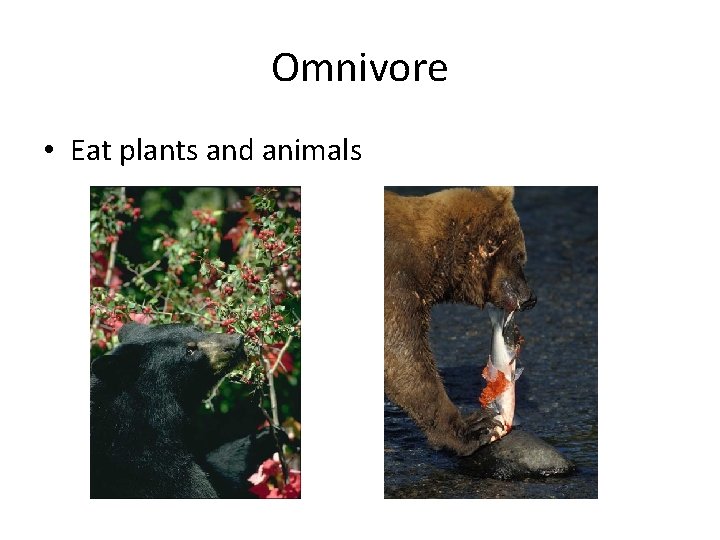
Omnivore • Eat plants and animals
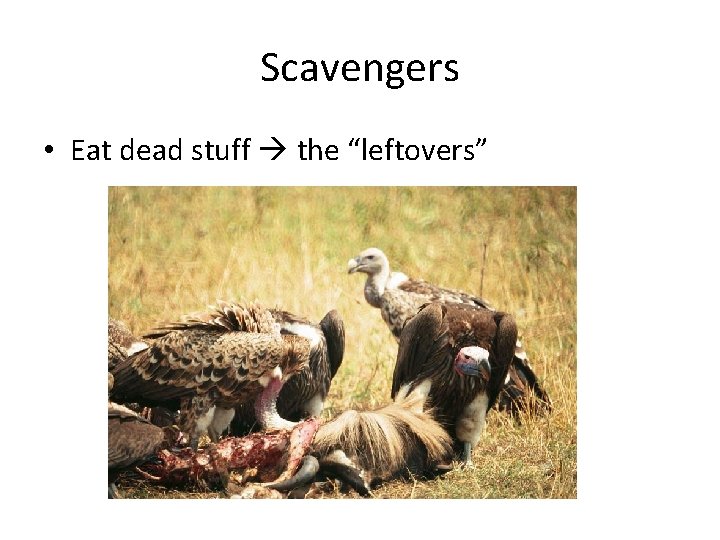
Scavengers • Eat dead stuff the “leftovers”
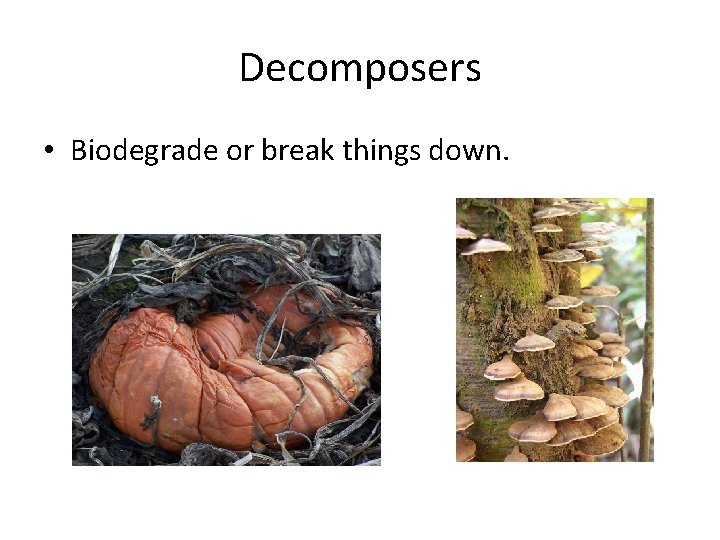
Decomposers • Biodegrade or break things down.
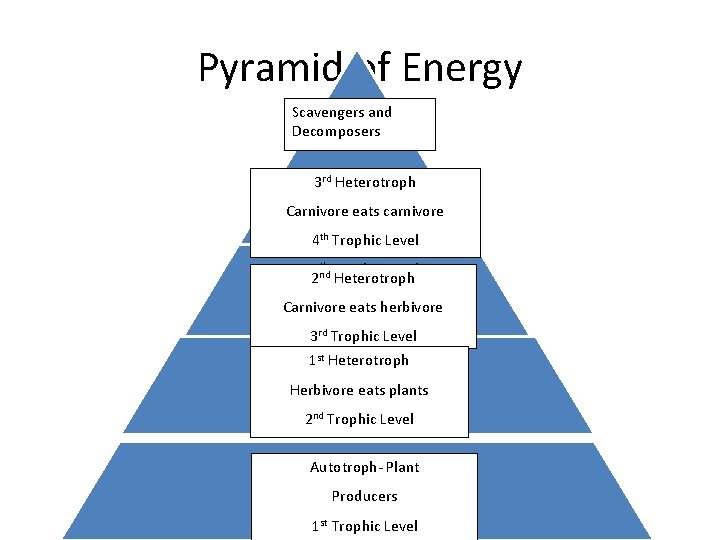
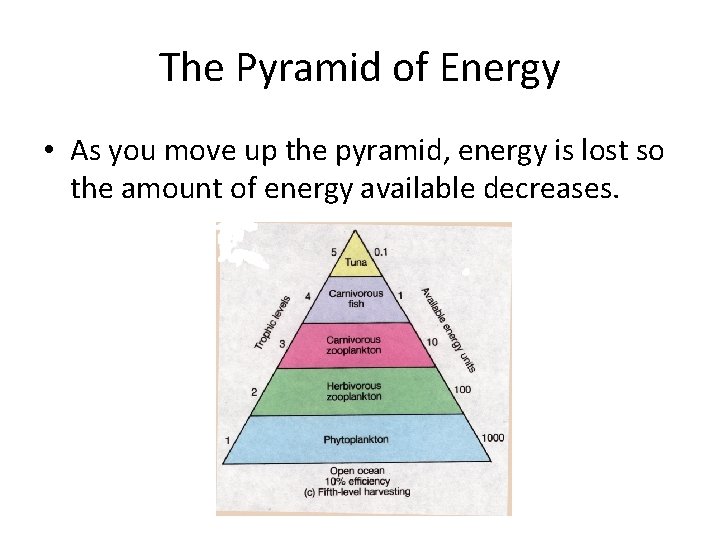
Pyramid of Energy Scavengers and Decomposers 3 rd Heterotroph Carnivore eats carnivore 4 th Trophic Level 2 nd Heterotroph Carnivore eats herbivore 3 rd Trophic Level 1 st Heterotroph Herbivore eats plants 2 nd Trophic Level Autotroph- Plant Producers 1 st Trophic Level
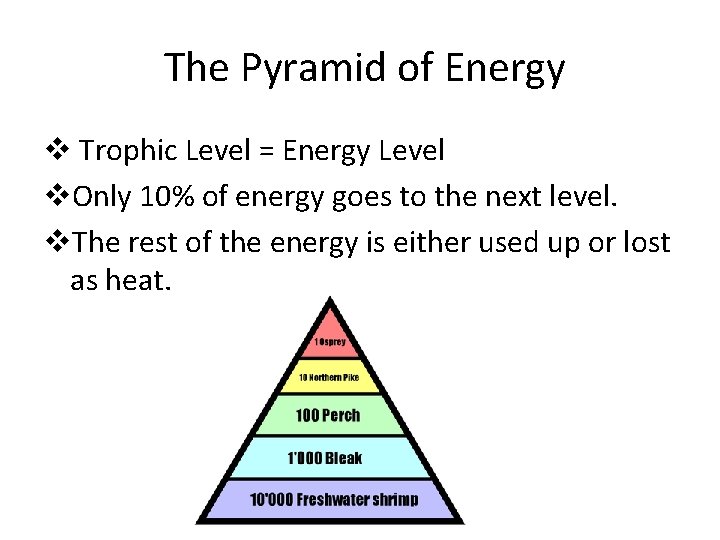
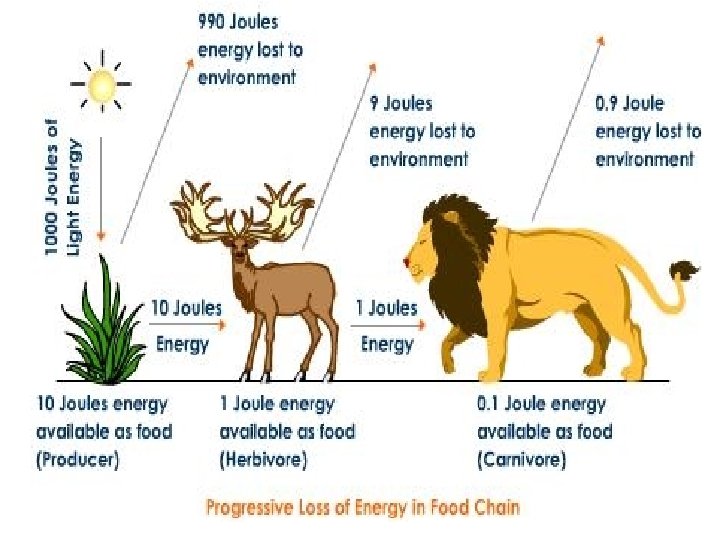
The Pyramid of Energy v Trophic Level = Energy Level v. Only 10% of energy goes to the next level. v. The rest of the energy is either used up or lost as heat.
The Pyramid of Energy • As you move up the pyramid, energy is lost so the amount of energy available decreases.
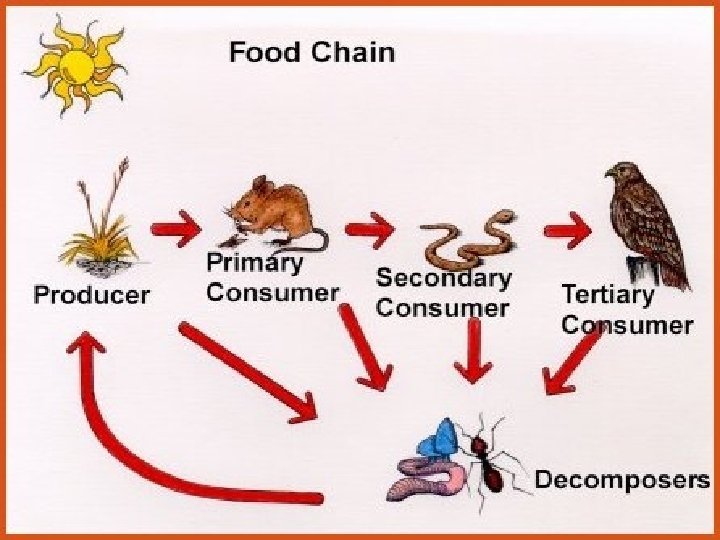
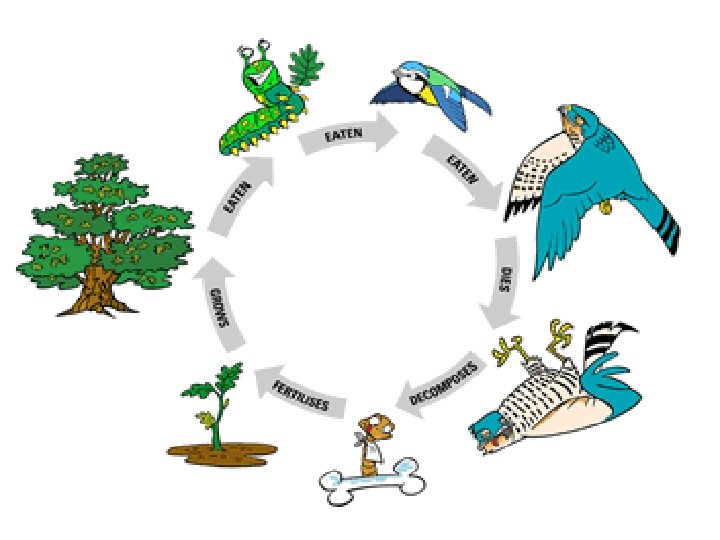
Food Chains/Food Webs • A food chain shows how an animal gets its food. • Always starts with plants and ends with an animal. • There are 3 different roles in the food chain: 1. Producers 2. Consumers 3. Decomposers
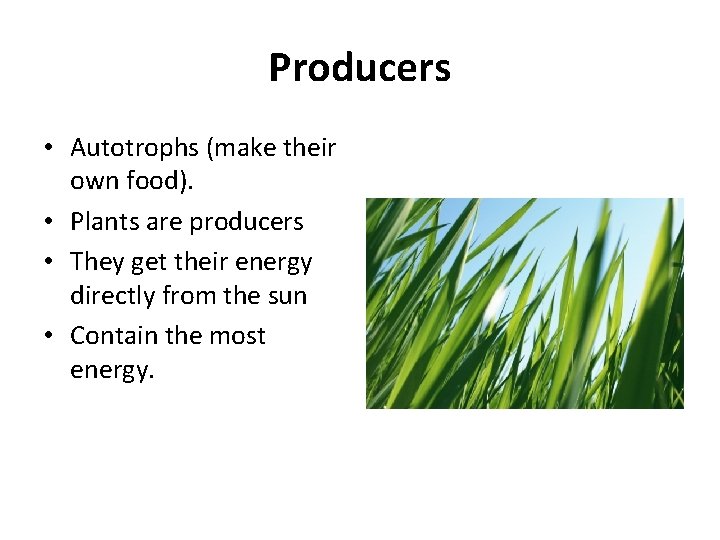
Producers • Autotrophs (make their own food). • Plants are producers • They get their energy directly from the sun • Contain the most energy.
Consumers • Heterotrophs: (Cannot make their own food). – Herbivores: Primary consumers, only eat plants – Carnivores: Secondary consumers, eat herbivores. Tertiary consumers, eat other carnivores – Omnivores: Eat both plants & animals
Decomposers • Feed on dead/decaying matter and break it down. • Ex. Bacteria & Fungi
Energy Flow in a Food Web • Producers contain the most energy because they get their energy directly from the sun. • The primary consumer (plant eater) only gets a small portion of the energy contained in the plant, because much of the energy was used by the plant for its life processes. • Tertiary consumers get the very least amount of energy from their food.
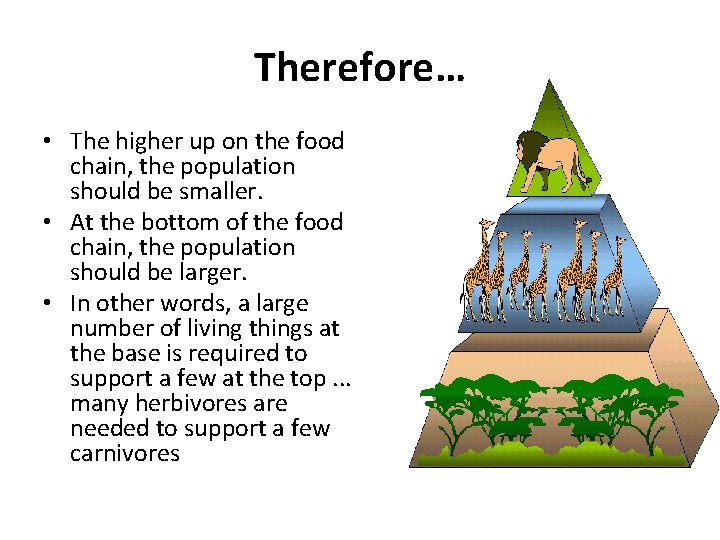
Therefore… • The higher up on the food chain, the population should be smaller. • At the bottom of the food chain, the population should be larger. • In other words, a large number of living things at the base is required to support a few at the top. . . many herbivores are needed to support a few carnivores