
Energy Flow in an Ecosystem 1 2 3
- Slides: 28
Energy Flow in an Ecosystem 1. 2. 3. 4. What are producers and consumers? What is a food chain and food web? How does energy pass in a food web? What is Biological magnification?
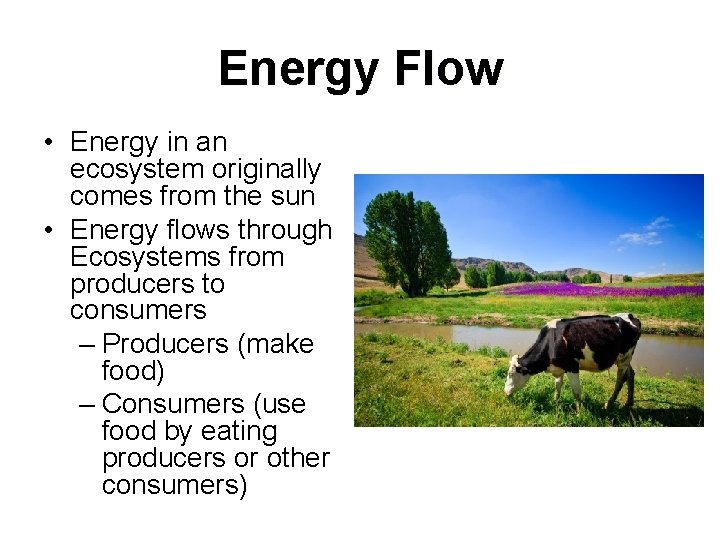
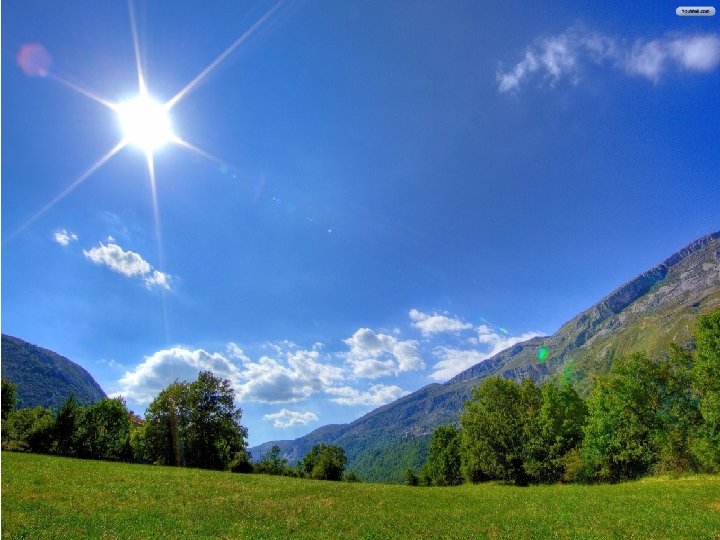
Energy Flow • Energy in an ecosystem originally comes from the sun • Energy flows through Ecosystems from producers to consumers – Producers (make food) – Consumers (use food by eating producers or other consumers)
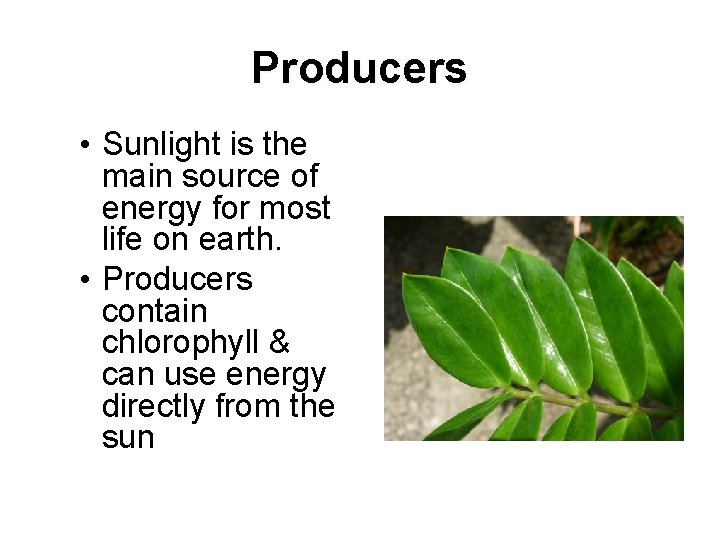
Producers • Sunlight is the main source of energy for most life on earth. • Producers contain chlorophyll & can use energy directly from the sun
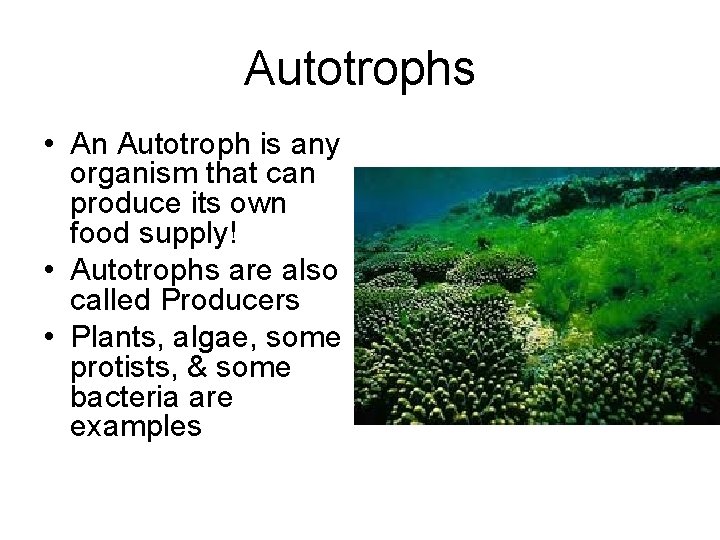
Autotrophs • An Autotroph is any organism that can produce its own food supply! • Autotrophs are also called Producers • Plants, algae, some protists, & some bacteria are examples
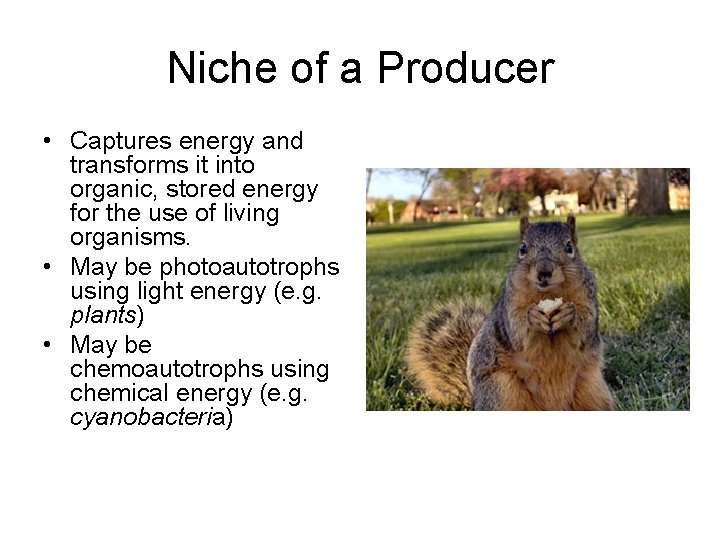
Niche of a Producer • Captures energy and transforms it into organic, stored energy for the use of living organisms. • May be photoautotrophs using light energy (e. g. plants) • May be chemoautotrophs using chemical energy (e. g. cyanobacteria)
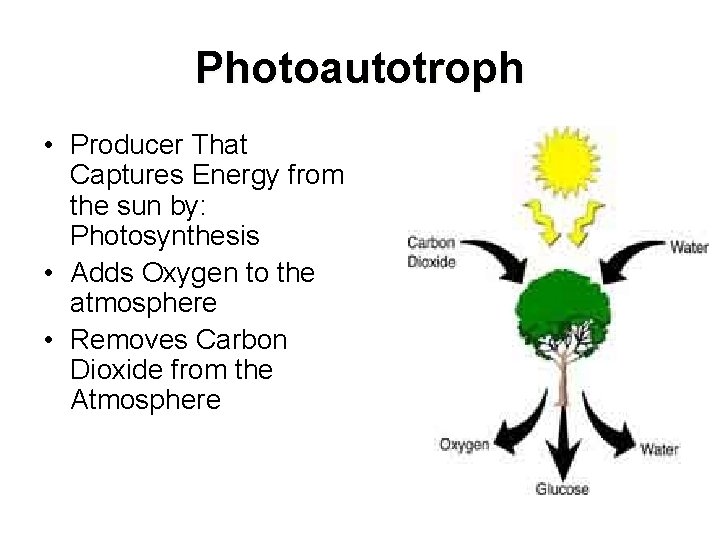
Photoautotroph • Producer That Captures Energy from the sun by: Photosynthesis • Adds Oxygen to the atmosphere • Removes Carbon Dioxide from the Atmosphere
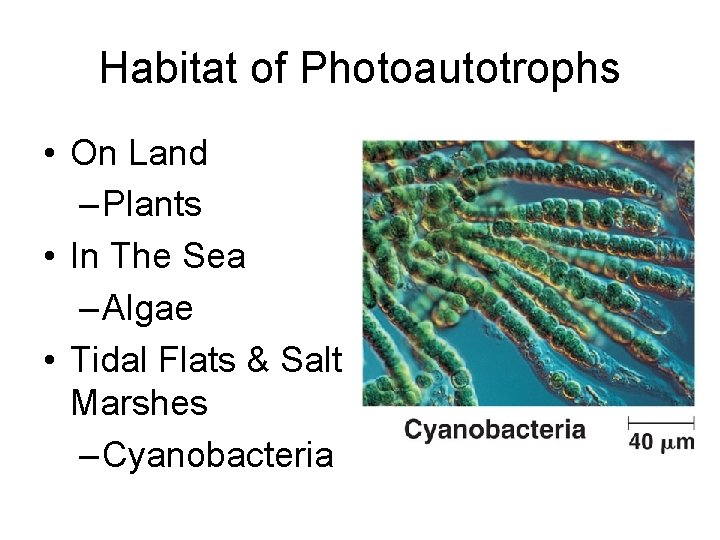
Habitat of Photoautotrophs • On Land – Plants • In The Sea – Algae • Tidal Flats & Salt Marshes – Cyanobacteria
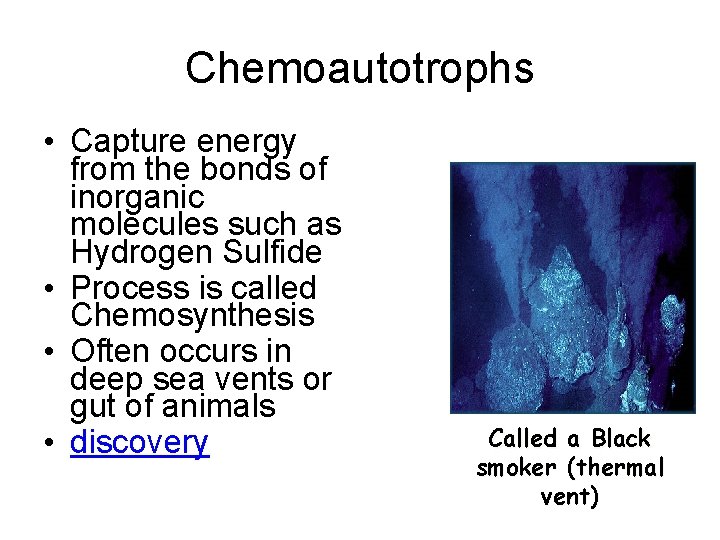
Chemoautotrophs • Capture energy from the bonds of inorganic molecules such as Hydrogen Sulfide • Process is called Chemosynthesis • Often occurs in deep sea vents or gut of animals • discovery Called a Black smoker (thermal vent)
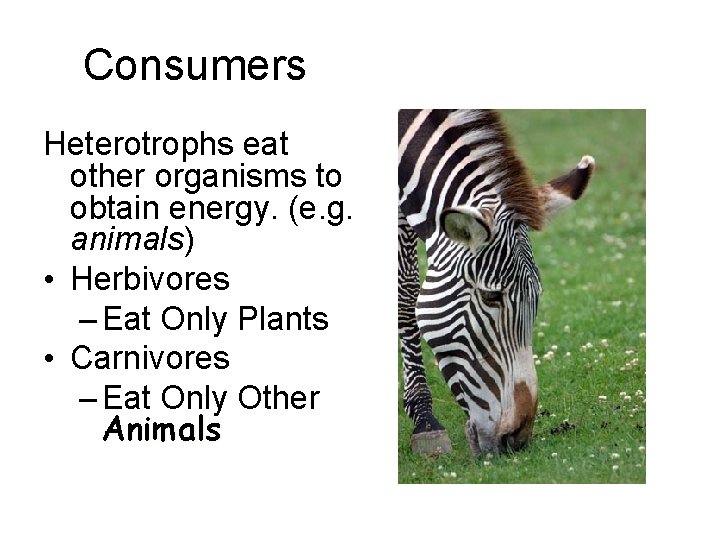
Consumers Heterotrophs eat other organisms to obtain energy. (e. g. animals) • Herbivores – Eat Only Plants • Carnivores – Eat Only Other Animals
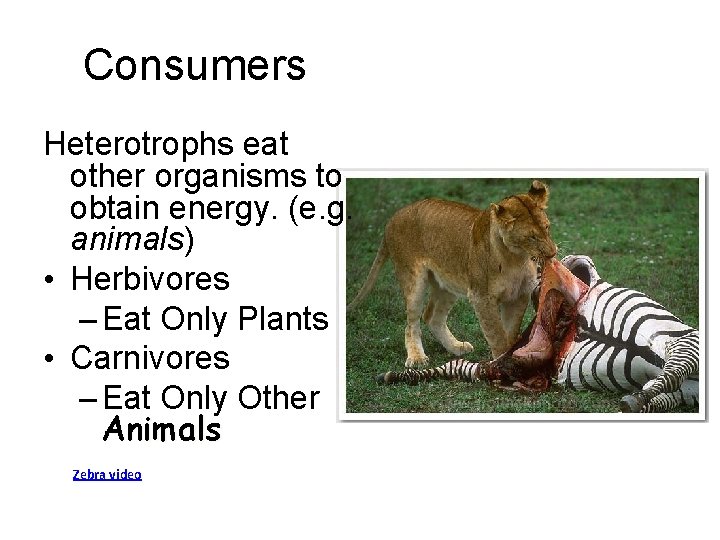
Consumers Heterotrophs eat other organisms to obtain energy. (e. g. animals) • Herbivores – Eat Only Plants • Carnivores – Eat Only Other Animals Zebra video
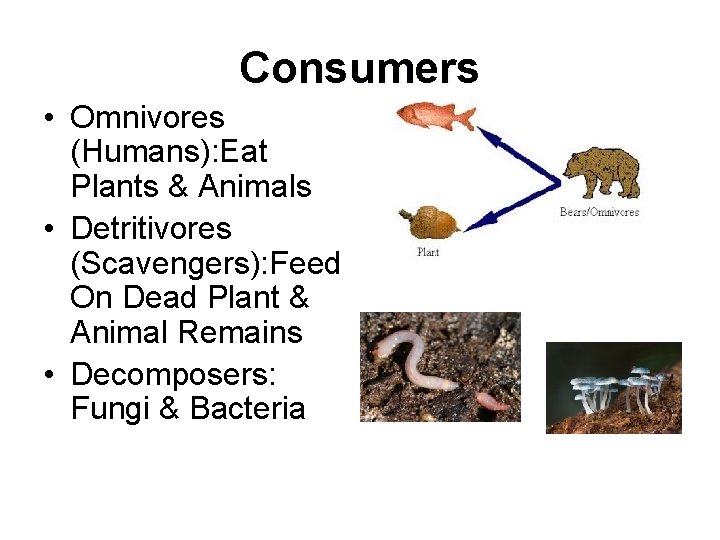
Consumers • Omnivores (Humans): Eat Plants & Animals • Detritivores (Scavengers): Feed On Dead Plant & Animal Remains • Decomposers: Fungi & Bacteria
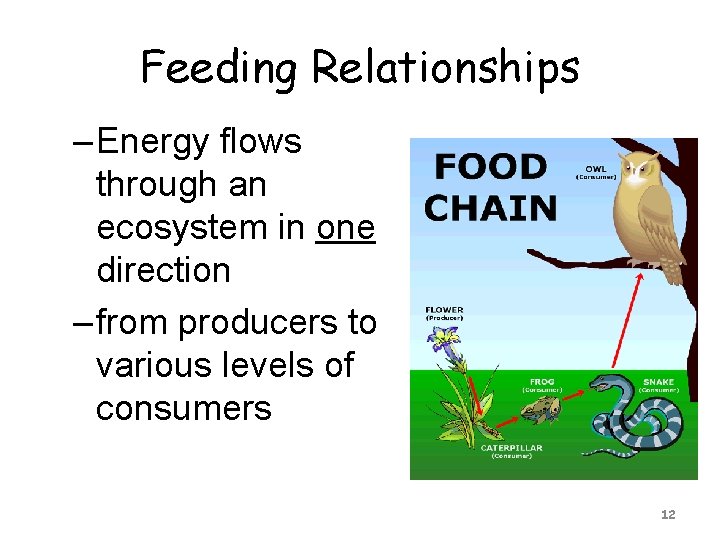
Feeding Relationships – Energy flows through an ecosystem in one direction – from producers to various levels of consumers 12
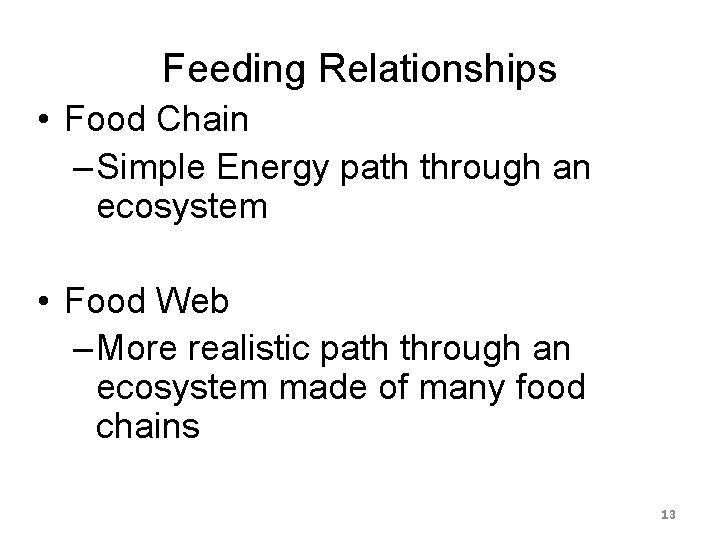
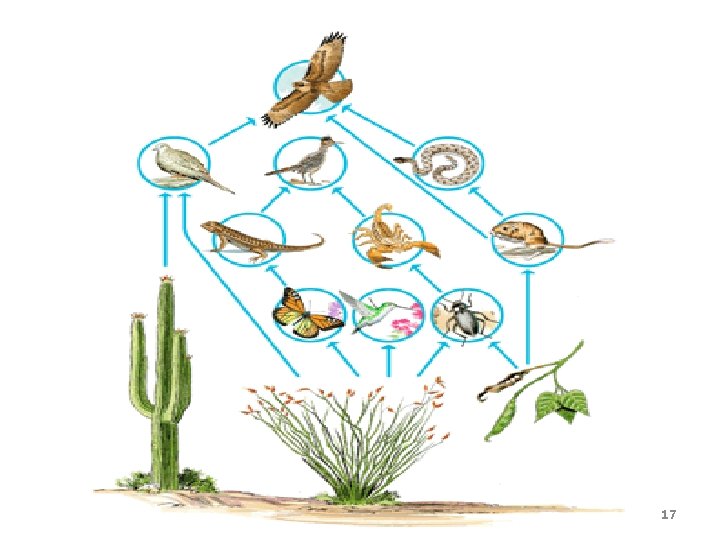
Feeding Relationships • Food Chain – Simple Energy path through an ecosystem • Food Web – More realistic path through an ecosystem made of many food chains 13
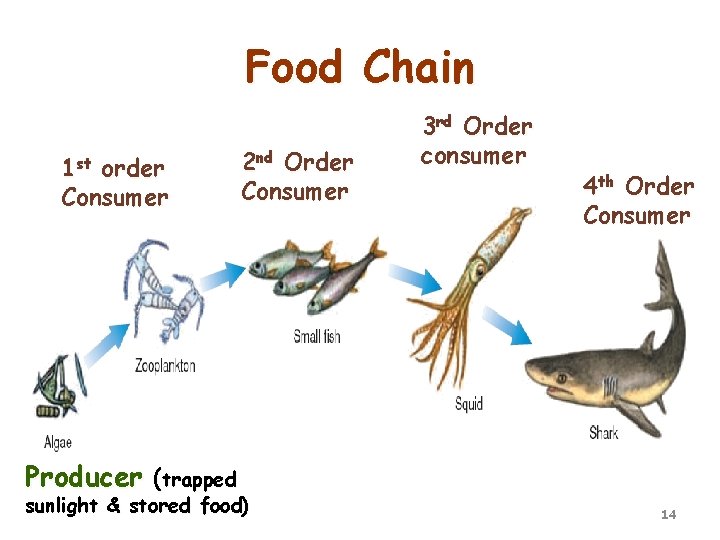
Food Chain 1 st order Consumer 2 nd Order Consumer 3 rd Order consumer 4 th Order Consumer Producer (trapped sunlight & stored food) 14
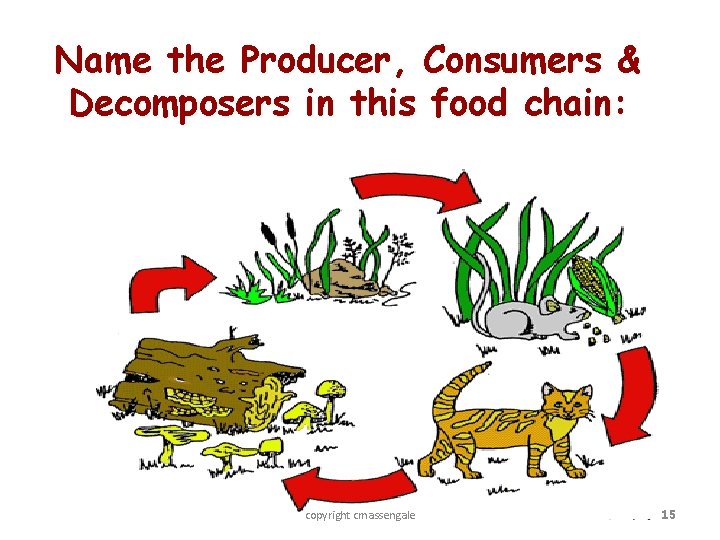
Name the Producer, Consumers & Decomposers in this food chain: copyright cmassengale 15
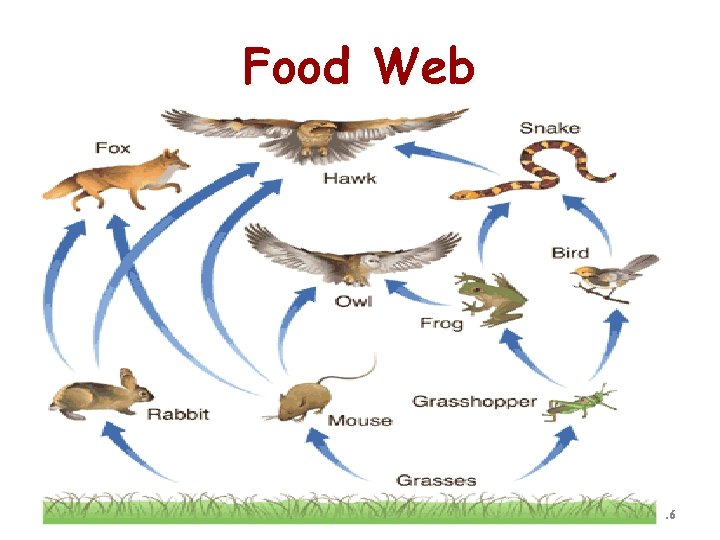
Food Web 16
copyright cmassengale 17
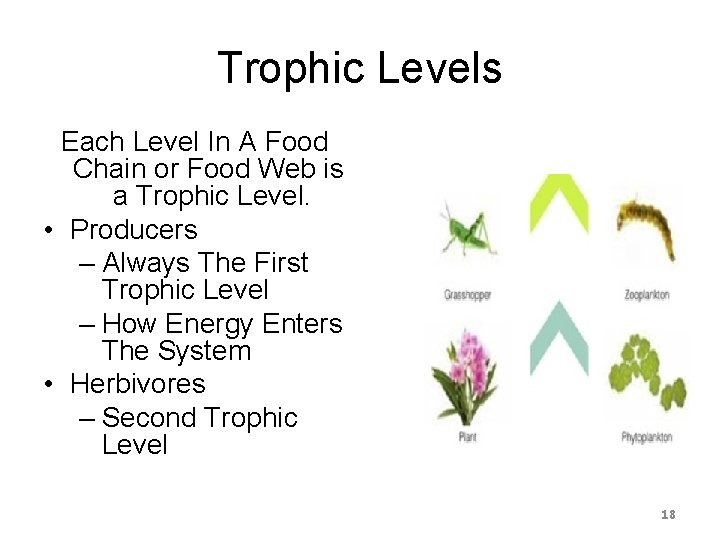
Trophic Levels Each Level In A Food Chain or Food Web is a Trophic Level. • Producers – Always The First Trophic Level – How Energy Enters The System • Herbivores – Second Trophic Level 18
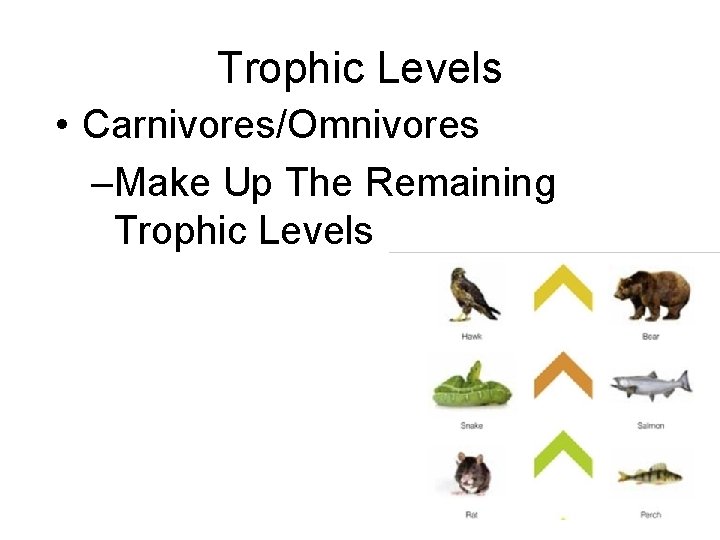
Trophic Levels • Carnivores/Omnivores –Make Up The Remaining Trophic Levels 19
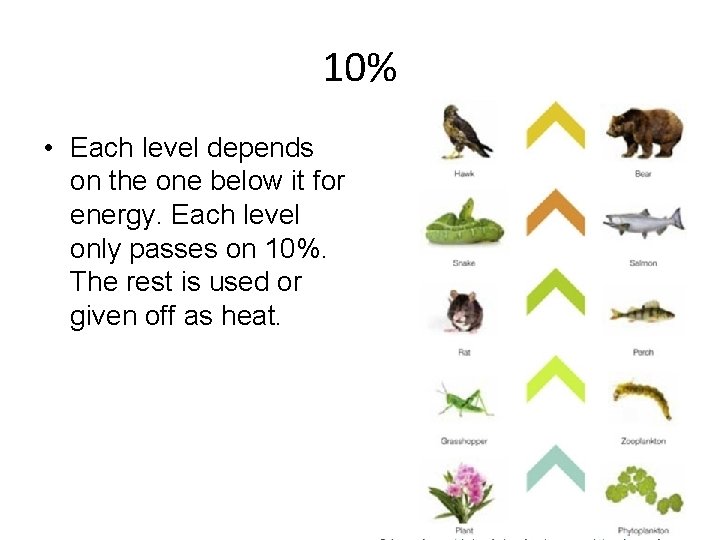
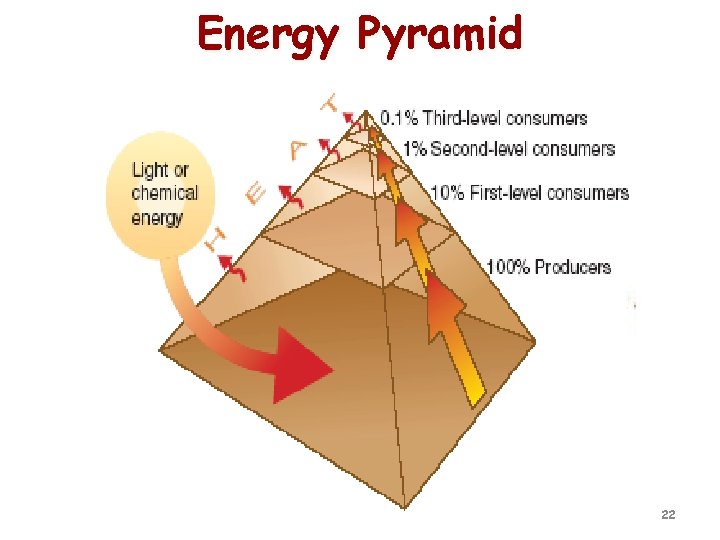
10% • Each level depends on the one below it for energy. Each level only passes on 10%. The rest is used or given off as heat. 20
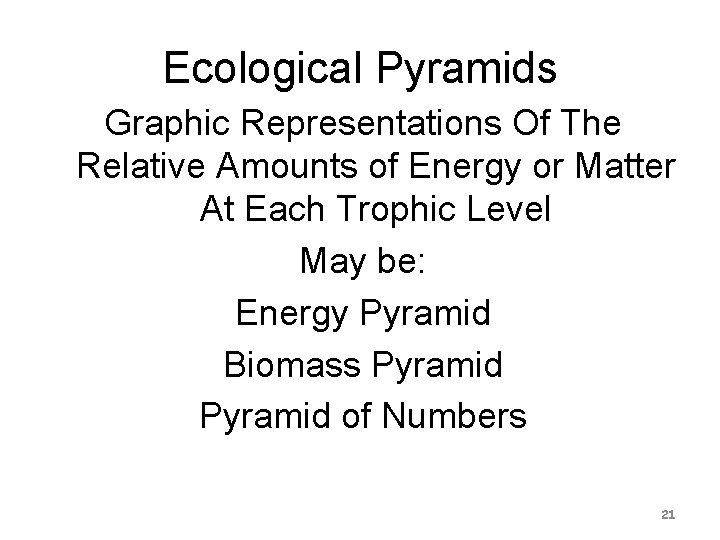
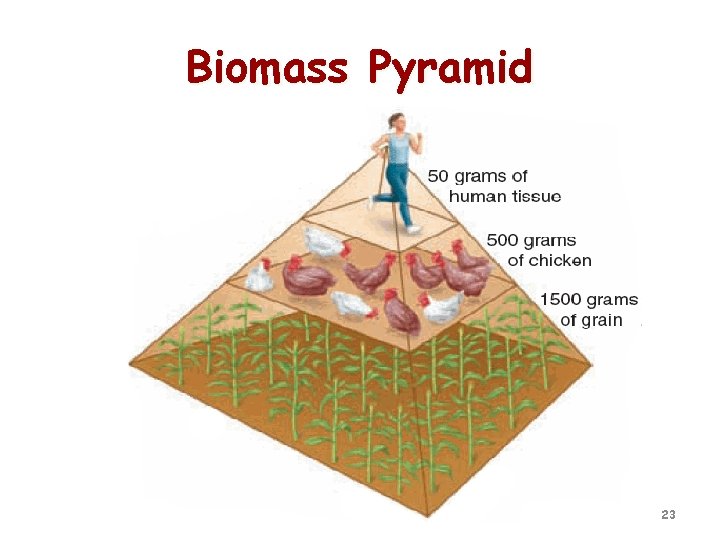
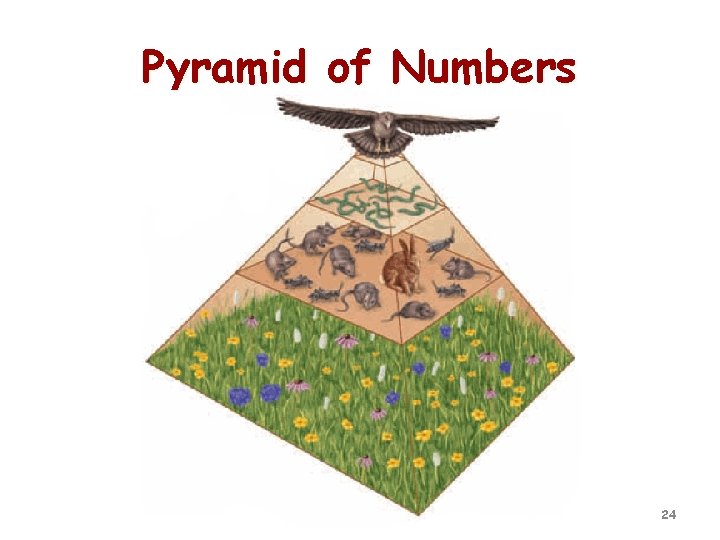
Ecological Pyramids Graphic Representations Of The Relative Amounts of Energy or Matter At Each Trophic Level May be: Energy Pyramid Biomass Pyramid of Numbers 21
Energy Pyramid 22
Biomass Pyramid copyright cmassengale 23
Pyramid of Numbers copyright cmassengale 24
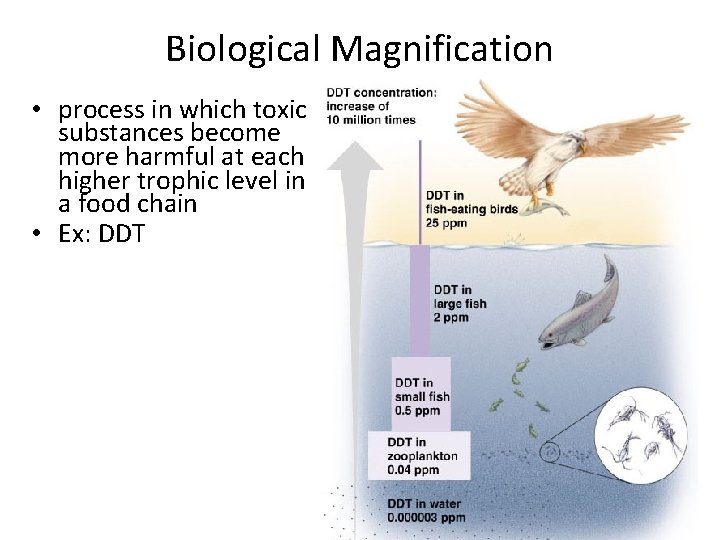
Biological Magnification • process in which toxic substances become more harmful at each higher trophic level in a food chain • Ex: DDT
26
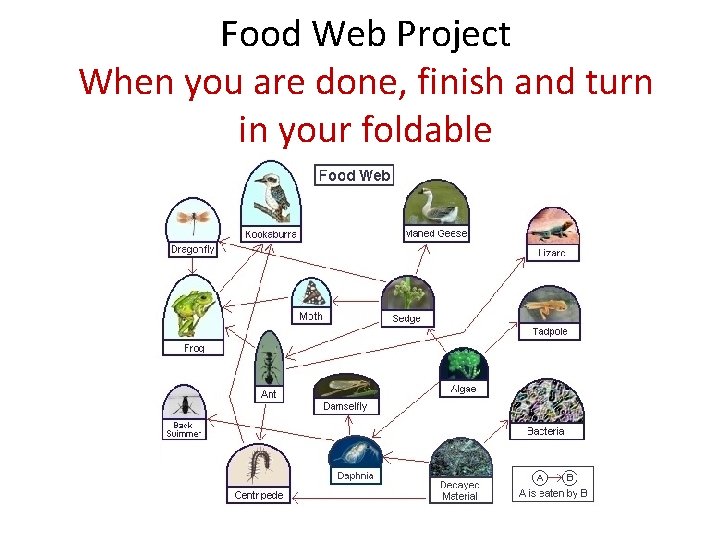
Food Web Project When you are done, finish and turn in your foldable
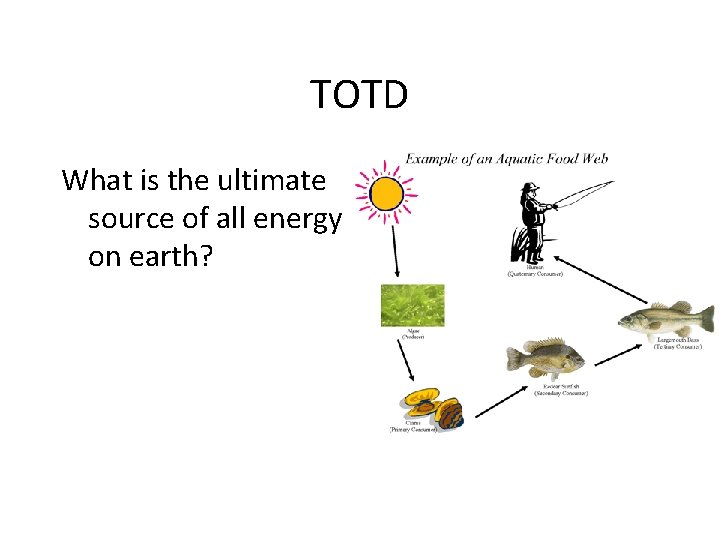
TOTD What is the ultimate source of all energy on earth?