
Energy Flow Food Webs Left Image from Wikimedia
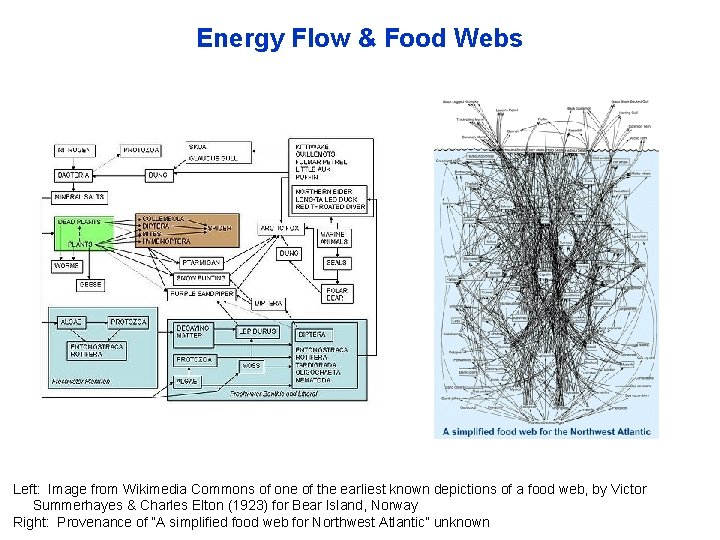
Energy Flow & Food Webs Left: Image from Wikimedia Commons of one of the earliest known depictions of a food web, by Victor Summerhayes & Charles Elton (1923) for Bear Island, Norway Right: Provenance of “A simplified food web for Northwest Atlantic” unknown
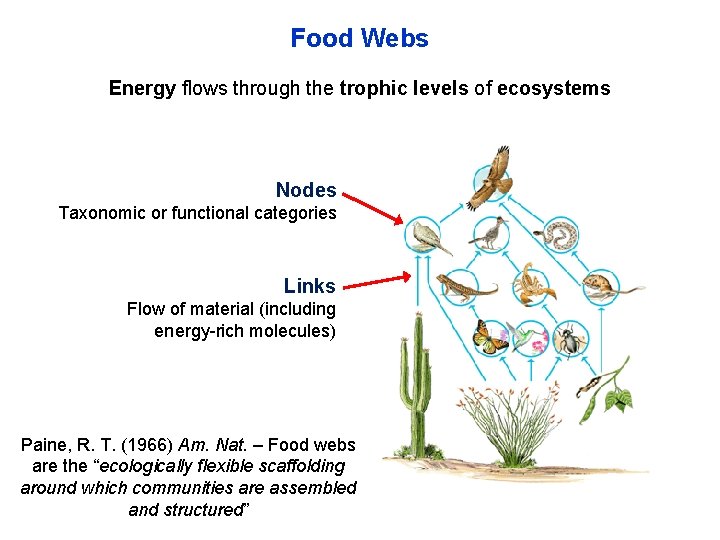
Food Webs Energy flows through the trophic levels of ecosystems Nodes Taxonomic or functional categories Links Flow of material (including energy-rich molecules) Paine, R. T. (1966) Am. Nat. – Food webs are the “ecologically flexible scaffolding around which communities are assembled and structured”
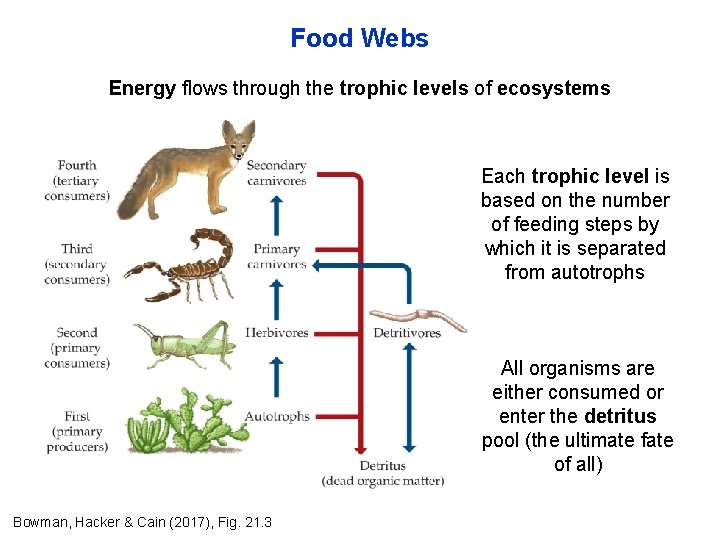
Food Webs Energy flows through the trophic levels of ecosystems Each trophic level is based on the number of feeding steps by which it is separated from autotrophs All organisms are either consumed or enter the detritus pool (the ultimate fate of all) Bowman, Hacker & Cain (2017), Fig. 21. 3
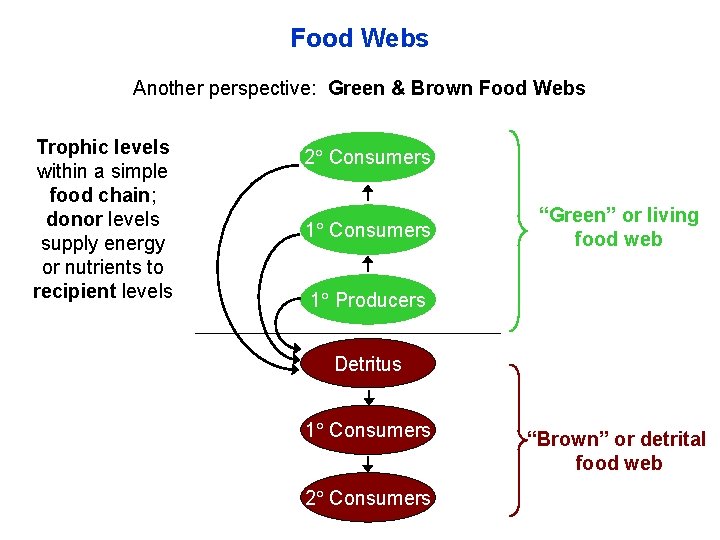
Food Webs Another perspective: Green & Brown Food Webs Trophic levels within a simple food chain; donor levels supply energy or nutrients to recipient levels 2 Consumers 1 Consumers “Green” or living food web 1 Producers Detritus 1 Consumers 2 Consumers “Brown” or detrital food web
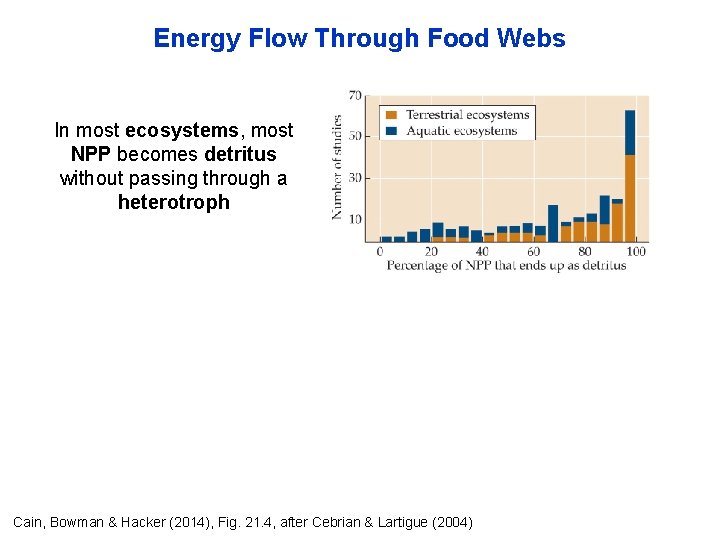
Energy Flow Through Food Webs In most ecosystems, most NPP becomes detritus without passing through a heterotroph Cain, Bowman & Hacker (2014), Fig. 21. 4, after Cebrian & Lartigue (2004)
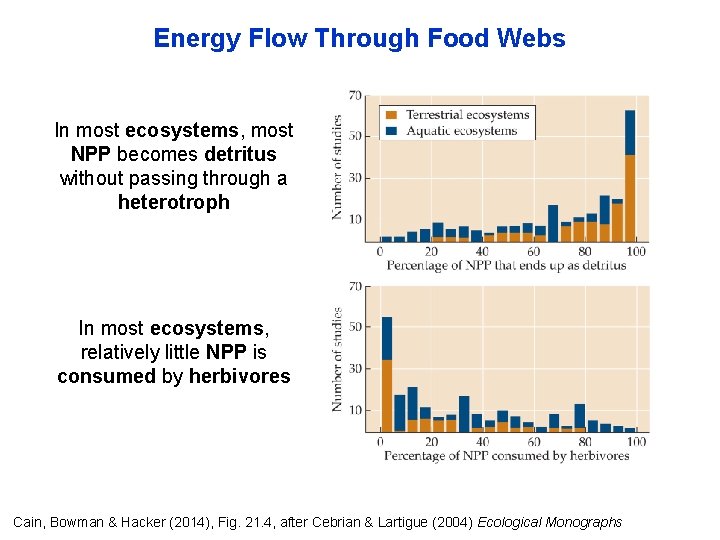
Energy Flow Through Food Webs In most ecosystems, most NPP becomes detritus without passing through a heterotroph In most ecosystems, relatively little NPP is consumed by herbivores Cain, Bowman & Hacker (2014), Fig. 21. 4, after Cebrian & Lartigue (2004) Ecological Monographs
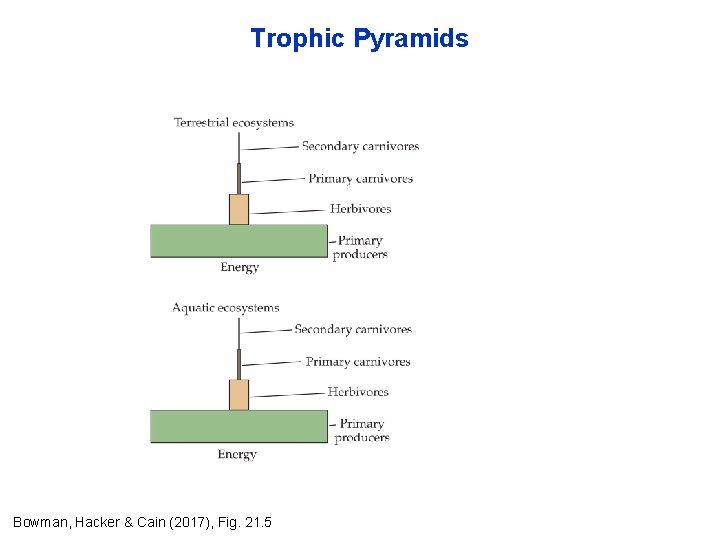
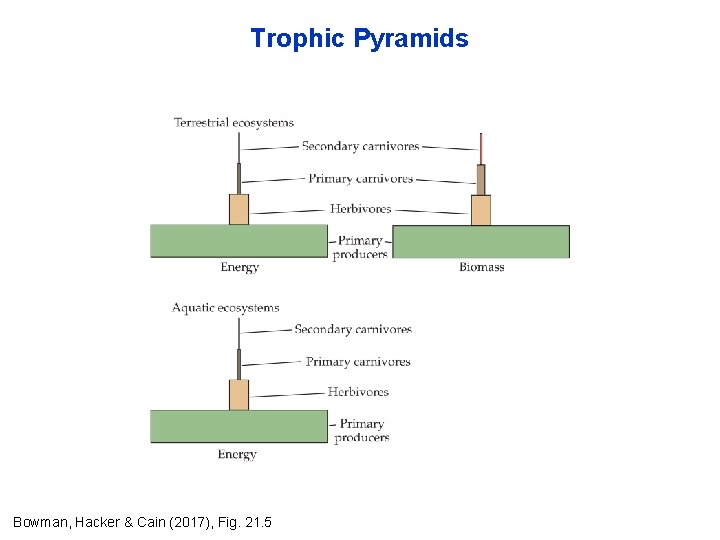
Energy Flow & Laws of Thermodynamics 2 nd Law of Thermodynamics In natural thermodynamic processes, entropy never decreases Energy transformations result in an increase in entropy, i. e. , only a fraction of the energy captured by one trophic level is available to do work in the next Usually only ~ 5 - 15% of the energy captured or assimilated at one trophic level is transferred to the next trophic level. Not all biomass at one level is consumed by the next level up the trophic hierarchy and biomass that is consumed is not fully converted into new biomass Consequently, food chains tend by have <5 trophic levels
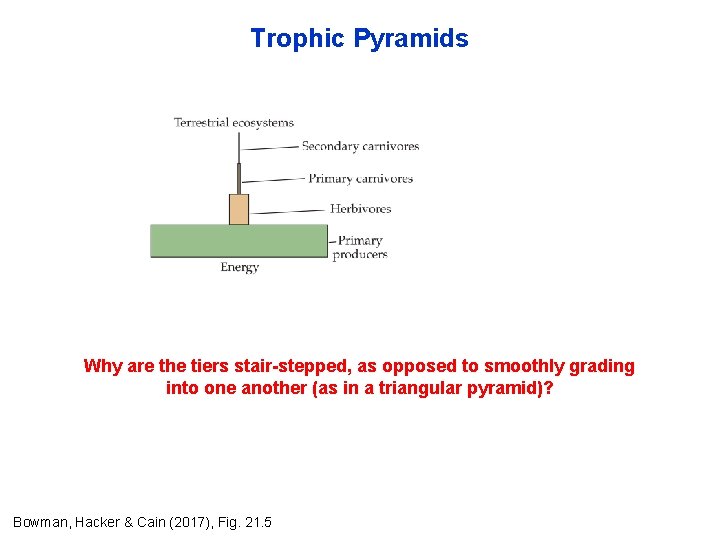
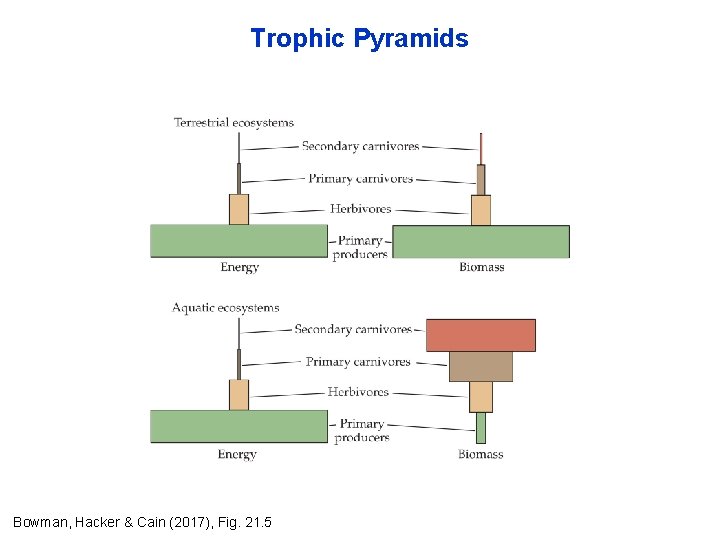
Trophic Pyramids Why are the tiers stair-stepped, as opposed to smoothly grading into one another (as in a triangular pyramid)? Bowman, Hacker & Cain (2017), Fig. 21. 5
Trophic Pyramids Bowman, Hacker & Cain (2017), Fig. 21. 5
Trophic Pyramids Bowman, Hacker & Cain (2017), Fig. 21. 5
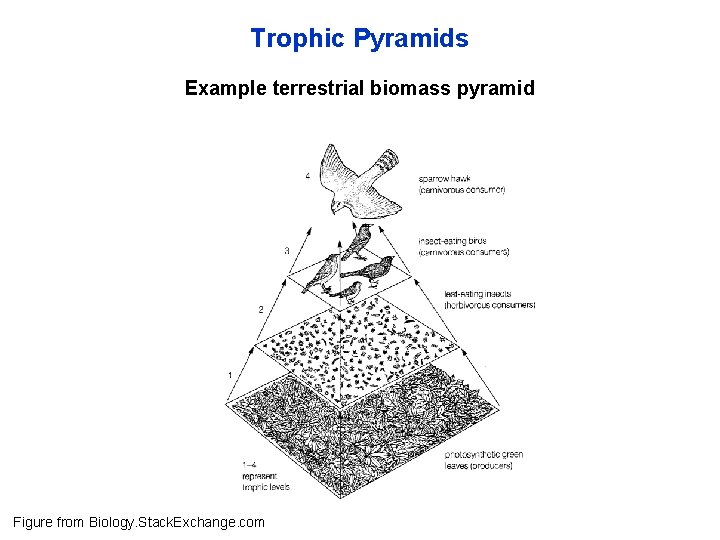
Trophic Pyramids Example terrestrial biomass pyramid Figure from Biology. Stack. Exchange. com
Trophic Pyramids Bowman, Hacker & Cain (2017), Fig. 21. 5
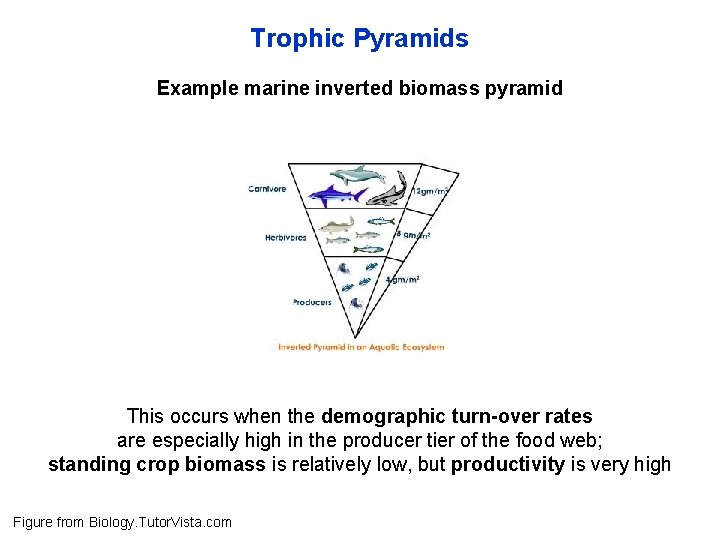
Trophic Pyramids Example marine inverted biomass pyramid This occurs when the demographic turn-over rates are especially high in the producer tier of the food web; standing crop biomass is relatively low, but productivity is very high Figure from Biology. Tutor. Vista. com
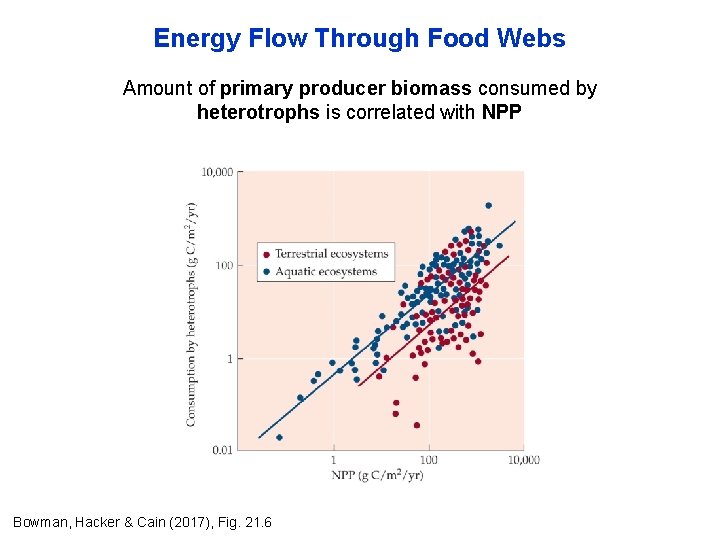
Energy Flow Through Food Webs Amount of primary producer biomass consumed by heterotrophs is correlated with NPP Bowman, Hacker & Cain (2017), Fig. 21. 6
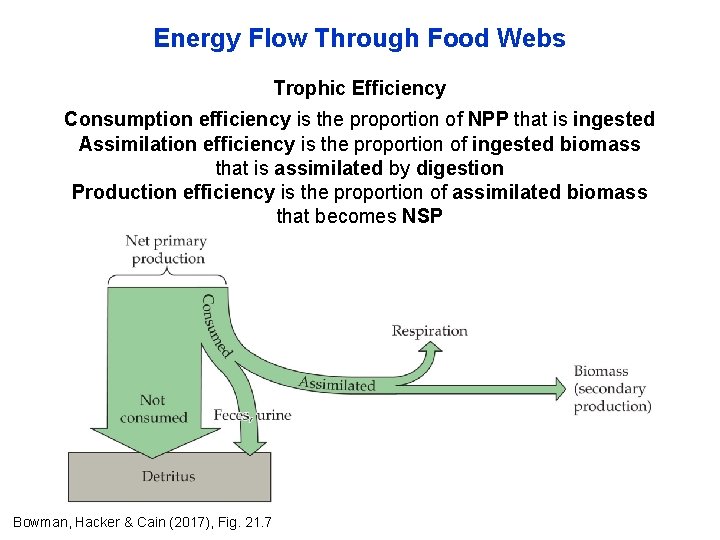
Energy Flow Through Food Webs Trophic Efficiency Consumption efficiency is the proportion of NPP that is ingested Assimilation efficiency is the proportion of ingested biomass that is assimilated by digestion Production efficiency is the proportion of assimilated biomass that becomes NSP Bowman, Hacker & Cain (2017), Fig. 21. 7

Bottom-Up vs. Top-Down Influences Control of energy flow through ecosystems Bottom-up view Resources that limit NPP govern energy flow Top-down view Consumption plus non-consumptive species interactions, e. g. , competition, facilitation, limit lower trophic levels and govern energy flow The “World is Green” Hypothesis Predators limit herbivores and allow plants to flourish Hairston, Smith & Slobodkin (HSS) (1960) Am. Nat. Photo from Wikimedia Commons
Bottom-Up vs. Top-Down Influences We should always start with a bottom-up template: “the removal of higher trophic levels leaves lower levels present (if perhaps greatly modified), whereas the removal of primary producers leaves no system at all” Hunter & Price (1992) Ecology “Break the food chain and creatures die out above the link” John Mc. Phee’s (1998) Annals of the Former World, pg. 84 Potential reconciliation: NPP determines the number of trophic levels that can be supported in a community; therefore NPP ultimately dictates when top-down forces could cascade back down Oksanen, Fretwell, Arruda & Niemela (OFAN) (1981) Am. Nat.
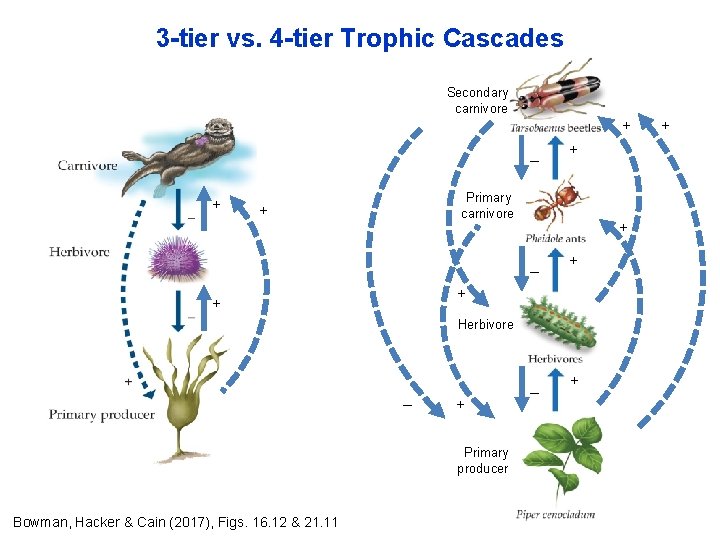
3 -tier vs. 4 -tier Trophic Cascades Secondary carnivore + _ + + Primary carnivore + + _ + + + Herbivore _ + Primary producer Bowman, Hacker & Cain (2017), Figs. 16. 12 & 21. 11 +
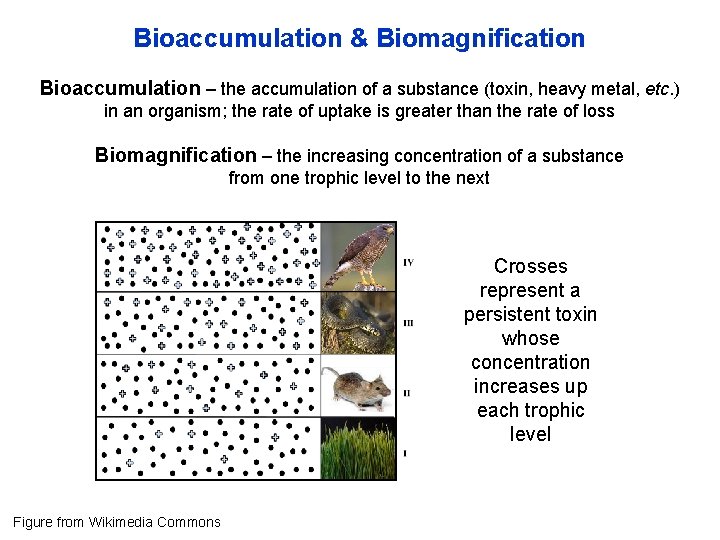
Bioaccumulation & Biomagnification Bioaccumulation – the accumulation of a substance (toxin, heavy metal, etc. ) in an organism; the rate of uptake is greater than the rate of loss Biomagnification – the increasing concentration of a substance from one trophic level to the next Crosses represent a persistent toxin whose concentration increases up each trophic level Figure from Wikimedia Commons
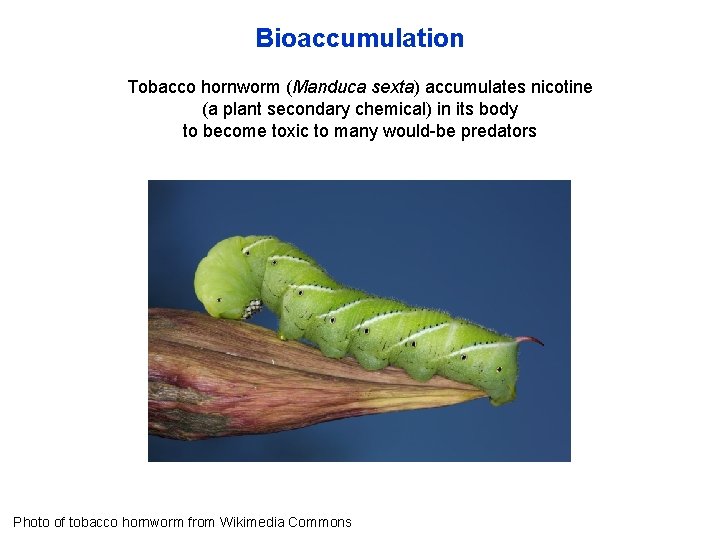
Bioaccumulation Tobacco hornworm (Manduca sexta) accumulates nicotine (a plant secondary chemical) in its body to become toxic to many would-be predators Photo of tobacco hornworm from Wikimedia Commons
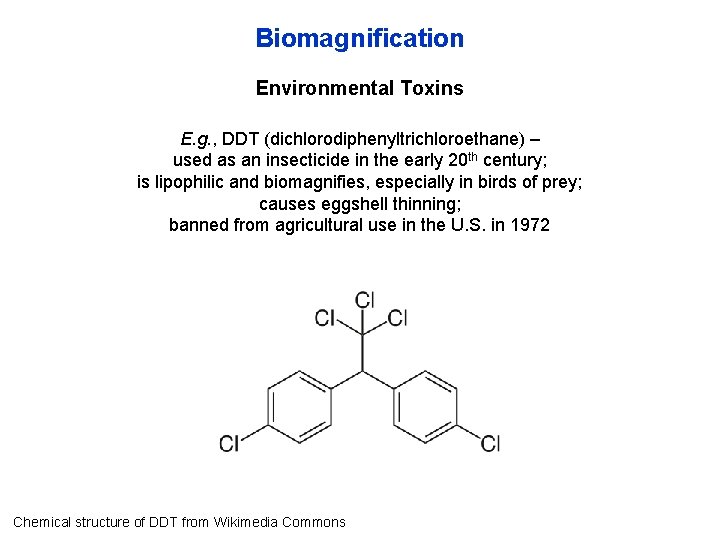
Biomagnification Environmental Toxins E. g. , DDT (dichlorodiphenyltrichloroethane) – used as an insecticide in the early 20 th century; is lipophilic and biomagnifies, especially in birds of prey; causes eggshell thinning; banned from agricultural use in the U. S. in 1972 Chemical structure of DDT from Wikimedia Commons
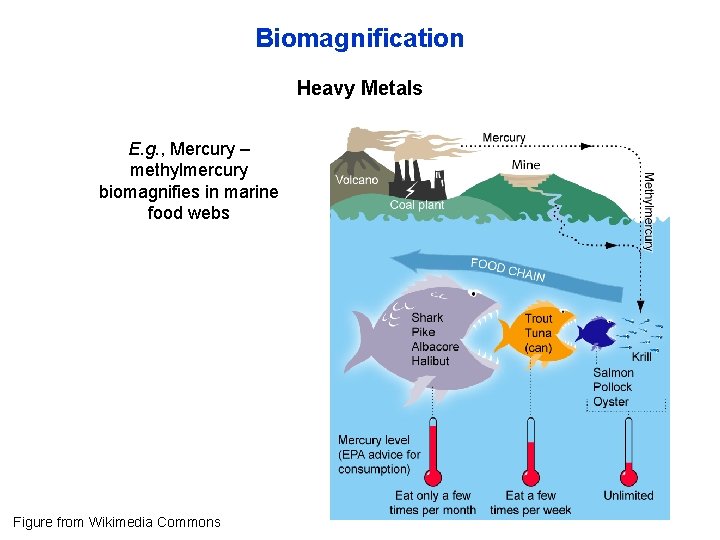
Biomagnification Heavy Metals E. g. , Mercury – methylmercury biomagnifies in marine food webs Figure from Wikimedia Commons
- Slides: 22