
ENERGY FLOW AND ECOSYSTEMS Food chains webs and
ENERGY FLOW AND ECOSYSTEMS Food chains, webs, and pyramids
Where does all energy to sustain life on Earth come from? • Discuss. • Everything that is alive needs energy. There are two ways to obtain energy. • 1. Make energy • 2. Ingest energy • Autotrophs make their own energy and heterotrophs ingest their energy.
Energy Flow • Autotrophs such as plants use photosynthesis to manufacture their own sugars for energy. • Heterotrophs such as animals ingest their energy (either by eating other animals or by eating plants). • Animals that eat plants are called herbivores and animals that eat meat are called carnivores. Animals that eat both are called omnivores. • Autotrophs are also called producers, since they produce energy for the rest of ecosystem to feed on. • Heterotrophs are called consumers, since they ingest or eat energy.
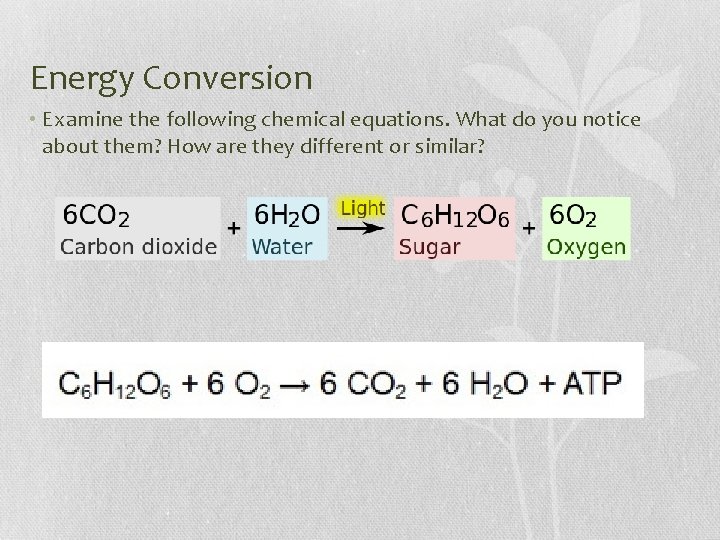
Energy Conversion • Examine the following chemical equations. What do you notice about them? How are they different or similar?

Energy Pyramid- The 10% Rule
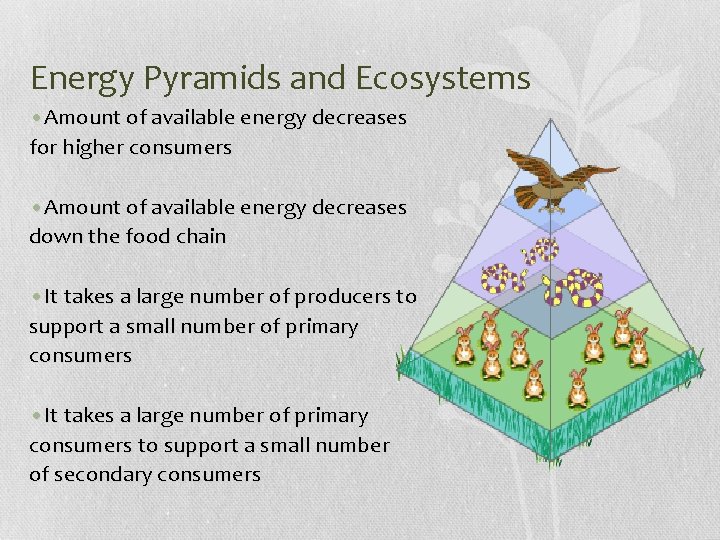
Energy Pyramids and Ecosystems • Amount of available energy decreases for higher consumers • Amount of available energy decreases down the food chain • It takes a large number of producers to support a small number of primary consumers • It takes a large number of primary consumers to support a small number of secondary consumers
Predators, Prey, and Scavengers • Predators are animals that kill and eat other animals for energy. • Prey are animals are that hunted and eaten for their energy. • Describe 3 predator-prey relationships that you know of in our ecosystem in Fort Worth. • Scavengers eat the remains of other consumers that were killed by another consumer. • What animals in Fort Worth are scavengers?
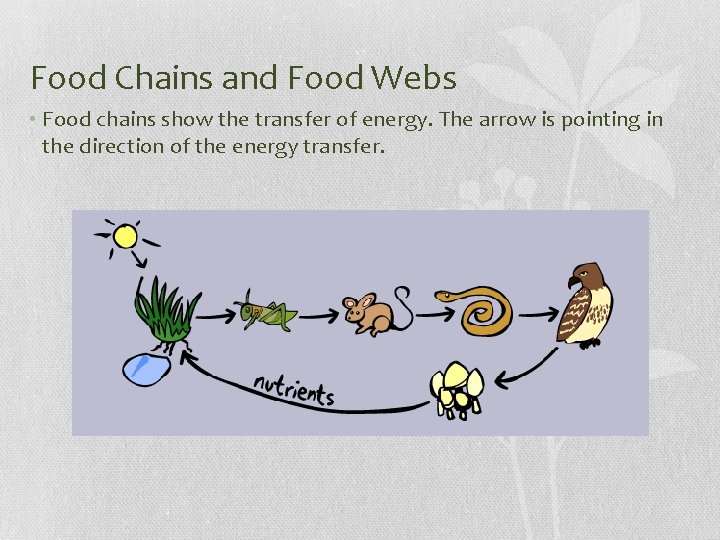
Food Chains and Food Webs • Food chains show the transfer of energy. The arrow is pointing in the direction of the energy transfer.
Food Chains and Food Webs • Food webs also show the transfer of energy between organisms. The arrow still points in the direction of the energy transfer. Food webs are useful in showing more complicated relationships in an ecosystem, since many organisms may eat more than one type of food, or may have more than one natural predator.
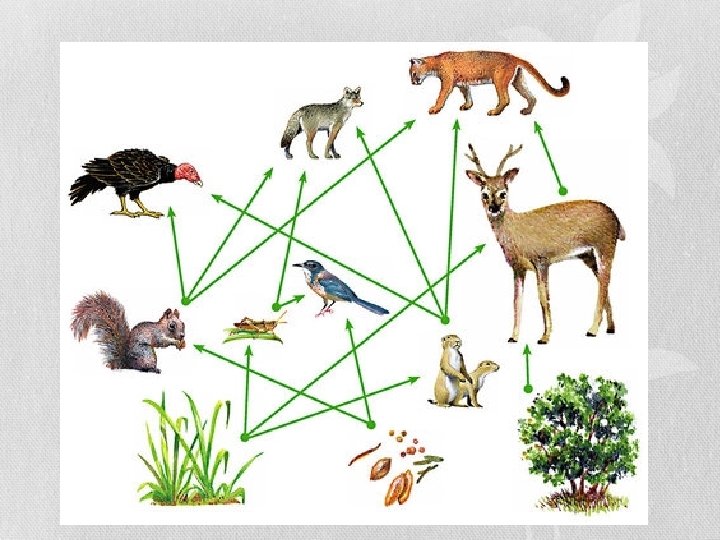
Keystone Species • A keystone species is a species that is considered vital to population control in an ecosystem. Most keystone species are large carnivores. For example, in a jungle in Sumatra, a Sumatran tiger is the keystone species. Without the tigers around keeping prey populations under control, the primary and secondary consumers each too much of each other and too many producers. • Producers are the foundation of the energy pyramid. If there are not enough producers, the pyramid collapses, and so does the ecosystem. • The overall health of an ecosystem can generally be assessed by looking at the health of the keystone species (large carnivores). If there is enough energy in an ecosystem to support a healthy population of the keystone species, then that ecosystem is in balance and is healthy.
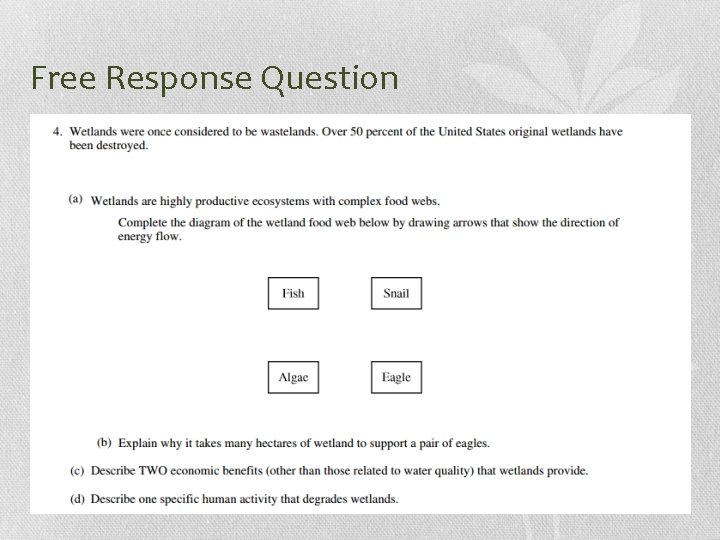
Free Response Question
- Slides: 12