
Energy Flow 7 4 2 Illustrate energy flow
- Slides: 31
Energy Flow 7 -4. 2 Illustrate energy flow in food chains, food webs, and energy pyramids.
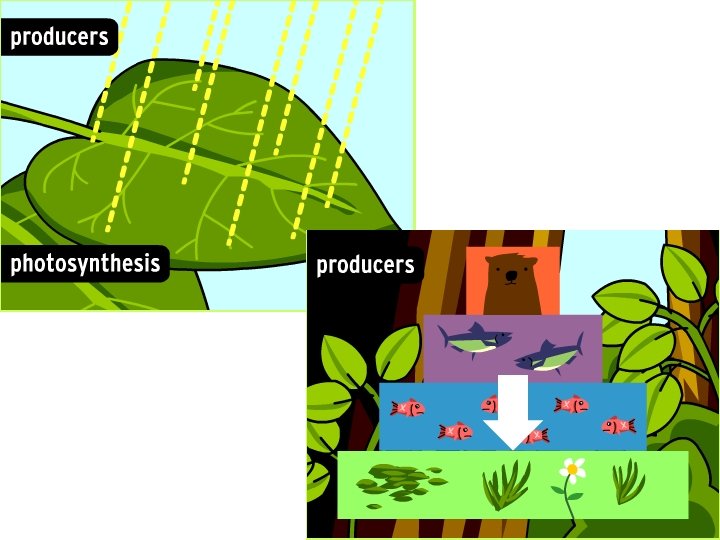
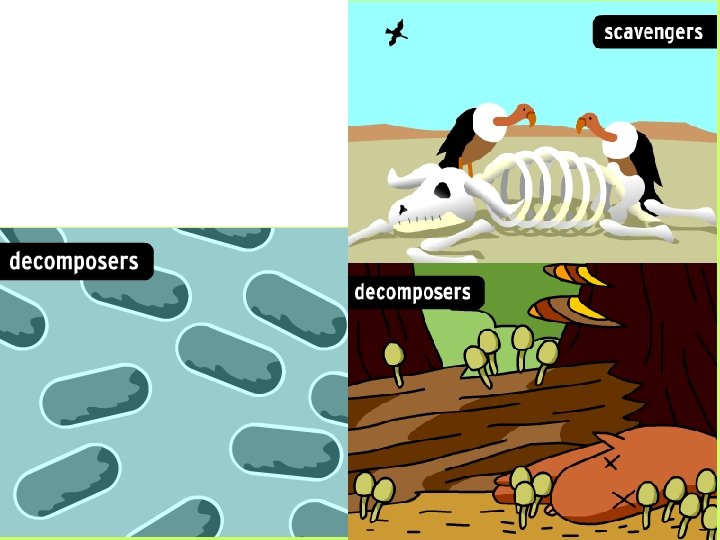
Energy Flow • Organisms have energy roles in their environments. • Role is determined by: –how organism obtains its energy –how they interact with other organisms in the environment • Classifications –Producer, consumer, decomposer
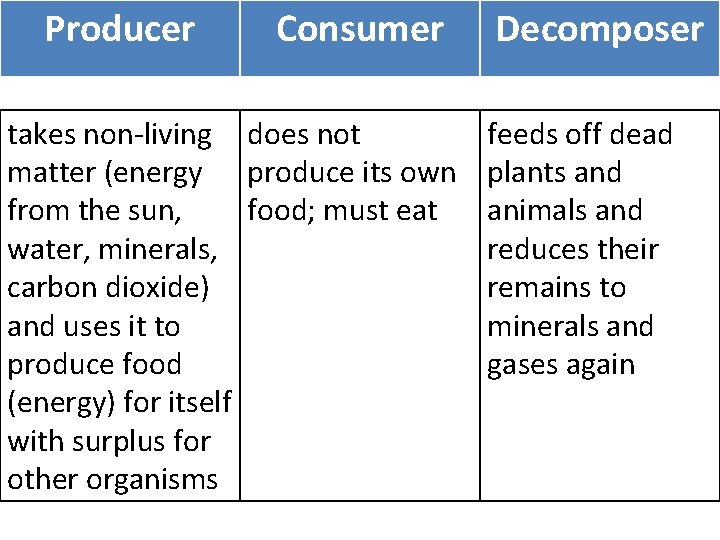
Producer Consumer takes non-living does not matter (energy produce its own from the sun, food; must eat water, minerals, carbon dioxide) and uses it to produce food (energy) for itself with surplus for other organisms Decomposer feeds off dead plants and animals and reduces their remains to minerals and gases again
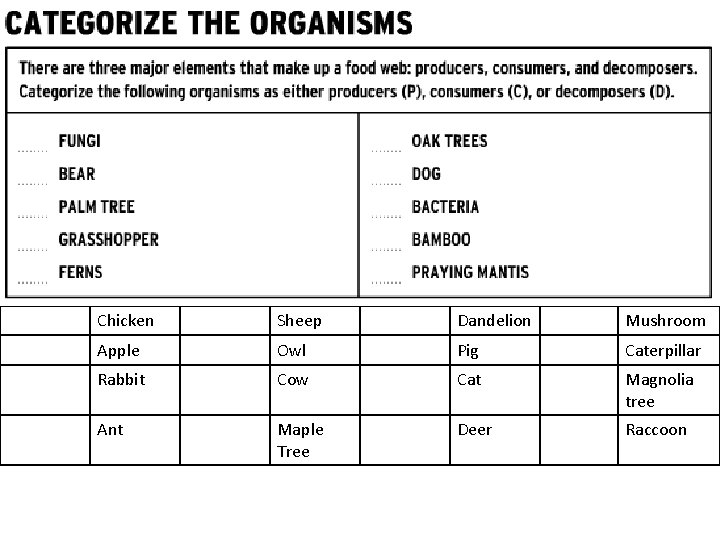
Chicken Sheep Dandelion Mushroom Apple Owl Pig Caterpillar Rabbit Cow Cat Magnolia tree Ant Maple Tree Deer Raccoon
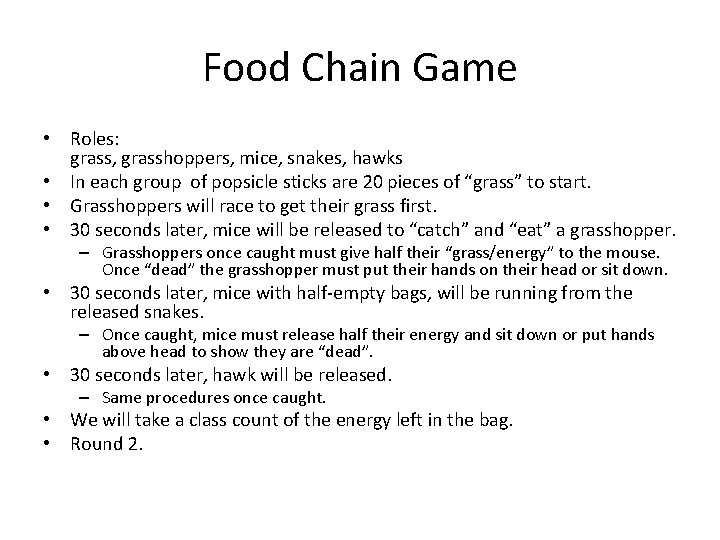
Food Chain Game • Roles: grass, grasshoppers, mice, snakes, hawks • In each group of popsicle sticks are 20 pieces of “grass” to start. • Grasshoppers will race to get their grass first. • 30 seconds later, mice will be released to “catch” and “eat” a grasshopper. – Grasshoppers once caught must give half their “grass/energy” to the mouse. Once “dead” the grasshopper must put their hands on their head or sit down. • 30 seconds later, mice with half-empty bags, will be running from the released snakes. – Once caught, mice must release half their energy and sit down or put hands above head to show they are “dead”. • 30 seconds later, hawk will be released. – Same procedures once caught. • We will take a class count of the energy left in the bag. • Round 2.
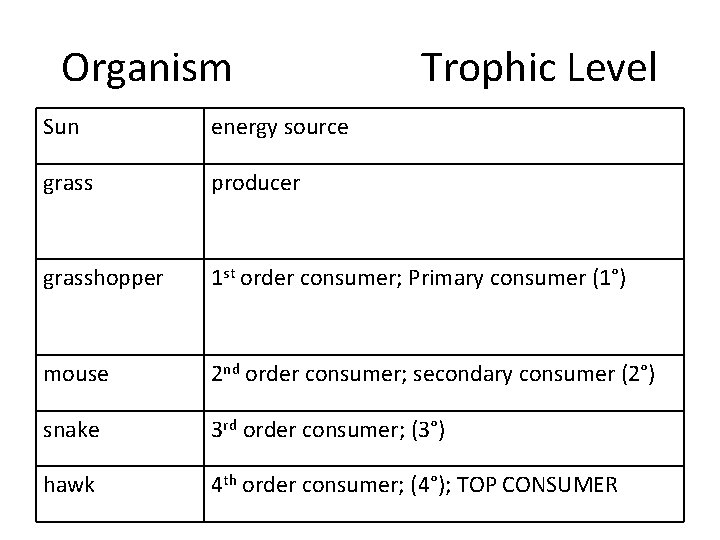
Organism Trophic Level Sun energy source grass producer grasshopper 1 st order consumer; Primary consumer (1°) mouse 2 nd order consumer; secondary consumer (2°) snake 3 rd order consumer; (3°) hawk 4 th order consumer; (4°); TOP CONSUMER
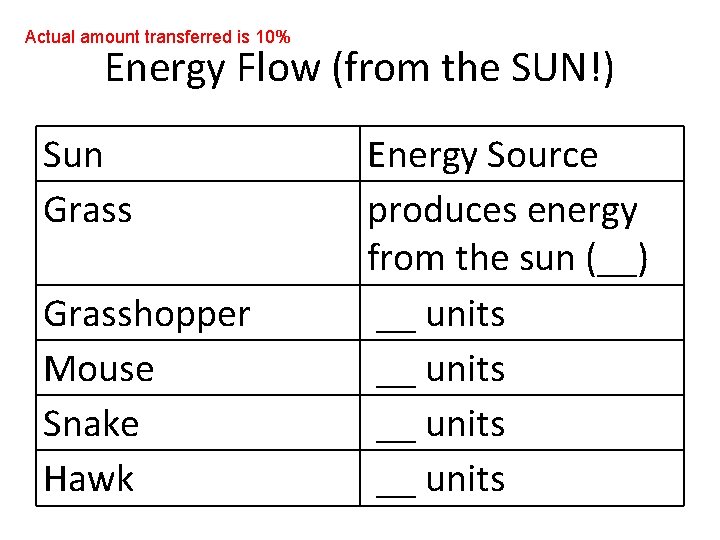
Actual amount transferred is 10% Energy Flow (from the SUN!) Sun Grasshopper Mouse Snake Hawk Energy Source produces energy from the sun (__) __ units
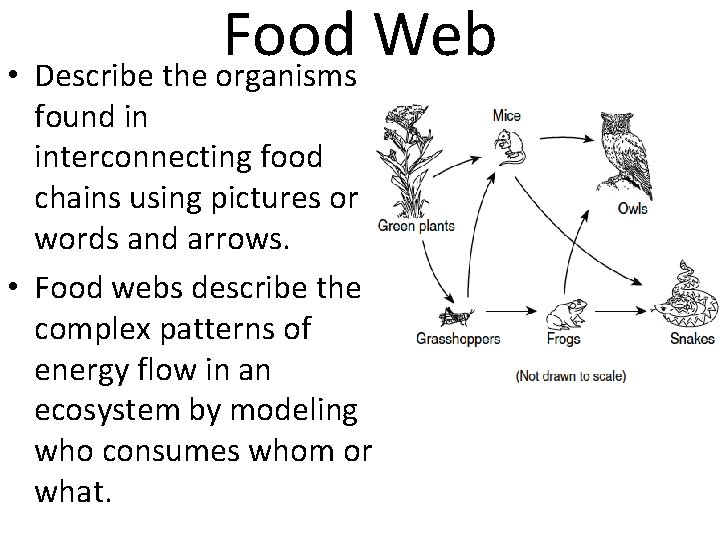
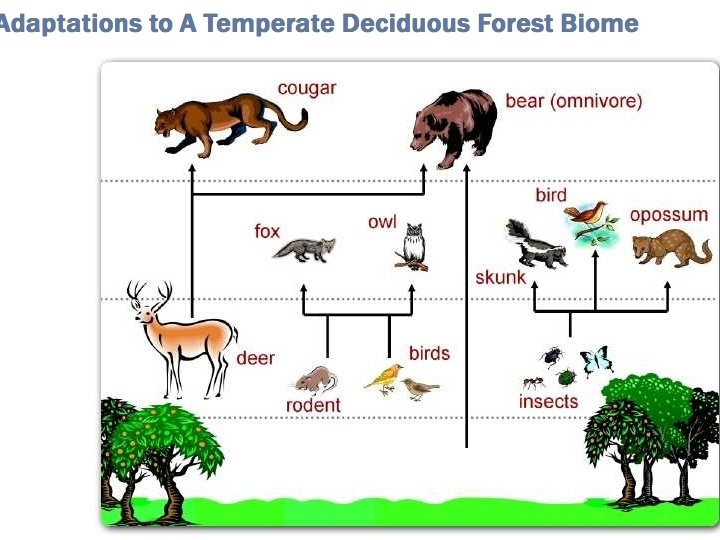
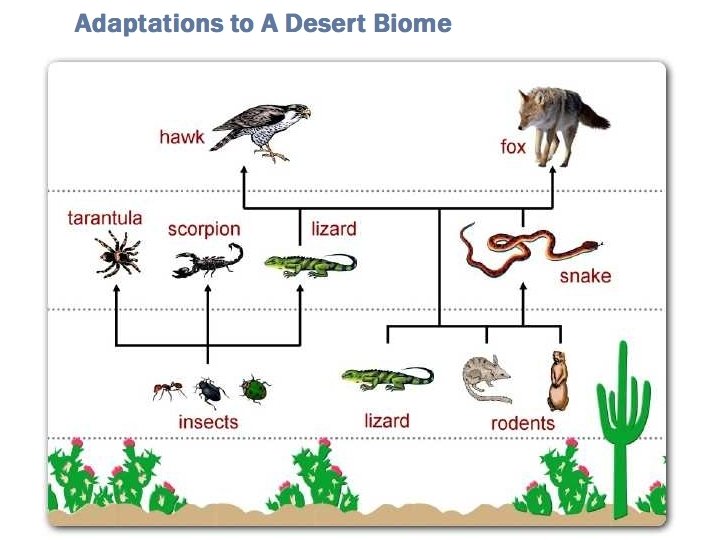
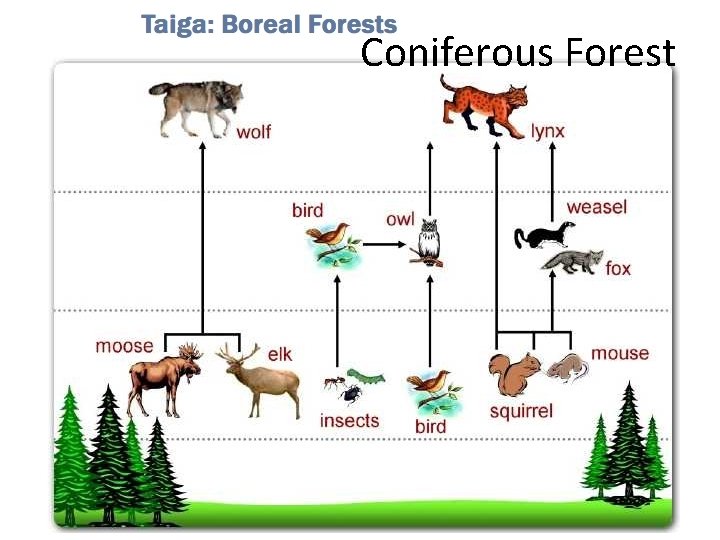
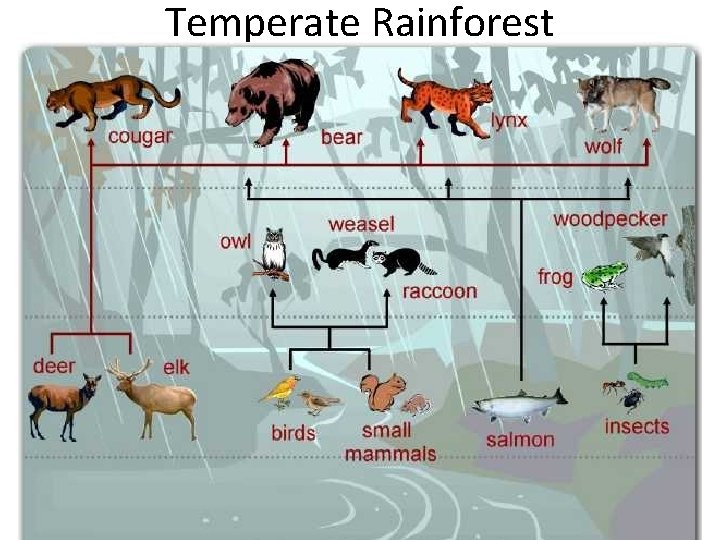
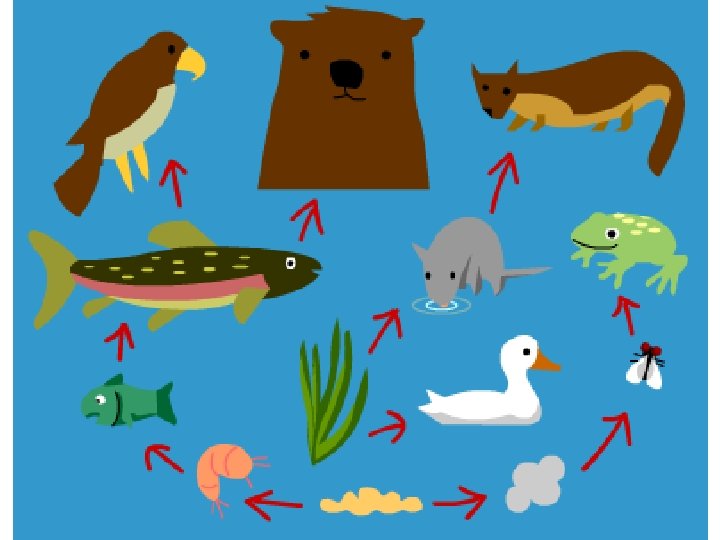
Food Web • Describe the organisms found in interconnecting food chains using pictures or words and arrows. • Food webs describe the complex patterns of energy flow in an ecosystem by modeling who consumes whom or what.
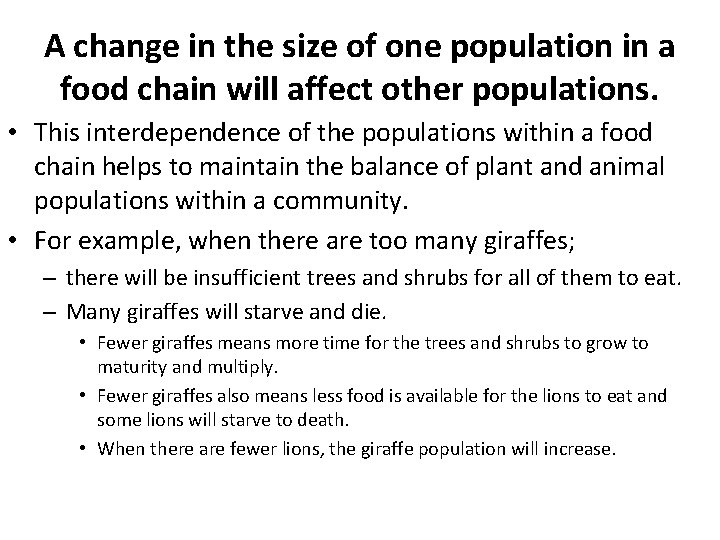
A change in the size of one population in a food chain will affect other populations. • This interdependence of the populations within a food chain helps to maintain the balance of plant and animal populations within a community. • For example, when there are too many giraffes; – there will be insufficient trees and shrubs for all of them to eat. – Many giraffes will starve and die. • Fewer giraffes means more time for the trees and shrubs to grow to maturity and multiply. • Fewer giraffes also means less food is available for the lions to eat and some lions will starve to death. • When there are fewer lions, the giraffe population will increase.
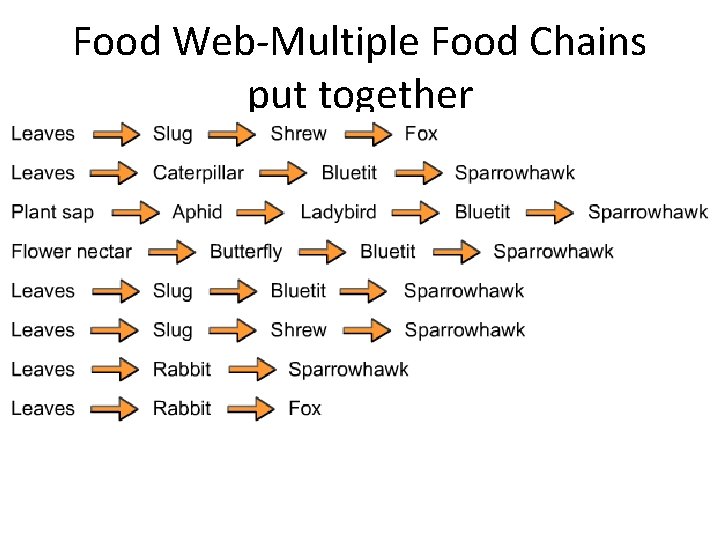
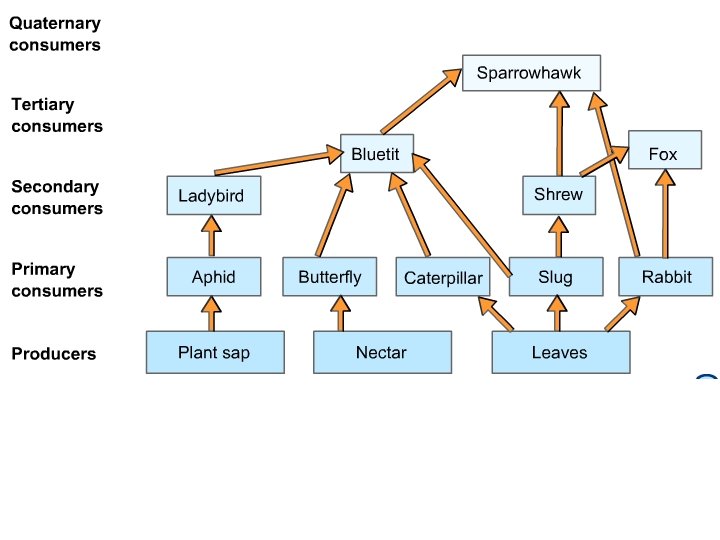
Food Web-Multiple Food Chains put together
Coniferous Forest
Temperate Rainforest
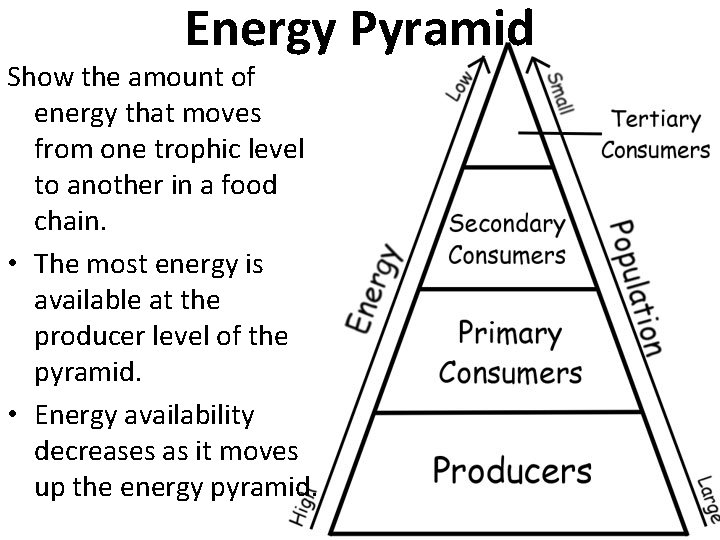
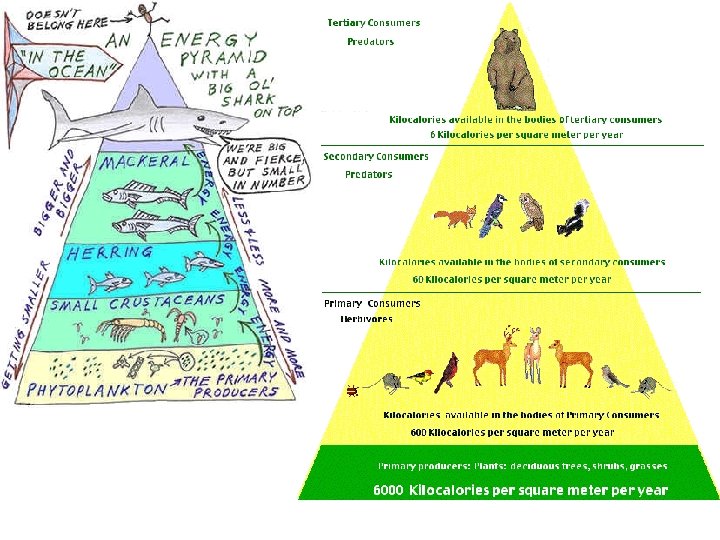
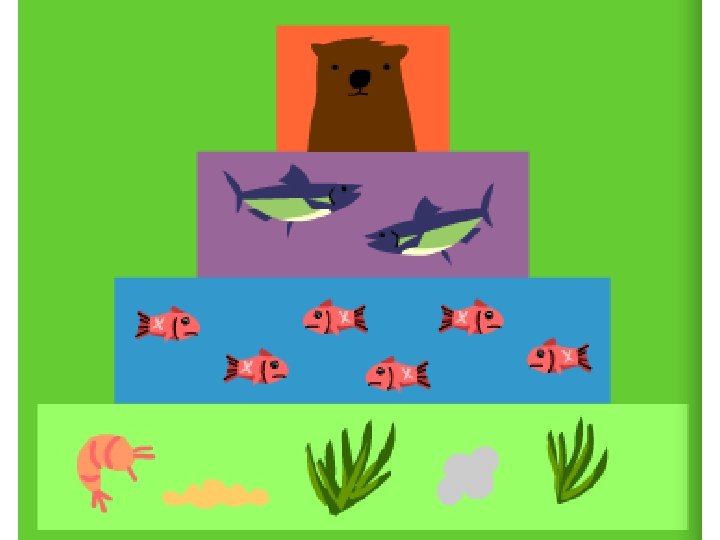
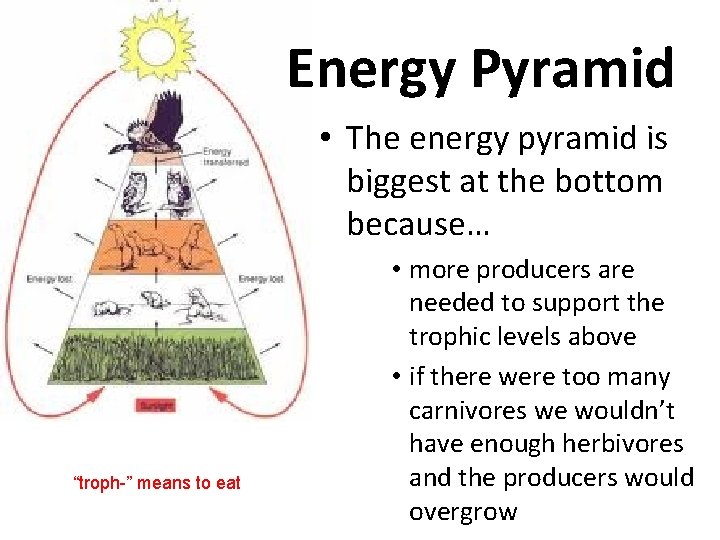
Energy Pyramid Show the amount of energy that moves from one trophic level to another in a food chain. • The most energy is available at the producer level of the pyramid. • Energy availability decreases as it moves up the energy pyramid.
Energy Pyramid • The energy pyramid is biggest at the bottom because… “troph-” means to eat • more producers are needed to support the trophic levels above • if there were too many carnivores we wouldn’t have enough herbivores and the producers would overgrow
Situations Effect Food Chains
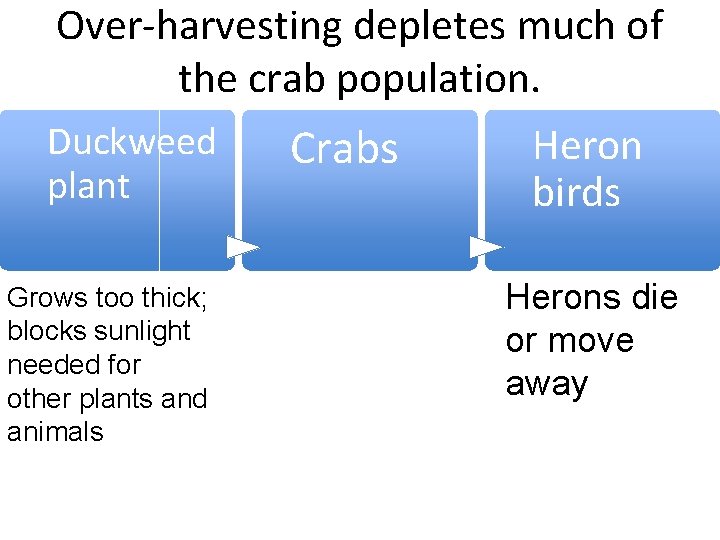
Over-harvesting depletes much of the crab population. Duckweed plant Grows too thick; blocks sunlight needed for other plants and animals Crabs Heron birds Herons die or move away
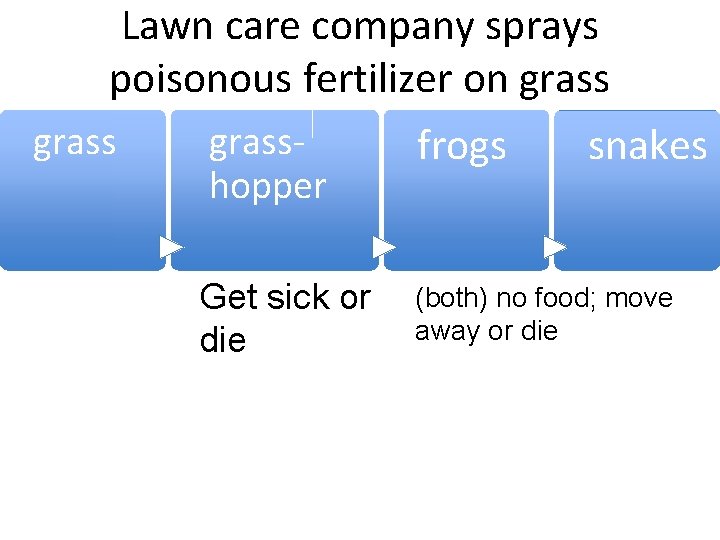
Lawn care company sprays poisonous fertilizer on grasshopper Get sick or die frogs snakes (both) no food; move away or die
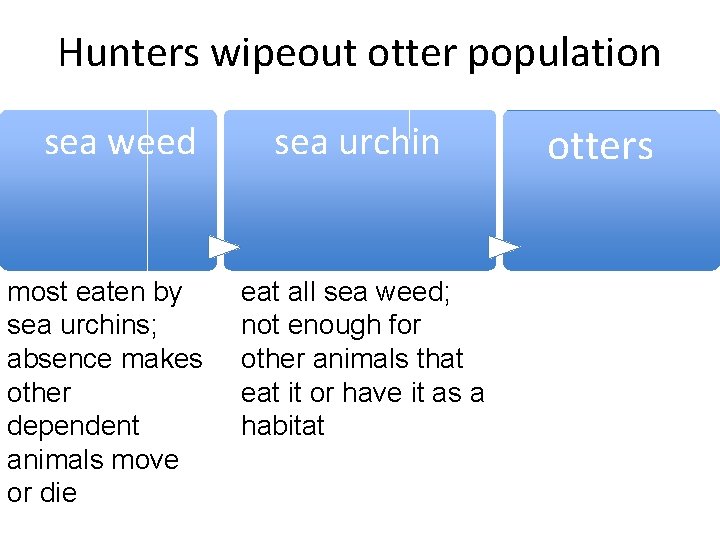
Hunters wipeout otter population sea weed most eaten by sea urchins; absence makes other dependent animals move or die sea urchin eat all sea weed; not enough for other animals that eat it or have it as a habitat otters
Brain. Pop
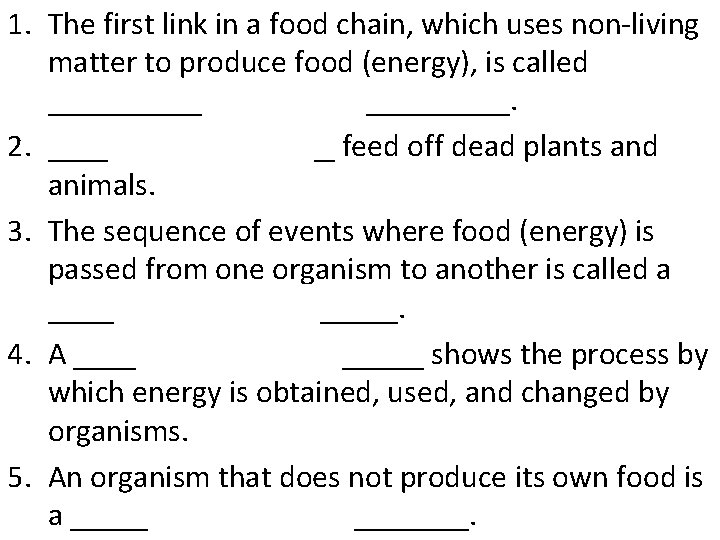
1. The first link in a food chain, which uses non-living matter to produce food (energy), is called _______________. 2. _________ feed off dead plants and animals. 3. The sequence of events where food (energy) is passed from one organism to another is called a ___________. 4. A ___________ shows the process by which energy is obtained, used, and changed by organisms. 5. An organism that does not produce its own food is a _____________.