
Energy Efficiency Percentage of the total energy input
- Slides: 25
Energy Efficiency: Percentage of the total energy input that does useful work and is not converted into LQE. HQE = high-temperature heat and chemical energy in fossil and nuclear fuels - useful LQE = low-temperature heat that is dispersed or diluted – mostly useless (generally through water vapor/steam) Life Cycle Cost = initial cost + lifetime operating cost. Energy efficient appliances cost more initially, but cost less to maintain and therefore have lower life cycle costs.
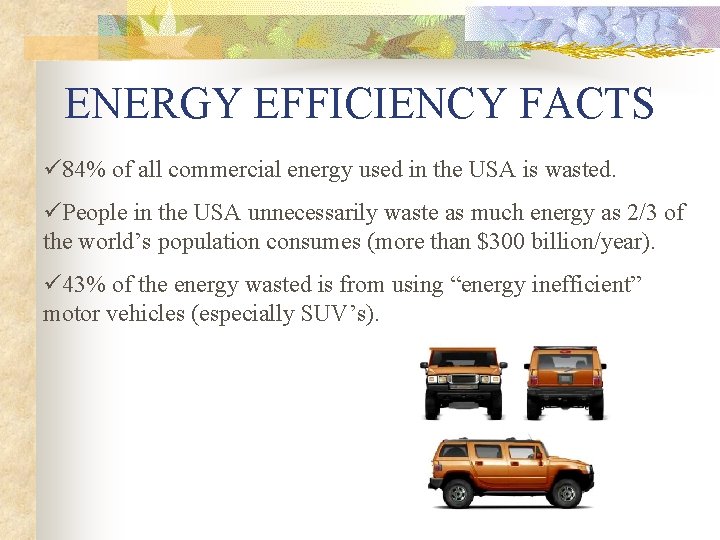
ENERGY EFFICIENCY FACTS ü 84% of all commercial energy used in the USA is wasted. üPeople in the USA unnecessarily waste as much energy as 2/3 of the world’s population consumes (more than $300 billion/year). ü 43% of the energy wasted is from using “energy inefficient” motor vehicles (especially SUV’s).
WHAT DOES THIS MEAN? Energy Efficiency = Military, Economic, and Environmental Security How do we achieve this? LIFE STYLE CHANGES!
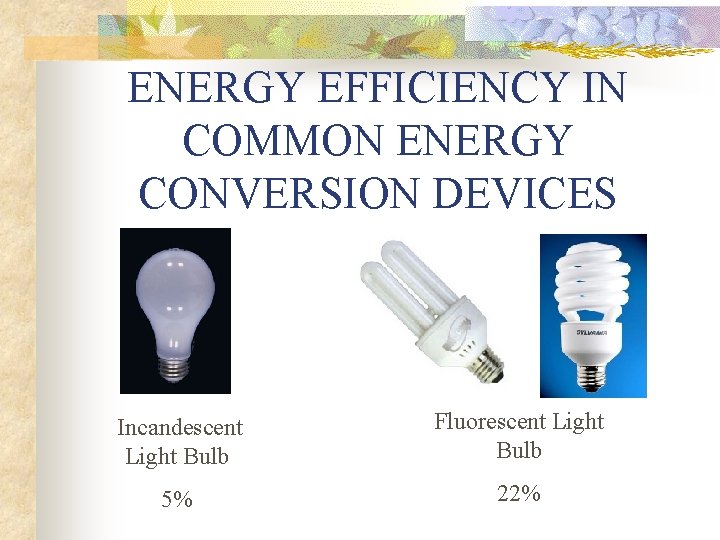
ENERGY EFFICIENCY IN COMMON ENERGY CONVERSION DEVICES Incandescent Light Bulb Fluorescent Light Bulb 5% 22%
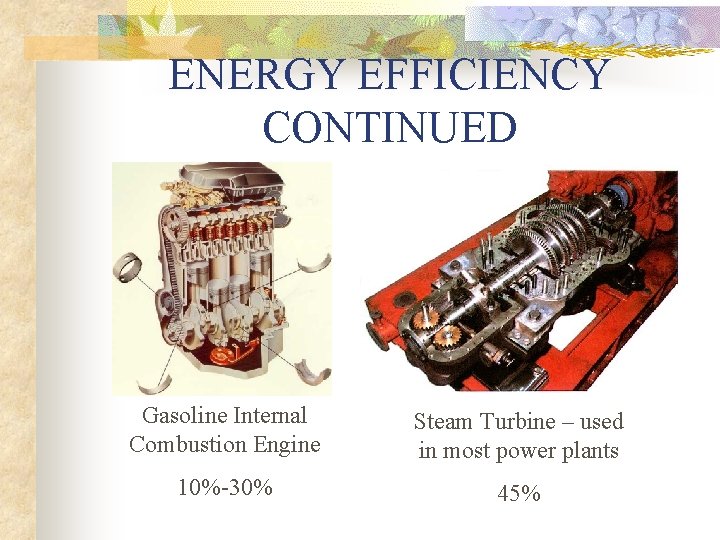
ENERGY EFFICIENCY CONTINUED Gasoline Internal Combustion Engine Steam Turbine – used in most power plants 10%-30% 45%
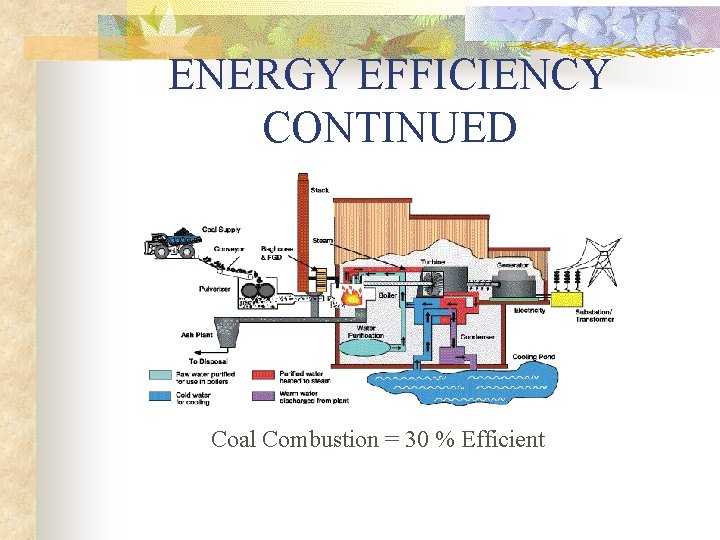
ENERGY EFFICIENCY CONTINUED Coal Combustion = 30 % Efficient
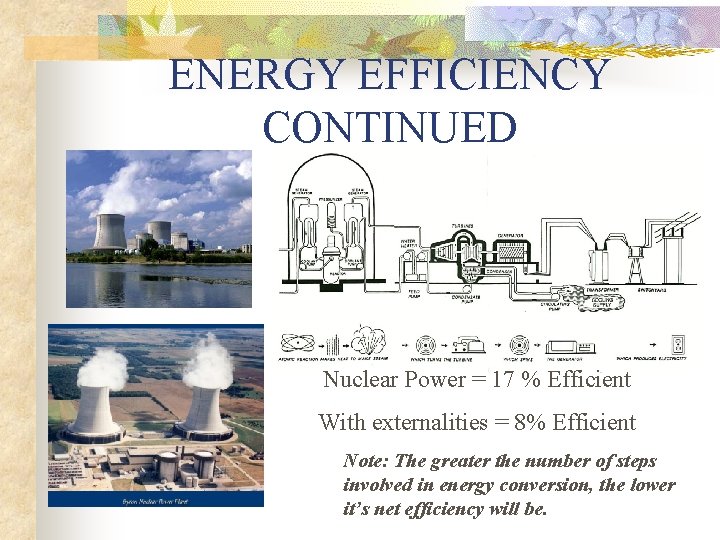
ENERGY EFFICIENCY CONTINUED Nuclear Power = 17 % Efficient With externalities = 8% Efficient Note: The greater the number of steps involved in energy conversion, the lower it’s net efficiency will be.
ENERGY EFFICIENCY IN APPLIANCES ØEnergy-efficient appliances typically cost more than less efficient models. ØLook for Energy Stars label. ØUse appliances during off-peak hours: winter – peak generating costs 4: 00 – 8: 00 pm summer – peak generating costs 11: 00 am – 8: 00 pm
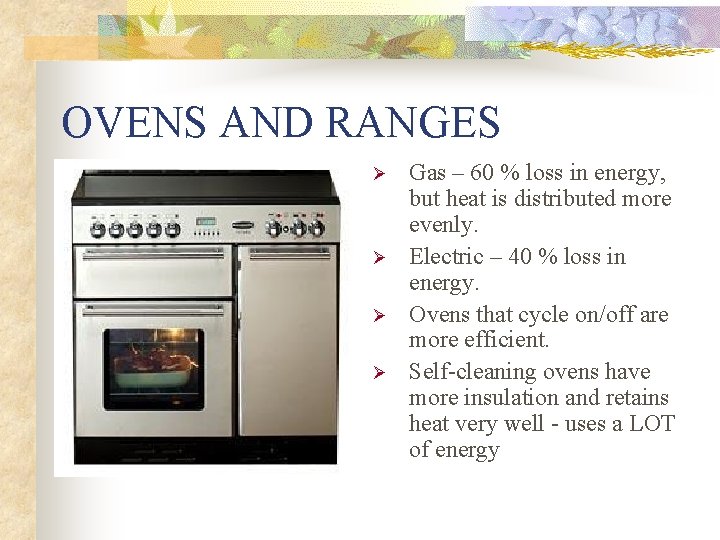
OVENS AND RANGES Ø Ø Gas – 60 % loss in energy, but heat is distributed more evenly. Electric – 40 % loss in energy. Ovens that cycle on/off are more efficient. Self-cleaning ovens have more insulation and retains heat very well - uses a LOT of energy
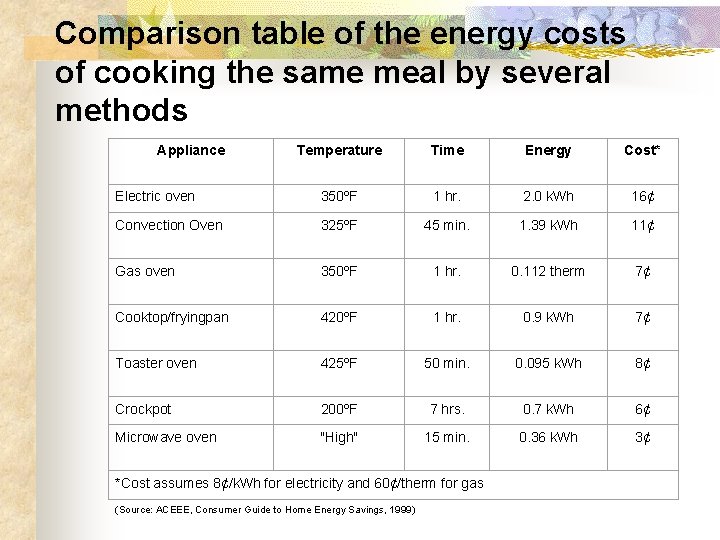
Comparison table of the energy costs of cooking the same meal by several methods Appliance Temperature Time Energy Cost* Electric oven 350ºF 1 hr. 2. 0 k. Wh 16¢ Convection Oven 325ºF 45 min. 1. 39 k. Wh 11¢ Gas oven 350ºF 1 hr. 0. 112 therm 7¢ Cooktop/fryingpan 420ºF 1 hr. 0. 9 k. Wh 7¢ Toaster oven 425ºF 50 min. 0. 095 k. Wh 8¢ Crockpot 200ºF 7 hrs. 0. 7 k. Wh 6¢ Microwave oven "High" 15 min. 0. 36 k. Wh 3¢ *Cost assumes 8¢/k. Wh for electricity and 60¢/therm for gas (Source: ACEEE, Consumer Guide to Home Energy Savings, 1999)
CLOTHES WASHERS Ø Ø Ø A considerable amount of hot water is used for washing clothes. Use a machine that uses the fewest gallons of water pound of clothes and one with H, M & L settings for water level control. Use appropriate volume of water for load. Use a low-warm water temperature for washing and cold cycle for rinsing. Use during off-peak hours. Follow maintenance instructions and clean regularly.
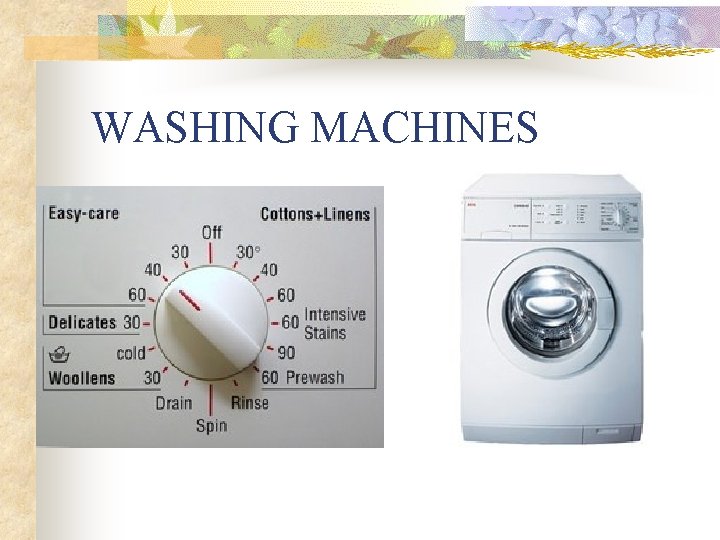
WASHING MACHINES
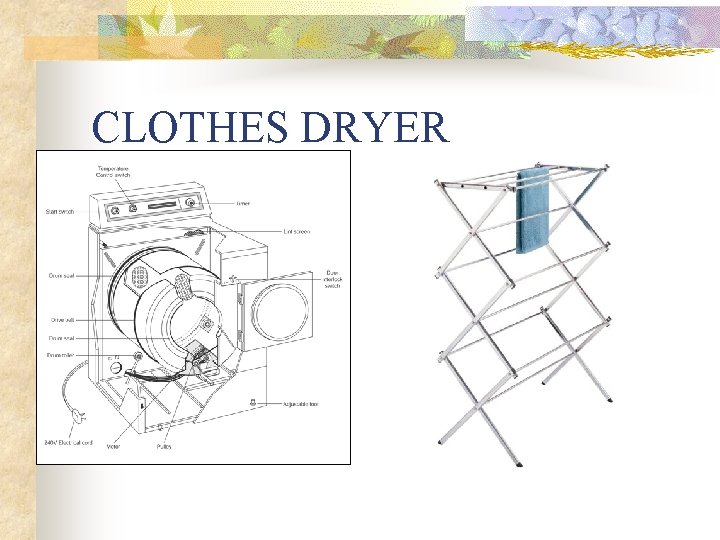
CLOTHES DRYERS A dryer evaporates water from clothes and minimizes wrinkling by tumbling the clothes. ØWater evaporation requires large amounts of heat. ØDon’t over dry clothes! ØDry clothes outside on clothesline whenever possible. ØVacuum lint from motor housing 3 -4 times per year.
CLOTHES DRYER
DISHWASHERS Dishwashers use less hot water than washing dishes by hand, but requires the water to be 20 degrees F hotter. ØBuy a dishwasher with an energy saving switch. ØWash only full loads during off-peak hours. ØClean filter screen regularly. ØFollow maintenance instructions.
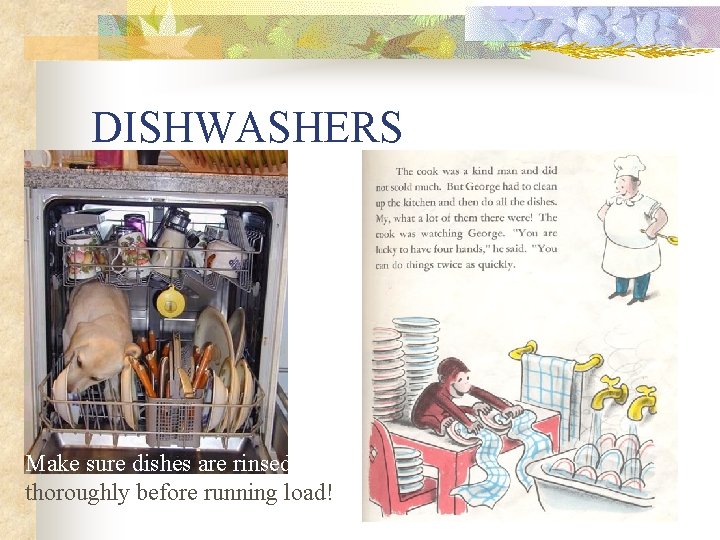
DISHWASHERS Make sure dishes are rinsed thoroughly before running load!
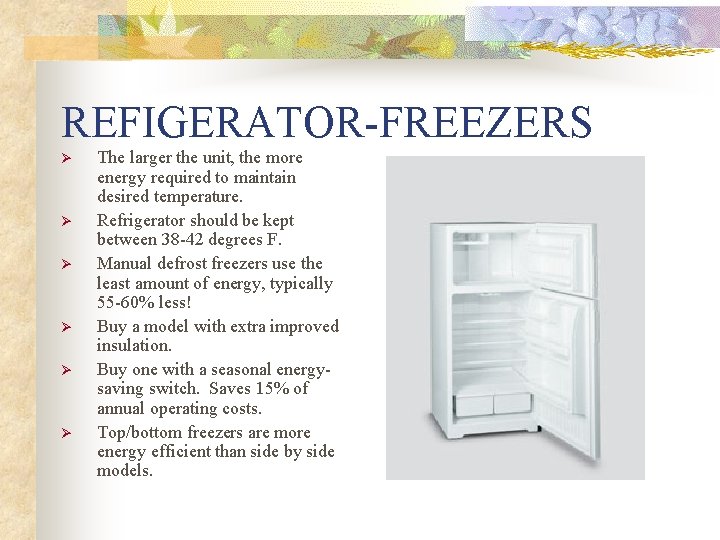
REFIGERATOR-FREEZERS Ø Ø Ø The larger the unit, the more energy required to maintain desired temperature. Refrigerator should be kept between 38 -42 degrees F. Manual defrost freezers use the least amount of energy, typically 55 -60% less! Buy a model with extra improved insulation. Buy one with a seasonal energysaving switch. Saves 15% of annual operating costs. Top/bottom freezers are more energy efficient than side by side models.
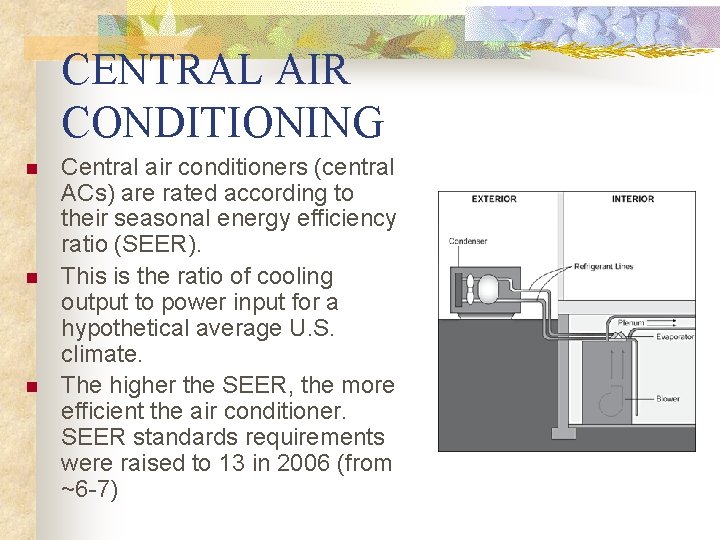
CENTRAL AIR CONDITIONING n n n Central air conditioners (central ACs) are rated according to their seasonal energy efficiency ratio (SEER). This is the ratio of cooling output to power input for a hypothetical average U. S. climate. The higher the SEER, the more efficient the air conditioner. SEER standards requirements were raised to 13 in 2006 (from ~6 -7)
WHAT CAN YOU DO AT HOME 1. Look for Energy Stars labels. 2. Turn off the lights when you leave a room. 3. Buy compact fluorescent light bulbs. 4. Shut doors behind you so that heat does not escape. 5. Seal windows and doors to prevent air drafts. 6. Make sure your refrigerator is an energy star product because it uses the MOST electricity out of all appliances. 7. Use toaster oven or microwave instead of oven when possible.
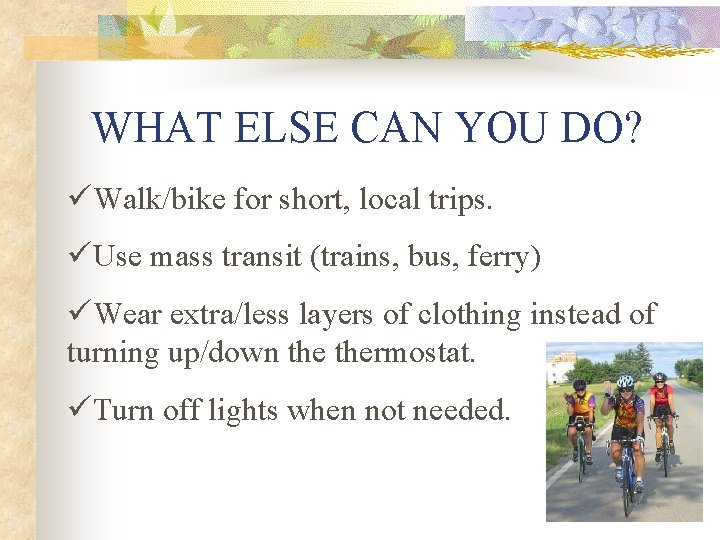
WHAT ELSE CAN YOU DO? üWalk/bike for short, local trips. üUse mass transit (trains, bus, ferry) üWear extra/less layers of clothing instead of turning up/down thermostat. üTurn off lights when not needed.
REDUCING ENERGY WASTE IS IMPORTANT BECAUSE… üDecreases rate at which fossil fuels become economically depleted and allows extended time to phase in renewable energy resources. üDecreases dependency on foreign oil resources (probably not by drilling in ANWR) üReduces local and global environmental damage. üQuickest and cheapest way to slow projected global warming. üImproves competitiveness in the International Marketplace.
Ways to improve energy efficiency üPower Utilities are the largest industry in USA – “regulated monopolies” – most utility companies make money by increasing the demand for electricity üApproximately 20 Utility Companies in the USA are promoting the “Negawatt Revolution” – utilities give customers cash rebates for improving energy efficiency in their houses üONG – rebates for installing gas dryers/water heaters/heating systems üOG&E – “Smart Hours” to shift energy consumption way from 2 -7 pm
SAVING ENERGY IN TRANSPORTATION ØIncrease fuel efficiency in motor vehicles - in USA, fuel efficiency has decreased by 5% in the last 15 years Ø 30 hybrid/electric models available at the beginning of 2011 in US – Toyota Prius is the most well-known, has the largest market share ØProblem: Little interest in consumer market because of fuel subsidies that generally promote waste and prohibit conservation interest.
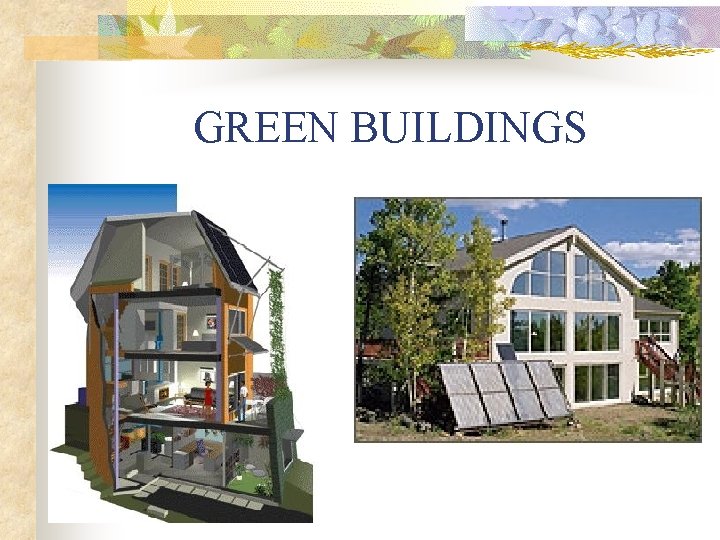
GREEN BUILDINGS SAVE ENERGY Focus is on heating, cooling and lighting üSouth facing – maximize angle of insolation to capture solar energy (passive solar heating). üEnergy-efficient lighting (passive lighting through southfacing windows and skylights) üSuperinsulation & high efficiency natural gas burners. PROBLEM: air tight buildings negatively impact indoor air quality üLEED is “nationally recognized benchmark for green building”
GREEN BUILDINGS