
Energy efficiency in public sector buildings in Bosnia
Energy efficiency in public sector buildings in Bosnia and Herzegovina Sanjin Avdic UNDP CO Bi. H
Overview • The Context • The Green Growth Model • The Bosnian model used for public sector buildings (participation / involvement & stepping out) • Conclusion
The Context „We know how geothermal energy works. We know what it takes to build cars with better mileage. We know how to insulate homes or how to put solar panels on the roof. The question is whether we have the guts to redirect the flow of money. . . “ - Daniele Ganser
The Context „The simple act of retrofitting these buildings to make them more energy efficient – insulation, new windows and doors, roofing, sealing leaks, modernizing heating and cooling equipment - is one of the fastest, easiest and cheapest things we can do to put Americans back to work while saving families money and reducing harmful emissions. “ - Barack Obama
The Context • In CC and PCC countries it is all about two things • . . . Decision to redirect the flow of money – due to low energy and water costs (average) • . . . Opportunity to generate employment – due to relatively high unemployment
The Context • We know how to increase energy efficiency (EU directive / targets) • We know how to use renewable energy (EU directive / targets) • Fastest, easiest and cheapest option to generate employment • Saving money • Reducing emissions (EU directive targets) The question is whether we have the guts to redirect the flow of money?
The Context • Why increase the energy efficiency / utilize renewable energy? 1. Economic savings 2. Environment protection 3. Climate change mitigation • The primary objectives
The Context • Why increase the energy efficiency / utilize renewable energy in SEE? 1. Employment 2. Entrepreneurial development 3. Economic development • Parallel aims through the achievement of objectives • Very importnat factors for CC and PCC governments
The Context • Do we have the guts to redirect the flow of money? 1. Employment 2. Entrepreneurial development 3. Economic development • Parallel aims through the achievement of objectives • Very importnat factors for CC and PCC governments
The Context • Do we have the guts to redirect the flow of money? • Transformation from subsidized energy / energy carriers to subsidize measures for increasing energy efficiency and use of renewable energy • Creating an favorable environment for investment in EE and RES • Why? • Energy efficiency / RES = new entrepreneurial economy branches • Energy efficiency / RES = Employment • How. . . ?
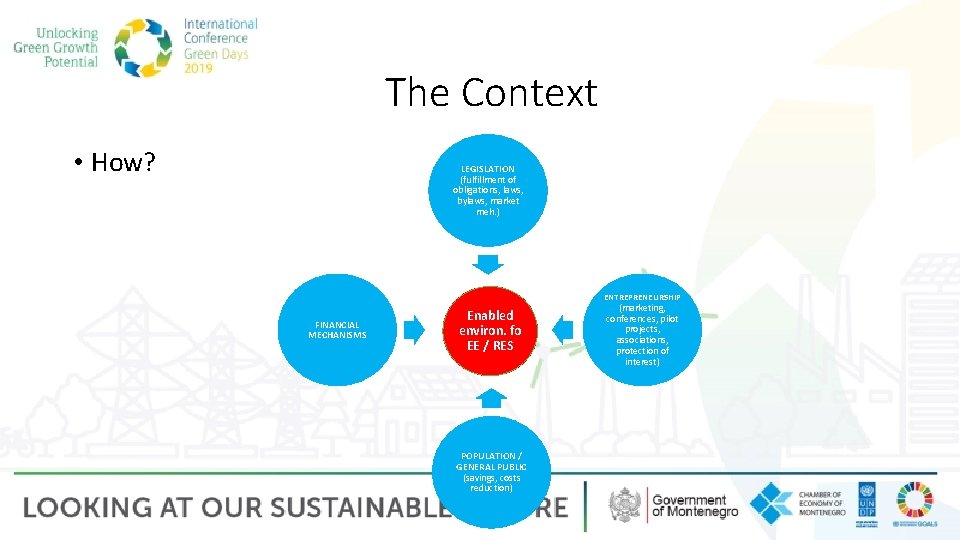
The Context • How? LEGISLATION (fulfillment of obligations, laws, bylaws, market meh. ) ENTREPRENEURSHIP FINANCIAL MECHANISMS Enabled environ. fo EE / RES POPULATION / GENERAL PUBLIC (savings, costs reduction) (marketing, conferences, pilot projects, associations, protection of interest)
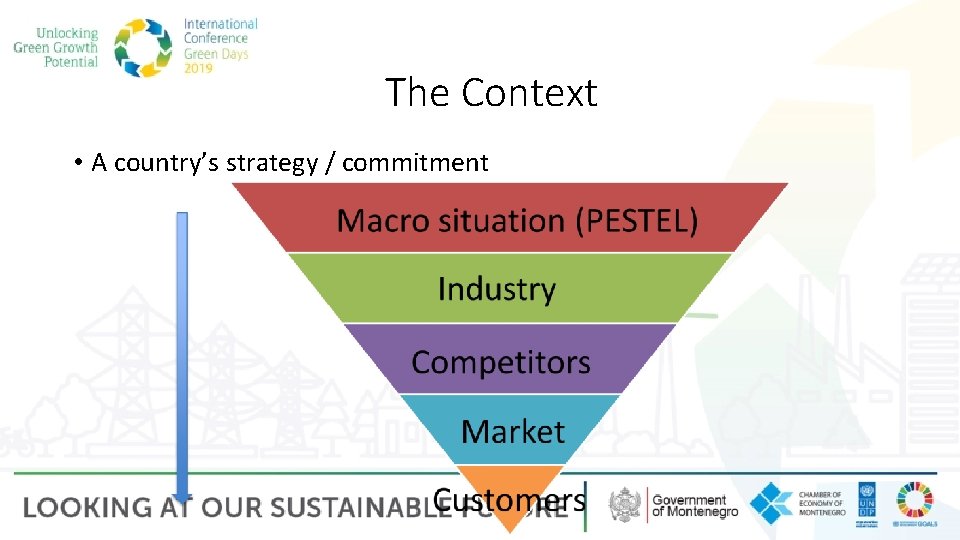
The Context • A country’s strategy / commitment
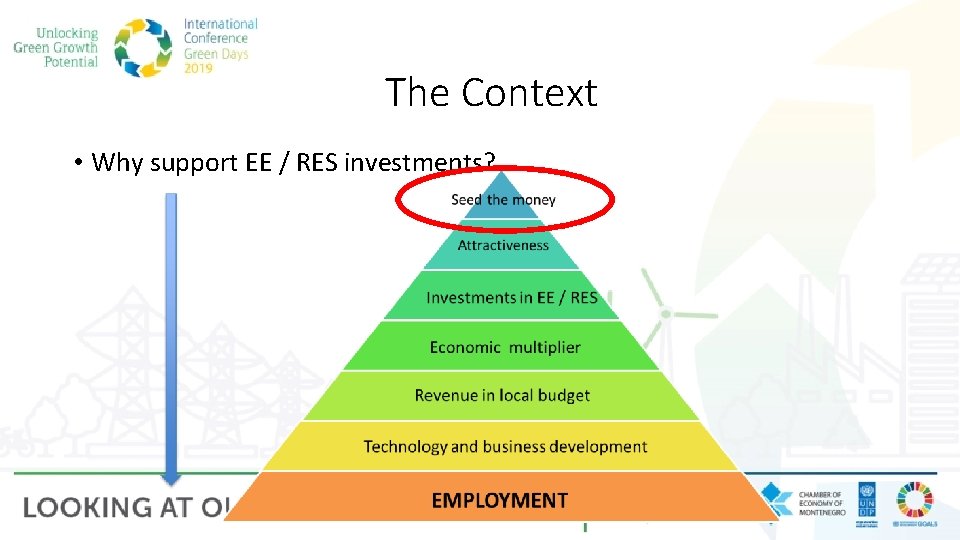
The Context • Why support EE / RES investments?

The Green Growth Model • MODEL ON GENERATION OF NEW EMPLOYMENT IN CC & PCC INCREASING EE ENERGY COST REDUCTION INCREASE INVESTMENTS / Market mechanisms DEVELOPMENT OF NEW PROFESSIONS INCREASING PURCHASING POWER DEVELOPMENT OF EXISTING PROFESSIONS MARKET DEVELOPMENT ECONOMIC DEVELOPMENT
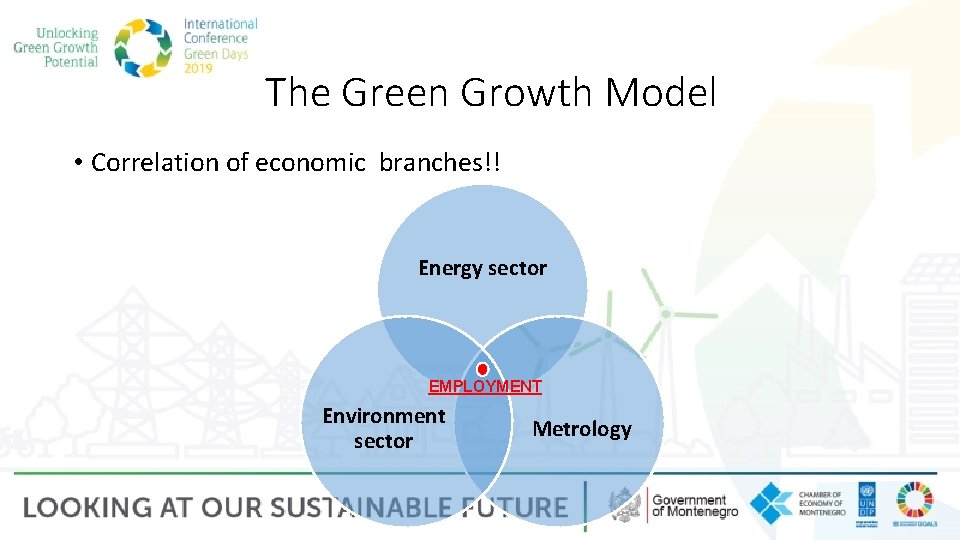
The Green Growth Model • Correlation of economic branches!! Energy sector EMPLOYMENT Environment sector Metrology
The Green Growth Model • High energy conservation potential due to high inefficiency (residential and nonresidential sector, industry, services) • In most countries there is high EE and renewable energy utilization potential However, • Low energy prices (utilities) • Cross-subsidizing • Relative low motivation for EE (private sector/SMEs are exception) • EE/RES legislation is a process • The EE/RES investing environment is in early stage • (relative high) interest rates from commercial FI
Energy markets & energy related context 2 nd however, • Energy prices will raise • Effects on financial indicators (NPV, IRR) of energy projects • Motivation to save energy, utilize renewables will raise • The investing environment (financial mechanisms) has to follow those processes e. g. Establishment of local supporting financial mechanism • Status of EE/RES on the political agenda very important (does the country want to deal with it in a strategic manner? )
EU Directives and its effects • EED • EPBD • RES related directives • LCP directive • ETS. . . • Beside revenue generation, emission reduction, reinvesting possibilities - employment generation very important to local gover.
The Green Economic Development project
The Green Economic Development project • • Project duration: 2014 – 2020 (1 st and 2 nd phase) Project budget: 22 m € Government of Sweden support: more than 10 m € Environmental Funds in Bi. H, Cantons, end-users, UNDP: more than 12 m € • Key goals: i. Develop and adopt self-sustainable financial mechanism for green economic growth (through EE and RE project financing) ii. Achieve budget cost savings & Generate employment of domestic workforce iii. Increase public awareness and understanding of human development as a result of RE and EE project benefits
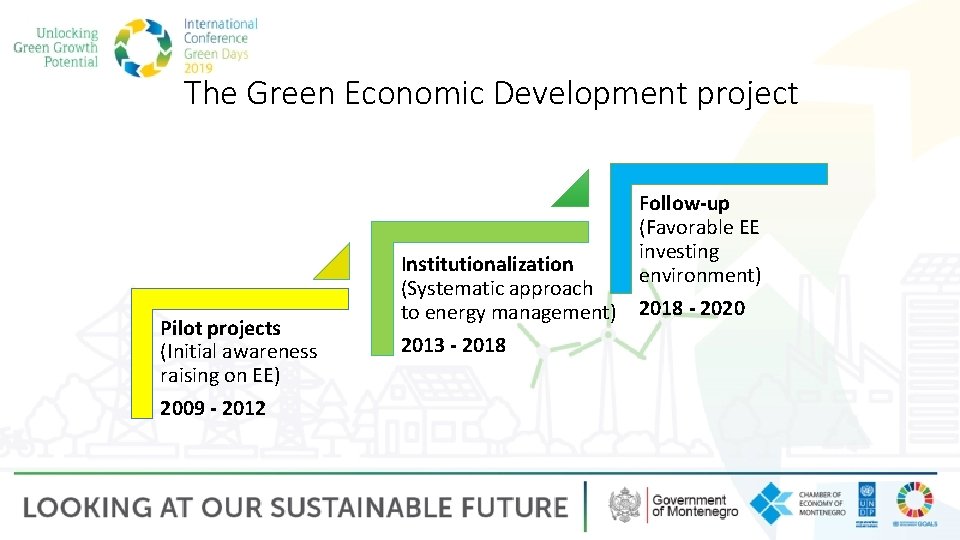
The Green Economic Development project Pilot projects (Initial awareness raising on EE) 2009 - 2012 Institutionalization (Systematic approach to energy management) 2013 - 2018 Follow-up (Favorable EE investing environment) 2018 - 2020
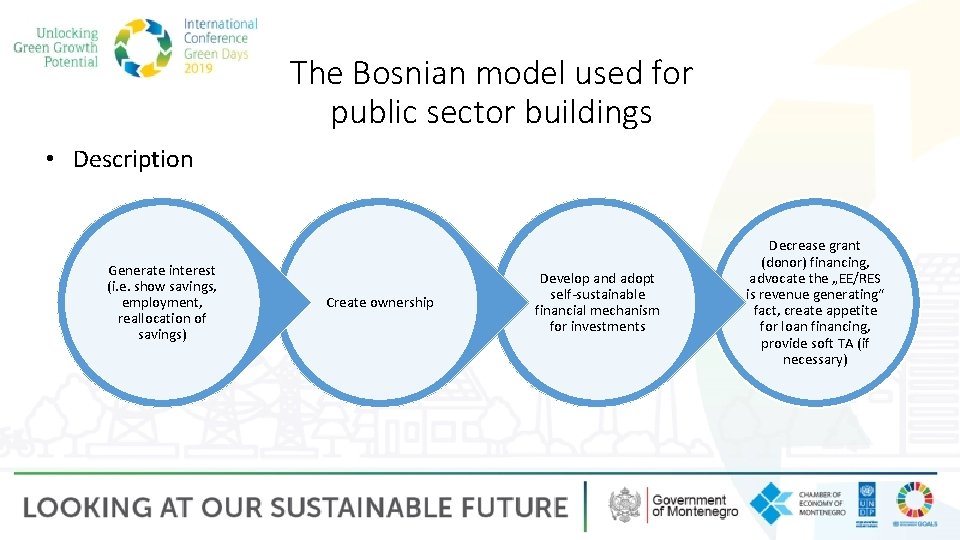
The Bosnian model used for public sector buildings • Description Generate interest (i. e. show savings, employment, reallocation of savings) Create ownership Develop and adopt self-sustainable financial mechanism for investments Decrease grant (donor) financing, advocate the „EE/RES is revenue generating“ fact, create appetite for loan financing, provide soft TA (if necessary)
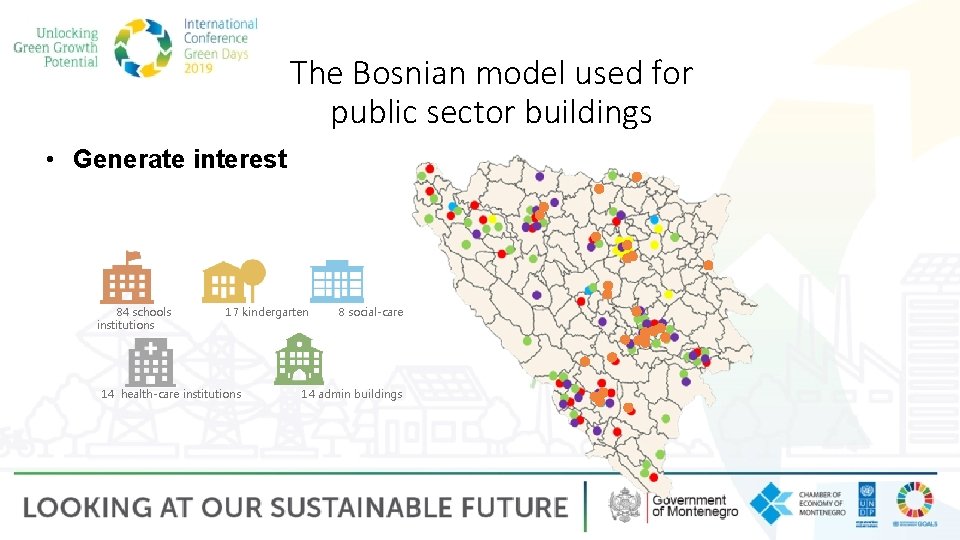
The Bosnian model used for public sector buildings • Generate interest 84 schools institutions 17 kindergarten 14 health-care institutions 8 social-care 14 admin buildings
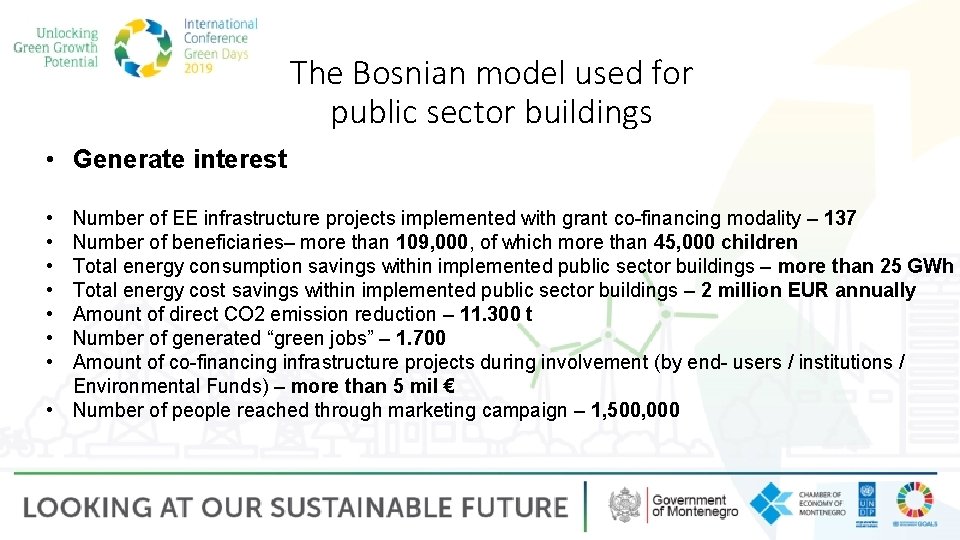
The Bosnian model used for public sector buildings • Generate interest • • Number of EE infrastructure projects implemented with grant co-financing modality – 137 Number of beneficiaries– more than 109, 000, of which more than 45, 000 children Total energy consumption savings within implemented public sector buildings – more than 25 GWh Total energy cost savings within implemented public sector buildings – 2 million EUR annually Amount of direct CO 2 emission reduction – 11. 300 t Number of generated “green jobs” – 1. 700 Amount of co-financing infrastructure projects during involvement (by end- users / institutions / Environmental Funds) – more than 5 mil € • Number of people reached through marketing campaign – 1, 500, 000
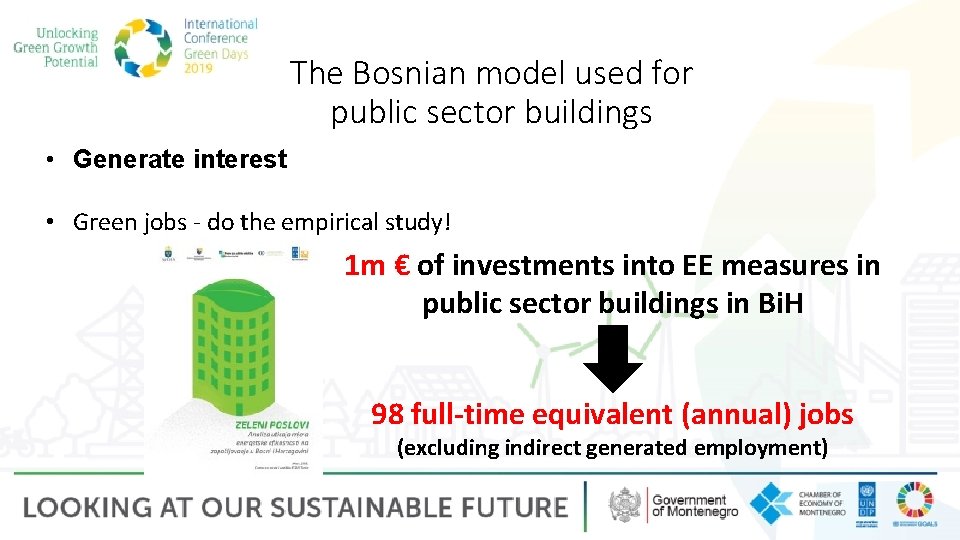
The Bosnian model used for public sector buildings • Generate interest • Green jobs - do the empirical study! 1 m € of investments into EE measures in public sector buildings in Bi. H 98 full-time equivalent (annual) jobs (excluding indirect generated employment)
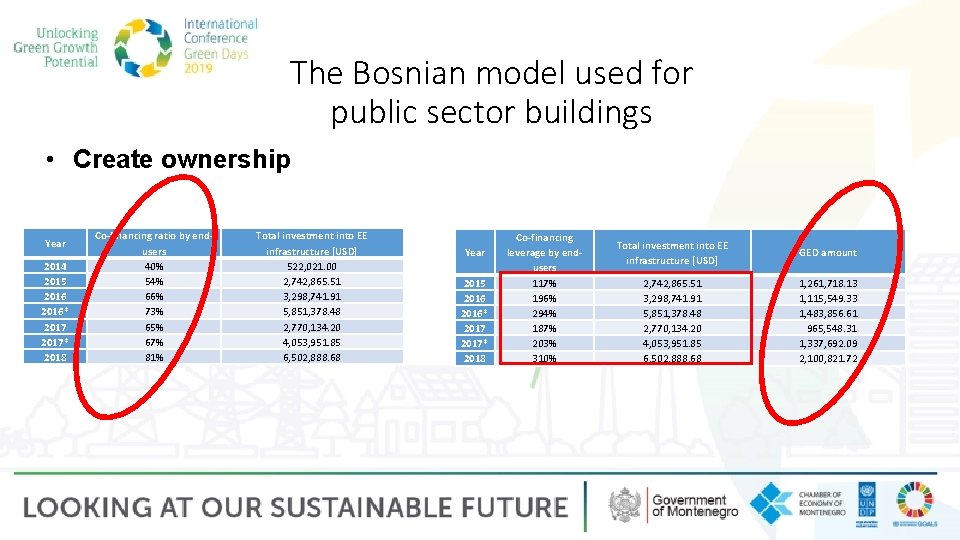
The Bosnian model used for public sector buildings • Create ownership Year 2014 2015 2016* 2017* 2018 Co-financing ratio by endusers 40% 54% 66% 73% 65% 67% 81% Total investment into EE infrastructure [USD] 522, 021. 00 2, 742, 865. 51 3, 298, 741. 91 5, 851, 378. 48 2, 770, 134. 20 4, 053, 951. 85 6, 502, 888. 68 Year 2015 2016* 2017* 2018 Co-financing leverage by endusers 117% 196% 294% 187% 203% 310% Total investment into EE infrastructure [USD] GED amount 2, 742, 865. 51 3, 298, 741. 91 5, 851, 378. 48 2, 770, 134. 20 4, 053, 951. 85 6, 502, 888. 68 1, 261, 718. 13 1, 115, 549. 33 1, 483, 856. 61 965, 548. 31 1, 337, 692. 09 2, 100, 821. 72
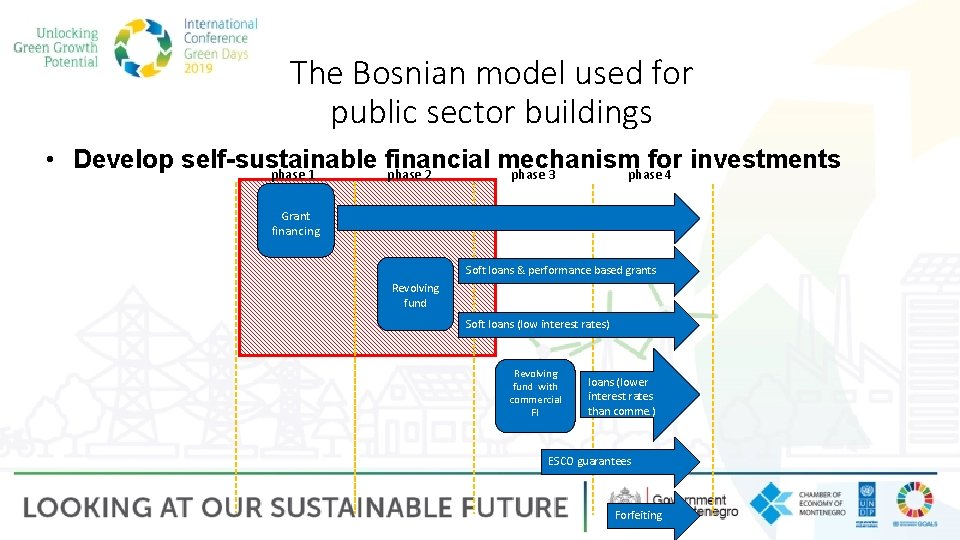
The Bosnian model used for public sector buildings • Develop self-sustainable financial mechanism for investments phase 1 phase 2 phase 3 phase 4 Grant financing Soft loans & performance based grants Revolving fund Soft loans (low interest rates) Revolving fund with commercial FI loans (lower interest rates than comme. ) ESCO guarantees Forfeiting
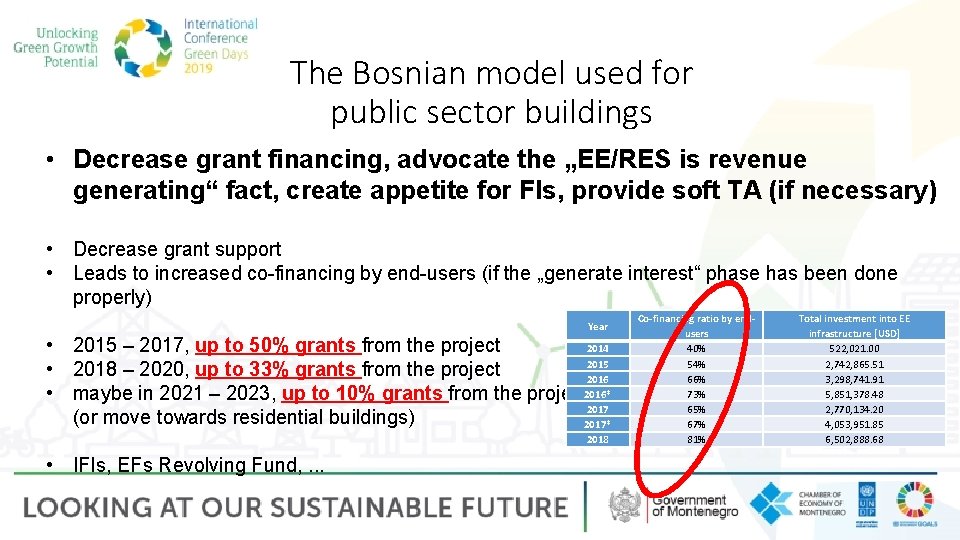
The Bosnian model used for public sector buildings • Decrease grant financing, advocate the „EE/RES is revenue generating“ fact, create appetite for FIs, provide soft TA (if necessary) • Decrease grant support • Leads to increased co-financing by end-users (if the „generate interest“ phase has been done properly) Year • 2015 – 2017, up to 50% grants from the project 2014 2015 • 2018 – 2020, up to 33% grants from the project 2016 • maybe in 2021 – 2023, up to 10% grants from the project 2016* 2017 (or move towards residential buildings) 2017* 2018 • IFIs, EFs Revolving Fund, . . . Co-financing ratio by endusers 40% 54% 66% 73% 65% 67% 81% Total investment into EE infrastructure [USD] 522, 021. 00 2, 742, 865. 51 3, 298, 741. 91 5, 851, 378. 48 2, 770, 134. 20 4, 053, 951. 85 6, 502, 888. 68
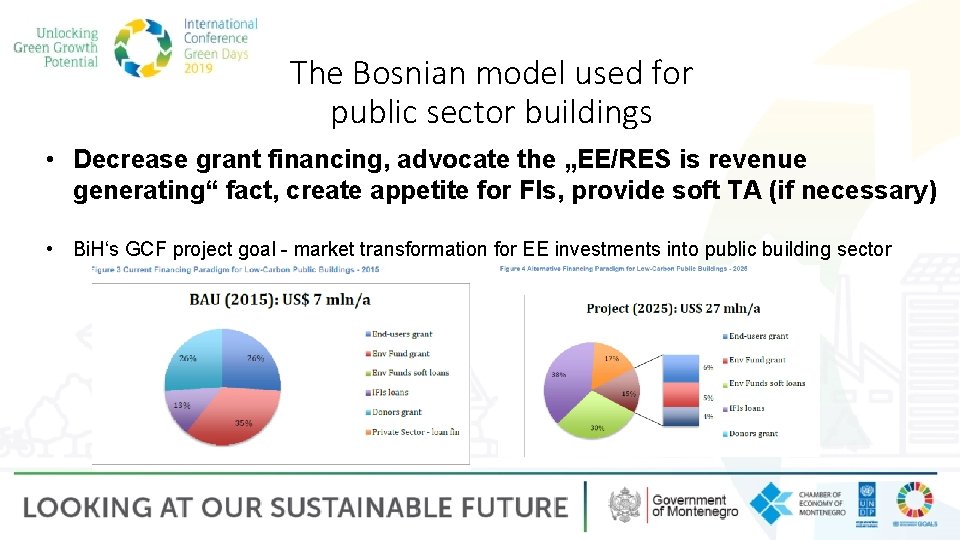
The Bosnian model used for public sector buildings • Decrease grant financing, advocate the „EE/RES is revenue generating“ fact, create appetite for FIs, provide soft TA (if necessary) • Bi. H‘s GCF project goal - market transformation for EE investments into public building sector
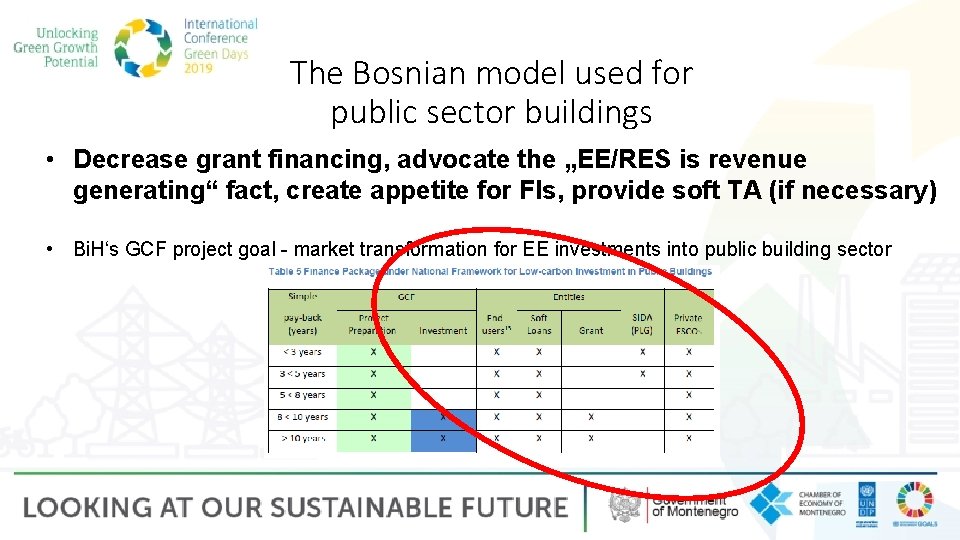
The Bosnian model used for public sector buildings • Decrease grant financing, advocate the „EE/RES is revenue generating“ fact, create appetite for FIs, provide soft TA (if necessary) • Bi. H‘s GCF project goal - market transformation for EE investments into public building sector
The Bosnian model used for public sector buildings • Description 1. 2. 3. 4. Generate interest (i. e. show savings, employment, reallocation of savings) Create ownership Develop and adopt self-sustainable financial mechanism for investments Decrease grant financing, advocate the „EE/RES is revenue generating“ fact, create appetite for FIs, provide soft TA (if necessary)
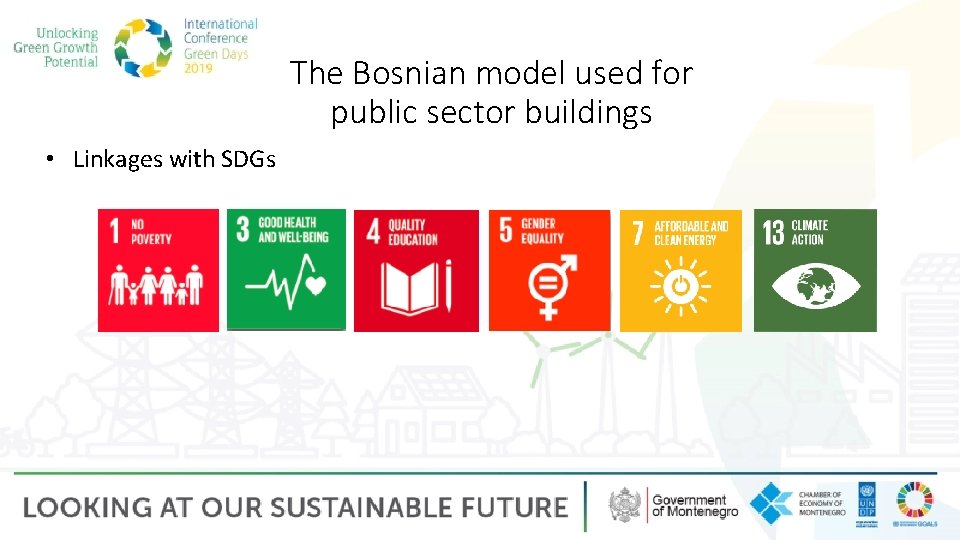
The Bosnian model used for public sector buildings • Linkages with SDGs
Conclusion • We know how to increase energy efficiency (EU directive / targets) • Fastest, easiest and cheapest option to generate employment • Ensure seed investments! • The question is whether we have the guts to redirect the flow of money
Thank you for your attention! Sanjin Avdic, Sector Leader, UNDP CO Bi. H
- Slides: 34