
Energy Efficiency in Jamaicas Building Code The Building
Energy Efficiency in Jamaica’s Building Code: The Building Envelope
1. Background to Jamaica’s Energy Efficiency Building Code • Buildings should all have Net-Zero Energy Consumption in 33 years time to avoid irreversible detrimental consequencies of Climatic Change, however Jamaica is yet to have a mandatory Energy-Efficiency Building code after 34 years. • The current Energy Code is voluntary and was developed in 1995 (22 years ago).
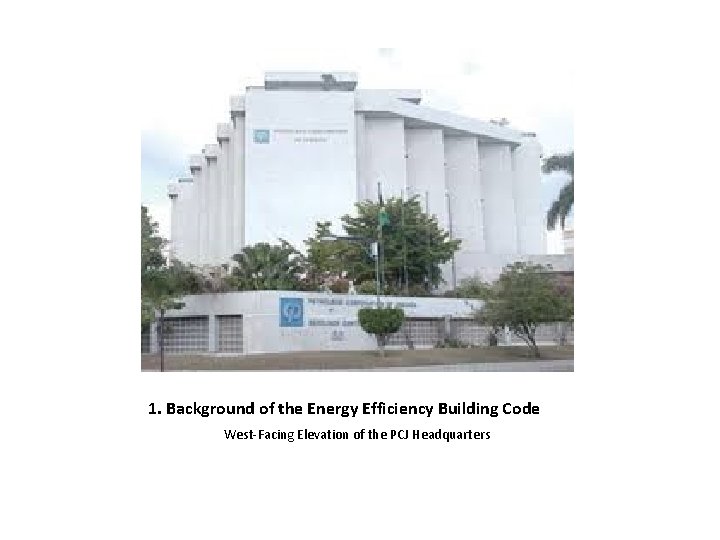
1. Background of the Energy Efficiency Building Code West-Facing Elevation of the PCJ Headquarters
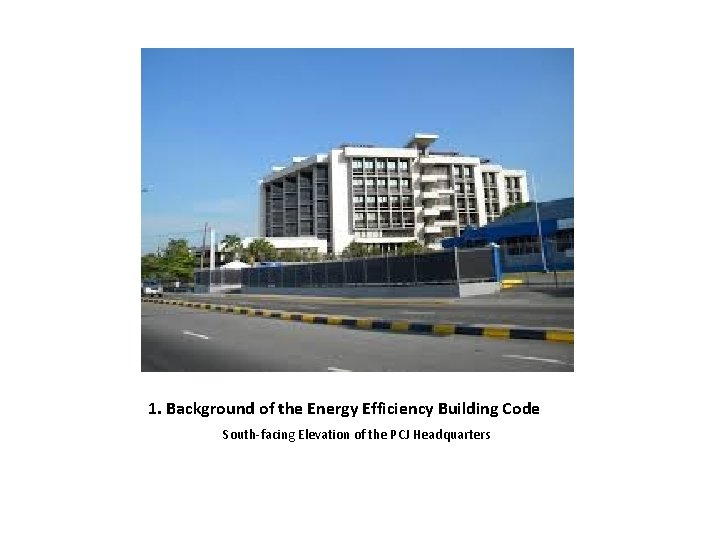
1. Background of the Energy Efficiency Building Code South-facing Elevation of the PCJ Headquarters
2. Assessing the Code To evaluate the effectiveness of the code, the actual energy consumption was determined for existing office buildings: • The average consumption for 17 large buildings was 23. 8 k. Whr/sq. ft. • The average consumption for 82 small office buildings was 20 k. Whr. sq. ft.
2. Assessing the Code • Comparable computer models were created; • Annual and peak electrical consumptions were divided into system loads; • System loads from highest to lowest were: Cooling Plant, Lighting, Fans, and Equipment; and • Peak cooling loads were also broken-down into components but there were differences between the large and small offices.
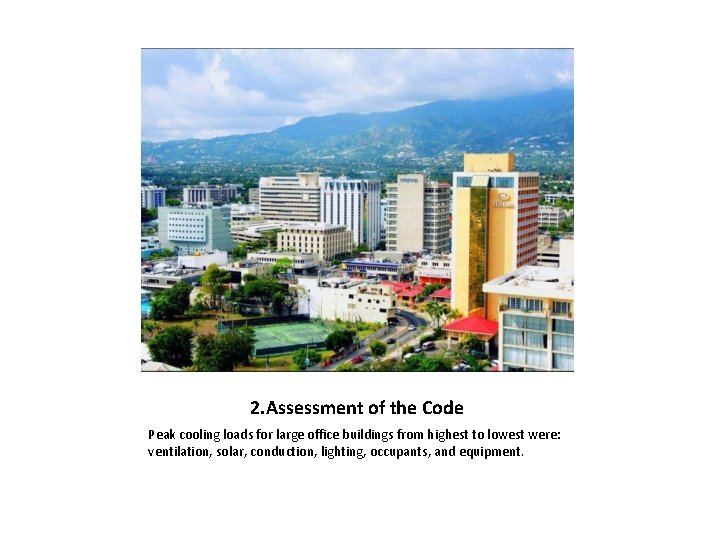
2. Assessment of the Code Peak cooling loads for large office buildings from highest to lowest were: ventilation, solar, conduction, lighting, occupants, and equipment.
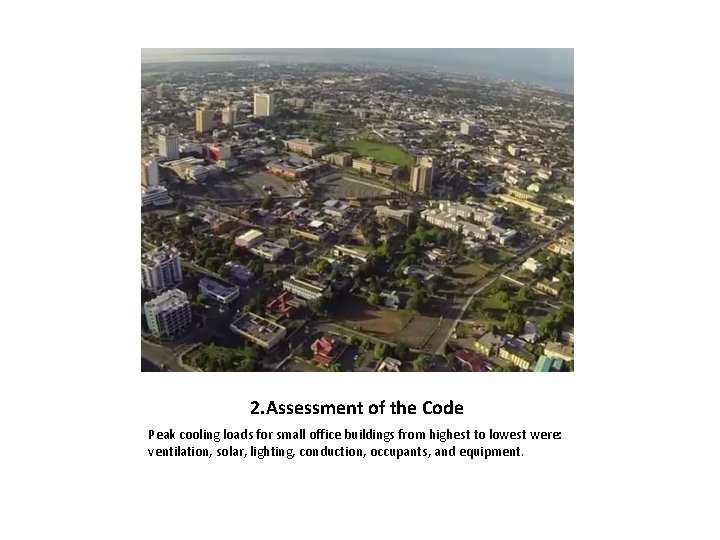
2. Assessment of the Code Peak cooling loads for small office buildings from highest to lowest were: ventilation, solar, lighting, conduction, occupants, and equipment.
2. Assessing the Code Changes were made to the buildings to comply with the code and the results were: • The energy consumption of the large office building was reduced by 30%; while • The energy consumption of the small office reduced by 36%.
2. Assessing the Code Changes were made to the base buildings to exceed code requirements, and the results were: • The energy consumption of the large building was reduced by 62%; while • The energy consumption of the small building reduced by 57%.
3. The Building Envelope The envelope comprises the external walls and roof of a building with any associated openings: • It cannot influence consumption of the equipment, but this is approximately 7% of annual consumption, and 9% of peak electrical consumption.
3. The Building Envelope • With regard to the cooling plant, it cannot affect occupant and equipment loads which are 12% for small buildings and 15% for large buildings; and • It can only influence lighting (whether directly or as a cooling load) by using daylight.
3. The Building Envelope To comply with the building code, the following changes were made to the envelope of the base building: • Insulation was added to the roof; • Special glasses and/or shading were used for windows; and • Walls were light-coloured so that they were very reflective

4. Conclusion • The Bureau of Standard’s deadline for comments on the mandatory energyefficiency building code ended last month; • That code is based on the 2009 International Building Code, which gets revised every 3 years and now has a green building component; and • A regional building code is presently being developed.
- Slides: 14