
Energy Definition Capacity to do work and transfer
- Slides: 25
Energy Ø Definition: Capacity to do “work” and transfer heat ØTypes: ØKinetic ØPotential
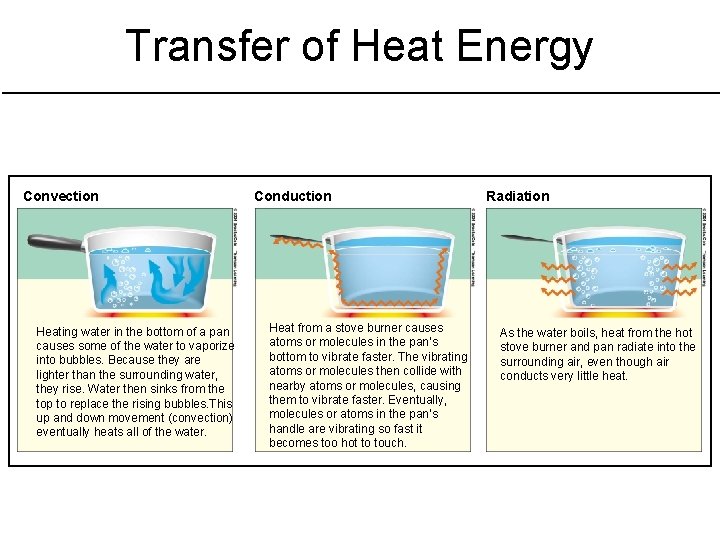
Transfer of Heat Energy Convection Heating water in the bottom of a pan causes some of the water to vaporize into bubbles. Because they are lighter than the surrounding water, they rise. Water then sinks from the top to replace the rising bubbles. This up and down movement (convection) eventually heats all of the water. Conduction Heat from a stove burner causes atoms or molecules in the pan’s bottom to vibrate faster. The vibrating atoms or molecules then collide with nearby atoms or molecules, causing them to vibrate faster. Eventually, molecules or atoms in the pan’s handle are vibrating so fast it becomes too hot to touch. Radiation As the water boils, heat from the hot stove burner and pan radiate into the surrounding air, even though air conducts very little heat.
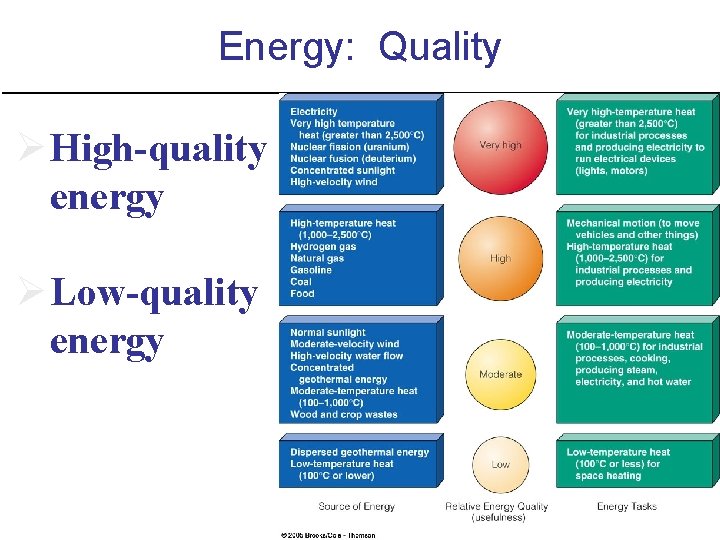
Energy: Quality Ø High-quality energy Ø Low-quality energy
Laws Governing Energy Changes First Law of Thermodynamics (Energy) Ø Energy is neither created nor destroyed Ø Energy only changes form Ø You can’t get something for nothing ENERGY IN = ENERGY OUT
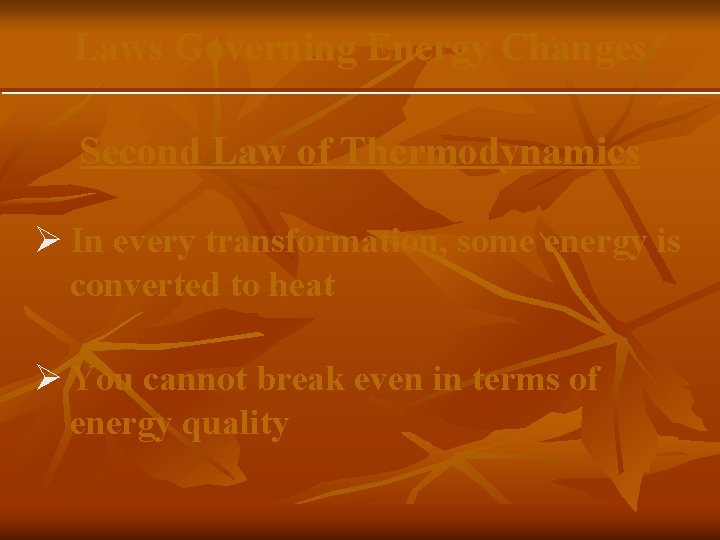
Laws Governing Energy Changes Second Law of Thermodynamics Ø In every transformation, some energy is converted to heat Ø You cannot break even in terms of energy quality
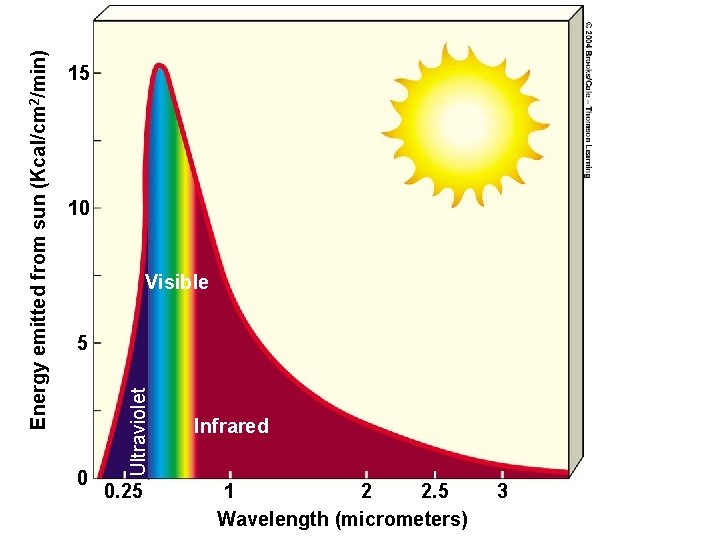
10 Visible 5 0 Ultraviolet Energy emitted from sun (Kcal/cm 2/min) 15 0. 25 Infrared 1 2 2. 5 Wavelength (micrometers) 3
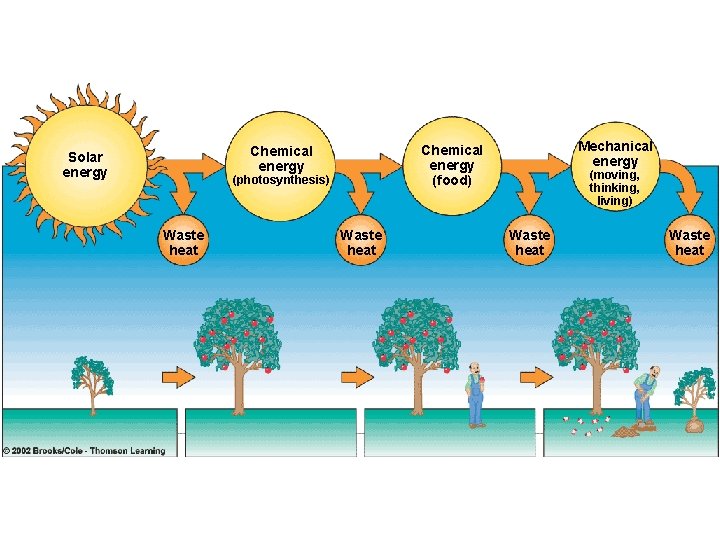
(photosynthesis) Waste heat Mechanical energy Chemical energy (food) Chemical energy Solar energy Waste heat (moving, thinking, living) Waste heat
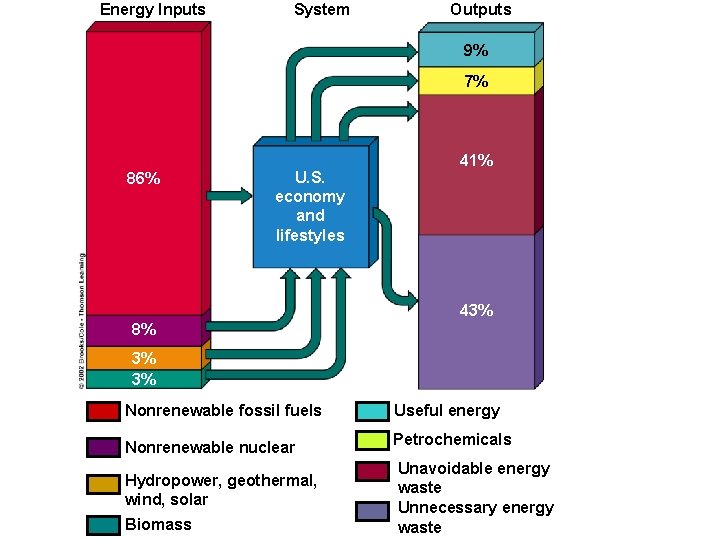
Energy Inputs System Outputs 9% 7% 86% U. S. economy and lifestyles 41% 43% 8% 3% 3% Nonrenewable fossil fuels Useful energy Nonrenewable nuclear Petrochemicals Hydropower, geothermal, wind, solar Unavoidable energy waste Unnecessary energy waste Biomass
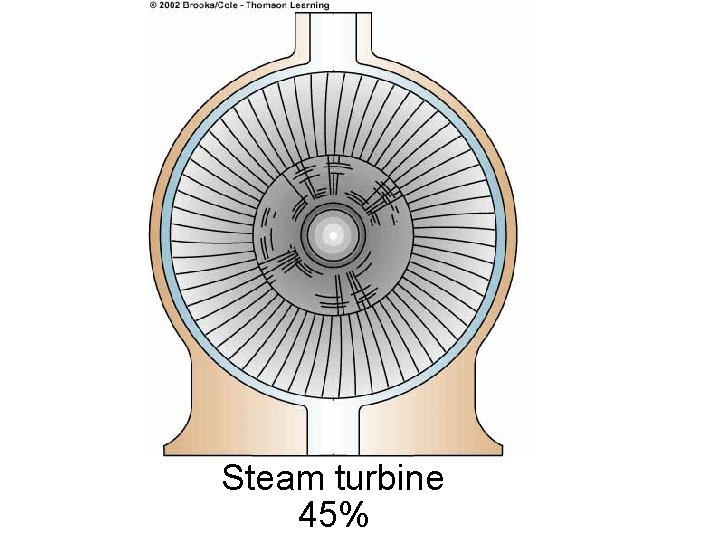
Steam turbine 45%
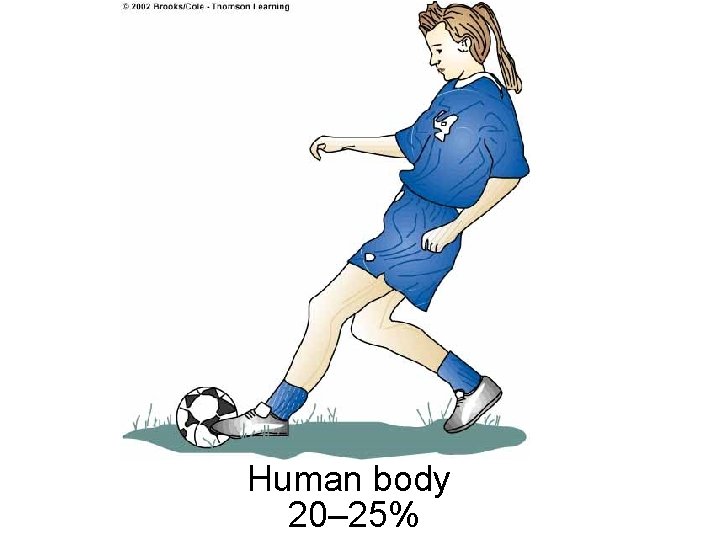
Human body 20– 25%
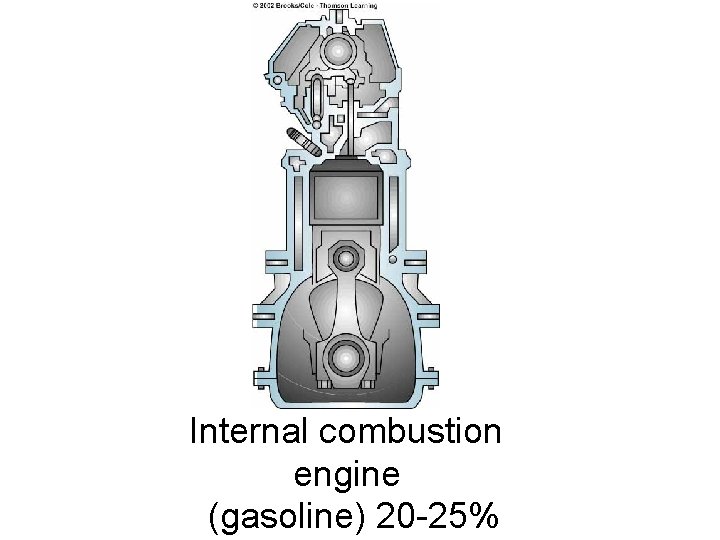
Internal combustion engine (gasoline) 20 -25%
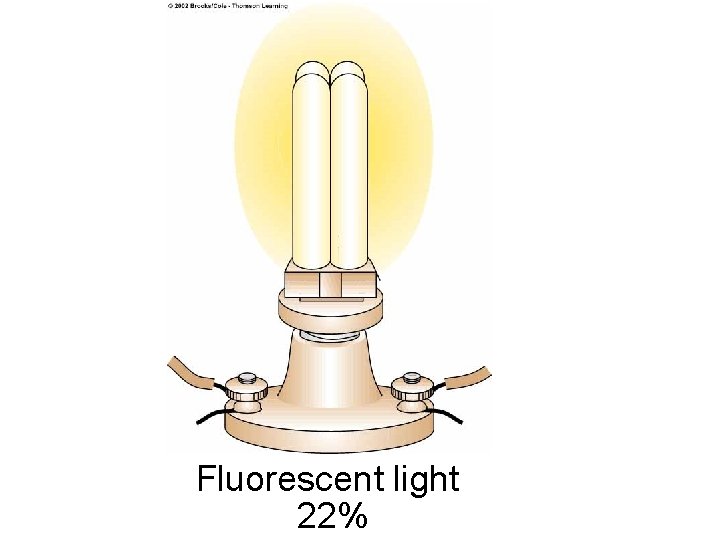
Fluorescent light 22%
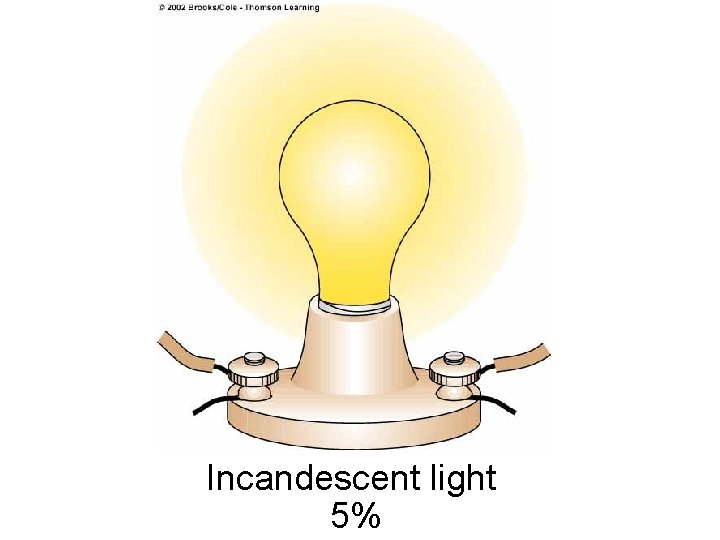
Incandescent light 5%
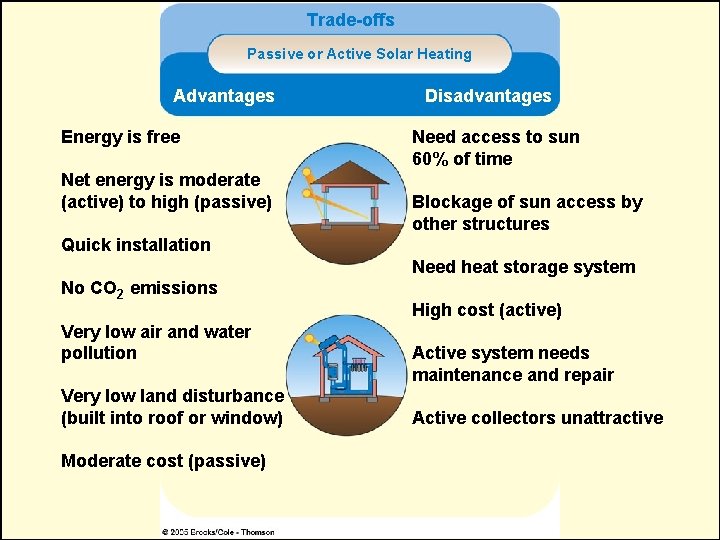
Trade-offs Passive or Active Solar Heating Advantages Energy is free Net energy is moderate (active) to high (passive) Disadvantages Need access to sun 60% of time Blockage of sun access by other structures Quick installation Need heat storage system No CO 2 emissions Very low air and water pollution Very low land disturbance (built into roof or window) Moderate cost (passive) High cost (active) Active system needs maintenance and repair Active collectors unattractive
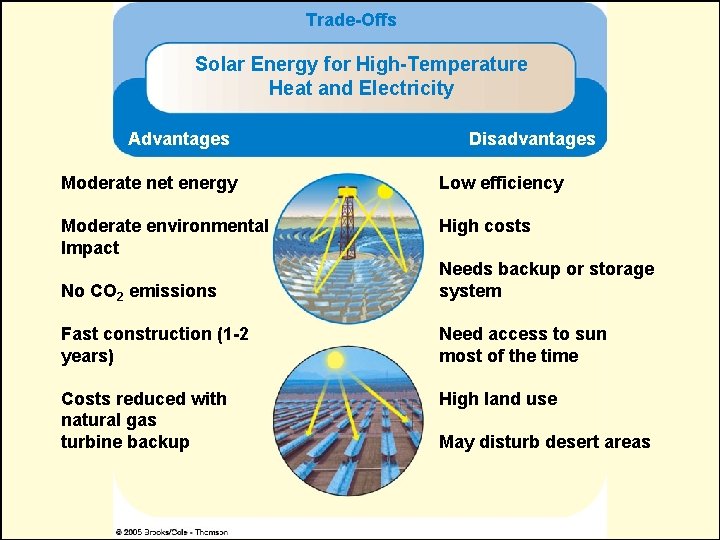
Trade-Offs Solar Energy for High-Temperature Heat and Electricity Advantages Disadvantages Moderate net energy Low efficiency Moderate environmental Impact High costs No CO 2 emissions Needs backup or storage system Fast construction (1 -2 years) Need access to sun most of the time Costs reduced with natural gas turbine backup High land use May disturb desert areas
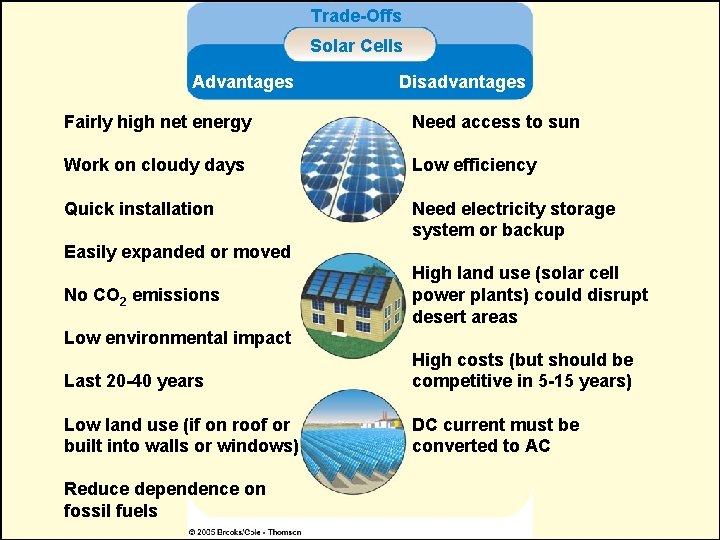
Trade-Offs Solar Cells Advantages Disadvantages Fairly high net energy Need access to sun Work on cloudy days Low efficiency Quick installation Need electricity storage system or backup Easily expanded or moved No CO 2 emissions High land use (solar cell power plants) could disrupt desert areas Low environmental impact Last 20 -40 years High costs (but should be competitive in 5 -15 years) Low land use (if on roof or built into walls or windows) DC current must be converted to AC Reduce dependence on fossil fuels
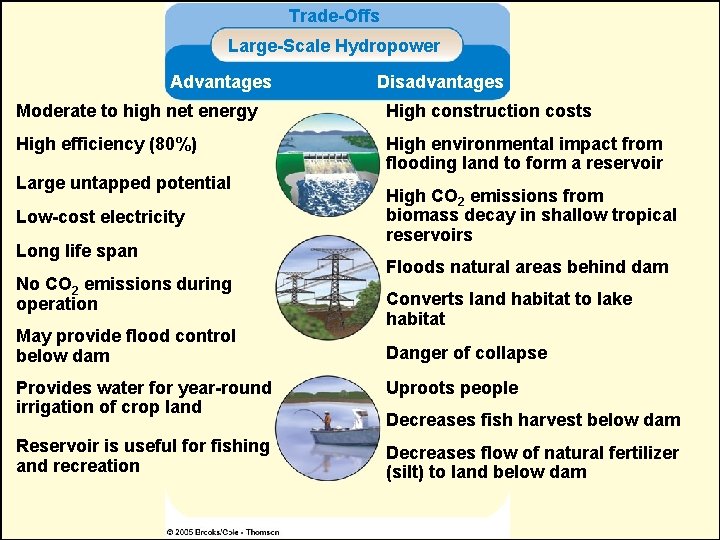
Trade-Offs Large-Scale Hydropower Advantages Disadvantages Moderate to high net energy High construction costs High efficiency (80%) High environmental impact from flooding land to form a reservoir Large untapped potential Low-cost electricity Long life span No CO 2 emissions during operation May provide flood control below dam High CO 2 emissions from biomass decay in shallow tropical reservoirs Floods natural areas behind dam Converts land habitat to lake habitat Danger of collapse Provides water for year-round irrigation of crop land Uproots people Reservoir is useful for fishing and recreation Decreases flow of natural fertilizer (silt) to land below dam Decreases fish harvest below dam
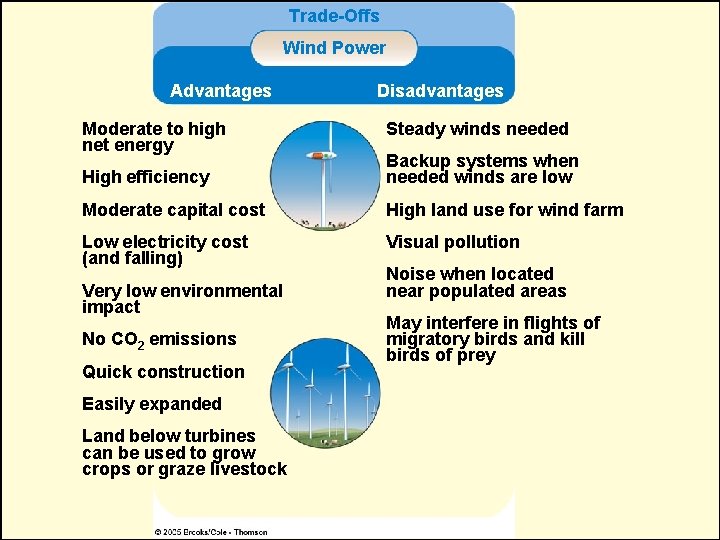
Trade-Offs Wind Power Advantages Moderate to high net energy Disadvantages Steady winds needed High efficiency Backup systems when needed winds are low Moderate capital cost High land use for wind farm Low electricity cost (and falling) Visual pollution Very low environmental impact No CO 2 emissions Quick construction Easily expanded Land below turbines can be used to grow crops or graze livestock Noise when located near populated areas May interfere in flights of migratory birds and kill birds of prey
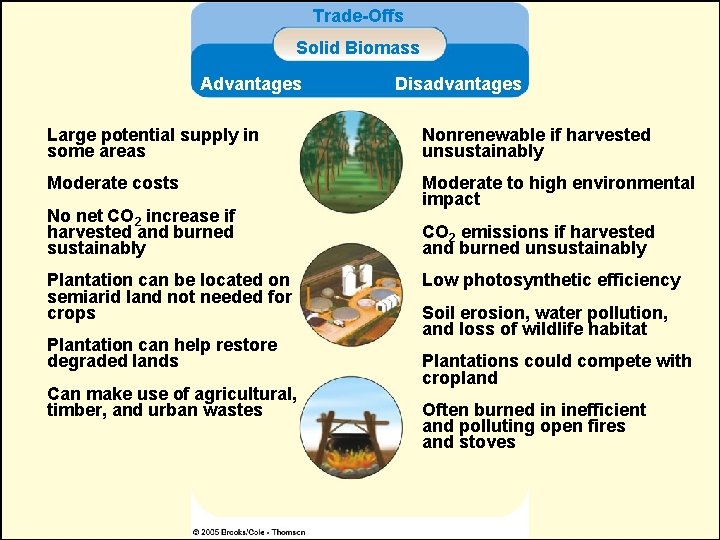
Trade-Offs Solid Biomass Advantages Disadvantages Large potential supply in some areas Nonrenewable if harvested unsustainably Moderate costs Moderate to high environmental impact No net CO 2 increase if harvested and burned sustainably Plantation can be located on semiarid land not needed for crops Plantation can help restore degraded lands Can make use of agricultural, timber, and urban wastes CO 2 emissions if harvested and burned unsustainably Low photosynthetic efficiency Soil erosion, water pollution, and loss of wildlife habitat Plantations could compete with cropland Often burned in inefficient and polluting open fires and stoves
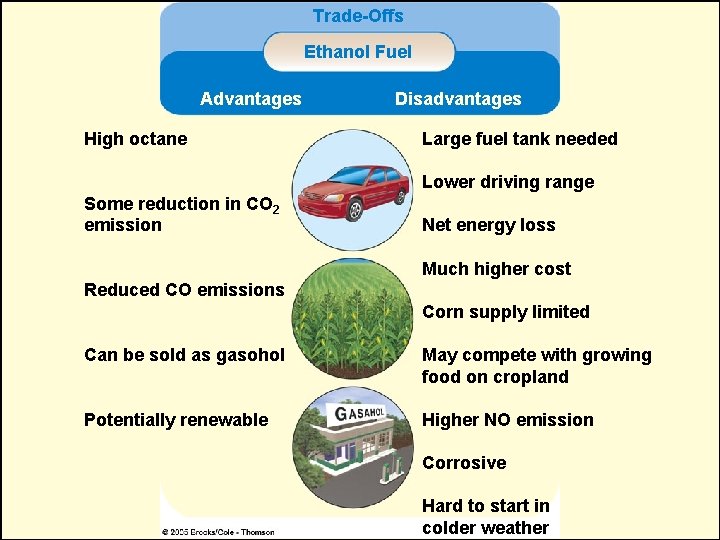
Trade-Offs Ethanol Fuel Advantages High octane Disadvantages Large fuel tank needed Lower driving range Some reduction in CO 2 emission Net energy loss Much higher cost Reduced CO emissions Corn supply limited Can be sold as gasohol May compete with growing food on cropland Potentially renewable Higher NO emission Corrosive Hard to start in colder weather
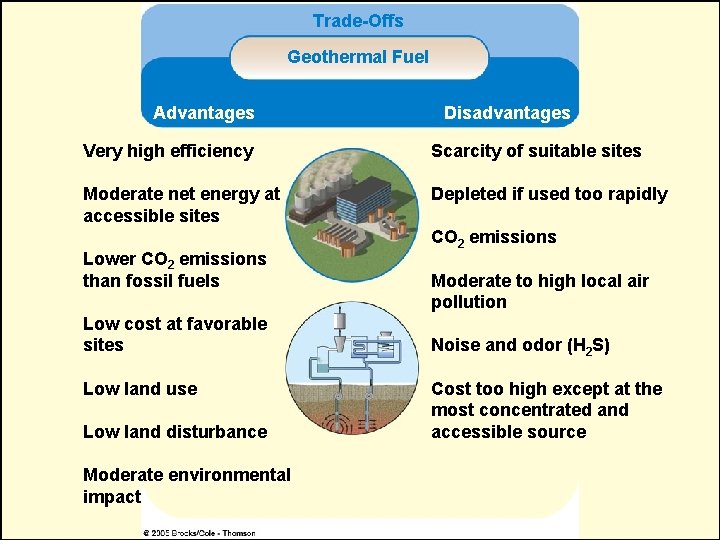
Trade-Offs Geothermal Fuel Advantages Disadvantages Very high efficiency Scarcity of suitable sites Moderate net energy at accessible sites Depleted if used too rapidly Lower CO 2 emissions than fossil fuels Low cost at favorable sites Low land use Low land disturbance Moderate environmental impact CO 2 emissions Moderate to high local air pollution Noise and odor (H 2 S) Cost too high except at the most concentrated and accessible source
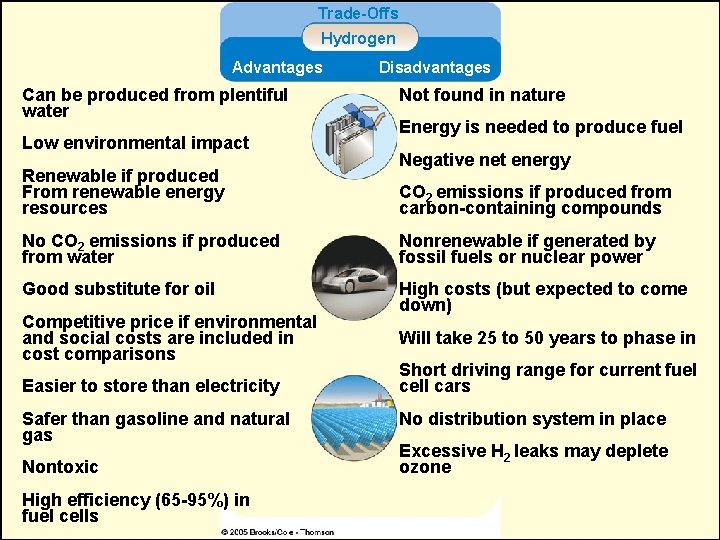
Trade-Offs Hydrogen Advantages Can be produced from plentiful water Low environmental impact Renewable if produced From renewable energy resources Disadvantages Not found in nature Energy is needed to produce fuel Negative net energy CO 2 emissions if produced from carbon-containing compounds No CO 2 emissions if produced from water Nonrenewable if generated by fossil fuels or nuclear power Good substitute for oil High costs (but expected to come down) Competitive price if environmental and social costs are included in cost comparisons Will take 25 to 50 years to phase in Easier to store than electricity Short driving range for current fuel cell cars Safer than gasoline and natural gas No distribution system in place Nontoxic High efficiency (65 -95%) in fuel cells Excessive H 2 leaks may deplete ozone
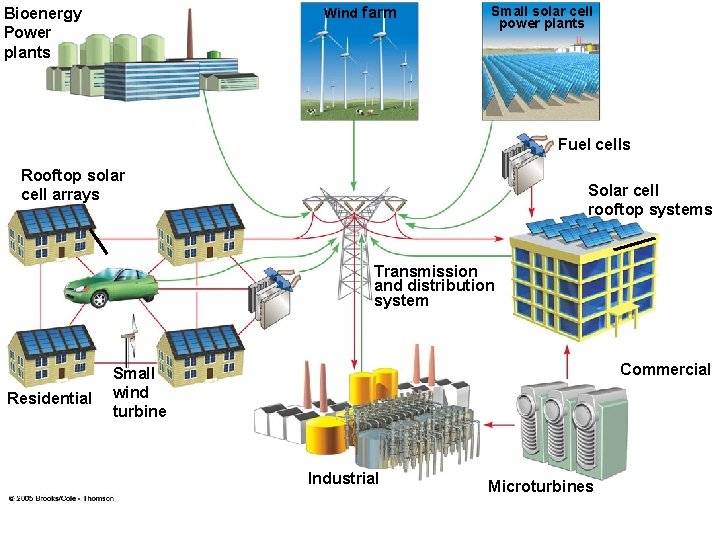
Wind farm Bioenergy Power plants Small solar cell power plants Fuel cells Rooftop solar cell arrays Solar cell rooftop systems Transmission and distribution system Residential Commercial Small wind turbine Industrial Microturbines
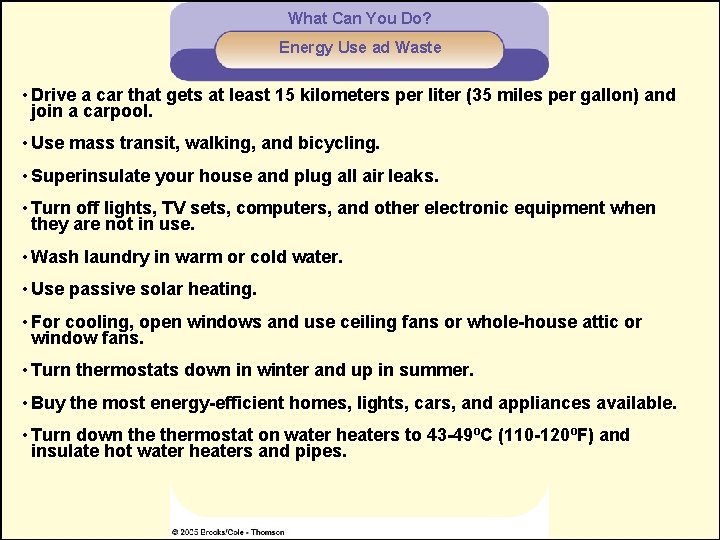
What Can You Do? Energy Use ad Waste • Drive a car that gets at least 15 kilometers per liter (35 miles per gallon) and join a carpool. • Use mass transit, walking, and bicycling. • Superinsulate your house and plug all air leaks. • Turn off lights, TV sets, computers, and other electronic equipment when they are not in use. • Wash laundry in warm or cold water. • Use passive solar heating. • For cooling, open windows and use ceiling fans or whole-house attic or window fans. • Turn thermostats down in winter and up in summer. • Buy the most energy-efficient homes, lights, cars, and appliances available. • Turn down thermostat on water heaters to 43 -49ºC (110 -120ºF) and insulate hot water heaters and pipes.
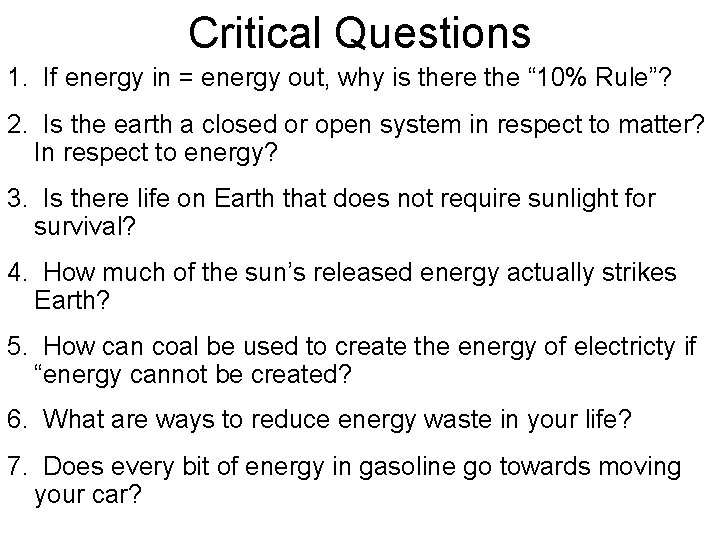
Critical Questions 1. If energy in = energy out, why is there the “ 10% Rule”? 2. Is the earth a closed or open system in respect to matter? In respect to energy? 3. Is there life on Earth that does not require sunlight for survival? 4. How much of the sun’s released energy actually strikes Earth? 5. How can coal be used to create the energy of electricty if “energy cannot be created? 6. What are ways to reduce energy waste in your life? 7. Does every bit of energy in gasoline go towards moving your car?