
Energy Code Update Key Points Adoption of the



- Slides: 20
Energy Code Update Key Points • Adoption of the new Energy Code will be impacting projects and specifications in Montana. • Newly adopted energy codes have slightly different requirements, so be aware! • Northern Rockies Agency does it’s utmost to help keep our partners on top of code requirements and developments for their projects.
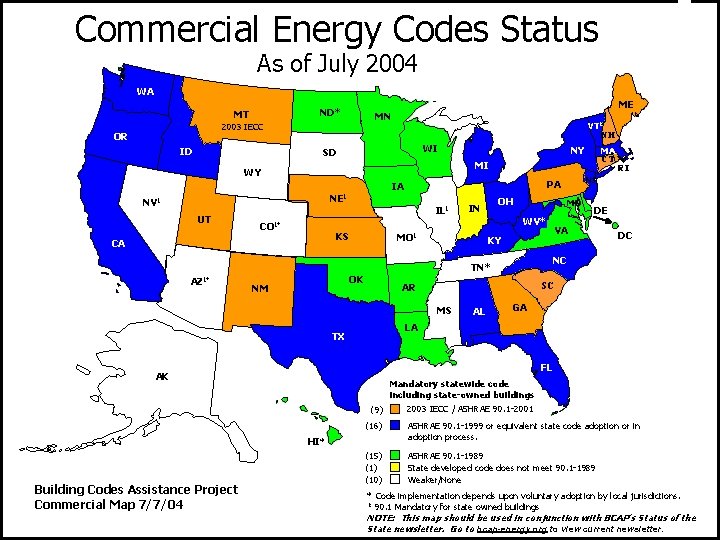
Commercial Energy Codes Status As of July 2004 WA ME ND* MT MN 2003 IECC OR ID VTt NH NH WI SD ILt COt* KS CA OH IN MD WV* MOt OK SC SC AR MS AL GA LA TX FL AK Mandatory statewide code including state-owned buildings (9) 2003 IECC / ASHRAE 90. 1 -2001 (16) ASHRAE 90. 1 -1999 or equivalent state code adoption or in adoption process. (15) (10) ASHRAE 90. 1 -1989 State developed code does not meet 90. 1 -1989 Weaker/None HI* Building Codes Assistance Project Commercial Map 7/7/04 DC NC TN* NM DE VA KY RI NJ PA IA NEt NVt AZt* MA CT CT MI WY UT NY * Code implementation depends upon voluntary adoption by local jurisdictions. t 90. 1 Mandatory for state owned buildings NOTE: This map should be used in conjunction with BCAP’s Status of the State newsletter. Go to bcap-energy. org to view current newsletter.
In December of 2004, Montana will begin the enforcement of the 2003 International Energy Conservation Code (2003 IECC). What is this going to mean to you?
Missoula will be enforcing the 2003 IECC as of Dec. 3, 2004
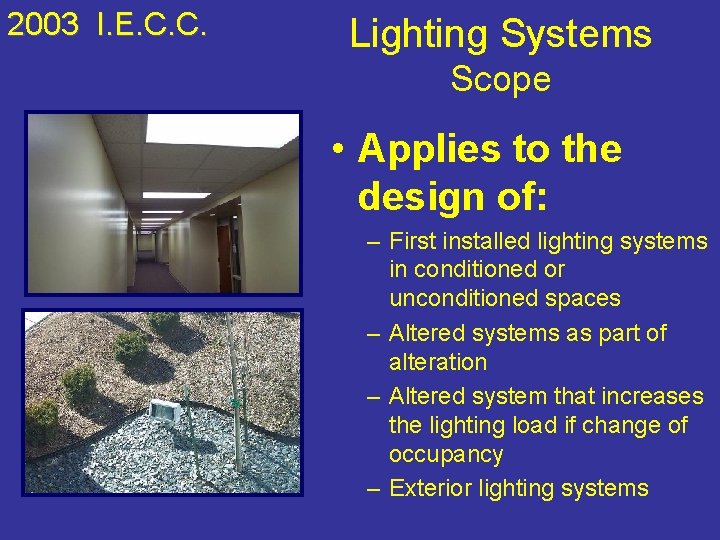
2003 I. E. C. C. Lighting Systems Scope • Applies to the design of: – First installed lighting systems in conditioned or unconditioned spaces – Altered systems as part of alteration – Altered system that increases the lighting load if change of occupancy – Exterior lighting systems
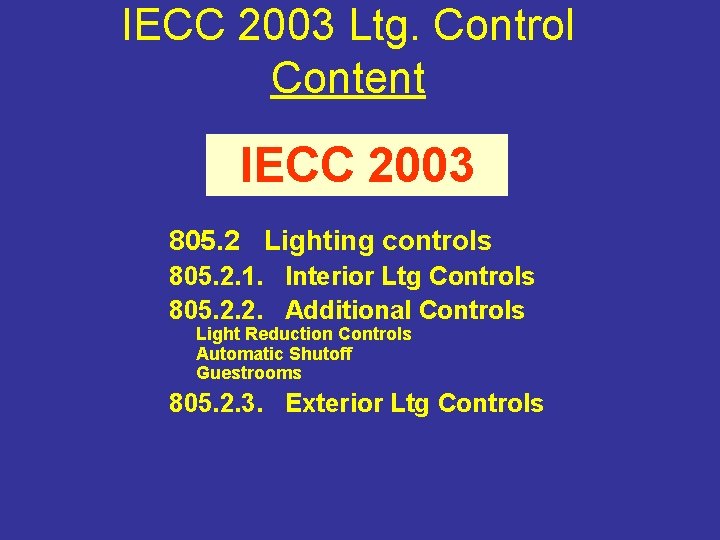
IECC 2003 Ltg. Control Content IECC 2003 805. 2 Lighting controls 805. 2. 1. Interior Ltg Controls 805. 2. 2. Additional Controls Light Reduction Controls Automatic Shutoff Guestrooms 805. 2. 3. Exterior Ltg Controls
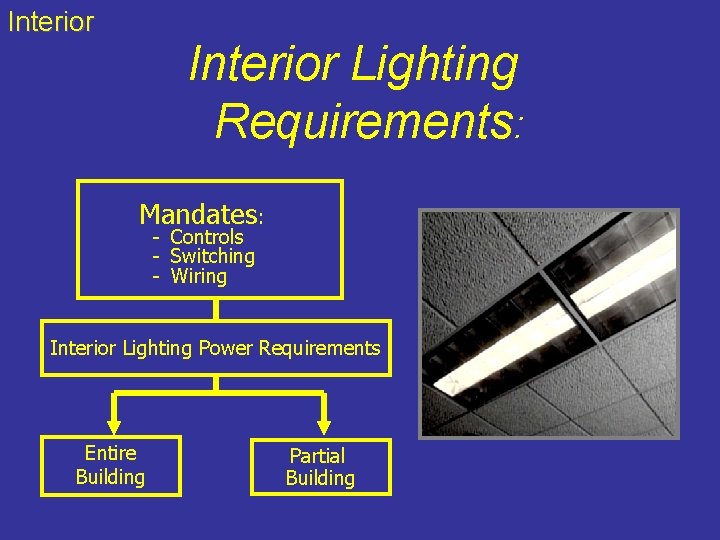
Interior Lighting Requirements: Mandates: - Controls - Switching - Wiring Interior Lighting Power Requirements Entire Building Partial Building
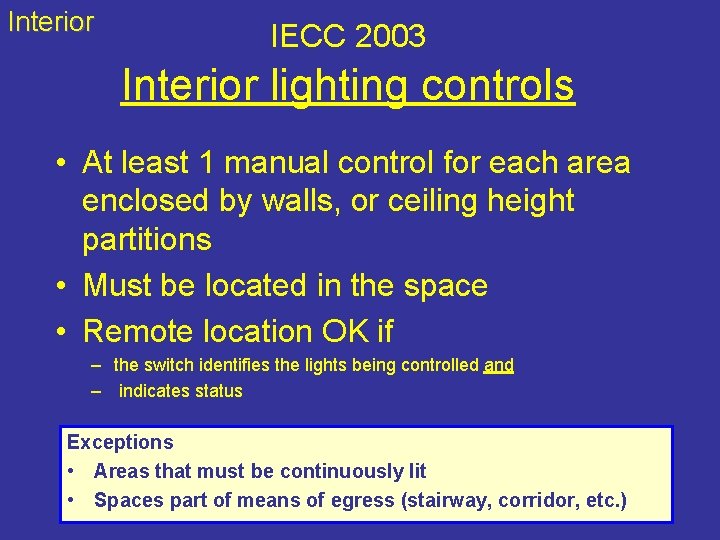
Interior IECC 2003 Interior lighting controls • At least 1 manual control for each area enclosed by walls, or ceiling height partitions • Must be located in the space • Remote location OK if – the switch identifies the lights being controlled and – indicates status Exceptions • Areas that must be continuously lit • Spaces part of means of egress (stairway, corridor, etc. )
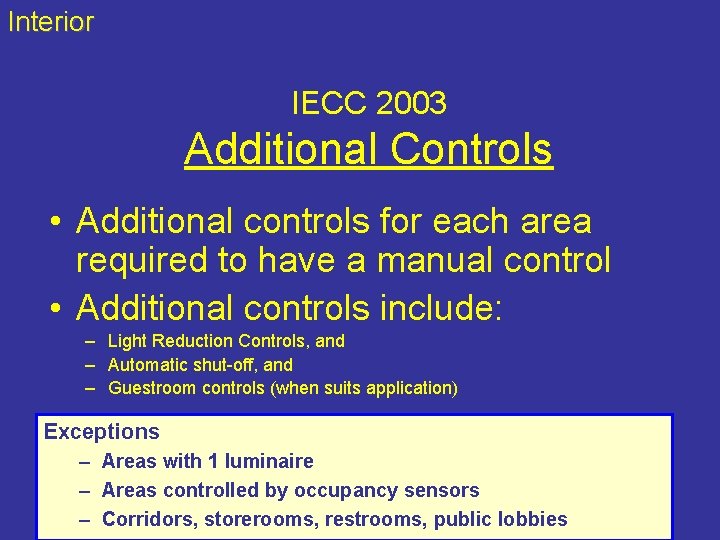
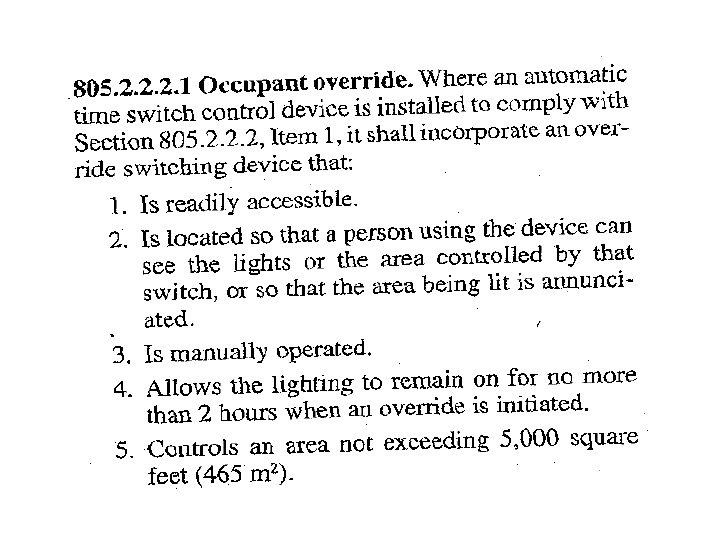
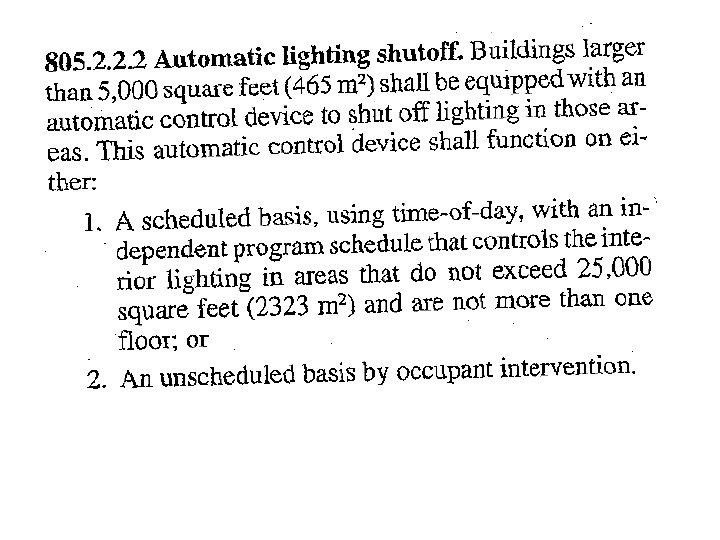
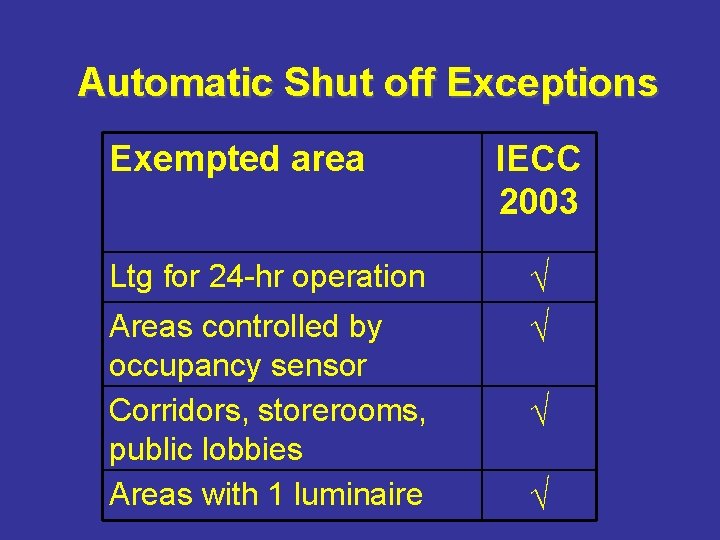
Interior IECC 2003 Additional Controls • Additional controls for each area required to have a manual control • Additional controls include: – Light Reduction Controls, and – Automatic shut-off, and – Guestroom controls (when suits application) Exceptions – Areas with 1 luminaire – Areas controlled by occupancy sensors – Corridors, storerooms, restrooms, public lobbies
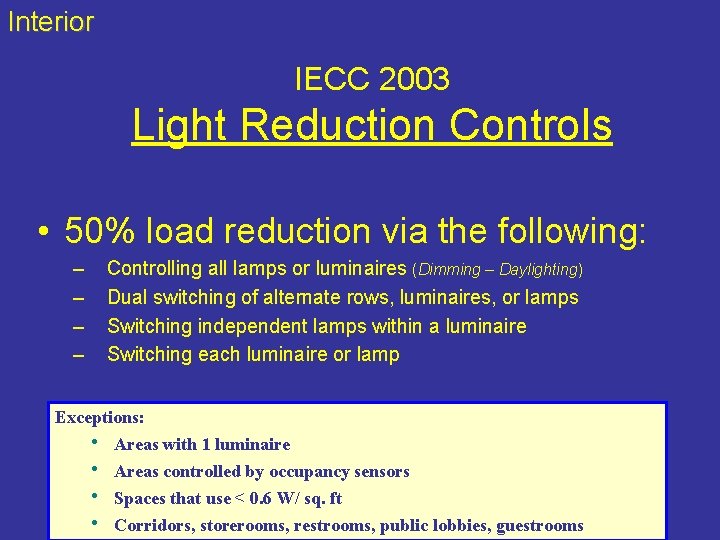
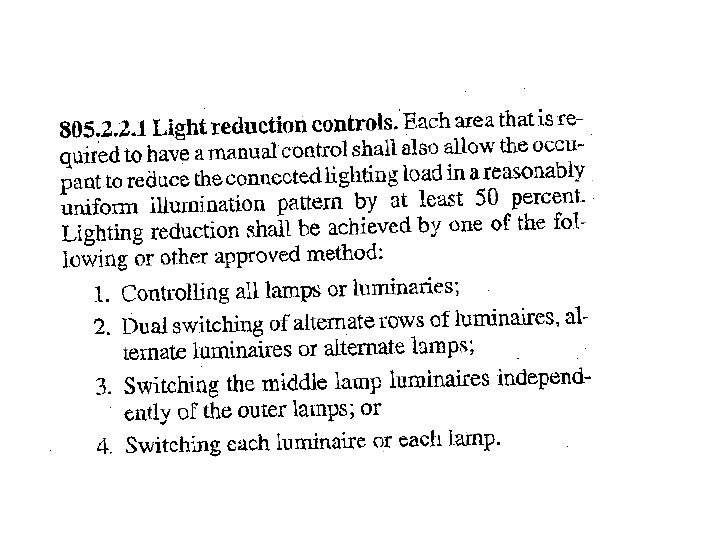
Interior IECC 2003 Light Reduction Controls • 50% load reduction via the following: – – Controlling all lamps or luminaires (Dimming – Daylighting) Dual switching of alternate rows, luminaires, or lamps Switching independent lamps within a luminaire Switching each luminaire or lamp Exceptions: • • Areas with 1 luminaire Areas controlled by occupancy sensors Spaces that use < 0. 6 W/ sq. ft Corridors, storerooms, restrooms, public lobbies, guestrooms
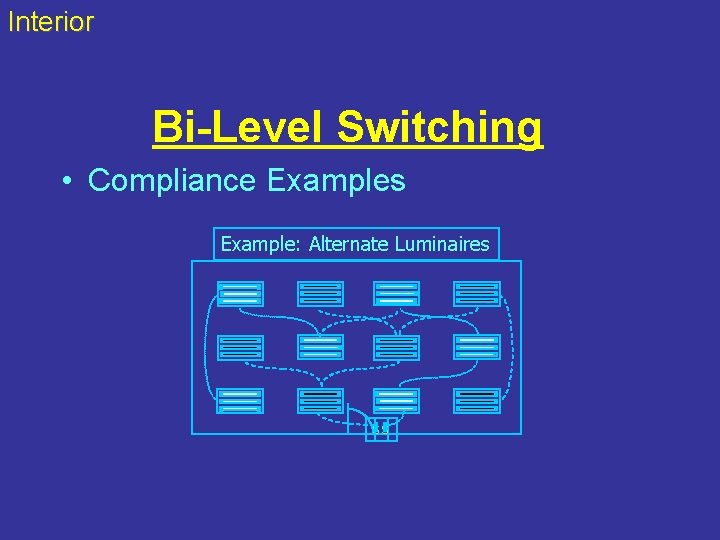
Interior Bi-Level Switching • Compliance Examples Example: Alternate Luminaires SS
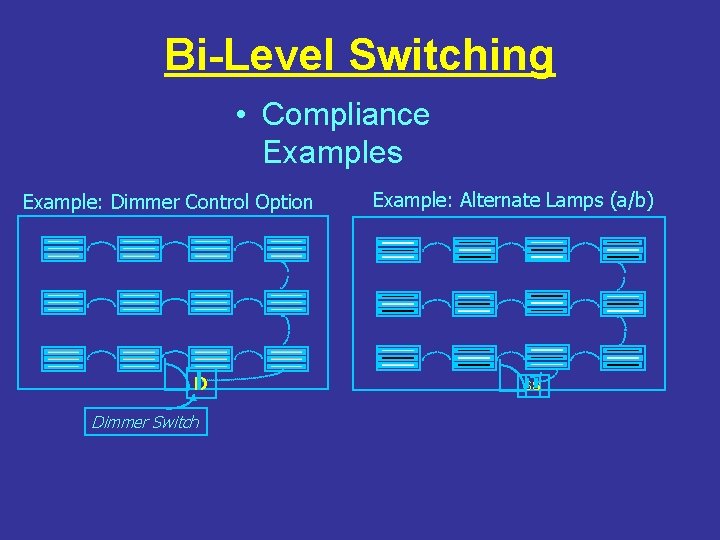
Bi-Level Switching • Compliance Examples Example: Dimmer Control Option D Dimmer Switch Example: Alternate Lamps (a/b) SS
Automatic Shut off Exceptions Exempted area Ltg for 24 -hr operation Areas controlled by occupancy sensor Corridors, storerooms, public lobbies Areas with 1 luminaire IECC 2003 √ √
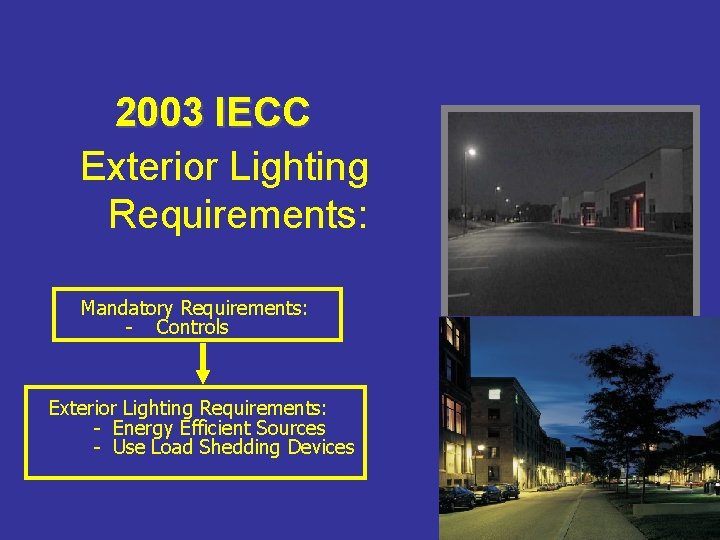
2003 IECC Exterior Lighting Requirements: Mandatory Requirements: - Controls Exterior Lighting Requirements: - Energy Efficient Sources - Use Load Shedding Devices
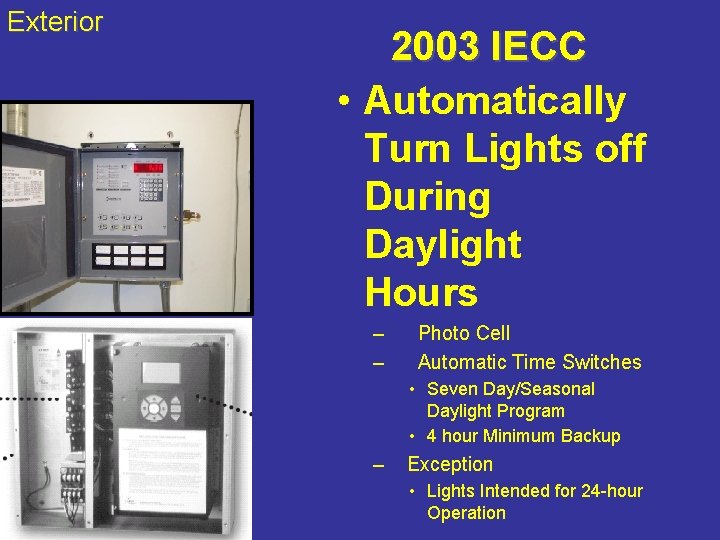
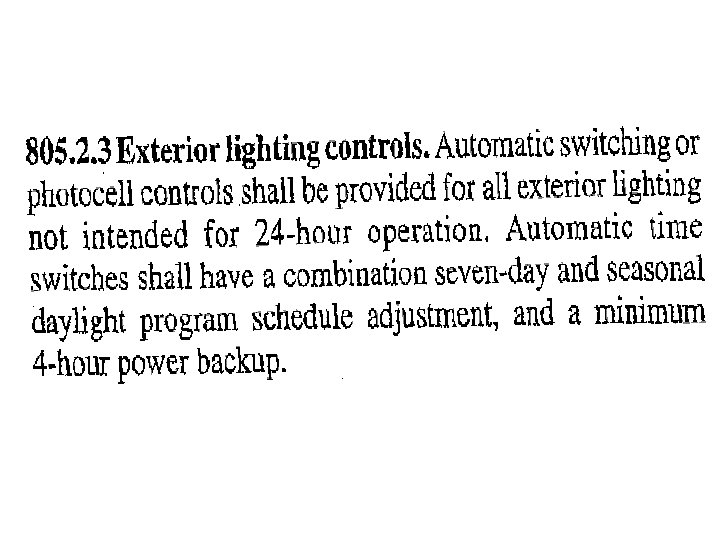
Exterior 2003 IECC • Automatically Turn Lights off During Daylight Hours – – Photo Cell Automatic Time Switches • Seven Day/Seasonal Daylight Program • 4 hour Minimum Backup – Exception • Lights Intended for 24 -hour Operation
Demonstrating Compliance Section 104 • Include the following information on the electrical plans – – – Switching / Dimming schemes Make/model of exterior lighting controls Make/model of interior programmable controls Notes for tandem wiring Make/model of the occupancy sensors Sensor placement scheme