
Energy changes Exothermic reactions Examples respiration combustion oxidation
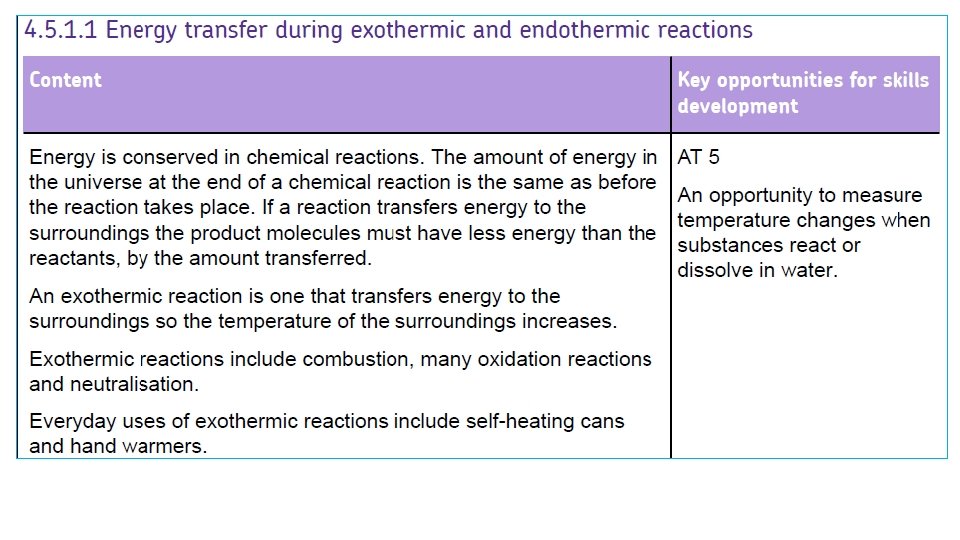
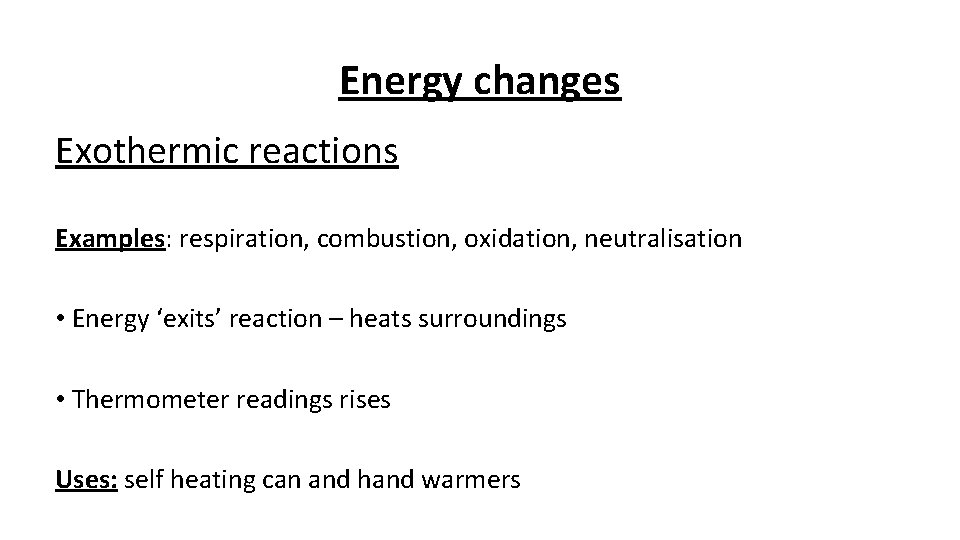
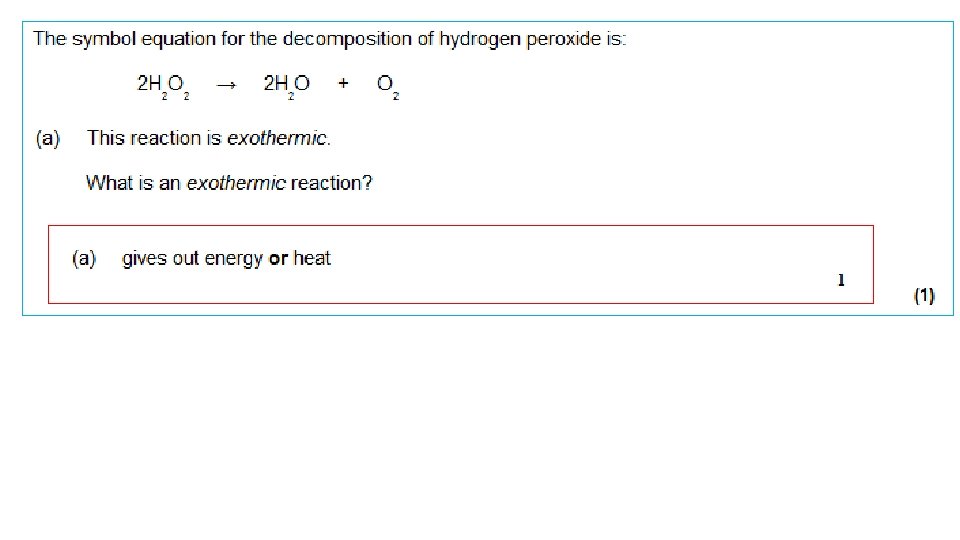
Energy changes Exothermic reactions Examples: respiration, combustion, oxidation, neutralisation • Energy ‘exits’ reaction – heats surroundings • Thermometer readings rises Uses: self heating can and hand warmers
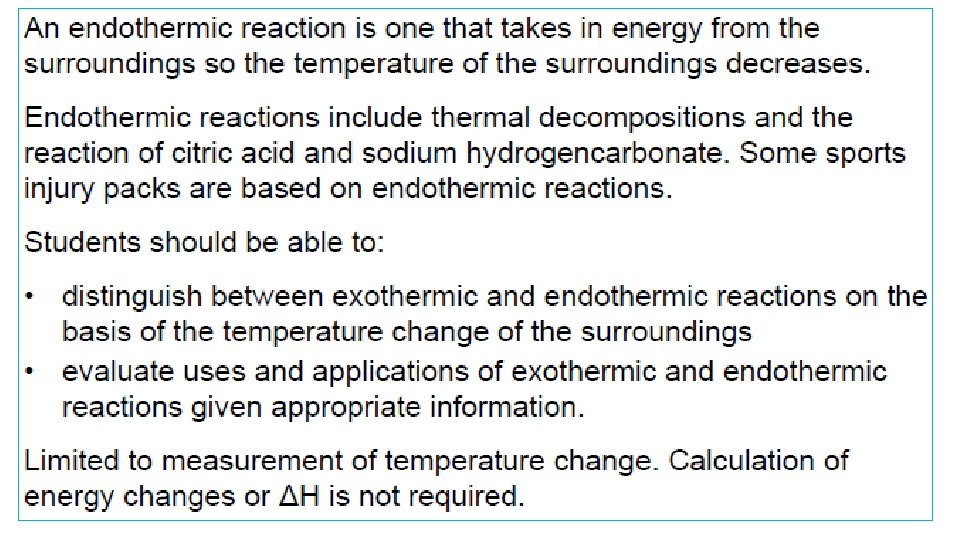
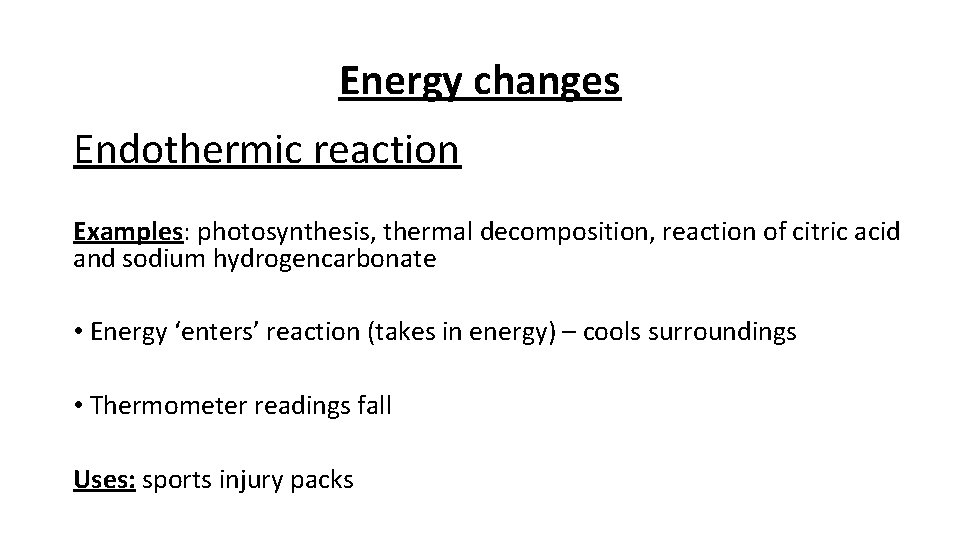
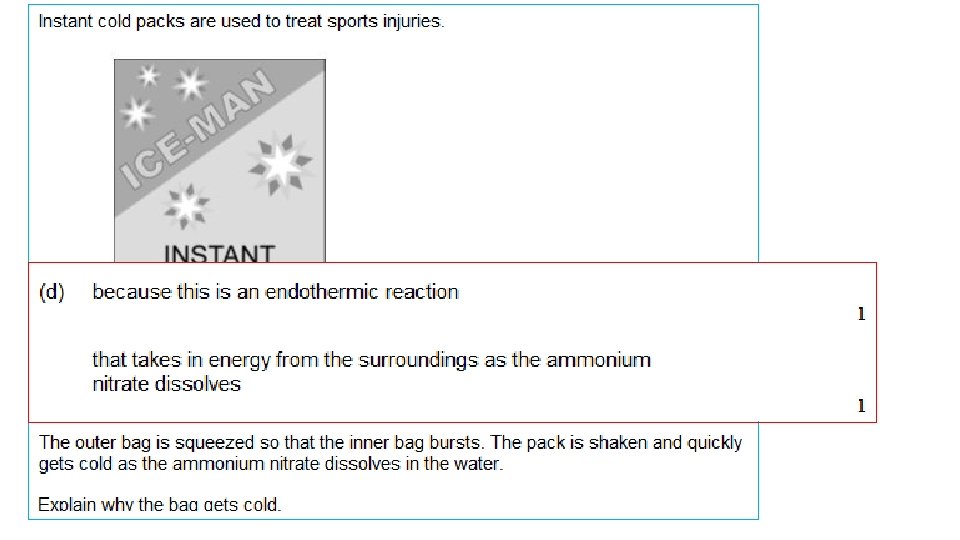
Energy changes Endothermic reaction Examples: photosynthesis, thermal decomposition, reaction of citric acid and sodium hydrogencarbonate • Energy ‘enters’ reaction (takes in energy) – cools surroundings • Thermometer readings fall Uses: sports injury packs
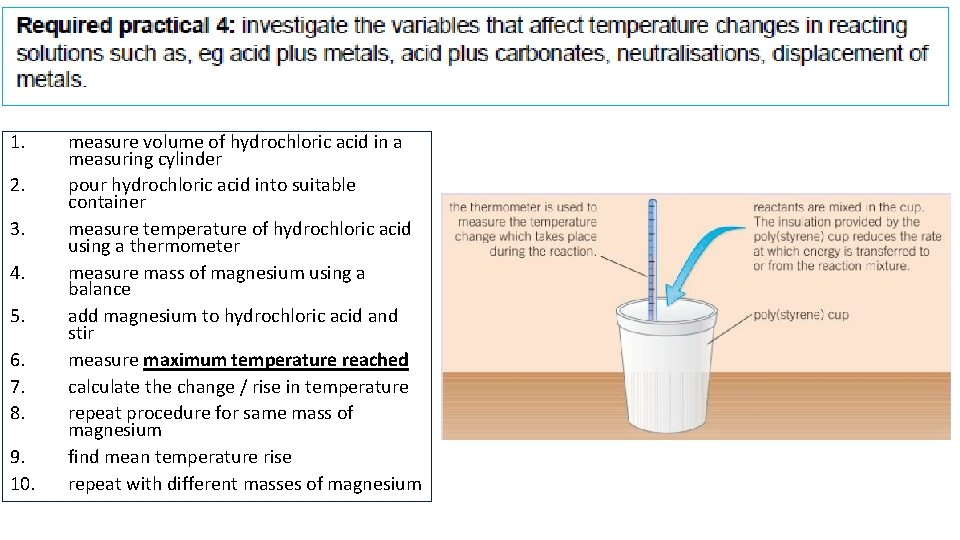
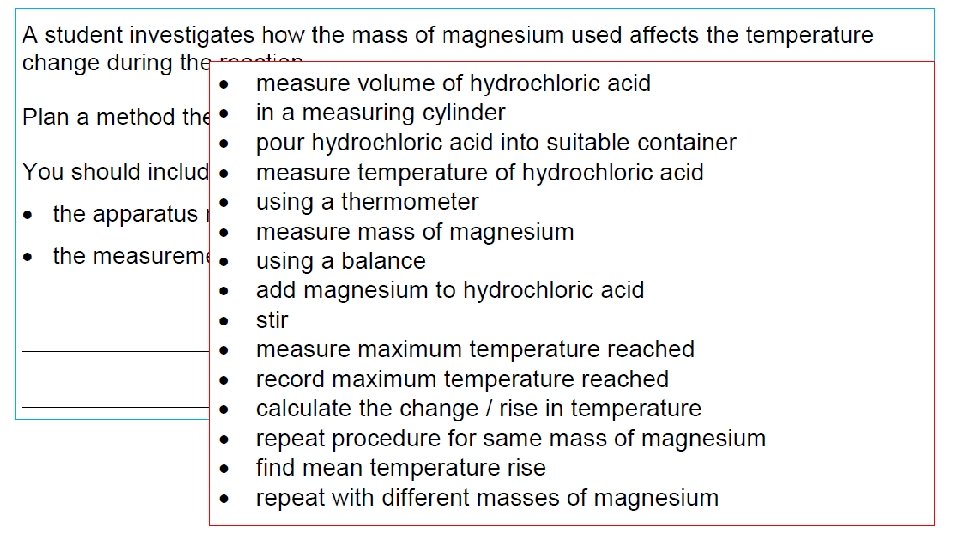
1. 2. 3. 4. 5. 6. 7. 8. 9. 10. measure volume of hydrochloric acid in a measuring cylinder pour hydrochloric acid into suitable container measure temperature of hydrochloric acid using a thermometer measure mass of magnesium using a balance add magnesium to hydrochloric acid and stir measure maximum temperature reached calculate the change / rise in temperature repeat procedure for same mass of magnesium find mean temperature rise repeat with different masses of magnesium
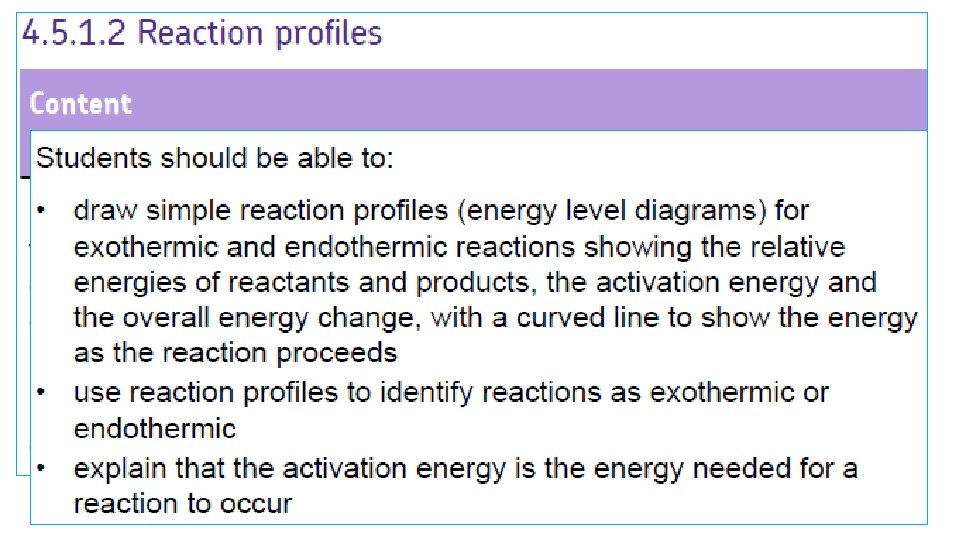
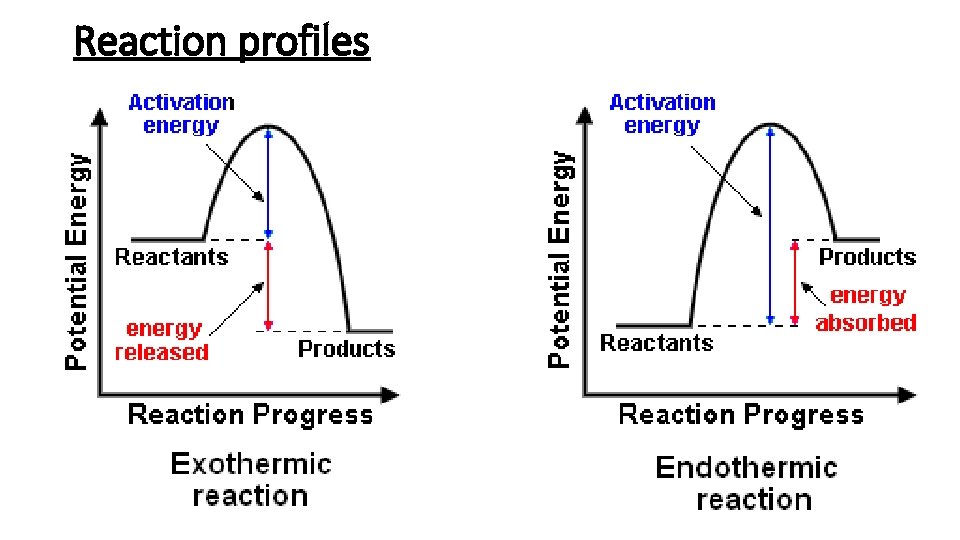
Reaction profiles
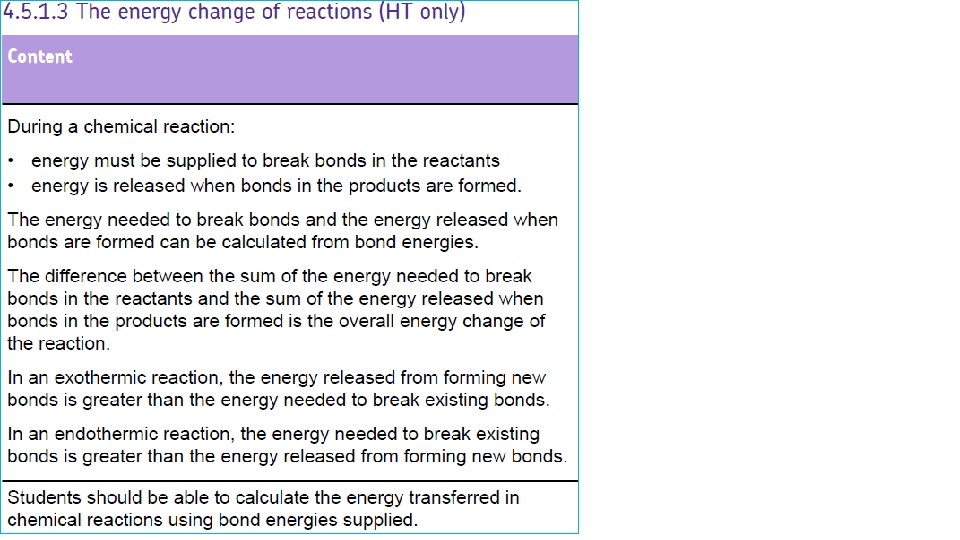
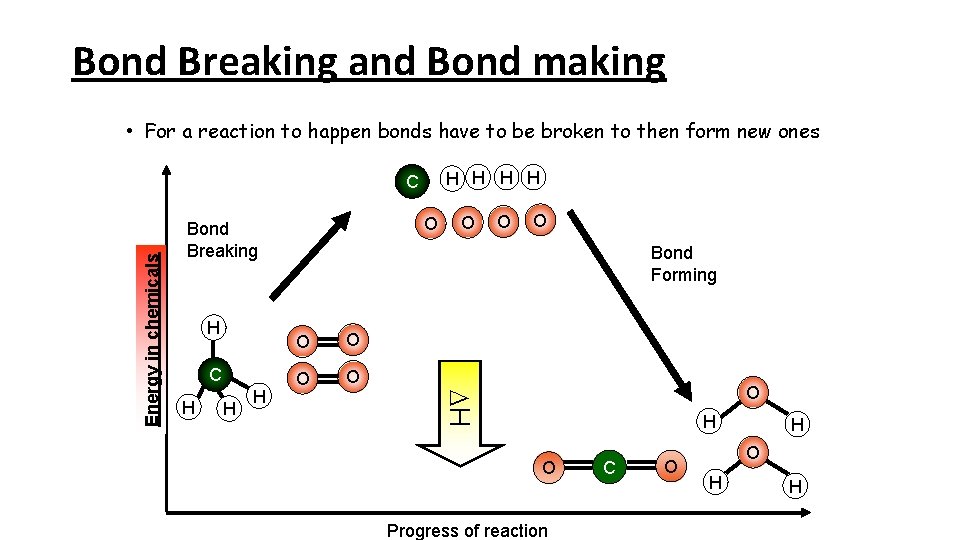
Bond Breaking and Bond making • For a reaction to happen bonds have to be broken to then form new ones H H O Bond Breaking H C H H H O O O Bond Forming O O O H Energy in chemicals C H O Progress of reaction C O H H
BENDOMEX • Bendo = Breaking is endo • Mex = Making is exo
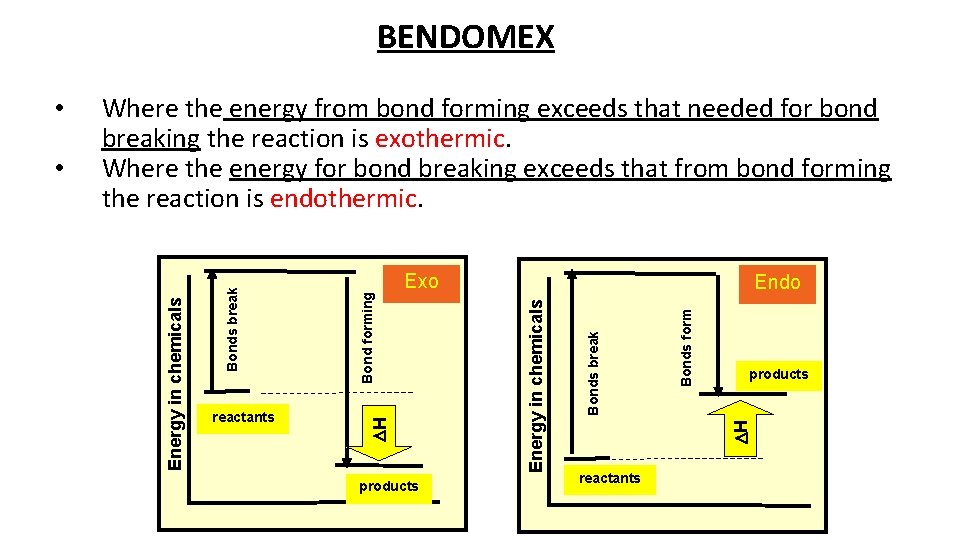
BENDOMEX Exo products H Bonds form Bonds break Endo Energy in chemicals H reactants Bond forming Bonds break • Where the energy from bond forming exceeds that needed for bond breaking the reaction is exothermic. Where the energy for bond breaking exceeds that from bond forming the reaction is endothermic. Energy in chemicals • reactants
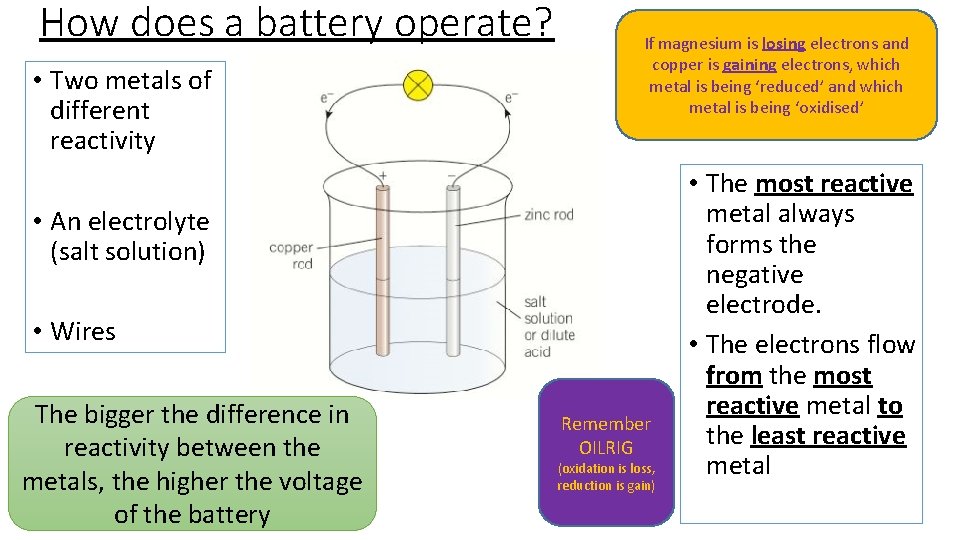
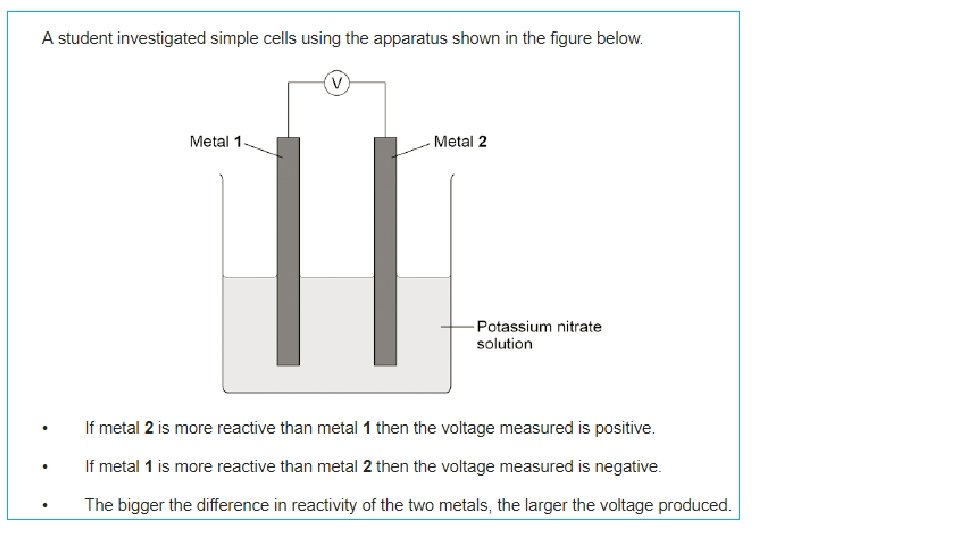
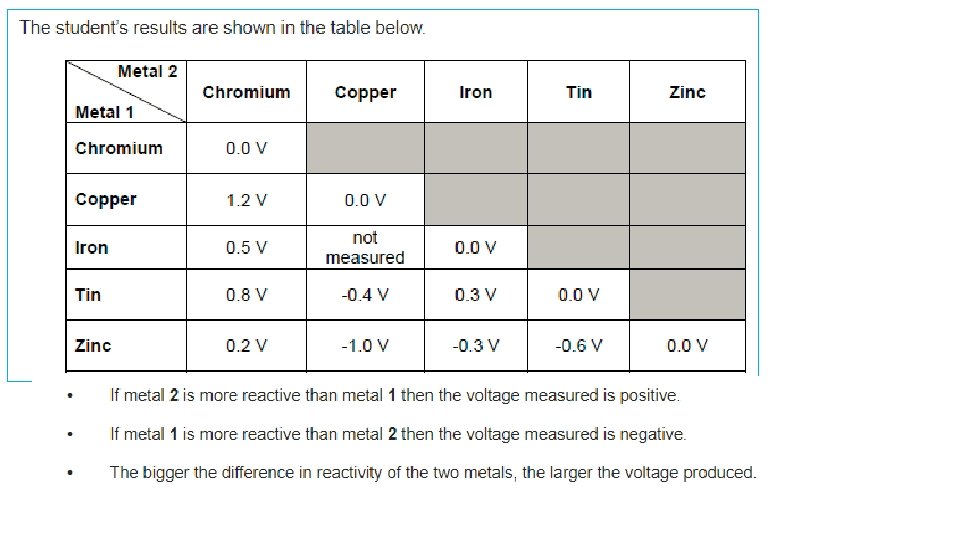
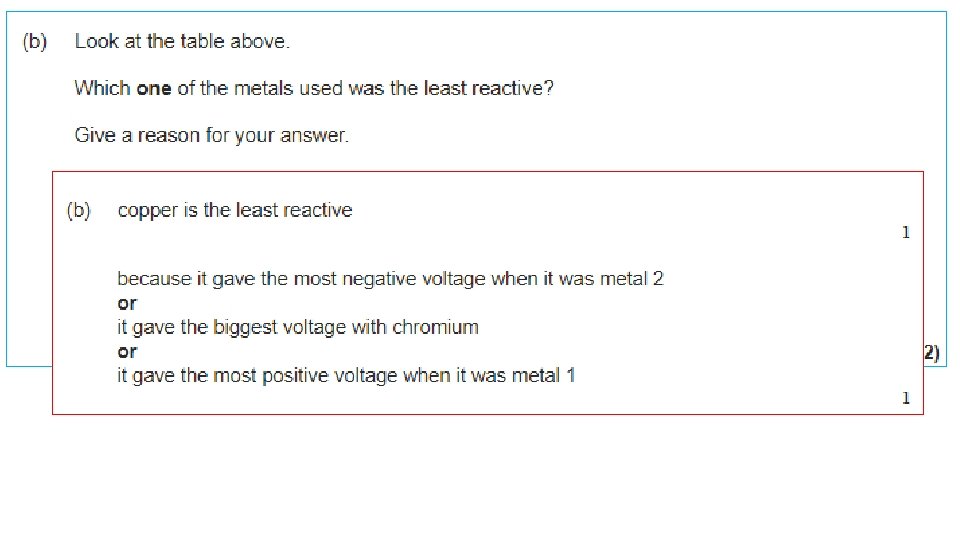
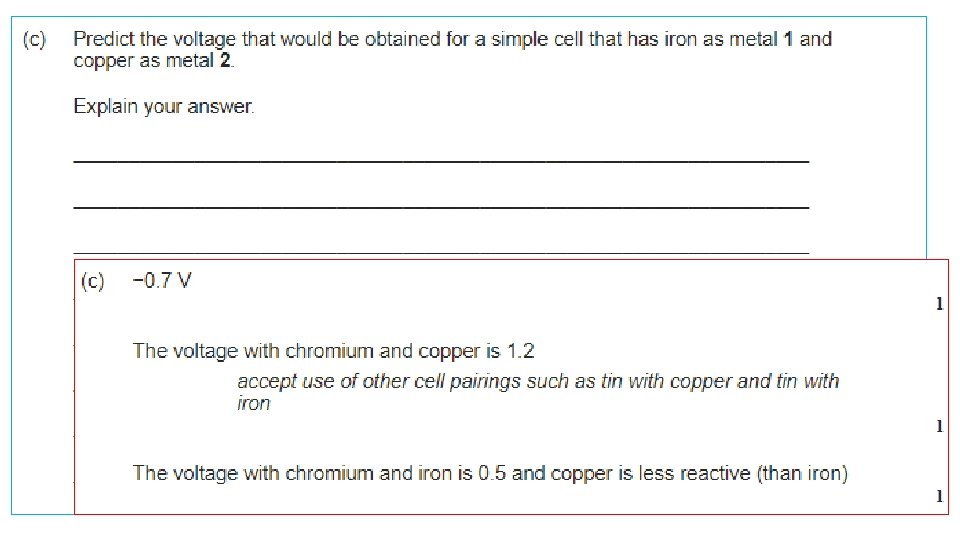
How does a battery operate? • Two metals of different reactivity If magnesium is losing electrons and copper is gaining electrons, which metal is being ‘reduced’ and which metal is being ‘oxidised’ • An electrolyte (salt solution) • Wires The bigger the difference in reactivity between the metals, the higher the voltage of the battery Remember OILRIG (oxidation is loss, reduction is gain) • The most reactive metal always forms the negative electrode. • The electrons flow from the most reactive metal to the least reactive metal
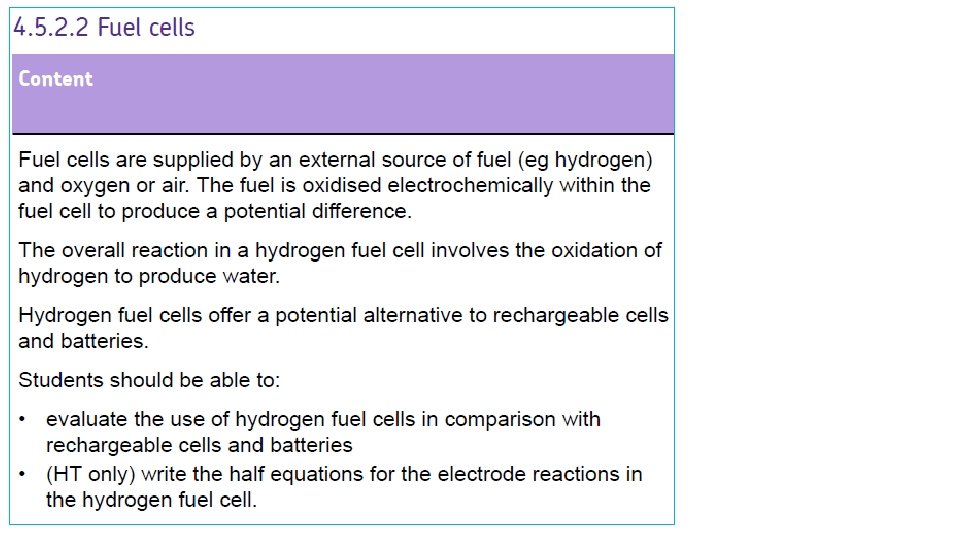
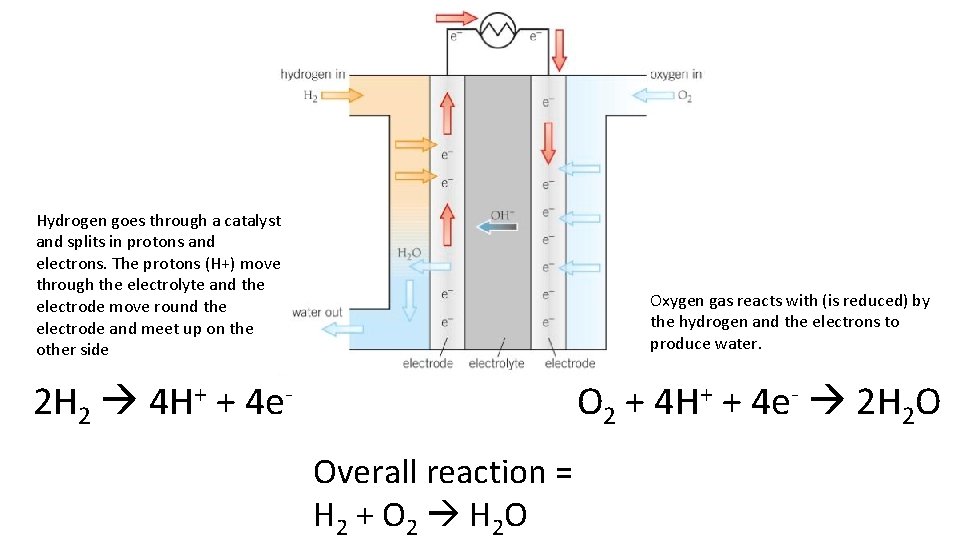
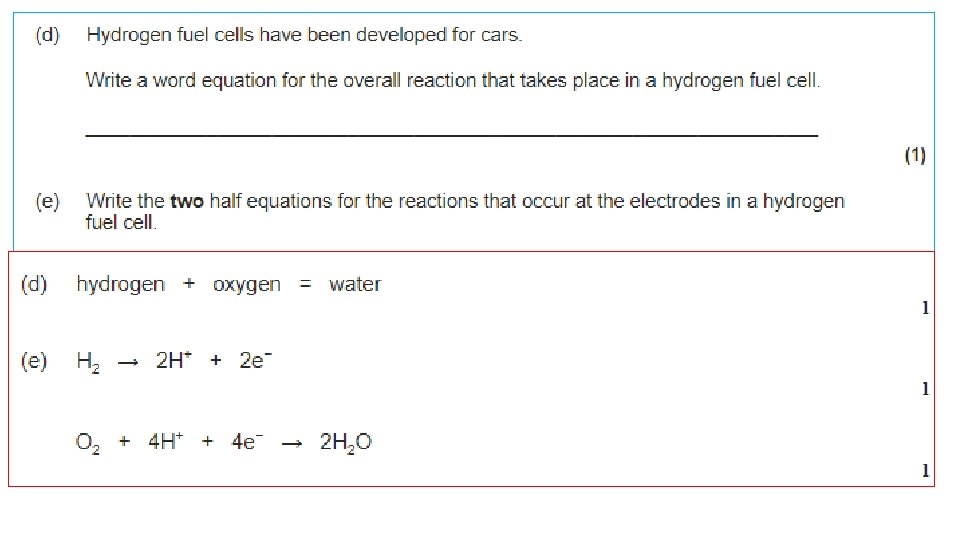
Hydrogen goes through a catalyst and splits in protons and electrons. The protons (H+) move through the electrolyte and the electrode move round the electrode and meet up on the other side Oxygen gas reacts with (is reduced) by the hydrogen and the electrons to produce water. 2 H 2 4 H+ + 4 e- O 2 + 4 H+ + 4 e- 2 H 2 O Overall reaction = H 2 + O 2 H 2 O
- Slides: 24