
Energy Balance and Body Composition 2010 Pearson Education
Energy Balance and Body Composition © 2010 Pearson Education, Inc.
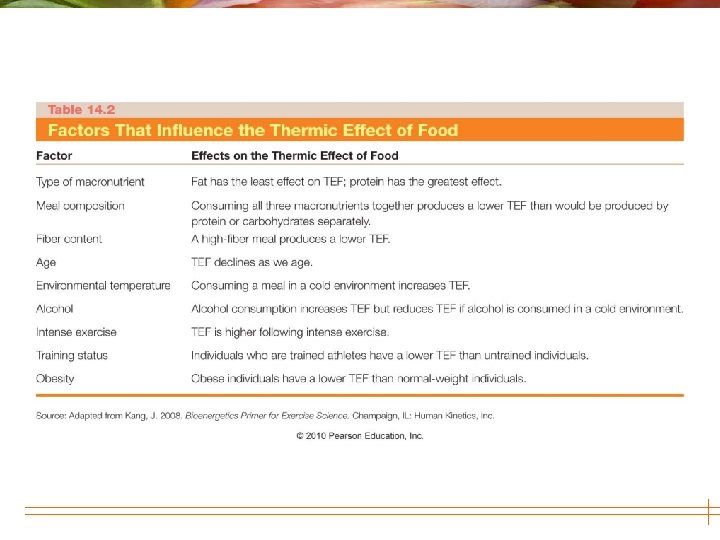
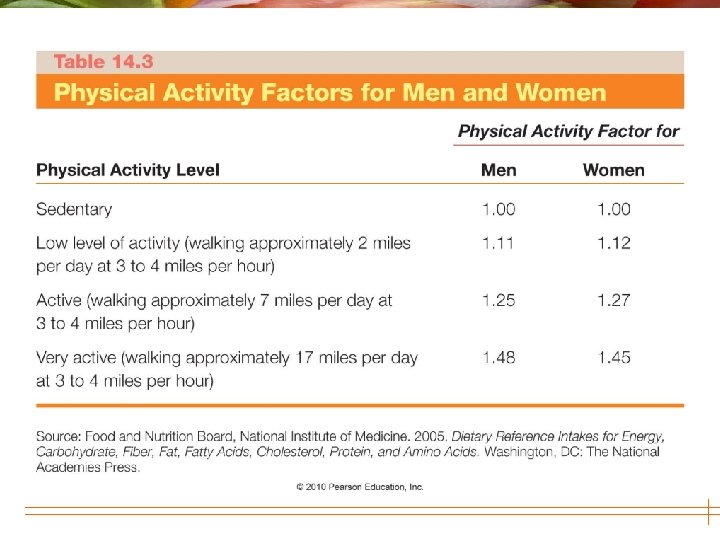
Energy is the capacity to do work. We need energy for : Ø Basal Metabolism • Basal Metabolic Rate- BMR: energy required for activity of the internal organs and maintaining of body temperature. Ø Physical Activity Ø Metabolizing of Food © 2010 Pearson Education, Inc.
Ø Calorie: unit used to measure energy Ø Kilocalorie is a unit of energy commonly used to express energy value of food. Ø Food energy is the amount of energy in food that is a available through digestion. The energy value of food indicates its value to the body as fuel. © 2010 Pearson Education, Inc.
Ø Kilocalories come from foods and beverages • Bomb calorimeter used in laboratories to measure kilocalories in foods and beverages - Results must be adjusted for the physiological fuel values • Nutrition analysis software or food composition tables can estimate energy in - Carbohydrate and Protein: 4 kcal/gram - Fat: 9 kcal/gram - Alcohol: 7 kcal/gram © 2010 Pearson Education, Inc.
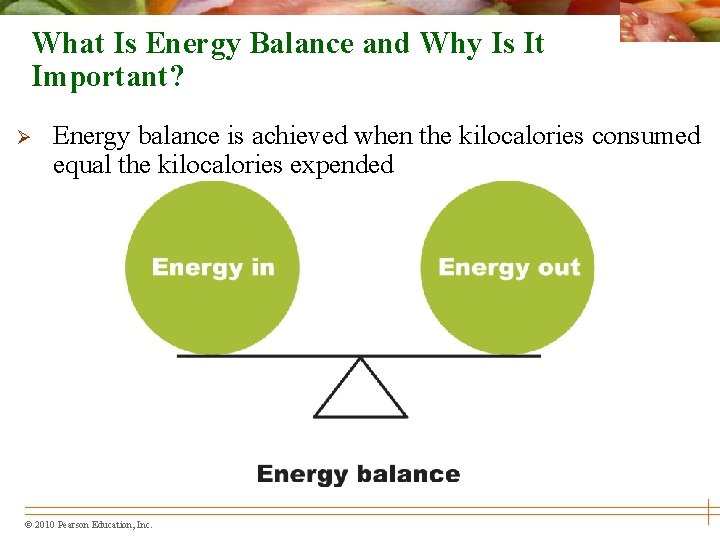
What Is Energy Balance and Why Is It Important? Ø Energy balance is achieved when the kilocalories consumed equal the kilocalories expended © 2010 Pearson Education, Inc.
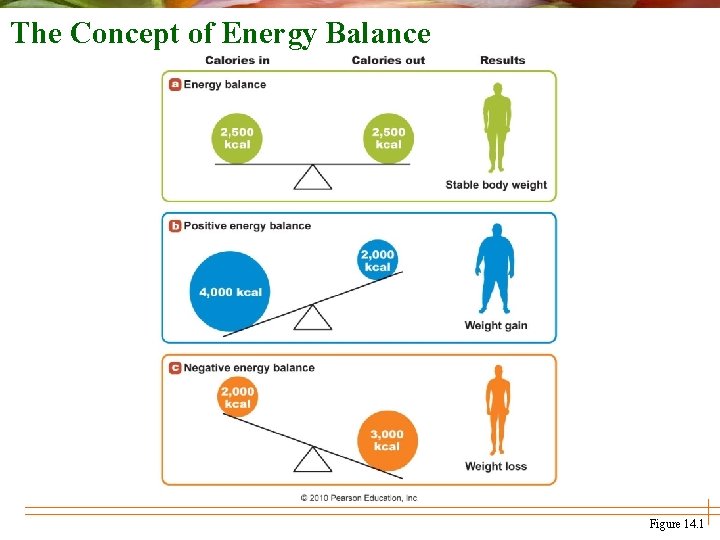
The Concept of Energy Balance Figure 14. 1
The Basal Metabolic Rate Ø Keeping your Basal Metabolic Rate (BMR) as high as possible is vital when it comes to weight loss and maintaining healthy body fat levels © 2010 Pearson Education, Inc.

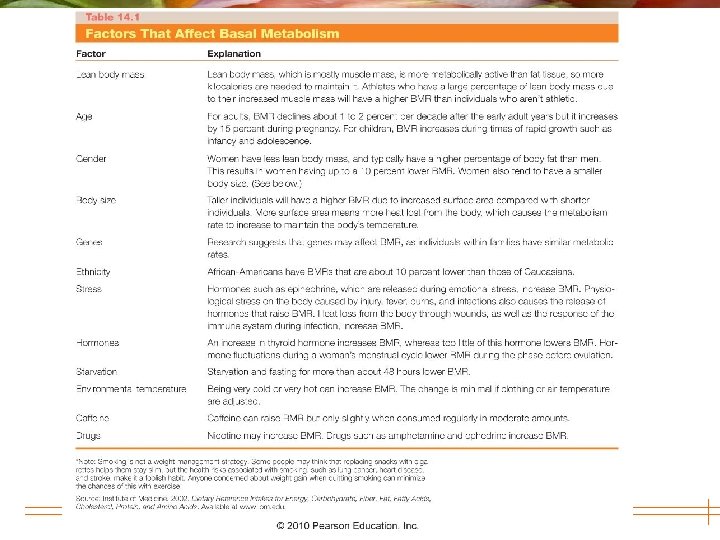
Factors that Affect Basal Metabolic Rate Ø Exercise: This is one of the biggest factors that influence BMR. Ø BMR is higher in people who exercise regularly © 2010 Pearson Education, Inc.
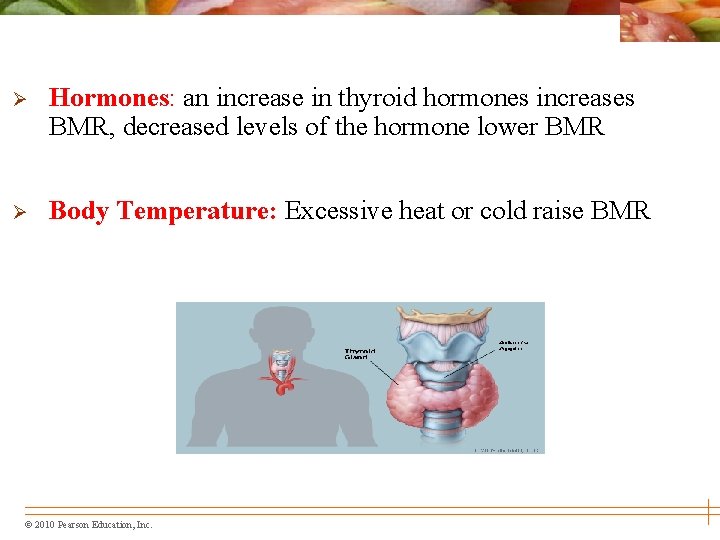
Ø Hormones: an increase in thyroid hormones increases BMR, decreased levels of the hormone lower BMR Ø Body Temperature: Excessive heat or cold raise BMR © 2010 Pearson Education, Inc.
Ø Ø Gender: Males tend to have higher basal metabolism than females due to an abundance of hormones such as testosterone ad elevated levels of muscle mass compared to females Age: as we get older basal metabolic rate becomes increasingly slower. © 2010 Pearson Education, Inc.
Ø Surface Area: Taller individuals have a higher BMR compared to shorter individuals. More surface area means more heat lost from the body, which causes the metabolism to speed up in order to maintain body temperature. © 2010 Pearson Education, Inc.
Ø Stress and Illness: increase in hormone activity due to physical or physiological stress increase BMR. Ø Starvation: Fasting for more than 48 hrs. will lead to a decrease of 50% of Basal Metabolic Rate. © 2010 Pearson Education, Inc.

Ø http: //app. discoveryeducation. com/player/view/asset. Guid/7 6 E 09 B 15 -F 9 FC-4088 -8 A 4 E-7 B 6 B 079607 DC © 2010 Pearson Education, Inc.

https: //www. brainpop. com/health/nutrition/bodyweight/
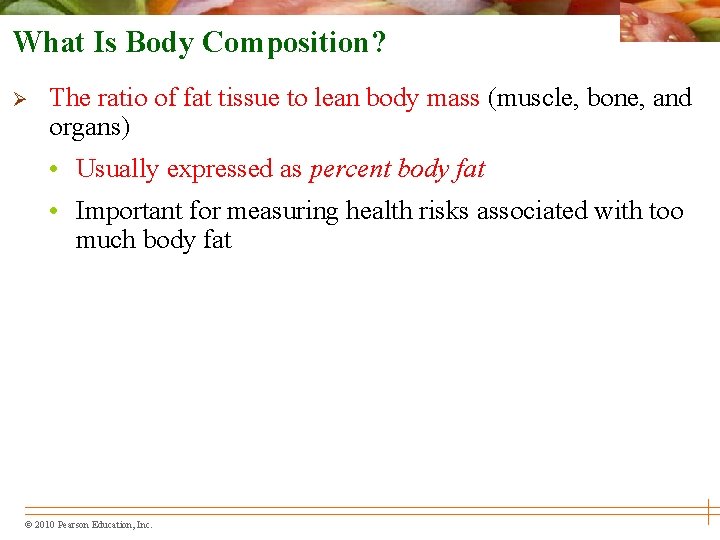
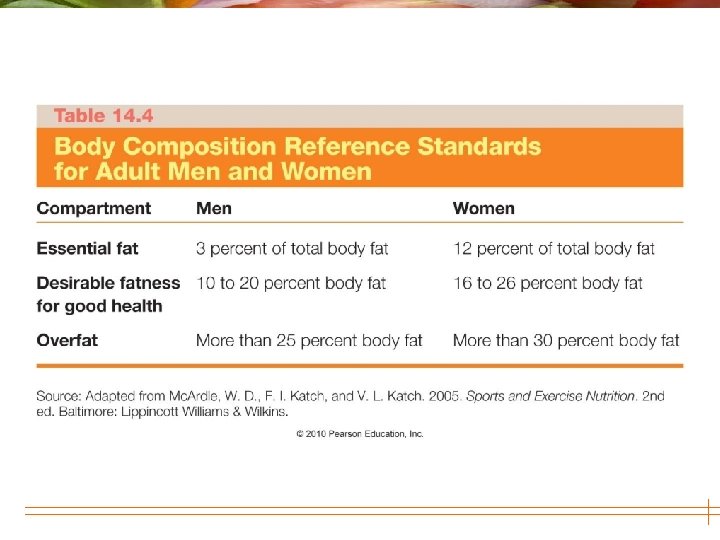
What Is Body Composition? Ø The ratio of fat tissue to lean body mass (muscle, bone, and organs) • Usually expressed as percent body fat • Important for measuring health risks associated with too much body fat © 2010 Pearson Education, Inc.
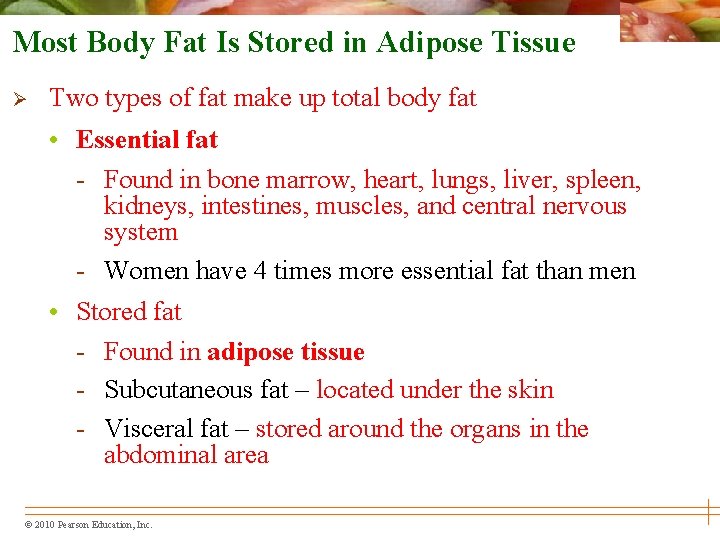
Most Body Fat Is Stored in Adipose Tissue Ø Two types of fat make up total body fat • Essential fat - Found in bone marrow, heart, lungs, liver, spleen, kidneys, intestines, muscles, and central nervous system - Women have 4 times more essential fat than men • Stored fat - Found in adipose tissue - Subcutaneous fat – located under the skin - Visceral fat – stored around the organs in the abdominal area © 2010 Pearson Education, Inc.
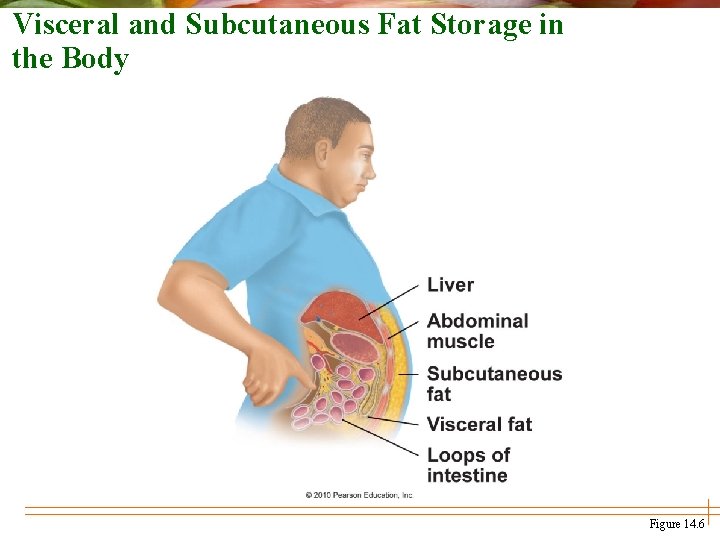
Visceral and Subcutaneous Fat Storage in the Body Figure 14. 6
Most Body Fat Is Stored in Adipose Tissue Ø In negative energy balance, fatty acids are released from adipose cells • Used as fuel and cells shrink Ø In positive energy balance, fat accumulates and adipose cells expand Ø Brown adipose tissue (BAT) is another type of fat tissue made up of specialized fat cells • Contain more mitochondria and rich in blood • Function is to generate heat • Found primarily in infants © 2010 Pearson Education, Inc.
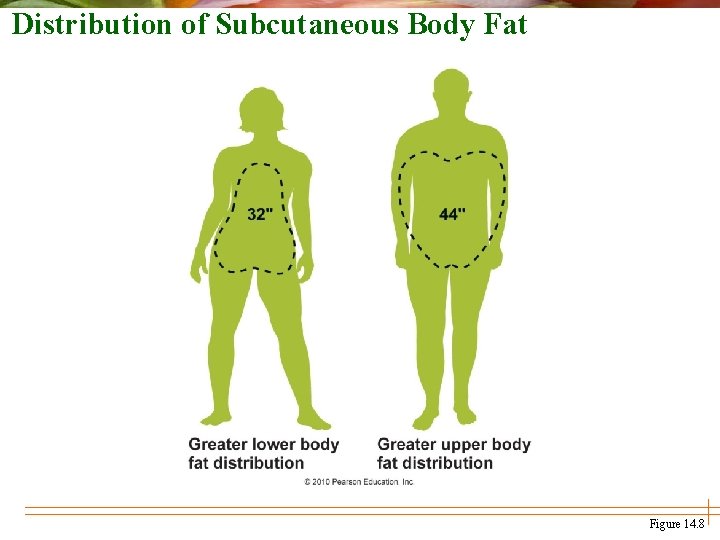
Distribution of Subcutaneous Body Fat Figure 14. 8
Body Fat Distribution Affects Health Ø Storing excess fat around the waist versus the hips and thighs increases risk of heart disease, diabetes, and hypertension Ø Central obesity (android obesity) – from storing too much visceral fat in the abdomen Ø Gynoid obesity – from excess fat around the thighs and buttocks Ø Visceral fat releases fatty acids which travel to the liver causing insulin resistance, increased LDL, decreased HDL, and increased cholesterol © 2010 Pearson Education, Inc.

Ø http: //app. discoveryeducation. com/player/view/asset. Guid/8 22 DEFF 3 -904 E-4488 -BD 2 F-0 B 91917 A 7 C 33 © 2010 Pearson Education, Inc.
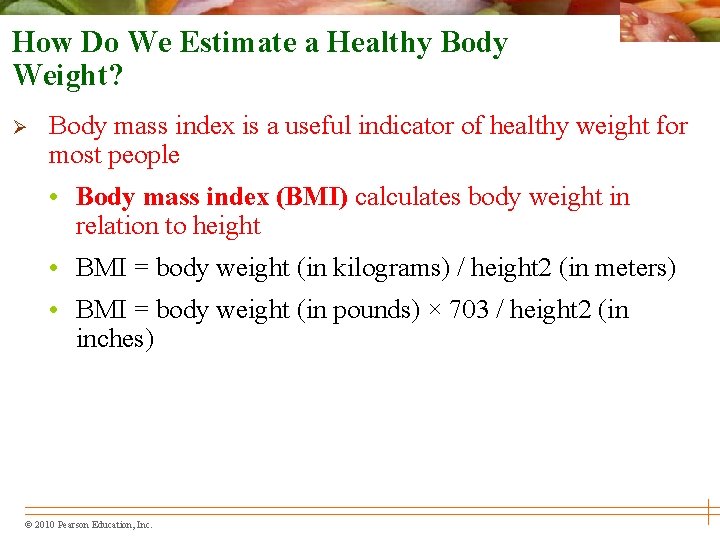
How Do We Estimate a Healthy Body Weight? Ø Body mass index is a useful indicator of healthy weight for most people • Body mass index (BMI) calculates body weight in relation to height • BMI = body weight (in kilograms) / height 2 (in meters) • BMI = body weight (in pounds) × 703 / height 2 (in inches) © 2010 Pearson Education, Inc.
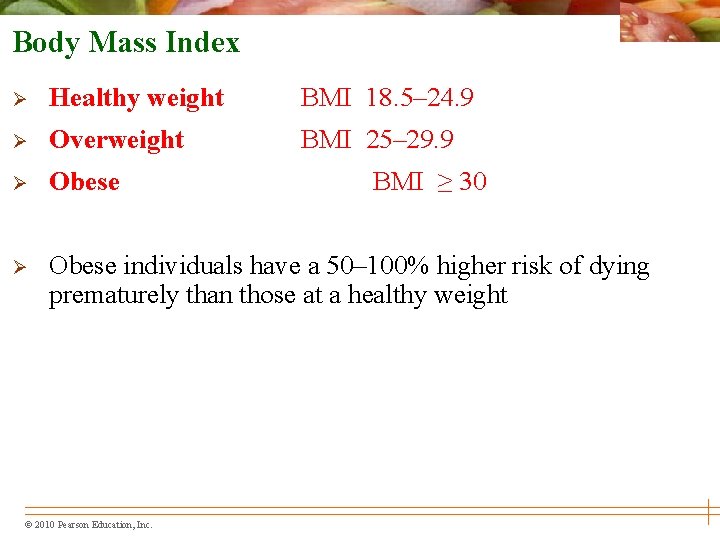
Body Mass Index Ø Healthy weight BMI 18. 5– 24. 9 Ø Overweight BMI 25– 29. 9 Ø Obese individuals have a 50– 100% higher risk of dying prematurely than those at a healthy weight © 2010 Pearson Education, Inc. BMI ≥ 30
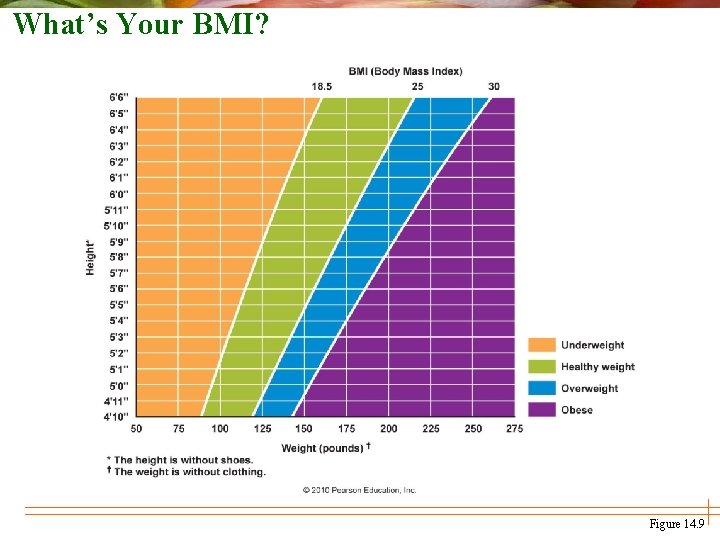
What’s Your BMI? Figure 14. 9
Body Mass Index Ø BMI may not be accurate for everyone • Is not a direct measure of percent body fat and doesn't assess if weight is predominantly muscle or fat • Athletes and individuals with high muscle mass may have a BMI over 25, yet a low percentage of body fat • Chronic weight loss in older adults signals loss of muscle mass and depletion of nutrients stores even though BMI may be within the healthy range • Individuals less than 5 ft in height may have a high BMI, but not be unhealthy © 2010 Pearson Education, Inc.
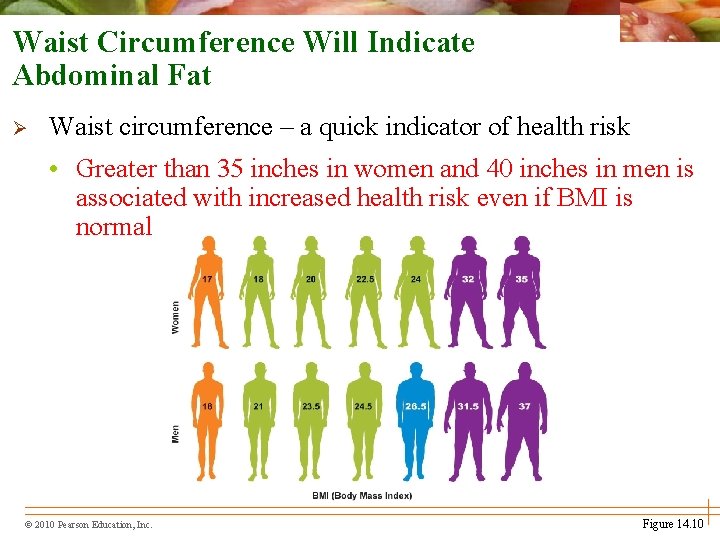
Waist Circumference Will Indicate Abdominal Fat Ø Waist circumference – a quick indicator of health risk • Greater than 35 inches in women and 40 inches in men is associated with increased health risk even if BMI is normal © 2010 Pearson Education, Inc. Figure 14. 10
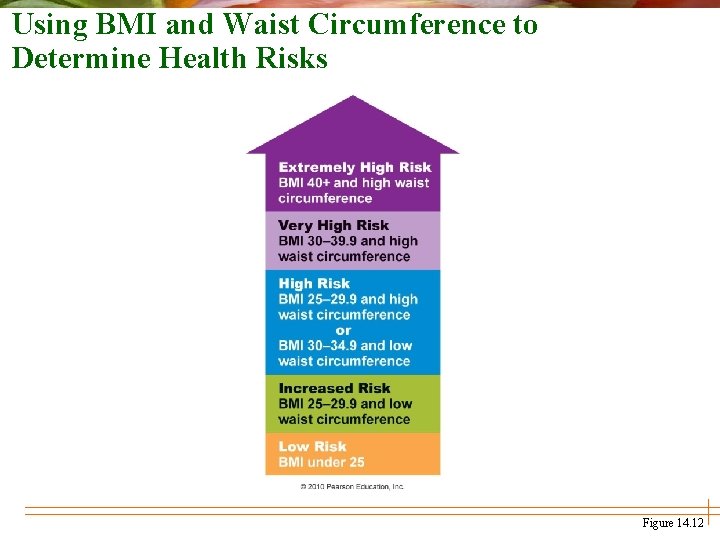
Using BMI and Waist Circumference to Determine Health Risks Figure 14. 12
Health Risks Associated with Body Weight and Body Composition Ø Being overweight increases health risks • Overweight and obesity associated with increased risk of heart disease, hypertension, stroke, hyperlipidemia, gallstones, sleep apnea, and reproductive problems • Increases risk of certain cancers including colon, breast, endometrial, and gallbladder cancer • More than 80% of people with type 2 diabetes are overweight • Metabolic syndrome is associated with central obesity © 2010 Pearson Education, Inc.
Health Risks Associated with Body Weight and Body Composition Ø Being underweight also increases health risks • Symptomatic of malnutrition, substance abuse, or disease • Higher risk of anemia, osteoporosis and bone fractures, heart irregularities, and amenorrhea • Correlated with depression and anxiety, inability to fight infection, trouble regulating body temperature, decreased muscle strength, and risk of premature death • May be unintentional and due to malabsorption associated with diseases such as cancer, inflammatory bowel disease, or celiac disease © 2010 Pearson Education, Inc.

Ø http: //app. discoveryeducation. com/player/view/asset. Guid/7 8 BA 1 E 4 D-790 C-4600 -88 BD-3344 D 592 D 745 © 2010 Pearson Education, Inc.
Putting It All Together Ø Energy balance is the relationship between energy consumed as kilocalories and energy expended, and includes basal metabolism, physical activity, adaptive thermogenesis, and thermic effect of food Ø Energy expenditure can be measured through direct or indirect calorimetry or estimated with reference equations. Ø Body composition describes the ratio of fat tissue to lean body mass; it is determined by hydrostatic weighing, air displacement, DEXA, bioelectrical impedance, or using skinfold calipers © 2010 Pearson Education, Inc.
Putting It All Together Ø Excess body fat and central obesity are associated with increased health risks including heart disease, type 2 diabetes, certain cancers, and other chronic diseases Ø Being underweight is also associated with health risks and increased risk of premature death © 2010 Pearson Education, Inc.
- Slides: 36