
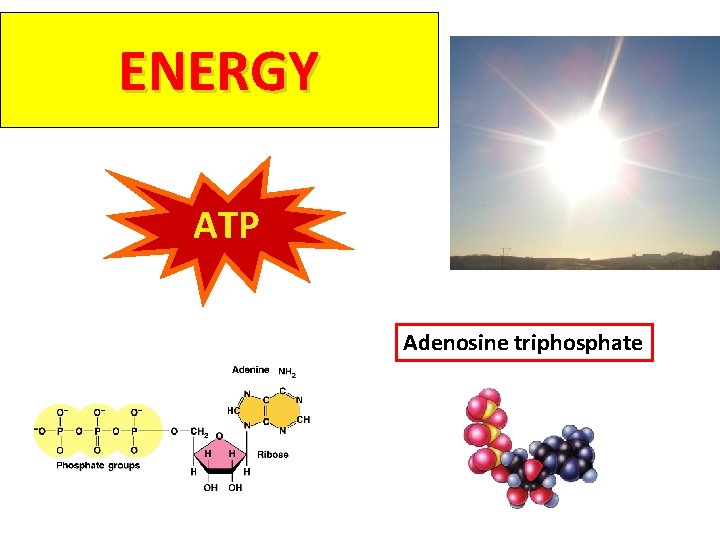
ENERGY ATP Adenosine triphosphate Why do you need
- Slides: 21
ENERGY ATP Adenosine triphosphate
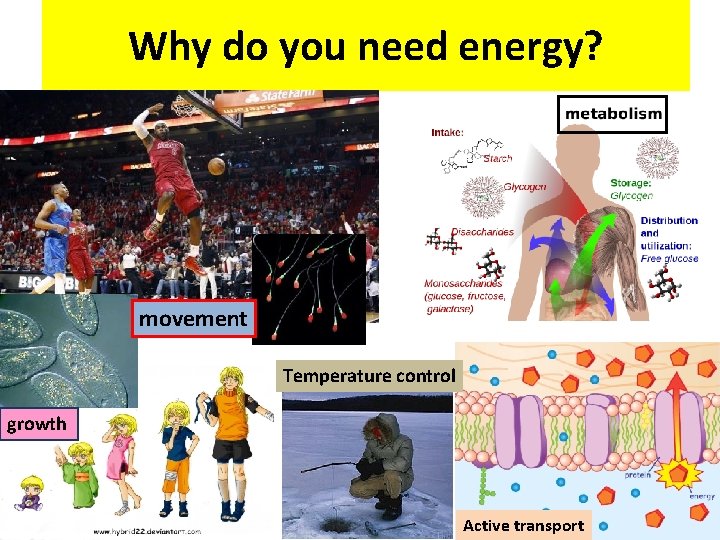
Why do you need energy? movement Temperature control growth Active transport
What is the ultimate source of energy? The sun.
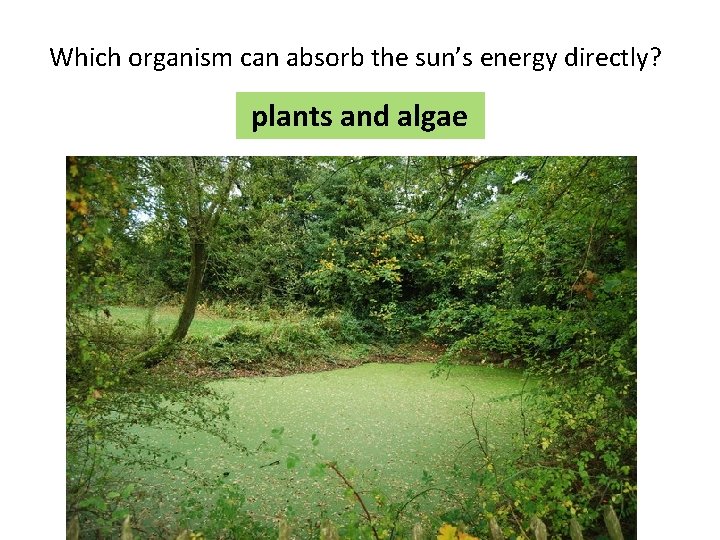
Which organism can absorb the sun’s energy directly? plants and algae
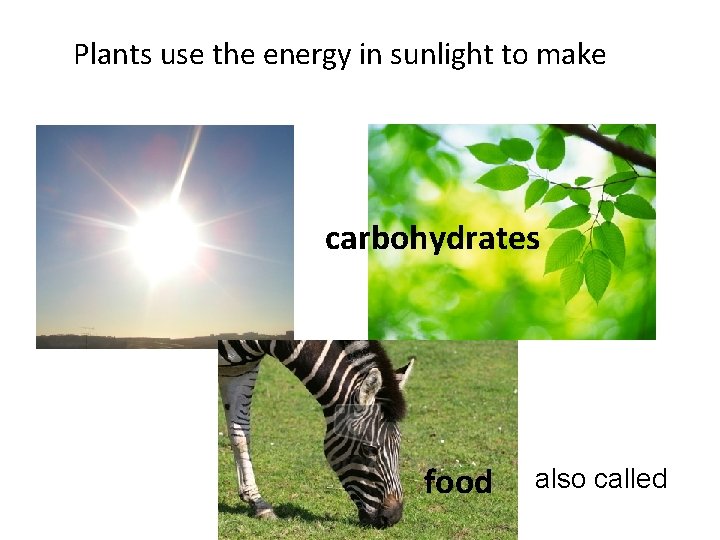
Plants use the energy in sunlight to make carbohydrates food also called
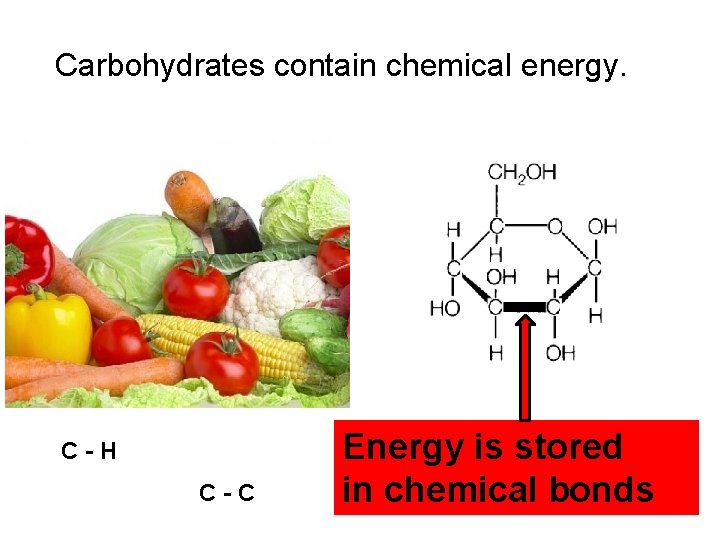
Carbohydrates contain chemical energy. C-H C-C Energy is stored in chemical bonds
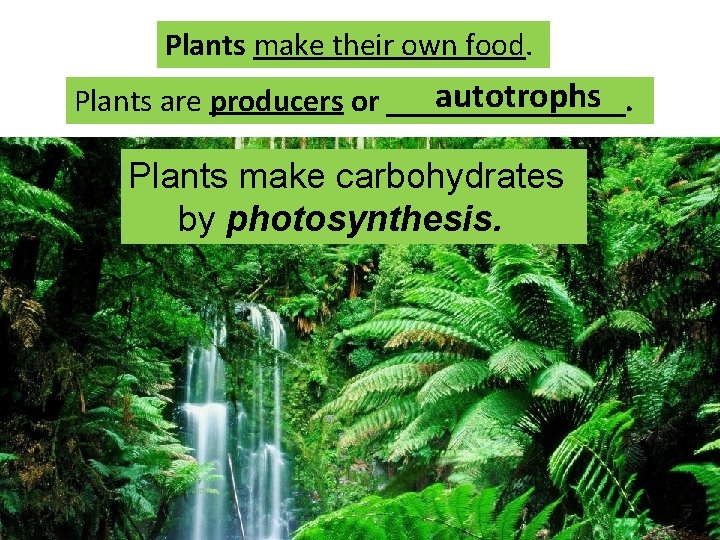
Plants make their own food. autotrophs Plants are producers or ________. Bymake what process? ? ? Plants carbohydrates by photosynthesis.
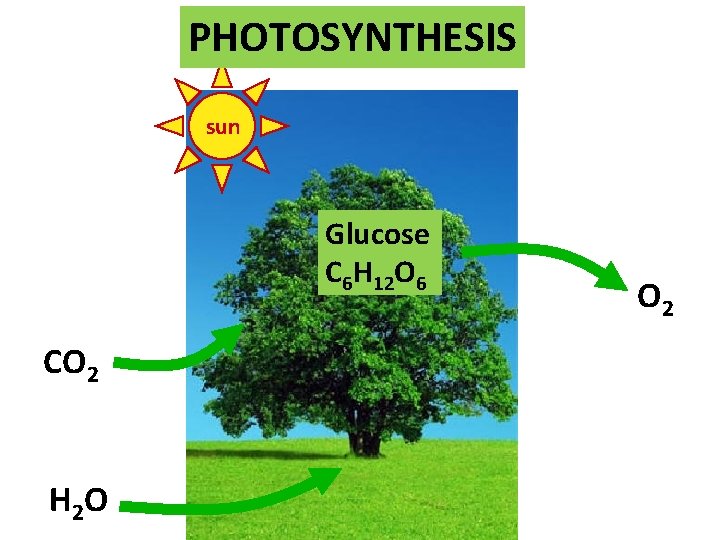
PHOTOSYNTHESIS sun Glucose C 6 H 12 O 6 CO 2 H 2 O O 2
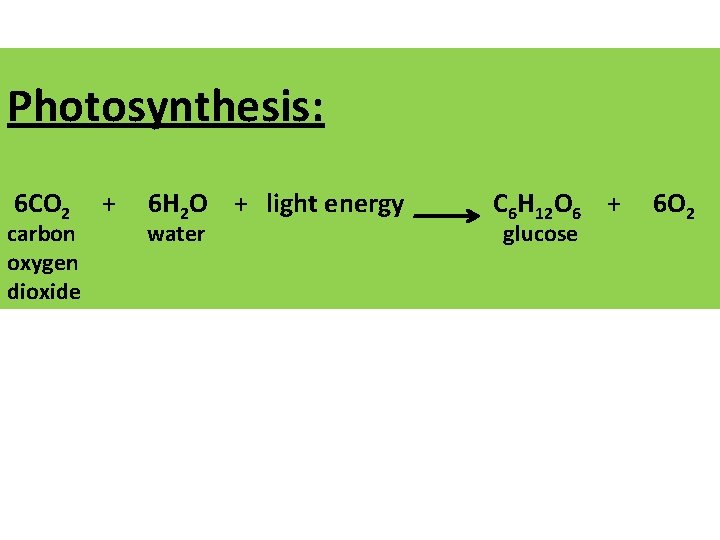
Photosynthesis: 6 CO 2 carbon oxygen dioxide + 6 H 2 O + light energy water C 6 H 12 O 6 + glucose 6 O 2
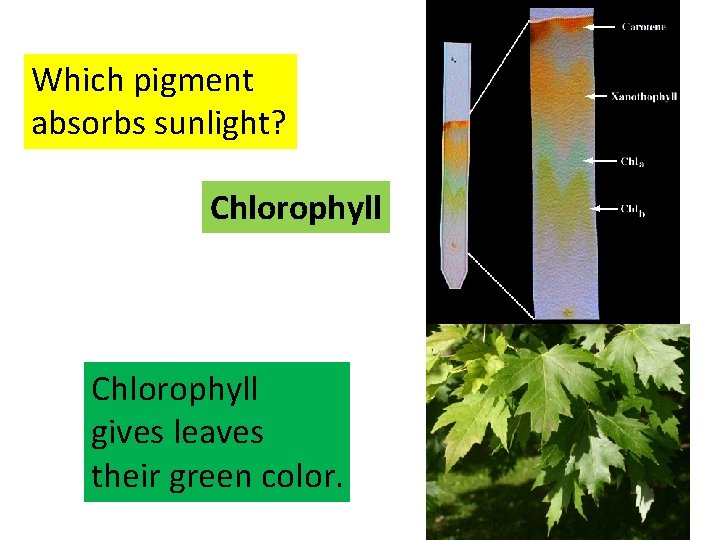
Which pigment absorbs sunlight? Chlorophyll gives leaves their green color.
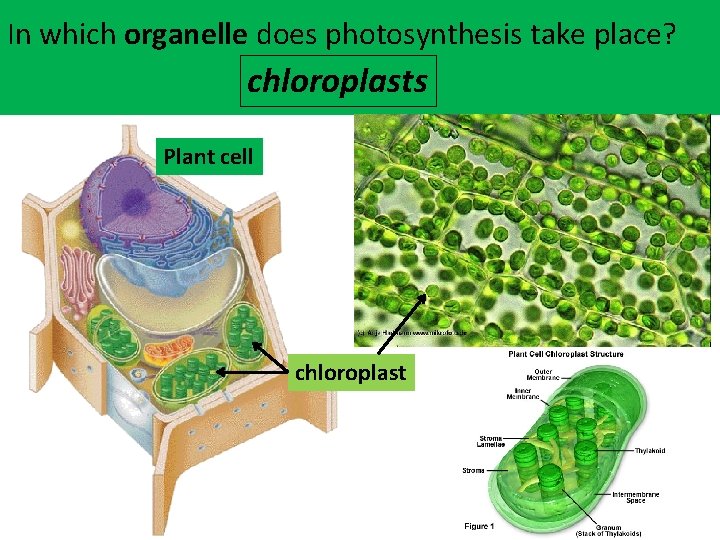
In which organelle does photosynthesis take place? chloroplasts Plant cell chloroplast
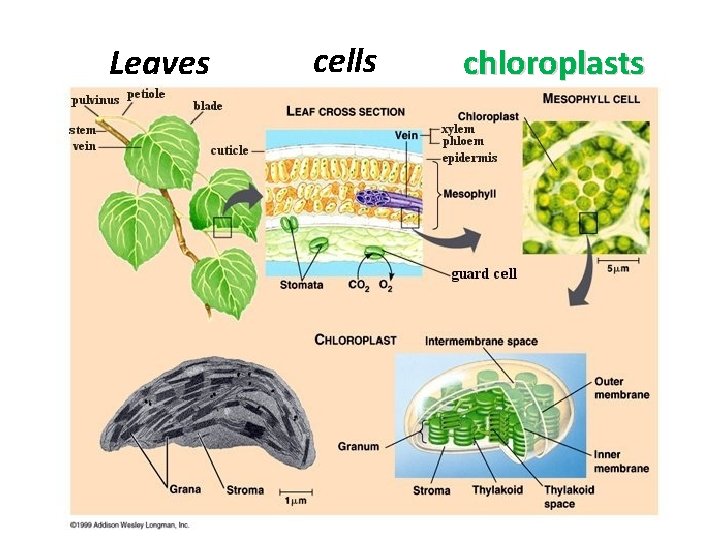
Leaves cells chloroplasts
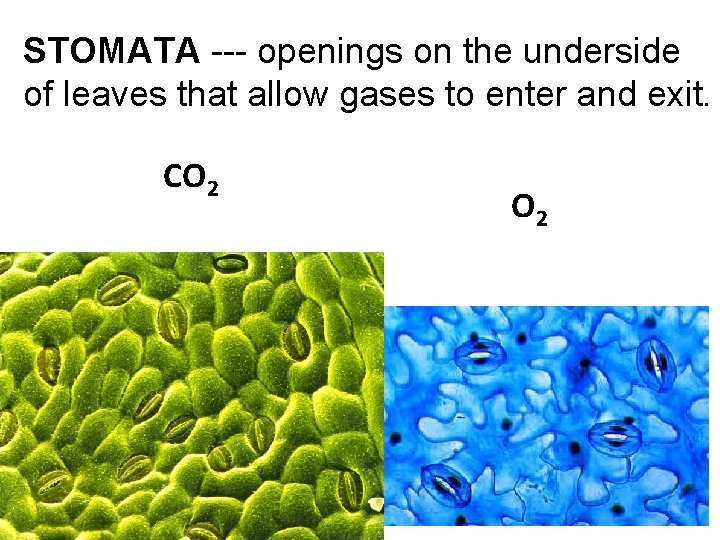
STOMATA --- openings on the underside of leaves that allow gases to enter and exit. CO 2
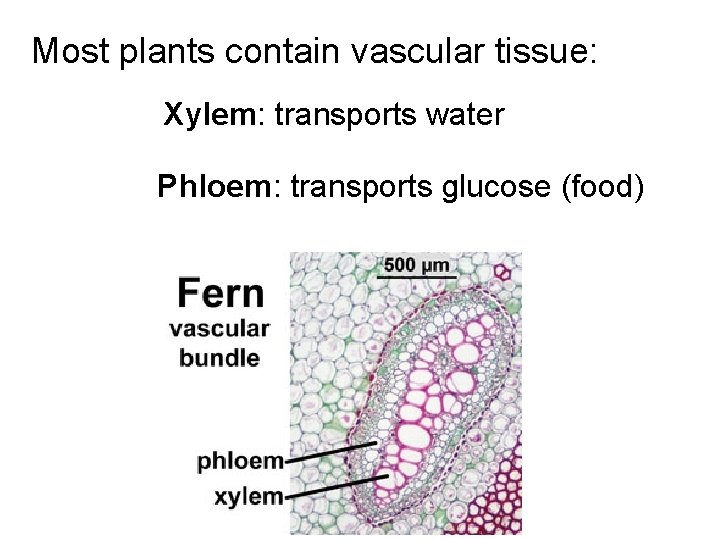
Most plants contain vascular tissue: Xylem: transports water Phloem: transports glucose (food)
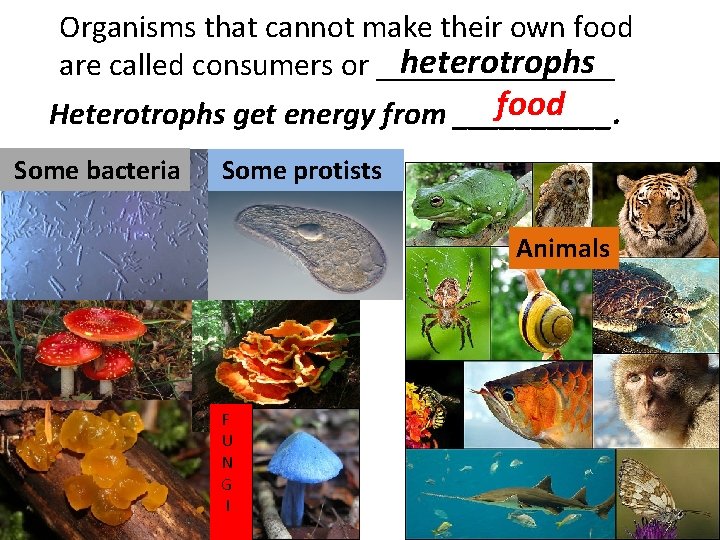
Organisms that cannot make their own food heterotrophs are called consumers or ________ food Heterotrophs get energy from _____. Some bacteria Some protists Animals Examples? F U N G I
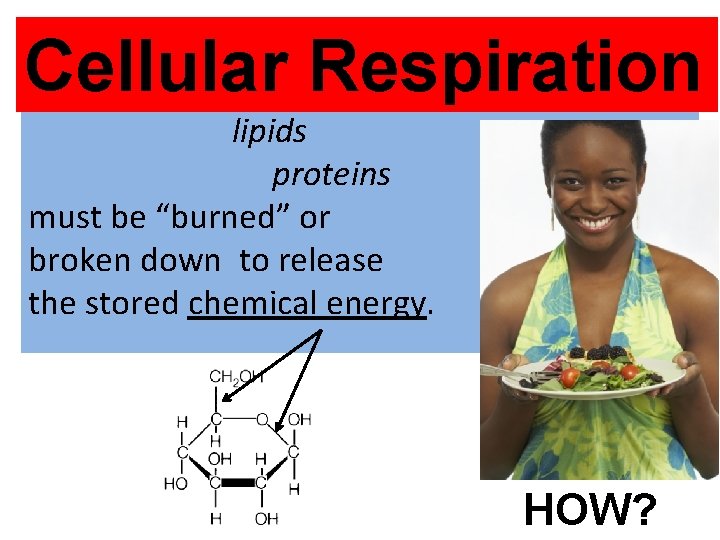
Foods carbohydrates lipids proteins must be “burned” or broken down to release the stored chemical energy. Cellular Respiration HOW?
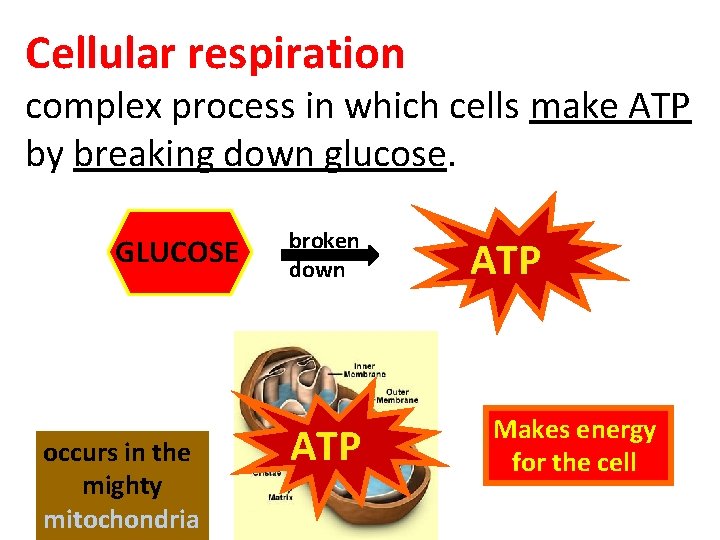
Cellular respiration complex process in which cells make ATP by breaking down glucose. GLUCOSE occurs in the mighty mitochondria broken down ATP Makes energy for the cell
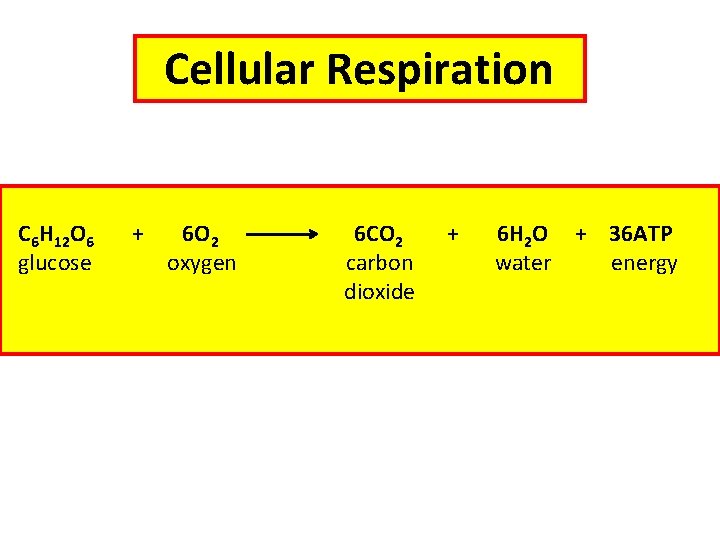
Cellular Respiration C 6 H 12 O 6 + 6 O 2 6 CO 2 + 6 H 2 O + 36 ATP glucose oxygen carbon water energy dioxide
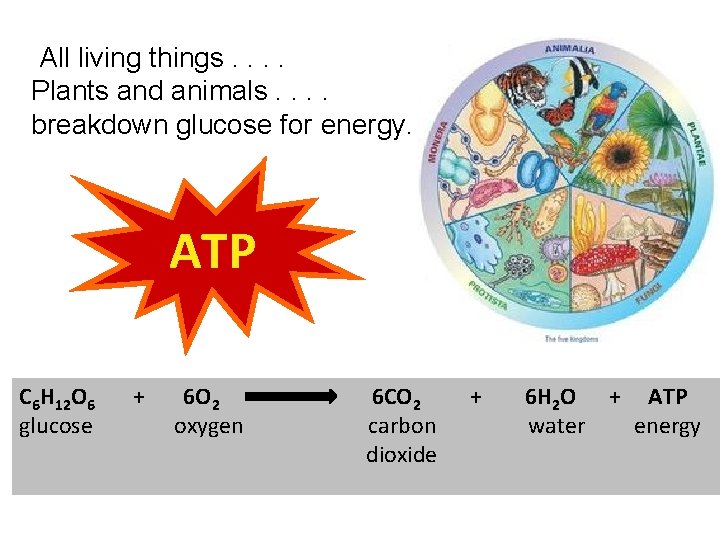
All living things. . Plants and animals. . breakdown glucose for energy. ATP C 6 H 12 O 6 + 6 O 2 6 CO 2 + 6 H 2 O + ATP glucose oxygen carbon water energy dioxide
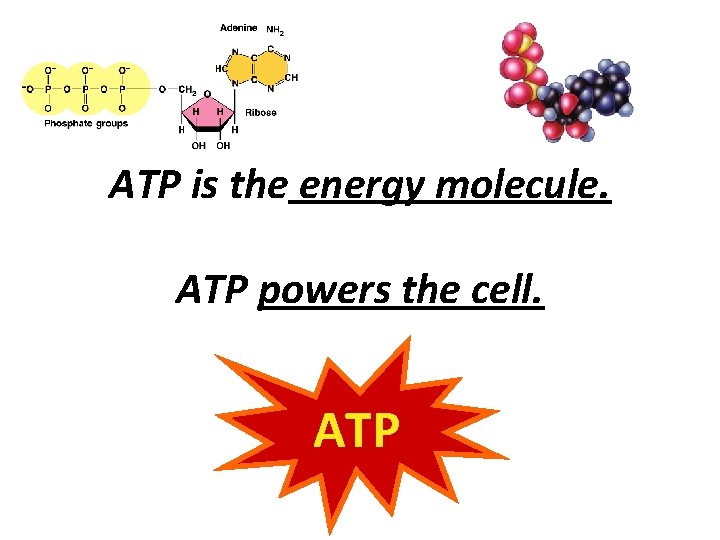
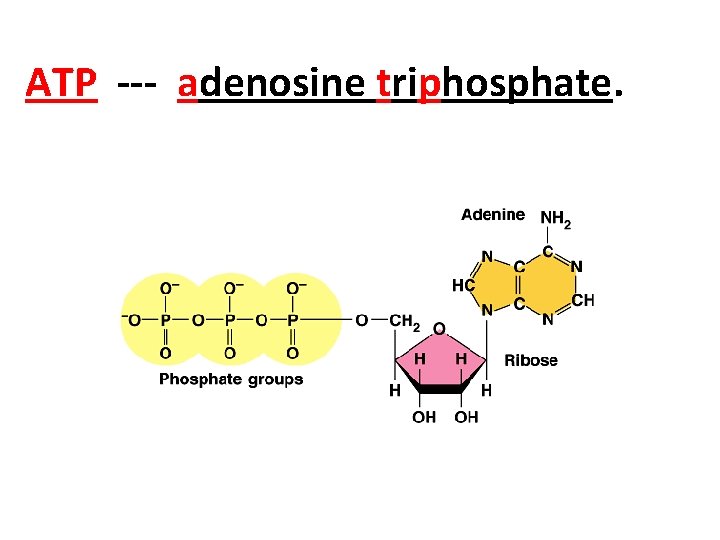
ATP is the energy molecule. ATP powers the cell. ATP
ATP --- adenosine triphosphate.