
Energy and Sustainable Tourism Energy Supply and Use
Energy and Sustainable Tourism: Energy Supply and Use in Off-Grid Ecotourism Facilities Pam Baldinger February 22, 2006
Objectives The objectives of this presentation are to provide an overview on: • Energy, ecotourism, and the bottom line • Issues USAID field officers must be aware of so they can take energy into account in sustainable tourism project planning and SOWs Focus This presentation will focus on tourism facilities in remote locations, and will cover the following topics: • Factors affecting energy use in ecolodges and other tourism facilities • Renewable and non-renewable energy sources and technologies for off-grid facilities • Factors affecting the selection of energy supply options and technologies • Impacts of energy systems on the local environment and communities

Energy and the lodging industry • Energy is vital, regardless of the location, type and/or size of operation • Conventional, grid-connected hotels typically operate with few energy supply concerns or end-use restrictions • Energy supply, use and efficiency are all major concerns for off-grid facilities • Energy supply problems in off-grid facilities can be addressed with technology • Cost of technology-intensive solutions tends to be high

Types of energy used in tourism facilities • Electricity: Energy source for electric lamps, motor-driven appliances and electronic devices • Thermal energy: Energy source for heating applications Conventional hotels are large energy consumers. Energy consumption per guest-night in small Caribbean tourist hotels typically ranges between 20 to 100 k. Wh/guest-night. In the Dominican Republic, electricity costs around. 18/k. Wh →$3. 60 -$18/night/room. This makes electricity the second highest operating cost after labor. Energy affects economic viability of the facility

Energy use in hotels and ecolodges • Efficiency benchmark for a conventional tourist hotel in tropical climates = 25 k. Wh/guest-night • An ecolodge providing basic services can consume less than 0. 5 k. Wh/guest-night (25 times less electricity than an energy-efficient hotel) • Principal energy use objectives for sustainable lodging facilities – minimize energy consumption (for environmental and economic purposes) – avoid electrical applications in locations where on-site electricity generation is costly – minimize the use of fossil fuels for electricity generation or thermal applications
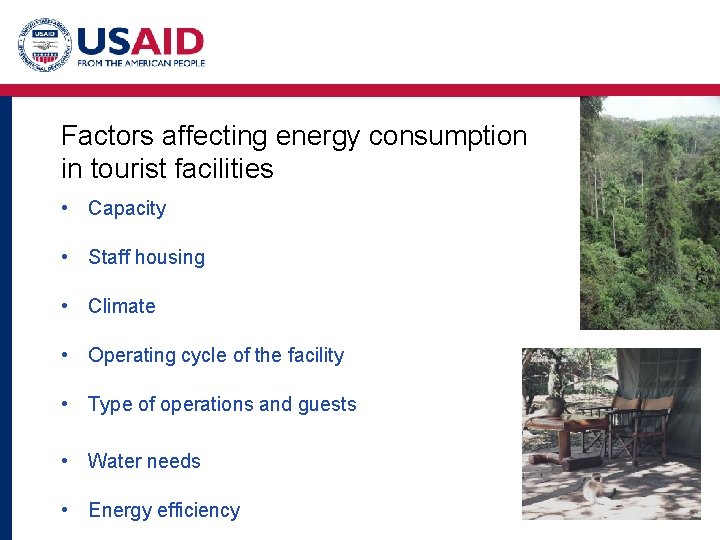
Factors affecting energy consumption in tourist facilities • Capacity • Staff housing • Climate • Operating cycle of the facility • Type of operations and guests • Water needs • Energy efficiency
Exercise Start Planning Your Tourism Facility 1. Identify all energy end-uses in this hotel. Create a list of all the major categories/activities that require electrical or thermal energy. 2. Now assume that you plan to build a sister facility in a remote, off-grid location. What could you do to minimize the total amount of energy that the facility would need to use for each of these end-uses? Place a second column next to the first indicating your choices.
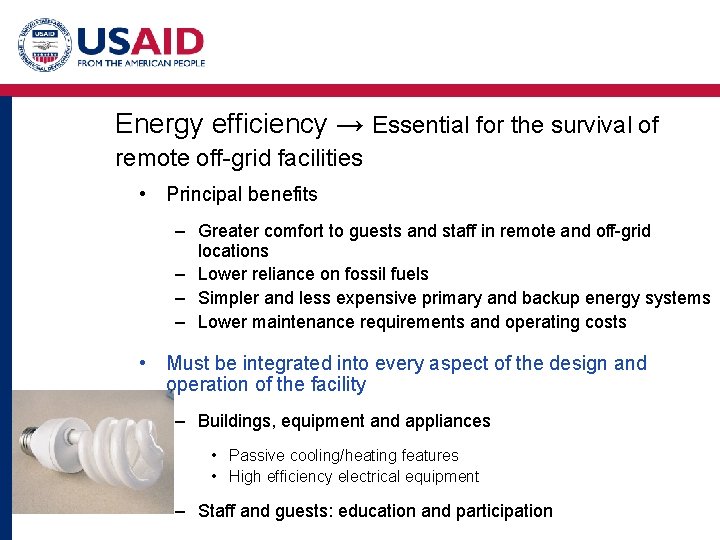
Energy efficiency → Essential for the survival of remote off-grid facilities • Principal benefits – Greater comfort to guests and staff in remote and off-grid locations – Lower reliance on fossil fuels – Simpler and less expensive primary and backup energy systems – Lower maintenance requirements and operating costs • Must be integrated into every aspect of the design and operation of the facility – Buildings, equipment and appliances • Passive cooling/heating features • High efficiency electrical equipment – Staff and guests: education and participation
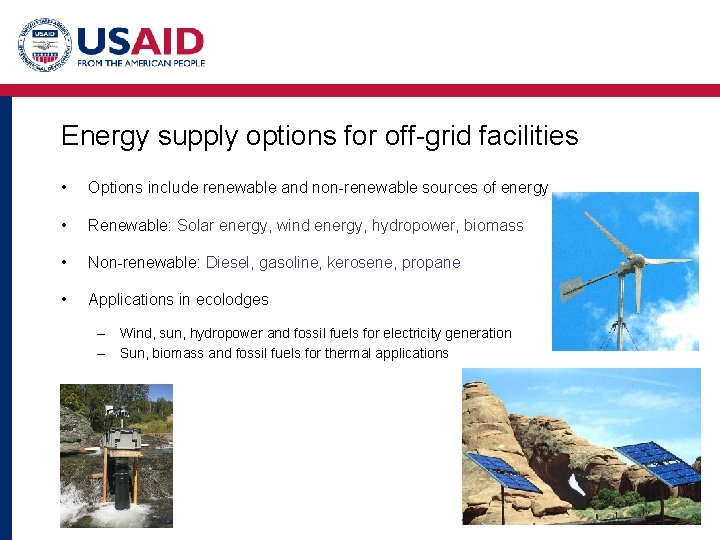
Energy supply options for off-grid facilities • Options include renewable and non-renewable sources of energy • Renewable: Solar energy, wind energy, hydropower, biomass • Non-renewable: Diesel, gasoline, kerosene, propane • Applications in ecolodges – Wind, sun, hydropower and fossil fuels for electricity generation – Sun, biomass and fossil fuels for thermal applications
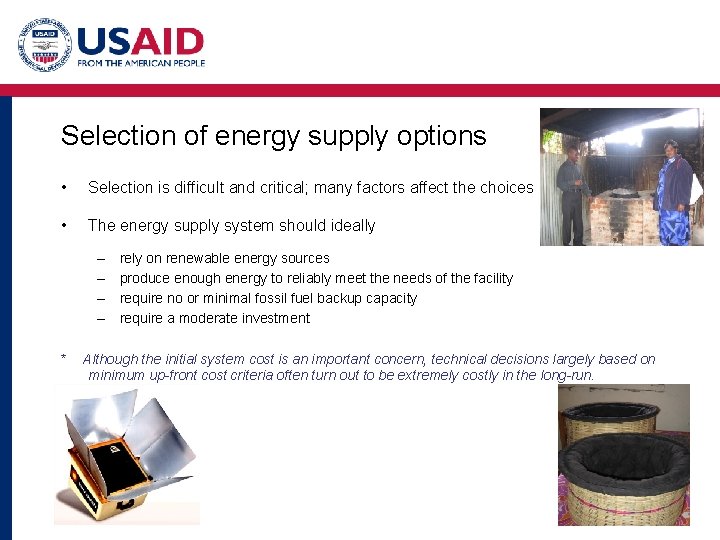
Selection of energy supply options • Selection is difficult and critical; many factors affect the choices • The energy supply system should ideally – – * rely on renewable energy sources produce enough energy to reliably meet the needs of the facility require no or minimal fossil fuel backup capacity require a moderate investment Although the initial system cost is an important concern, technical decisions largely based on minimum up-front cost criteria often turn out to be extremely costly in the long-run.
Factors affecting the selection of energy supply options • Energy needs and end-uses • Location and features of the site • Availability and time distribution of renewable energy sources • Availability of information on renewable energy resources – To determine applicability and capacity of the required systems; but – Collecting information can be a slow process
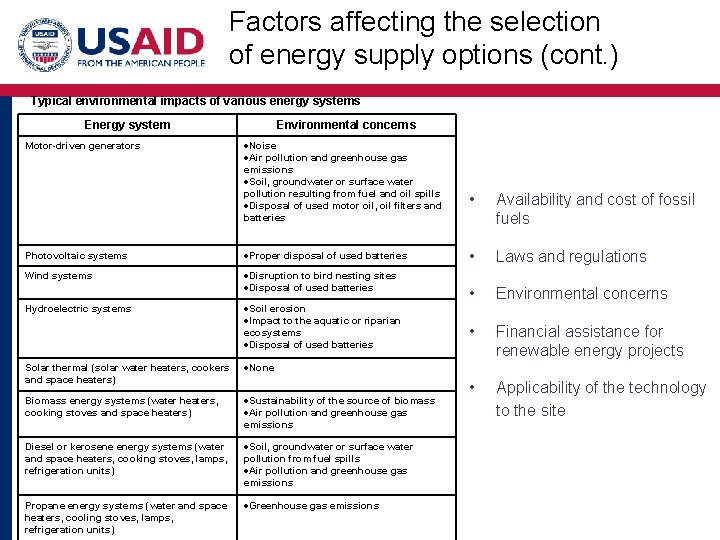
Factors affecting the selection of energy supply options (cont. ) Typical environmental impacts of various energy systems Energy system Motor-driven generators Environmental concerns Noise Air pollution and greenhouse gas emissions Soil, groundwater or surface water pollution resulting from fuel and oil spills Disposal of used motor oil, oil filters and batteries Photovoltaic systems Proper disposal of used batteries Wind systems Disruption to bird nesting sites Disposal of used batteries Hydroelectric systems Soil erosion Impact to the aquatic or riparian ecosystems Disposal of used batteries Solar thermal (solar water heaters, cookers and space heaters) None Biomass energy systems (water heaters, cooking stoves and space heaters) Sustainability of the source of biomass Air pollution and greenhouse gas emissions Diesel or kerosene energy systems (water and space heaters, cooking stoves, lamps, refrigeration units) Soil, groundwater or surface water pollution from fuel spills Air pollution and greenhouse gas emissions Propane energy systems (water and space heaters, cooling stoves, lamps, refrigeration units) Greenhouse gas emissions • Availability and cost of fossil fuels • Laws and regulations • Environmental concerns • Financial assistance for renewable energy projects • Applicability of the technology to the site
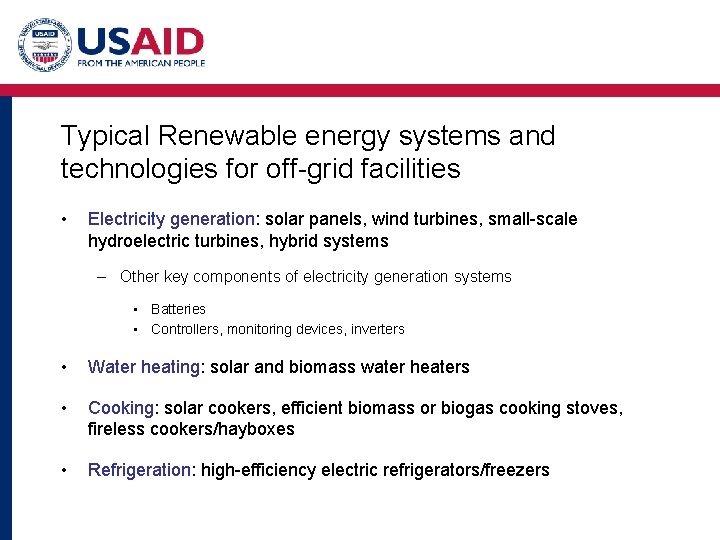
Typical Renewable energy systems and technologies for off-grid facilities • Electricity generation: solar panels, wind turbines, small-scale hydroelectric turbines, hybrid systems – Other key components of electricity generation systems • Batteries • Controllers, monitoring devices, inverters • Water heating: solar and biomass water heaters • Cooking: solar cookers, efficient biomass or biogas cooking stoves, fireless cookers/hayboxes • Refrigeration: high-efficiency electric refrigerators/freezers
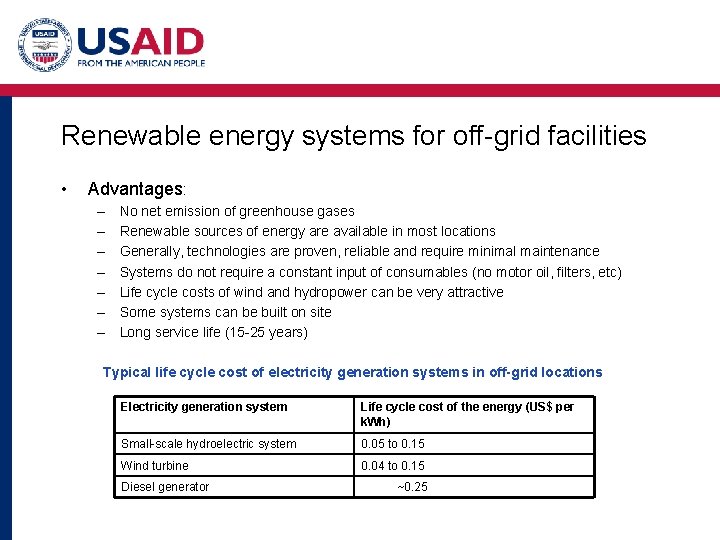
Renewable energy systems for off-grid facilities • Advantages: – – – – No net emission of greenhouse gases Renewable sources of energy are available in most locations Generally, technologies are proven, reliable and require minimal maintenance Systems do not require a constant input of consumables (no motor oil, filters, etc) Life cycle costs of wind and hydropower can be very attractive Some systems can be built on site Long service life (15 -25 years) Typical life cycle cost of electricity generation systems in off-grid locations Electricity generation system Life cycle cost of the energy (US$ per k. Wh) Small-scale hydroelectric system 0. 05 to 0. 15 Wind turbine 0. 04 to 0. 15 Diesel generator ~0. 25
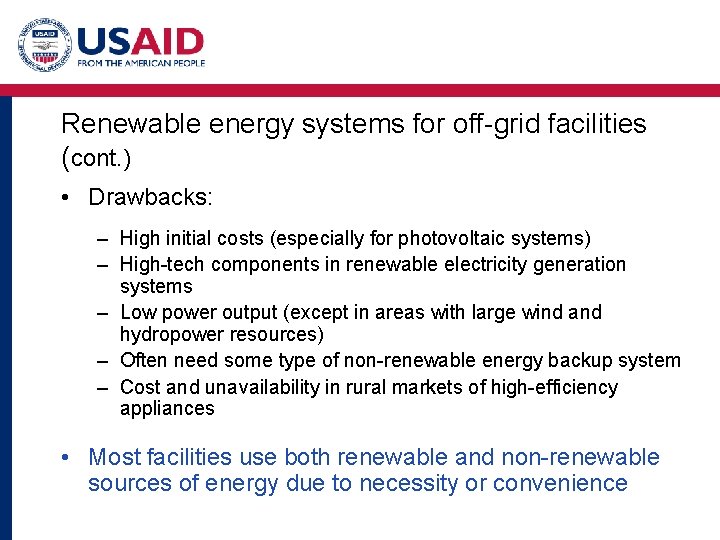
Renewable energy systems for off-grid facilities (cont. ) • Drawbacks: – High initial costs (especially for photovoltaic systems) – High-tech components in renewable electricity generation systems – Low power output (except in areas with large wind and hydropower resources) – Often need some type of non-renewable energy backup system – Cost and unavailability in rural markets of high-efficiency appliances • Most facilities use both renewable and non-renewable sources of energy due to necessity or convenience
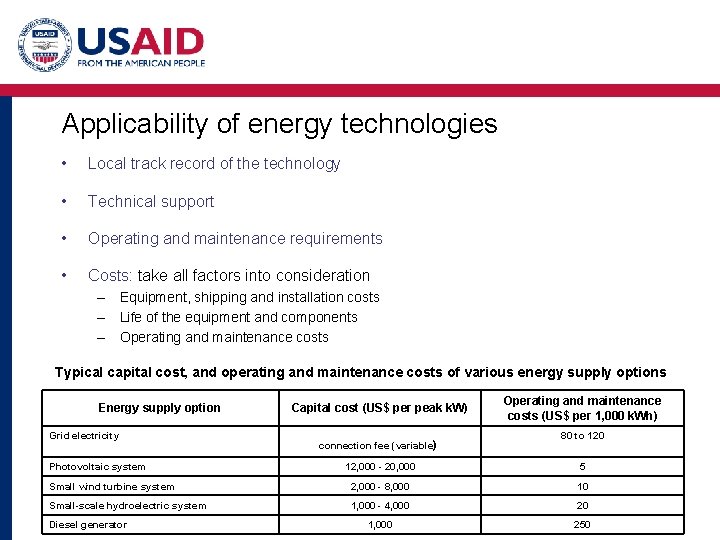
Applicability of energy technologies • Local track record of the technology • Technical support • Operating and maintenance requirements • Costs: take all factors into consideration – Equipment, shipping and installation costs – Life of the equipment and components – Operating and maintenance costs Typical capital cost, and operating and maintenance costs of various energy supply options Energy supply option Grid electricity Photovoltaic system Capital cost (US$ per peak k. W) connection fee (variable) Operating and maintenance costs (US$ per 1, 000 k. Wh) 80 to 120 12, 000 - 20, 000 5 Small wind turbine system 2, 000 - 8, 000 10 Small-scale hydroelectric system 1, 000 - 4, 000 20 1, 000 250 Diesel generator
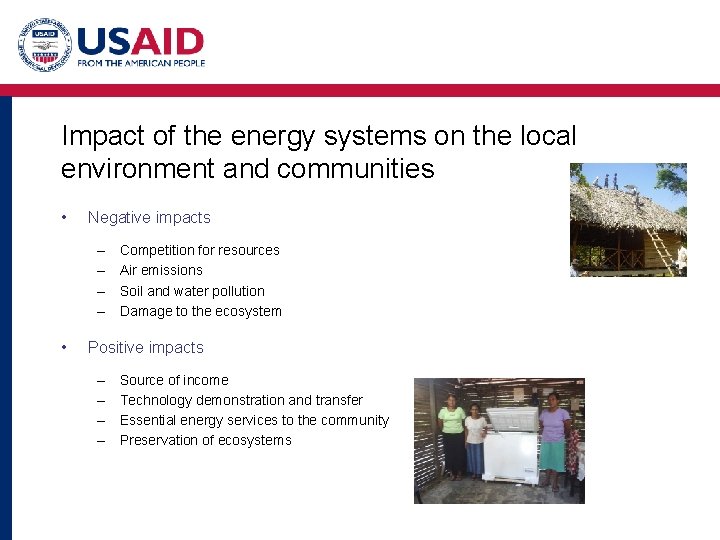
Impact of the energy systems on the local environment and communities • Negative impacts – – • Competition for resources Air emissions Soil and water pollution Damage to the ecosystem Positive impacts – – Source of income Technology demonstration and transfer Essential energy services to the community Preservation of ecosystems
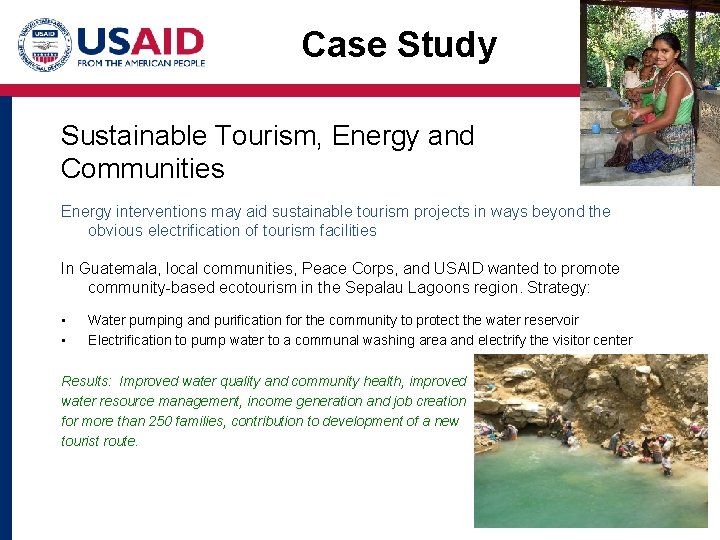
Case Study Sustainable Tourism, Energy and Communities Energy interventions may aid sustainable tourism projects in ways beyond the obvious electrification of tourism facilities In Guatemala, local communities, Peace Corps, and USAID wanted to promote community-based ecotourism in the Sepalau Lagoons region. Strategy: • • Water pumping and purification for the community to protect the water reservoir Electrification to pump water to a communal washing area and electrify the visitor center Results: Improved water quality and community health, improved water resource management, income generation and job creation for more than 250 families, contribution to development of a new tourist route.
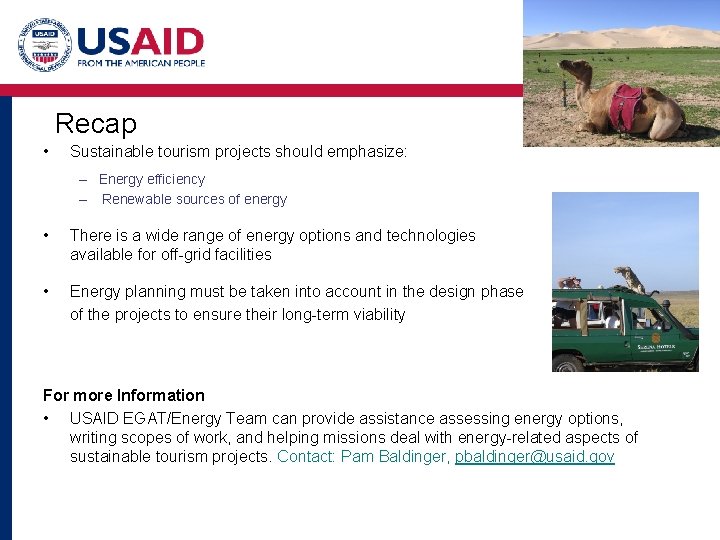
Recap • Sustainable tourism projects should emphasize: – Energy efficiency – Renewable sources of energy • There is a wide range of energy options and technologies available for off-grid facilities • Energy planning must be taken into account in the design phase of the projects to ensure their long-term viability For more Information • USAID EGAT/Energy Team can provide assistance assessing energy options, writing scopes of work, and helping missions deal with energy-related aspects of sustainable tourism projects. Contact: Pam Baldinger, pbaldinger@usaid. gov
- Slides: 19