
Energy and Resource Management Challenges in Data Centers




- Slides: 40
Energy and Resource Management Challenges in Data Centers A Feedback Control and Optimization Perspective Tarek Abdelzaher
2 Early Challenges… More Recent Research… Emerging Challenges…
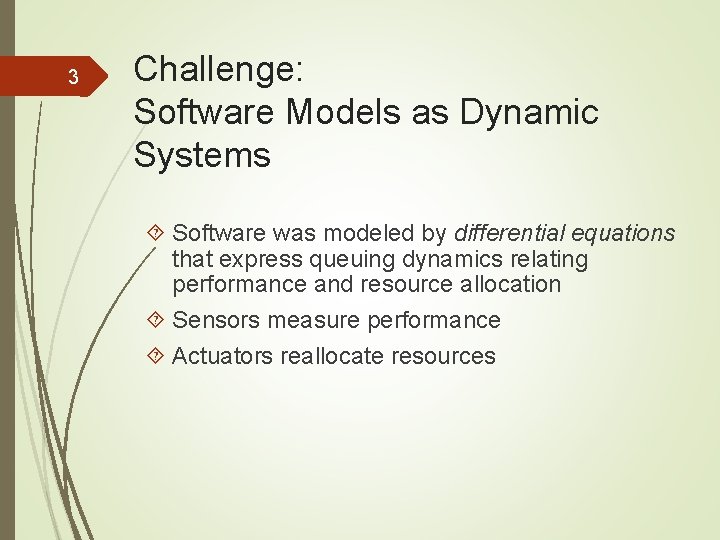
3 Challenge: Software Models as Dynamic Systems Software was modeled by differential equations that express queuing dynamics relating performance and resource allocation Sensors measure performance Actuators reallocate resources
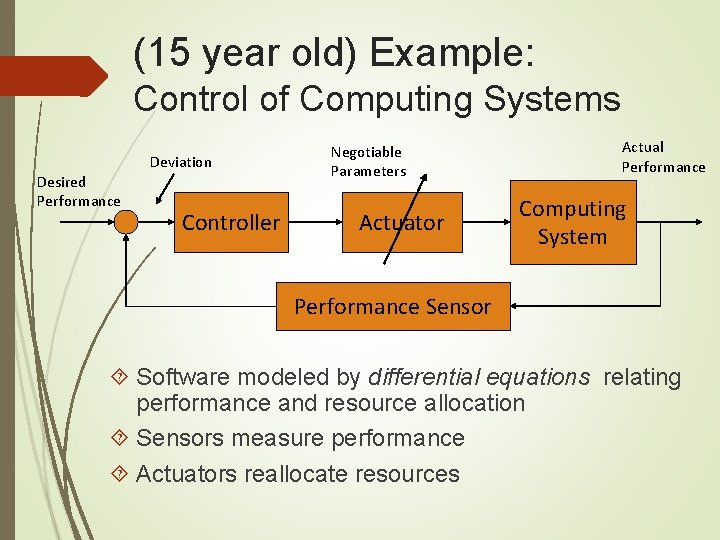
(15 year old) Example: Control of Computing Systems Deviation Desired Performance Controller Negotiable Parameters Actuator Actual Performance Computing System Performance Sensor Software modeled by differential equations relating performance and resource allocation Sensors measure performance Actuators reallocate resources
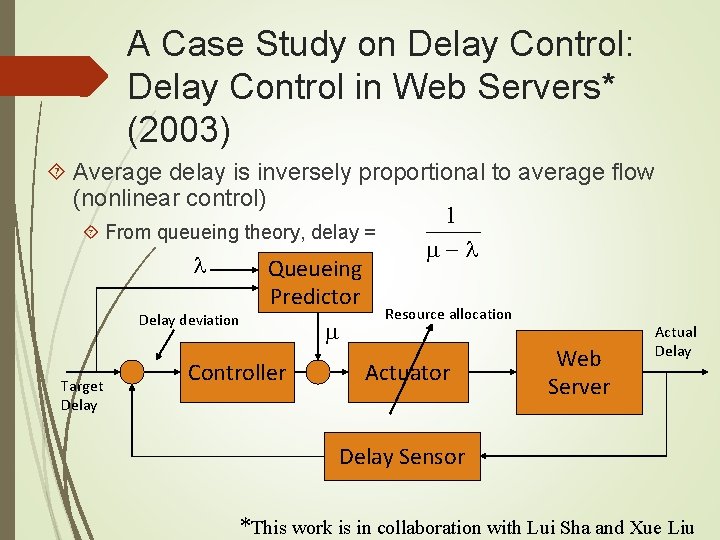
A Case Study on Delay Control: Delay Control in Web Servers* (2003) Average delay is inversely proportional to average flow (nonlinear control) 1 From queueing theory, delay = m-l l Queueing Predictor Resource allocation Delay deviation Actual m Delay Web Controller Actuator Target Server Delay Sensor *This work is in collaboration with Lui Sha and Xue Liu
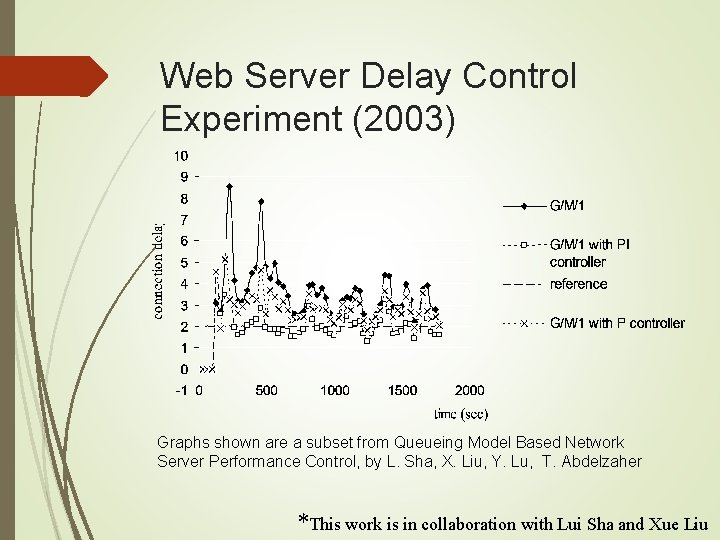
Web Server Delay Control Experiment (2003) Graphs shown are a subset from Queueing Model Based Network Server Performance Control, by L. Sha, X. Liu, Y. Lu, T. Abdelzaher *This work is in collaboration with Lui Sha and Xue Liu
7 Early Challenges… More Recent Research… Emerging Challenges…
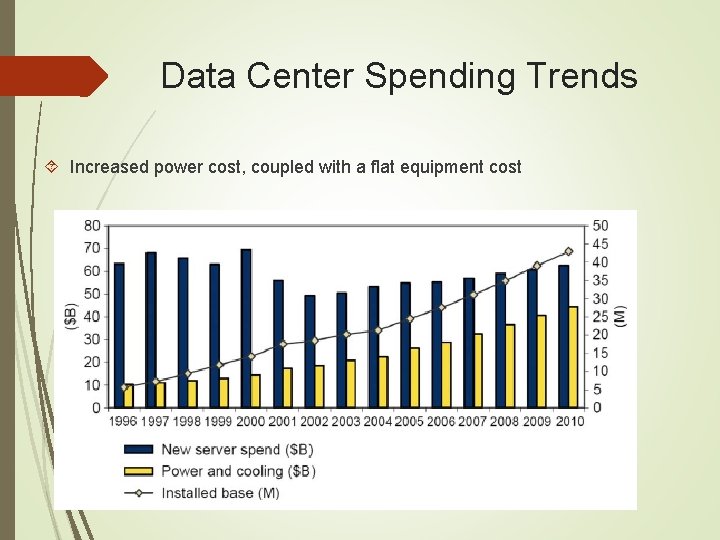
Data Center Spending Trends Increased power cost, coupled with a flat equipment cost
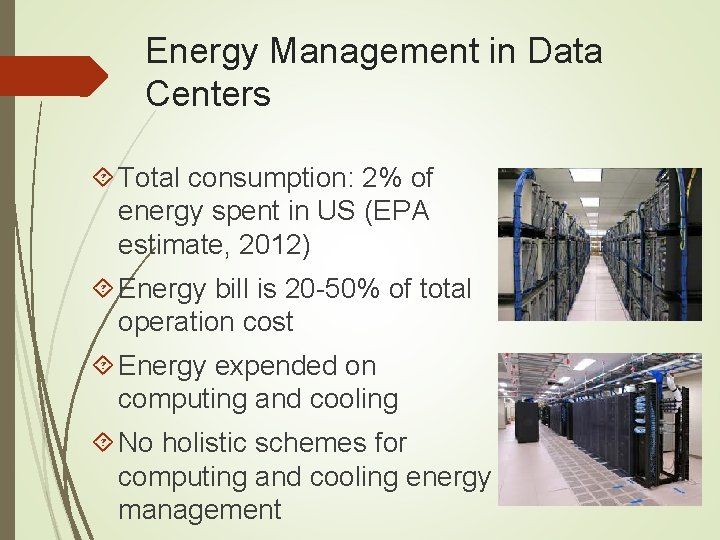
Energy Management in Data Centers Total consumption: 2% of energy spent in US (EPA estimate, 2012) Energy bill is 20 -50% of total operation cost Energy expended on computing and cooling No holistic schemes for computing and cooling energy management
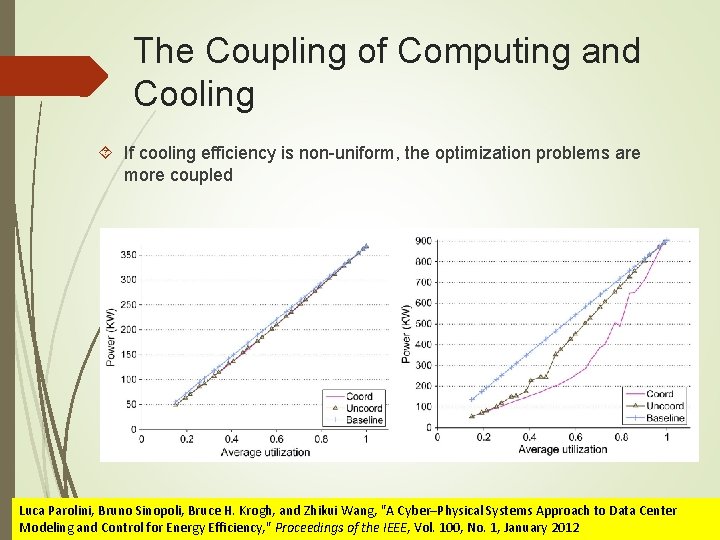
The Coupling of Computing and Cooling If cooling efficiency is non-uniform, the optimization problems are more coupled Luca Parolini, Bruno Sinopoli, Bruce H. Krogh, and Zhikui Wang, "A Cyber–Physical Systems Approach to Data Center Modeling and Control for Energy Efficiency, " Proceedings of the IEEE, Vol. 100, No. 1, January 2012
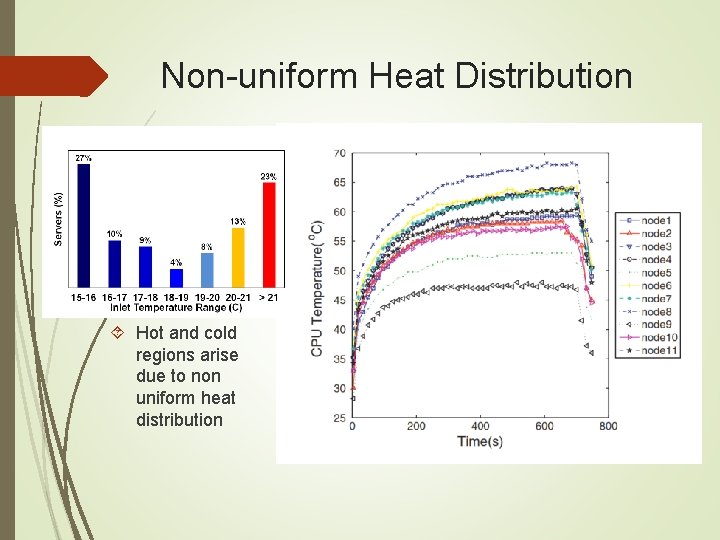
Non-uniform Heat Distribution Hot and cold regions arise due to non uniform heat distribution
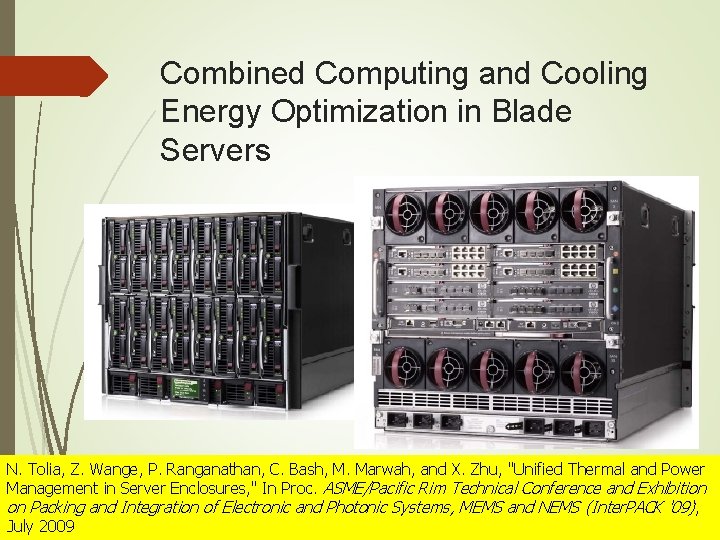
Combined Computing and Cooling Energy Optimization in Blade Servers N. Tolia, Z. Wange, P. Ranganathan, C. Bash, M. Marwah, and X. Zhu, "Unified Thermal and Power Management in Server Enclosures, " In Proc. ASME/Pacific Rim Technical Conference and Exhibition on Packing and Integration of Electronic and Photonic Systems, MEMS and NEMS (Inter. PACK '09), July 2009
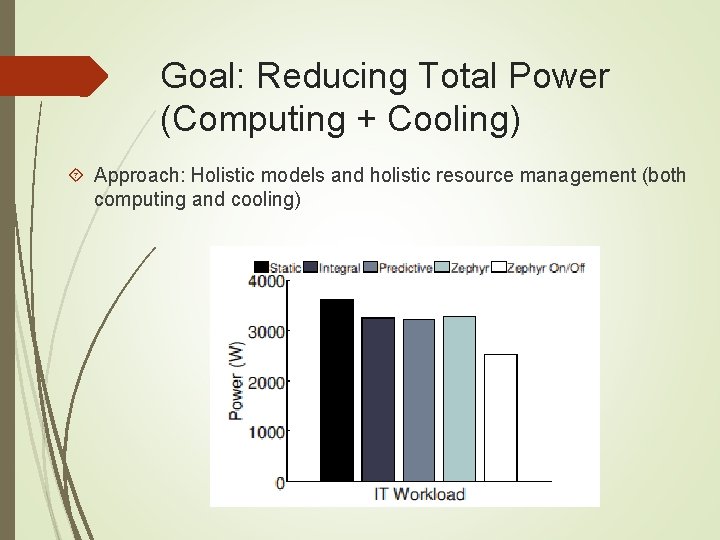
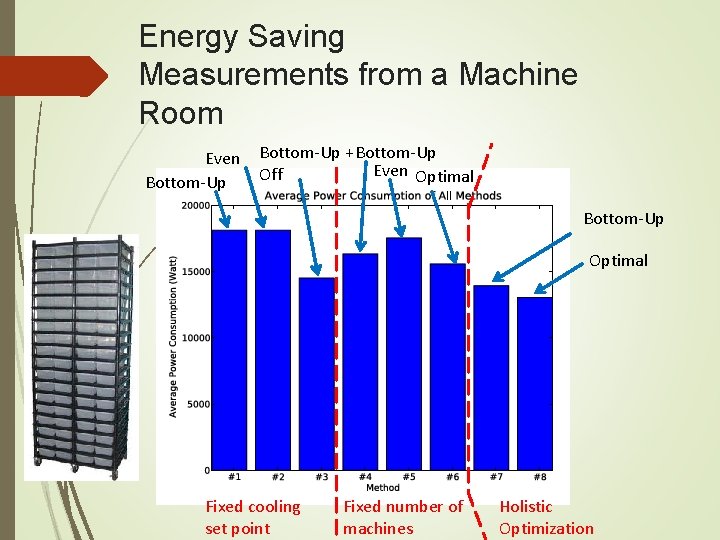
Goal: Reducing Total Power (Computing + Cooling) Approach: Holistic models and holistic resource management (both computing and cooling)
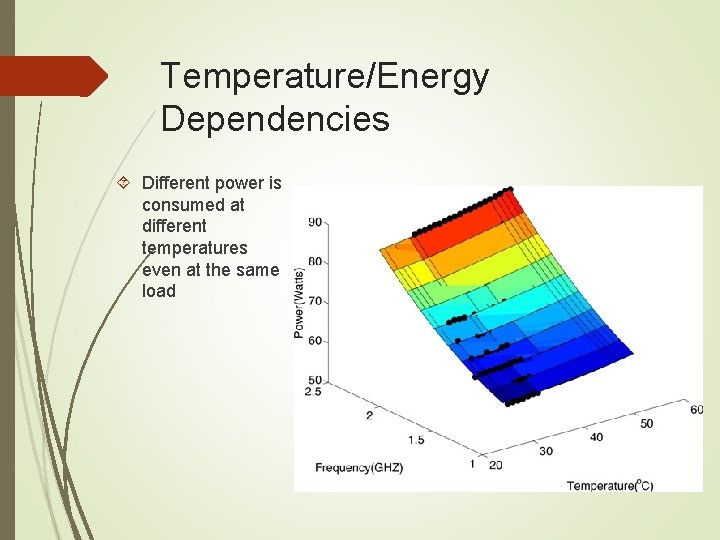
Temperature/Energy Dependencies Different power is consumed at different temperatures even at the same load
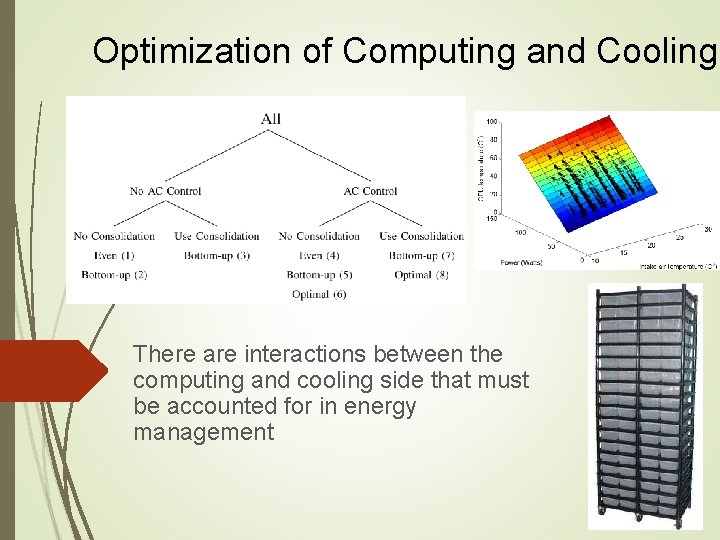
Optimization of Computing and Cooling There are interactions between the computing and cooling side that must be accounted for in energy management
Energy Saving Measurements from a Machine Room Even Bottom-Up + Bottom-Up Even Optimal Off Bottom-Up Optimal Fixed cooling set point Fixed number of machines Holistic Optimization
17 Early Challenges… More Recent Research… Emerging Challenges…
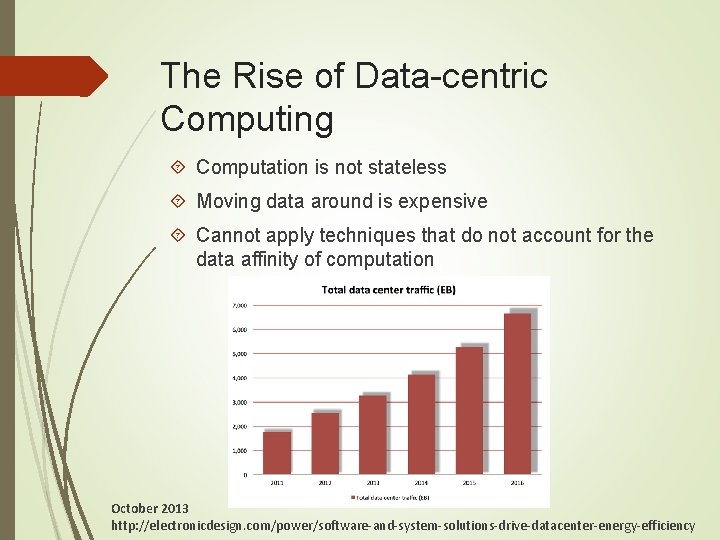
The Rise of Data-centric Computing Computation is not stateless Moving data around is expensive Cannot apply techniques that do not account for the data affinity of computation October 2013 http: //electronicdesign. com/power/software-and-system-solutions-drive-datacenter-energy-efficiency
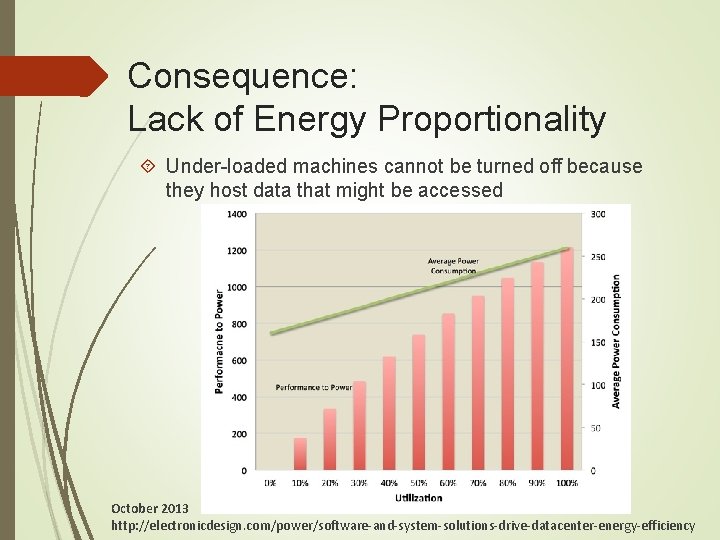
Consequence: Lack of Energy Proportionality Under-loaded machines cannot be turned off because they host data that might be accessed October 2013 http: //electronicdesign. com/power/software-and-system-solutions-drive-datacenter-energy-efficiency
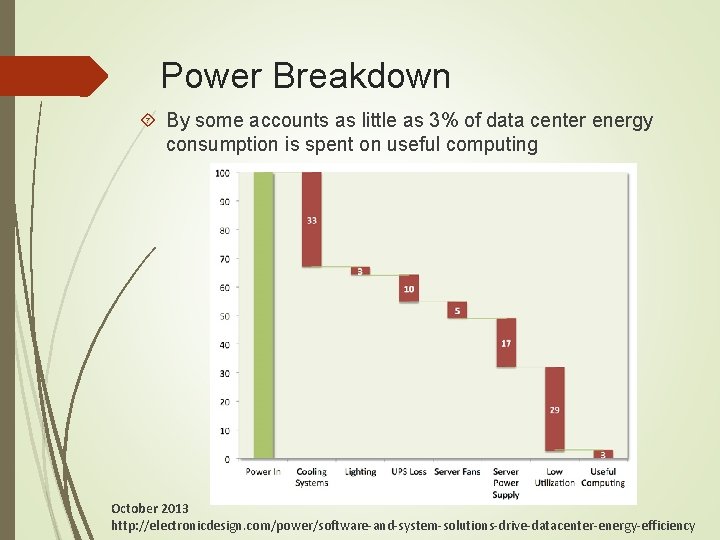
Power Breakdown By some accounts as little as 3% of data center energy consumption is spent on useful computing October 2013 http: //electronicdesign. com/power/software-and-system-solutions-drive-datacenter-energy-efficiency
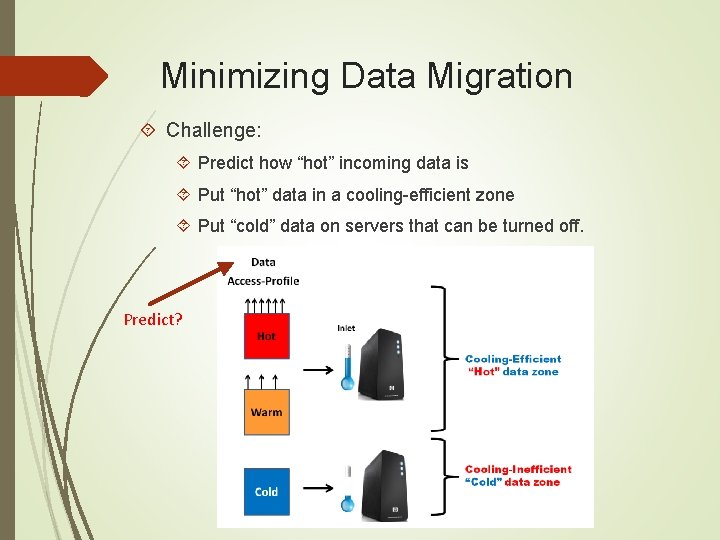
Minimizing Data Migration Challenge: Predict how “hot” incoming data is Put “hot” data in a cooling-efficient zone Put “cold” data on servers that can be turned off. Predict?
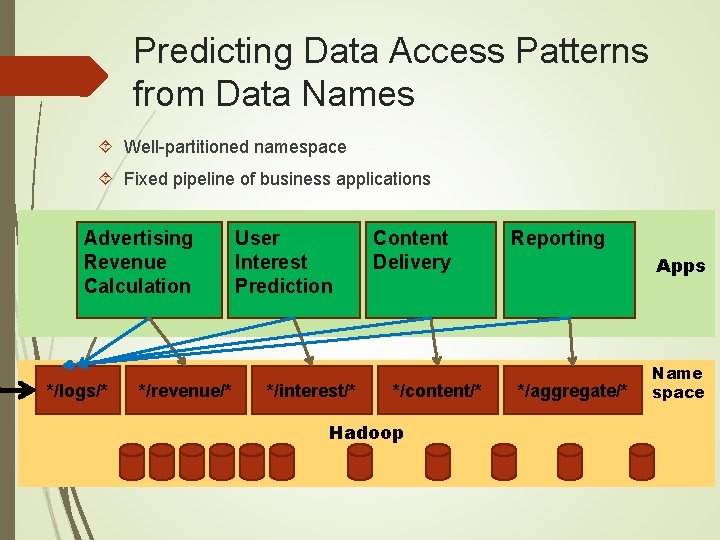
Predicting Data Access Patterns from Data Names Well-partitioned namespace Fixed pipeline of business applications Advertising Revenue Calculation */logs/* */revenue/* User Interest Prediction */interest/* Content Delivery */content/* Hadoop Reporting Apps */aggregate/* Name space
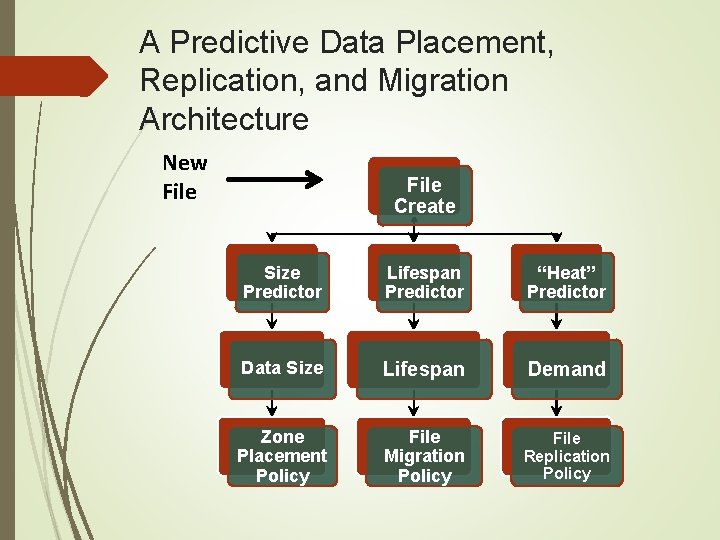
A Predictive Data Placement, Replication, and Migration Architecture New File Create Size Predictor Lifespan Predictor “Heat” Predictor Data Size Lifespan Demand Zone Placement Policy File Migration Policy File Replication Policy
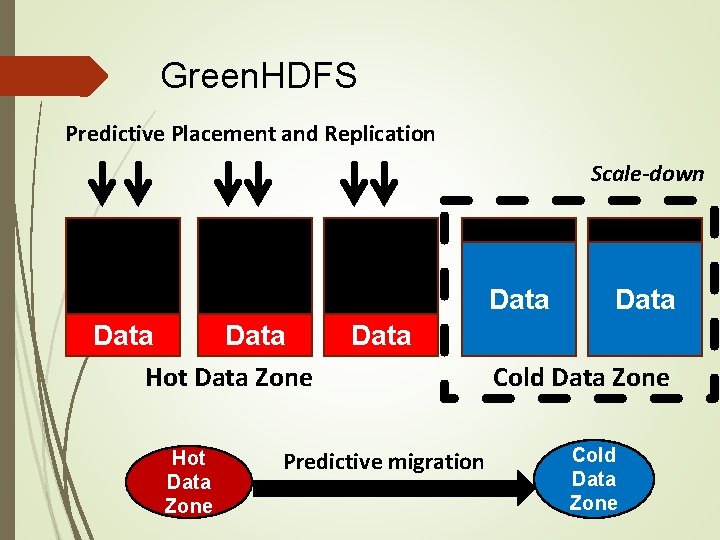
Green. HDFS Predictive Placement and Replication Scale-down Data Hot Data Zone Data Predictive migration Cold Data Zone
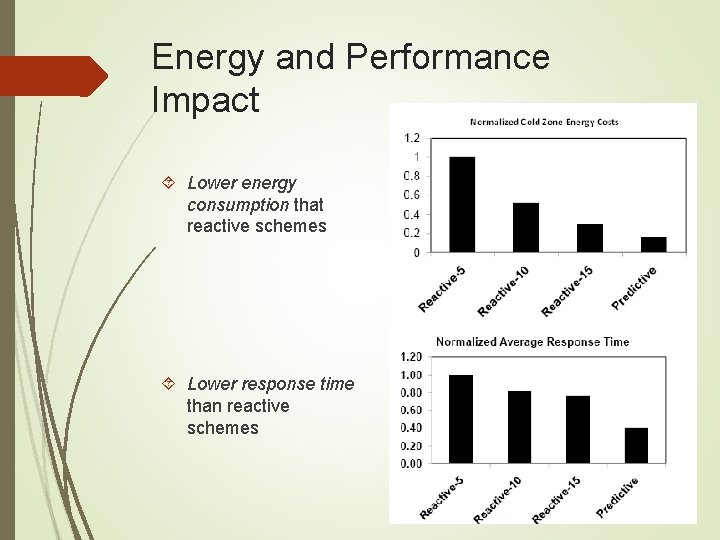
Energy and Performance Impact Lower energy consumption that reactive schemes Lower response time than reactive schemes
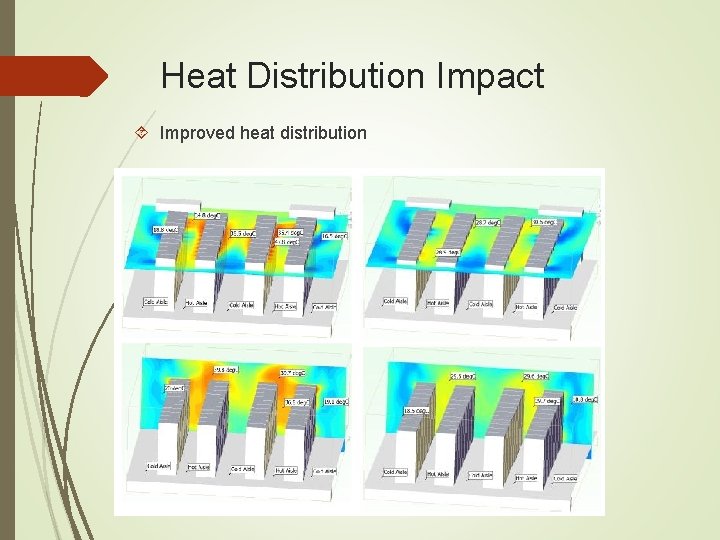
Heat Distribution Impact Improved heat distribution
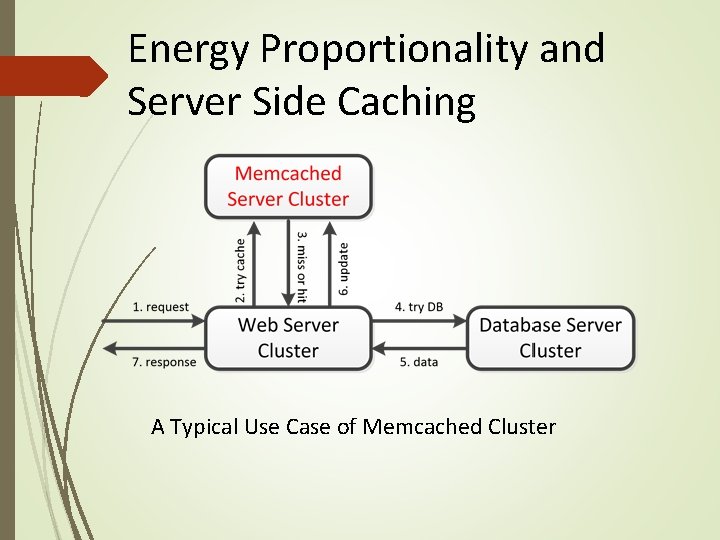
Energy Proportionality and Server Side Caching A Typical Use Case of Memcached Cluster
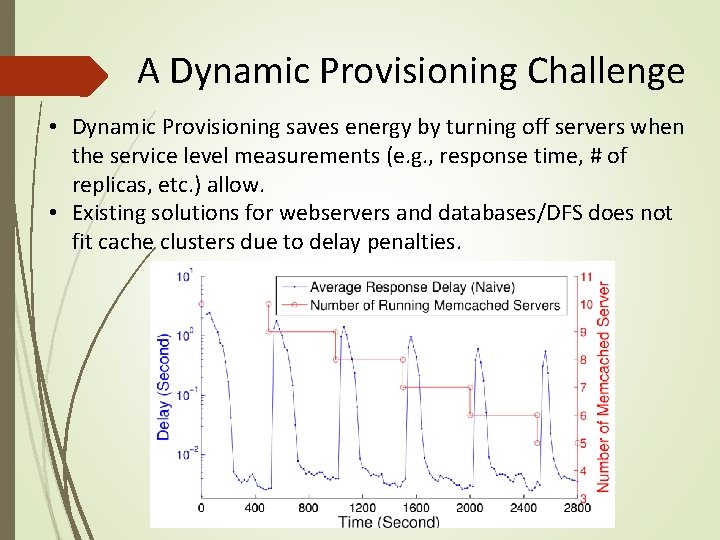
A Dynamic Provisioning Challenge • Dynamic Provisioning saves energy by turning off servers when the service level measurements (e. g. , response time, # of replicas, etc. ) allow. • Existing solutions for webservers and databases/DFS does not fit cache clusters due to delay penalties.
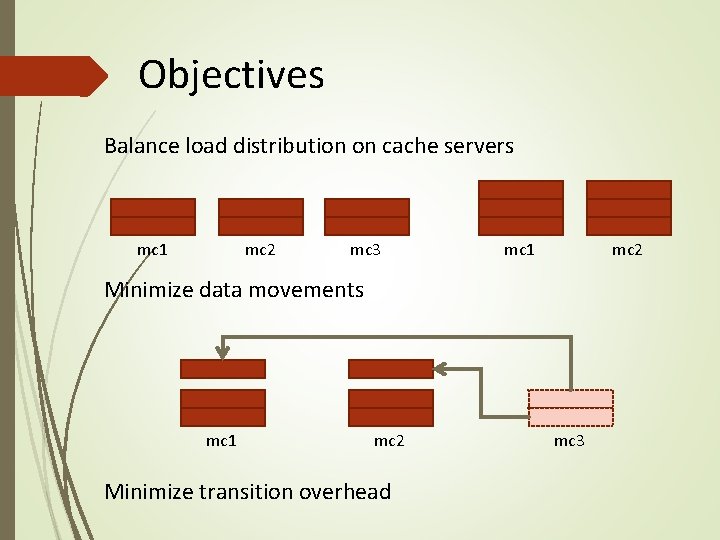
Objectives Balance load distribution on cache servers mc 1 mc 2 mc 3 mc 1 mc 2 Minimize data movements mc 1 mc 2 Minimize transition overhead mc 3
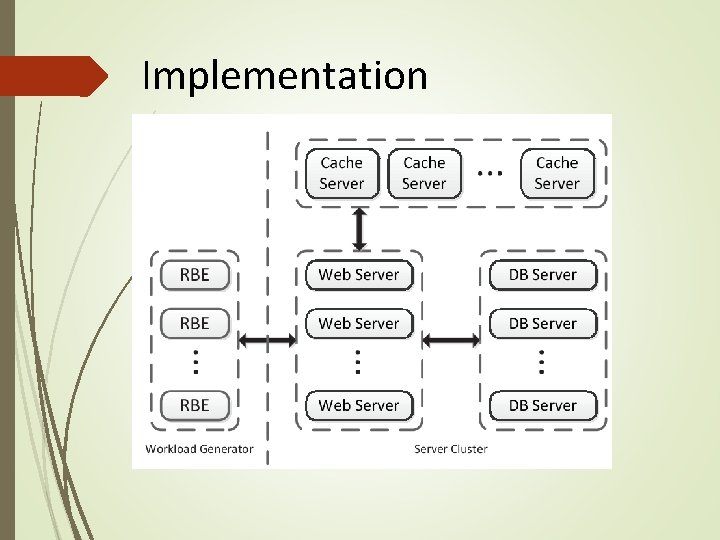
Implementation
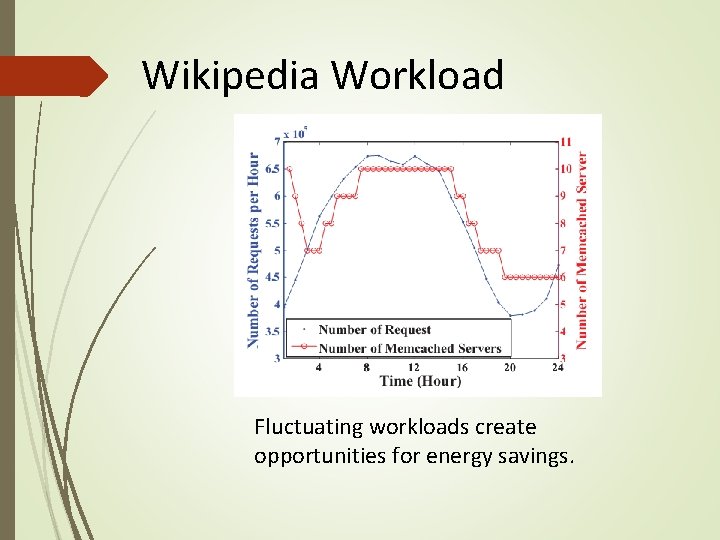
Wikipedia Workload Fluctuating workloads create opportunities for energy savings.
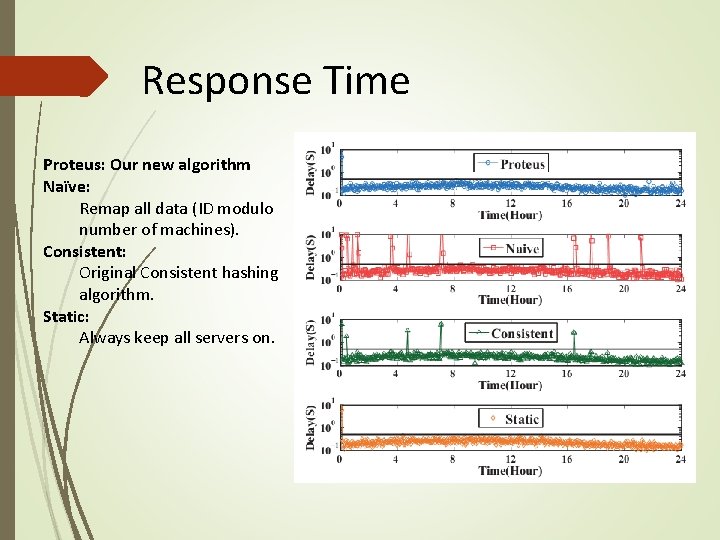
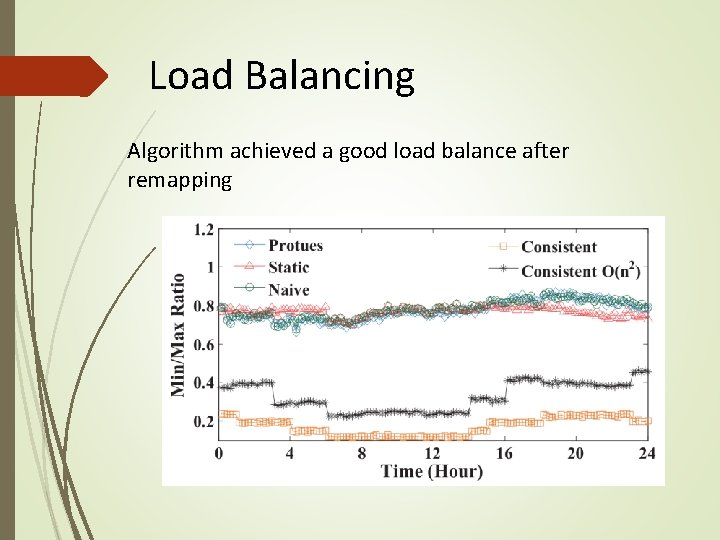
Response Time Proteus: Our new algorithm Naïve: Remap all data (ID modulo number of machines). Consistent: Original Consistent hashing algorithm. Static: Always keep all servers on.
Load Balancing Algorithm achieved a good load balance after remapping
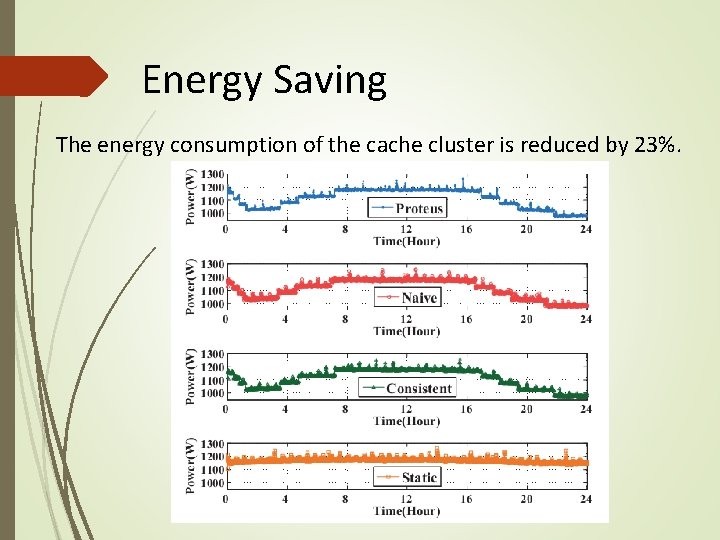
Energy Saving The energy consumption of the cache cluster is reduced by 23%.
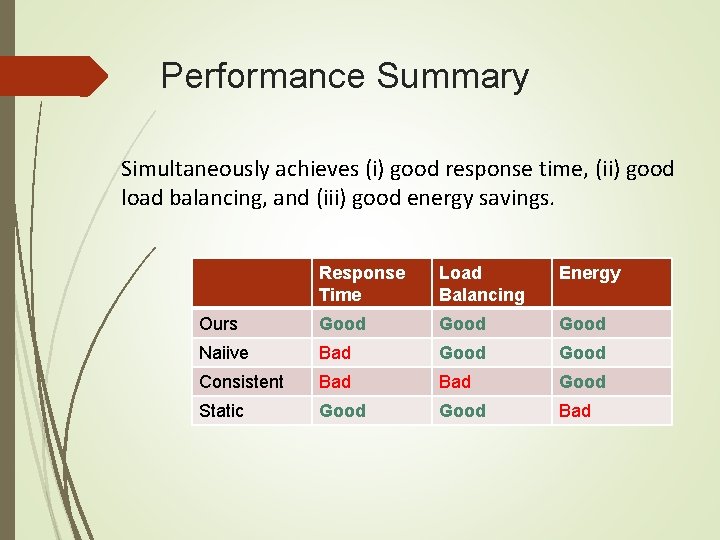
Performance Summary Simultaneously achieves (i) good response time, (ii) good load balancing, and (iii) good energy savings. Response Time Load Balancing Energy Ours Good Naiive Bad Good Consistent Bad Good Static Good Bad
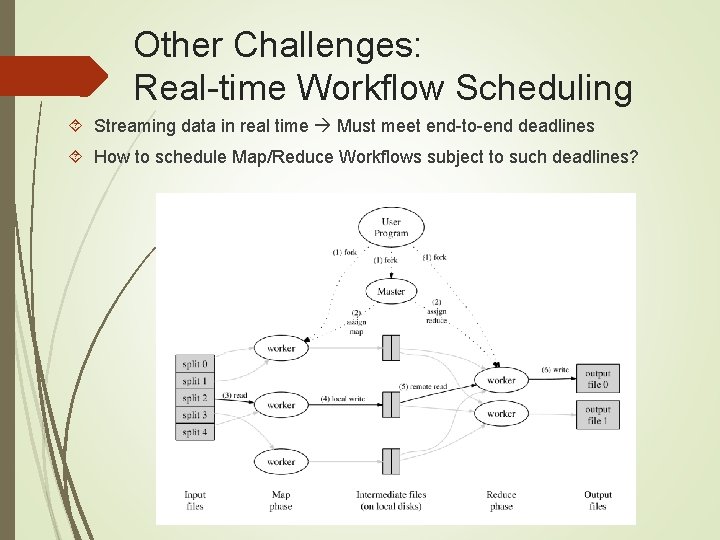
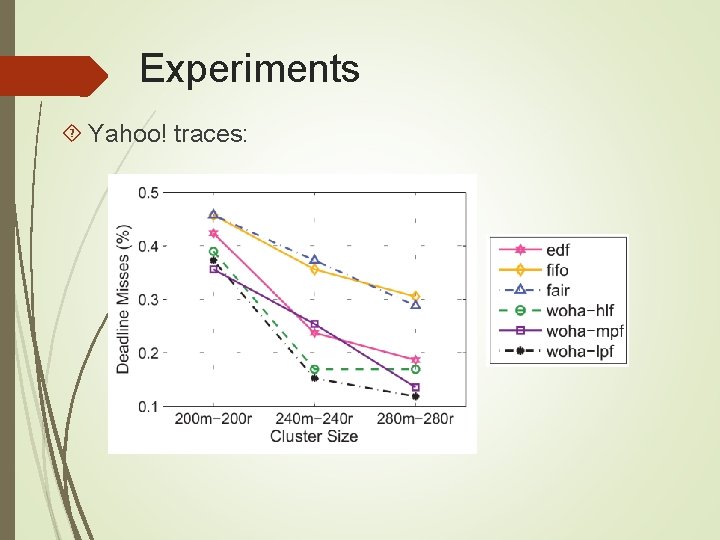
Other Challenges: Real-time Workflow Scheduling Streaming data in real time Must meet end-to-end deadlines How to schedule Map/Reduce Workflows subject to such deadlines?
Progress-Based Scheduling Intra-workflow prioritization: borrow from existing work (e. g. , Highest Level First, Longest Path First, Highest Parallelism First. ) Inter-workflow prioritization: Compute remaining progress it has to make in order to meet the deadline (if it monopolized a minimal cluster). The workflow that falls the most behind gets the highest priority.
Experiments Yahoo! traces:
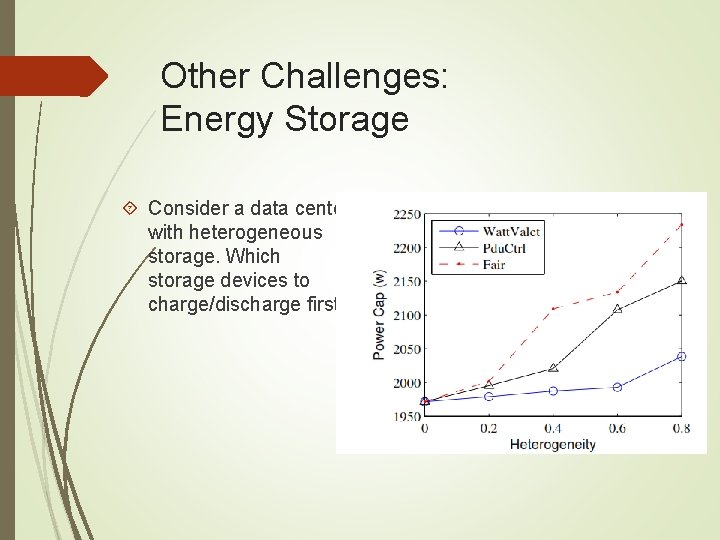
Other Challenges: Energy Storage Consider a data center with heterogeneous storage. Which storage devices to charge/discharge first?
Conclusions The data centric nature of cloud computing backends (the data centers) changes the nature of resource and energy management challenges Data migration is heavy. Algorithms must account for data affinity Energy proportional operation becomes harder to achieve Real-time constraints become an issue Predictable load profiles allow for efficient energy storage management to reduce peak power