
Energy and Heat Specific Heat and Heat of
- Slides: 12
Energy and Heat Specific Heat and Heat of Reaction Ms. Henriksen Chemistry
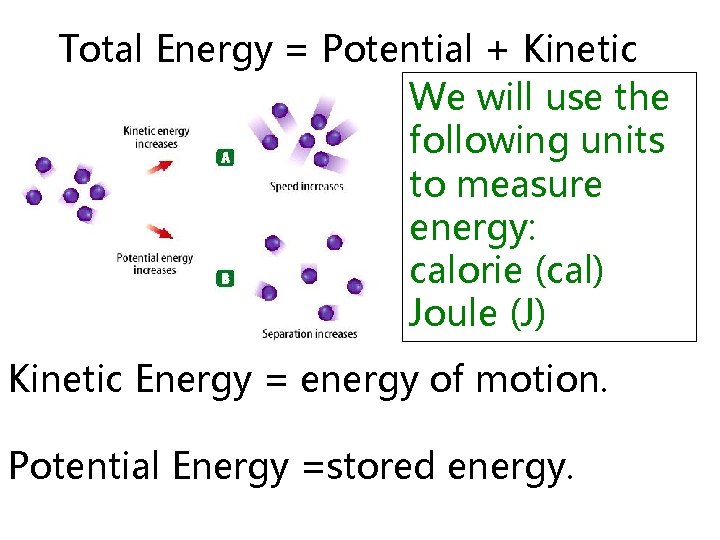
Total Energy = Potential + Kinetic We will use the following units to measure energy: calorie (cal) Joule (J) Kinetic Energy = energy of motion. Potential Energy =stored energy.
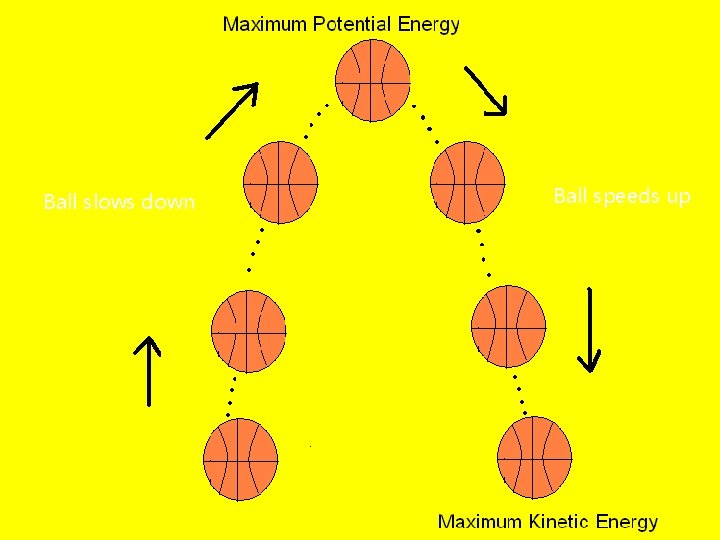
Ball slows down Ball speeds up
The Law of Conservation of Energy • Energy can be neither created nor destroyed by ordinary means. – It can only be converted from one form to another. – If energy seems to disappear, then scientists look for it – leading to many important discoveries.
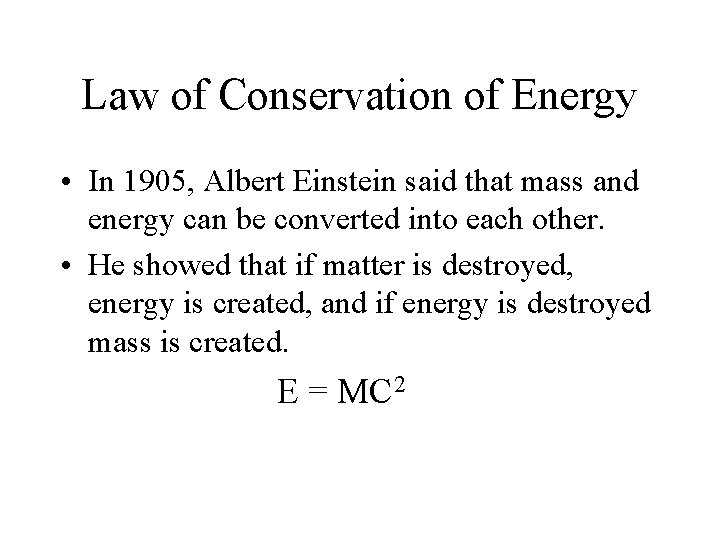
Law of Conservation of Energy • In 1905, Albert Einstein said that mass and energy can be converted into each other. • He showed that if matter is destroyed, energy is created, and if energy is destroyed mass is created. E = MC 2
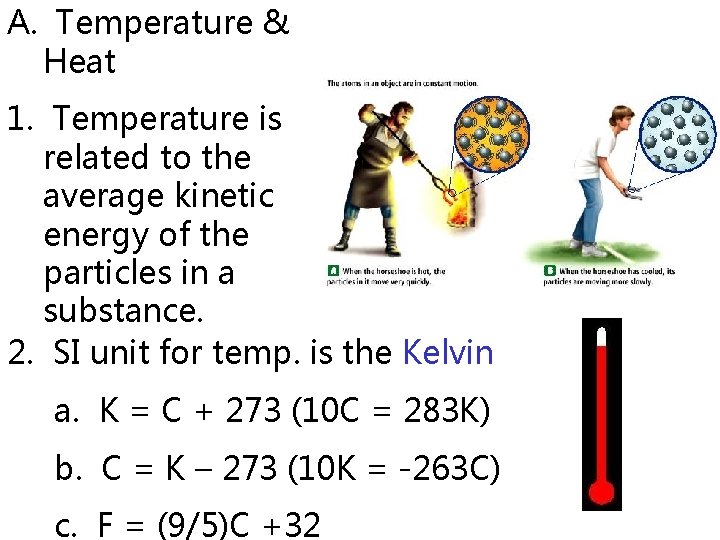
A. Temperature & Heat 1. Temperature is related to the average kinetic energy of the particles in a substance. 2. SI unit for temp. is the Kelvin a. K = C + 273 (10 C = 283 K) b. C = K – 273 (10 K = -263 C) c. F = (9/5)C +32
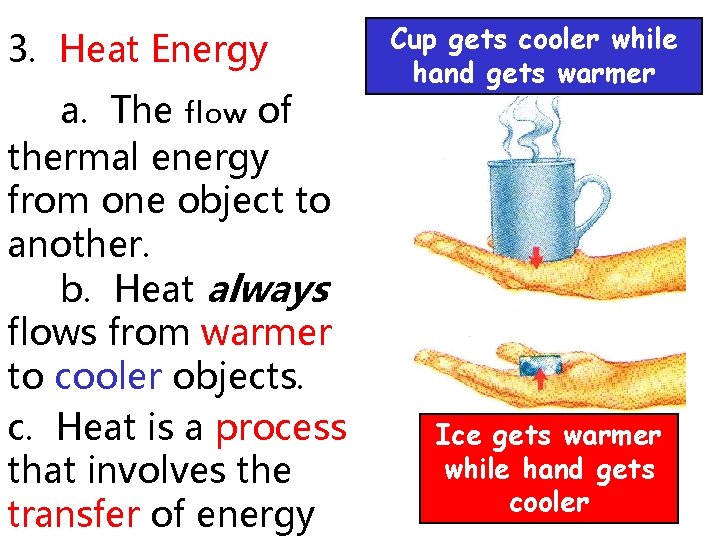
3. Heat Energy a. The flow of thermal energy from one object to another. b. Heat always flows from warmer to cooler objects. c. Heat is a process that involves the transfer of energy Cup gets cooler while hand gets warmer Ice gets warmer while hand gets cooler
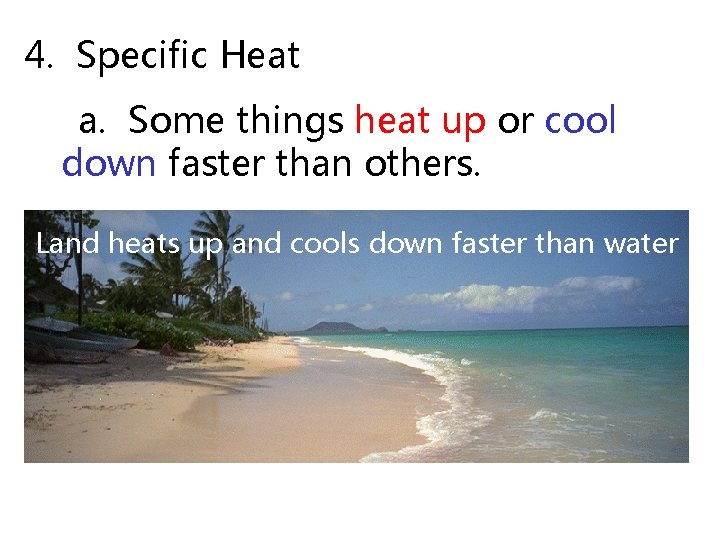
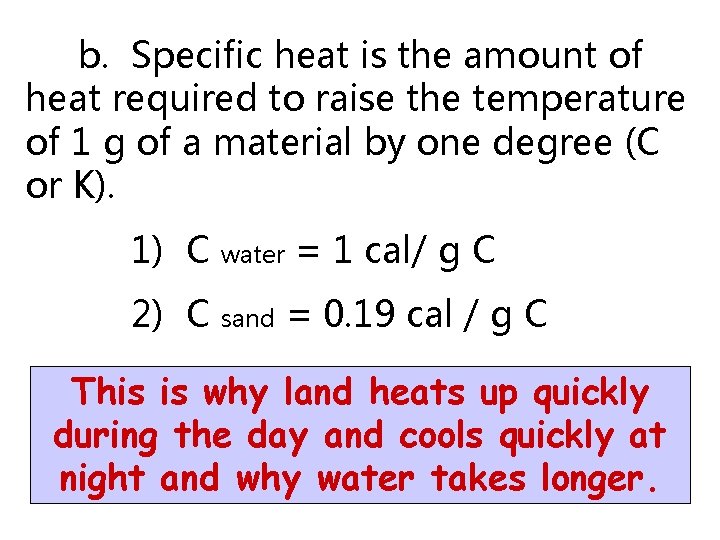
4. Specific Heat a. Some things heat up or cool down faster than others. Land heats up and cools down faster than water
b. Specific heat is the amount of heat required to raise the temperature of 1 g of a material by one degree (C or K). 1) C water 2) C sand = 1 cal/ g C = 0. 19 cal / g C This is why land heats up quickly during the day and cools quickly at night and why water takes longer.
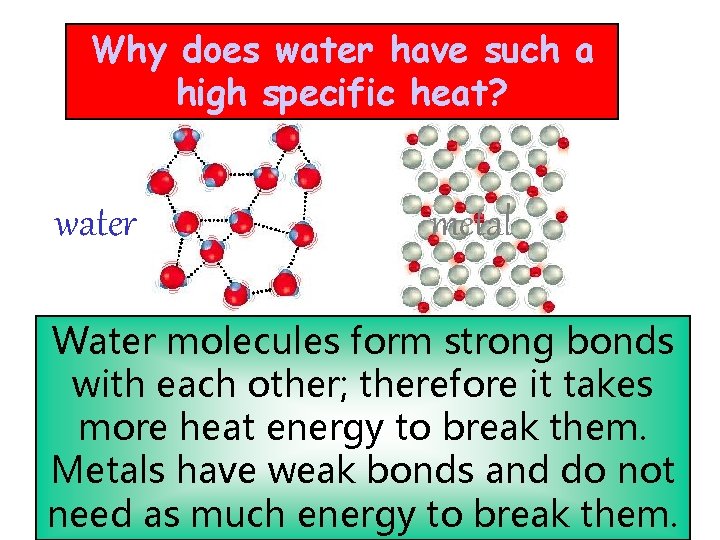
Why does water have such a high specific heat? water metal Water molecules form strong bonds with each other; therefore it takes more heat energy to break them. Metals have weak bonds and do not need as much energy to break them.
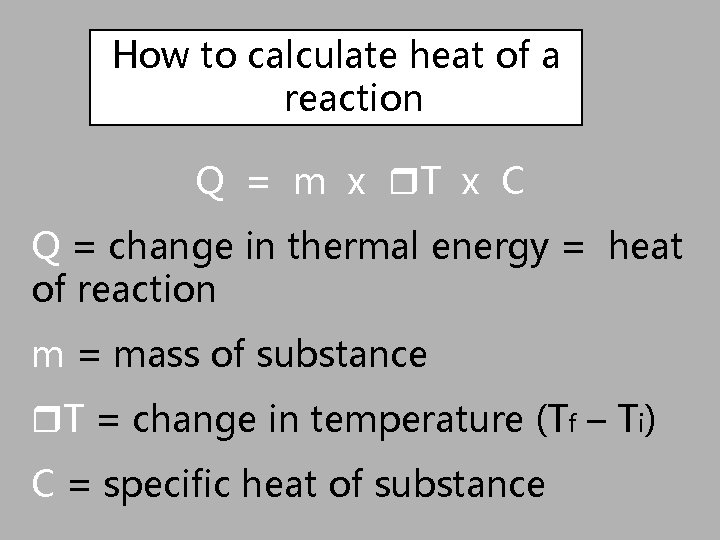
How to calculate heat of a reaction Q = m x T x C Q = change in thermal energy = heat of reaction m = mass of substance T = change in temperature (Tf – Ti) C = specific heat of substance
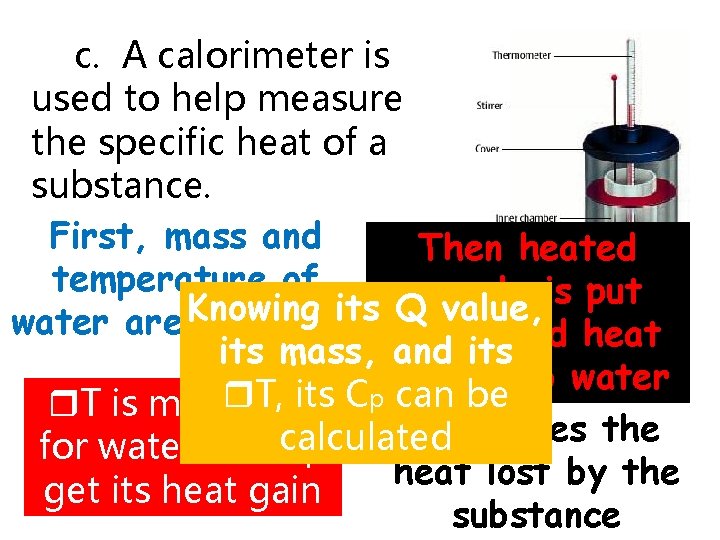
c. A calorimeter is used to help measure the specific heat of a substance. First, mass and Then heated temperature of sample is put Knowing its Q value, water are measured inside and heat its mass, and its flows into water T, its Cp can be T is measured This gives the calculated for water to help heat lost by the get its heat gain substance