
ENERGY AND FORCE C Unit 4 Motion Forces

- Slides: 14
ENERGY AND FORCE C Unit 4: Motion & Forces
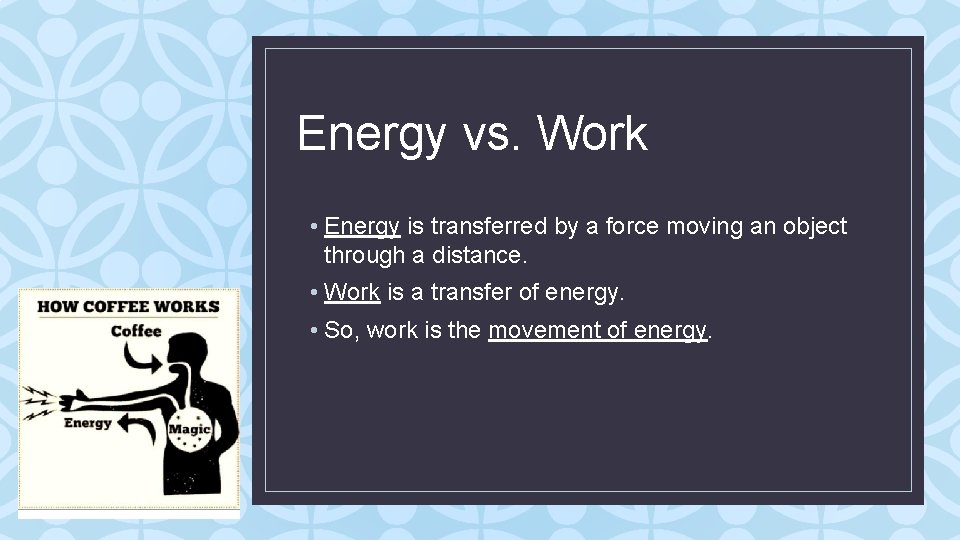
Energy vs. Work • Energy is transferred by a force moving an object through a distance. • Work is a transfer of energy. • So, work is the movement of energy.
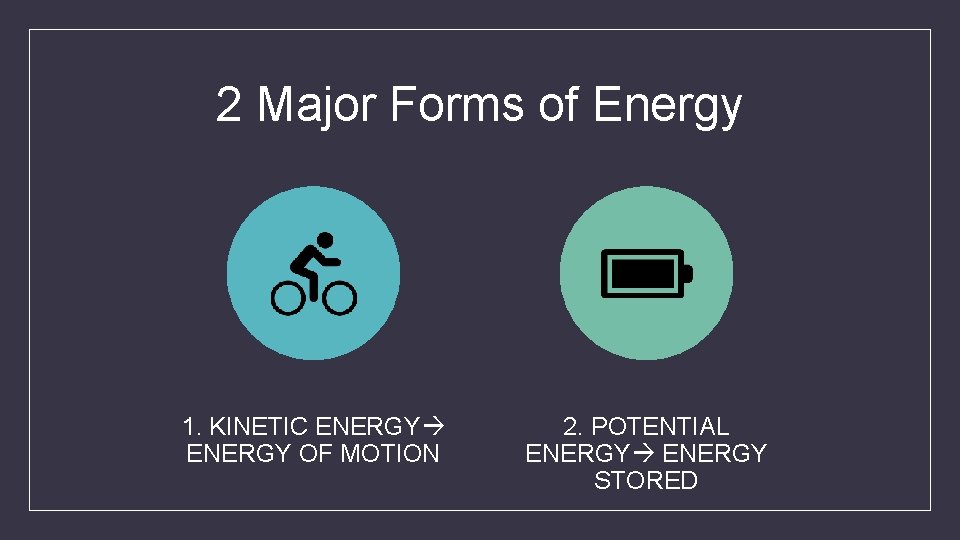
2 Major Forms of Energy 1. KINETIC ENERGY OF MOTION 2. POTENTIAL ENERGY STORED
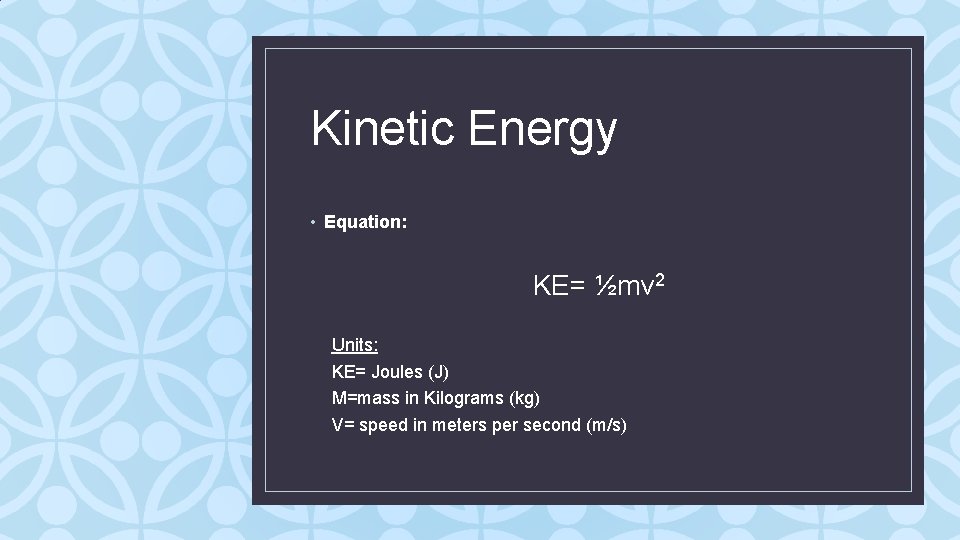
Kinetic Energy • Equation: KE= ½mv 2 Units: KE= Joules (J) M=mass in Kilograms (kg) V= speed in meters per second (m/s)
Kinetic Energy Practice • A pitcher throws a 0. 145 -kg baseball at a velocity of 30. 0 m/s. How much kinetic energy does the ball have?
Potential Energy • Equation: PE=mgh Units: PE=Joules (J) M=mass in kilograms (kg) G=9. 8 m/s 2 **Always 9. 8 H=height in meters (m)
Potential Energy Practice • A 60. 0 -kg person walks from the ground to the roof of a 74. 8 -meter tall building. How much potential energy does she have at the top of the building?
Forms of Energy Web & Examples
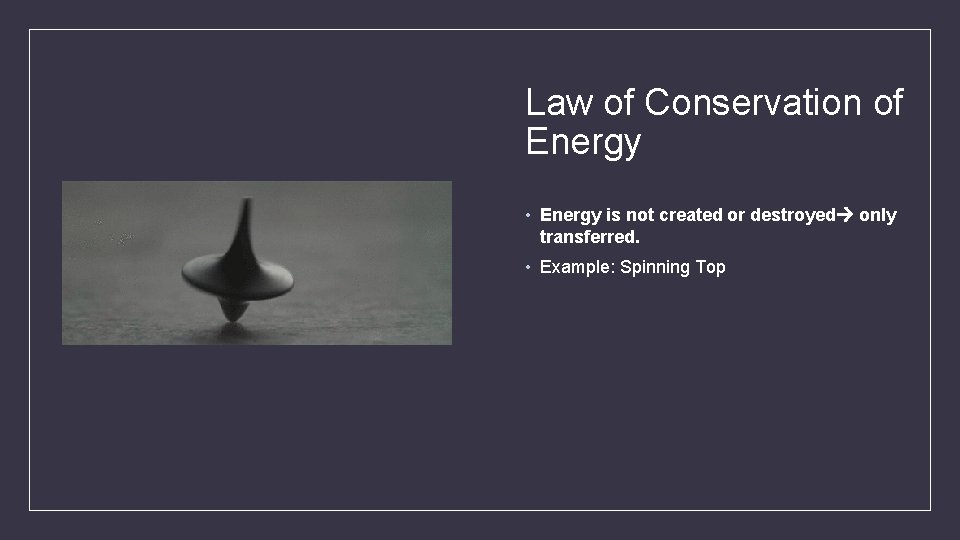
Law of Conservation of Energy • Energy is not created or destroyed only transferred. • Example: Spinning Top
What is force? • Force=a push or a pull • Force is also a vector because it has magnitude (how much force) and direction.
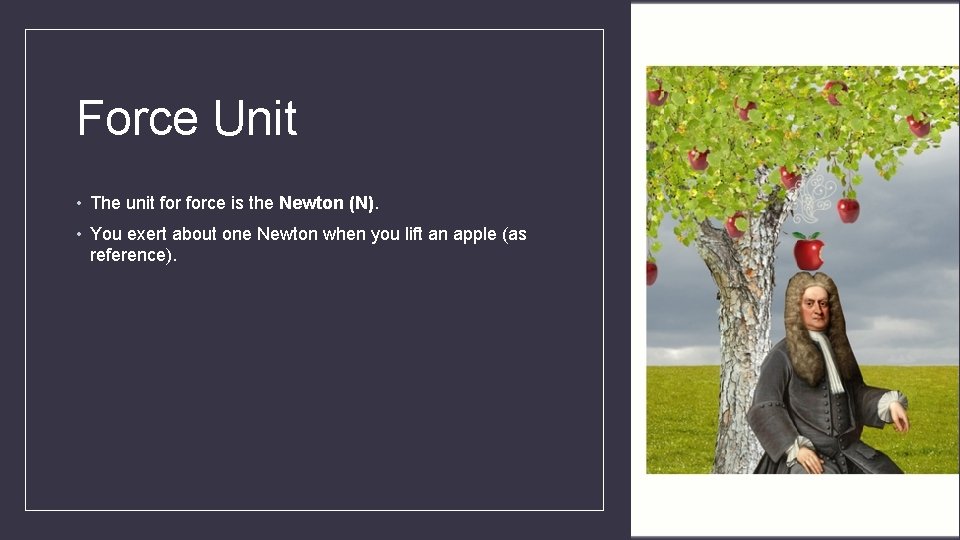
Force Unit • The unit force is the Newton (N). • You exert about one Newton when you lift an apple (as reference).
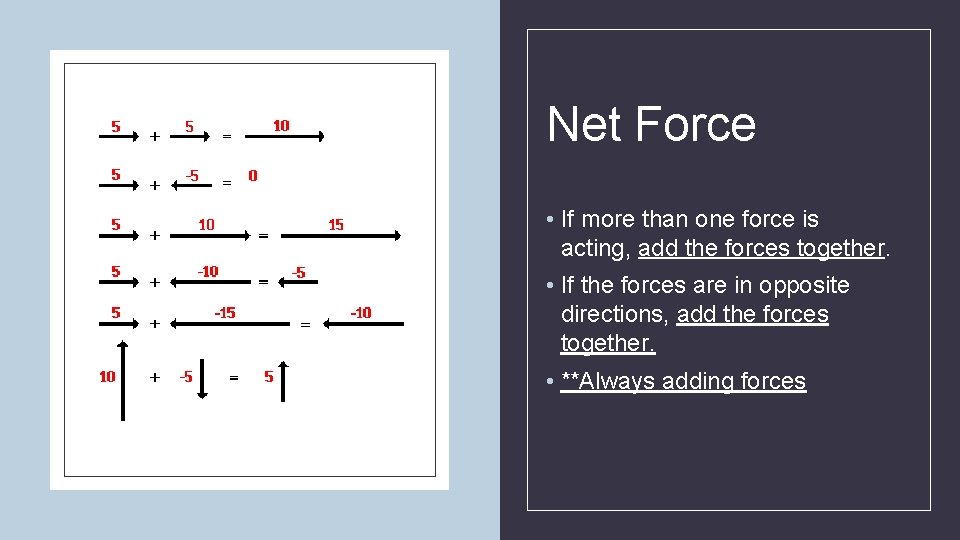
Net Force • If more than one force is acting, add the forces together. • If the forces are in opposite directions, add the forces together. • **Always adding forces
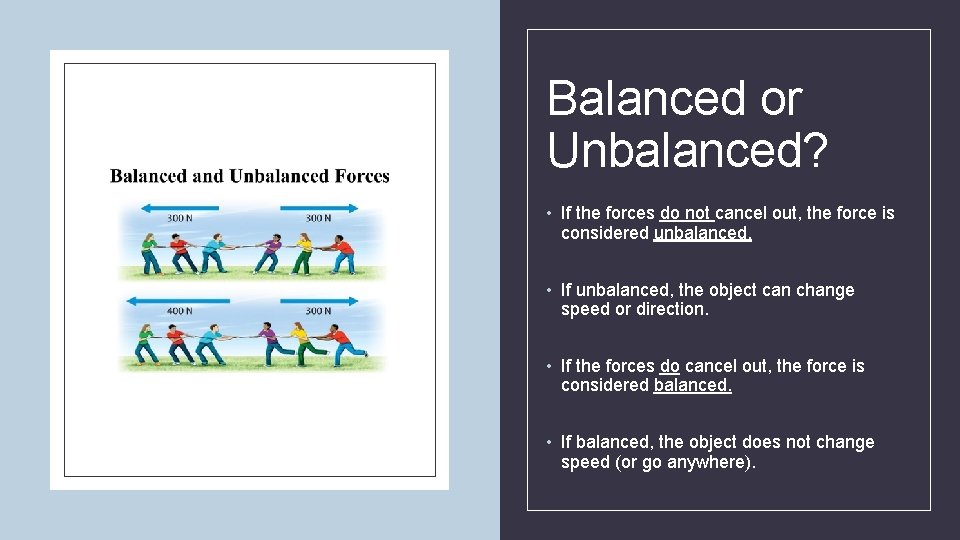
Balanced or Unbalanced? • If the forces do not cancel out, the force is considered unbalanced. • If unbalanced, the object can change speed or direction. • If the forces do cancel out, the force is considered balanced. • If balanced, the object does not change speed (or go anywhere).
Force Drawing Practice