
EnergeticsThermochemistry Outline for Energetics 1 endothermic and exothermic



- Slides: 23
Energetics/Thermochemistry
Outline for Energetics • • 1. endothermic and exothermic reactions 2. units of energy 3. specific heat, and molar heat 4. molar heats of combustion 5. heats or enthalpies of formation ∆Hf 6. Hess’s Law 7. Bond enthalpies (juniors only)
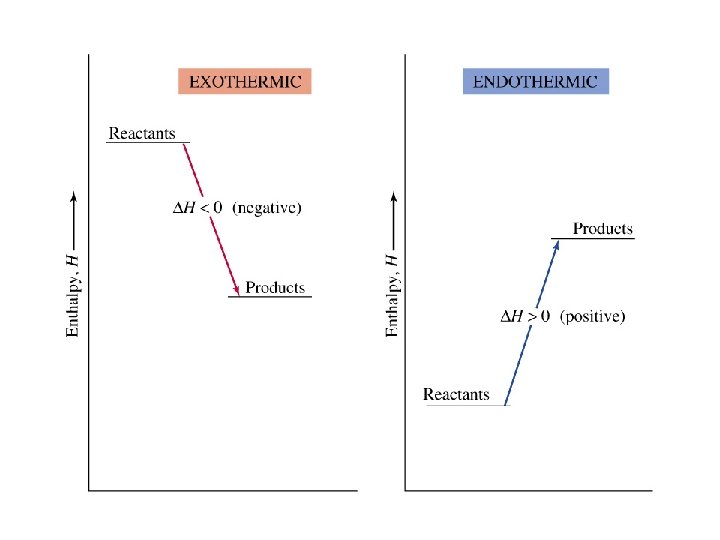
Endothermic and exothermic reactions • Endothermic – Reactions which absorb energy or have energy added in order to occur. – Products have more stored energy than reactants – Products are less stable than reactants – Writing the reactions • k. J are written on the reactant side • ∆H is positive
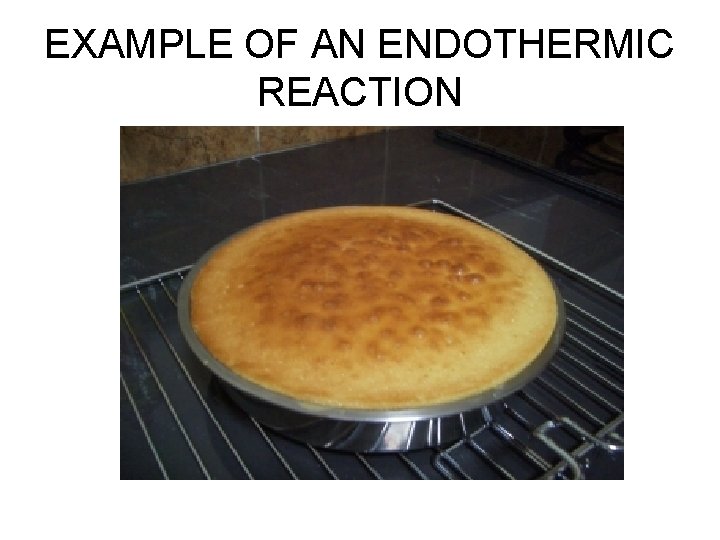
EXAMPLE OF AN ENDOTHERMIC REACTION
Endothermic and exothermic reactions continued • Exothermic – Reactions which release energy – Products have less stored energy than the reactants – Products are more stable than the reactants – Writing the reactions: • The k. J are written on the products side • ∆H is negative
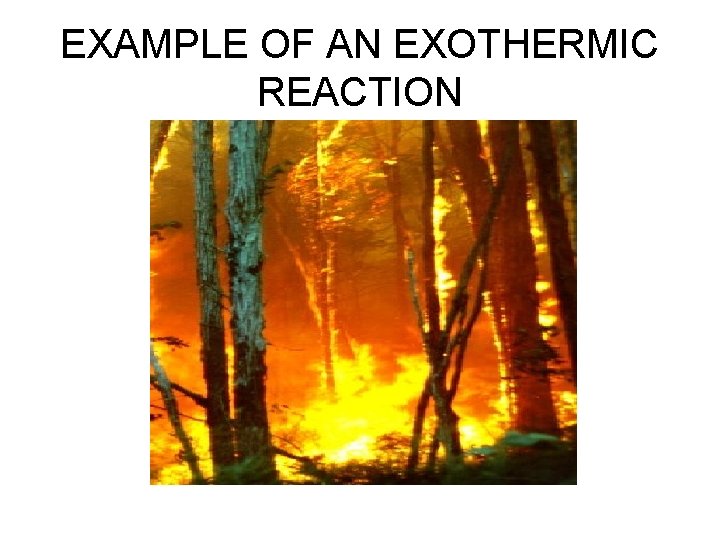
EXAMPLE OF AN EXOTHERMIC REACTION
Writing endothermic or exothermic reactions • Endothermic • Example: k. J +2 H 2 O 2 H 2 + O 2 The k. J are written on the reactant side. 2 H 2 O 2 H 2 + O 2 ; ∆H=k. J The ∆H is positive. • Exothermic • Example: 2 H 2 + O 2 2 H 2 O + k. J The k. J are written on the product side. 2 H 2 + O 2 2 H 2 O; ∆H = - k. J The ∆H is negative.
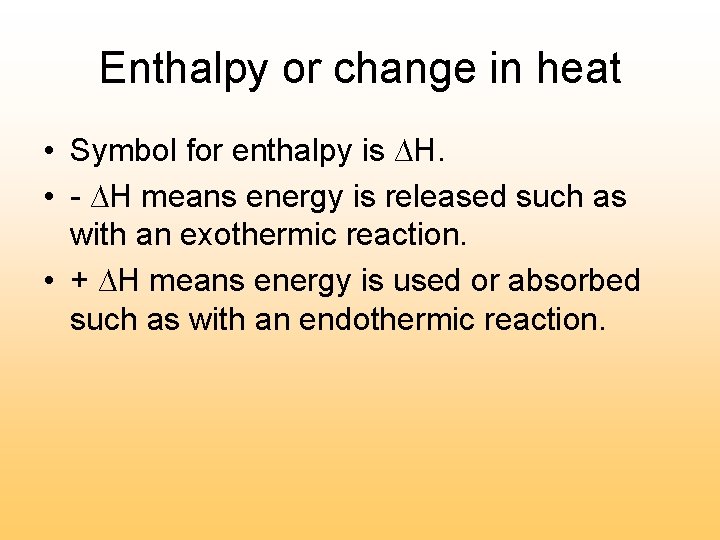
Enthalpy or change in heat • Symbol for enthalpy is ∆H. • - ∆H means energy is released such as with an exothermic reaction. • + ∆H means energy is used or absorbed such as with an endothermic reaction.
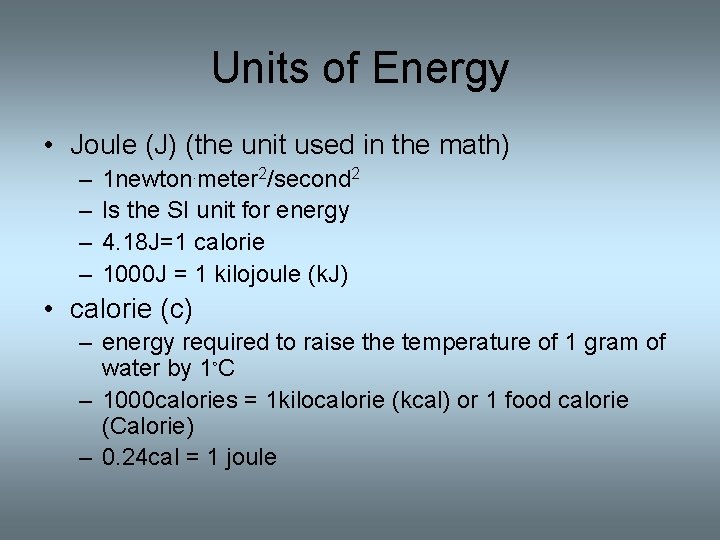
Units of Energy • Joule (J) (the unit used in the math) – – 1 newton. meter 2/second 2 Is the SI unit for energy 4. 18 J=1 calorie 1000 J = 1 kilojoule (k. J) • calorie (c) – energy required to raise the temperature of 1 gram of water by 1◦C – 1000 calories = 1 kilocalorie (kcal) or 1 food calorie (Calorie) – 0. 24 cal = 1 joule
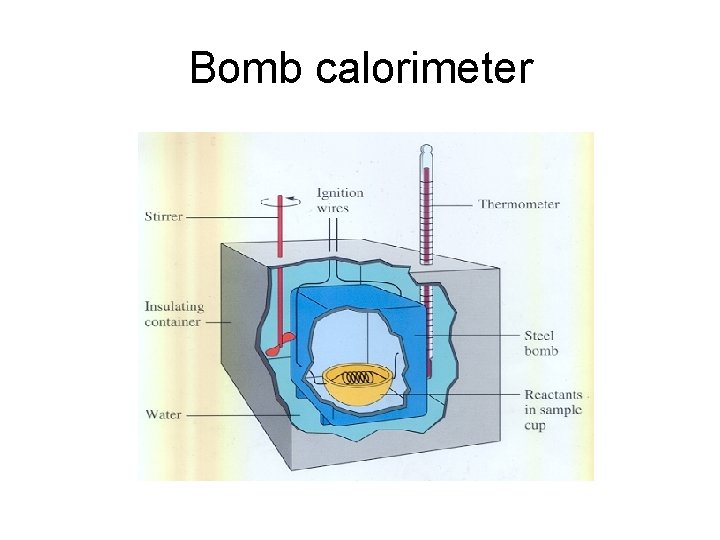
Bomb calorimeter
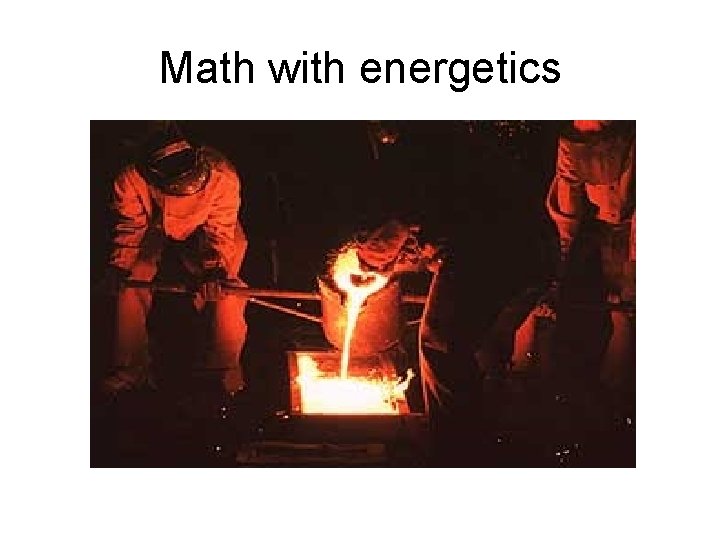
Math with energetics
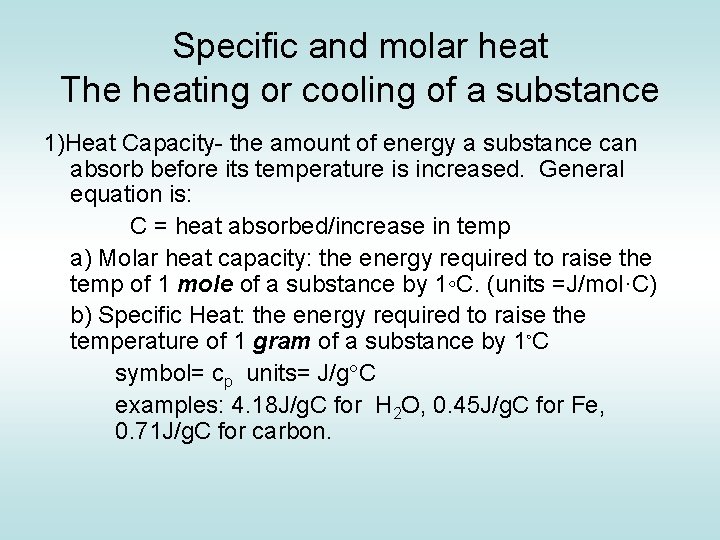
Specific and molar heat The heating or cooling of a substance 1)Heat Capacity- the amount of energy a substance can absorb before its temperature is increased. General equation is: C = heat absorbed/increase in temp a) Molar heat capacity: the energy required to raise the temp of 1 mole of a substance by 1◦C. (units =J/mol·C) b) Specific Heat: the energy required to raise the temperature of 1 gram of a substance by 1◦C symbol= cp units= J/g°C examples: 4. 18 J/g. C for H 2 O, 0. 45 J/g. C for Fe, 0. 71 J/g. C for carbon.
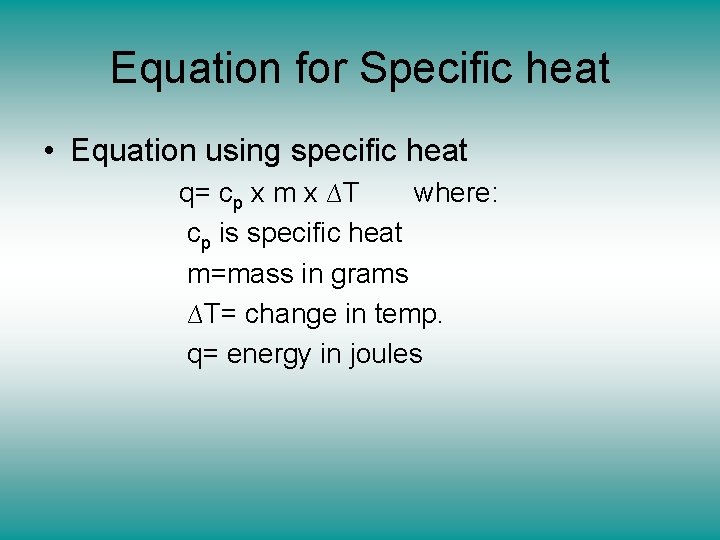
Equation for Specific heat • Equation using specific heat q= cp x m x ∆T where: cp is specific heat m=mass in grams ∆T= change in temp. q= energy in joules
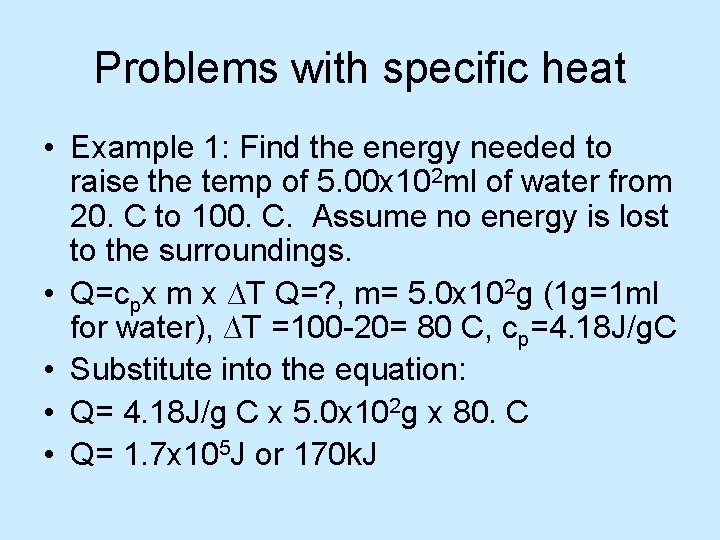
Problems with specific heat • Example 1: Find the energy needed to raise the temp of 5. 00 x 102 ml of water from 20. C to 100. C. Assume no energy is lost to the surroundings. • Q=cpx m x ∆T Q=? , m= 5. 0 x 102 g (1 g=1 ml for water), ∆T =100 -20= 80 C, cp=4. 18 J/g. C • Substitute into the equation: • Q= 4. 18 J/g C x 5. 0 x 102 g x 80. C • Q= 1. 7 x 10⁵ J or 170 k. J
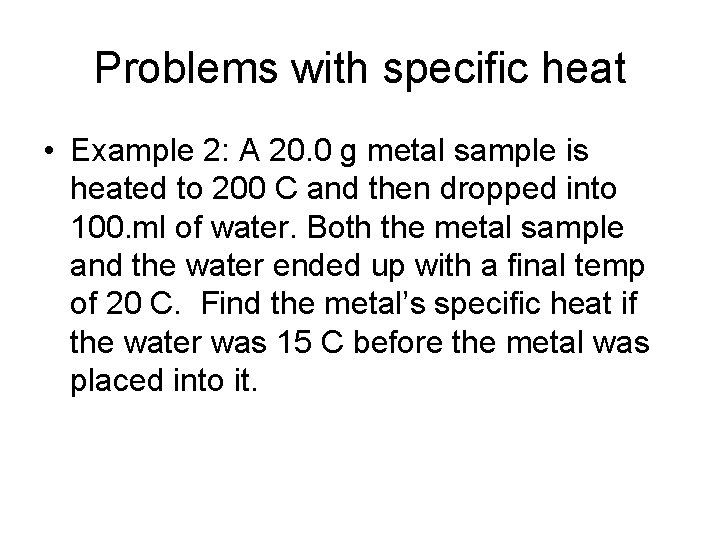
Problems with specific heat • Example 2: A 20. 0 g metal sample is heated to 200 C and then dropped into 100. ml of water. Both the metal sample and the water ended up with a final temp of 20 C. Find the metal’s specific heat if the water was 15 C before the metal was placed into it.
Example 2 continued In order to find the cp of the metal, there is: m= 20. 0 g. ∆T= 200 -20= 180 C. but Q=? , and cp=? There are too many variables. However, the metal released its heat into the water so we can find the Q by finding the energy that went to heat the water. Step 1: Find the energy to heat the water: Q= ? , m= 100 g H 2 O, cp= 4. 18 J/g. C, ∆T= 20 -15 C= 5 C Q= 4. 18 J/g. C x 100 g x 5 C Q= 2090 J or 2. 1 x 10³ J Step 2: Find the specifc heat of the metal: Q= 2090 J, m= 20. 0 g, cp = ? ∆T= 200 -20=180 C 2090 J= cp x 20. 0 g x 180 C, cp= 0. 58 J/g. C
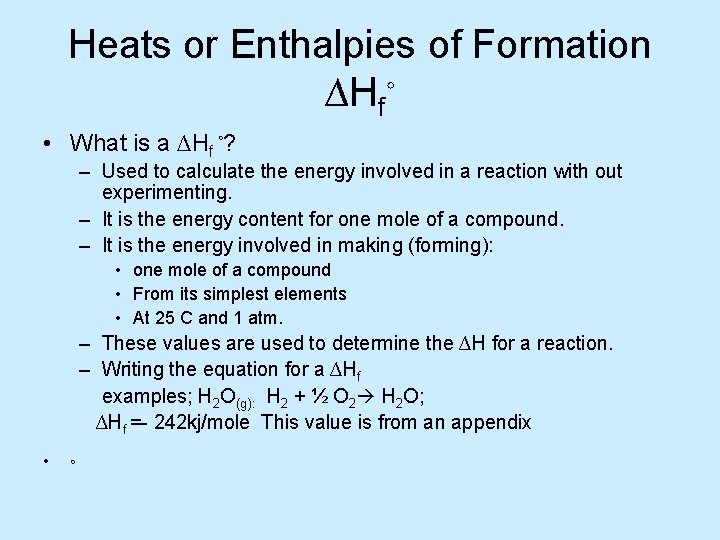
Heats or Enthalpies of Formation ∆Hf◦ • What is a ∆Hf ◦? – Used to calculate the energy involved in a reaction with out experimenting. – It is the energy content for one mole of a compound. – It is the energy involved in making (forming): • one mole of a compound • From its simplest elements • At 25 C and 1 atm. – These values are used to determine the ∆H for a reaction. – Writing the equation for a ∆Hf examples; H 2 O(g): H 2 + ½ O 2 H 2 O; ∆Hf =- 242 kj/mole This value is from an appendix • ◦
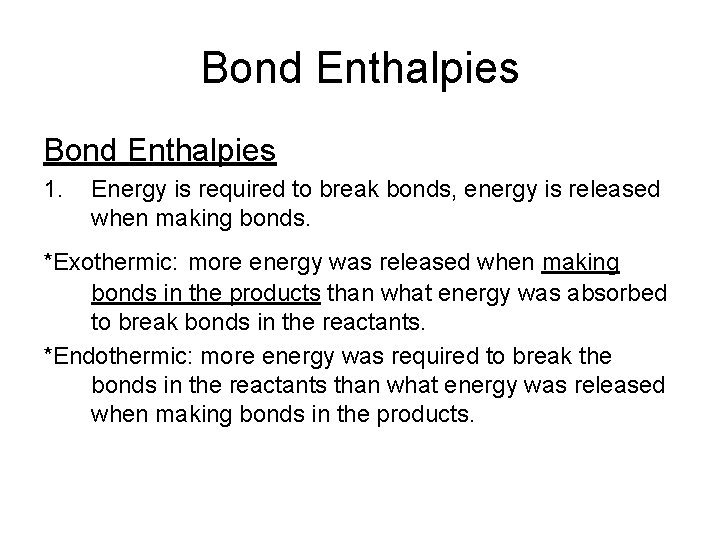
Bond Enthalpies 1. Energy is required to break bonds, energy is released when making bonds. *Exothermic: more energy was released when making bonds in the products than what energy was absorbed to break bonds in the reactants. *Endothermic: more energy was required to break the bonds in the reactants than what energy was released when making bonds in the products.
Bond Enthalpies(continued) 2. Bond Enthalpies: • The average energy required to break a covalent bonds. -@ 25 degrees Celsius, 1 ATM, always work w/ gases -compound is turned into single gaseous atoms, not its simplest, stable form in nature Ex: C-H(g) C+H 413 KJ/mol O 2(g) O+O 495 KJ/mol • Single bonds require less energy to break than double bonds, < triple bonds. • EXAMPLES: WRITE ON BOARD
Molar Heats of Combustion • 1. Combustion reactions: a) requirements for combustion i) fuel ii) ignition iii) O 2 b) products of complete combustion i) energy & light ii) stable compounds, each w/ oxygen in it C CO 2, H H 2 O, S SO 2
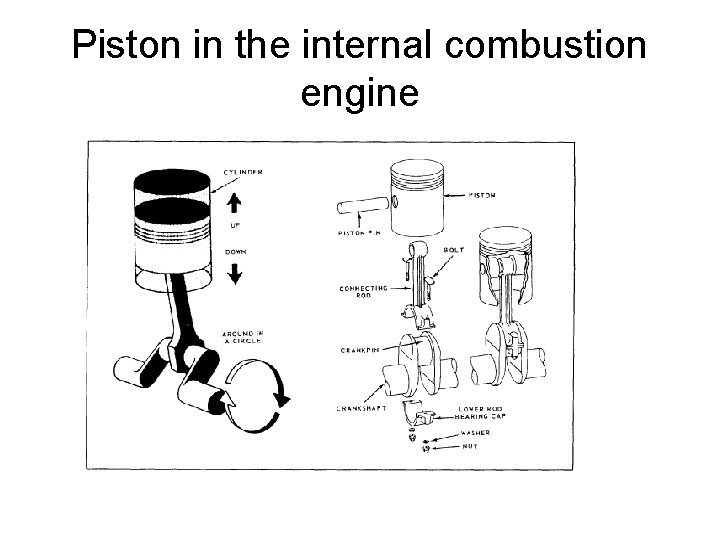
Piston in the internal combustion engine
continued c) Writing Combustion Reactions CH 4(g)+2 O 2 CO 2(g)+3 H 2 O(g)+KJ 2. Incomplete Combustion: a) Why this happens: i) not enough O 2 ii) not enough time iii) not enough surface area b) products made from incomplete combustion: CO, ash, soot as well as CO 2 and H 2 O