
ENEE 244 02 xx Digital Logic Design Lecture
- Slides: 34
ENEE 244 -02 xx Digital Logic Design Lecture 10
Announcements • HW 4 due 10/9 – Please omit last problem 4. 6(a), (c) • Quiz during recitation on Monday (10/13) – Will cover material from lectures 10, 11, 12.
Agenda • Last time: – Prime Implicants (4. 2) – Prime Implicates (4. 3) • This time: – Karnaugh Maps (4. 4)
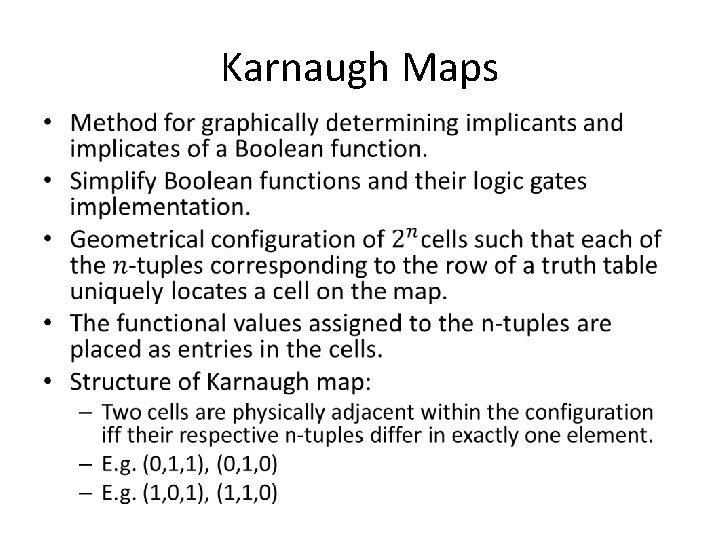
Karnaugh Maps •
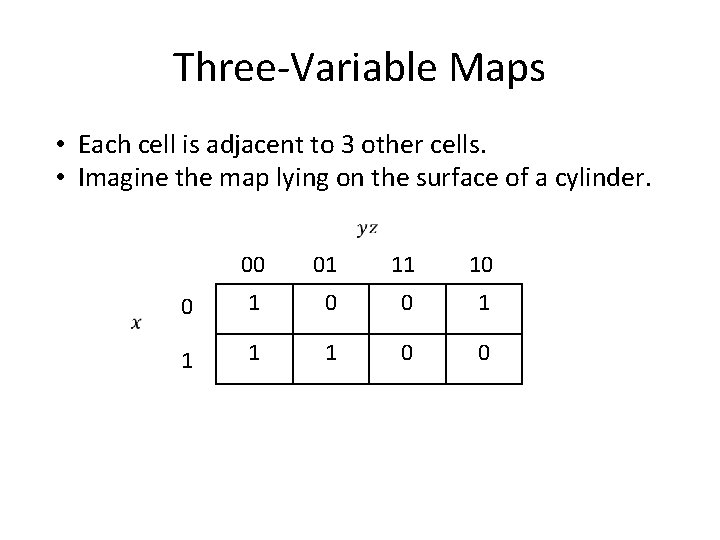
Three-Variable Maps • Each cell is adjacent to 3 other cells. • Imagine the map lying on the surface of a cylinder. 00 01 11 10 0 1 1 1 1 0 0
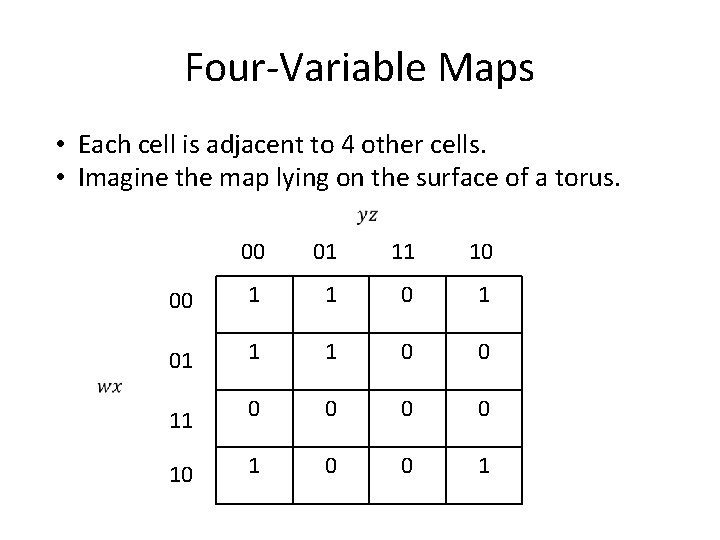
Four-Variable Maps • Each cell is adjacent to 4 other cells. • Imagine the map lying on the surface of a torus. 00 01 11 10 00 1 1 01 1 1 0 0 11 0 0 10 1 0 0 1
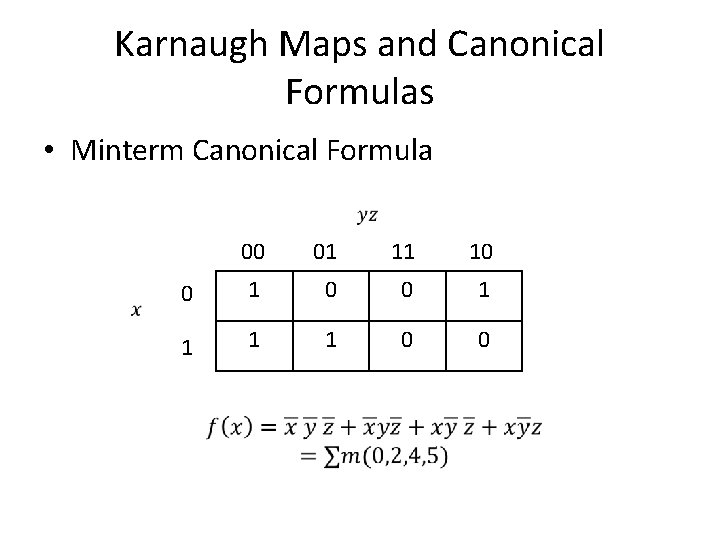
Karnaugh Maps and Canonical Formulas • Minterm Canonical Formula 00 01 11 10 0 1 1 1 1 0 0
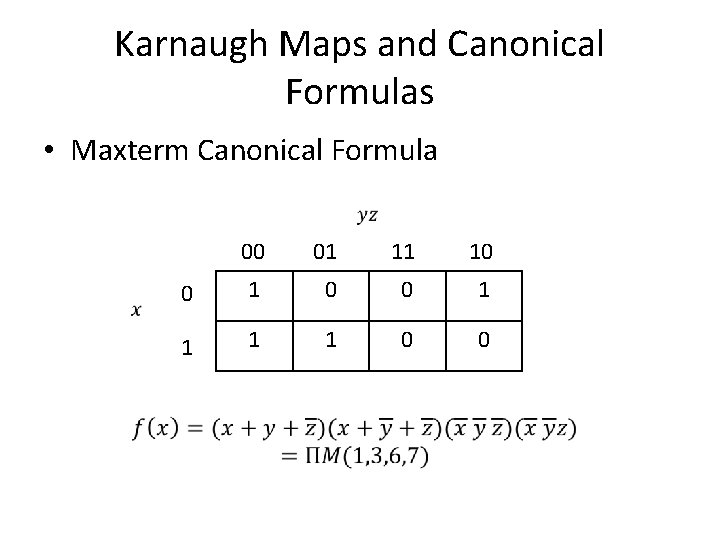
Karnaugh Maps and Canonical Formulas • Maxterm Canonical Formula 00 01 11 10 0 1 1 1 1 0 0
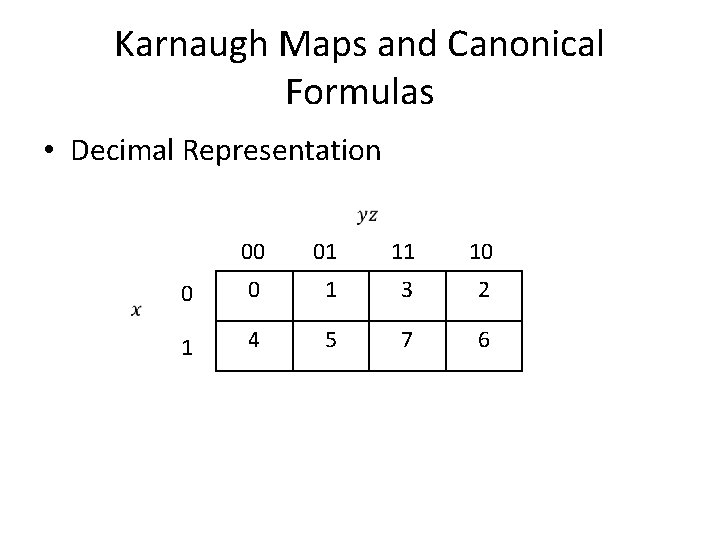
Karnaugh Maps and Canonical Formulas • Decimal Representation 00 01 11 10 0 0 1 3 2 1 4 5 7 6
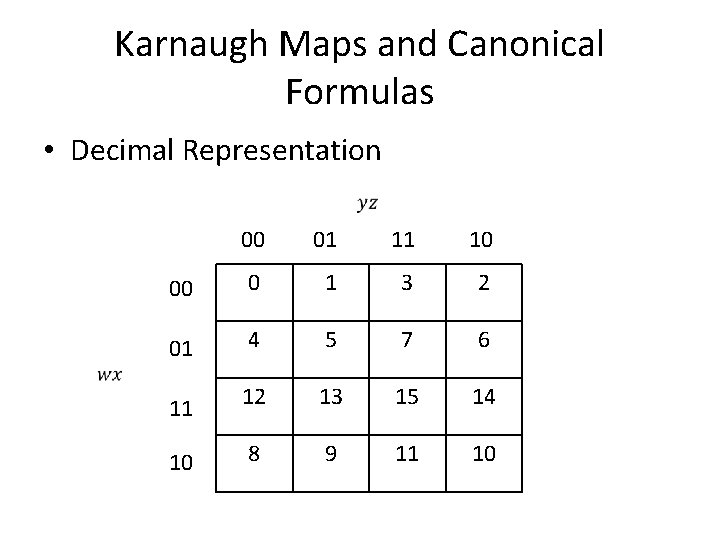
Karnaugh Maps and Canonical Formulas • Decimal Representation 00 01 11 10 00 0 1 3 2 01 4 5 7 6 11 12 13 15 14 10 8 9 11 10
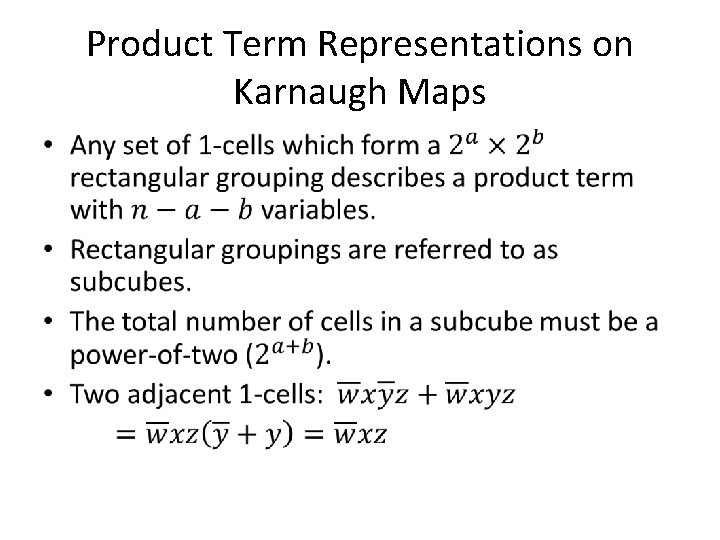
Product Term Representations on Karnaugh Maps •
Examples of Subcubes
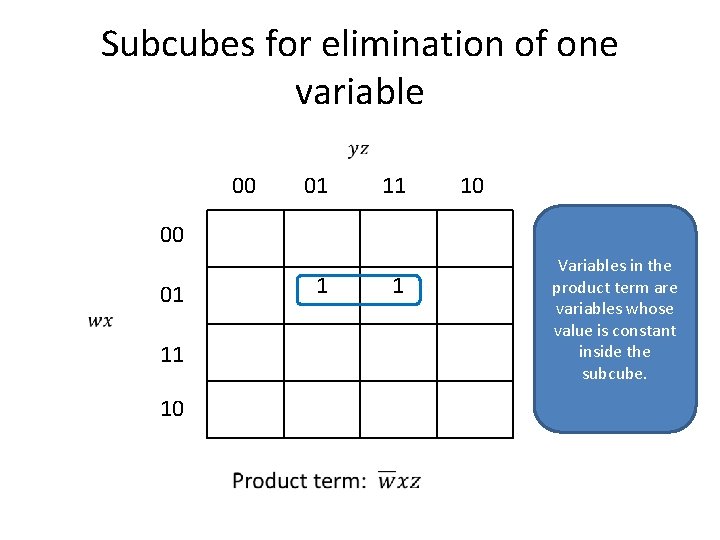
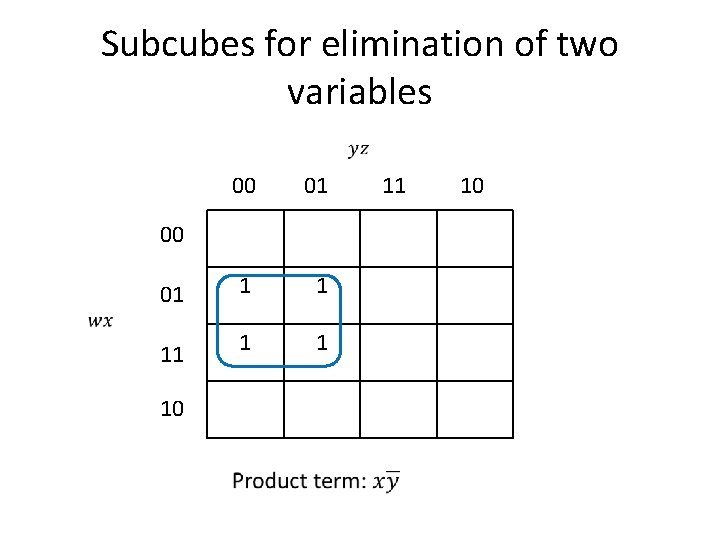
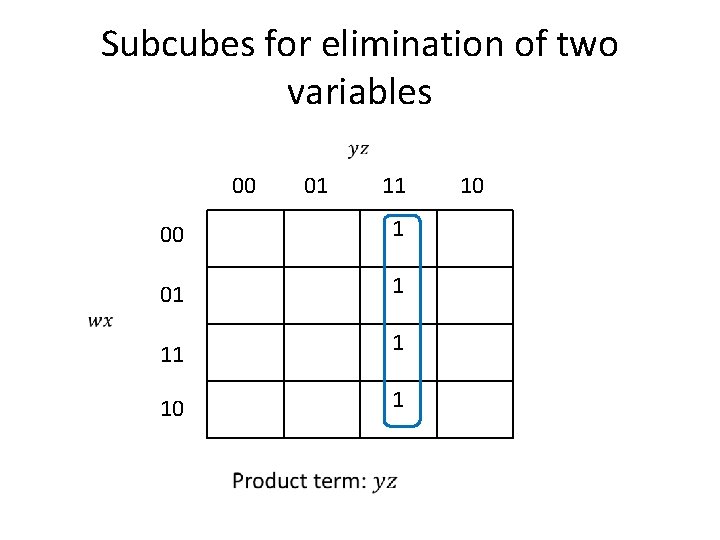
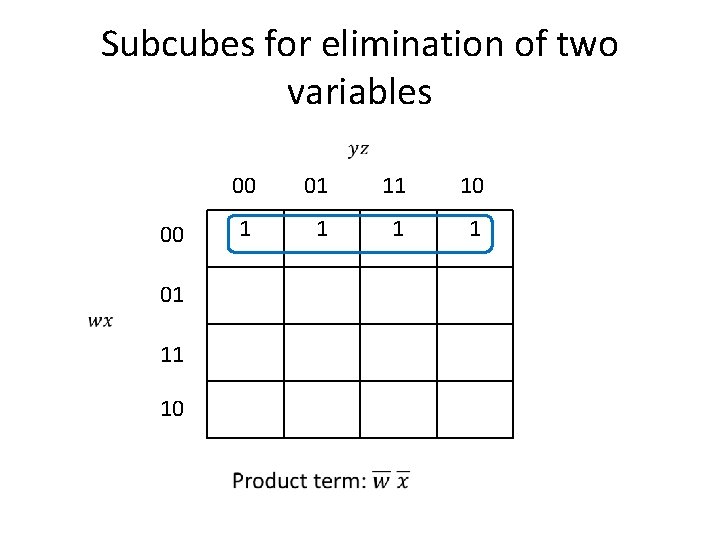
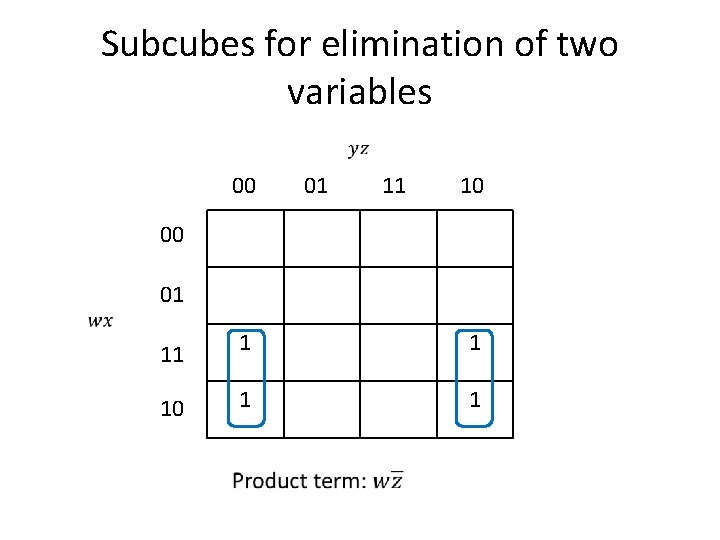
Subcubes for elimination of one variable 00 01 11 10 00 1 01 11 10 1 Variables in the product term are variables whose value is constant inside the subcube.
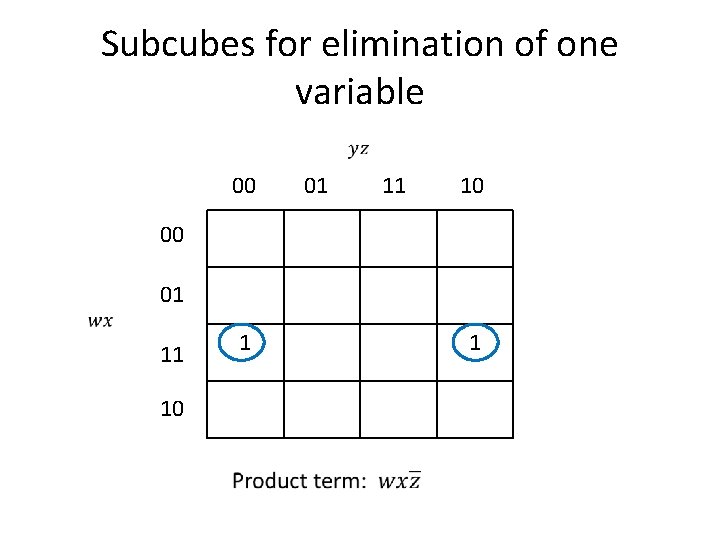
Subcubes for elimination of one variable 00 01 11 10 00 01 1 11 10 1
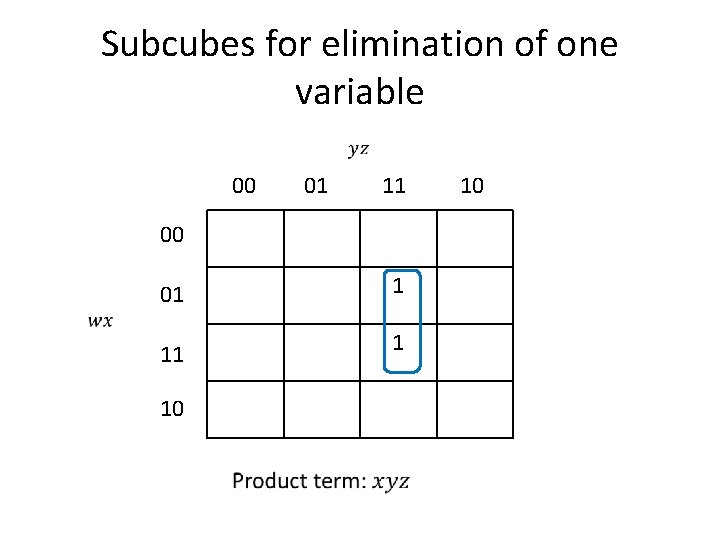
Subcubes for elimination of one variable 00 01 11 00 01 1 10 10
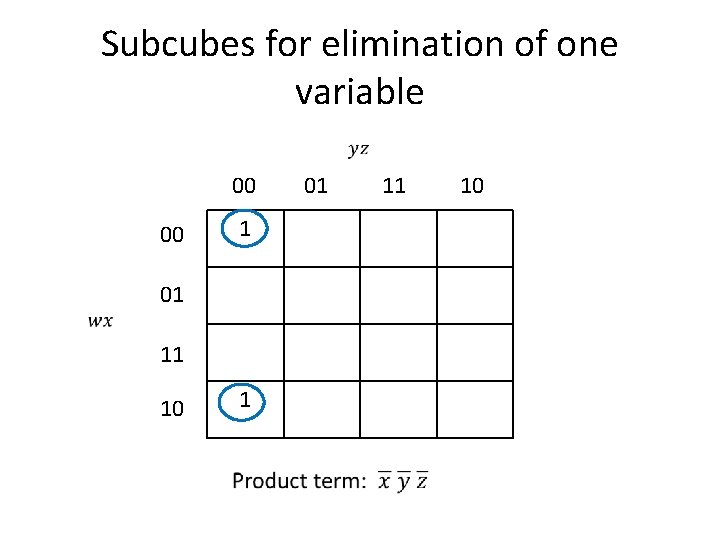
Subcubes for elimination of one variable 00 1 00 01 11 1 10 01 11 10
Subcubes for elimination of two variables 00 01 01 1 1 1 00 11 10
Subcubes for elimination of two variables 00 01 11 00 1 01 1 10 1 10
Subcubes for elimination of two variables 00 01 11 10 1 1 00 01 11 10
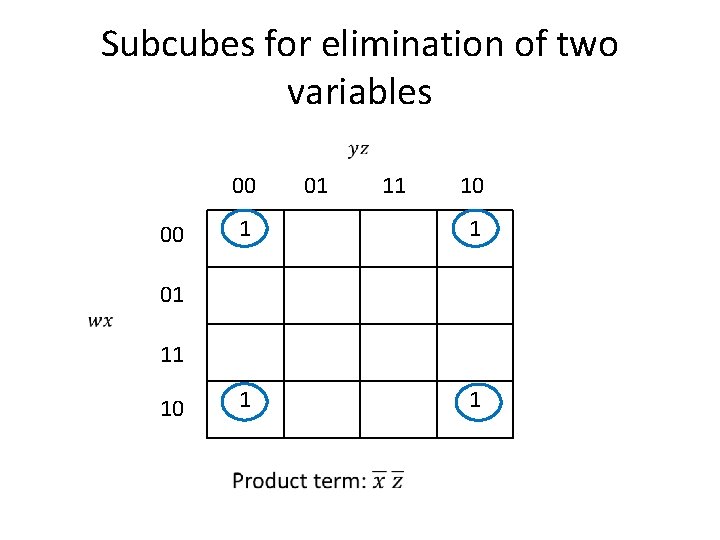
Subcubes for elimination of two variables 00 01 11 10 00 01 11 1 1 10 1 1
Subcubes for elimination of two variables 00 00 01 11 10 1 1 01 11 10
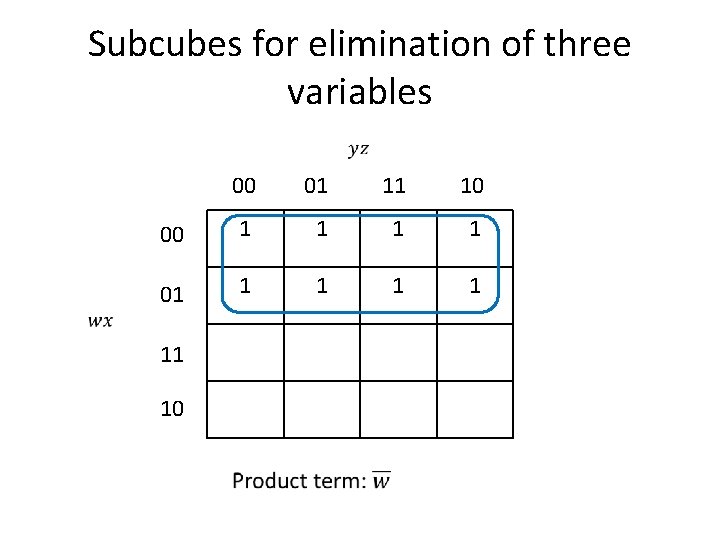
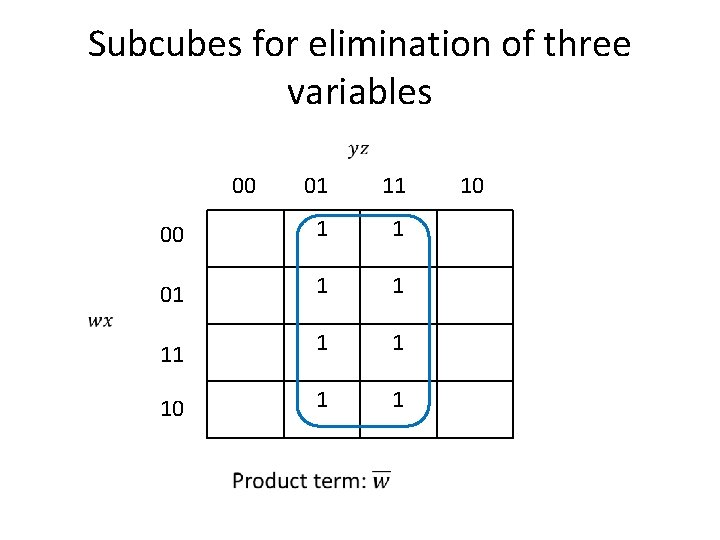
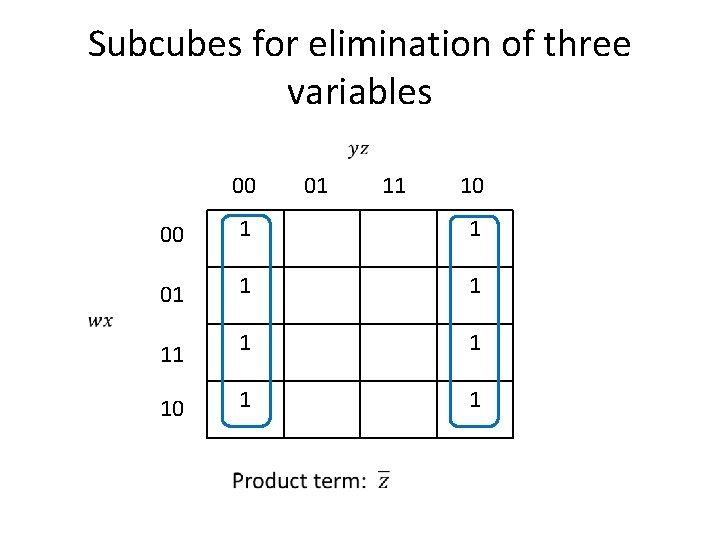
Subcubes for elimination of three variables 00 01 11 10 00 1 1 01 1 1 11 10
Subcubes for elimination of three variables 00 01 11 00 1 1 01 1 1 10
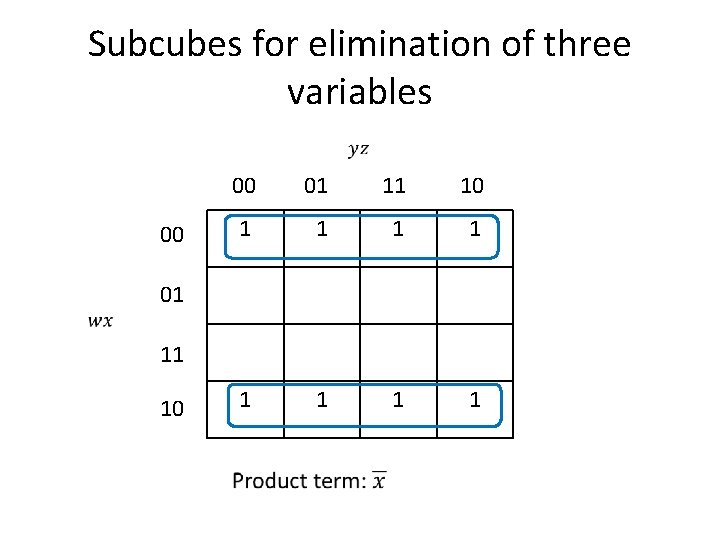
Subcubes for elimination of three variables 00 01 11 10 1 1 1 1 00 01 11 10
Subcubes for elimination of three variables 00 01 11 10 00 1 1 01 1 1 10 1 1
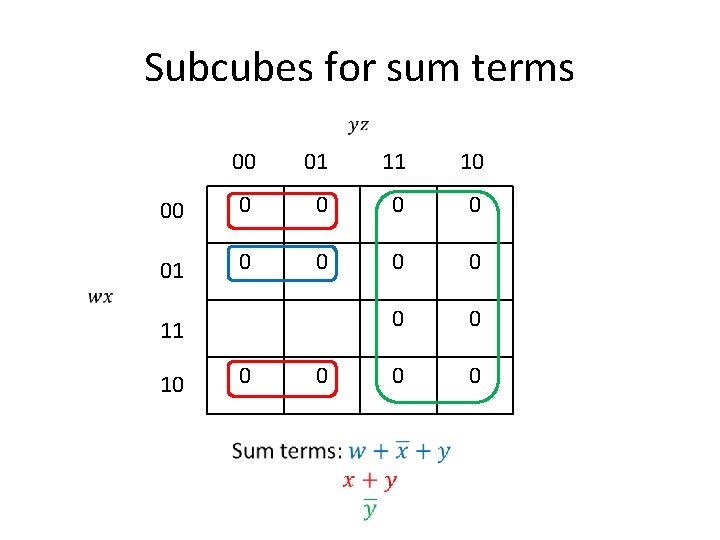
Subcubes for sum terms 00 01 11 10 00 0 0 01 0 0 0 0 11 0 10 0
Using K-Maps to Obtain Minimal Boolean Expressions
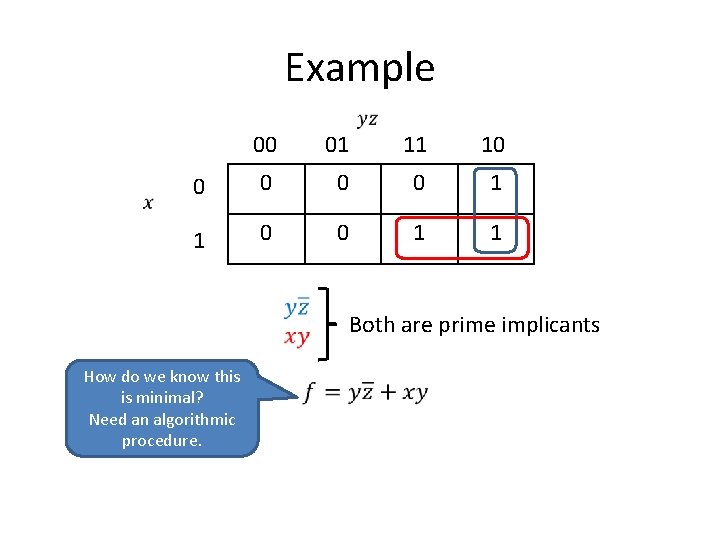
Example 00 01 11 10 0 0 1 1 Both are prime implicants How do we know this is minimal? Need an algorithmic procedure.
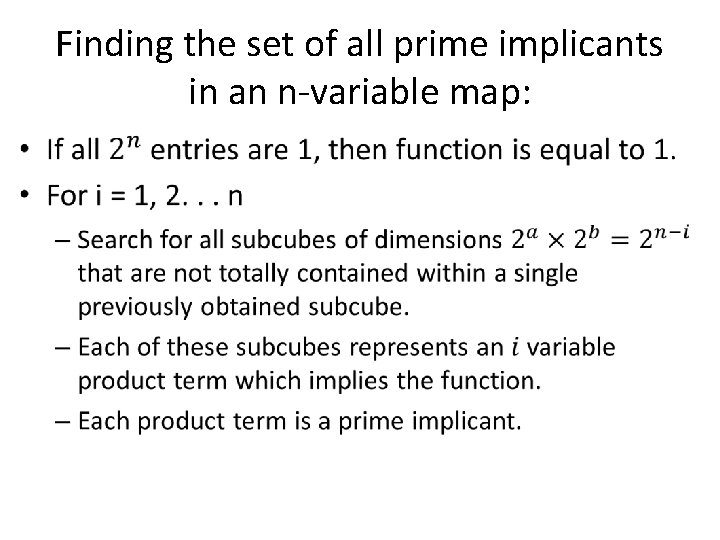
Finding the set of all prime implicants in an n-variable map: •
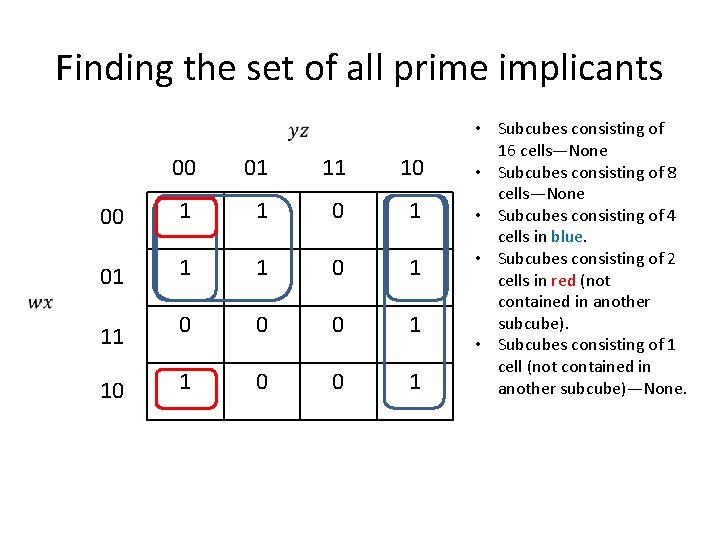
Finding the set of all prime implicants 00 01 11 10 00 1 1 01 1 1 0 1 11 0 0 0 1 10 1 0 0 1 • Subcubes consisting of 16 cells—None • Subcubes consisting of 8 cells—None • Subcubes consisting of 4 cells in blue. • Subcubes consisting of 2 cells in red (not contained in another subcube). • Subcubes consisting of 1 cell (not contained in another subcube)—None.
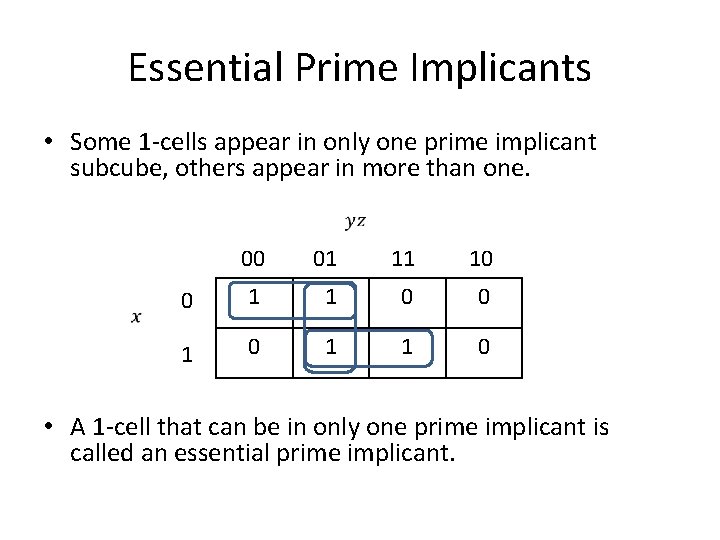
Essential Prime Implicants • Some 1 -cells appear in only one prime implicant subcube, others appear in more than one. 00 01 11 10 0 1 1 0 • A 1 -cell that can be in only one prime implicant is called an essential prime implicant.
Essential Prime Implicants • Every essential prime implicant must appear in all the irredundant disjunctive normal formulas of the function. • Hence must also appear in a minimal sum. – Why?
General Approach for Finding Minimal Sums • Find all prime implicants using K-map • Find all essential prime implicants using K-map • **If all 1 -cells are not yet covered, determine optimal choice of remaining prime implicants using K-map.
Next time: Lots of examples of finding minimal sums using K-maps