
Endpoints of Stellar Evolution White Dwarfs Neutron Stars
- Slides: 33
Endpoints of Stellar Evolution White Dwarfs, Neutron Stars, and Black Holes
Stellar Evolution Summary • Low mass star (0. 08 M⊙ <M < 0. 4 M⊙)→helium white dwarf. • Medium mass star (0. 4 M⊙ < M < 8 M⊙) →red giant→carbon white dwarf + planetary nebula • High mass star (8 M⊙ < M < 20 M⊙) →red supergiant→massive star supernova + neutron star • Very high mass star (M > 20 M⊙) →red supergiant→massive star supernova + black hole
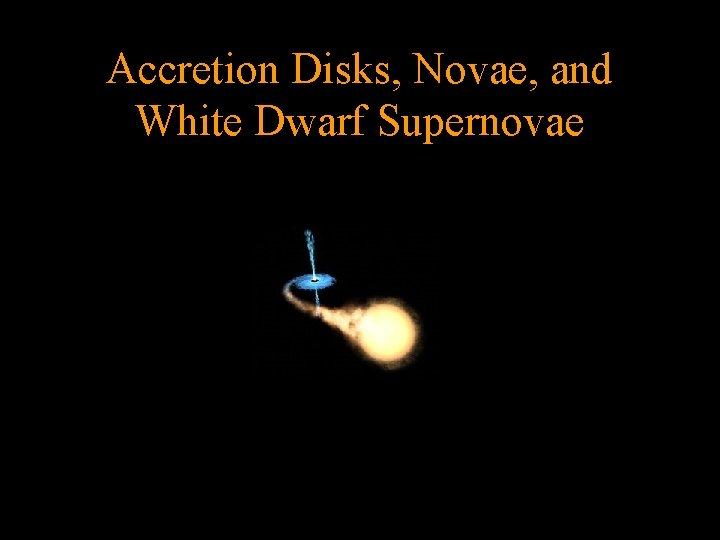
Accretion Disks, Novae, and White Dwarf Supernovae
Summary of Neutron Star Properties • Radius ~ 10 km (about 600 times smaller than Earth). • Mass ~1. 4 to 3 times the mass of the Sun. • Density ~ 1017 kg per cubic meter. A ½ inch cube of this material with would weigh more than 100 million tons. • Neutron degeneracy prevents it from collapsing further • Spins very rapidly. • Has a powerful magnetic field. • Spin rate and magnetic field strength normally decrease with time.
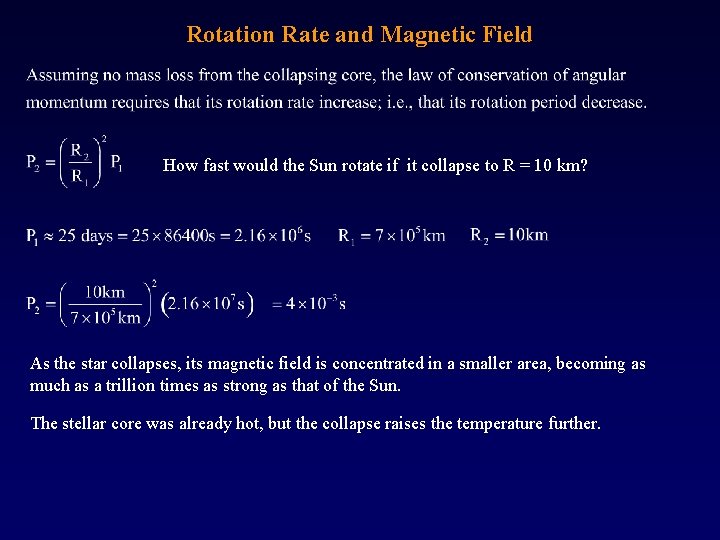
Rotation Rate and Magnetic Field How fast would the Sun rotate if it collapse to R = 10 km? As the star collapses, its magnetic field is concentrated in a smaller area, becoming as much as a trillion times as strong as that of the Sun. The stellar core was already hot, but the collapse raises the temperature further.
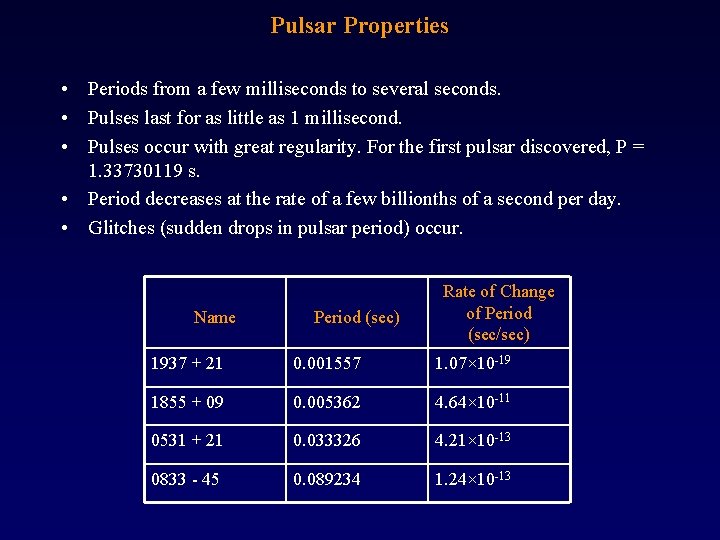
Pulsar Properties • Periods from a few milliseconds to several seconds. • Pulses last for as little as 1 millisecond. • Pulses occur with great regularity. For the first pulsar discovered, P = 1. 33730119 s. • Period decreases at the rate of a few billionths of a second per day. • Glitches (sudden drops in pulsar period) occur. Name Period (sec) Rate of Change of Period (sec/sec) 1937 + 21 0. 001557 1. 07× 10 -19 1855 + 09 0. 005362 4. 64× 10 -11 0531 + 21 0. 033326 4. 21× 10 -13 0833 - 45 0. 089234 1. 24× 10 -13
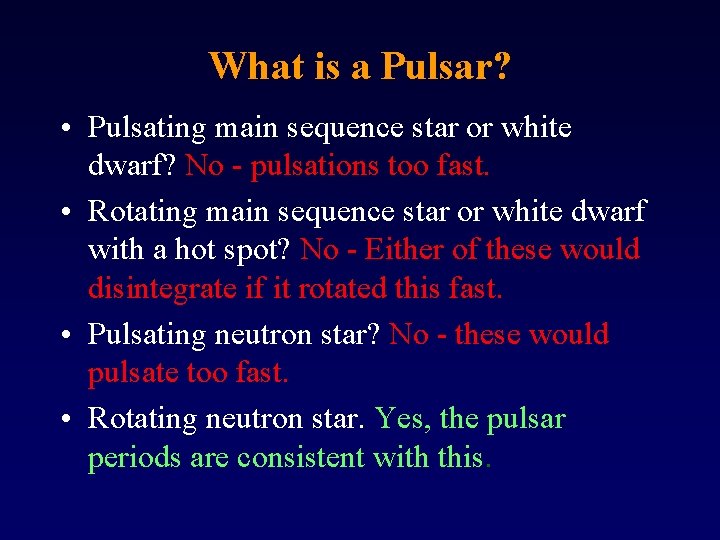
What is a Pulsar? • Pulsating main sequence star or white dwarf? No - pulsations too fast. • Rotating main sequence star or white dwarf with a hot spot? No - Either of these would disintegrate if it rotated this fast. • Pulsating neutron star? No - these would pulsate too fast. • Rotating neutron star. Yes, the pulsar periods are consistent with this.
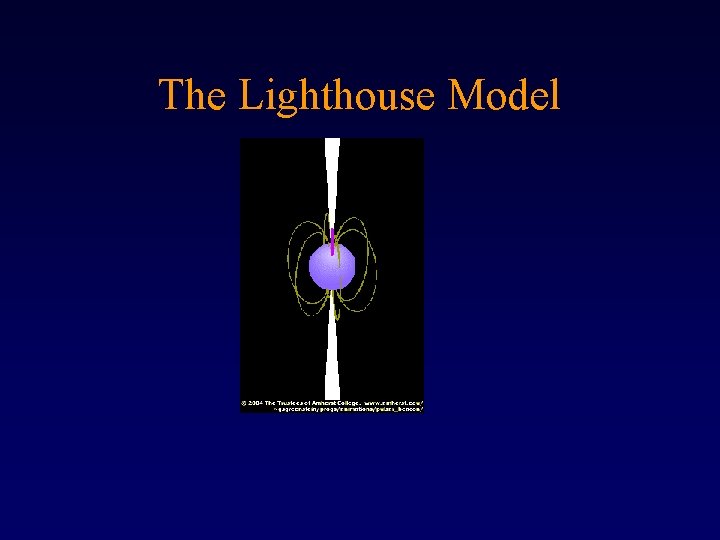
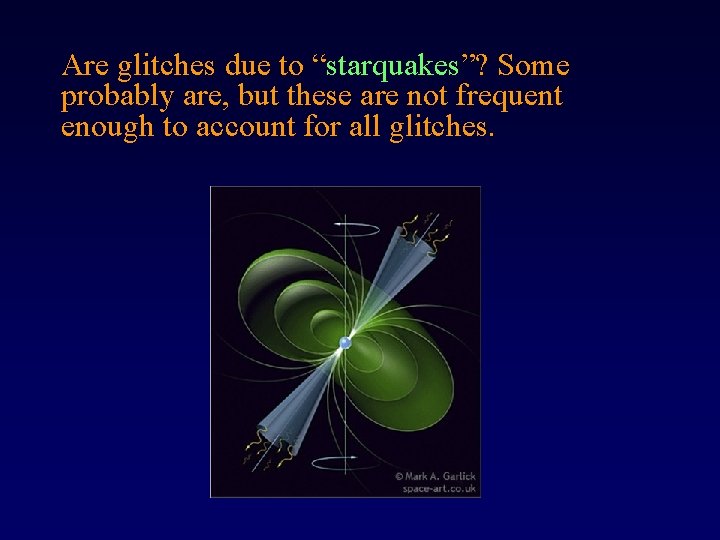
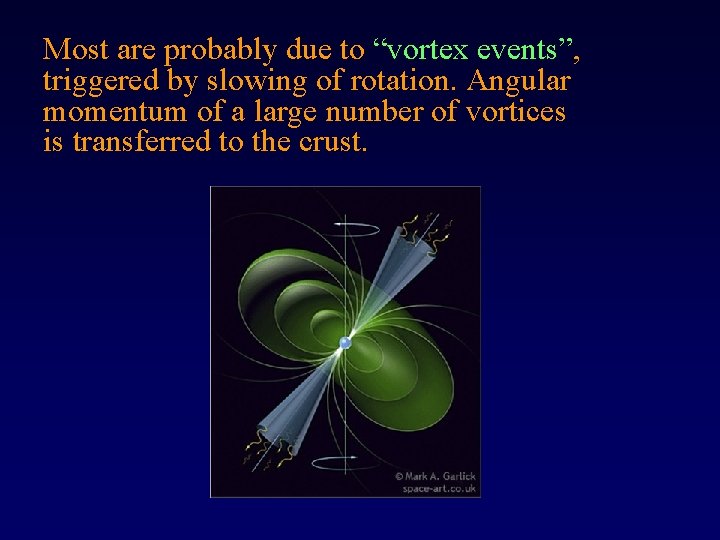
The Lighthouse Model
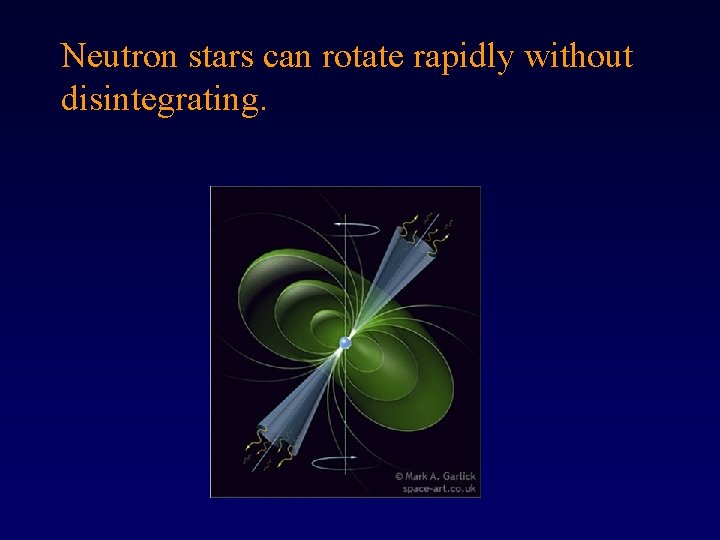
Neutron stars can rotate rapidly without disintegrating.
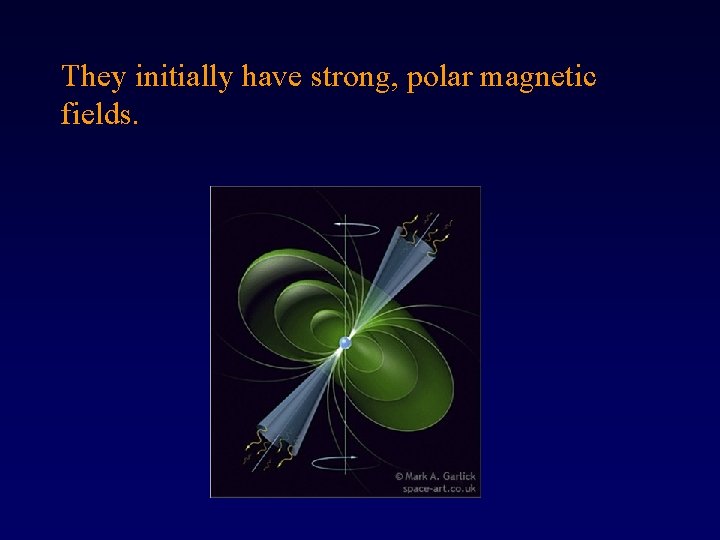
They initially have strong, polar magnetic fields.
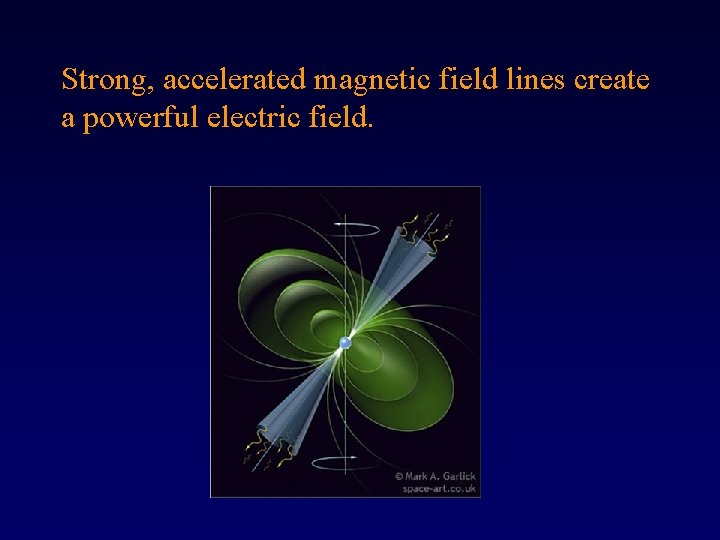
Strong, accelerated magnetic field lines create a powerful electric field.
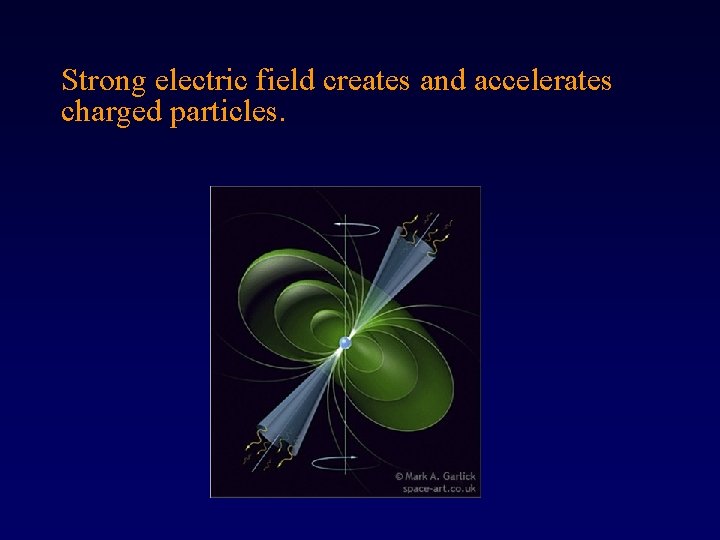
Strong electric field creates and accelerates charged particles.
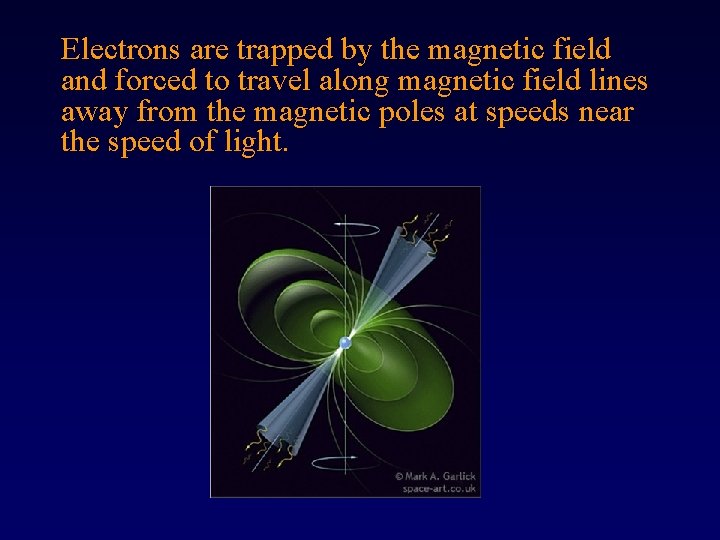
Electrons are trapped by the magnetic field and forced to travel along magnetic field lines away from the magnetic poles at speeds near the speed of light.
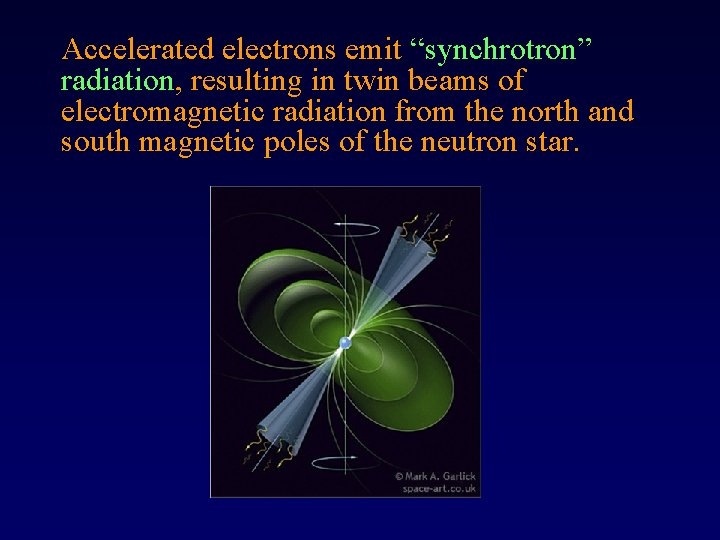
Accelerated electrons emit “synchrotron” radiation, resulting in twin beams of electromagnetic radiation from the north and south magnetic poles of the neutron star.
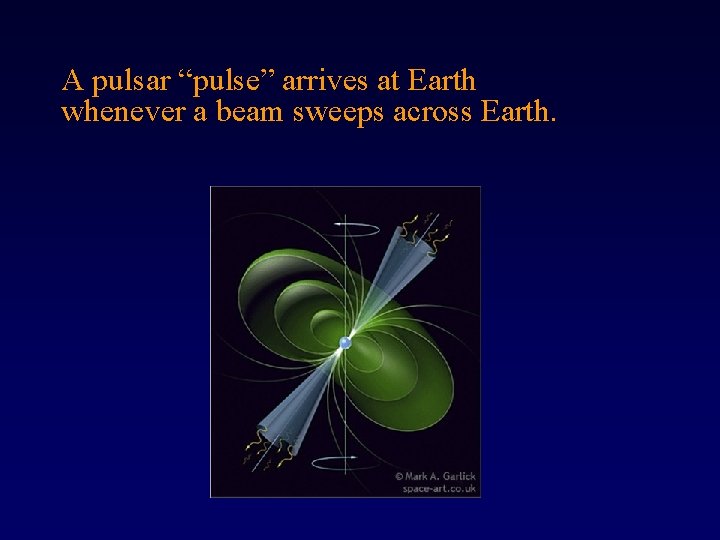
A pulsar “pulse” arrives at Earth whenever a beam sweeps across Earth.
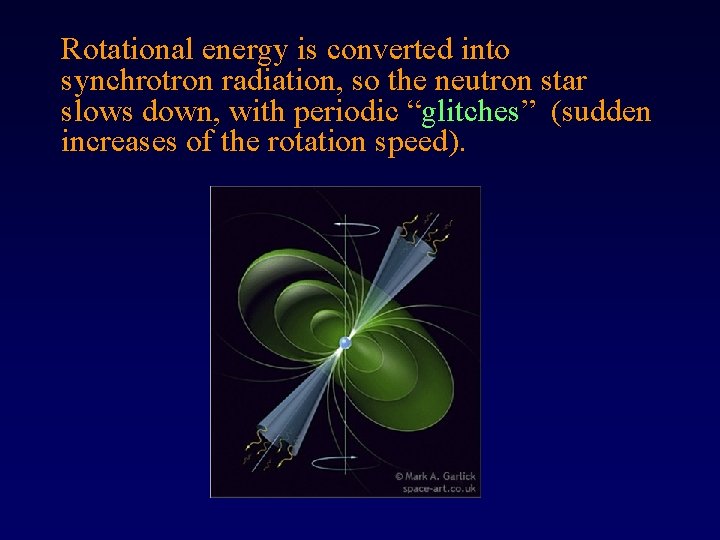
Rotational energy is converted into synchrotron radiation, so the neutron star slows down, with periodic “glitches” (sudden increases of the rotation speed).
Are glitches due to “starquakes”? Some probably are, but these are not frequent enough to account for all glitches.
Most are probably due to “vortex events”, triggered by slowing of rotation. Angular momentum of a large number of vortices is transferred to the crust.
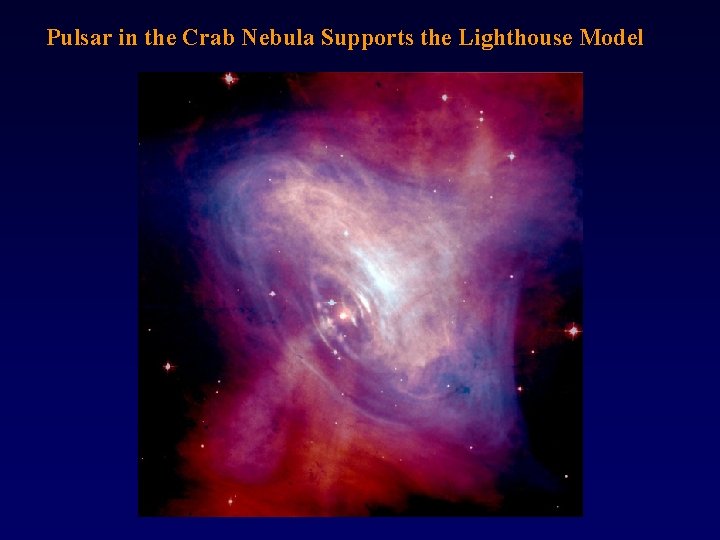
Pulsar in the Crab Nebula Supports the Lighthouse Model
Black Holes
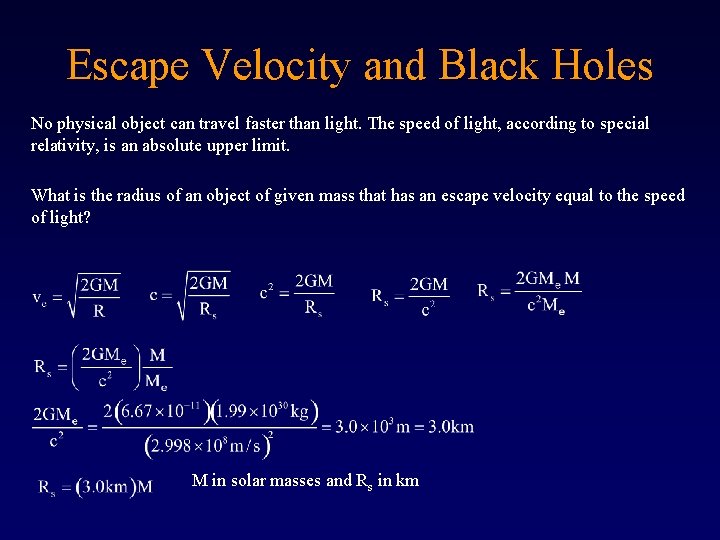
Escape Velocity and Black Holes No physical object can travel faster than light. The speed of light, according to special relativity, is an absolute upper limit. What is the radius of an object of given mass that has an escape velocity equal to the speed of light? M in solar masses and Rs in km
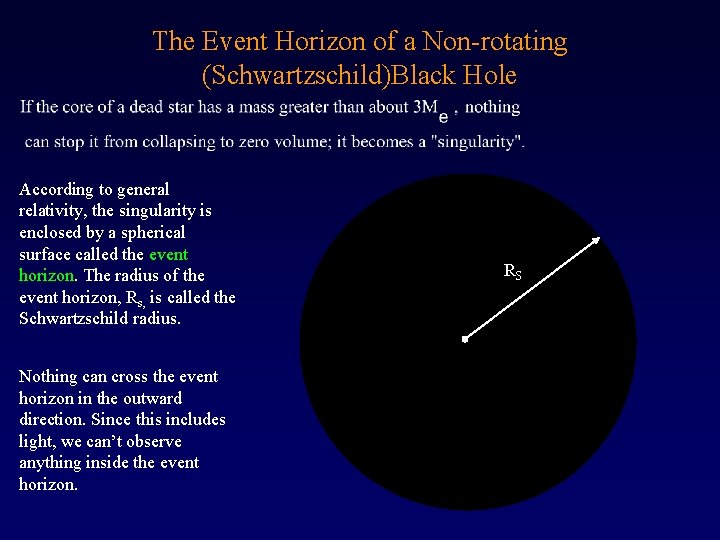
The Event Horizon of a Non-rotating (Schwartzschild)Black Hole According to general relativity, the singularity is enclosed by a spherical surface called the event horizon. The radius of the event horizon, Rs, is called the Schwartzschild radius. Nothing can cross the event horizon in the outward direction. Since this includes light, we can’t observe anything inside the event horizon. RS
Summary of Schwartzschild Black Hole Properties • Nothing that enters the event horizon can escape from the black hole. • No force can stop collapse to zero volume. • Time slows down and light is red-shifted as the event horizon is approached. • Tidal forces squeeze, stretch, tear apart, and ionize material before it reaches the event horizon.
Kerr (Rotating) Black Holes • A black hole can have only three properties: mass, angular momentum, and charge. • Stellar black holes are electrically neutral. • A neutral rotating black hole is called a Kerr black hole. • Outside its event horizon, a Kerr black hole has a region, called the ergosphere, in which spacetime is dragged along with the rotating black hole. In principle, energy can be extracted from the ergosphere. • An object dropped into the ergosphere can break into two parts. One of them drops through the event horizon. The other leaves the ergosphere with more energy than the original object had, and the mass of the black hole decreases.
Searching for Black Holes • Isolated black holes are impossible for us to see from Earth, because they’re small and emit no light. • A black hole is more likely to be recognized if it has a visible companion that isn’t a black hole. • A black hole with a visible companion will be a strong source of x-rays. The x-ray emission intensity should exhibit rapid fluctuations because of the chaotic nature of the processes that cause the x-ray emission. • So, we search for binary systems in which (a) one of the objects is visible, (b) the other is invisible and (c) there are x-ray sources that have short time scale fluctuations • We deduce the mass of the visible companion from its spectrum. • Having the mass of the visible companion and some information about the orbit, we can find a lower limit to the mass of the invisible companion. If it’s greater than about 3 times the mass of the Sun, it’s probably a black hole. Otherwise, it’s likely to be a neutron star.
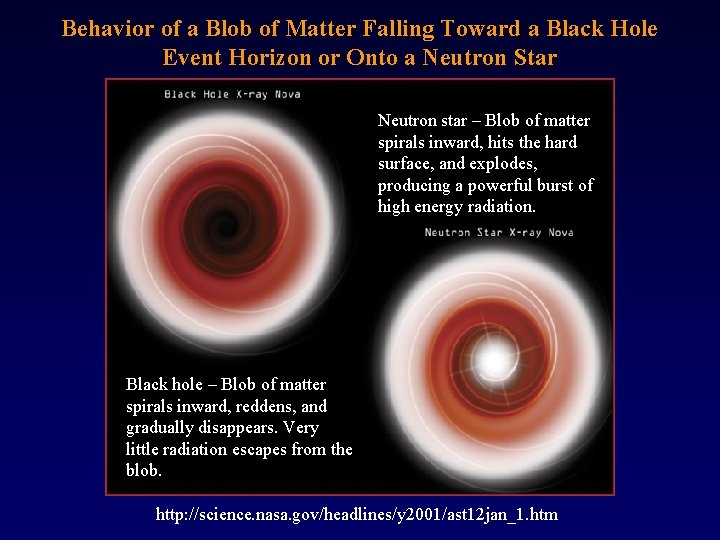
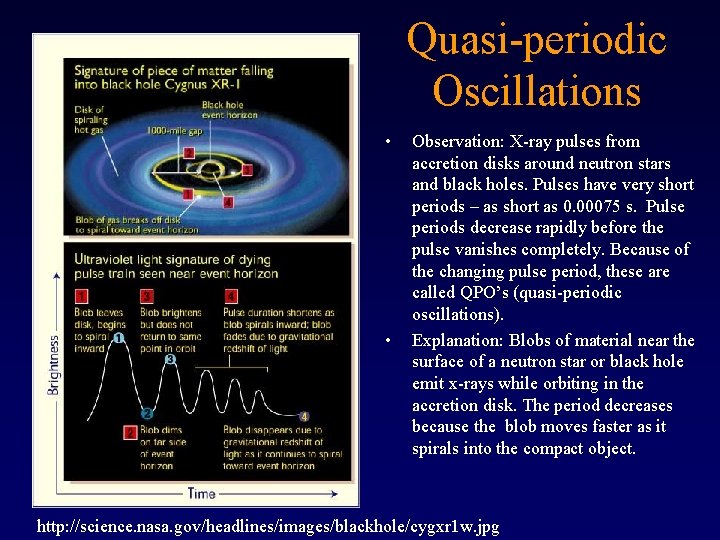
Behavior of a Blob of Matter Falling Toward a Black Hole Event Horizon or Onto a Neutron Star Neutron star – Blob of matter spirals inward, hits the hard surface, and explodes, producing a powerful burst of high energy radiation. Black hole – Blob of matter spirals inward, reddens, and gradually disappears. Very little radiation escapes from the blob. http: //science. nasa. gov/headlines/y 2001/ast 12 jan_1. htm
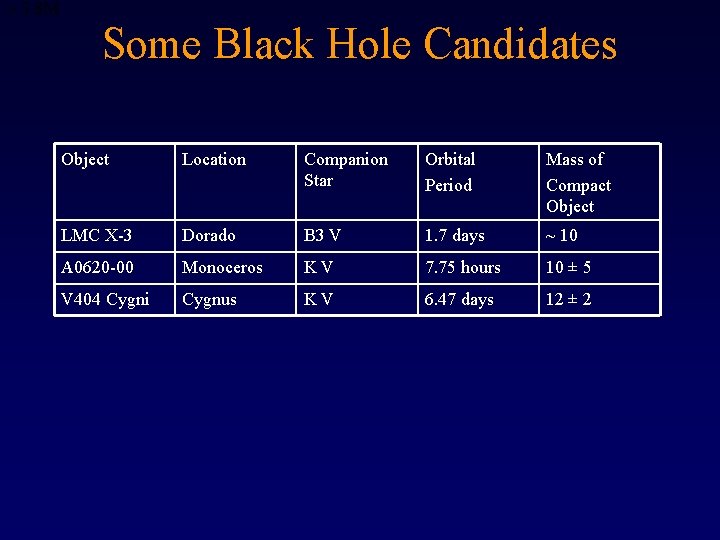
Some Black Hole Candidates Object Location Companion Star Orbital Period Mass of Compact Object LMC X-3 Dorado B 3 V 1. 7 days ~ 10 A 0620 -00 Monoceros KV 7. 75 hours 10 ± 5 V 404 Cygni Cygnus KV 6. 47 days 12 ± 2
X-Ray Bursters, Gamma Ray Bursters, QPO’s, and SS 433
X-Ray Bursters • • Powerful bursts of energy at irregular intervals. The longer the period between bursts, the stronger the burst. Explanation: Neutron star with a normal star companion. Close enough for normal star material to pass through the inner Lagrangian point, form a disk around the neutron star, and accrete onto it. • As the mixture of hydrogen and helium accumulates on the surface of the neutron star, the hydrogen fuses steadily and a layer of helium builds up. • When the layer of helium becames dense enough and hot enough, it fuses to form carbon and emits a burst of x-rays. The burst lasts just a few seconds, but emits ~1037 Joules of energy. • The helium layer can then build up until another burst occurs.
Quasi-periodic Oscillations • • Observation: X-ray pulses from accretion disks around neutron stars and black holes. Pulses have very short periods – as short as 0. 00075 s. Pulse periods decrease rapidly before the pulse vanishes completely. Because of the changing pulse period, these are called QPO’s (quasi-periodic oscillations). Explanation: Blobs of material near the surface of a neutron star or black hole emit x-rays while orbiting in the accretion disk. The period decreases because the blob moves faster as it spirals into the compact object. http: //science. nasa. gov/headlines/images/blackhole/cygxr 1 w. jpg
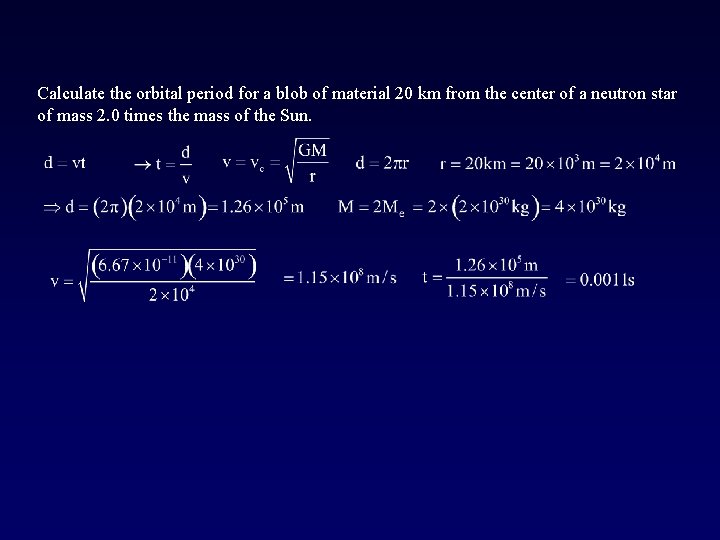
Calculate the orbital period for a blob of material 20 km from the center of a neutron star of mass 2. 0 times the mass of the Sun.
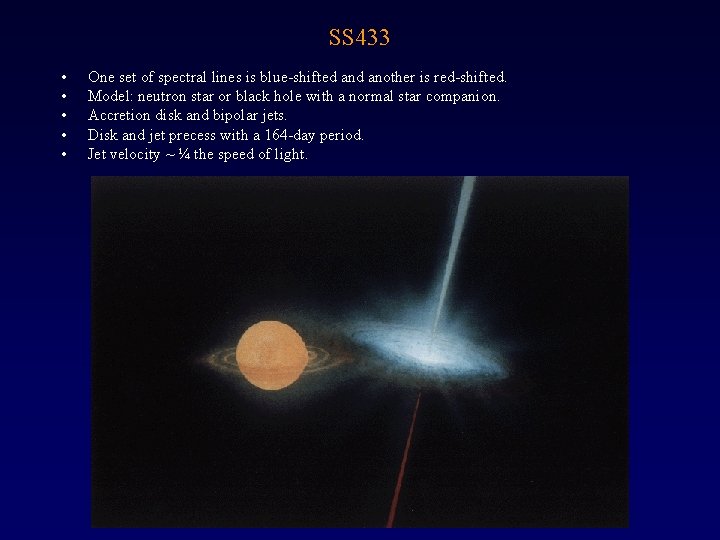
SS 433 • • • One set of spectral lines is blue-shifted another is red-shifted. Model: neutron star or black hole with a normal star companion. Accretion disk and bipolar jets. Disk and jet precess with a 164 -day period. Jet velocity ~ ¼ the speed of light.
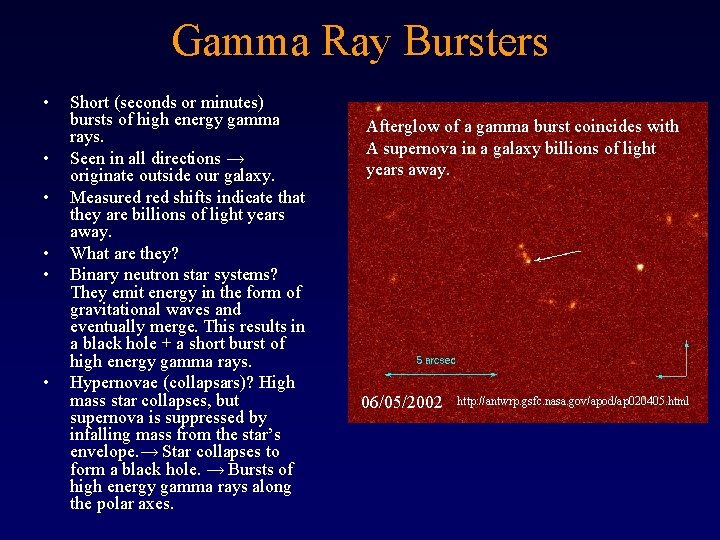
Gamma Ray Bursters • • • Short (seconds or minutes) bursts of high energy gamma rays. Seen in all directions → originate outside our galaxy. Measured shifts indicate that they are billions of light years away. What are they? Binary neutron star systems? They emit energy in the form of gravitational waves and eventually merge. This results in a black hole + a short burst of high energy gamma rays. Hypernovae (collapsars)? High mass star collapses, but supernova is suppressed by infalling mass from the star’s envelope. → Star collapses to form a black hole. → Bursts of high energy gamma rays along the polar axes. Afterglow of a gamma burst coincides with A supernova in a galaxy billions of light years away. 06/05/2002 http: //antwrp. gsfc. nasa. gov/apod/ap 020405. html