
Endotracheal Tube Adaptor Team Members Evan Joyce Team
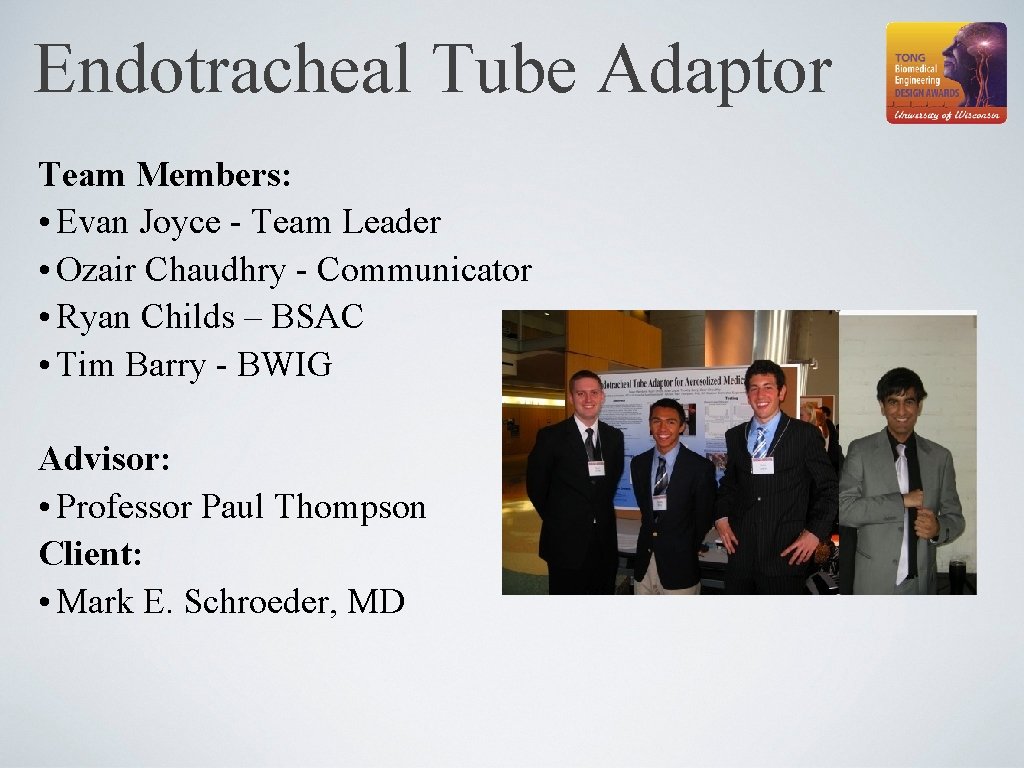
Endotracheal Tube Adaptor Team Members: • Evan Joyce - Team Leader • Ozair Chaudhry - Communicator • Ryan Childs – BSAC • Tim Barry - BWIG Advisor: • Professor Paul Thompson Client: • Mark E. Schroeder, MD
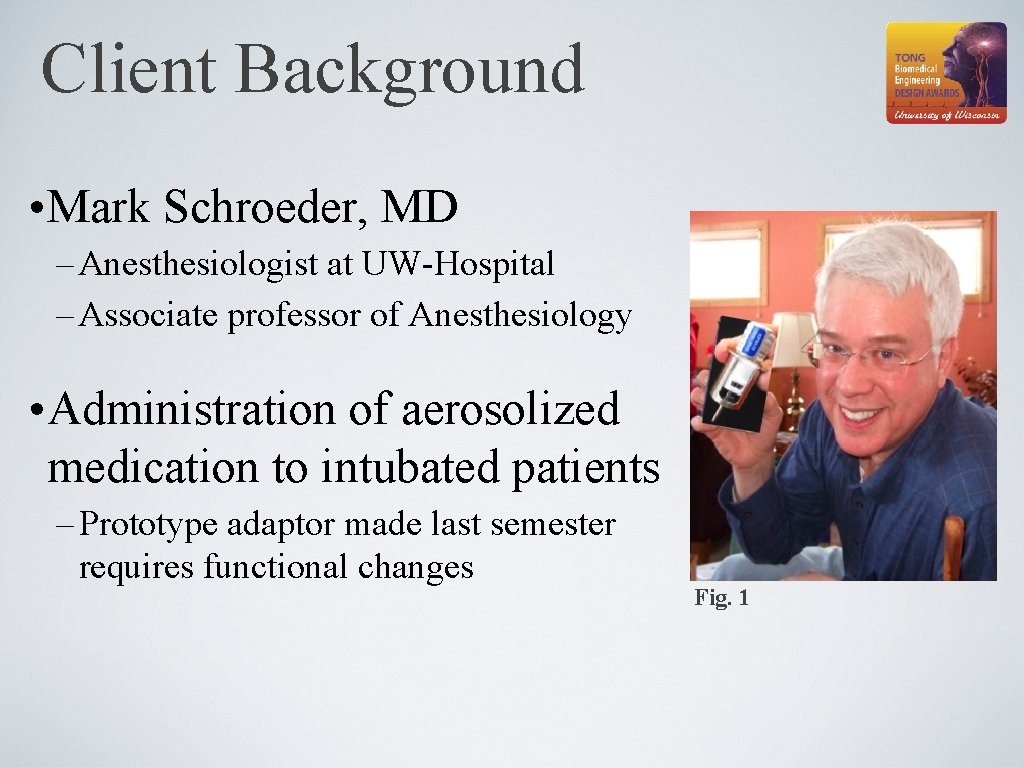
Client Background • Mark Schroeder, MD – Anesthesiologist at UW-Hospital – Associate professor of Anesthesiology • Administration of aerosolized medication to intubated patients – Prototype adaptor made last semester requires functional changes Fig. 1
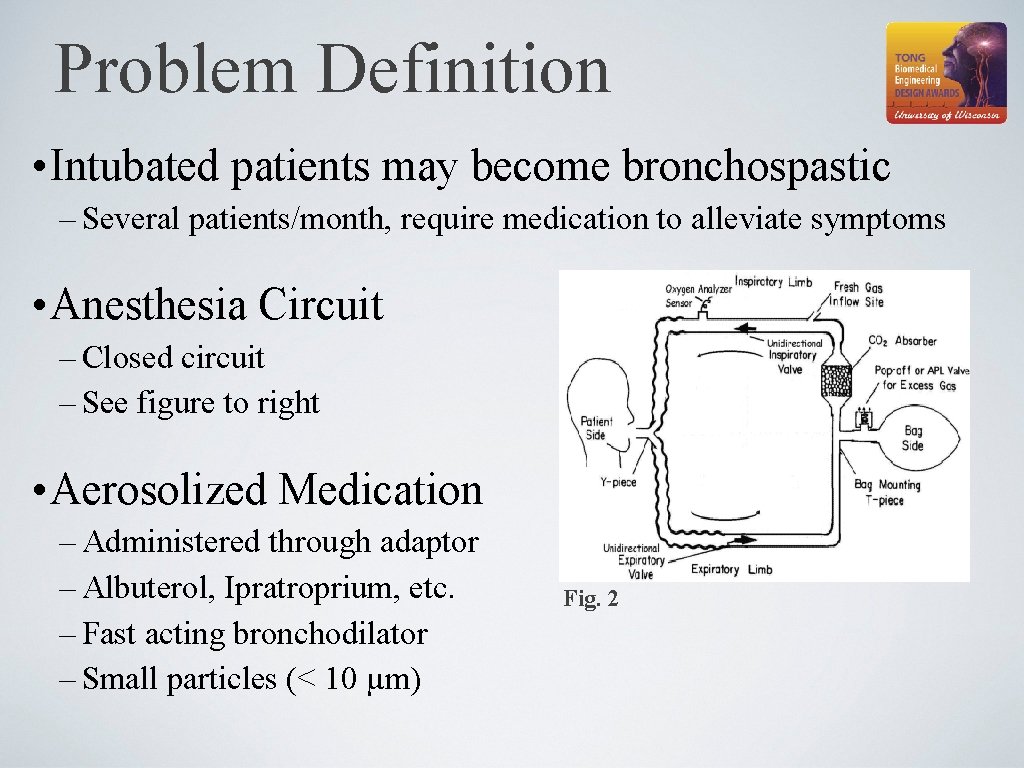
Problem Definition • Intubated patients may become bronchospastic – Several patients/month, require medication to alleviate symptoms • Anesthesia Circuit – Closed circuit – See figure to right • Aerosolized Medication – Administered through adaptor – Albuterol, Ipratroprium, etc. – Fast acting bronchodilator – Small particles (< 10 µm) Fig. 2
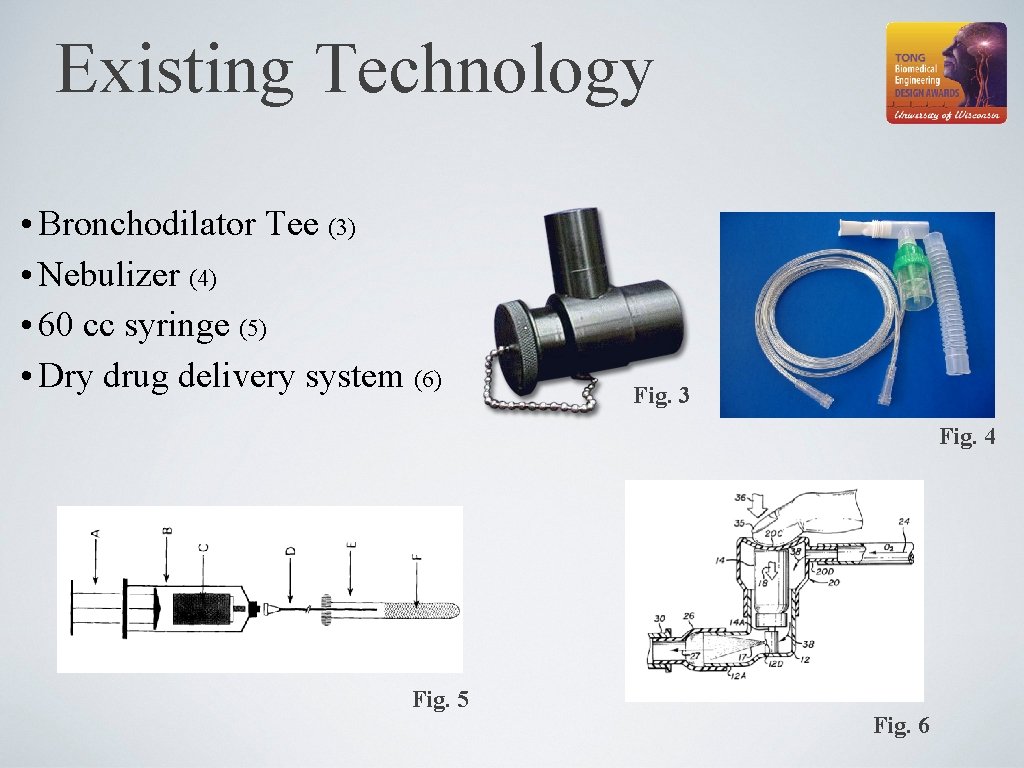
Existing Technology • Bronchodilator Tee (3) • Nebulizer (4) • 60 cc syringe (5) • Dry drug delivery system (6) Fig. 3 Fig. 4 Fig. 5 Fig. 6
Client Requirements • Develop a method to administer aerosolized medication from canister into ventilator circuit • Adjust spray characteristics • Address ergonomic and compatibility issues
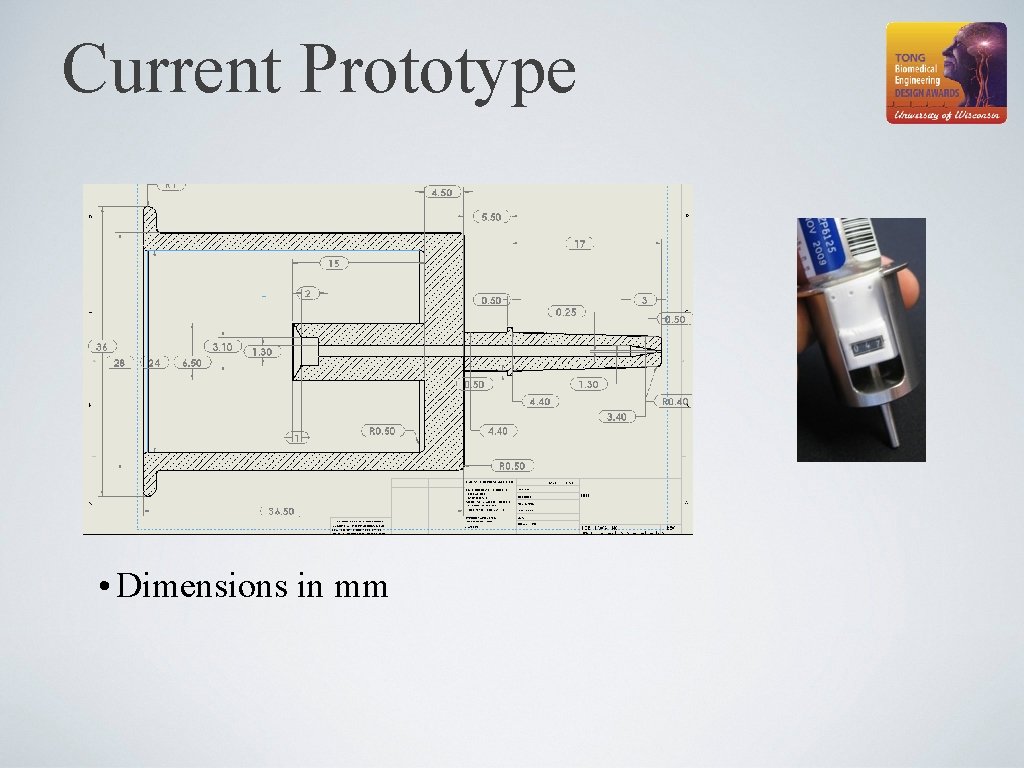
Current Prototype • Dimensions in mm
Changes to Current Design • Improve upon existing spray pattern by changing nozzle functionality – Particle diameter between 5 -10 µm – Slow particle velocity by creating pressure drop – Increase orifice size (from 0. 25 mm to ~0. 5 mm) • Improve compatibility, general aesthetics – Adjust nozzle length to Luer standard (7. 5 mm) – Round sharp edges/corners • Make an injection-moldable design – Draft angles, uniform thickness
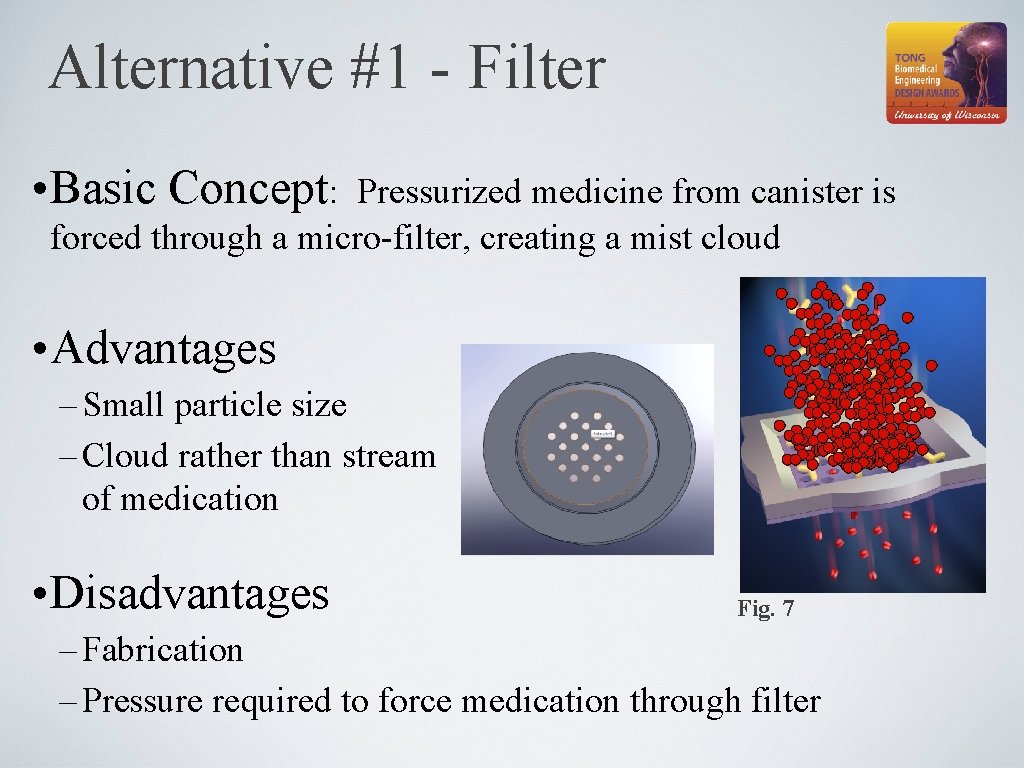
Alternative #1 - Filter • Basic Concept: Pressurized medicine from canister is forced through a micro-filter, creating a mist cloud • Advantages – Small particle size – Cloud rather than stream of medication • Disadvantages Fig. 7 – Fabrication – Pressure required to force medication through filter
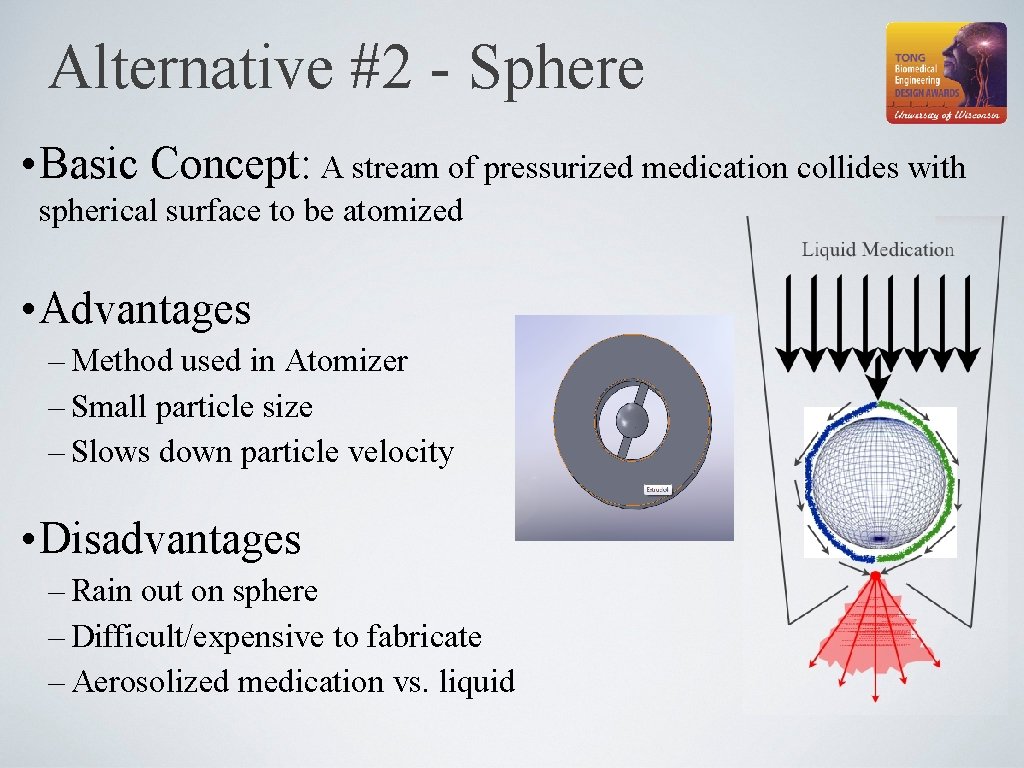
Alternative #2 - Sphere • Basic Concept: A stream of pressurized medication collides with spherical surface to be atomized • Advantages – Method used in Atomizer – Small particle size – Slows down particle velocity • Disadvantages – Rain out on sphere – Difficult/expensive to fabricate – Aerosolized medication vs. liquid
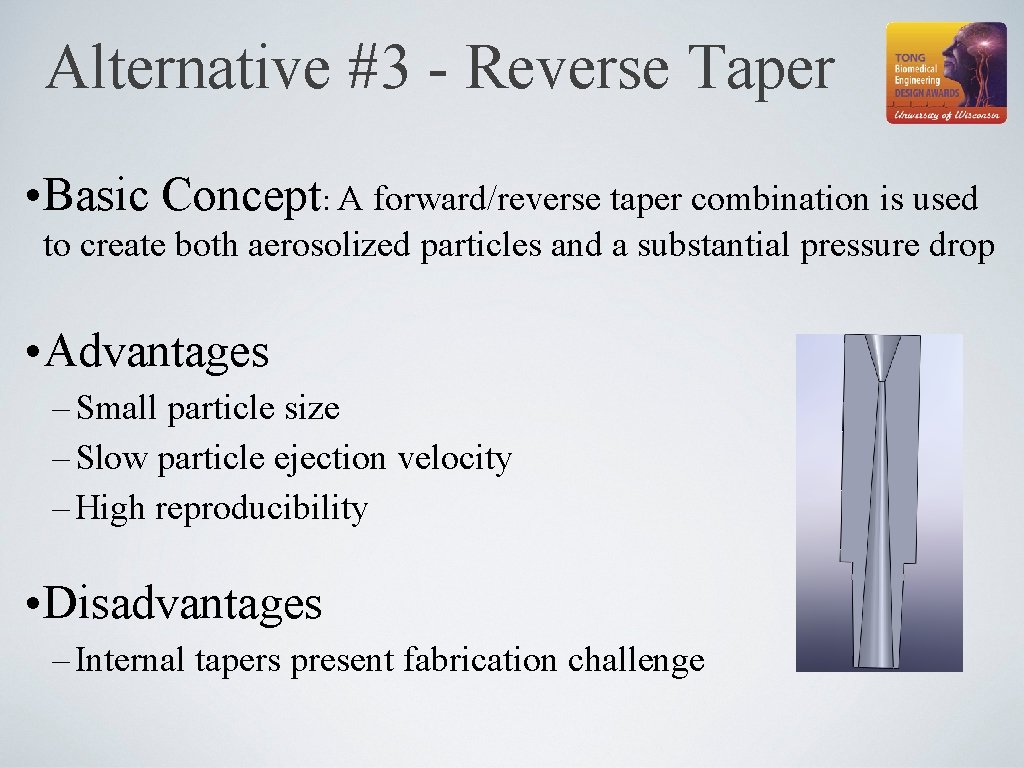
Alternative #3 - Reverse Taper • Basic Concept: A forward/reverse taper combination is used to create both aerosolized particles and a substantial pressure drop • Advantages – Small particle size – Slow particle ejection velocity – High reproducibility • Disadvantages – Internal tapers present fabrication challenge
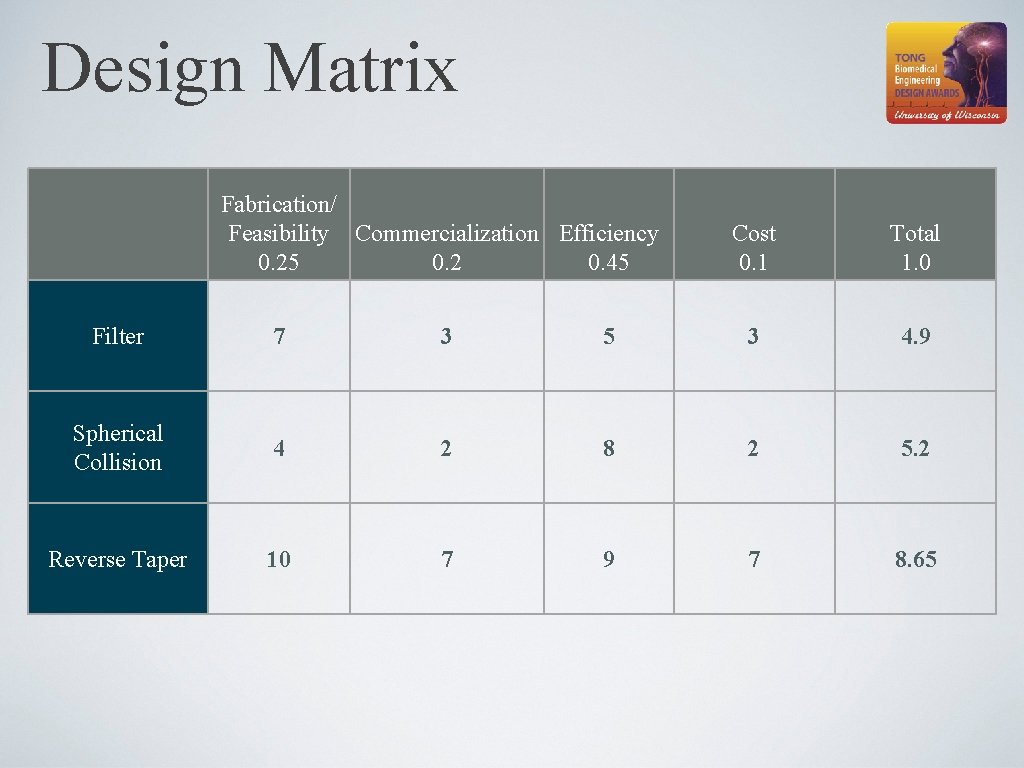
Design Matrix Fabrication/ Feasibility Commercialization Efficiency 0. 25 0. 2 0. 45 Cost 0. 1 Total 1. 0 Filter 7 3 5 3 4. 9 Spherical Collision 4 2 8 2 5. 2 Reverse Taper 10 7 9 7 8. 65
Future Work • Solid. Works model of updated prototype • Theoretical flow testing • Mold flow “analysis” • Test prototype – Particle size: Laser Diffraction – Albuterol amount: Na. OH and photospectrometry (8)
Special Thanks To. . . • Mark Schroeder and the UW Hospital • Professor Thompson • Professors Samuelson, Reitz, and Bower
References Figures 1) www. facebook. com 2) http: //www. osha. gov/dts/osta/anestheticgases/fig 05. gif 3) http: //www. boehringerlabs. com/products/accessories/model-9056. php 4) http: //www. myrespiratorysupply. com/images/nebulizer%20 kit. JPG 5) http: //www. ncbi. nlm. nih. gov/pubmed/8109777 6) http: //www. freepatentsonline. com/6014972. html 7) http: //www. rochester. edu/news/photos/hi_res/Mc. Grath/Nanofilter. jpg Articles 8) Peterfreund RA, Niven RW, Kacmarek RM. Syringe-actuated metered dose inhalers: a quantitative laboratory evaluation of albuterol delivery through nozzle extensions. Anesth Analg. 1994 Mar; 78(3): 554 -8.
Questions?
- Slides: 15