
ENDOTRACHEAL INTUBATION Thida Uakritdathikarn MD Department Of Anesthesiology
ENDOTRACHEAL INTUBATION Thida Ua-kritdathikarn, MD. Department Of Anesthesiology Faculty of medicine, PSU
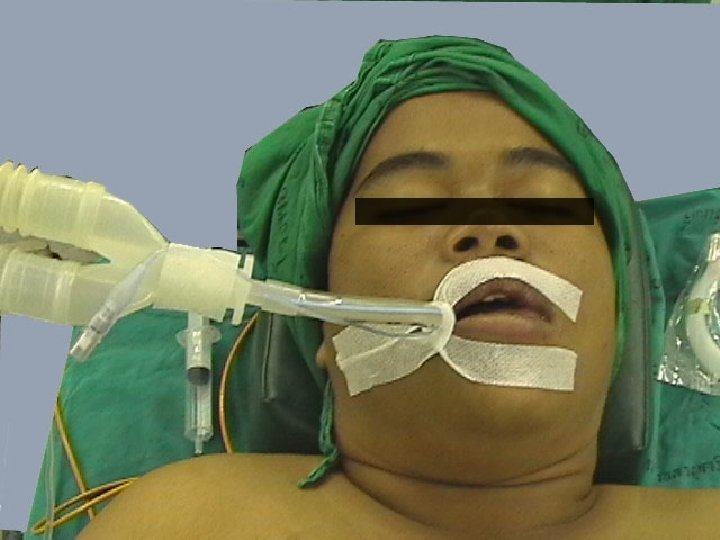
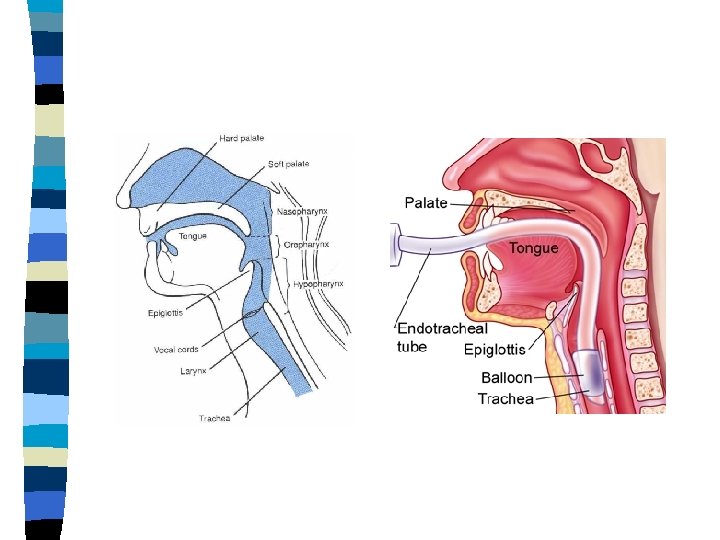
Indication for endotracheal intubation (1 For supporting ventilation in patient with some pathologic disease : Upper airway obstruction : Respiratory failure : Loss of conciousness
Indication for endotracheal intubation (con’t( (2 For supporting ventilation during general anesthesia § Type of surgery : Operative site near the airway : Abdominal or thoracic surgery
Indication for endotracheal intubation (con’t( : Prone or lateral position : Long period of surgery § Patient has risk of pulmonary aspiration § Difficult mask ventilation
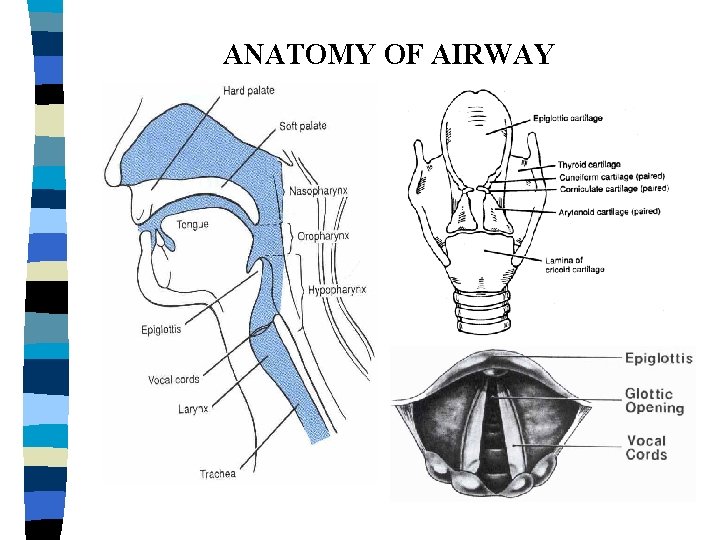
ANATOMY OF AIRWAY
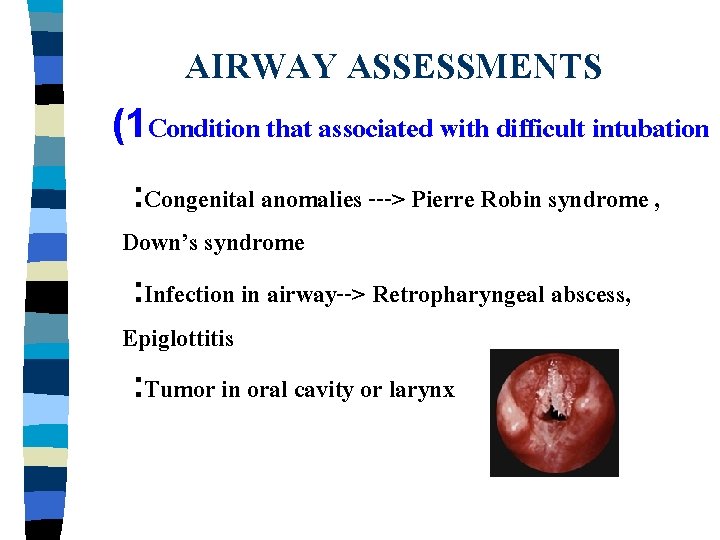
AIRWAY ASSESSMENTS (1 Condition that associated with difficult intubation : Congenital anomalies ---> Pierre Robin syndrome , Down’s syndrome : Infection in airway--> Retropharyngeal abscess, Epiglottitis : Tumor in oral cavity or larynx
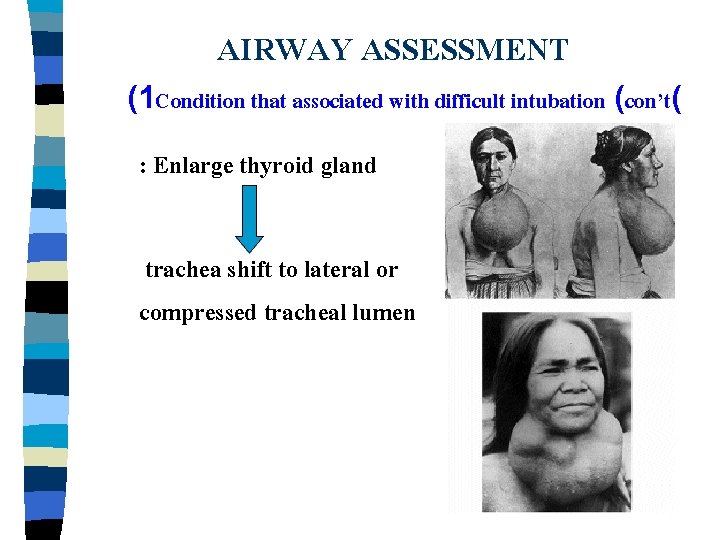
AIRWAY ASSESSMENT (1 Condition that associated with difficult intubation (con’t( : Enlarge thyroid gland trachea shift to lateral or compressed tracheal lumen
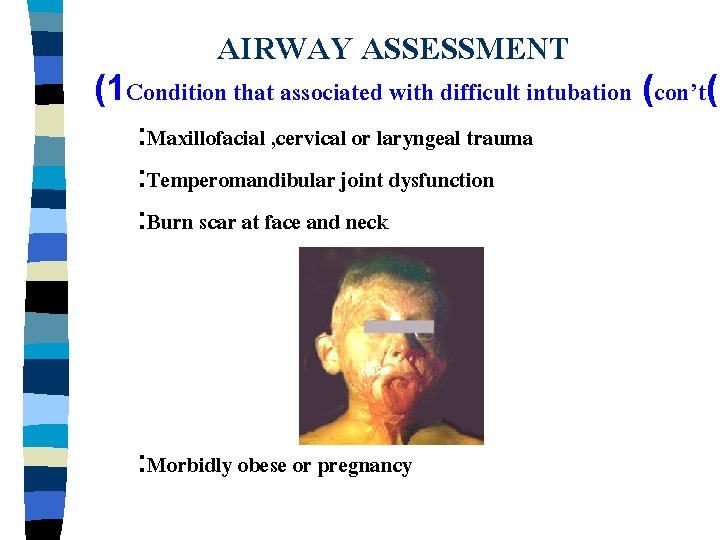
AIRWAY ASSESSMENT (1 Condition that associated with difficult intubation (con’t( : Maxillofacial , cervical or laryngeal trauma : Temperomandibular joint dysfunction : Burn scar at face and neck : Morbidly obese or pregnancy
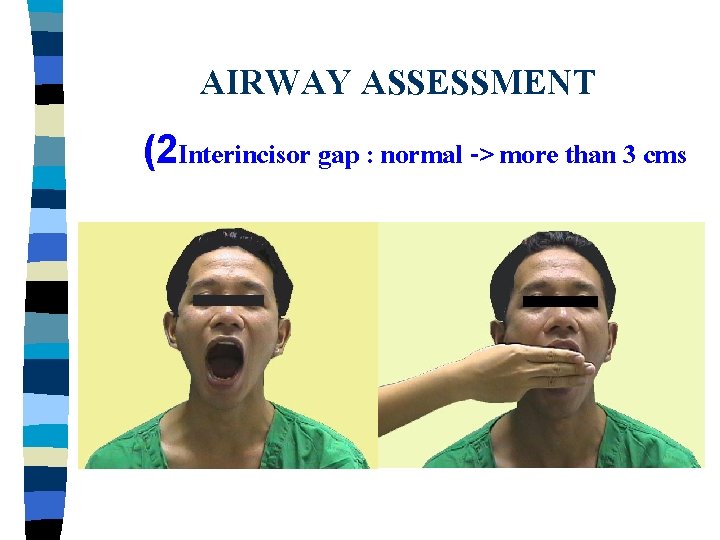
AIRWAY ASSESSMENT (2 Interincisor gap : normal -> more than 3 cms
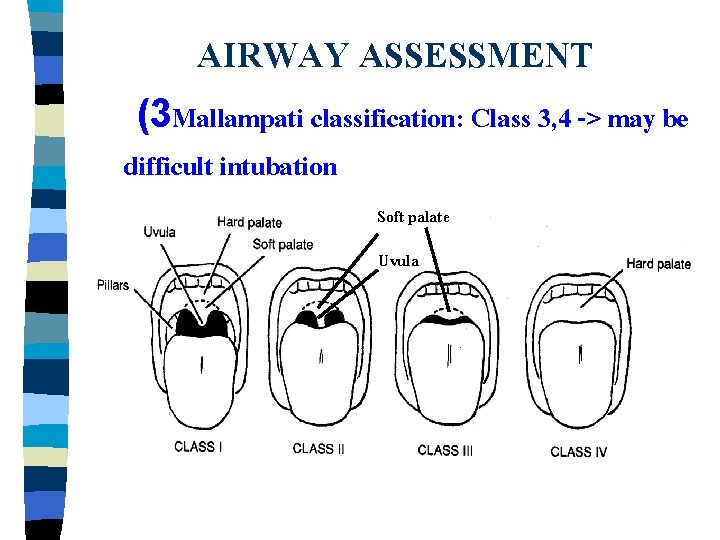
AIRWAY ASSESSMENT (3 Mallampati classification: Class 3, 4 -> may be difficult intubation Soft palate Uvula
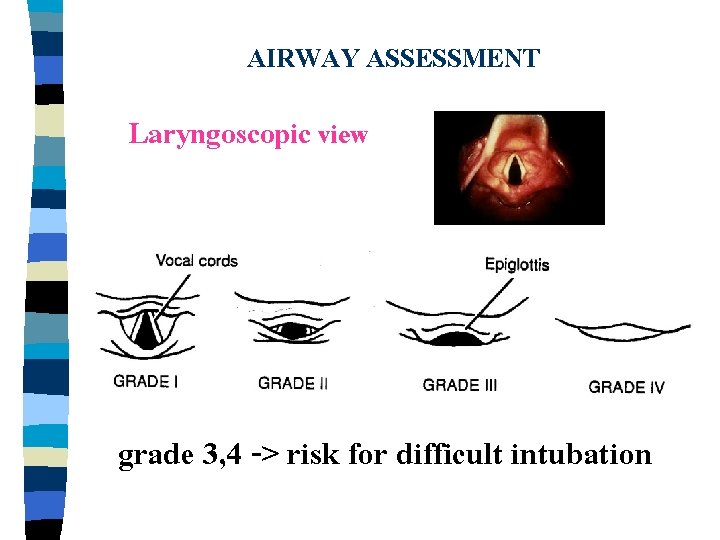
AIRWAY ASSESSMENT Laryngoscopic view grade 3, 4 -> risk for difficult intubation
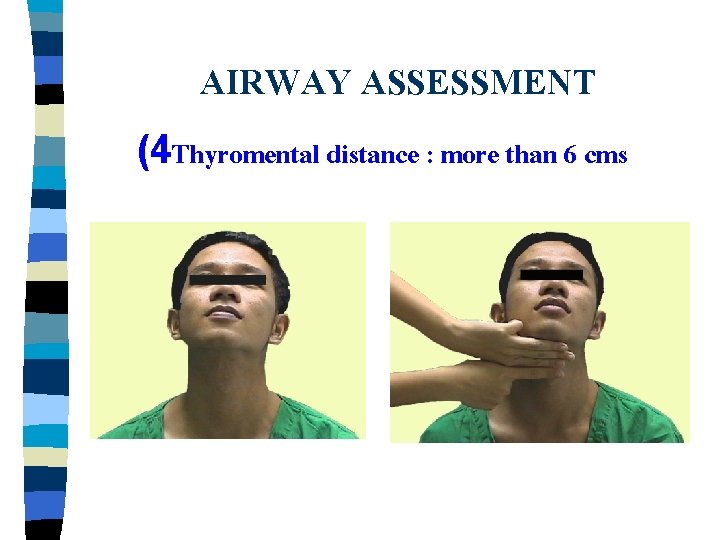
AIRWAY ASSESSMENT (4 Thyromental distance : more than 6 cms
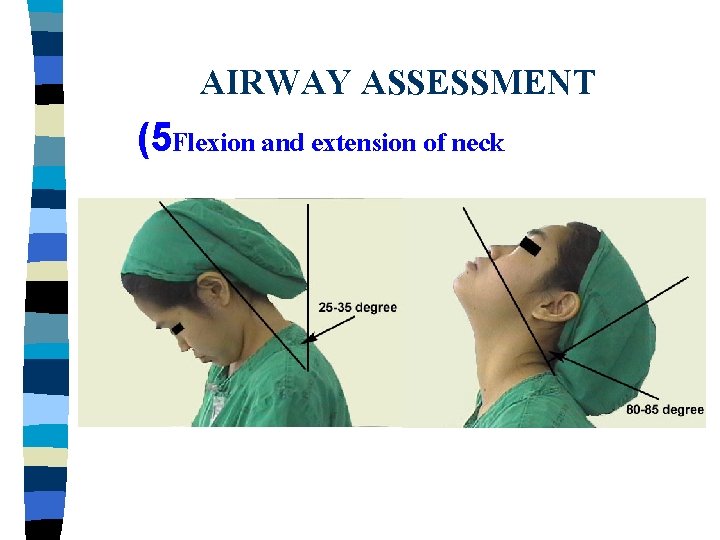
AIRWAY ASSESSMENT (5 Flexion and extension of neck
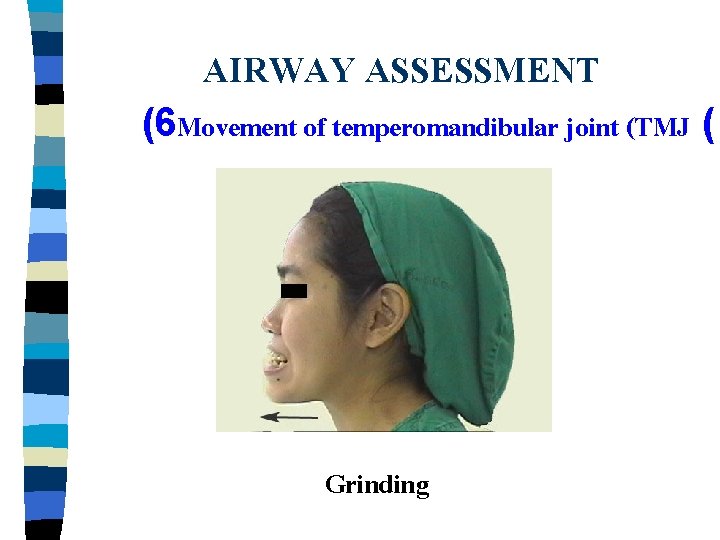
AIRWAY ASSESSMENT (6 Movement of temperomandibular joint (TMJ ( Grinding
Equipment preparation
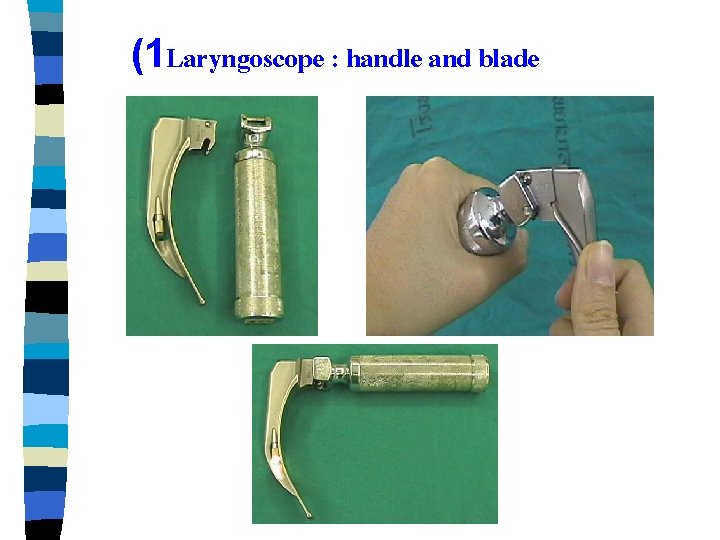
(1 Laryngoscope : handle and blade
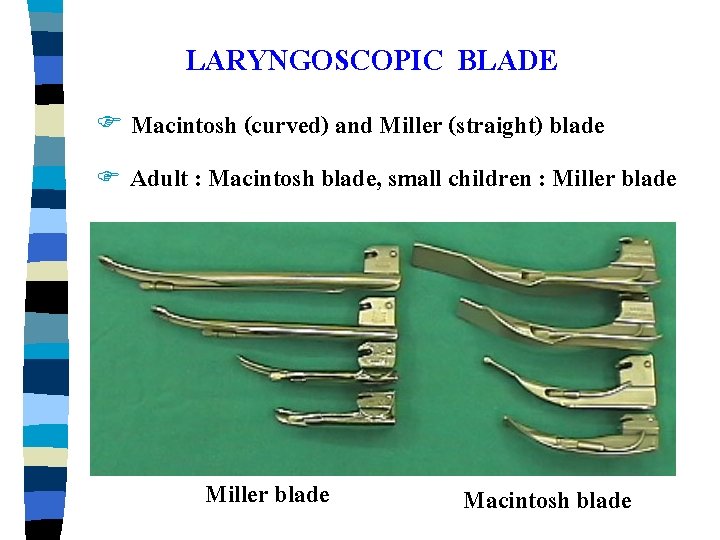
LARYNGOSCOPIC BLADE F Macintosh (curved) and Miller (straight) blade F Adult : Macintosh blade, small children : Miller blade Macintosh blade
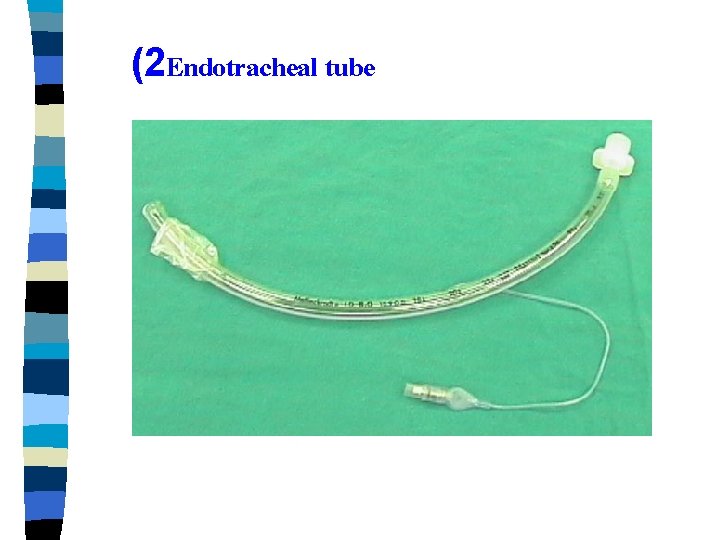
(2 Endotracheal tube
Endotracheal tube (1 Size of endotracheal tube : internal diameter (ID( Male: ID 8. 0 mms. Female : ID 7. 5 mms H H H New born - 3 months : ID 3. 0 mms 3 -9 months : ID 3. 5 mms 9 -18 months : ID 4. 0 mms 2 - 6 yrs : ID = (Age/3)3. 5 + 6 < yrs : ID = (Age/4) + 4. 5
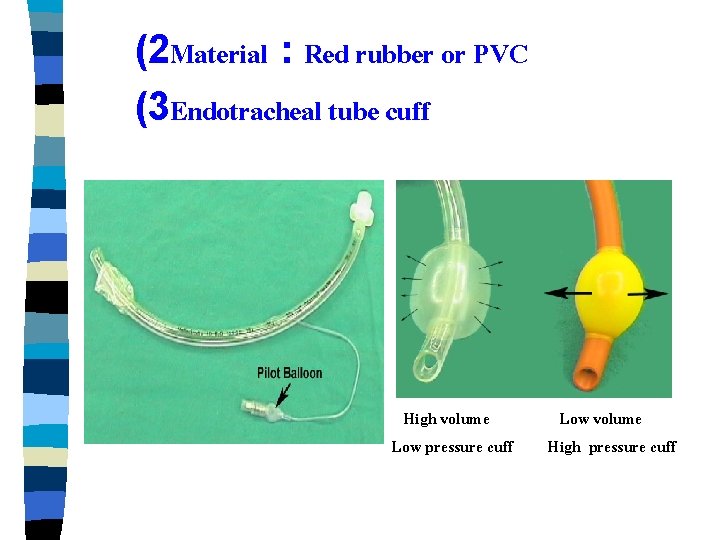
(2 Material : Red rubber or PVC (3 Endotracheal tube cuff High volume Low pressure cuff Low volume High pressure cuff

(4 Bevel (5 Murphy’s eye
(6 Depth of endotracheal tube : Midtrachea or below vocal cord ~ 2 cms F Adult -> Male = 23 cms , Female = 21 cms F Children Oral endotracheal tube = (Age/2) + 12 (cm( Nasal endotracheal tube = (Age/2) + 15 (cm(
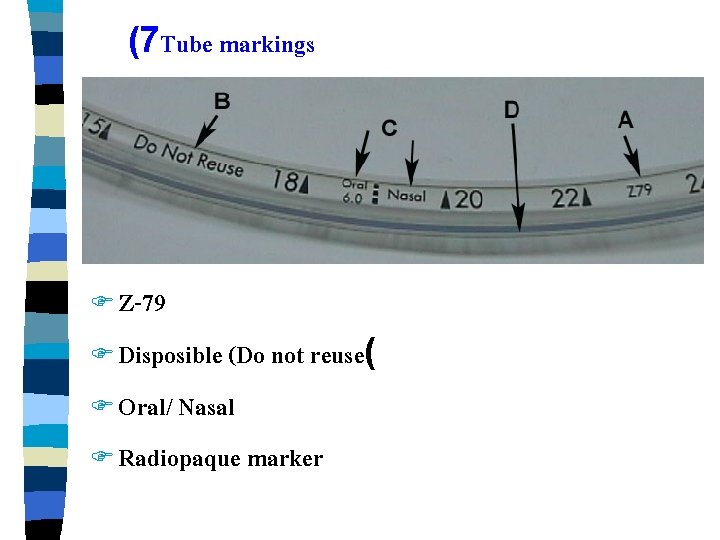
(7 Tube markings F Z-79 F Disposible (Do not reuse( F Oral/ Nasal F Radiopaque marker

(3 Other equipments 3. 1 Stylet
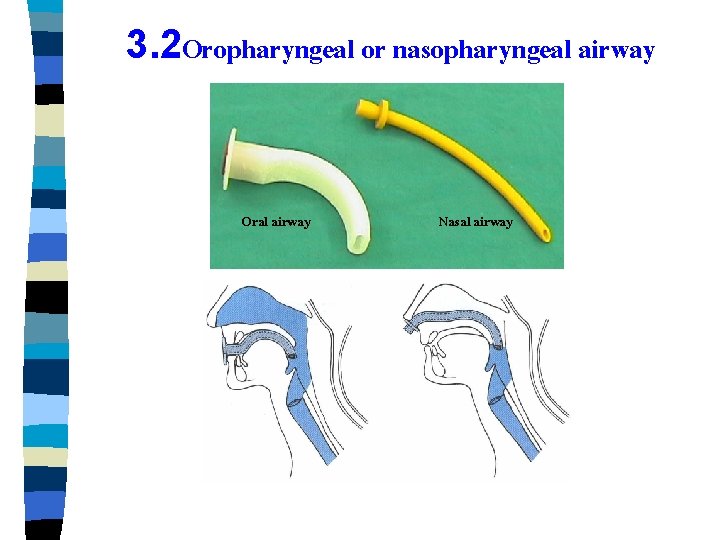
3. 2 Oropharyngeal or nasopharyngeal airway Oral airway Nasal airway
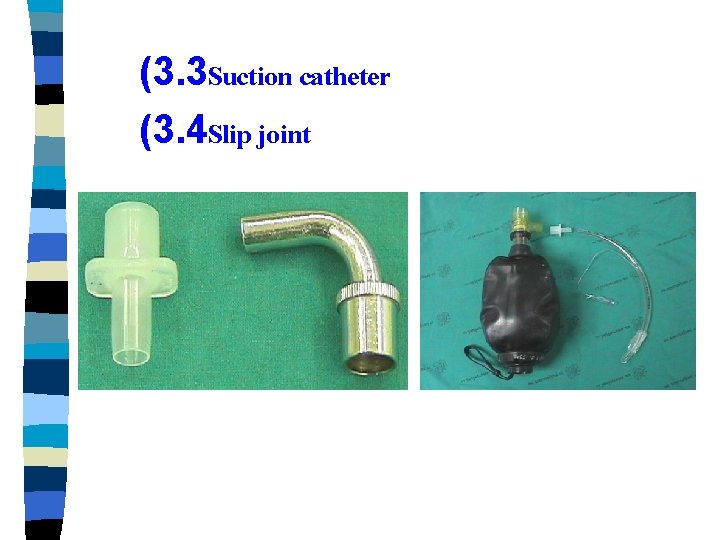
(3. 3 Suction catheter (3. 4 Slip joint
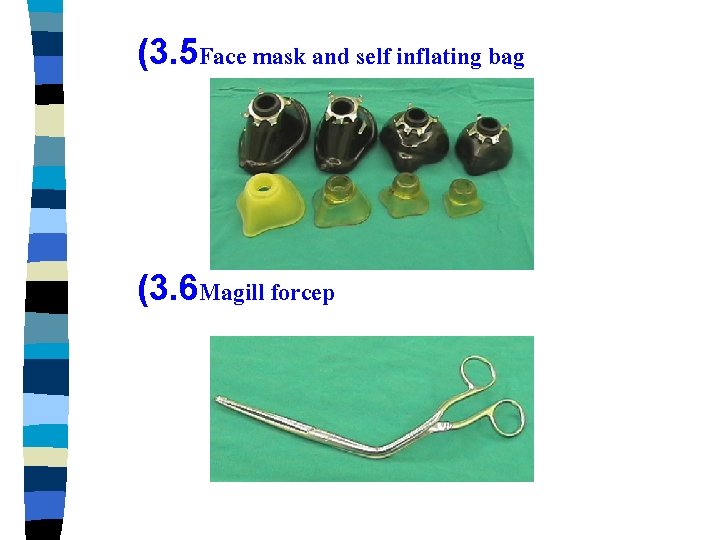
(3. 5 Face mask and self inflating bag (3. 6 Magill forcep

(3. 7 Syringe (3. 8 Lubricating jelly (3. 9 Plaster for strap endotracheal tube . 4 Monitoring success of endotracheal intubation (4. 1 Stethoscope (4. 2 Endtidal - CO 2 (4. 3 Pulse oximeter

Sniffing position Flexion at lower cervical spine Extension at atlanto-occipital joint

Sniffing position
Steps of oroendotracheal intubation
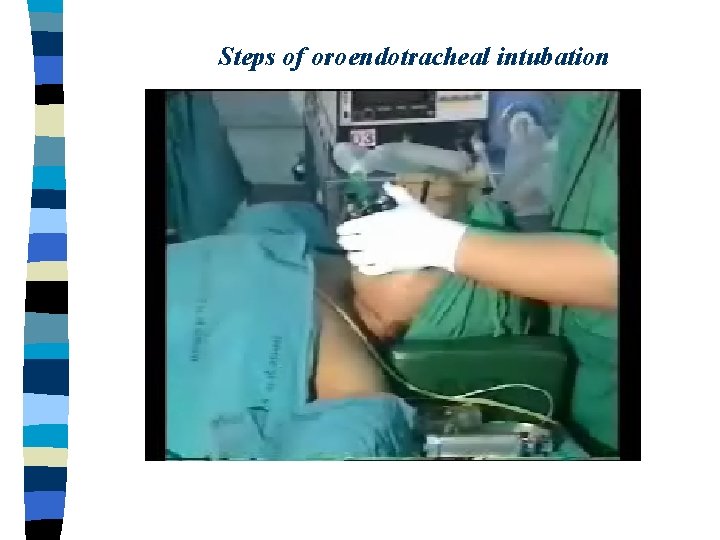
Steps of oroendotracheal intubation
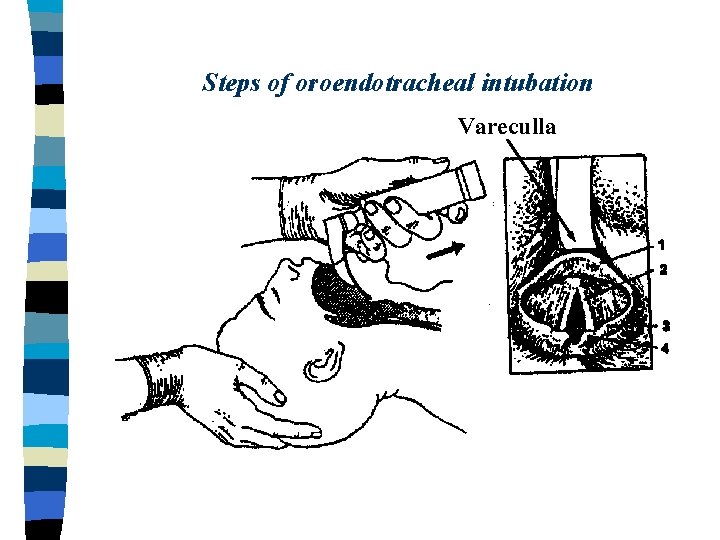
Steps of oroendotracheal intubation Vareculla
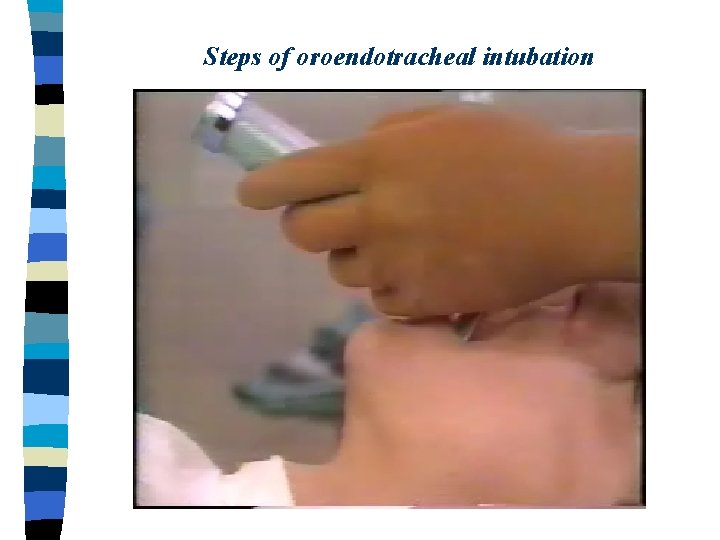
Steps of oroendotracheal intubation
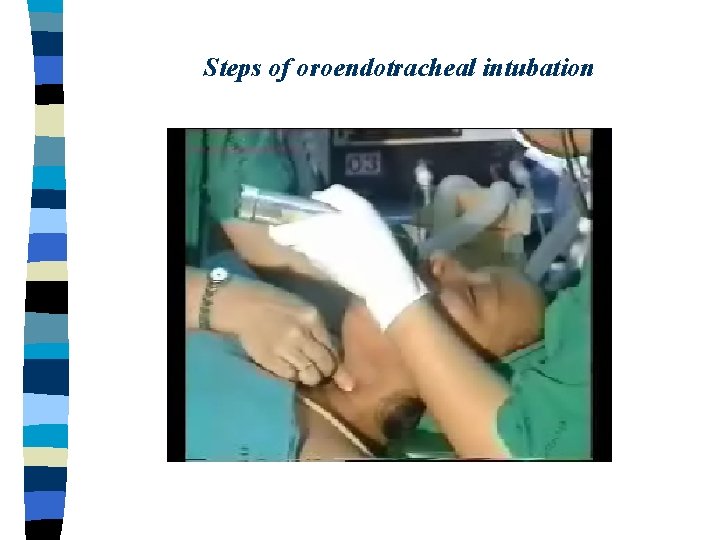
Steps of oroendotracheal intubation
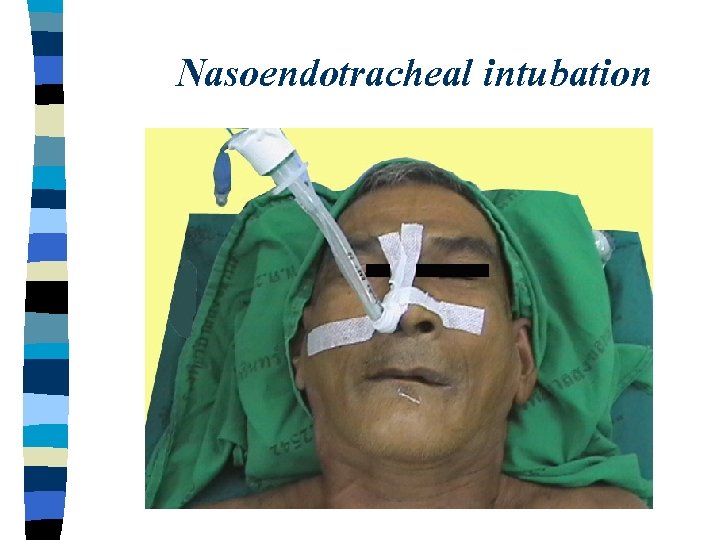
Nasoendotracheal intubation
Nasoendotracheal intubation F Advantage (1 Comfortable for prolong intubation in postoperative period (2 Suitable for oral surgery : tonsillectomy , mandible surgery (3 For blind nasal intubation (4 Can take oral feeding (5 Resist for kinking and difficult to accidental extubation
Disadvantage (1 Trauma to nasal mucosa (2 Risk for sinusitis in prolong intubation (3 Risk for bacteremia (4 Smaller diameter than oral route -> difficult for suction
Contraindication for nasoendotracheal intubation (1 Fracture base of skull (2 Coagulopathy (3 Nasal cavity obstruction (4 Retropharyngeal abscess
Complication of endotracheal intubation (1 During intubation : Trauma to lip, tongue or teeth : Hypertension and tachycardia or arrhythmia : Pulmonary aspiration : Laryngospasm : Bronchospasm
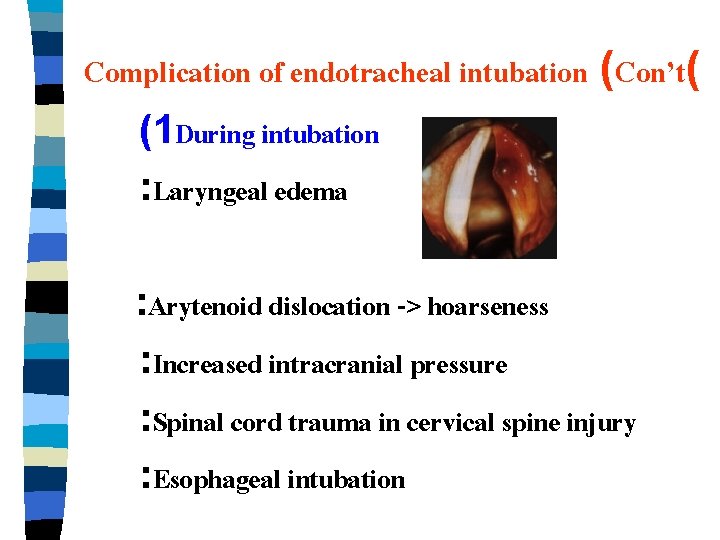
Complication of endotracheal intubation (Con’t( (1 During intubation : Laryngeal edema : Arytenoid dislocation -> hoarseness : Increased intracranial pressure : Spinal cord trauma in cervical spine injury : Esophageal intubation
Complication of endotracheal intubation(Con’t( 2) During remained intubation : Obstruction from klinking , secretion or overinflation of cuff : Accidental extubation or endobronchial intubation : Disconnection from breathing circuit
Complication of endotracheal intubation(Con’t( 2) During remained intubation : Pulmonary aspiration : Lib or nasal ulcer in case with prolong period of intubation : Sinusitis or otitis in case with prolong nasoendotracheal intubation
Complication of endotracheal intubation(Con’t( 3) During extubation F Laryngospasm F Pulmonary aspiration F Edema of upper airway
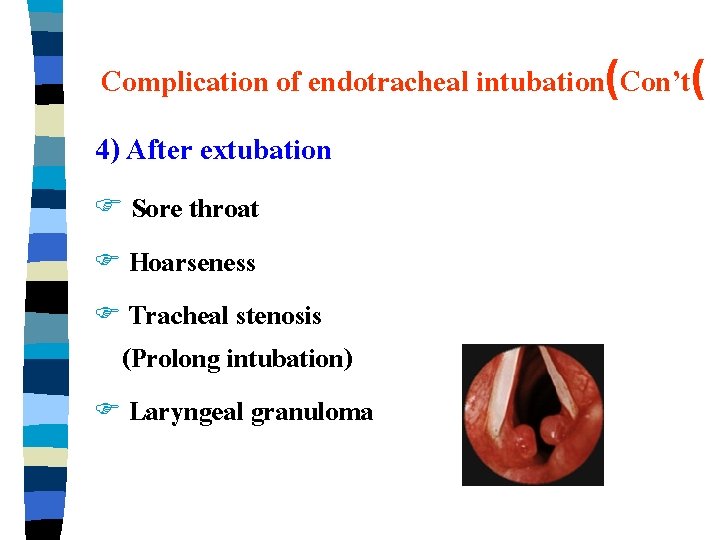
Complication of endotracheal intubation(Con’t( 4) After extubation F Sore throat F Hoarseness F Tracheal stenosis (Prolong intubation) F Laryngeal granuloma
- Slides: 47