
ENDOSCOPE STORAGEDRYING CABINET IMPORTANCE OF QUALIFICATIONS Lionel PINEAU
ENDOSCOPE STORAGE/DRYING CABINET: IMPORTANCE OF QUALIFICATIONS Lionel PINEAU Ph. D, BIOTECH-GERMANDE, FRANCE
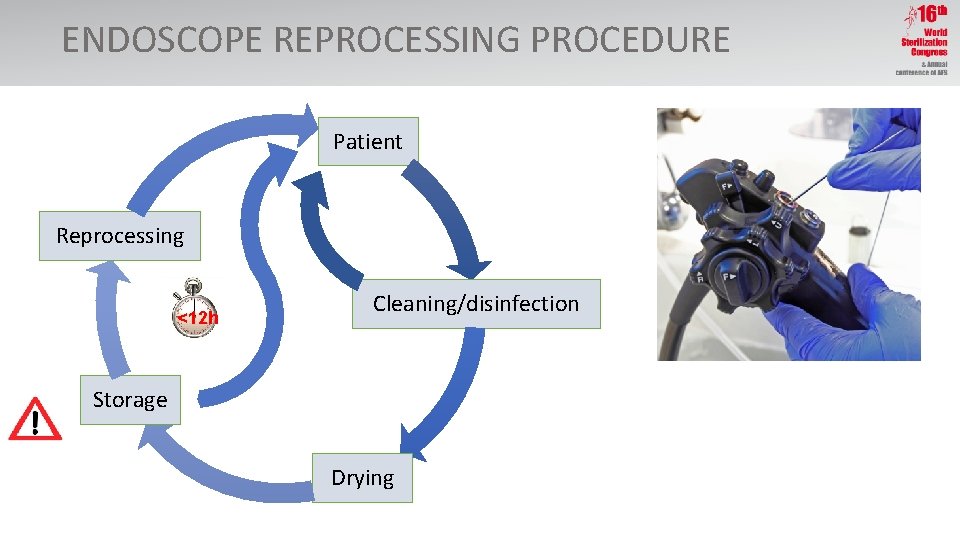
ENDOSCOPE REPROCESSING PROCEDURE Patient Reprocessing <12 h Cleaning/disinfection Storage Drying
THE RISK ASSOCIATED WITH STORAGE "Accurate endoscope drying is crucial, whereas a humid environment facilitates microbial growth during storage. The final drying steps greatly reduce the risk of remaining pathogens as well as the possibility of recontamination of the endoscope by waterborne microorganisms such as Pseudomonas spp. " Kovaleva J. Transmission of Infection by Flexible Gastrointestinal Endoscopy and Bronchoscopy Clinical Microbiology Reviews 2013
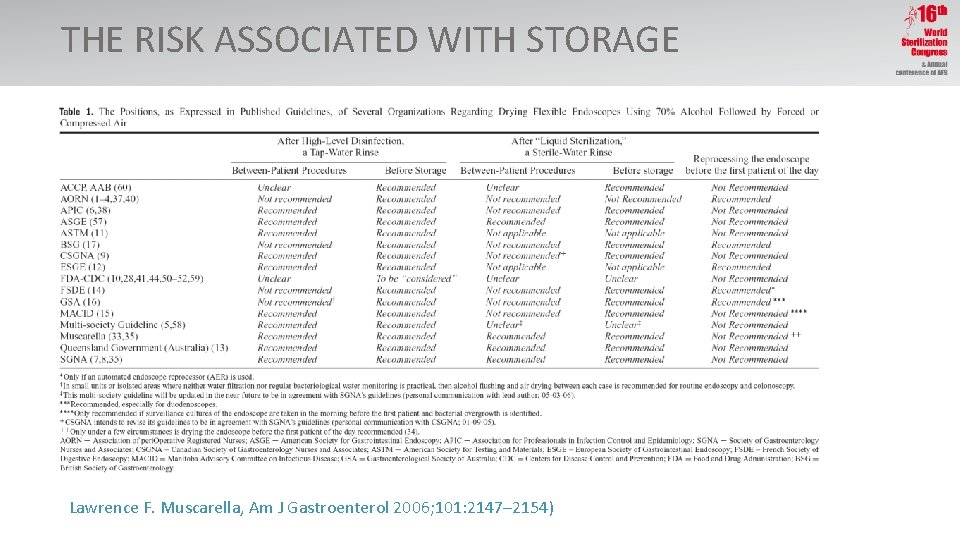
THE RISK ASSOCIATED WITH STORAGE Lawrence F. Muscarella, Am J Gastroenterol 2006; 101: 2147– 2154)
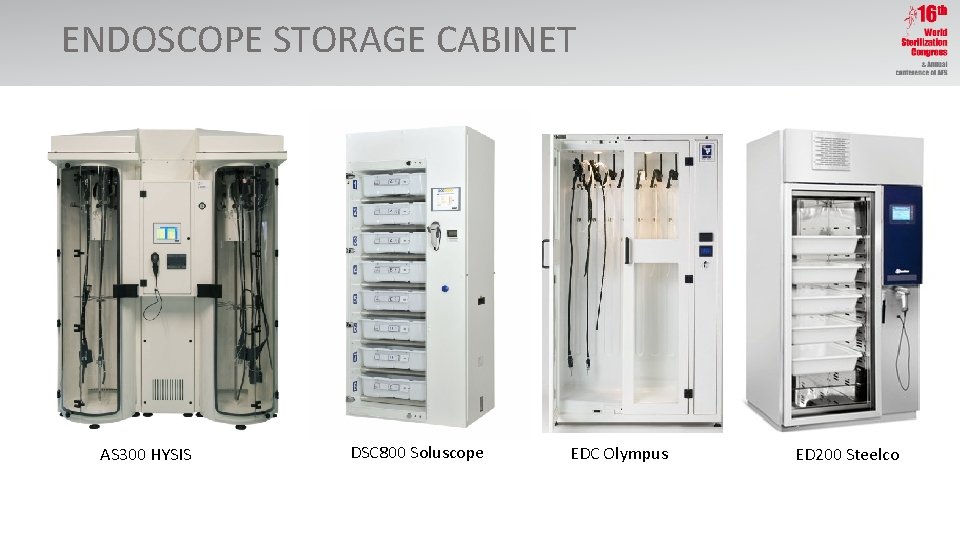
ENDOSCOPE STORAGE CABINET AS 300 HYSIS DSC 800 Soluscope EDC Olympus ED 200 Steelco
THE EUROPEAN STANDARD EN 16442 France has proposed a new work item based on the existing French standard, The new work item has been accepted on May 2011, Working Group 8 of TC 102 was in charge to draw up the draft European standard, The document was submitted to CEN members formal vote in September 2014, The European standard EN 16442 was published in March 2015.
THE EUROPEAN STANDARD EN 16442 ESC are designed to provide a controlled environment for the storage of endoscope(s) (with or without channels) and, if necessary, drying of the endoscope(s). The controlled environment provided by the ESC, ensures that during storage, there is no deterioration of the microbiological quality of the endoscope. The drying function is intended to supplement, if necessary, any drying conducted during automated or manual processing of the endoscope.
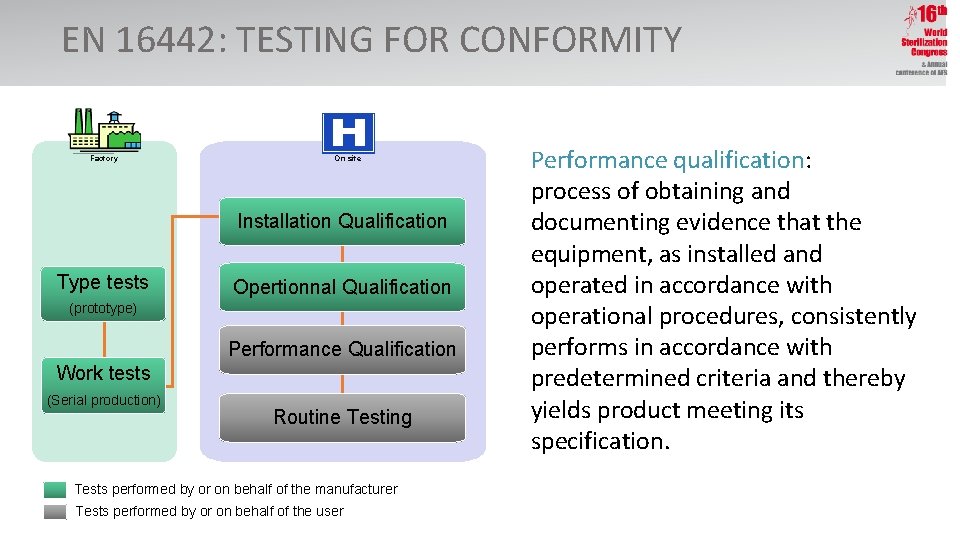
EN 16442: TESTING FOR CONFORMITY Factory On site Installation Qualification Type tests Opertionnal Qualification (prototype) Performance Qualification Work tests (Serial production) Routine Testing Tests performed by or on behalf of the manufacturer Tests performed by or on behalf of the user Performance qualification: process of obtaining and documenting evidence that the equipment, as installed and operated in accordance with operational procedures, consistently performs in accordance with predetermined criteria and thereby yields product meeting its specification.
EN 16442: TESTING FOR CONFORMITY Performance qualification tests shall be performed on at least one model of each relevant endoscope type tests group as defined in Annex F and the choice shall be made according to the endoscopes available on site. or Alternatively performance tests may be performed with one model of each endoscope product family (see Annex G) for which the same ESC connector set is used, if it is demonstrated that the endoscopes selected are the most challenging.
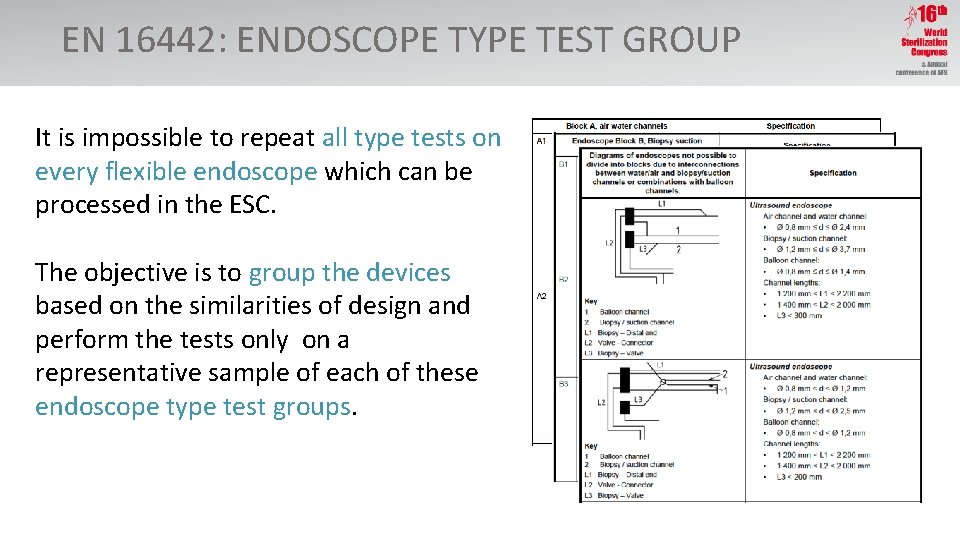
EN 16442: ENDOSCOPE TYPE TEST GROUP It is impossible to repeat all type tests on every flexible endoscope which can be processed in the ESC. The objective is to group the devices based on the similarities of design and perform the tests only on a representative sample of each of these endoscope type test groups.
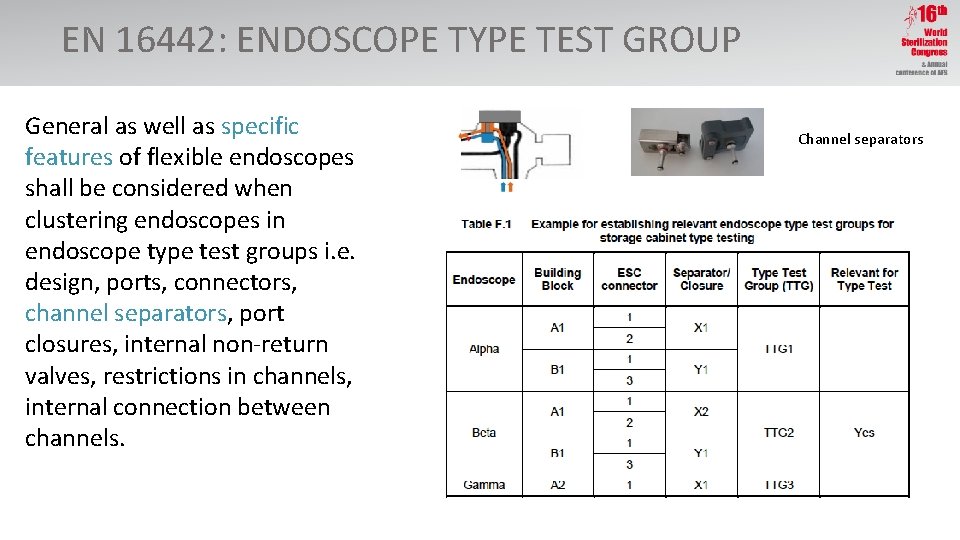
EN 16442: ENDOSCOPE TYPE TEST GROUP General as well as specific features of flexible endoscopes shall be considered when clustering endoscopes in endoscope type test groups i. e. design, ports, connectors, channel separators, port closures, internal non-return valves, restrictions in channels, internal connection between channels. Channel separators
FRENCH GUIDELINES (1, 2) For performance qualification, a significant number of endoscopes (one model of each endoscopes family and a number of endoscopes corresponding to at least one third of the total capacity of the ESC) is sampled after storage. Endoscope family: endoscopes with the same internal design (number of channels, channel diameter, …) and same ESC connectors (all characteristics which may have an influence on the ESC efficacy are identical). (1) Recommandations de bonnes pratiques d'utilisation des enceintes de stockage d'endoscopes thermosensibles (ESET). SF 2 H, SFED. 2011, 7 pages. (2) Haut Conseil de la santé publique. AVIS. Enceintes de stockage d’endoscopes thermosensibles (ESET) 26 juin 2013
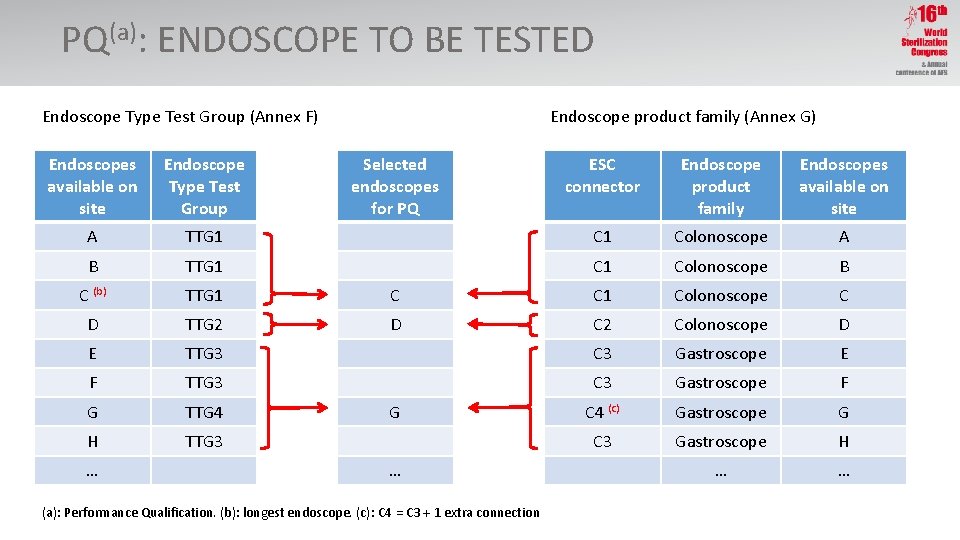
PQ(a): ENDOSCOPE TO BE TESTED Endoscope Type Test Group (Annex F) Endoscope product family (Annex G) ESC connector Endoscope product family Endoscopes available on site TTG 1 Colonoscope A B TTG 1 Colonoscope B C (b) TTG 1 C C 1 Colonoscope C D TTG 2 D C 2 Colonoscope D E TTG 3 C 3 Gastroscope E F TTG 3 C 3 Gastroscope F G TTG 4 C 4 (c) Gastroscope G H TTG 3 C 3 Gastroscope H … … Endoscopes available on site Endoscope Type Test Group A … Selected endoscopes for PQ G … (a): Performance Qualification. (b): longest endoscope. (c): C 4 = C 3 + 1 extra connection
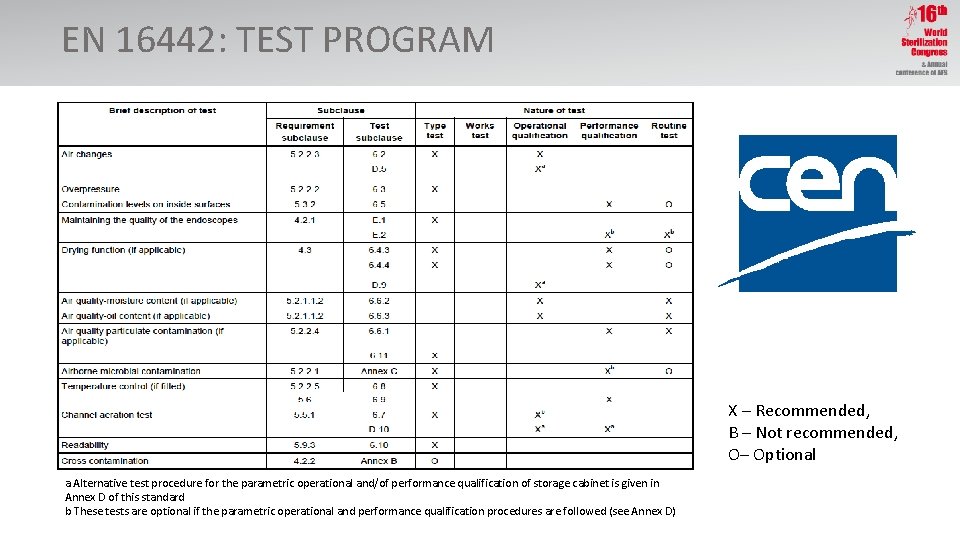
EN 16442: TEST PROGRAM X – Recommended, B – Not recommended, O– Optional a Alternative test procedure for the parametric operational and/of performance qualification of storage cabinet is given in Annex D of this standard b These tests are optional if the parametric operational and performance qualification procedures are followed (see Annex D)
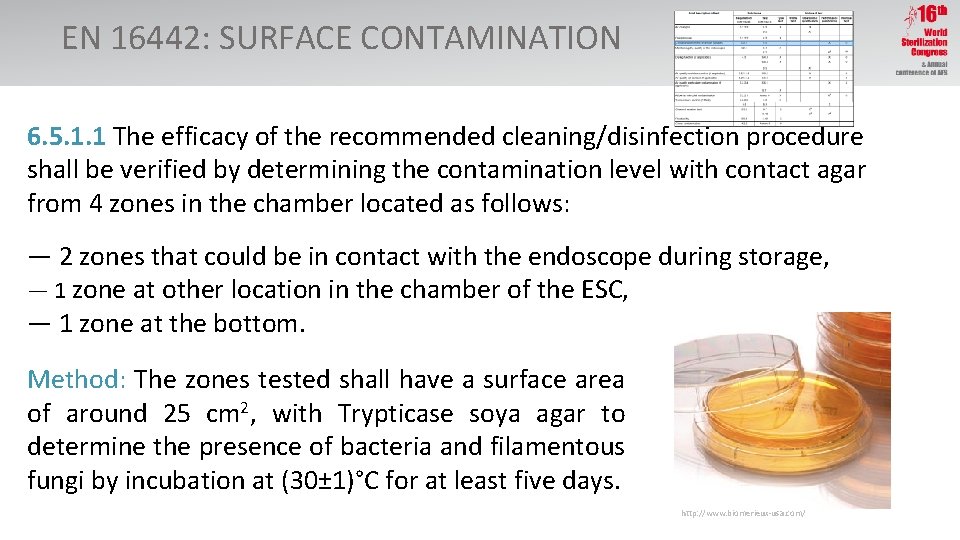
EN 16442: SURFACE CONTAMINATION 6. 5. 1. 1 The efficacy of the recommended cleaning/disinfection procedure shall be verified by determining the contamination level with contact agar from 4 zones in the chamber located as follows: — 2 zones that could be in contact with the endoscope during storage, — 1 zone at other location in the chamber of the ESC, — 1 zone at the bottom. Method: The zones tested shall have a surface area of around 25 cm 2, with Trypticase soya agar to determine the presence of bacteria and filamentous fungi by incubation at (30± 1)°C for at least five days. http: //www. biomerieux-usa. com/
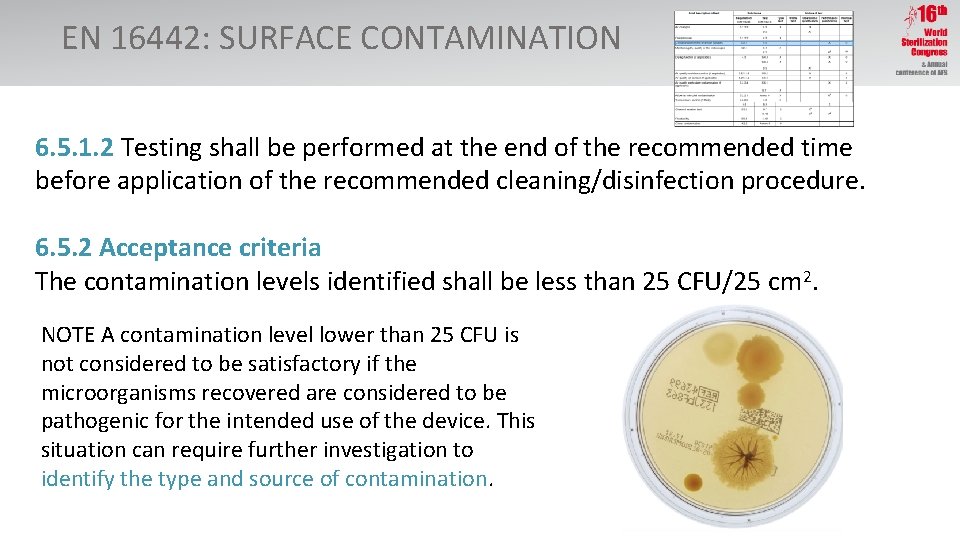
EN 16442: SURFACE CONTAMINATION 6. 5. 1. 2 Testing shall be performed at the end of the recommended time before application of the recommended cleaning/disinfection procedure. 6. 5. 2 Acceptance criteria The contamination levels identified shall be less than 25 CFU/25 cm 2. NOTE A contamination level lower than 25 CFU is not considered to be satisfactory if the microorganisms recovered are considered to be pathogenic for the intended use of the device. This situation can require further investigation to identify the type and source of contamination.
EN 16442: ENDOSCOPES Verification of the ability of the ESC to maintain the quality of the endoscopes E. 2. 2. 1 The endoscopes intended to be stored in the storage cabinet are cleaned and disinfected, stored in the storage cabinet according to the instructions for use for the maximum storage time specified for the type of endoscope being tested and sampled. E. 2. 2. 2 Samples taken from the distal ends of the endoscopes are split into two equal volumes. Each volume is analysed by membrane filtration and incubated on Tryptone soya agar and Sabouraud dextrose agar with chloramphenicol and incubated for 5 days at (30 ± 1) °C.
EN 16442: ENDOSCOPES E. 2. 2. 3 Following incubation, the colonies formed are counted and the results are expressed in number of viable microorganisms per endoscope (X) taking into account the recovery ratio of the sampling method. E. 2. 3 Acceptance criteria The results are deemed to be acceptable if contamination of the internal channels of the endoscopes is less than 25 CFU/endoscope. NOTE 2 A contamination level lower than 25 CFU/endoscope is not considered to be satisfactory if the microorganisms recovered are considered to be pathogenic for the intended use of the device. This situation can require further investigation to identify the type and source of contamination.
ENDOSCOPE SAMPLING SOLUTION Different sampling solutions are described in the literature for endoscope sampling: Sterile distilled water, Saline solution(1) [Na. Cl (0. 9%)], FHM(1, 2) [Peptone (0. 01%), Tween 80 (0. 1%), Na. Cl (0. 043%), Phosphate (0. 095%)], DNP(3) [Peptone (0. 01%), Tween 80 (0. 3%), Lecithin (0. 01%), Histidin chlorhydrate (0. 01%) Na. Cl (0. 043%), KH 2 PO 4 (0. 036%), Na 2 HPO 4, 2 H 20 (0. 072%)], T+Thio(4) [Tween 80 (0. 3%), Lecithin (0. 03%), L-Histidin (0. 01%) Sodium thiosulfate (0. 05%)]. (1) (2) (3) (4) Eléments d’assurance qualité en hygiène relatifs au contrôle microbiologique des endoscopes et à la traçabilité en endoscopie. Conseil supérieur d’hygiène publique de France. March 2007. NF EN ISO 11737 -1 DNP: Neutralizing Pharmacopoeia Diluent. Sampling solution recommended by Biotech-Germande
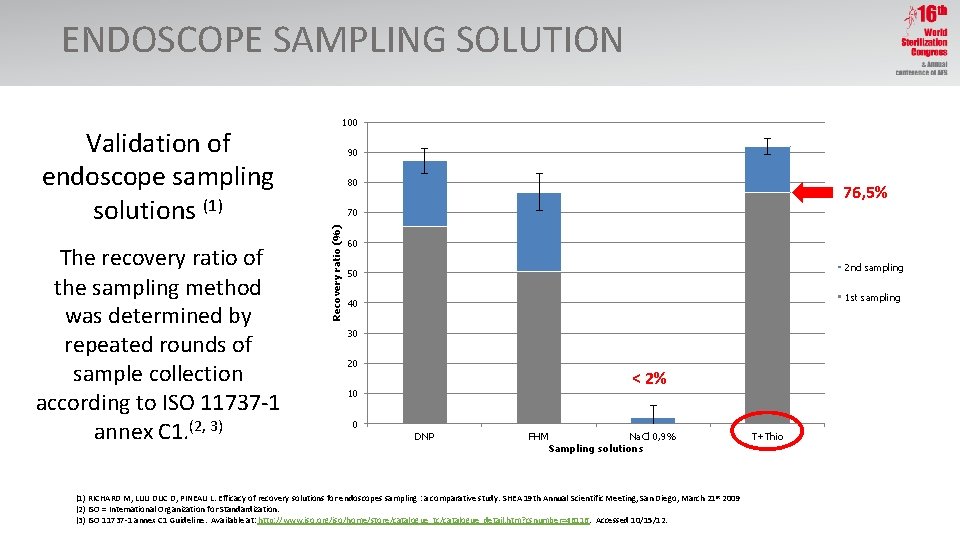
ENDOSCOPE SAMPLING SOLUTION The recovery ratio of the sampling method was determined by repeated rounds of sample collection according to ISO 11737 -1 annex C 1. (2, 3) 90 80 76, 5% 70 Recovery ratio (%) Validation of endoscope sampling solutions (1) 100 60 2 nd sampling 50 1 st sampling 40 30 20 < 2% 10 0 DNP FHM Na. Cl 0, 9% Sampling solutions (1) RICHARD M, LUU DUC D, PINEAU L. Efficacy of recovery solutions for endoscopes sampling : a comparative study. SHEA 19 th Annual Scientific Meeting, San Diego, March 21 st 2009 (2) ISO = International Organization for Standardization. (3) ISO 11737 -1 annex C 1 Guideline. Available at: http: //www. iso. org/iso/home/store/catalogue_tc/catalogue_detail. htm? csnumber=46116. Accessed 10/15/12. T+Thio
INITIAL ENDOSCOPE QUALITY EN 16442 E. 2. 2. 1 NOTE 1 All endoscopes available in the unit where the storage cabinet is installed and that are intended to be stored in the ESC cabinet should be sampled before installation of the ESC (initial assessment) in order to be able of determining the source of the contamination in the event that a routine test is positive. French guidelines: The installation of the ESC shall be preceded by: An audit of the endoscope reprocessing procedure, A control of the microbiological quality of all endoscopes, intended to be stored in the ESC (initial assessment) within the month preceding the installation.
EN 16442: DRYING TESTS 6. 4. 3 Exterior surface drying Load the storage cabinet, following the instructions for use. Carry out a normal operating cycle. Immediately following the recommended drying period, use a piece of anhydrous copper (II) sulphate paper (or crepe paper) to test the presence of moisture on the load exterior surfaces (copper (II) sulphate paper from white or light blue to deep blue) as evidence of residual water). 6. 4. 4 Channel drying At the end of the drying phase, the endoscope shall be removed from the cabinet. Direct the distal end of the endoscope towards a horizontal piece of anhydrous copper (II) sulphate paper at a distance of 50 mm to 100 mm and flush medical grade air at a positive pressure.
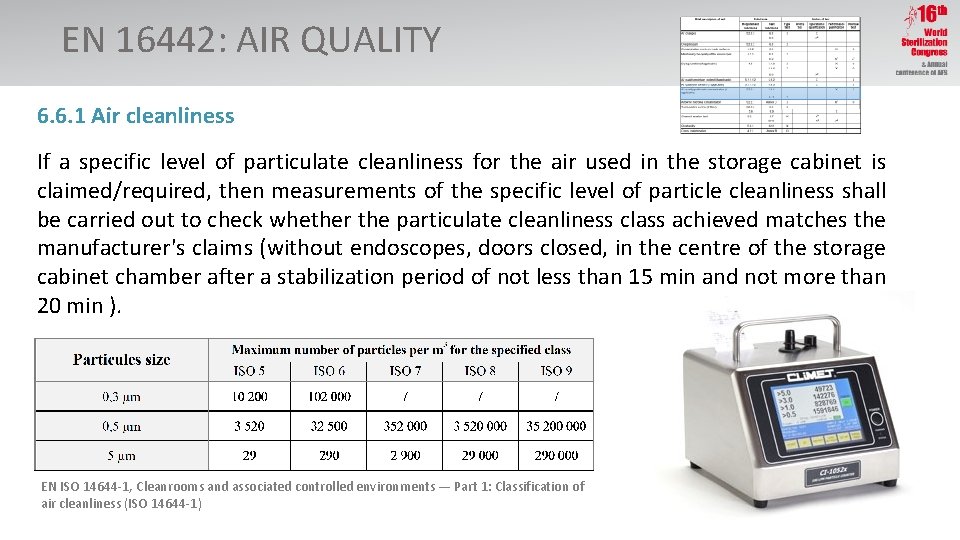
EN 16442: AIR QUALITY 6. 6. 1 Air cleanliness If a specific level of particulate cleanliness for the air used in the storage cabinet is claimed/required, then measurements of the specific level of particle cleanliness shall be carried out to check whether the particulate cleanliness class achieved matches the manufacturer's claims (without endoscopes, doors closed, in the centre of the storage cabinet chamber after a stabilization period of not less than 15 min and not more than 20 min ). EN ISO 14644 -1, Cleanrooms and associated controlled environments — Part 1: Classification of air cleanliness (ISO 14644 -1)
EN 16442: AIR QUALITY 5. 2. 2. 1 Airborne microbial contamination Air inside the ESC and flowing through the channels of the endoscope shall be of a microbiological quality which will not impair the quality of the load. Tests shall be done according to Annex C. Active sampling: < 100 CFU/m 3 (Class 8 of ISO 14644 -1). 1 m 3 of air is sampled on Trypticase soya agar. The agar is then incubated at (30 ± 1) °C for 5 days. Sedimentation: < 50 CFU/m 3 (Class 8 of ISO 14644 -1) 4 Trypticase Soya agar plates are placed on the floor of each chamber of the storage cabinet and left for 1 hour. The agar cultures are then incubated at (30 ± 1) °C for 5 days
EN 16442: THERMOMETRIC TEST 6. 9. 1 Procedure: Fit the temperature sensors as follows: — one sensor on the control head of the endoscope or, — one sensor in at least one endoscope channel at the distal end or, —on the outer surface of the endoscope. Record the temperature during a drying phase or a limited time frame during the storage cycle. 6. 9. 2 Acceptance criteria The results are considered to be satisfactory when the temperatures recorded are within the specified temperature band for the corresponding stage.
EN 16442: CHANNEL AERATION TEST Procedure Two endoscopes, from the list of compatible endoscopes and that is used by the user, one that has the highest air demand one that has the lowest air demand are connected to the ESC. The flow of air in each tubing of the ESC connector is blocked one by one and the moment the storage cabinet indicates a fault is recorded. Acceptance criteria Verify that the ESC indicate a fault and that the moment the fault is indicated corresponds to the setting of the channel aeration control
ROUTINE TESTING Endoscope: An endoscope representative of each endoscope family stored in the ESC shall be sampled quarterly and each endoscope at least one time a year, Air cleanliness: required If a specific level of particulate cleanliness for the air used in the storage cabinet is claimed, Airborne microbial contamination : Sedimentation, 1 agar plate/1 hour, < 25 CFU/m 3 (at least quarterly), Surface contamination: 5 sampling points, < 25 CFU/25 cm 2 (at least quarterly).
CONCLUSIONS The use of en endoscope storage cabinet ensures that during storage there is no deterioration of the microbiological quality of the endoscope. Confirmation that the ESC is consistent with the essential requirements of EN 6442 is essential but not sufficient. Considering that it si not possible to repeat type tests for every flexible endoscopes intended to be processed in the storage cabinet, performance qualification and routine sampling are critical to ensure that the equipment, as installed and operated in accordance with operational procedures, consistently performs in accordance with predetermined criteria on all endoscopes intended to be processed in the unit where the ESC is installed.
CONCLUSIONS THANK YOU VERY MUCH…
- Slides: 29