
Endometriosis Adenomyosis Dr Ismaiel Abu Mahfouz Endometriosis Endometriosis
Endometriosis & Adenomyosis Dr Ismaiel Abu Mahfouz
Endometriosis
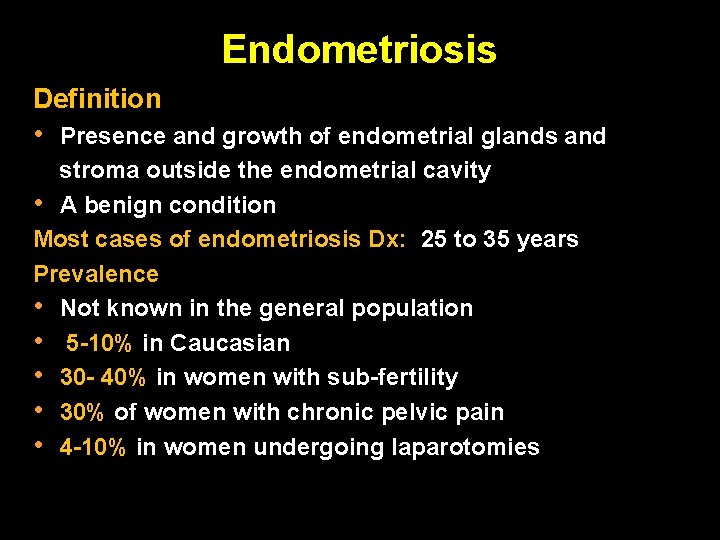
Endometriosis Definition • Presence and growth of endometrial glands and stroma outside the endometrial cavity • A benign condition Most cases of endometriosis Dx: 25 to 35 years Prevalence • Not known in the general population • 5 -10% in Caucasian • 30 - 40% in women with sub-fertility • 30% of women with chronic pelvic pain • 4 -10% in women undergoing laparotomies
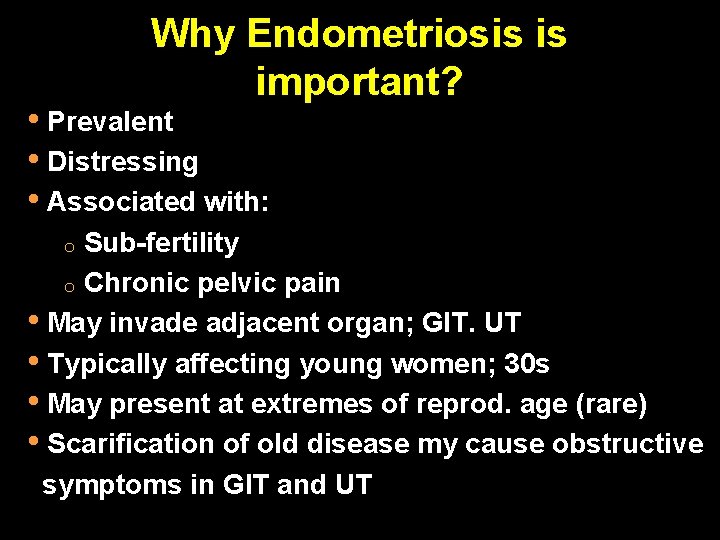
Why Endometriosis is important? • Prevalent • Distressing • Associated with: o Sub-fertility o Chronic pelvic pain • May invade adjacent organ; GIT. UT • Typically affecting young women; 30 s • May present at extremes of reprod. age (rare) • Scarification of old disease my cause obstructive symptoms in GIT and UT
Pathophysiology ? ? Multifactorial • Exact cause; not known • Genetic predisposition • Immune system Theories regarding pathogenesis • The retrograde menstruation Endometrial tissue can grow in vivo and in vitro • The Mullerian metaplasia Metaplastic transformation of peritoneal mesothelium into endometrium • The lymphatic spread 20% of women showed endometrial tissue in pelvic lymphatic system
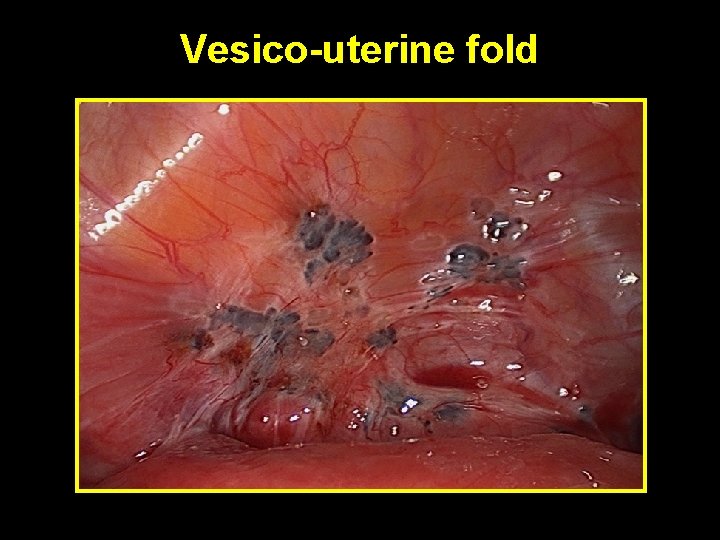
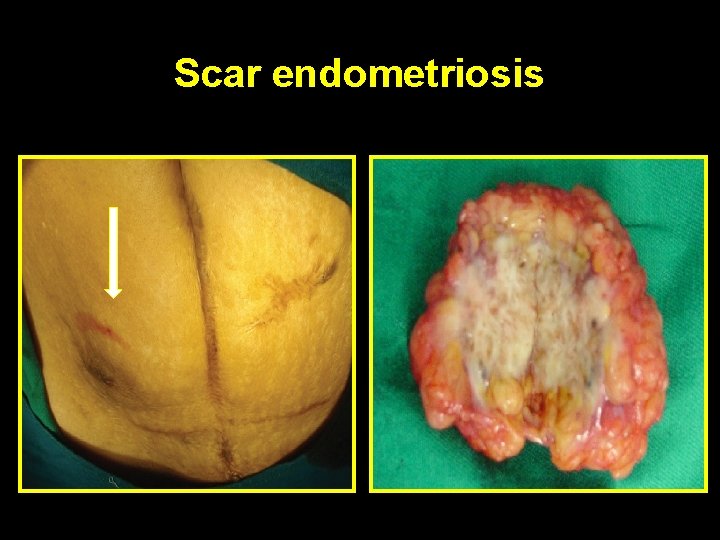
Endometriosis; sites The pelvis • Ovaries (most common site, 70%) • Broad and uterosacral ligaments • Fallopian tubes • Peritoneal surfaces of the POD • Rectovaginal septum • Vagina, vulva, appendix Extrapelvic site • Laparotomy scars • Lungs • Forehead • Axillae
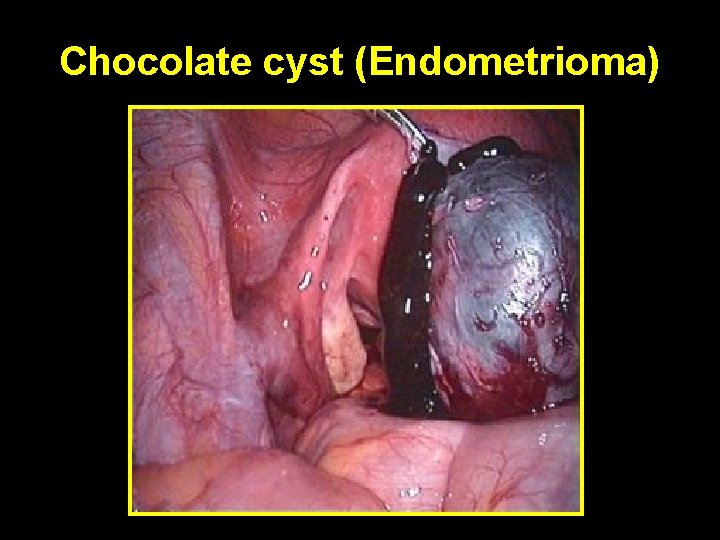
Chocolate cyst (Endometrioma)
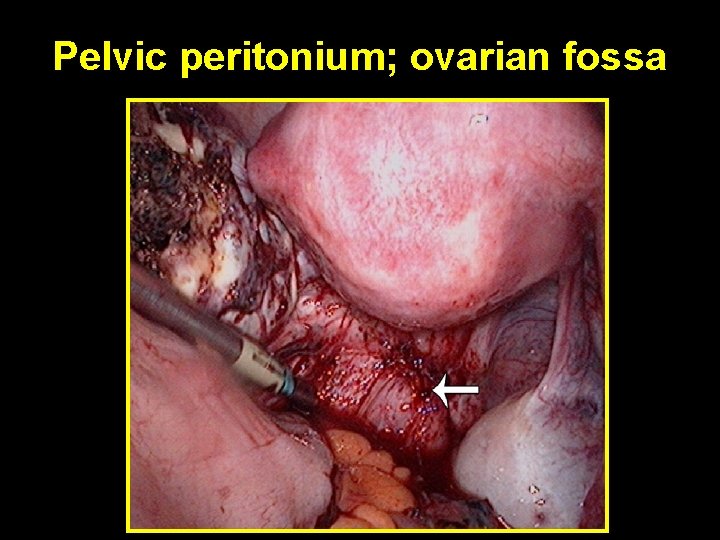
Pelvic peritonium; ovarian fossa
Vesico-uterine fold
Scar endometriosis
Clinical presentation; Symptoms Risk factors: Caucasian. Nullip. High economic class Symptoms: Gynaecology symptom • Pain: Dysmenorrhea, dyspareunia, chronic pelvic pain • Pre and postmenstrual spotting • May cause heavy periods • Sub-fertility Extragenital symptoms • Dyschezia and PR bleeding • Haematuria • Masses in various places (Scar tissue) But: may be asymptomatic, and diagnosed during surgery
Clinical presentation; Signs Abdominal examination • Usually unremarkable, except severe disease • Tenderness following ruptured cyst • Mass Speculum • Bluish discoloration of cervix or vagina Pelvic examination • A small, tender nodule in POD or uterosacrals • Pelvic adnexal mass (tender, fixed) • Fixed ? Retroverted uterus / pelvic mass (adhesions) During Laparoscopy / laparotomy • Endometriotic spot • Endometrioma • Adhesions
Endometriosis; investigation Ultrasound scan • • Adnexal mass Endometrioma MRI • To investigate a deep endometriosis • Recto-vaginal masses
Endometriosis, DDx • Pelvic inflammatory disease • Acute salpingitis (? Hydrosaplinx) • Haemorrhagic corpus luteum • Benign ovarian cyst • Malignant ovarian neoplasm • Ectopic pregnancy
Endometriosis; Dx Suspected on the basis of clinical presentation • Afebrile, pelvic pain; a firm, fixed, tender adnexal mass; and tender nodules in the POD Imaging Ultrasonic / MRI ( less frequently used) • Adnexal mass; complex echogenicity, internal echoes suggestive of old blood Blood investigations (No Dx blood marker) CA-125 o Frequently elevated o PPV: 20% o Should not be used to Dx endometriosis
Laparoscopy in endometriosis The definitive diagnosis • Based on characteristic gross and histologic findings Failure to identify disease visually on laparoscopy or laparotomy is due to • Older implants may have a very subtle appearance • Deeper lesions may not be visible Therefore, biopsy of any suspicious lesions improves diagnostic accuracy Laparoscopy • Diagnosis • Staging
Endometriosis; staging The revised American Society for Reproductive Medicine classification of endometriosis Four stages: • Minimal • Mild • Moderate • Severe Based on the presence and size of the disease in various pelvic sites including: • Peritonium • Both ovaries • Both tubes
Management Indications for treatment • Pain syndromes: Chronic pelvic pain, Dysmenorrhea Dyspareunia • Abnormal bleeding • Ovarian cysts • Sub-fertility caused by distortion of tubal and ovarian anatomy The choice of Rx depends on: • Age • Fertility plans • Severity of disease / symptoms • Site of disease • Involvement of other organ systems (GIT)
Management Conservative, Medical, Surgical Conservative • Pain killer • Avoid hormonal Rx. in women trying to conceive • Patient support groups Medical Aim: To produce atrophy of ectopic endometrium Agents: COCP, progestogens, Gn. RH agonist • All equally effective in reducing pain • Use limited by S. E • Symptoms recurrence is common after Rx cessation
Management Conservative, Medical, Surgical Laparoscopy • Ablation of superficial lesions (laser or bipolar) • Excision of nodules • Endometrioma: De-roofed / excision Up to 70% of women report improvement 90%: Improvement persists for 1 year TAH+BSO: Final option
Endometriosis and sub-fertility 30 -40% of patients with endometriosis have sub-fertility Pathophysiology of sub-fertility in endometriosis • Distortion of pelvic anatomy and tubal adhesions • Abnormal peritoneal and cellular function • Ovulatory and endocrine abnormalities • Impaired implantation Management of endometriosis in sub-fertility Hormonal medical Rx: • Not indicated • Causes anovulation, ? teratogenicity Surgical: • Of mild to moderate disease improves natural conception rates • Of sever disease: improve success at IVF
Adenomyosis
Adenomyosis Definition • The extension of endometrial glands and stroma into the uterine musculature more than 2. 5 mm beneath the basalis layer Adenomyosis • Often is an incidental finding during a pathologic examination in up to 60% of women in their 40 s • About 15% have endometriosis • Islands of adenomyosis do not participate in the proliferative and secretary cycles induced by the ovary
Adenomyosis; gross appearance The gross appearance of the uterus • Diffuse enlargement of the uterus • Thickened myometrium • The endometrial cavity is enlarged • Occasionally, may be confined to one part of the myometrium and of a round shape Adenomyoma vs fibroid on ultrasound: • The distinction may not be clear • Unlike fibroid: no distinct capsule between the adenomyoma and myometrium
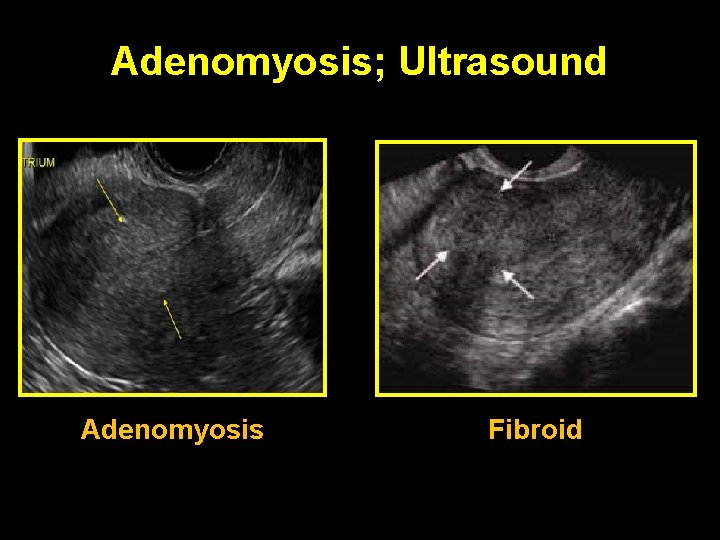
Adenomyosis; Ultrasound Adenomyosis Fibroid
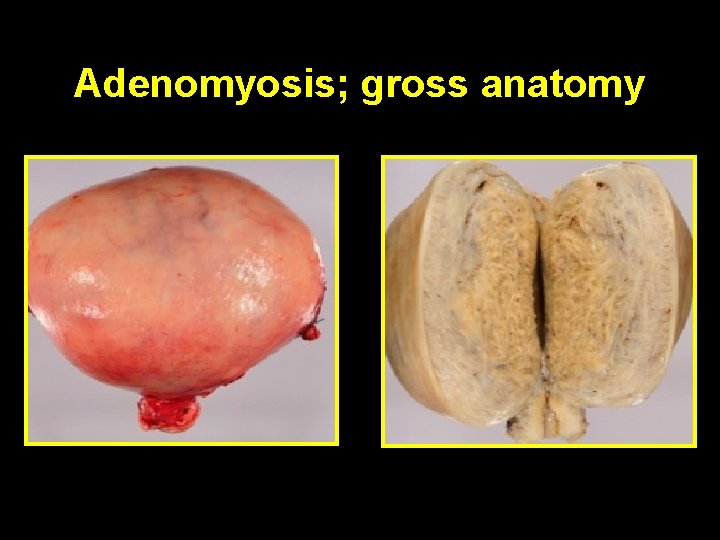
Adenomyosis; gross anatomy
Clinical presentation Symptoms Many are asymptomatic Typically presentation • Severe secondary dysmenorrhea • HMB Occasional deep premenstrual dyparunia Pathophysiology of symptoms • Adenomyosis islands do not respond to ovarian hormones But: • Prostaglandin release and local inflammatory changes persist leading to pain and vasodilatation causing HMB
Clinical presentation Signs Abdomen: Normal Pelvic exam. : • Symmetrically enlarged, " soft”, tender uterus in the premenstrual period • Occasionally asymmetrical like a fibroid uterus • Consistency of the uterus is softer than a fibroid Diagnosis: • Usually on histology of hysterectomy • Ultrasound scan • ? MRI
Adenomyosis; Rx Depends on symptoms Conservative management • NSAIDs • Hormonal control o COCP o E 2 patches o DMPA o Levonorgestrel IUD (Mirena IUS) Surgical; If conservative measures fail or contraindicated • Hysterectomy • Endometrial ablation “control the bleeding”
- Slides: 29