
Endodontics AKA Root Canal Therapy RCT 1 Describe
Endodontics AKA Root Canal Therapy (RCT) 1
• Describe the testing modalities for determining need for endo tx • Compare reversible and irreversible pulpitis • Compare acute and chronic pulpitis • Identify the steps taken to complete a root canal • Identify endodontic instruments and functions • Identify most common cause of failure of Root canal treatment 2
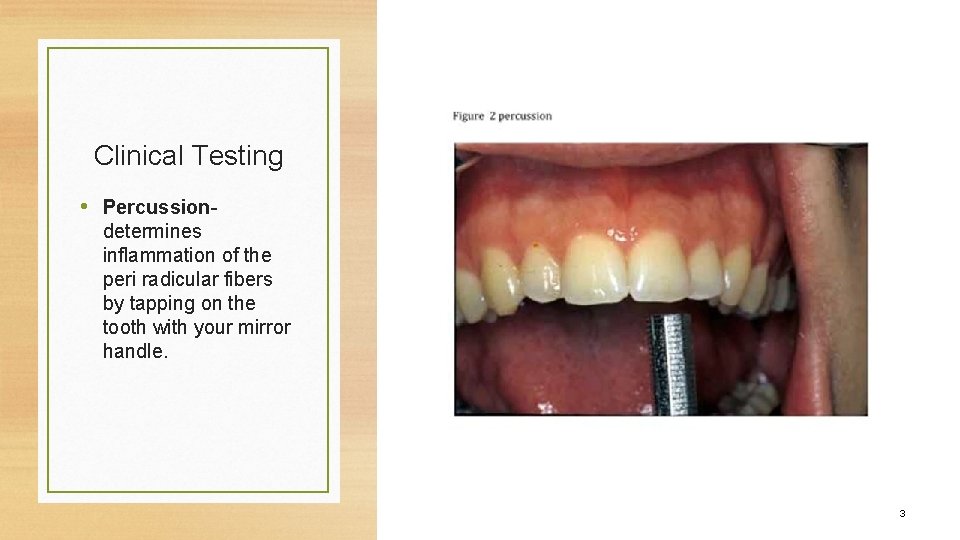
Clinical Testing • Percussiondetermines inflammation of the peri radicular fibers by tapping on the tooth with your mirror handle. 3
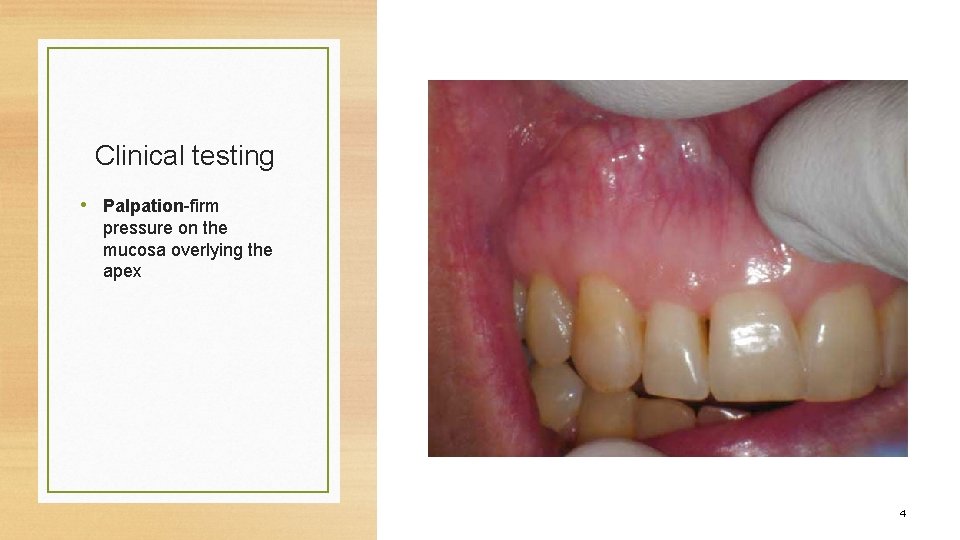
Clinical testing • Palpation-firm pressure on the mucosa overlying the apex 4

Clinical Testing • Cold test- Ice, carbon dioxide (dry ice) or refridgerant spray (endo ice)* 5
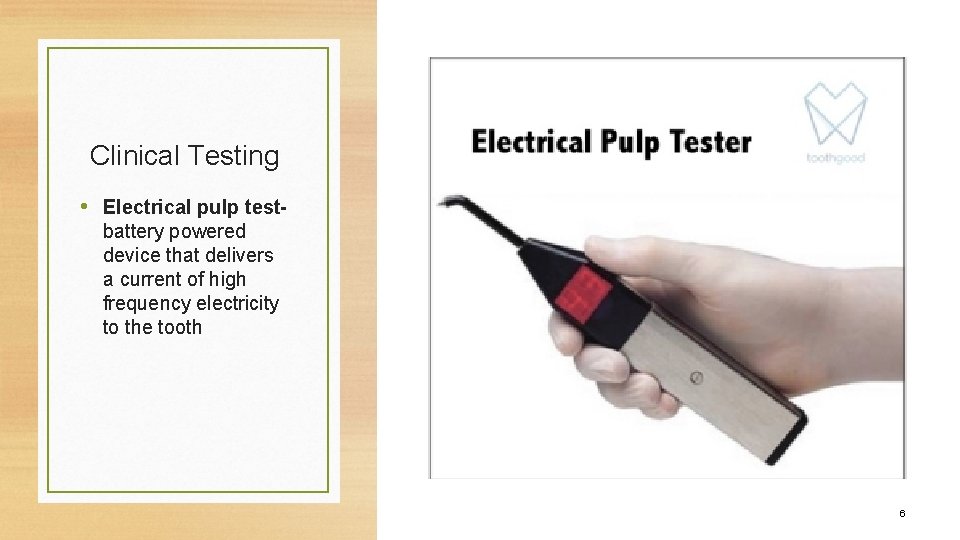
Clinical Testing • Electrical pulp testbattery powered device that delivers a current of high frequency electricity to the tooth 6
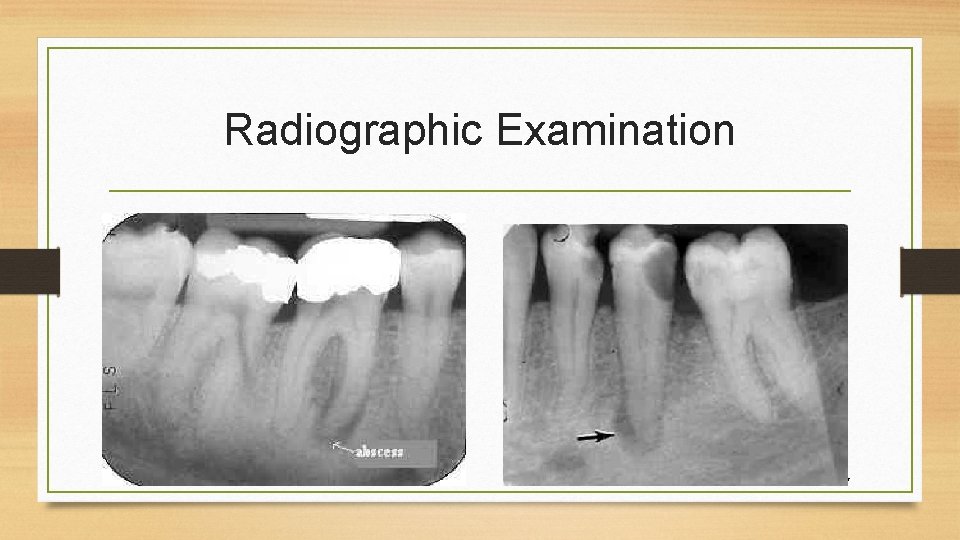
Radiographic Examination 7
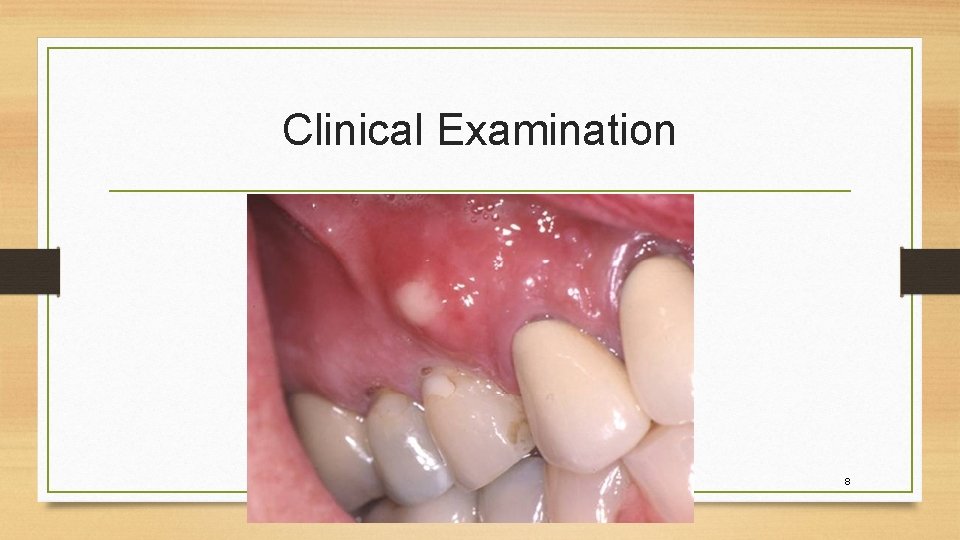
Clinical Examination 8
Watch if you Dare! • Warning this video is very disgusting!! • https: //www. youtube. com/watch? v=h. MZ 9 UIVTIz. Y 9
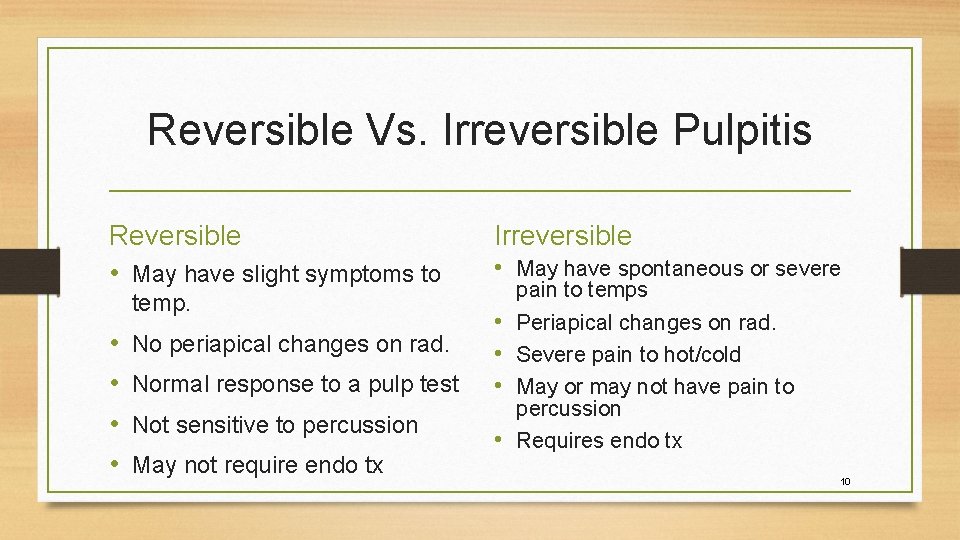
Reversible Vs. Irreversible Pulpitis Reversible • May have slight symptoms to temp. • • No periapical changes on rad. Normal response to a pulp test Not sensitive to percussion May not require endo tx Irreversible • May have spontaneous or severe • • pain to temps Periapical changes on rad. Severe pain to hot/cold May or may not have pain to percussion Requires endo tx 10
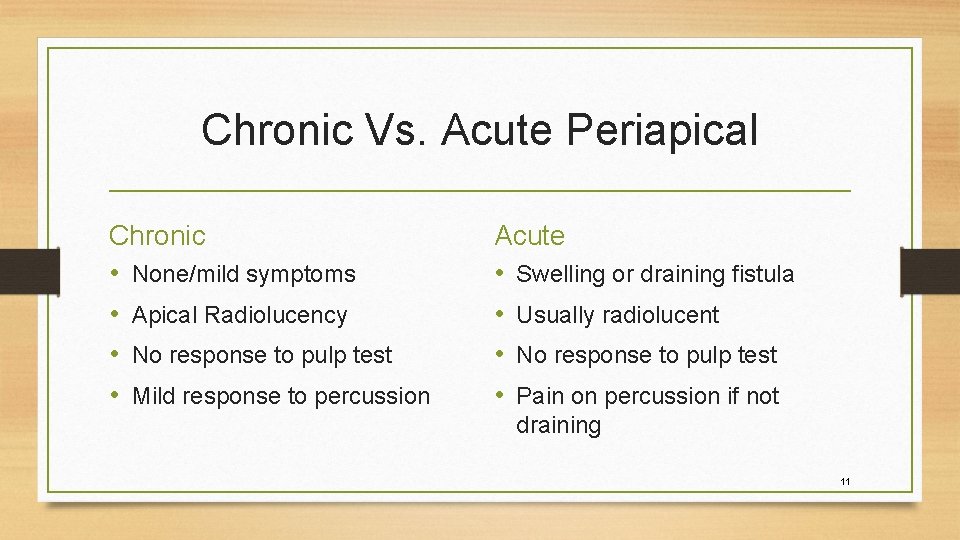
Chronic Vs. Acute Periapical Chronic • None/mild symptoms • Apical Radiolucency • No response to pulp test • Mild response to percussion Acute • Swelling or draining fistula • Usually radiolucent • No response to pulp test • Pain on percussion if not draining 11
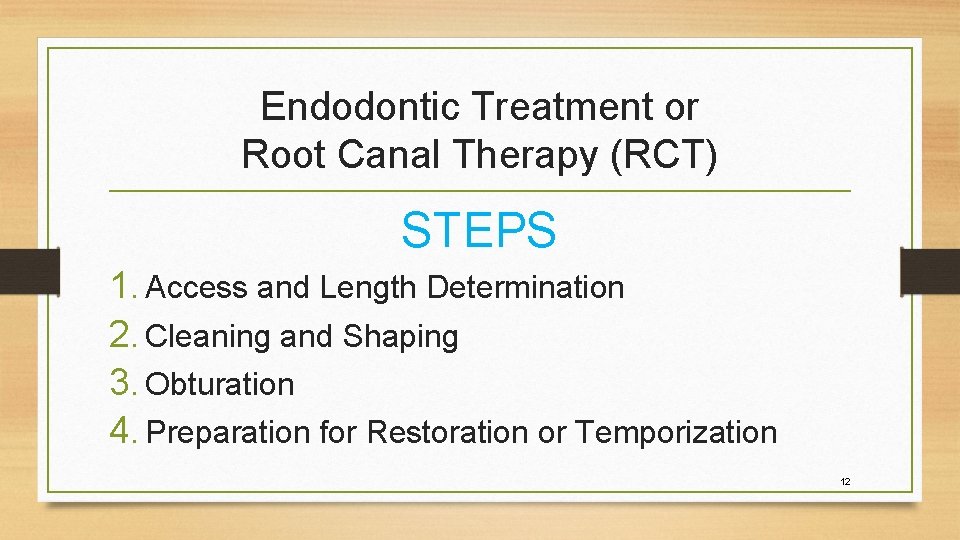
Endodontic Treatment or Root Canal Therapy (RCT) STEPS 1. Access and Length Determination 2. Cleaning and Shaping 3. Obturation 4. Preparation for Restoration or Temporization 12

Access Preparation • Access-most important phase of RCT technical aspects 1 -Straight-line access 2 - Conservation of tooth structure 3 -Unroofing of the pulp chamber 13

14

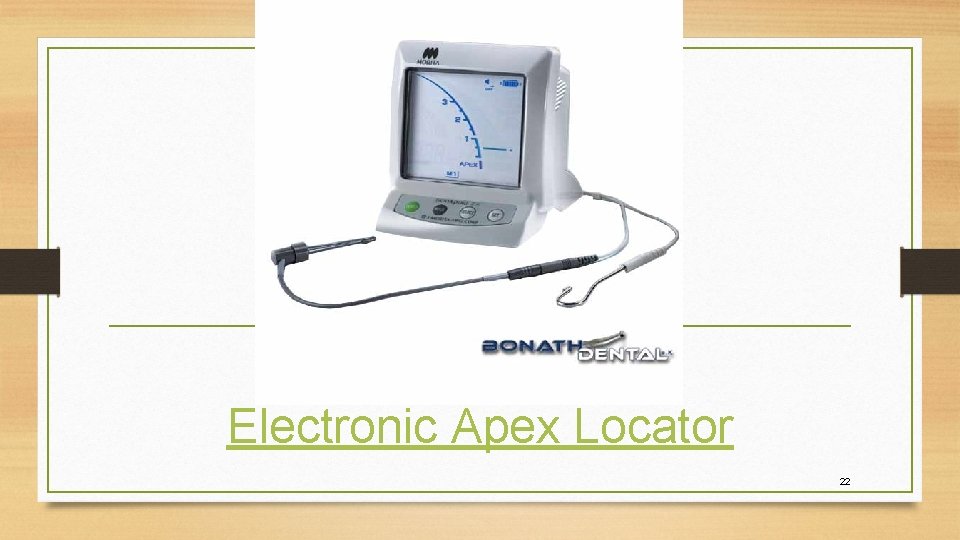
Determining Working Length • Establish the length for canal preparation • Optimal is 1 -2 mm short of the apex • Reference point- Site from which measurements are made. Must be stable and easily visualized • Aides-Radiographs and Electronic Apex locators 15
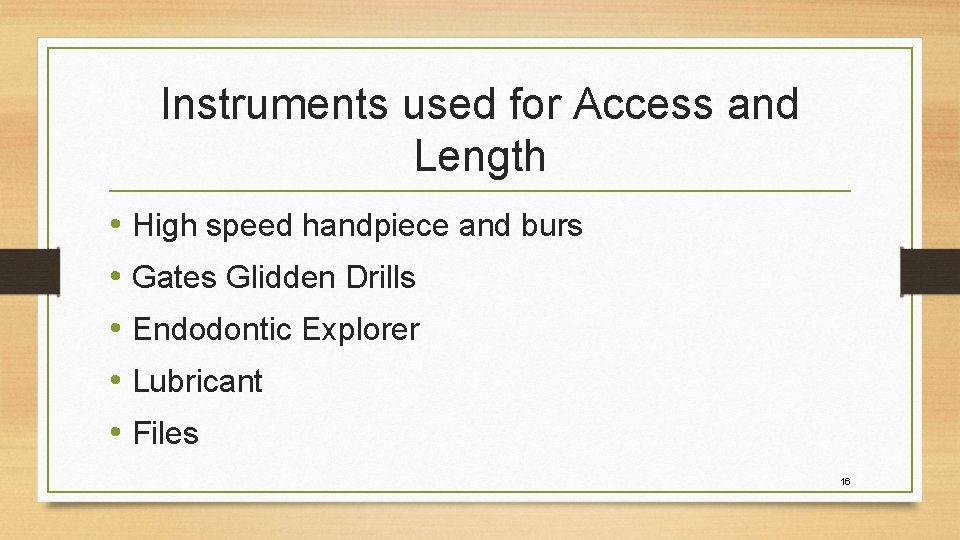
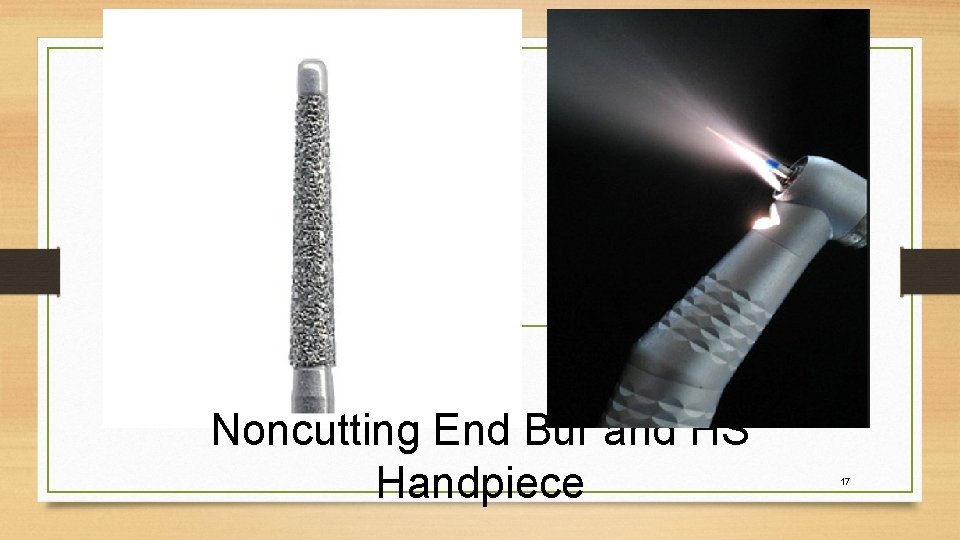
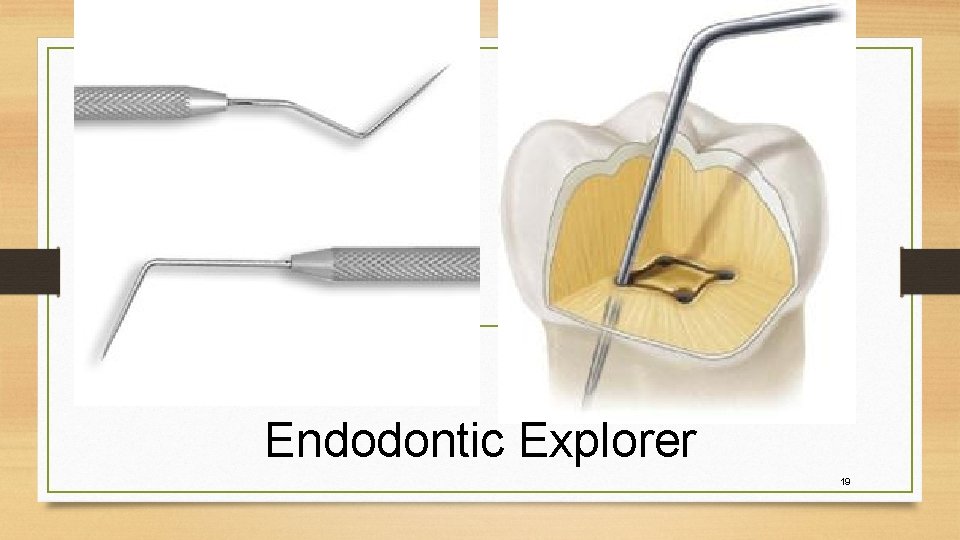
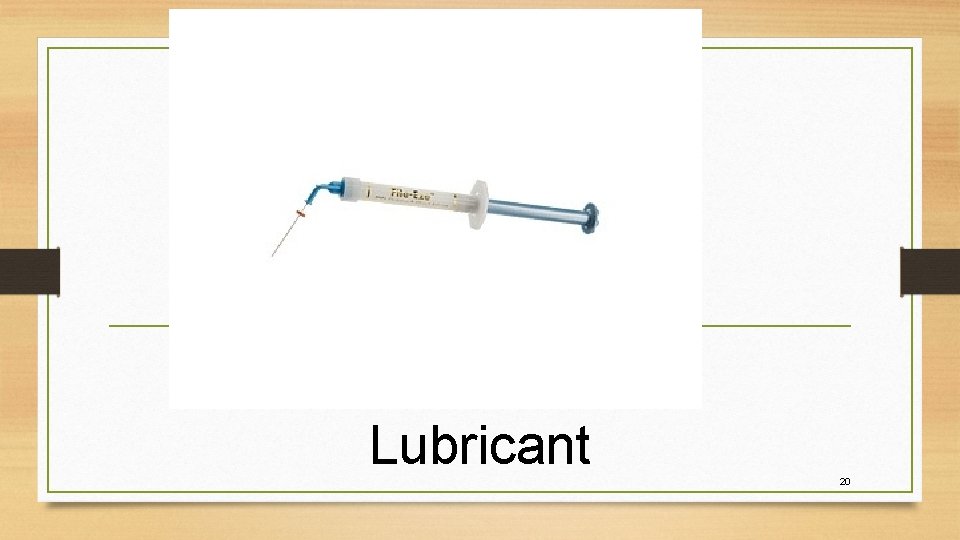
Instruments used for Access and Length • High speed handpiece and burs • Gates Glidden Drills • Endodontic Explorer • Lubricant • Files 16
Noncutting End Bur and HS Handpiece 17

Gates Glidden 18
Endodontic Explorer 19
Lubricant 20

Files 21
Electronic Apex Locator 22
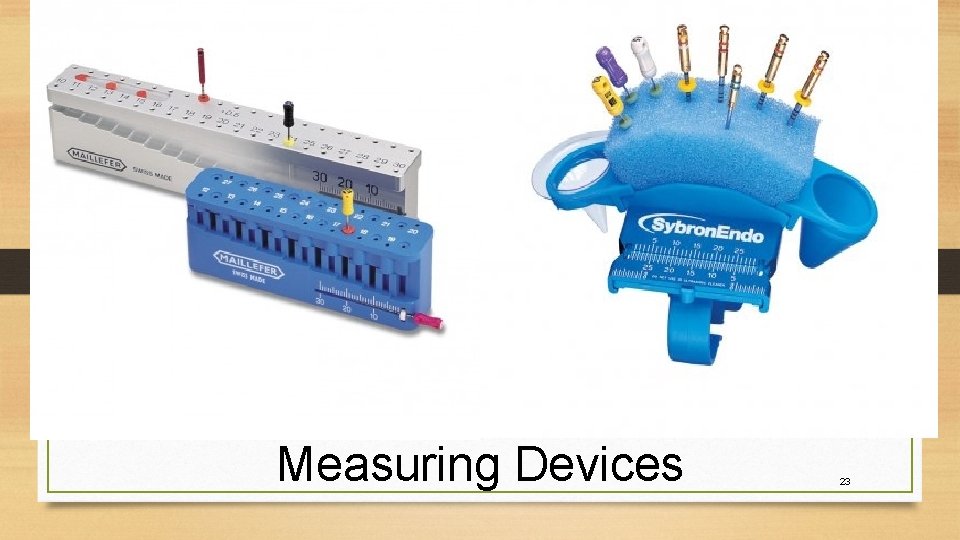
Measuring Devices 23

Radiographs 24
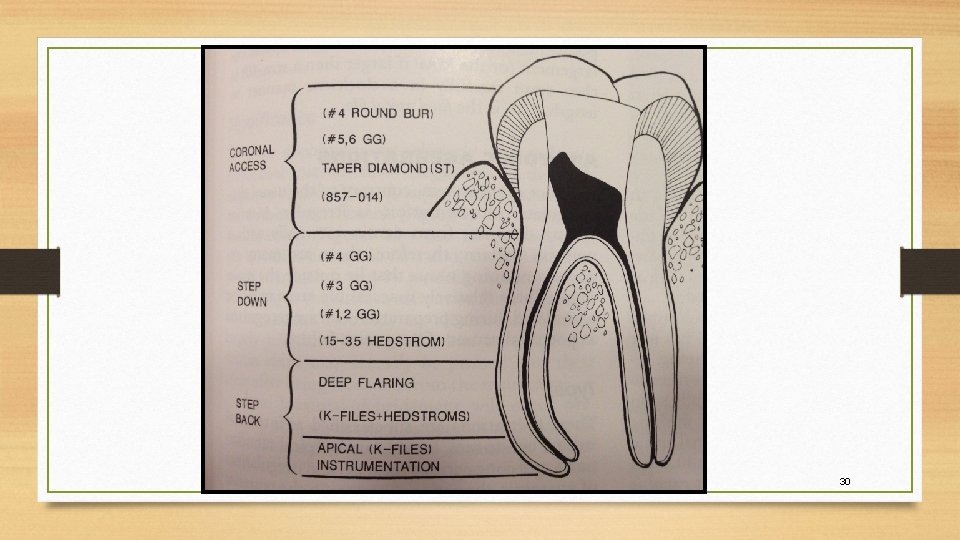
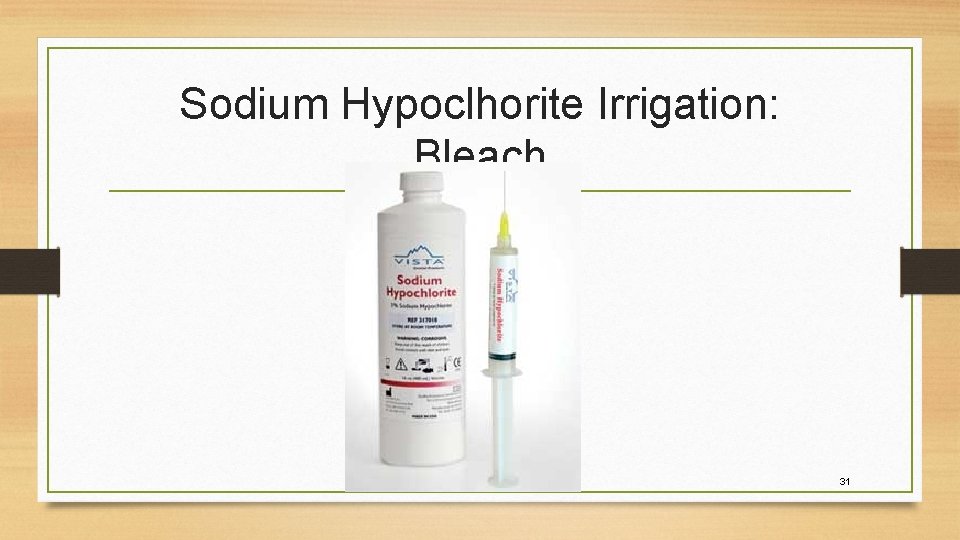
Cleaning and Shaping • Debridement: Removal of existing or potential irritants from the root canal system • Debridement technique: Instruments contact and plane all walls to loosen debris. Irrigants flush the loosened and suspended debris, dissolves organic remnants and destroys microorganisms • Shaping: Develop a continuously shaped conical form from apical to coronal 25

Instruments for Cleaning and Shaping • Barbed broach-Used to removed pulp tissue • Rotary files-plane and flare walls of the canals 26

Barbed Broach 27
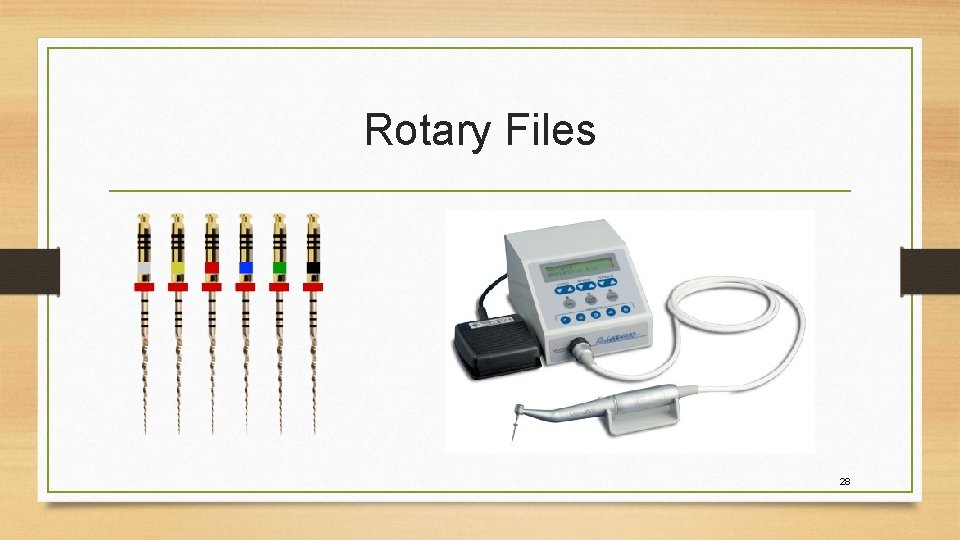
Rotary Files 28
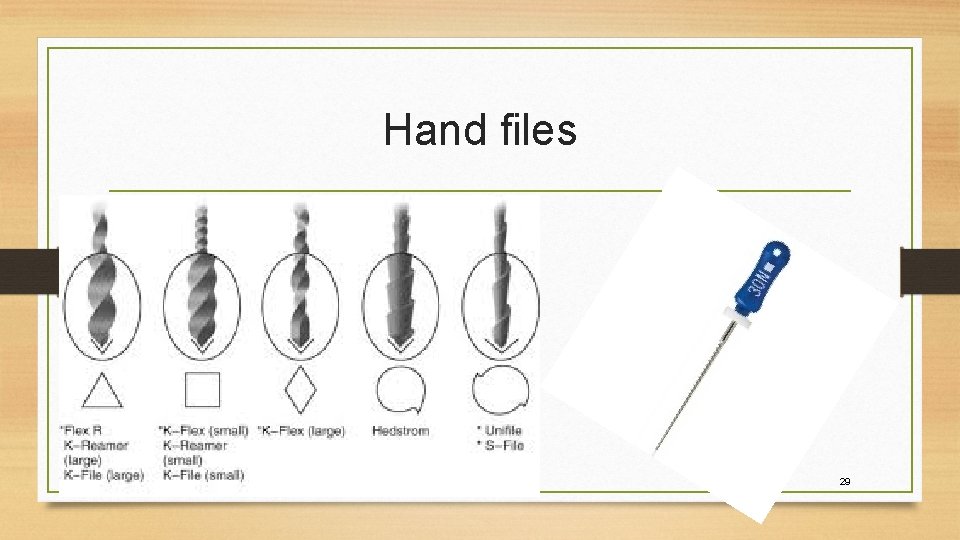
Hand files 29
30
Sodium Hypoclhorite Irrigation: Bleach 31
Paper Points 32
Obturate: to block • Materials- Gutta-Percha-used 160+ years! Silver points-nonadaptable and toxicity Pastes-lack of length control, unpredictable, shrinkage • Sealer- gives a fluid tight seal to be used with the obturating material ZOE*, Glass Ionomer*, Poly carboxylate, composite resin 33
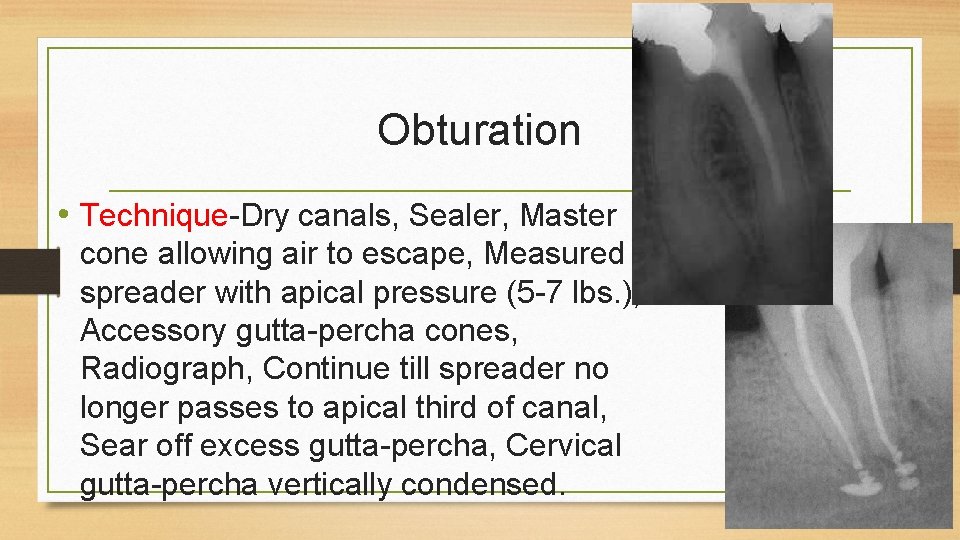
Obturation • Technique-Dry canals, Sealer, Master cone allowing air to escape, Measured spreader with apical pressure (5 -7 lbs. ), Accessory gutta-percha cones, Radiograph, Continue till spreader no longer passes to apical third of canal, Sear off excess gutta-percha, Cervical gutta-percha vertically condensed. 34

Sealer 35

Endodontic Obturation Products and Instruments • Gutta Percha-fills canal, primarily made of zinc oxide • Lateral Condensation • Plugger-flat tip • Spreader-pointed tip • Vertical Condensation • Pluggers with or without heat 36
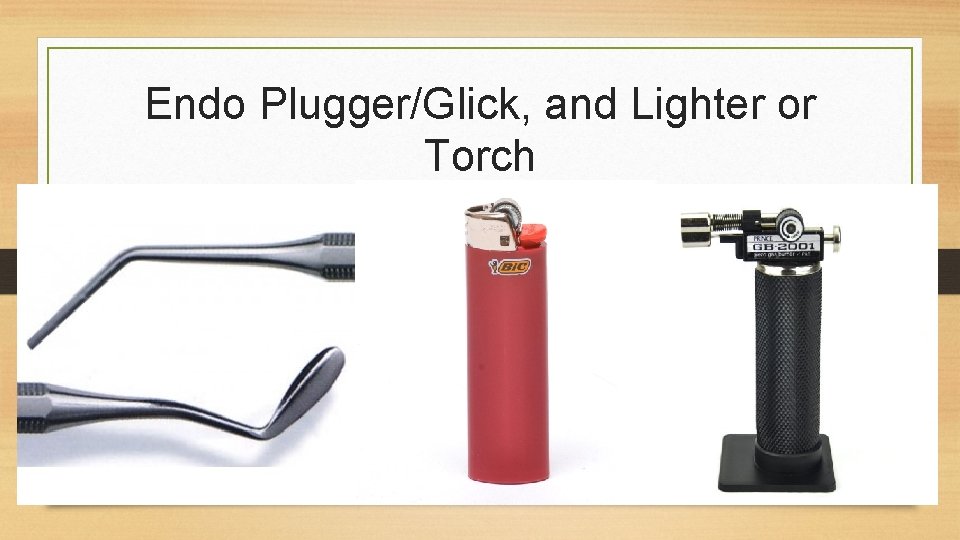
Endo Plugger/Glick, and Lighter or Torch 37
Let’s See How Its Done! Root Canal Therapy Demo 38
Restoration of Endo Tx’d Tooth • More endo tx’d teeth are lost because of restorative factors rather than failure of the RCT itself!! • Requirements: Provide a coronal seal • Protect remaining tooth structure • Minimize cuspal flexure • Satisfy function and esthetics • 39
Indications for Post Placement • Anterior: If a complete crown is needed then a post is needed for strength especially for maxillary incisors and canines • Posterior: Due to the vertical biting pressure most posterior teeth do not require a post before a crown is placed 40
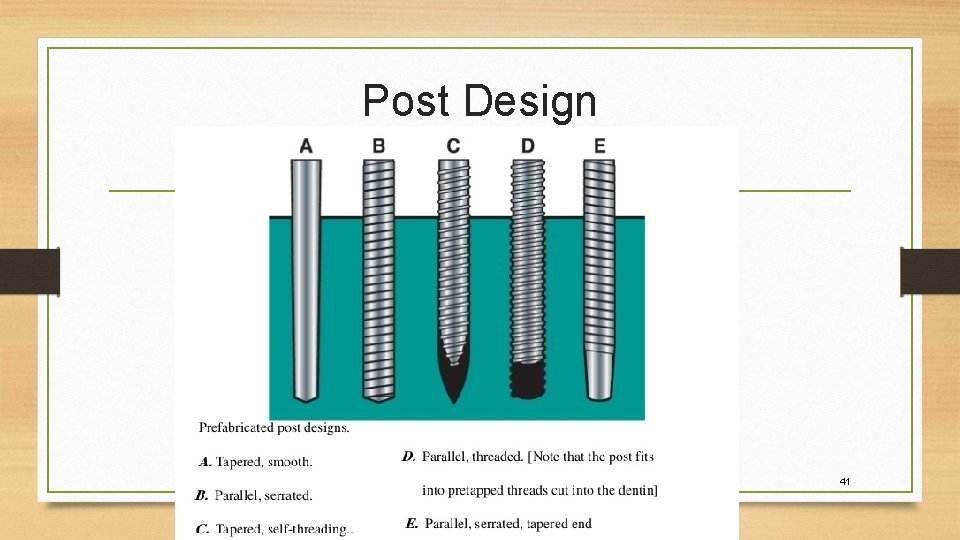
Post Design 41
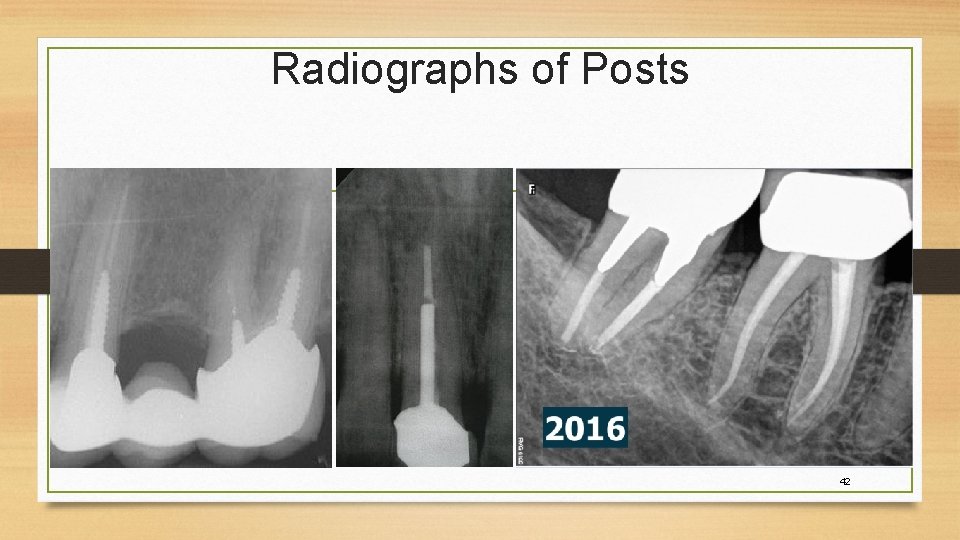
Radiographs of Posts 42
43

44
45
46

47

48
Pumpkin Root Canals 49
- Slides: 49