
ENDOCRINOLOGY THYROID HORMONE 3 rd YEAR BSc BIOCHEMISTRY
ENDOCRINOLOGY THYROID HORMONE 3 rd YEAR – BSc BIOCHEMISTRY SUBJECT CODE-16 SMBEBC 2 ENDOCRINOLOGY (UNIT-1) VI SEMESTER BY Dr. R. MOHANAMBAL DEPT. OF BIOCHEMISTRY GOVT. ARTS & SCIENCE COLLEGE (W) ORATHANADU.

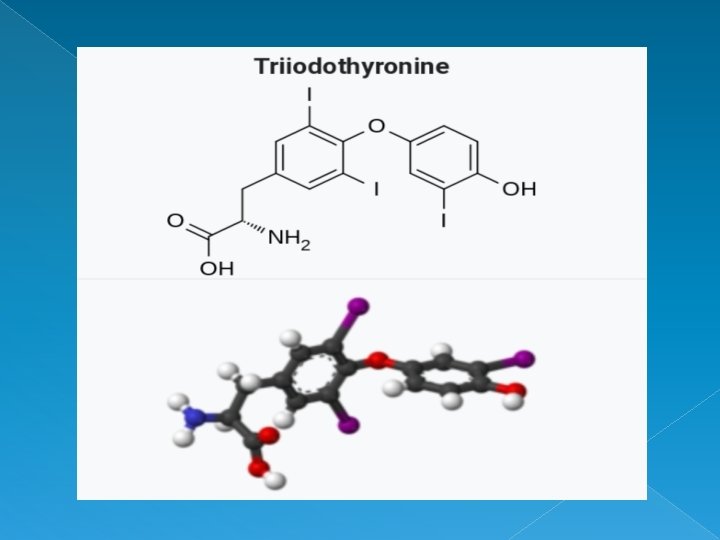
Definition �A chemical substance made by the thyroid gland for export into the bloodstream. � The thyroid gland needs iodine to make thyroid hormones. � Two hormones produced and released by thyroid gland , namely triiodothyronine and thyroxine.
� They are tyrosine – based hormones that are primarily responsible for regulation of metabolism. � T 3 and T 4 are partially composed of iodine.

Classification � Thyroid gland produces two hormones: 1. Triiodothyronine (T 3) 2. Tetraiodothyronine (T 4 ) also called thyroxine.
T 3 � It affects almost every physiological process in the body, including growth and development , metabolism, body temperature and heart rate.
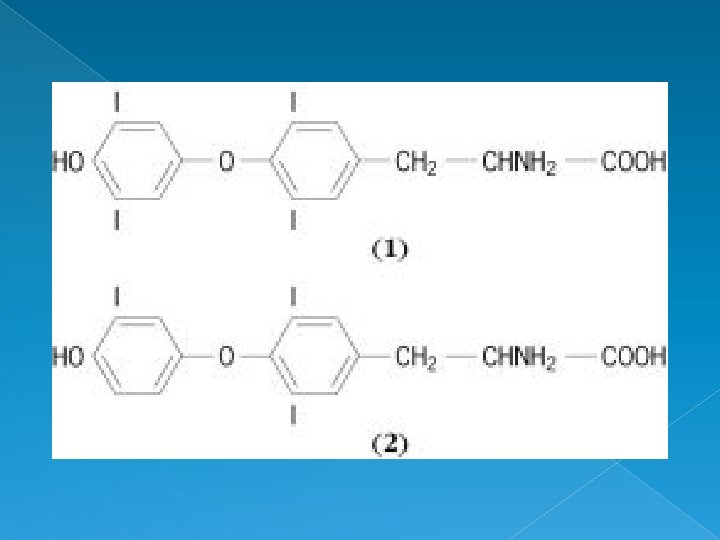
Thyroxin � Hormone produced by the thyroid glands to regulate metabolism by controlling the rate of oxidation in cells. � L – 3, 5, 5’- tetraiodothyronine increases the rate of chemical reactions in cells and helps control growth and development. � It can also be made in the laboratory and is used to treat thyroid disorders.
Biosynthesis of Thyroid hormone � Thyroid hormones are amine hormones and so their synthesis is based on the amino acid tyrosine. � The primary synthesis organ of Thyroid hormones is the thyroid gland which produces about twenty times more than T compared to T. 4 3
� The thyroid gland is full of thyroid follicles which are the basic units of thyroid hormone synthesis. � Synthesis of thyroid hormones is a complex multi – step process.

� It involves five steps : 1) Iodide transport. 2) Thyroglobulin Synthesis. 3) Thyroid Peroxidase 4)Endocytosis of Peroxidase-processed Thyroglobulin. 5) Release of T 4 and T 3 from Thyroglobulin.
Mechanism of action of Thyroid hormone : � Thyroid hormone enters cell through membrane transportor protein. � The hormone binds its receptor to form hormone receptor complex in sequences of DNA. � The effect of the hormone – receptor complex binding to DNA is to modulate gene expression.
Physiological effects of Thyroid Hormones � Thyroid hormones have profound effects on many “big time” physiologic processes, such as 1)Development 2)Growth 3)Metabolism a. Lipid metabolism b. Carbohydrate metabolism
� Deficiency of Thyroid hormone. a) Hypo thyrodism – Cretinism, Myxedema and goiter. b) Hyper thyrodism – Graves disease.

Thank you
- Slides: 17