
Endocrine System Overview Defined Body system that controls
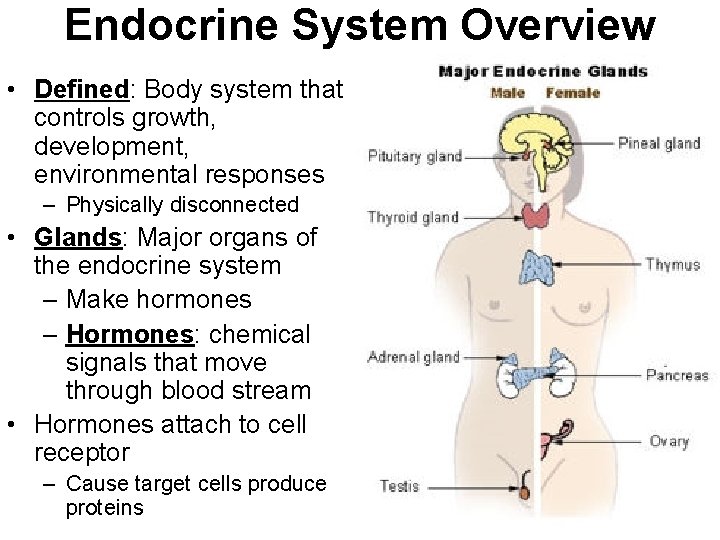
Endocrine System Overview • Defined: Body system that controls growth, development, environmental responses – Physically disconnected • Glands: Major organs of the endocrine system – Make hormones – Hormones: chemical signals that move through blood stream • Hormones attach to cell receptor – Cause target cells produce proteins
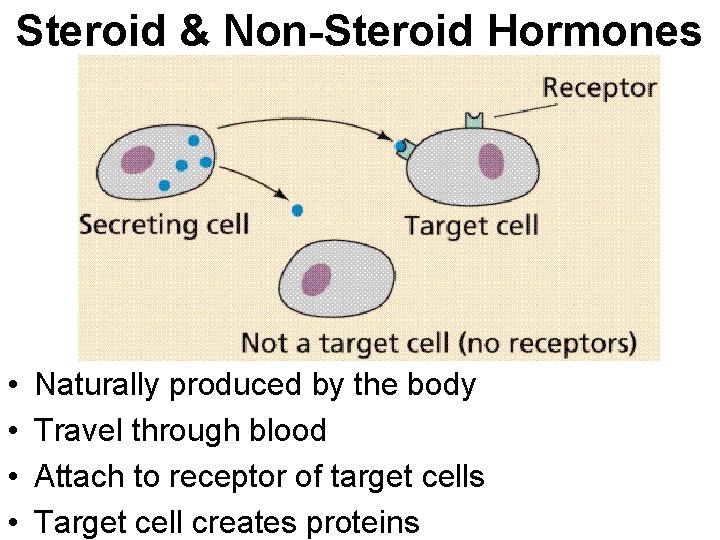
Steroid & Non-Steroid Hormones • • Naturally produced by the body Travel through blood Attach to receptor of target cells Target cell creates proteins
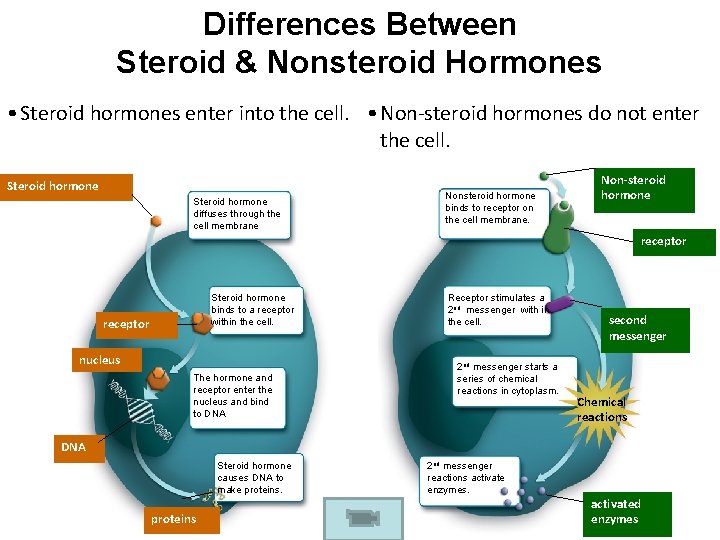
Differences Between Steroid & Nonsteroid Hormones • Steroid hormones enter into the cell. • Non-steroid hormones do not enter the cell. Steroid hormone diffuses through the cell membrane Nonsteroid hormone binds to receptor on the cell membrane. Non-steroid hormone receptor Steroid hormone binds to a receptor within the cell. receptor nucleus The hormone and receptor enter the nucleus and bind to DNA Receptor stimulates a 2 nd messenger with in the cell. 2 nd messenger starts a series of chemical reactions in cytoplasm. second messenger Chemical reactions DNA Steroid hormone causes DNA to make proteins 2 nd messenger reactions activate enzymes. activated enzymes
You. Tube clip: Endocrine system
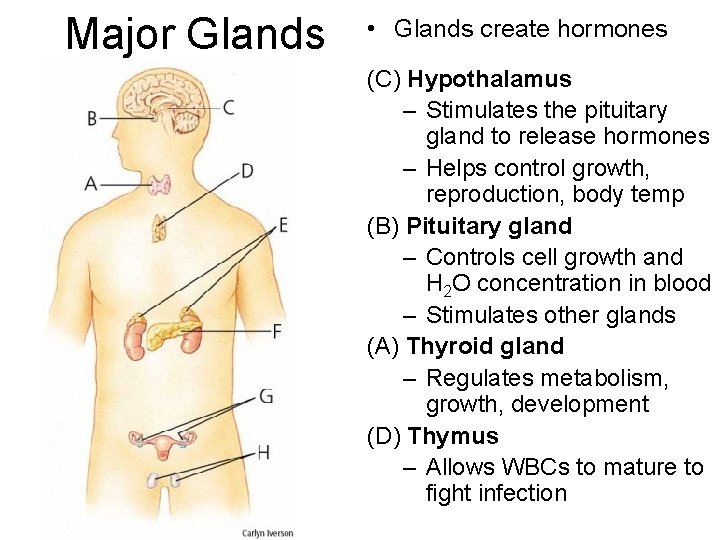
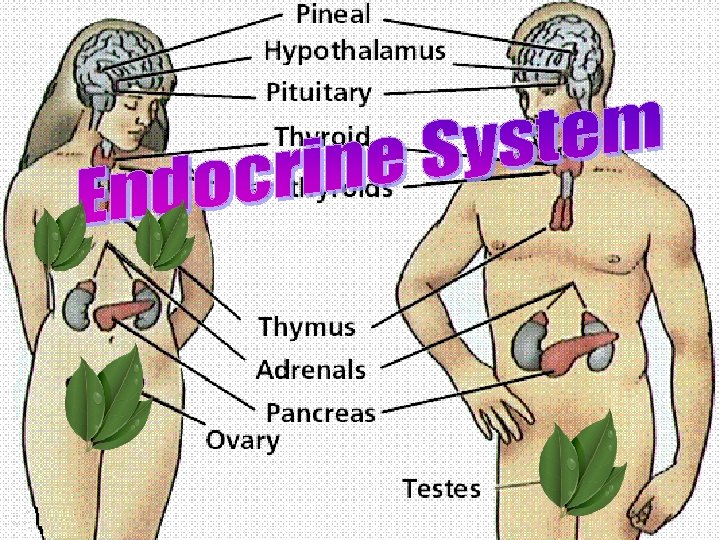
Major Glands • Glands create hormones (C) Hypothalamus – Stimulates the pituitary gland to release hormones – Helps control growth, reproduction, body temp (B) Pituitary gland – Controls cell growth and H 2 O concentration in blood – Stimulates other glands (A) Thyroid gland – Regulates metabolism, growth, development (D) Thymus – Allows WBCs to mature to fight infection
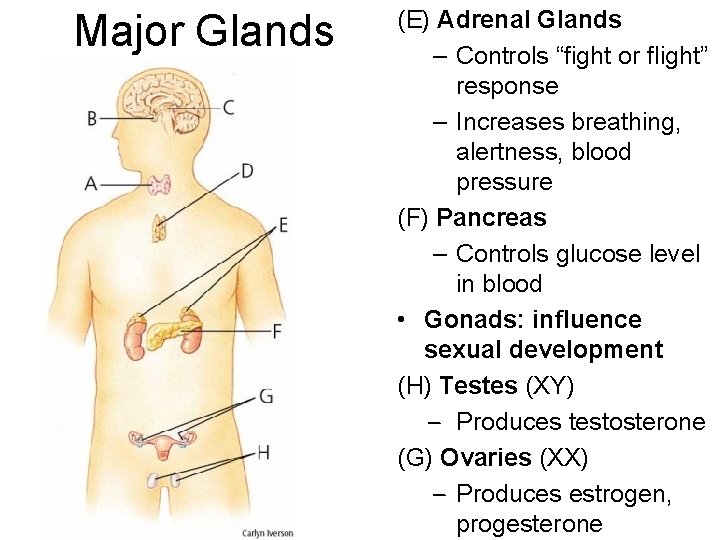
Major Glands (E) Adrenal Glands – Controls “fight or flight” response – Increases breathing, alertness, blood pressure (F) Pancreas – Controls glucose level in blood • Gonads: influence sexual development (H) Testes (XY) – Produces testosterone (G) Ovaries (XX) – Produces estrogen, progesterone
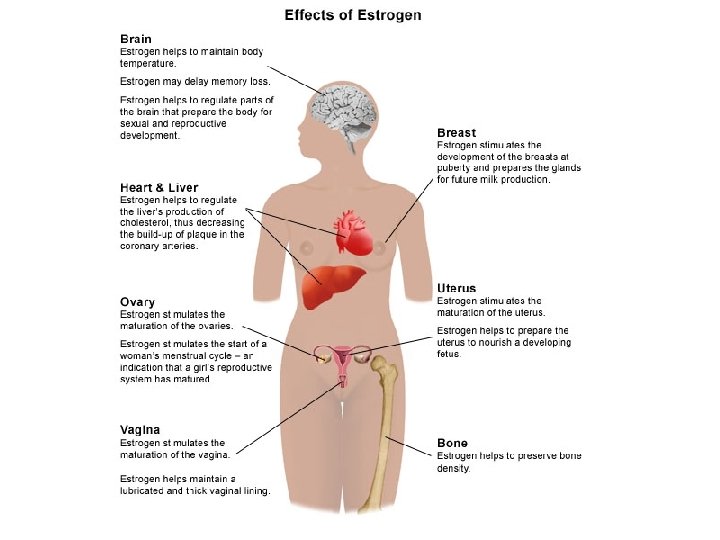
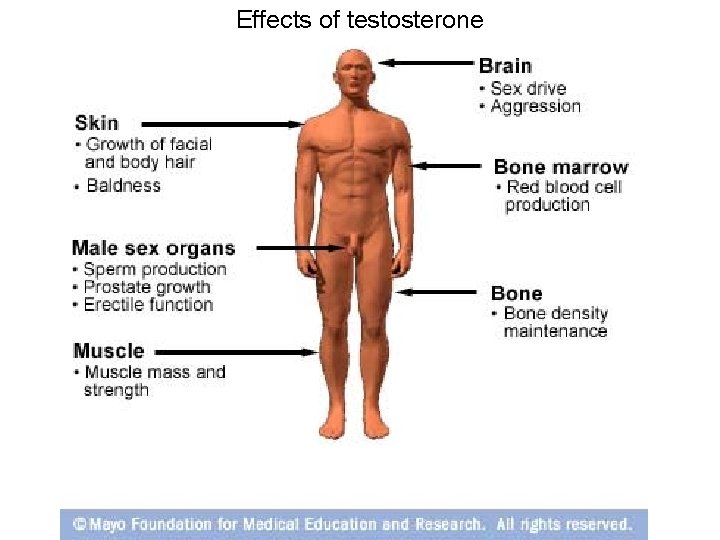
Effects of testosterone
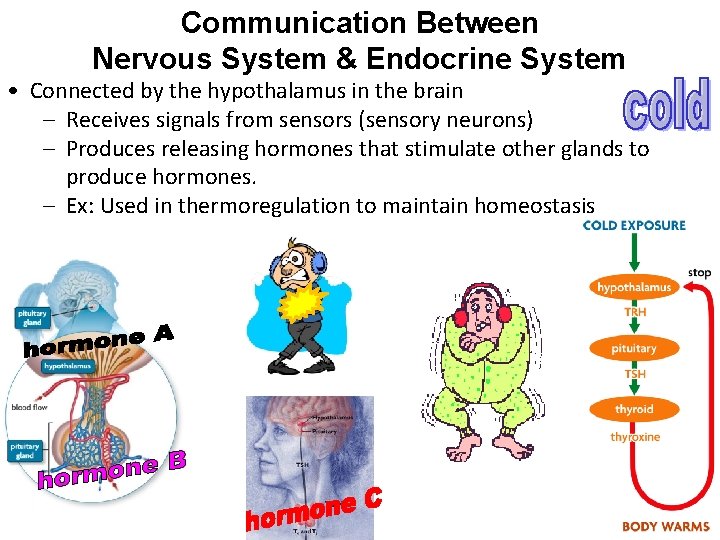
Communication Between Nervous System & Endocrine System • Connected by the hypothalamus in the brain – Receives signals from sensors (sensory neurons) – Produces releasing hormones that stimulate other glands to produce hormones. – Ex: Used in thermoregulation to maintain homeostasis
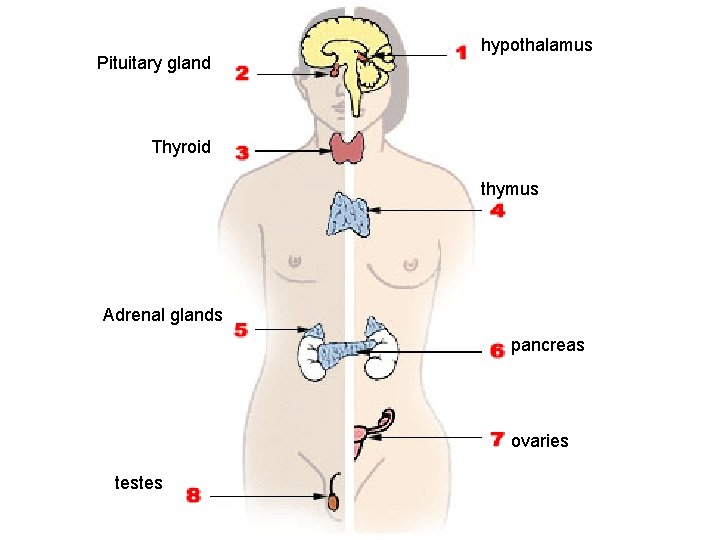
Pituitary gland hypothalamus Thyroid thymus Adrenal glands pancreas ovaries testes
Review 1) 2) 3) 4) What are glands and what do they release? What do hormones direct cells to create? How do hormones travel through the body? What gland connects the endocrine and nervous systems? 5) What are the differences between steroid and nonsteroid hormones? 6) Examine the diagram of the endocrine system on slide #12. Practice labeling the 8 different glands. 7) Which gland…. a) b) c) d) e) f) releases insulin to lower blood sugar levels? increases your alertness and blood pressure? helps your white blood cells mature? is located atop your kidneys? are found in your brain (two answers)? is considered your body’s thermostat?
- Slides: 12