
Endocrine System KEY CONCEPT The endocrine system produces


- Slides: 27
Endocrine System KEY CONCEPT The endocrine system produces hormones that affect growth, development, and homeostasis.
Goals and Objectives • Target cells for a given hormone have the correct receptor sites. • Be able to identify several glands associated with the Endocrine System and their influence on the body.
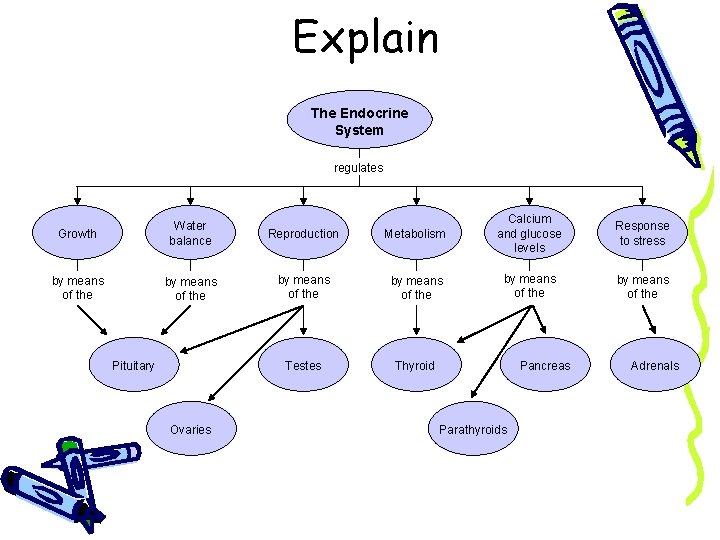
Explain Section 39 -2 The Endocrine System regulates Metabolism Calcium and glucose levels Response to stress by means of the Testes Thyroid Growth Water balance Reproduction by means of the Pituitary Ovaries Pancreas Parathyroids Adrenals
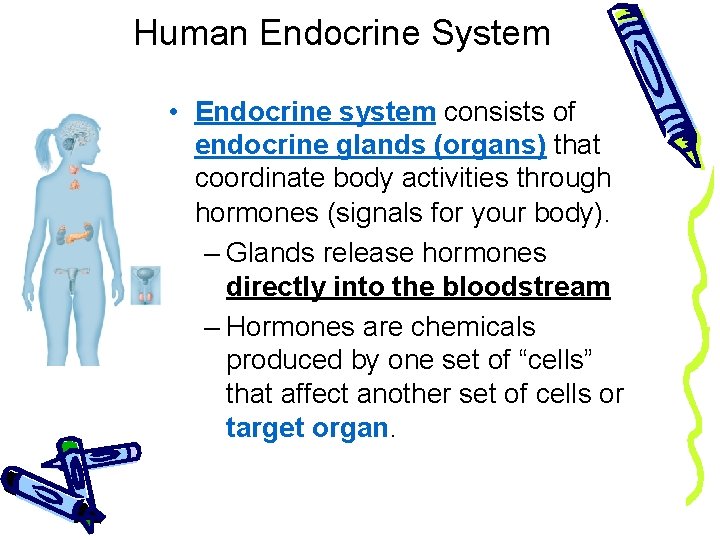
Human Endocrine System • Endocrine system consists of endocrine glands (organs) that coordinate body activities through hormones (signals for your body). – Glands release hormones directly into the bloodstream – Hormones are chemicals produced by one set of “cells” that affect another set of cells or target organ.
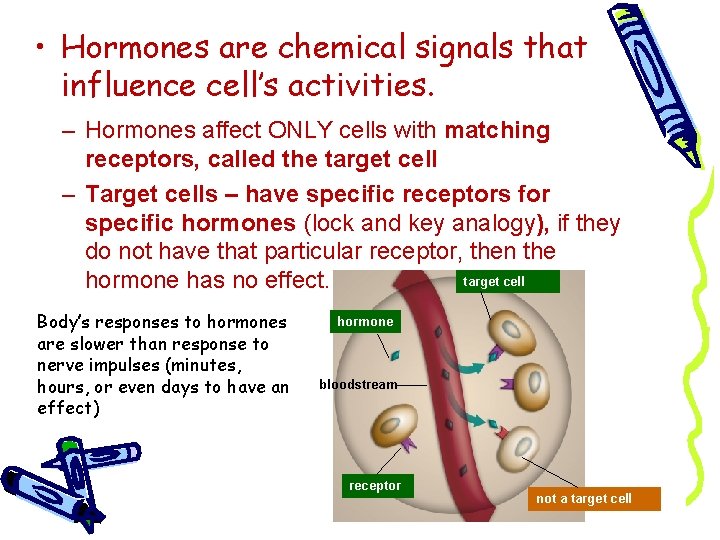
• Hormones are chemical signals that influence cell’s activities. – Hormones affect ONLY cells with matching receptors, called the target cell – Target cells – have specific receptors for specific hormones (lock and key analogy), if they do not have that particular receptor, then the target cell hormone has no effect. Body’s responses to hormones are slower than response to nerve impulses (minutes, hours, or even days to have an effect) hormone bloodstream receptor not a target cell
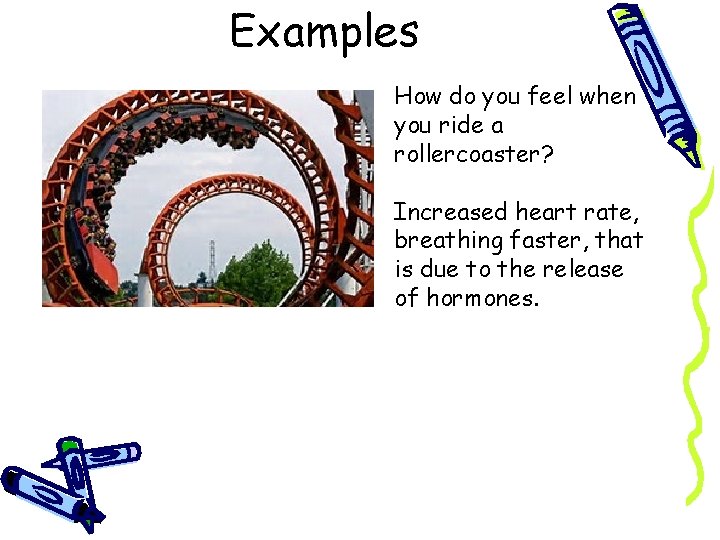
Examples How do you feel when you ride a rollercoaster? Increased heart rate, breathing faster, that is due to the release of hormones.
What 2 groups are hormones broken into? • Steroid Hormones – The hormone crosses the cell membrane and binds to a receptor protein inside the cell. • Non-steroid Hormones – the hormone binds to receptors on the outside of the cell.
Homeostasis • Endocrine system is especially involved in helping the body maintain homeostasis. – Effect of hormones is controlled in 2 ways: • Internal Feedback – Stops or slows down the release of hormone (deals with 1 hormone) § Complementary hormones – Uses 2 hormones that have opposite effects such as increases and decreasing to regulate homeostasis.
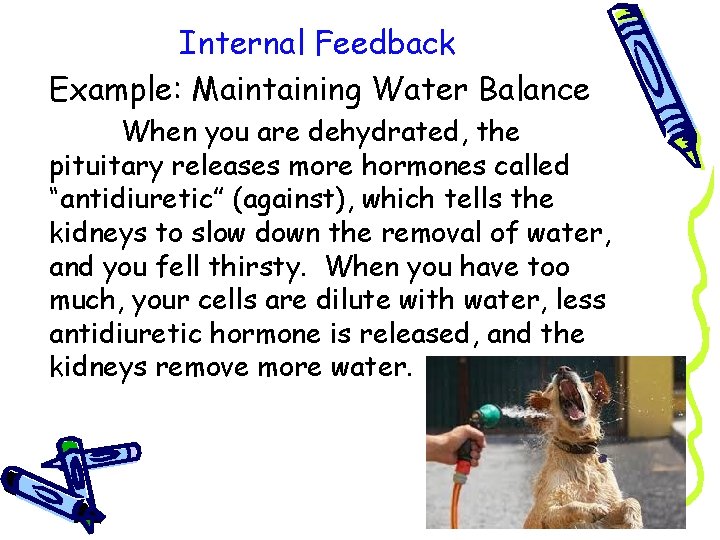
Internal Feedback Example: Maintaining Water Balance When you are dehydrated, the pituitary releases more hormones called “antidiuretic” (against), which tells the kidneys to slow down the removal of water, and you fell thirsty. When you have too much, your cells are dilute with water, less antidiuretic hormone is released, and the kidneys remove more water.
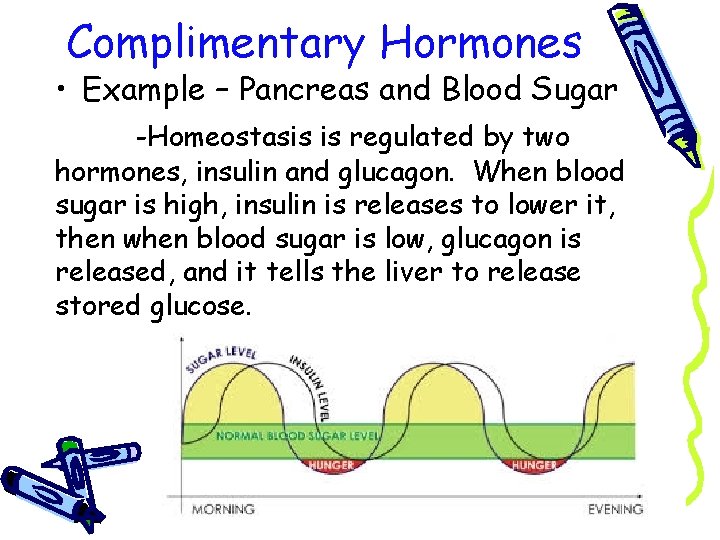
Complimentary Hormones • Example – Pancreas and Blood Sugar -Homeostasis is regulated by two hormones, insulin and glucagon. When blood sugar is high, insulin is releases to lower it, then when blood sugar is low, glucagon is released, and it tells the liver to release stored glucose.
Hormonal imbalances can cause severe illness. • Abnormal hormone levels affect homeostasis. • Hormonal imbalances might be treated with surgery or medicine. • Steroids, a pituitary tumor, or some prescription drugs can make the pituitary overactive and indirectly cause problems.
Endocrine System • Let’s briefly discuss the types of endocrine glands in the human body and what they help regulate or control.
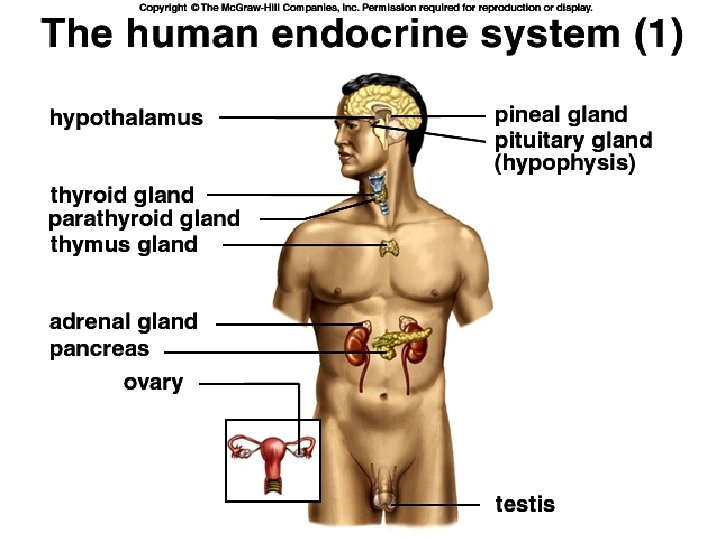
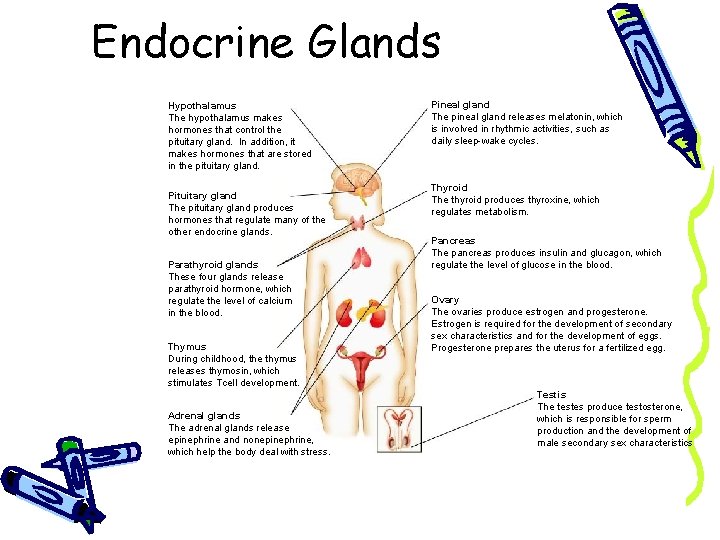
Endocrine Glands Section 39 -1 Hypothalamus The hypothalamus makes hormones that control the pituitary gland. In addition, it makes hormones that are stored in the pituitary gland. Pituitary gland The pituitary gland produces hormones that regulate many of the other endocrine glands. Parathyroid glands These four glands release parathyroid hormone, which regulate the level of calcium in the blood. Thymus During childhood, the thymus releases thymosin, which stimulates Tcell development. Adrenal glands The adrenal glands release epinephrine and nonepinephrine, which help the body deal with stress. Pineal gland The pineal gland releases melatonin, which is involved in rhythmic activities, such as daily sleep-wake cycles. Thyroid The thyroid produces thyroxine, which regulates metabolism. Pancreas The pancreas produces insulin and glucagon, which regulate the level of glucose in the blood. Ovary The ovaries produce estrogen and progesterone. Estrogen is required for the development of secondary sex characteristics and for the development of eggs. Progesterone prepares the uterus for a fertilized egg. Testis The testes produce testosterone, which is responsible for sperm production and the development of male secondary sex characteristics
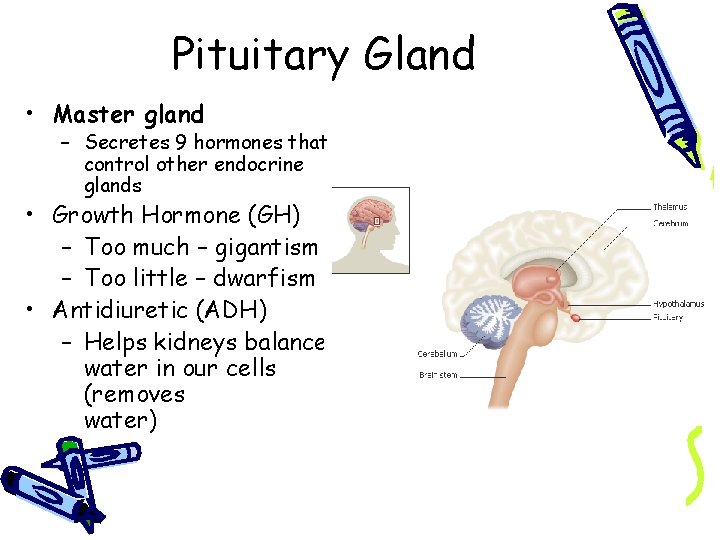
Pituitary Gland • Master gland – Secretes 9 hormones that control other endocrine glands • Growth Hormone (GH) – Too much – gigantism – Too little – dwarfism • Antidiuretic (ADH) – Helps kidneys balance water in our cells (removes water)
Pituitary Hormone Gland Action - this hormone stimulates Posterior Antiduretic hormone (ADH) . . the kidneys to resorb water Anterior Oxytocin . . Contractions for birth, milk release Follicle-stimulating hormone (FSH) . . Production ofmature eggs and sperm Luteinizing hormone (LH) . . Ovaries and testes, prepares uterus for implantation of egg Thyroid-Stimulating hormone (TSH) . . The synthesis and release of thyroxine Adreno-corticotropic hormone (ACTH) . . Release of hormones from adrenal cortex Growth Hormone (GH) . . Protein sythnesis and growth in cells Prolactin . . Milk production Melanocyte-stimulating hormone (MSM) . . Increase skin pigment melanin
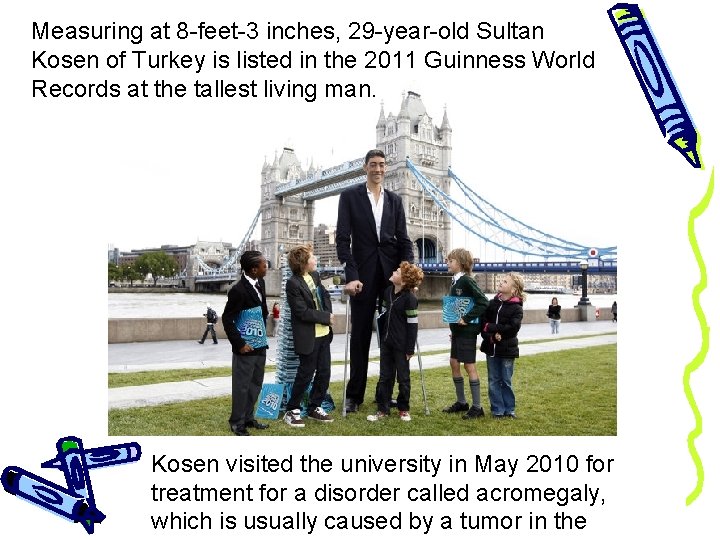
Measuring at 8 -feet-3 inches, 29 -year-old Sultan Kosen of Turkey is listed in the 2011 Guinness World Records at the tallest living man. Kosen visited the university in May 2010 for treatment for a disorder called acromegaly, which is usually caused by a tumor in the
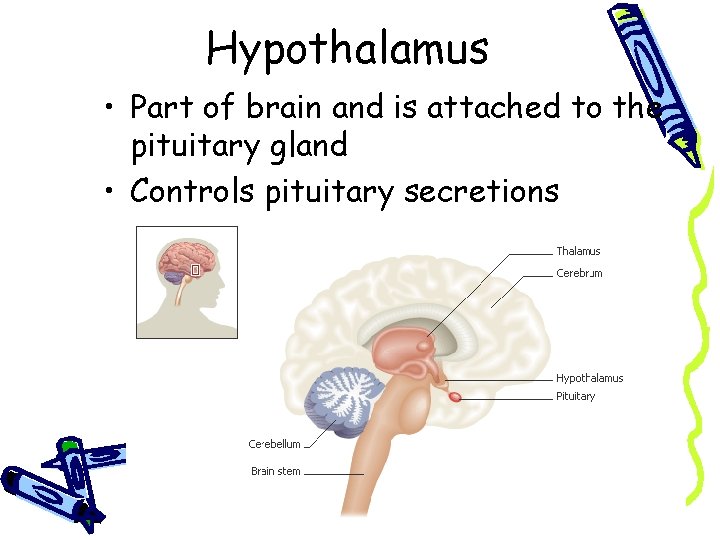
Hypothalamus • Part of brain and is attached to the pituitary gland • Controls pituitary secretions
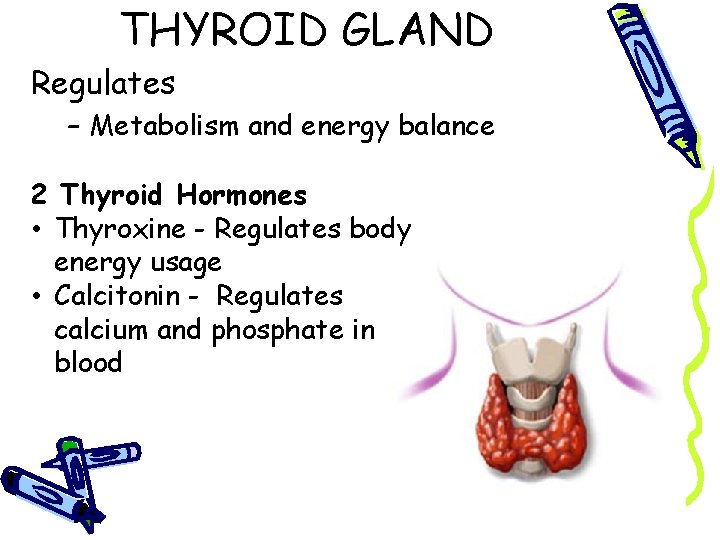
THYROID GLAND Regulates – Metabolism and energy balance 2 Thyroid Hormones • Thyroxine - Regulates body energy usage • Calcitonin - Regulates calcium and phosphate in blood
Questions • What are the two hormones that the thyroid secretes? • What is the function of thyroxine? • What is the function of calcitonin?
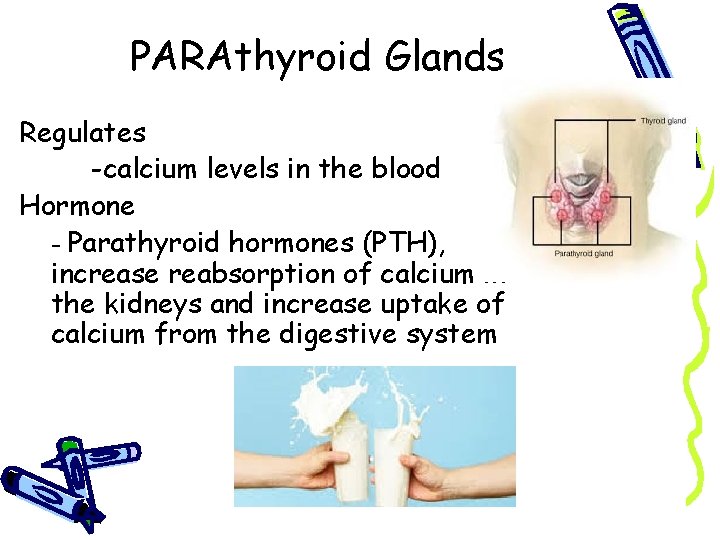
PARAthyroid Glands Regulates -calcium levels in the blood Hormone - Parathyroid hormones (PTH), increase reabsorption of calcium in the kidneys and increase uptake of calcium from the digestive system
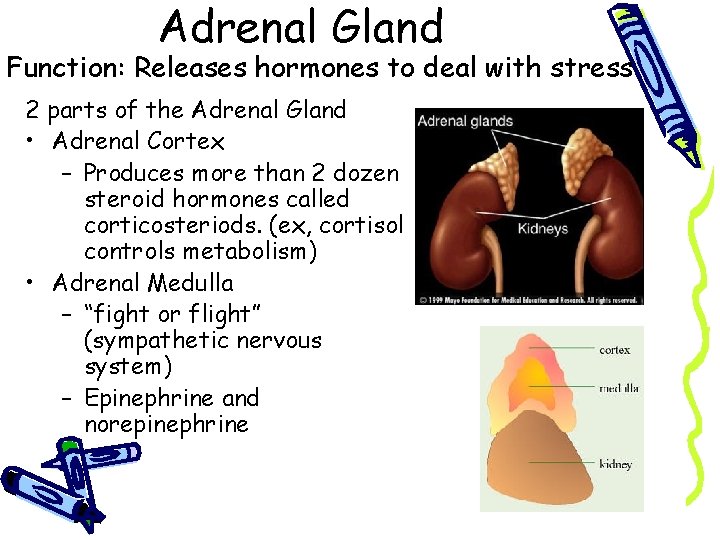
Adrenal Gland Function: Releases hormones to deal with stress 2 parts of the Adrenal Gland • Adrenal Cortex – Produces more than 2 dozen steroid hormones called corticosteriods. (ex, cortisol controls metabolism) • Adrenal Medulla – “fight or flight” (sympathetic nervous system) – Epinephrine and norepinephrine
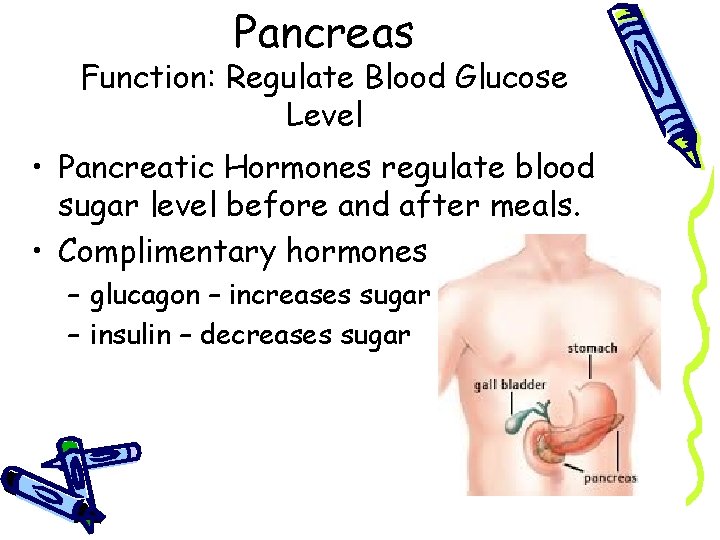
Pancreas Function: Regulate Blood Glucose Level • Pancreatic Hormones regulate blood sugar level before and after meals. • Complimentary hormones – glucagon – increases sugar – insulin – decreases sugar
What Happens? • Between meals Blood glucose low Pancreas secretes glucagon Liver changes glycogen to glucose sent to target tissues • After a meal Blood glucose high Pancreas secretes insulin Glucose goes to the Liver(Glygogen) and goes to Target tissues
Questions • What organ regulates glucose in blood? • When we eat our blood glucose level is high or low? • In between meals our blood glucose level is high or low? • When our blood glucose is high the pancreas secretes ______. • When our blood glucose is low the pancreas secretes ______. • What mechanism allows our body to control the glucose level in our body?
Endocrine Disorder Diabetes • Diabetes – High sugar levels in blood – Do not produce enough insulin to control blood sugar – Some take insulin injections to regulate
Reproductive Glands (Gonads) 2 Functions • Production of gametes • Secretion of sex hormones Hormones • Female – Ovaries produce Estrogen (development of eggs and characteristics of the female body) + Progesterone (prepares uterus for embryo) • Males – Testes produce Testosterone (responsible for sperm production, male characteristic like facial hair and bigger body size)