
Endocrine System General Mechanisms http home mira net





- Slides: 43
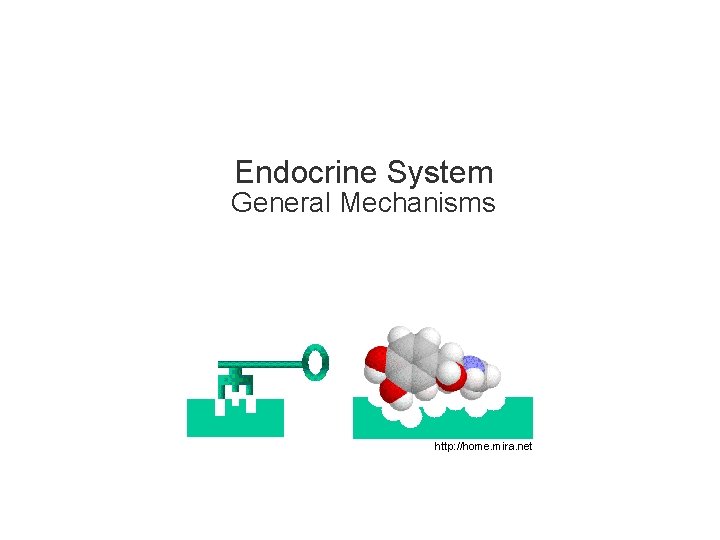
Endocrine System General Mechanisms http: //home. mira. net
Note Much of the text material is from, “Principles of Anatomy and Physiology” by Gerald J. Tortora and Bryan Derrickson (2009, 2011, and 2014). I don’t claim authorship. Other sources are noted when they are used. The lecture slides are mapped to the three editions of the textbook based on the color-coded key below. 14 th edition 13 th edition 12 th edition Same figure or table reference in all three editions 2
Outline Overview • Feedback concepts • Mechanisms of hormone action • 3
Overview 4
Regulation • The nervous system and endocrine system regulate many functions of the body. • The nervous system acts via graded potentials, action potentials, and neurotransmitters. • The endocrine system regulates body activities by releasing chemical mediators known as hormones. • The nervous system controls many aspects of the endocrine system. Endocrinology = structure and function of the endocrine glands; the medical specialty for the diagnosis and treatment of disorders of the endocrine system. Page 616 Page 681 Page 643 5
Hormones • A hormone is a molecule secreted from cells to regulate the activities (usually) of other cells. • Hormones, as with neurotransmitters, exert their effects by binding to receptors either on the plasma membrane or within target cells. • A few types of molecules, such as norepinephrine, serve as neurotransmitters and hormones. Page 616 Page 681 Page 643 6
Endocrine versus Nervous Responses • The responses of the endocrine system are usually slower than those of the nervous system. • Some hormones act within seconds, but most take several minutes or longer to elicit (trigger) responses. • The response times of the nervous system are usually briefer than for the endocrine system. • The nervous system acts on muscles and glands, while the endocrine system, depending on the hormone, can help regulate many different cell types within the body. Page 616 Page 681 Page 643 Table 18. 1 7
Exocrine Glands • The body has two general types of glands—exocrine and endocrine. • Exocrine glands release their products into ducts that carry them into body cavities, such as the digestive tract, or directly outside the body. • They include digestive, mucous, sudoriferous (sweat), and sebaceous glands. Page 616 Page 681 Page 643 8
Endocrine Glands • Endocrine glands secrete hormones into the interstitial fluid surrounding their secretory cells. • Many hormones then diffuse into blood capillaries where they can be carried to target cells throughout the body. • The circulating levels of hormones are generally very low since most are only needed in small amounts to exert their physiological actions. Interstitial fluid = the extracellular fluid that fills the microscopic spaces between cells. Page 616 Page 681 Page 643 9
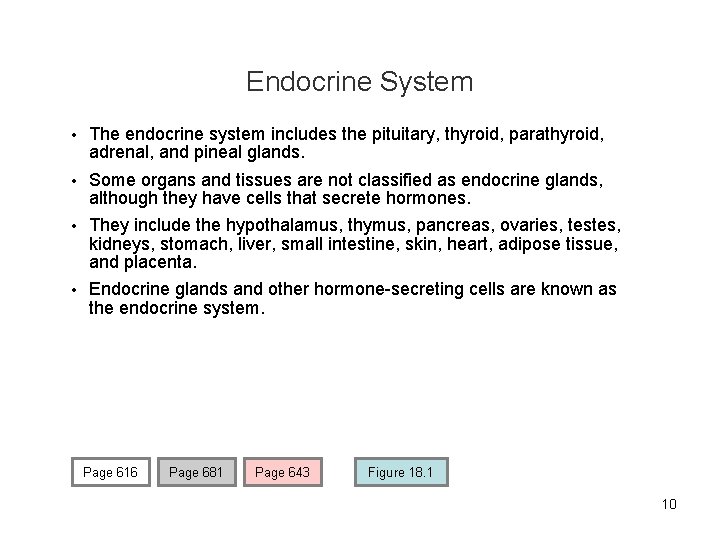
Endocrine System • The endocrine system includes the pituitary, thyroid, parathyroid, adrenal, and pineal glands. • Some organs and tissues are not classified as endocrine glands, although they have cells that secrete hormones. • They include the hypothalamus, thymus, pancreas, ovaries, testes, kidneys, stomach, liver, small intestine, skin, heart, adipose tissue, and placenta. • Endocrine glands and other hormone-secreting cells are known as the endocrine system. Page 616 Page 681 Page 643 Figure 18. 1 10
Feedback Concepts 11
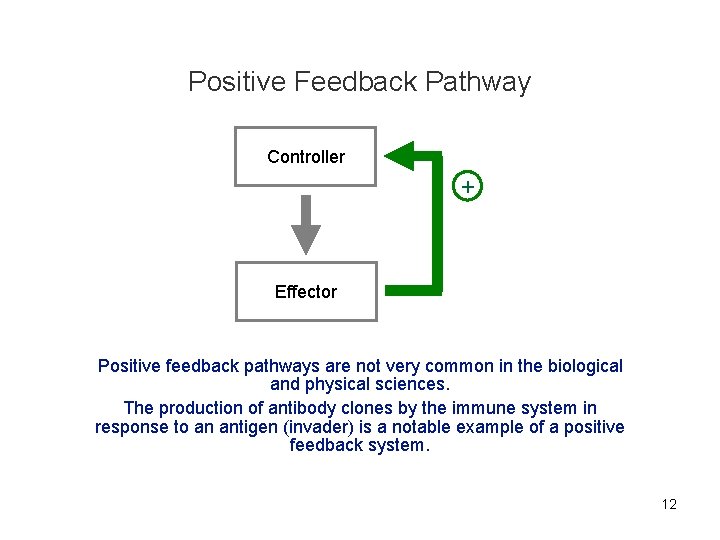
Positive Feedback Pathway Controller + Effector Positive feedback pathways are not very common in the biological and physical sciences. The production of antibody clones by the immune system in response to an antigen (invader) is a notable example of a positive feedback system. 12
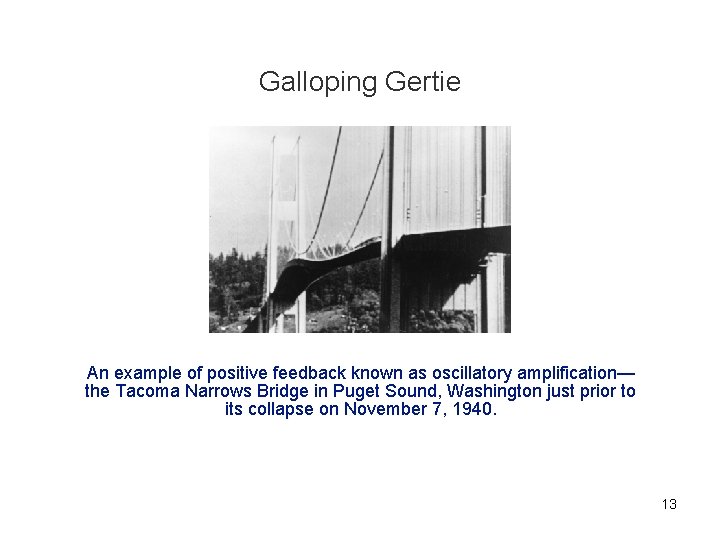
Galloping Gertie An example of positive feedback known as oscillatory amplification— the Tacoma Narrows Bridge in Puget Sound, Washington just prior to its collapse on November 7, 1940. 13
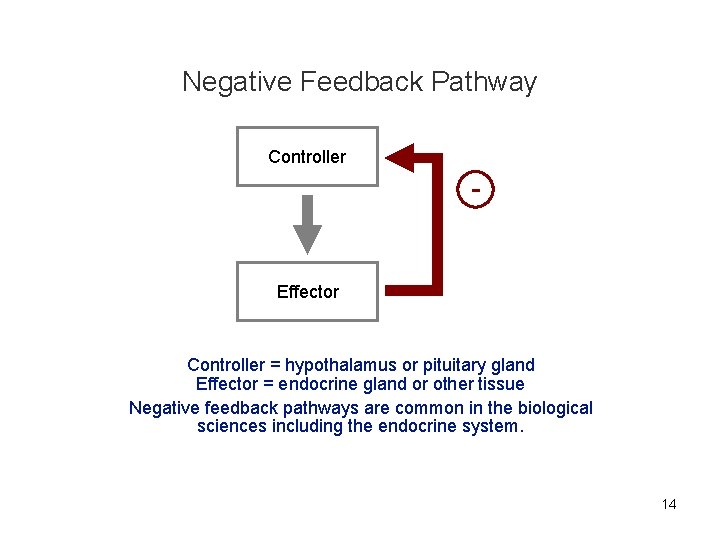
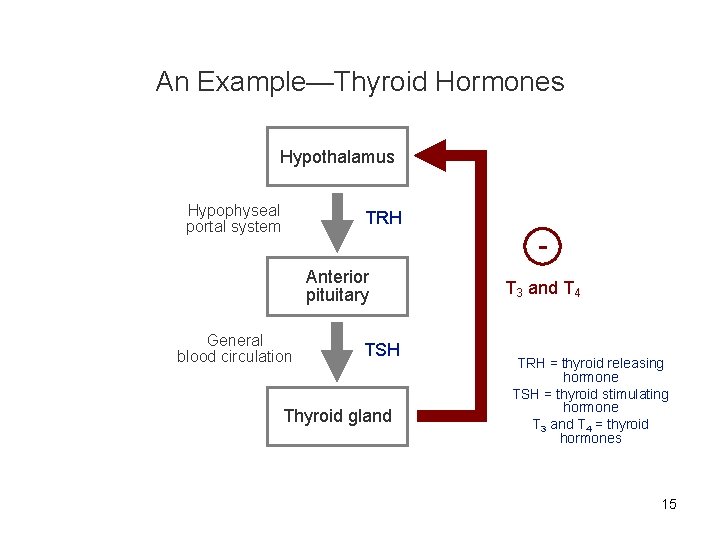
Negative Feedback Pathway Controller - Effector Controller = hypothalamus or pituitary gland Effector = endocrine gland or other tissue Negative feedback pathways are common in the biological sciences including the endocrine system. 14
An Example—Thyroid Hormones Hypothalamus Hypophyseal portal system TRH Anterior pituitary General blood circulation TSH Thyroid gland T 3 and T 4 TRH = thyroid releasing hormone TSH = thyroid stimulating hormone T 3 and T 4 = thyroid hormones 15
Mechanisms of Hormone Action 16
Hormone Receptors • Although many hormones circulate in the blood, they affect specific target cells of the body. • A hormone exerts its actions by binding to hormone receptors of protein molecules that recognize it molecular shape. • Thyroid-stimulating hormone (TSH) secreted by the anterior pituitary binds to TSH receptors on certain types of cells in the thyroid gland. • TSH does not bind to cells in the ovaries (among other tissues) because they do not have TSH receptors that would recognize the hormone. Page 617 Page 683 Page 645 17
Hormone Receptors (continued) • A target cell typically contains 2, 000 to 10, 000 receptors for a given hormone. • Hormone receptors, like other cellular proteins, are continually being synthesized and broken-down. Page 618 Page 683 Page 645 18
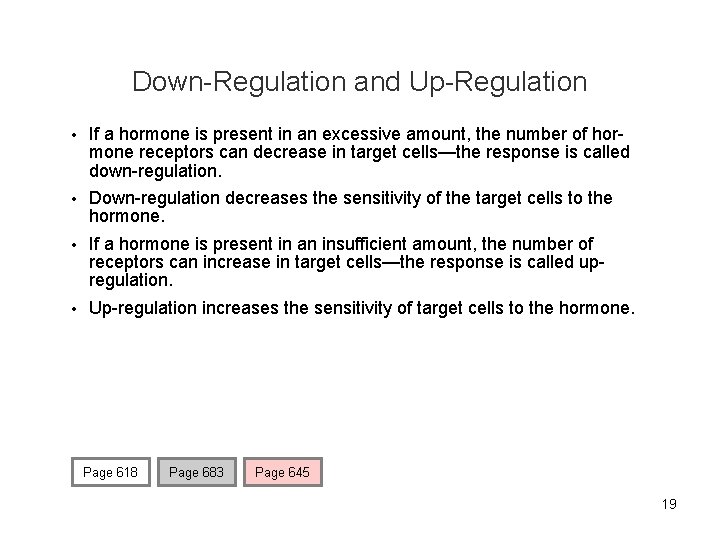
Down-Regulation and Up-Regulation • If a hormone is present in an excessive amount, the number of hormone receptors can decrease in target cells—the response is called down-regulation. • Down-regulation decreases the sensitivity of the target cells to the hormone. • If a hormone is present in an insufficient amount, the number of receptors can increase in target cells—the response is called upregulation. • Up-regulation increases the sensitivity of target cells to the hormone. Page 618 Page 683 Page 645 19
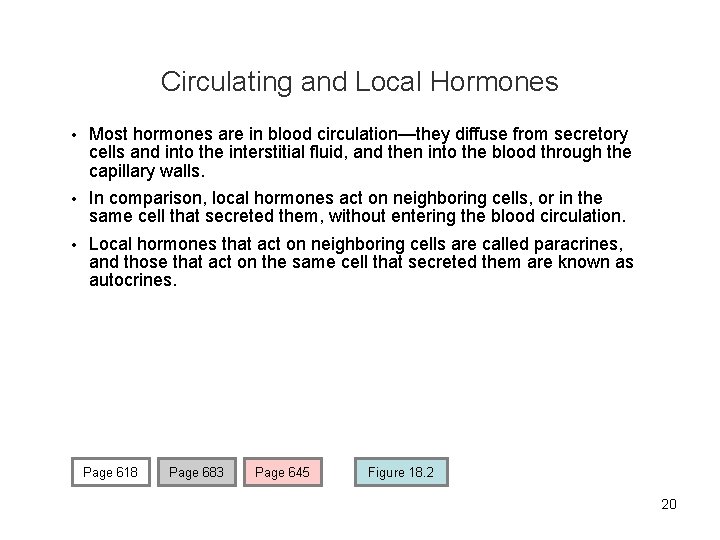
Circulating and Local Hormones • Most hormones are in blood circulation—they diffuse from secretory cells and into the interstitial fluid, and then into the blood through the capillary walls. • In comparison, local hormones act on neighboring cells, or in the same cell that secreted them, without entering the blood circulation. • Local hormones that act on neighboring cells are called paracrines, and those that act on the same cell that secreted them are known as autocrines. Page 618 Page 683 Page 645 Figure 18. 2 20
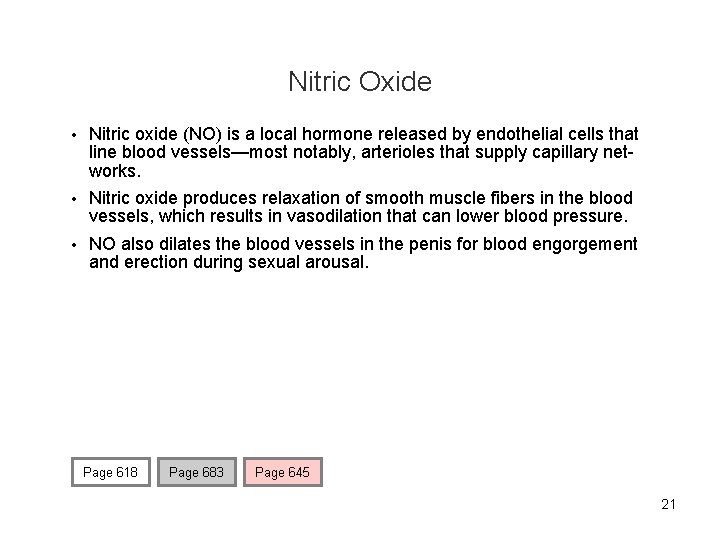
Nitric Oxide • Nitric oxide (NO) is a local hormone released by endothelial cells that line blood vessels—most notably, arterioles that supply capillary networks. • Nitric oxide produces relaxation of smooth muscle fibers in the blood vessels, which results in vasodilation that can lower blood pressure. • NO also dilates the blood vessels in the penis for blood engorgement and erection during sexual arousal. Page 618 Page 683 Page 645 21
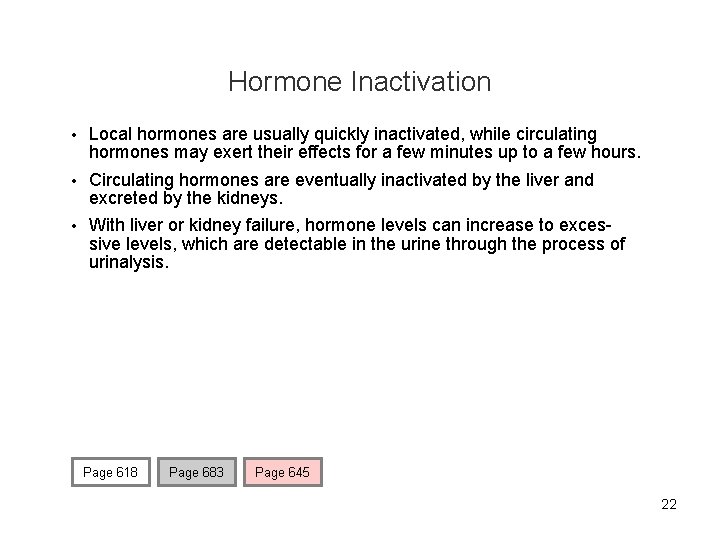
Hormone Inactivation • Local hormones are usually quickly inactivated, while circulating hormones may exert their effects for a few minutes up to a few hours. • Circulating hormones are eventually inactivated by the liver and excreted by the kidneys. • With liver or kidney failure, hormone levels can increase to excessive levels, which are detectable in the urine through the process of urinalysis. Page 618 Page 683 Page 645 22
Chemical Classes of Hormones • Hormones are divided into two classes: 1) lipid-soluble and 2) watersoluble. • Hormones in the two biochemical classes exert their effects differently, as we will discuss. Page 619 Page 684 Page 646 23
Lipid-Soluble Hormones • Steroid hormones are derived from cholesterol—the different chemical groups attached to their four-ring structure allow for different actions. • Steroids included androgens, estrogens, glucocorticoids, and mineralcorticoids. • The thyroid hormones, T 3 and T 4 , are synthesized by binding of iodine to the amino acid, tyrosine. • Nitric oxide is also a lipid-soluble local hormone, and a neurotransmitter. Page 619 Page 684 Page 646 24
Water-Soluble Hormones • Amine hormones are synthesized by removing a CO 2 molecule from certain amino acids (along with other biochemical modifications). • They include the catecholamines—epinephrine, norepinephrine, and dopamine—and histamine, serotonin, and melatonin. • Peptide hormones consist of short chains of 3 to 49 amino acids. • They include antidiuretic hormone (ADH) and oxytocin secreted by the posterior pituitary. Page 619 Page 684 Page 646 25
Water-Soluble Hormones (continued) • Protein hormones are longer chains of about 50 to 100 amino acids. • They include human growth hormone (h. GH) and insulin. • Eicosanoid hormones are derived from a 20 -carbon fatty acid (called arachidonic acid). • They include prostaglandins and leukotrienes that have local effects. Page 619 Page 684 Page 646 26
Hormone Transport • Water-soluble hormones circulate in blood plasma (which is mostly water) in free form, and not attached to other molecules. • Lipid-soluble hormones, due to their low solubility since they are hydrophobic, bind to transport proteins synthesized in the liver. • The functions of transport proteins are to: Increase the solubility of lipid-soluble hormones in blood plasma. - Provide a reserve of the hormone in circulation. - Reduce the passage of small hormone molecules through the filtration mechanism of the kidneys to slow their rate of loss from the body. - Page 619 Page 684 Page 646 27
Free Fraction • About 0. 1 to 10 percent of a lipid-soluble hormone is not bound to a transport protein. • Some of the free fraction passively diffuses out of the capillaries, binds to receptors inside cells, and triggers cellular actions. • Transport proteins release more hormone to replenish the free fraction. Page 619 Page 684 Page 646 28
Physiological Responses • The physiological responses of a hormone depend on the hormone and target cells. • Different target cells can respond differently to the same hormone. • Insulin stimulates synthesis of glycogen in liver cells (how the body stores glucose), but the synthesis of triglycerides in adipose cells. Page 619 Page 684 Page 646 29
Physiological Responses (continued) • A target cell’s response to a hormone does not always involve the synthesis of new molecules. • Other hormonal effects can include: Changing the permeability of the plasma membrane of target cells. - Stimulating active transport into or out of target cells. - Altering the rate of metabolic reactions in target cells. - Affecting the contractions of cardiac and smooth muscle. - • The effects vary because a hormone can produce different physiological responses in different target cells. Page 619 Page 684 Page 646 30
Cell Receptors • A hormone must bind to cellular receptors to exert its physiological actions. • Receptors for lipid-soluble hormones are located inside target cells. • Receptors for water-soluble hormones are found on the plasma membrane of target cells. Page 620 Page 685 Page 647 31
Actions of Lipid-Soluble Hormones • Lipid-soluble hormones passively diffuse across the walls of capillaries, into the interstitial fluid, and then through the phospholipid bilayer of the plasma membrane of a cell. • The hormone binds to and activates receptors within the cytoplasm or nucleus of a target cell. • The activated hormone-receptor complex turns on-or-off certain genes of DNA in the cell nucleus for gene expression—that is, from genotype to phenotype. Page 620 Page 686 Page 648 Figure 18. 3 32
Actions of Lipid-Soluble Hormones (continued) • In the transcription process of gene expression, m. RNA is formed using a strand of DNA as the template. • The m. RNA exits the nucleus to the cytosol. • In the translation process, m. RNA provides directions for the synthesis of a new protein (often an enzyme) on the ribosomes. • The new protein alters cellular activities by producing specific responses. Page 621 Page 686 Page 648 Figure 18. 3 33
Actions of Water-Soluble Hormones • Water-soluble hormones cannot diffuse across the phospholipid bilayer of a plasma membrane due their hydrophobic properties. • The hormones bind to protein receptors on the plasma membranes of target cells. • A water-soluble hormone serves as the first messenger when it binds to receptors on the plasma membrane. Page 621 Page 686 Page 648 Figure 18. 4 34
First and Second Messengers • The first messenger stimulates production of a second messenger inside the cell, usually a molecule known as cyclic AMP (c. AMP). • Biochemical reactions occur in the cell to produce phosphorylated (energized) molecules that produce the physiological responses of the hormone. • An enzyme, phosphodiesterase, inactivates c. AMP after a brief period. • Inactivation turns-off the cellular response unless the water-soluble hormone continues to bind to receptors on the plasma membrane. Page 621 Page 686 Page 648 Figure 18. 4 35
Cascading Reactions • Water-soluble hormones can induce effects at low concentrations because they initiate a series of cascading biochemical reactions in the cell. • Each step in the cascade amplifies the physiological effects of the hormone. • For example, the binding of only one molecule of epinephrine to a receptor results in hydrolysis of many millions of glycogen molecules into glucose monomers. Page 622 Page 687 Page 649 36
Hormone Responses and Interactions • The response of a target cell to a particular hormone depends on three factors: Concentration of the hormone - Abundance of target cell receptors - Influences exerted by other hormones - • The influences by other hormones can be permissive, synergistic, or antagonistic. Page 622 Page 687 Page 649 37
Permissive Effects • The actions of certain hormones require a simultaneous or recent exposure to a second hormone. • The second hormone is said to exert a permissive effect on the first hormone. • Epinephrine alone weakly stimulates the breakdown of triglycerides— when thyroid hormones (T 3 and T 4) are present, it stimulates lipolysis much more strongly. Page 622 Page 687 Page 649 38
Permissive Effects (continued) • Permissive hormones increase the number of cell receptors available for binding the primary hormone. • They also promote synthesis of enzymes in target cells for expressing the primary hormone’s effects. Page 622 Page 687 Page 649 39
Synergistic Effects • Two hormones have a synergistic effect when their effects acting together are greater than when either of the hormones acts alone. • The development of oocytes (eggs) in the ovaries requires folliclestimulating hormone (FSH) from the anterior pituitary and estrogen from the ovaries. • Neither hormone alone is sufficient to produce the intended physiological actions. Page 622 Page 687 Page 649 40
Antagonistic Effects • Two hormones have antagonistic effects when one hormone opposes the action of the other hormone. • Insulin and glucagon are antagonistic in their effects on blood glucose level. • Glycogen is a polysaccharide made-up of glucose monomers—it is how the body stores glucose. • Insulin promotes the synthesis of glycogen in the liver, lowering blood glucose level, while glucagon stimulates the breakdown of glycogen in the liver, increasing blood glucose level. Page 622 Page 687 Page 649 41
Secretory Control • Secretion of most hormones occurs in short bursts, with very little or no release occurring during the time in-between bursts. • When stimulated, an endocrine gland secretes its hormone in more frequent bursts. • This form of secretory control normally prevents the over- and underproduction and release of hormones. Page 622 Page 688 Page 650 42
Secretory Control (continued) • Hormone secretions are regulated or controlled by the nervous system, other hormones, and chemical changes. • For example: The ANS sympathetic division stimulates the adrenal medulla to secrete epinephrine and norepinephrine. - Adrenocorticotropic hormone (ACTH) from the anterior pituitary stimulates the secretion of cortisol, a steroid, from the adrenal cortex. - Blood calcium (Ca 2+) level regulates the secretion of parathyroid hormone (PTH) from the parathyroid glands. - Page 623 Page 688 Page 650 43