
Endocrine System Endocrine System maintains Homeostasis controls growth
- Slides: 27
Endocrine System • Endocrine System maintains: Homeostasis, controls growth, development, reproduction, and metabolism by releasing different hormones.
What are hormones? • Hormones-chemical messengers secreted by cells to regulate the activity of other cells • Target organs contain receptor sites specific to a hormone
Steroid Hormone Actions: 1) diffuse through plasma membrane of target cell 2) enter the nucleus 3) bind to a specific receptor protein to form a complex 4) binds to DNA 5) activates certain genes which are translated to result in synthesis of new proteins
Non Steroid Hormone Action: • does not enter target cells • instead binds onto the target cell plasma membrane that results in a response by the cell to the hormone.
Negative Feedback Loops • The net effects of the response to the stimulus is to shut off or reduce the original stimulus. • Examples: blood glucose levels, acute stress levels
Positive Feedback Loops • Response enhances the original stimulus so that the response is accelerated. • Example: childbirth. The force of the baby’s head on the cervix causes the uterus to contract more and more
Endocrine gland stimuli types: • Hormonal- endocrine glands release hormones because of the influence of other hormones • Humoral- glands release hormones because of changing ions or minerals • Neural- hormone release in response to nervous system stimulation (sympathetic)
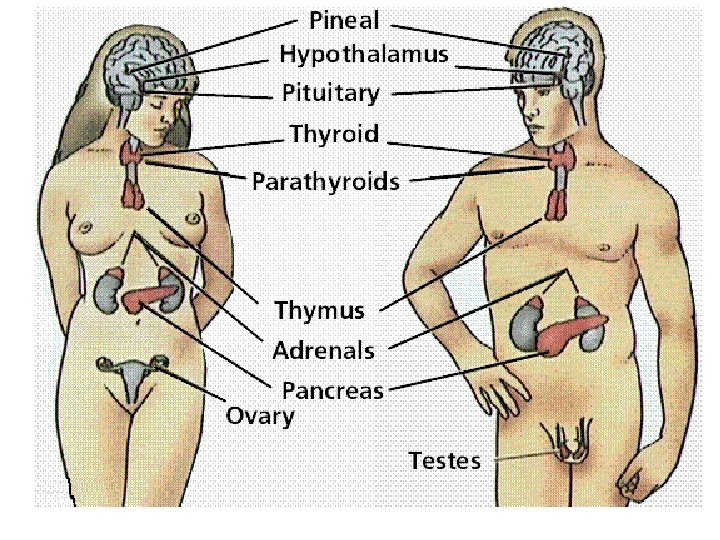
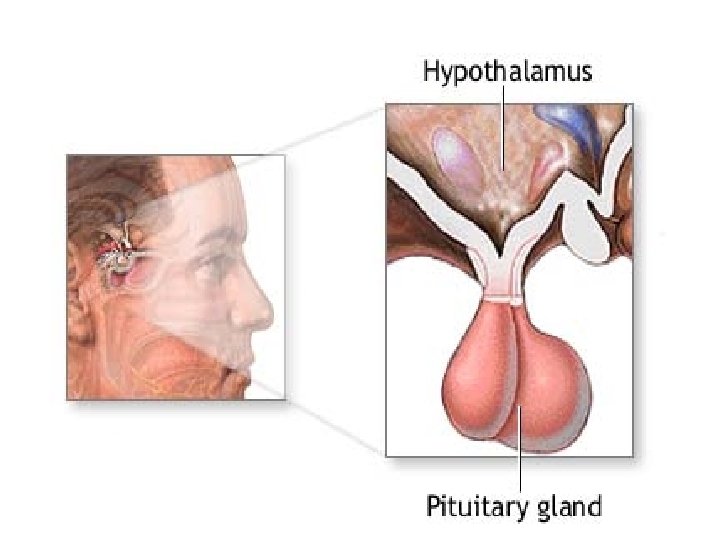
Major Endocrine Organs: • Pituitary- grape size, hangs from hypothalamus, surrounded by bone (sella turcica) • Two parts: – Anterior – Posterior
Anterior Pituitary secretes: • Growth hormone(GH)- effects growth of skeletal muscle and long bone • Prolactin- targets breast to produce milk after childbirth • Adrenocorticotropic(ACTH)- regulates the hormones in the adrenal cortex • Thyroid Stimulations Hormone(TSH)- influences growth and activity of the thyroid • Gonadotropic: regulates hormone activity of the gonads – FSH- function- follicle stimulating hormone- egg and sperm production – LH- triggers ovulation of an egg
Posterior Pituitary secretes: • Oxytocin- released during childbirth to stimulate contractions of the uterine muscle • Antidiuretic (ADH)- inhibits urine production by causing the kidneys to absorb water
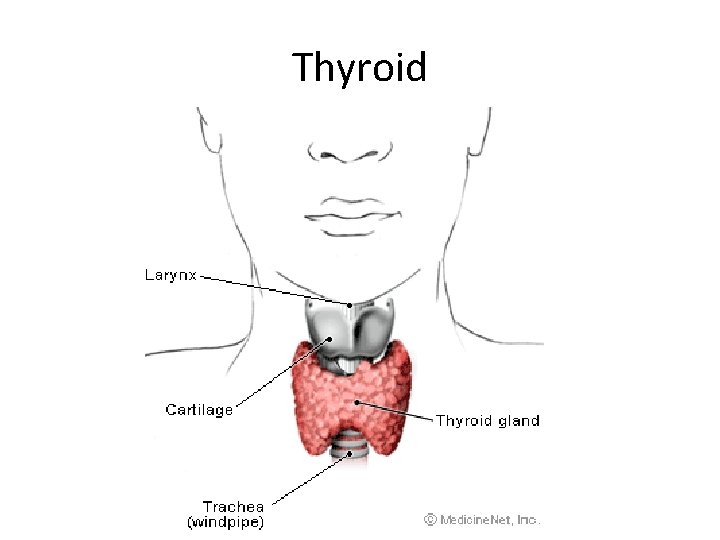
Thyroid
Thyroid- located on the trachea (windpipe) • Thyroid hormone (T 4, T 3)- controls the rate that glucose is burned or oxidized • Calcitonin- decreases blood calcium levels by causing calcium to be deposited in bone
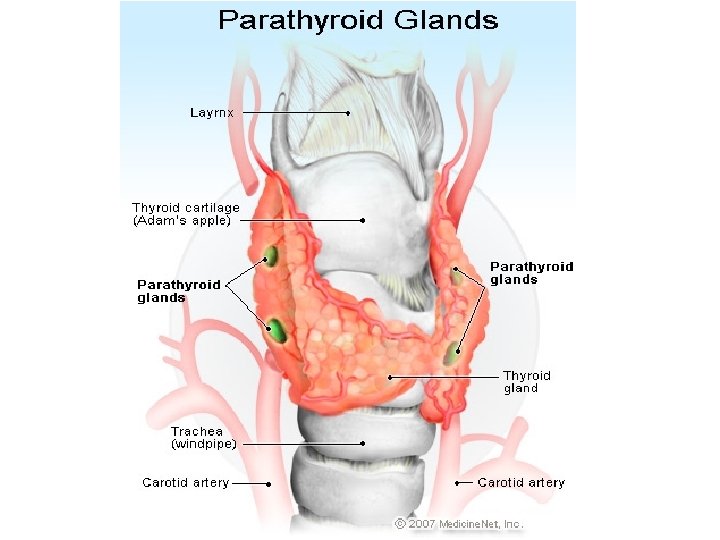
Parathyroid- tiny masses of tissue on the thyroid • Parathyroid hormone (PTH)- regulator of calcium in the blood-breaks down bone to release Ca
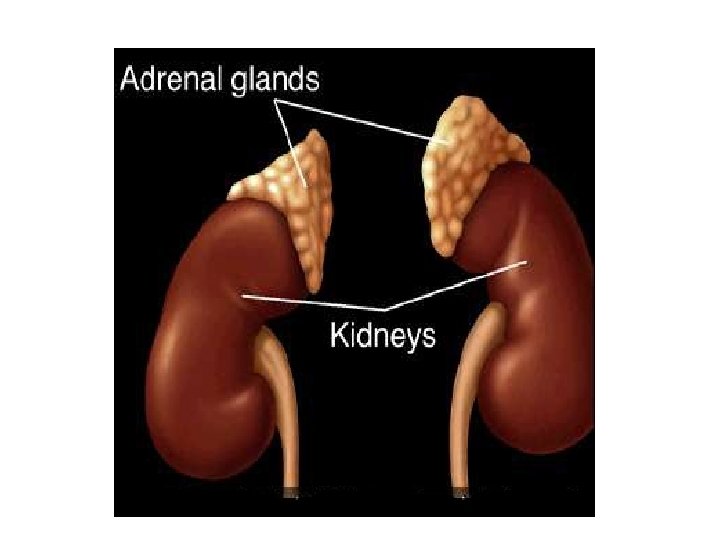
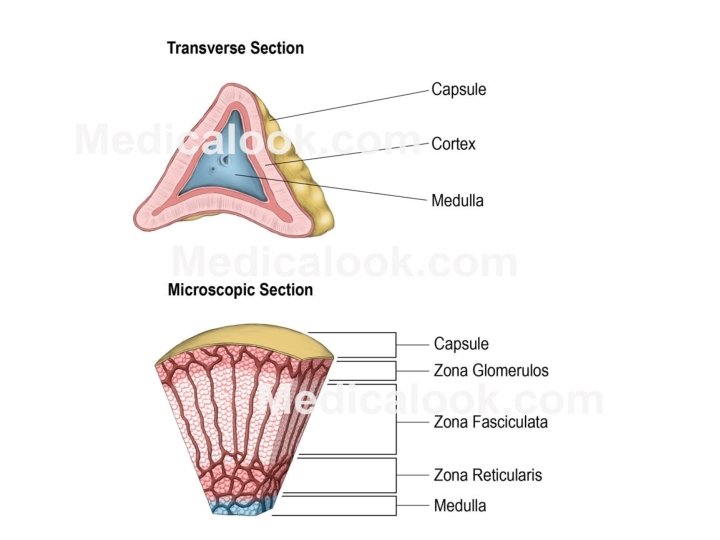
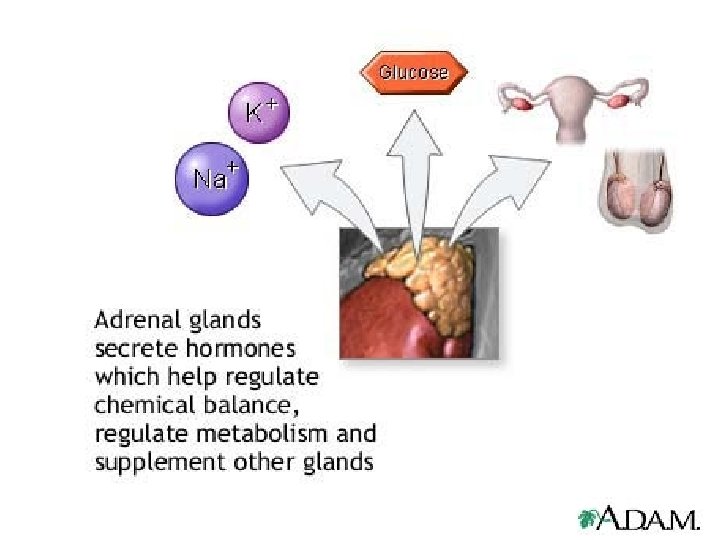
Adrenal- on top of the kidney: • Aldosterone- important in regulating concentrations of sodium and potassiumreabsorbs water, increases blood pressure • Cortisol- helps the body to resist stress Androgens and Estrogens- are collectively called sex hormones (gonadocorticoids)
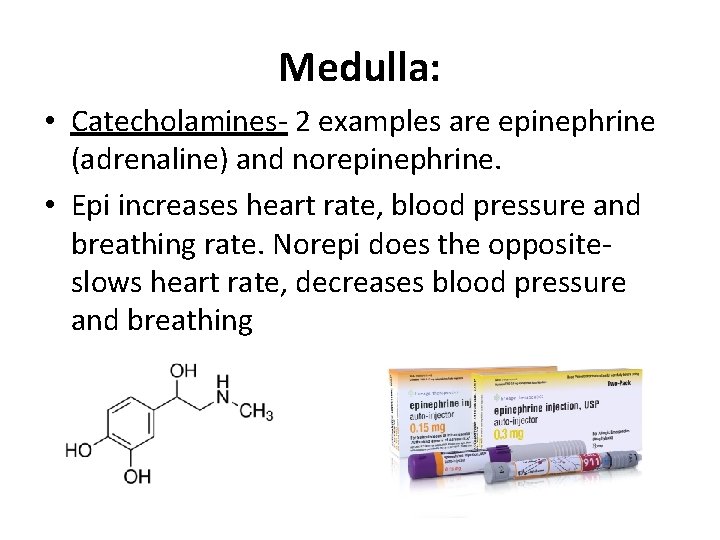
Medulla: • Catecholamines- 2 examples are epinephrine (adrenaline) and norepinephrine. • Epi increases heart rate, blood pressure and breathing rate. Norepi does the oppositeslows heart rate, decreases blood pressure and breathing
Pancreas- Behind the stomach in abdomen • Insulin- acts on all body cells to increase the ability to transport glucose across plasma membranes-reduces blood glucose levels • Glucagon- acts as an antagonist to insulinraises blood glucose levels by breaking down glycogen in liver
Gonads • Females: ovaries • Males: Testes
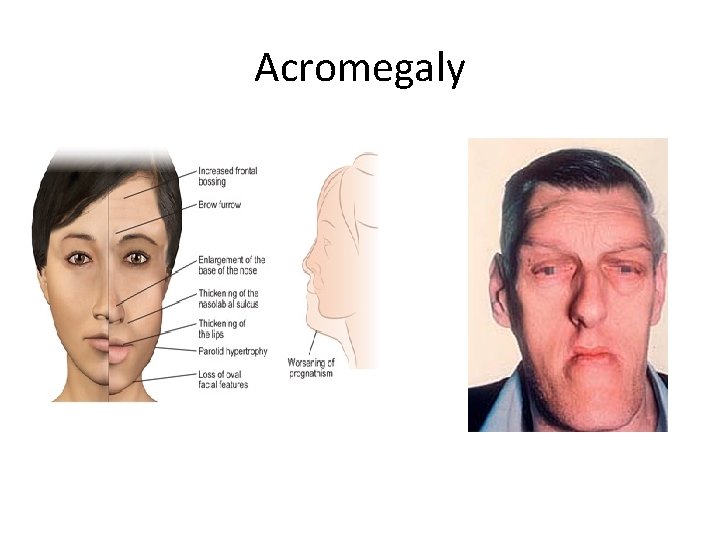
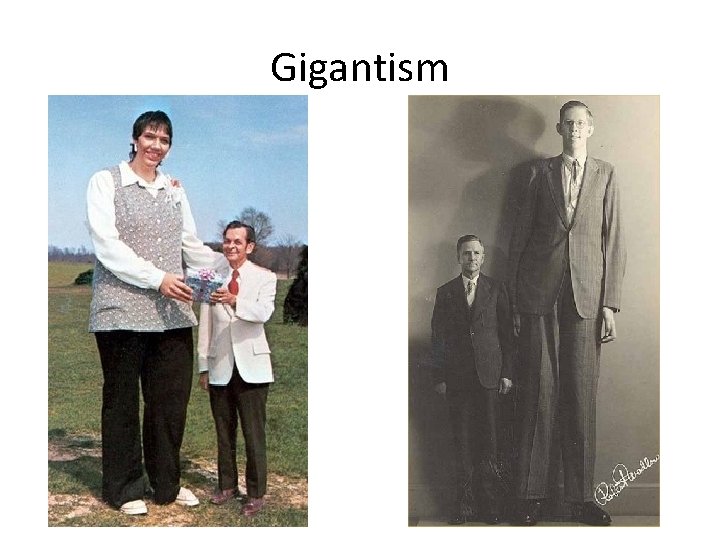
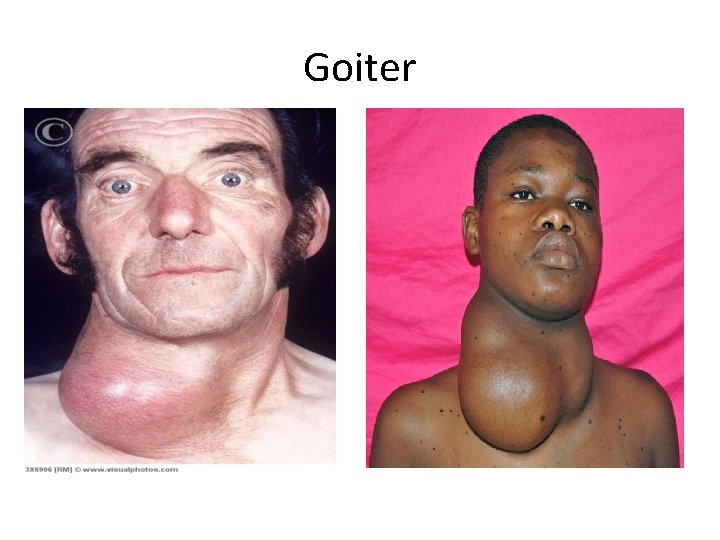
Homeostatic Imbalances • Goiter- enlargement of the thyroid gland that results when the diet is deficient in iodine • Diabetes mellitus- glucose level rise in the absence of insulin • Acromegaly- hypersecretion of GH (growth hormone) after long bones have finished growing. Leads to elongation of jaw, eyebrows, feet, and hands
Acromegaly
Gigantism
Goiter