
Endocrine system 9 main components 1 hypothalamus 2



- Slides: 20
Endocrine system
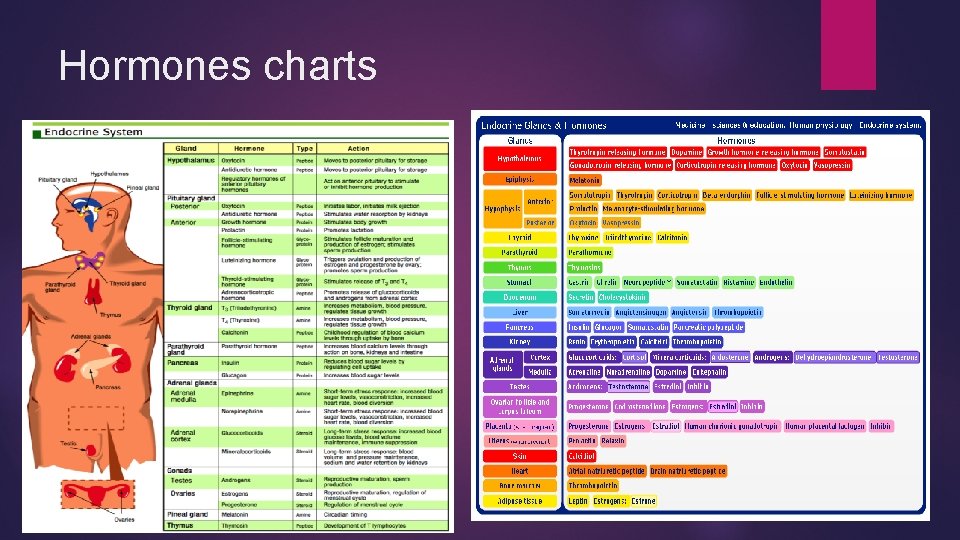
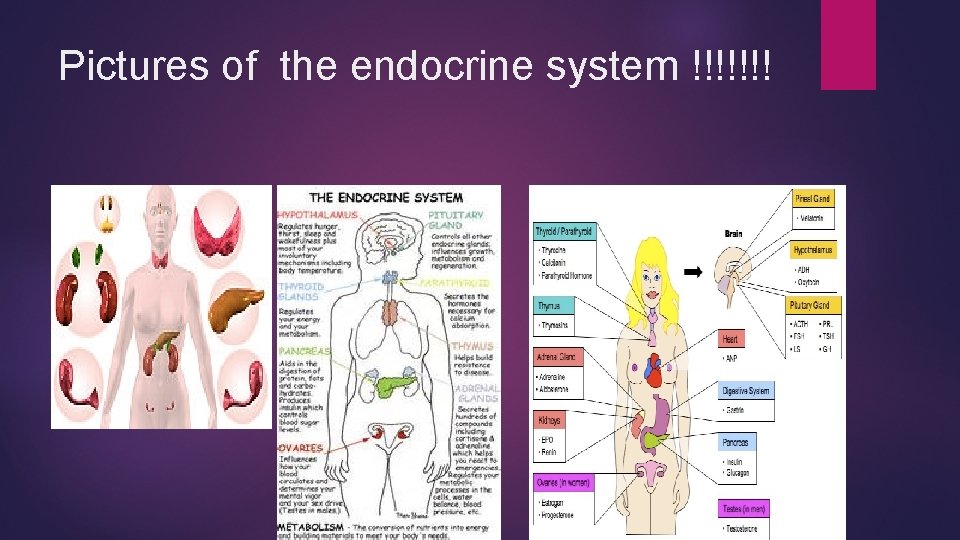
9 main components 1. hypothalamus 2. pituitary gland 3. thyroid gland 4. adrenal gland 5. pancreas 6. ovaries 7. testes 8. 9. Parathyroid gland pineal
Functions of the main components hypothalamus- ( located central part of the brain ) is the main link between the endocrine and nervous system testes and ovaries – is the reproductive system what cause you to make babies and have puberty but don’t use this system until 30 because kids are a lot of mon Pituitary gland –(The pituitary gland is located at the base of the brain just below the brain). The pituitary gland secretes hormones on the basis of the emotional and seasonal changes. Thyroid gland -The thyroid gland is situated in the front part of the lower neck that is shaped like a bow tie or butterfly. Thyroid produces thyroxine and triiodothyronine, that controls the rate at which the cells use up energy from food for production of energy.
More functions Parathyroid-(These are four tiny glands that are attached to the thyroid gland). They release the parathyroid hormone that helps in regulating the level of calcium in blood along with another hormone produced by thyroid known as calcitinin. Adrenal gland - On each of the two kidneys, there are two triangular adrenal glands situated. This hormone is also called the adrenaline, it increases the blood pressure and heart rate when the body is under stress. Pancreas - These glands are associated with the digestive system of the human body. They secrete digestive enzymes and two important hormones insulin and glucagon. (sugar)
1 more function Pineal- is located in the center of the brain. Melatonin is secreted by this gland that helps regulate the sleeping cycle of a person.
Hormones charts
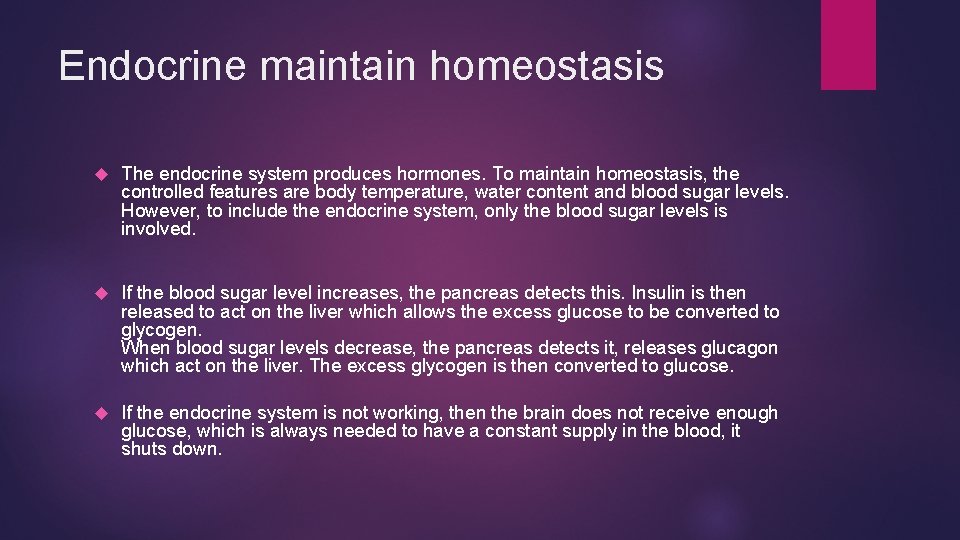
Endocrine maintain homeostasis The endocrine system produces hormones. To maintain homeostasis, the controlled features are body temperature, water content and blood sugar levels. However, to include the endocrine system, only the blood sugar levels is involved. If the blood sugar level increases, the pancreas detects this. Insulin is then released to act on the liver which allows the excess glucose to be converted to glycogen. When blood sugar levels decrease, the pancreas detects it, releases glucagon which act on the liver. The excess glycogen is then converted to glucose. If the endocrine system is not working, then the brain does not receive enough glucose, which is always needed to have a constant supply in the blood, it shuts down.
When the endocrine system is not maintaining homeostasis Homoeostasis is maintained through a series of control mechanisms and when is this for whatever reason does not kick in; the body will suffer various illnesses or disease. The homeostatic balance can becomes disrupted when cells malfunction and this can be caused by deficiency (cells not getting all they need) or toxicity (cells being poisoned by things they don’t need. When things like this happen there are options to either correct or worsen the problem, usually a lot are based on lifestyle choices and environmental exposure that influences our body’s ability to maintain cellular health. examples- fevers, colds and other sickness
Endocrine disorders Endocrine diseases and disorders can be grouped into several different areas. Some endocrinologists focus on one or two areas, such as diabetes, pediatric disorders, thyroid, or reproductive and menstrual disorders. Others work in all areas of endocrinology
what is Diabetes ? How do you treat it ? Patients with diabetes have too much sugar in their blood. Recent studies have found that controlling blood sugar helps prevent serious problems that can be caused by diabetes. These can include problems with the eyes, kidneys and nerves, which can lead to blindness, dialysis, or amputation. Treatment -Endocrinologists treat diabetes with diet and medications, including insulin. They also work closely with patients to control blood sugar and monitor them so they can prevent health problems effects the pancreas
Thyroid Patients with thyroid disorders often have problems with their energy levels. They may also have problems with muscle strength, emotions, weight control, and tolerating heat or cold. Endocrinologists treat patients with too much or too little thyroid hormone. treatment-They help patients reach a hormone balance by replacing or blocking thyroid hormone. Endocrinologists also receive special training to manage patients with thyroid growths or thyroid cancer, and enlarged thyroid glands. In fact, thyroid cancer is found in only 8% of men and 4% of women. This disorder effects the thyroid hormone
Osteomalacia Osteomalacia (rickets), which causes bones to soften, and osteoporosis are bone diseases that endocrinologists diagnose and treat. Osteoporosis is a disease that weakens your skeleton. Certain hormones act to protect bone tissue. When hormone levels are abnormal, bones can lose calcium and weaken. Menopause, loss of testicle function, and aging may put you at risk for bone fractures Endocrinologists treat other disorders that can affect bones Treatment- long term use of steroids like prednisone
Pituitary gland The pituitary is often called the master gland of the body because it controls other glands. The pituitary makes several important hormones. Over - or under - production of pituitary hormones can lead to infertility, menstrual disorders, growth disorders (acromegaly or short stature) and too much cortisol production (Cushing's syndrome). Endocrinologists control these conditions with medications and refer patients who need surgery. (Click here for more info)
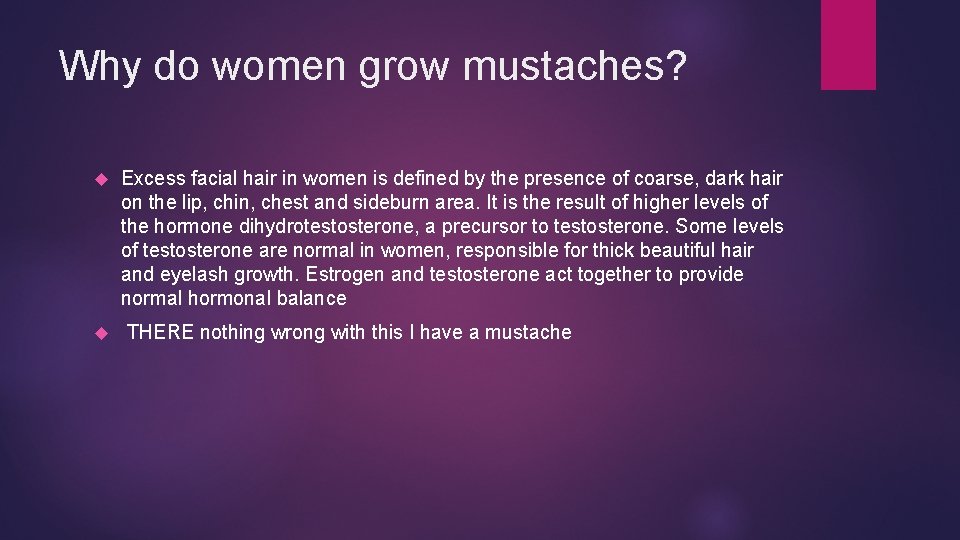
Why do women grow mustaches? Excess facial hair in women is defined by the presence of coarse, dark hair on the lip, chin, chest and sideburn area. It is the result of higher levels of the hormone dihydrotestosterone, a precursor to testosterone. Some levels of testosterone are normal in women, responsible for thick beautiful hair and eyelash growth. Estrogen and testosterone act together to provide normal hormonal balance THERE nothing wrong with this I have a mustache
Why do men grow BOOBES Some men get enlarged breast tissue. It’s called gynecomastia. Maybe you've heard people call the condition “man boobs. ” It’s usually not anything to worry about. Nor does it have to be permanent. Here’s what you should know.
Fun facts 1. The hypothalamus is the one that makes you feel hunger and thirst. It also helps in body temperature. 2. It aids the immune system by helping the body build resistance to disease. 3. The human behavior is also controlled by the endocrine system when it affects the nervous system. 4. We must be thankful to the pineal gland for our sweet sleep. It secretes melatonin which regulates our sleep. 5. There are 30 hormones in the human body
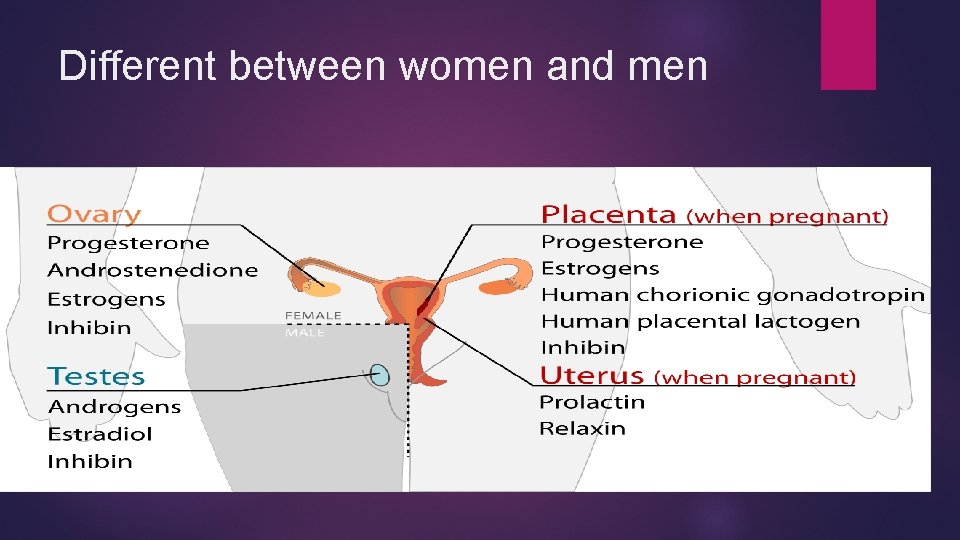
Different between women and men
Women & men women have ovaries men have testes men creates sperm women creates eggs women carries the baby and men just supports but women will always be stronger then men because they can carry a baby for 9 months and bleed for 7 days and still live …
Pictures of the endocrine system !!!!!!!
Made by- Nick-iah edmond