
Endocrine Physiology Mohammad Qussay AlSabbagh 2 nd year

Endocrine Physiology Mohammad Qussay Al-Sabbagh 2 nd year medical student- University of Jordan June, 2016
ﻛﻠﻴﺔ ﺍﻟﻄﺐ - ﻟﺠﺎﻥ ﺍﻟﺪﻓﻌﺎﺕ 2014 ﺩﻓﻌﺔ Endocrine Physiology Adrenal cortex- glucocorticoids

Introduction
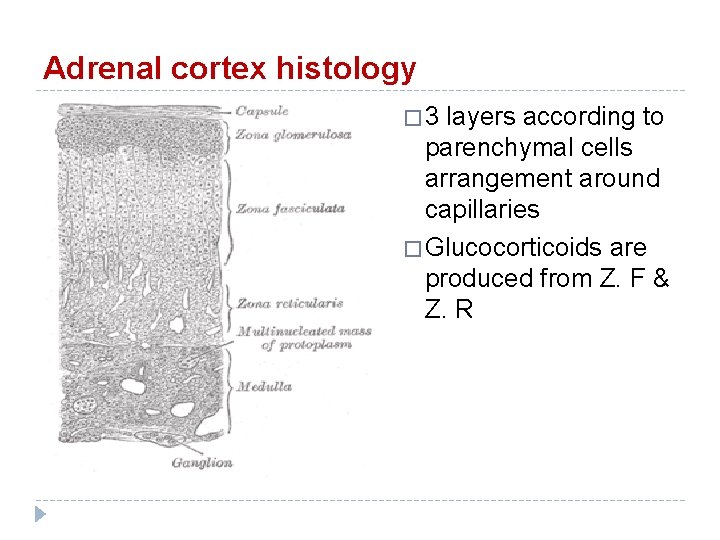
Adrenal cortex histology � 3 layers according to parenchymal cells arrangement around capillaries � Glucocorticoids are produced from Z. F & Z. R
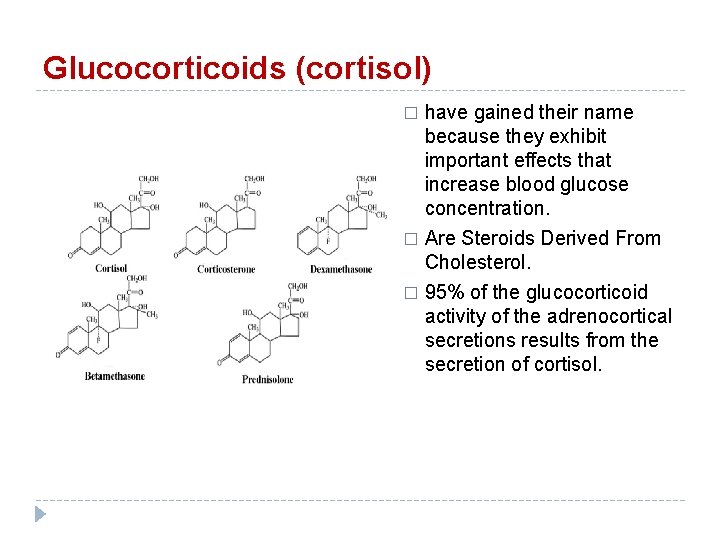
Glucocorticoids (cortisol) have gained their name because they exhibit important effects that increase blood glucose concentration. � Are Steroids Derived From Cholesterol. � 95% of the glucocorticoid activity of the adrenocortical secretions results from the secretion of cortisol. �
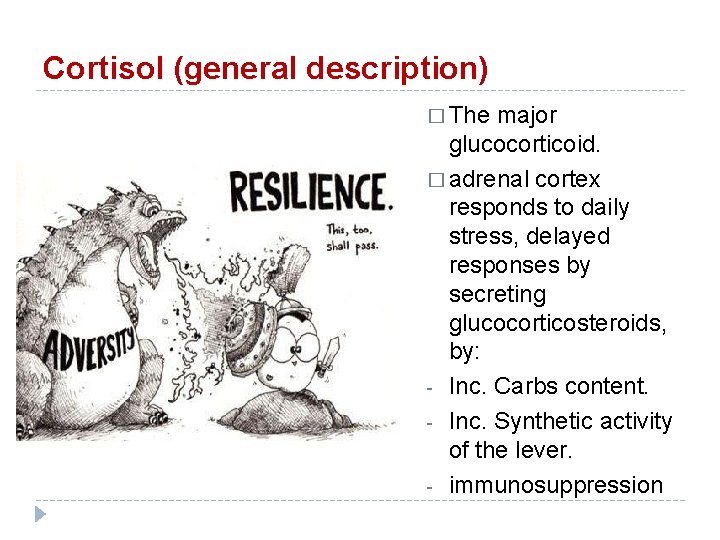
Cortisol (general description) � The major glucocorticoid. � adrenal cortex responds to daily stress, delayed responses by secreting glucocorticosteroids, by: - Inc. Carbs content. - Inc. Synthetic activity of the lever. - immunosuppression

Regulation of cortisol secretion
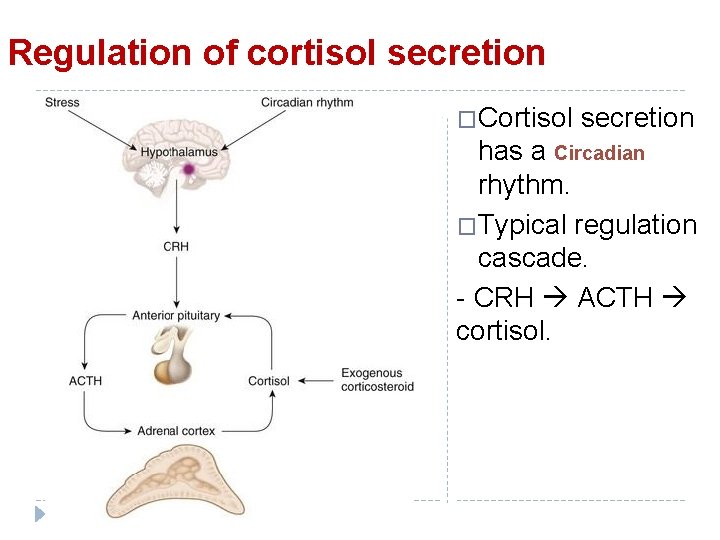
Regulation of cortisol secretion �Cortisol secretion has a Circadian rhythm. �Typical regulation cascade. - CRH ACTH cortisol.
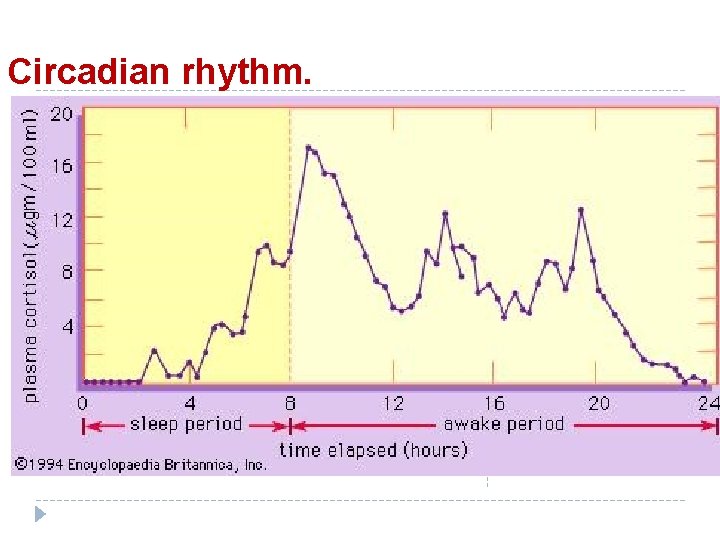
Circadian rhythm.
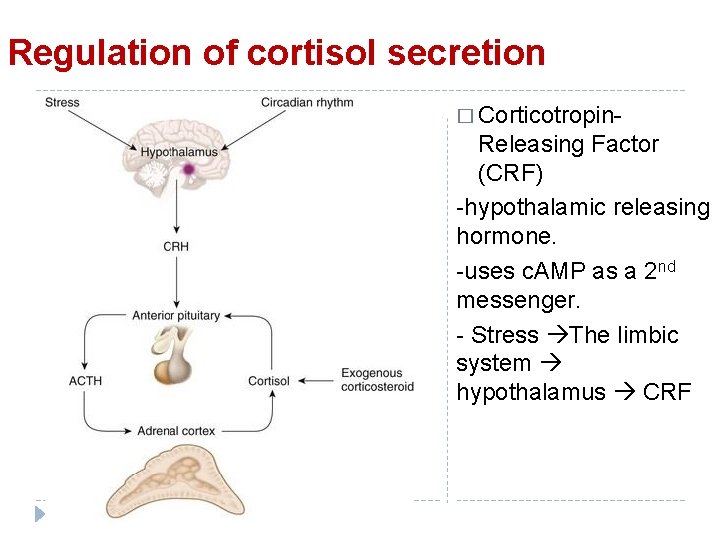
Regulation of cortisol secretion � Corticotropin- Releasing Factor (CRF) -hypothalamic releasing hormone. -uses c. AMP as a 2 nd messenger. - Stress The limbic system hypothalamus CRF
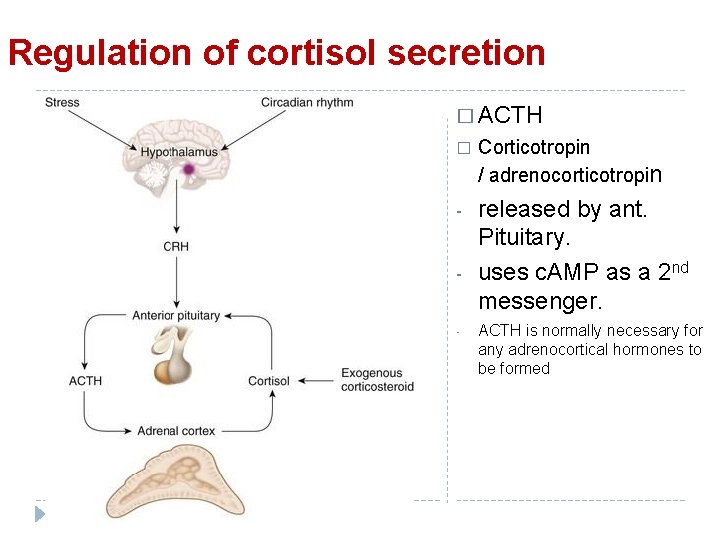
Regulation of cortisol secretion � ACTH � Corticotropin / adrenocorticotropin - released by ant. Pituitary. uses c. AMP as a 2 nd messenger. - ACTH is normally necessary for any adrenocortical hormones to be formed
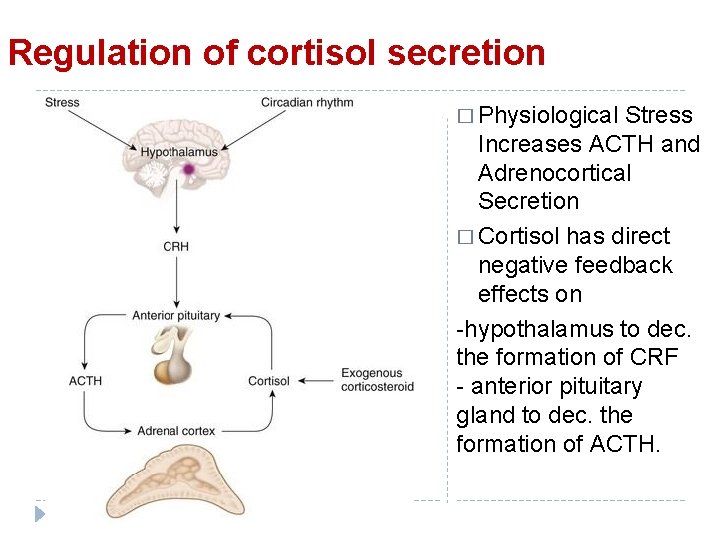
Regulation of cortisol secretion � Physiological Stress Increases ACTH and Adrenocortical Secretion � Cortisol has direct negative feedback effects on -hypothalamus to dec. the formation of CRF - anterior pituitary gland to dec. the formation of ACTH.

Cortisol functions
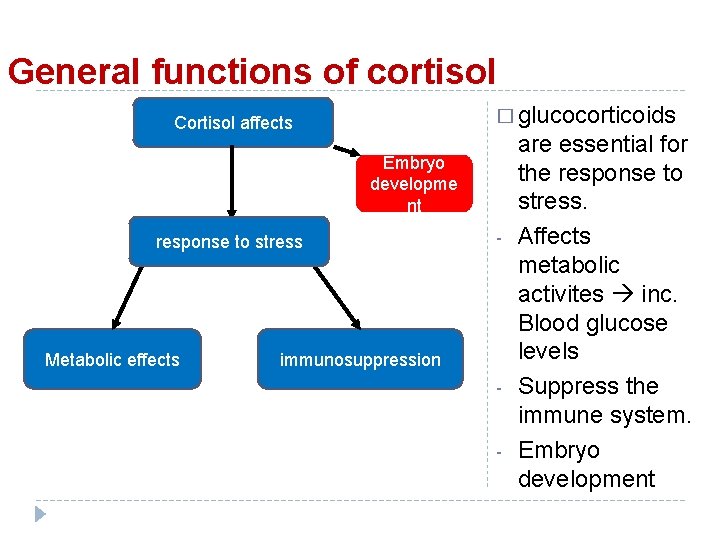
General functions of cortisol � glucocorticoids Cortisol affects Embryo developme nt response to stress Metabolic effects - immunosuppression - are essential for the response to stress. Affects metabolic activites inc. Blood glucose levels Suppress the immune system. Embryo development
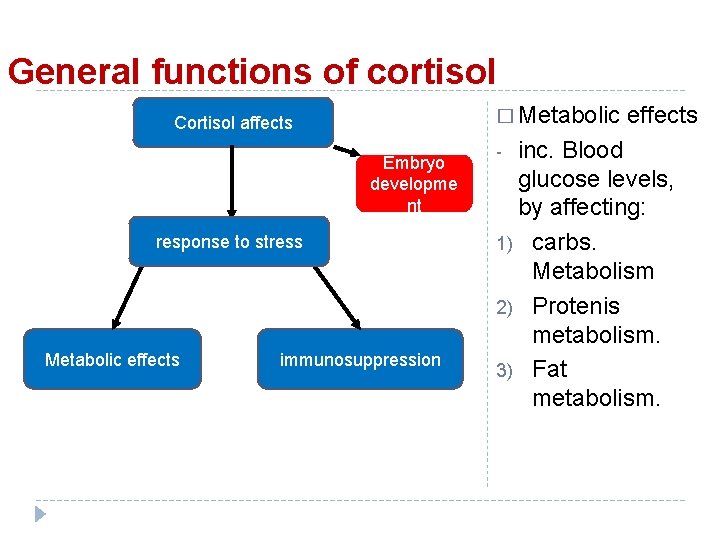
General functions of cortisol � Metabolic effects Cortisol affects Embryo developme nt response to stress Metabolic effects immunosuppression inc. Blood glucose levels, by affecting: 1) carbs. Metabolism 2) Protenis metabolism. 3) Fat metabolism. -
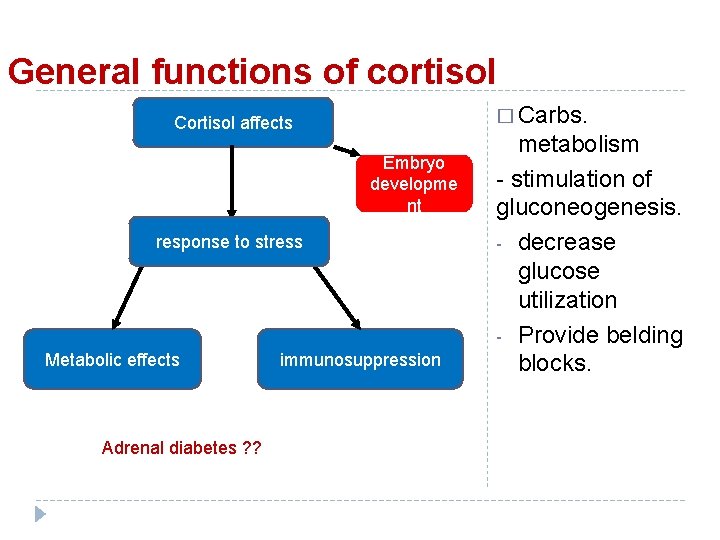
General functions of cortisol � Carbs. Cortisol affects Embryo developme nt response to stress Metabolic effects Adrenal diabetes ? ? immunosuppression metabolism - stimulation of gluconeogenesis. - decrease glucose utilization - Provide belding blocks.
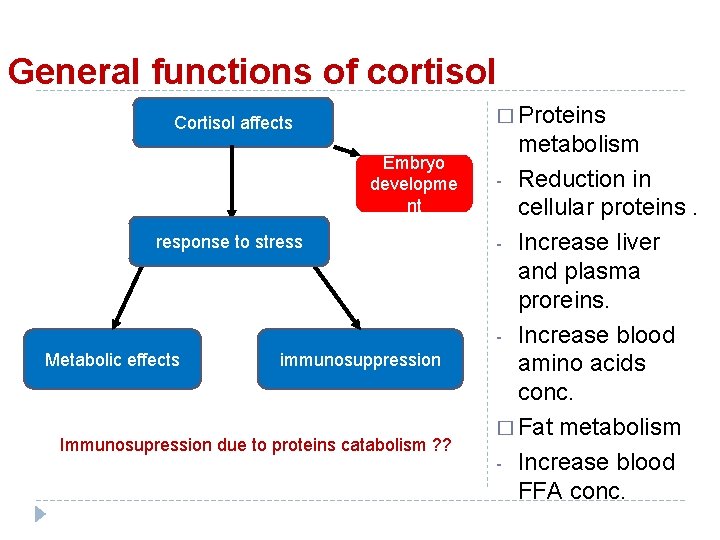
General functions of cortisol � Proteins Cortisol affects Embryo developme nt response to stress Metabolic effects immunosuppression Immunosupression due to proteins catabolism ? ? metabolism - Reduction in cellular proteins. - Increase liver and plasma proreins. - Increase blood amino acids conc. � Fat metabolism - Increase blood FFA conc.
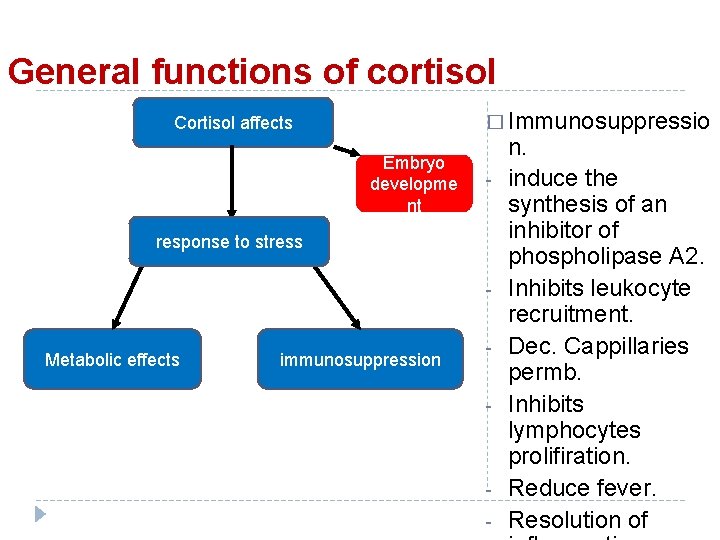
General functions of cortisol � Immunosuppressio Cortisol affects Embryo developme nt - response to stress Metabolic effects immunosuppression - - n. induce the synthesis of an inhibitor of phospholipase A 2. Inhibits leukocyte recruitment. Dec. Cappillaries permb. Inhibits lymphocytes prolifiration. Reduce fever. Resolution of
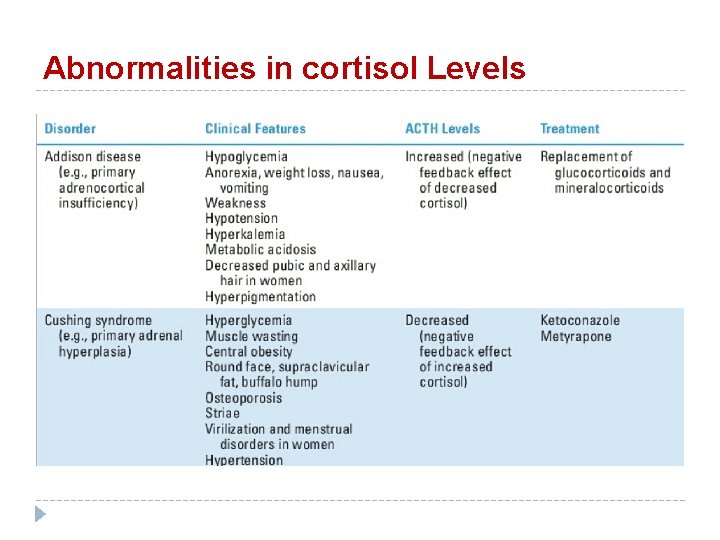
Abnormalities in cortisol Levels

- Slides: 20