
ENDOCRINE DISRUPTION BISC 312 Environmental Toxicology Brought to
ENDOCRINE DISRUPTION BISC 312 Environmental Toxicology Brought to you by: Source: www. foe. co. uk
OUTLINE v Introduction to the Endocrine System v Endocrine Disruption Mechanisms v Endocrine Disrupting Chemicals & their Sources v Examples in Wildlife and in Humans v Detection of EDCs (screening level, etc. & my research)
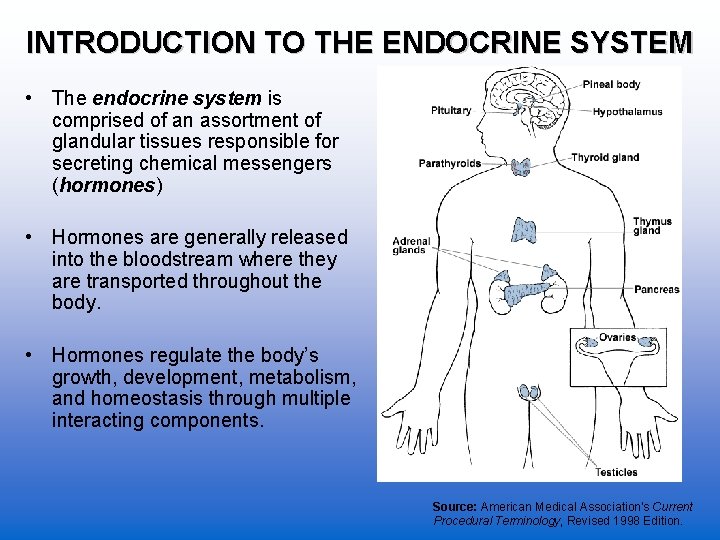
INTRODUCTION TO THE ENDOCRINE SYSTEM • The endocrine system is comprised of an assortment of glandular tissues responsible for secreting chemical messengers (hormones) • Hormones are generally released into the bloodstream where they are transported throughout the body. • Hormones regulate the body’s growth, development, metabolism, and homeostasis through multiple interacting components. Source: American Medical Association's Current Procedural Terminology, Revised 1998 Edition.
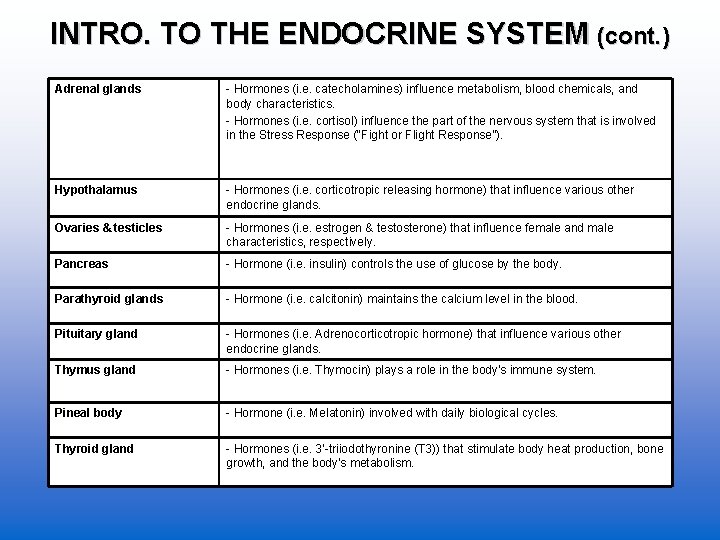
INTRO. TO THE ENDOCRINE SYSTEM (cont. ) Adrenal glands - Hormones (i. e. catecholamines) influence metabolism, blood chemicals, and body characteristics. - Hormones (i. e. cortisol) influence the part of the nervous system that is involved in the Stress Response (“Fight or Flight Response”). Hypothalamus - Hormones (i. e. corticotropic releasing hormone) that influence various other endocrine glands. Ovaries & testicles - Hormones (i. e. estrogen & testosterone) that influence female and male characteristics, respectively. Pancreas - Hormone (i. e. insulin) controls the use of glucose by the body. Parathyroid glands - Hormone (i. e. calcitonin) maintains the calcium level in the blood. Pituitary gland - Hormones (i. e. Adrenocorticotropic hormone) that influence various other endocrine glands. Thymus gland - Hormones (i. e. Thymocin) plays a role in the body's immune system. Pineal body - Hormone (i. e. Melatonin) involved with daily biological cycles. Thyroid gland - Hormones (i. e. 3’-triiodothyronine (T 3)) that stimulate body heat production, bone growth, and the body's metabolism.
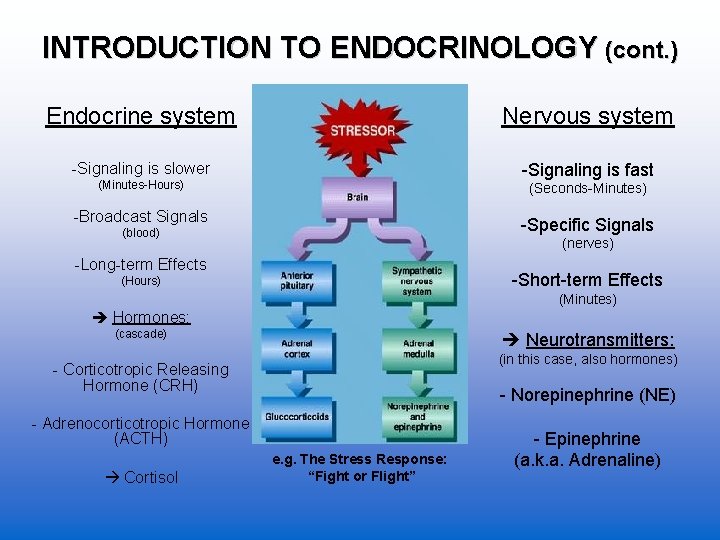
INTRODUCTION TO ENDOCRINOLOGY (cont. ) Endocrine system Nervous system -Signaling is slower -Signaling is fast (Minutes-Hours) (Seconds-Minutes) -Broadcast Signals -Specific Signals (blood) (nerves) -Long-term Effects -Short-term Effects (Hours) (Minutes) Hormones: (cascade) Neurotransmitters: (in this case, also hormones) - Corticotropic Releasing Hormone (CRH) - Norepinephrine (NE) - Adrenocorticotropic Hormone (ACTH) Cortisol e. g. The Stress Response: “Fight or Flight” - Epinephrine (a. k. a. Adrenaline)
INTRODUCTION TO THE ENDOCRINE SYSTEM Comparative Endocrinology • Evolution has provided us with a vast array of modifications to the physiological systems under endocrine system control. • A high degree of conservation of the basic design of the vertebrate endocrine system exists • Many structurally similar hormones have similar and different functions amongst various organisms • At the subcellular and molecular levels, the similarities are even greater. This is the level relevant to endocrine disruption mechanisms. Xenobiotics may interfere with the biosynthesis, distribution, metabolism and/or action of hormones
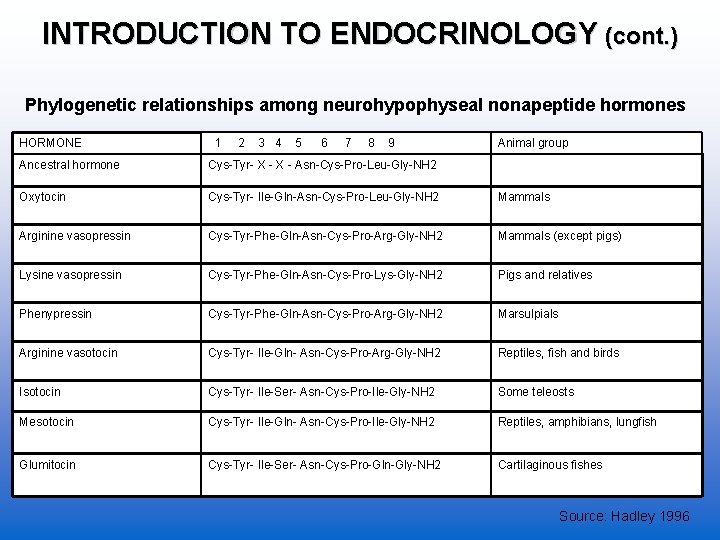
INTRODUCTION TO ENDOCRINOLOGY (cont. ) Phylogenetic relationships among neurohypophyseal nonapeptide hormones HORMONE 1 2 3 4 5 6 7 8 9 Animal group Ancestral hormone Cys-Tyr- X - Asn-Cys-Pro-Leu-Gly-NH 2 Oxytocin Cys-Tyr- Ile-Gln-Asn-Cys-Pro-Leu-Gly-NH 2 Mammals Arginine vasopressin Cys-Tyr-Phe-Gln-Asn-Cys-Pro-Arg-Gly-NH 2 Mammals (except pigs) Lysine vasopressin Cys-Tyr-Phe-Gln-Asn-Cys-Pro-Lys-Gly-NH 2 Pigs and relatives Phenypressin Cys-Tyr-Phe-Gln-Asn-Cys-Pro-Arg-Gly-NH 2 Marsulpials Arginine vasotocin Cys-Tyr- Ile-Gln- Asn-Cys-Pro-Arg-Gly-NH 2 Reptiles, fish and birds Isotocin Cys-Tyr- Ile-Ser- Asn-Cys-Pro-Ile-Gly-NH 2 Some teleosts Mesotocin Cys-Tyr- Ile-Gln- Asn-Cys-Pro-Ile-Gly-NH 2 Reptiles, amphibians, lungfish Glumitocin Cys-Tyr- Ile-Ser- Asn-Cys-Pro-Gln-Gly-NH 2 Cartilaginous fishes Source: Hadley 1996
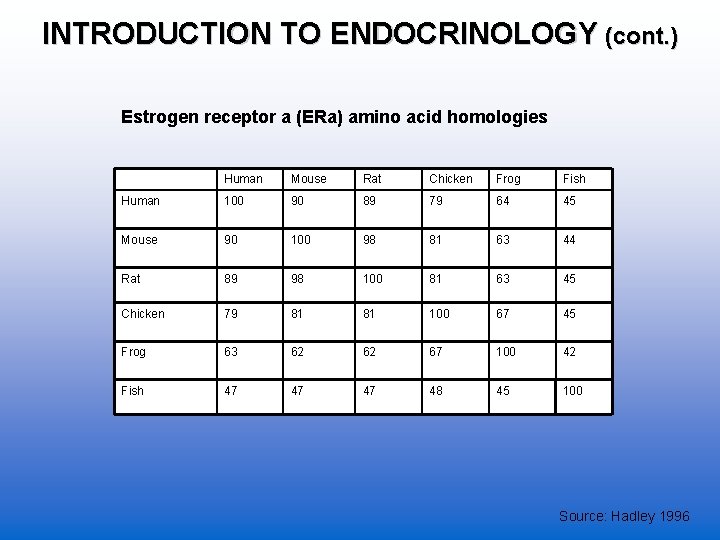
INTRODUCTION TO ENDOCRINOLOGY (cont. ) Estrogen receptor a (ERa) amino acid homologies Human Mouse Rat Chicken Frog Fish Human 100 90 89 79 64 45 Mouse 90 100 98 81 63 44 Rat 89 98 100 81 63 45 Chicken 79 81 81 100 67 45 Frog 63 62 62 67 100 42 Fish 47 47 47 48 45 100 Source: Hadley 1996
ENDOCRINE DISRUPTING MECHANISMS Hormone Biosynthesis: Alterations to the sequence of enzymatic reactions Hormone Distribution: Many hormones require plasma (carrier) proteins Hormone Metabolism: Only a small proportion of the circulating hormones make it to their receptors. Mostly hormone metabolites are excreted, since their metabolism is fast and efficient. Hormone Action: Receptor agonism and/or antagonism
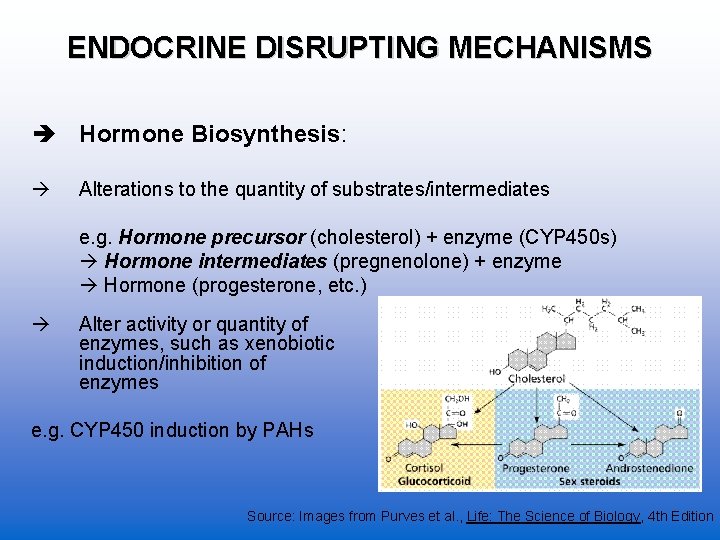
ENDOCRINE DISRUPTING MECHANISMS Hormone Biosynthesis: Alterations to the quantity of substrates/intermediates e. g. Hormone precursor (cholesterol) + enzyme (CYP 450 s) Hormone intermediates (pregnenolone) + enzyme Hormone (progesterone, etc. ) Alter activity or quantity of enzymes, such as xenobiotic induction/inhibition of enzymes e. g. CYP 450 induction by PAHs Source: Images from Purves et al. , Life: The Science of Biology, 4 th Edition

ENDOCRINE DISRUPTING MECHANISMS (cont. ) Hormone Distribution: Many lipid soluble hormones require plasma (carrier) proteins e. g. Xenobiotic effects on sex hormone binding globulins affinity Hormone Metabolism: Only a small proportion of the circulating hormones make it to their receptors. Mostly hormone metabolites are excreted, since their metabolism is fast and efficient. e. g. Induction of Enzymes (CYP 450) responsible forming and degrading hormones e. g. Inhibition of conjugation (UDPGA) reactions which aid in the elimination of hormones

ENDOCRINE DISRUPTING MECHANISMS (cont. ) Hormone Action: Receptor (membrane or cytoplasm) agonism and/or antagonism e. g. Binding of estrogenic (agonist) or anti-estrogenic (antagonist) chemicals to estrogen receptors. Source: Images from Purves et al. , Life: The Science of Biology, 4 th Edition

ENDOCRINE DISRUPTION TERMINOLOGY Endocrine Disrupting Chemical (EDC): “Any substance capable of altering the homeostatic status of hormones or their interactions with associated receptors” Note: Metabolites included
ENDOCRINE DISRUPTING CHEMICALS (EDC) Common characteristics of many of these chemicals are: Environmental persistence: Resistance to degradation and metabolism (the very feature that made these the “wonder chemicals” of the post-WWII industrial boom) High Kow (Lipophilic): May result in bioaccumulation (higher concentration in an organism) and possibly biomagnification (higher concentrations with each successive trophic level) Potent and Mixtures: EDCs may act in low levels and in mixtures making predictions difficult
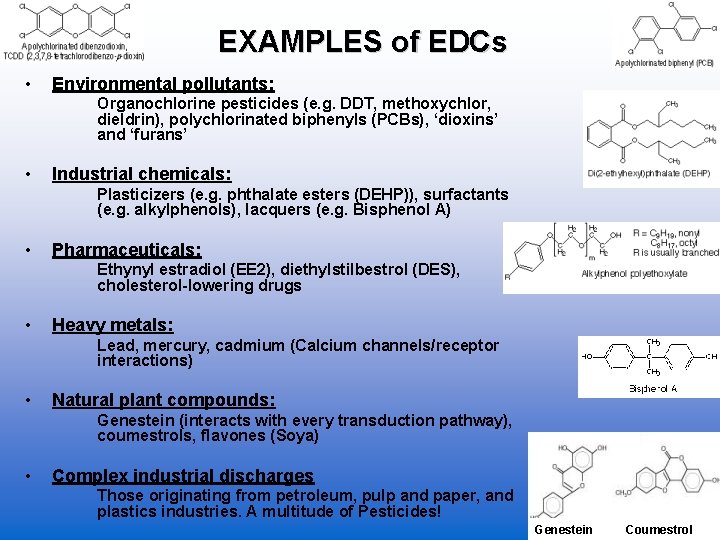
EXAMPLES of EDCs • Environmental pollutants: Organochlorine pesticides (e. g. DDT, methoxychlor, dieldrin), polychlorinated biphenyls (PCBs), ‘dioxins’ and ‘furans’ • Industrial chemicals: Plasticizers (e. g. phthalate esters (DEHP)), surfactants (e. g. alkylphenols), lacquers (e. g. Bisphenol A) • Pharmaceuticals: Ethynyl estradiol (EE 2), diethylstilbestrol (DES), cholesterol-lowering drugs • Heavy metals: Lead, mercury, cadmium (Calcium channels/receptor interactions) • Natural plant compounds: Genestein (interacts with every transduction pathway), coumestrols, flavones (Soya) • Complex industrial discharges Those originating from petroleum, pulp and paper, and plastics industries. A multitude of Pesticides! Genestein Coumestrol
MAIN SOURCES OF INFORMATION FOR EDCs 1. Observations in wildlife species Plentiful 2. Controlled experiments using laboratory animals and cell culture systems Plentiful 3. Epidemiological (human) studies Limited and controversial Most of the scientific focus has been on the ability of the EDCs to alter sex steroid hormones homeostasis, particularly estrogen; much less attention has been paid to other hormones. Brought to public attention by Rachel Carson (Silent Spring, 1962), and more recently Theo Colburn (Our Stolen Future, 1996)
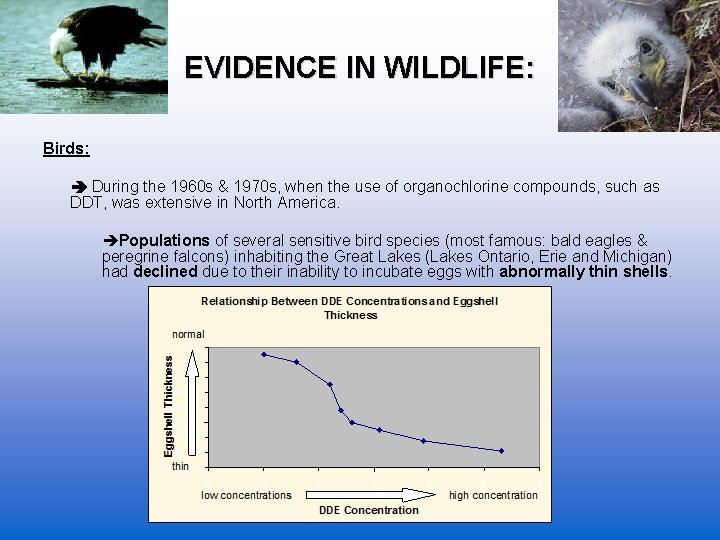
EVIDENCE IN WILDLIFE: Birds: During the 1960 s & 1970 s, when the use of organochlorine compounds, such as DDT, was extensive in North America. Populations of several sensitive bird species (most famous: bald eagles & peregrine falcons) inhabiting the Great Lakes (Lakes Ontario, Erie and Michigan) had declined due to their inability to incubate eggs with abnormally thin shells.
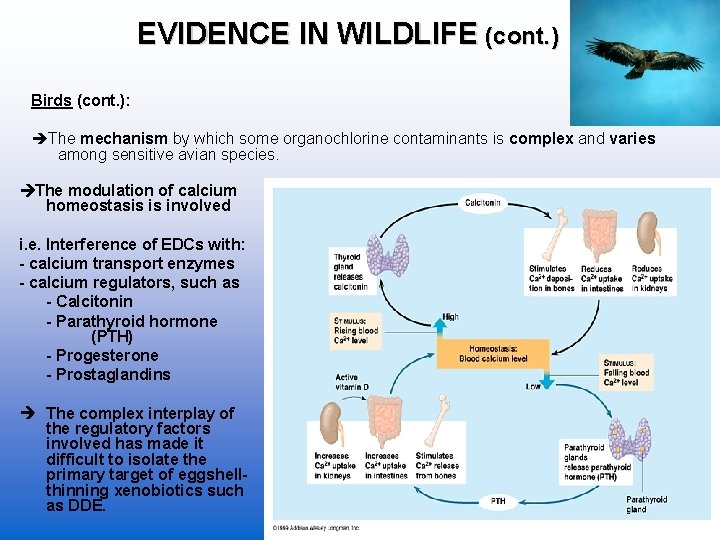
EVIDENCE IN WILDLIFE (cont. ) Birds (cont. ): The mechanism by which some organochlorine contaminants is complex and varies among sensitive avian species. The modulation of calcium homeostasis is involved i. e. Interference of EDCs with: - calcium transport enzymes - calcium regulators, such as - Calcitonin - Parathyroid hormone (PTH) - Progesterone - Prostaglandins The complex interplay of the regulatory factors involved has made it difficult to isolate the primary target of eggshellthinning xenobiotics such as DDE.
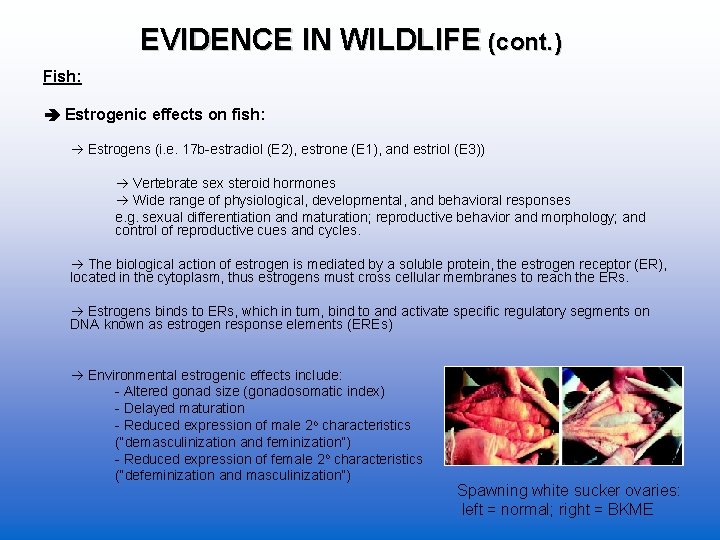
EVIDENCE IN WILDLIFE (cont. ) Fish: Estrogenic effects on fish: Estrogens (i. e. 17 b-estradiol (E 2), estrone (E 1), and estriol (E 3)) Vertebrate sex steroid hormones Wide range of physiological, developmental, and behavioral responses e. g. sexual differentiation and maturation; reproductive behavior and morphology; and control of reproductive cues and cycles. The biological action of estrogen is mediated by a soluble protein, the estrogen receptor (ER), located in the cytoplasm, thus estrogens must cross cellular membranes to reach the ERs. Estrogens binds to ERs, which in turn, bind to and activate specific regulatory segments on DNA known as estrogen response elements (EREs) Environmental estrogenic effects include: - Altered gonad size (gonadosomatic index) - Delayed maturation - Reduced expression of male 2 o characteristics (“demasculinization and feminization”) - Reduced expression of female 2 o characteristics (“defeminization and masculinization”) Spawning white sucker ovaries: left = normal; right = BKME
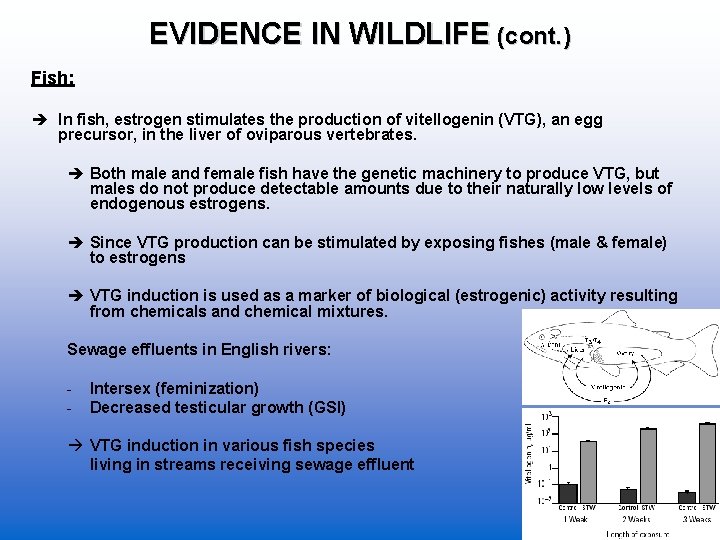
EVIDENCE IN WILDLIFE (cont. ) Fish: In fish, estrogen stimulates the production of vitellogenin (VTG), an egg precursor, in the liver of oviparous vertebrates. Both male and female fish have the genetic machinery to produce VTG, but males do not produce detectable amounts due to their naturally low levels of endogenous estrogens. Since VTG production can be stimulated by exposing fishes (male & female) to estrogens VTG induction is used as a marker of biological (estrogenic) activity resulting from chemicals and chemical mixtures. Sewage effluents in English rivers: - Intersex (feminization) Decreased testicular growth (GSI) VTG induction in various fish species living in streams receiving sewage effluent
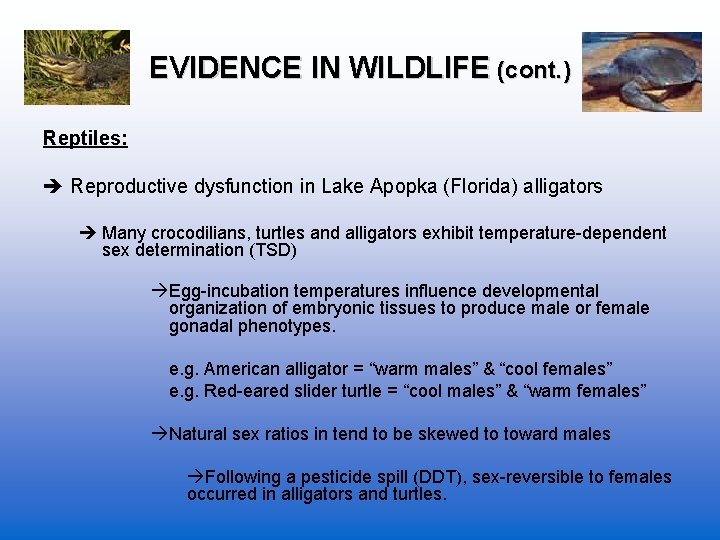
EVIDENCE IN WILDLIFE (cont. ) Reptiles: Reproductive dysfunction in Lake Apopka (Florida) alligators Many crocodilians, turtles and alligators exhibit temperature-dependent sex determination (TSD) Egg-incubation temperatures influence developmental organization of embryonic tissues to produce male or female gonadal phenotypes. e. g. American alligator = “warm males” & “cool females” e. g. Red-eared slider turtle = “cool males” & “warm females” Natural sex ratios in tend to be skewed to toward males Following a pesticide spill (DDT), sex-reversible to females occurred in alligators and turtles.
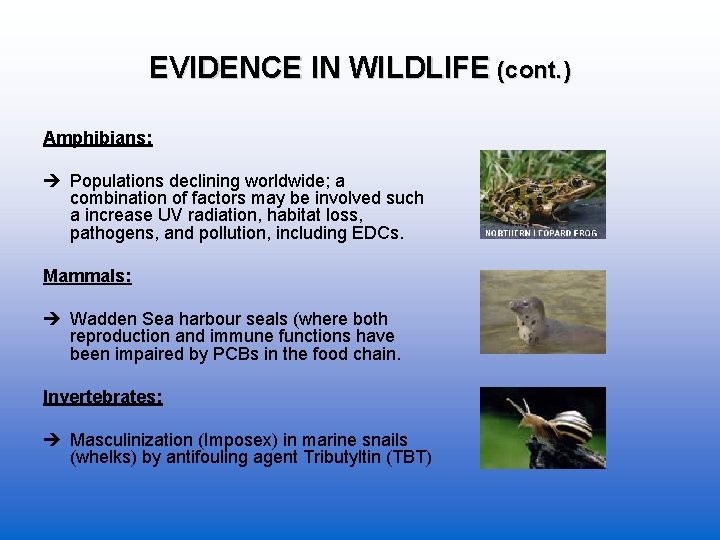
EVIDENCE IN WILDLIFE (cont. ) Amphibians: Populations declining worldwide; a combination of factors may be involved such a increase UV radiation, habitat loss, pathogens, and pollution, including EDCs. Mammals: Wadden Sea harbour seals (where both reproduction and immune functions have been impaired by PCBs in the food chain. Invertebrates: Masculinization (Imposex) in marine snails (whelks) by antifouling agent Tributyltin (TBT)
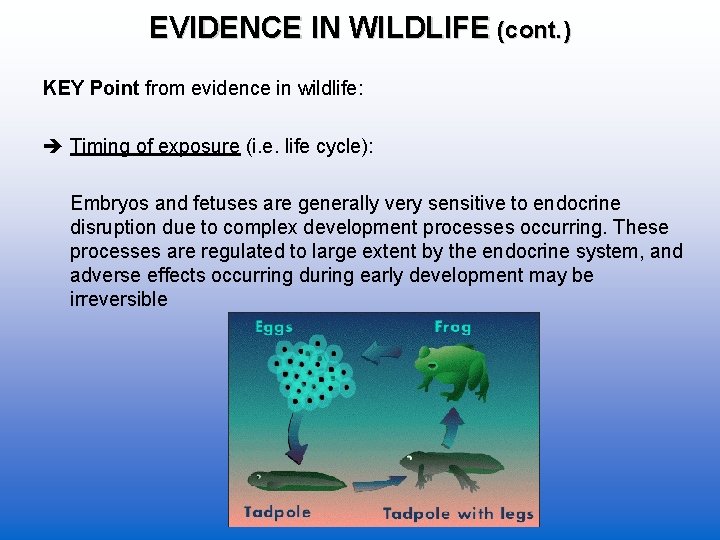
EVIDENCE IN WILDLIFE (cont. ) KEY Point from evidence in wildlife: Timing of exposure (i. e. life cycle): Embryos and fetuses are generally very sensitive to endocrine disruption due to complex development processes occurring. These processes are regulated to large extent by the endocrine system, and adverse effects occurring during early development may be irreversible
EVIDENCE IN HUMANS Mostly epidemiological studies (incidence, distribution, and control of disease in a population), but also from studies on animals or on cell cultures, including human cell culture. Worrying human trends exist! Increasing incidence of cancers in several endocrineresponsive tissues (breast, endometrial, ovarian, testicular, prostate) – Biased by better detection methods available today Decreased sperm counts: Studies in Europe & in the USA (declining ~3. 1 million/ml/yr)
EVIDENCE IN HUMANS Increased incidence of reproductive abnormalities: – Hypospadias (arrest in normal development of the urethral, foreskin, and ventral aspect of the penis) (1 in 250 newborns) – Cryptorchidism (testis in abnormal position – undescended testes) • Increases the risk of testicular tumours • Increased risk of infertility Developmental effects on fetus, infants and children – “Deficits” – e. g. IQ, behavior – VERY difficult to measure these effects
EVIDENCE IN HUMANS (cont. ) KEY Point: Limited evidence in humans: human health risk assessment is based largely on cancer and gross birth defects. It is NOT based on subtle functional deficits such as sublethal effects on reproduction, behavior, immune system, central nervous system. PROBLEMS: - Difficult to identify and measure these effects - Chronic (long-term) effects - Potentially trans-generational (passed on to offspring)

- Slides: 27