
ENDOCRINE CELL COMMUNICATION PART I INTRODUCTION TO COMMUNICATION
- Slides: 17
ENDOCRINE & CELL COMMUNICATION PART I: INTRODUCTION TO COMMUNICATION
WHY DO CELLS NEED TO COMMUNICATE? • Here a few reasons: • • • Coordinate activities in multicellular organisms Hormone actions Cell recognition To find mates (yeast cells) Turn pathways on/off apoptosis 2
EVOLUTIONARY TIES OF CELL COMMUNICATION • Cell-to-cell communication is everywhere in biological systems from Archaea and bacteria to multicellular organisms. • The basic chemical processes of communication are shared across evolutionary lines of descent. • Signal transduction is an excellent example 3
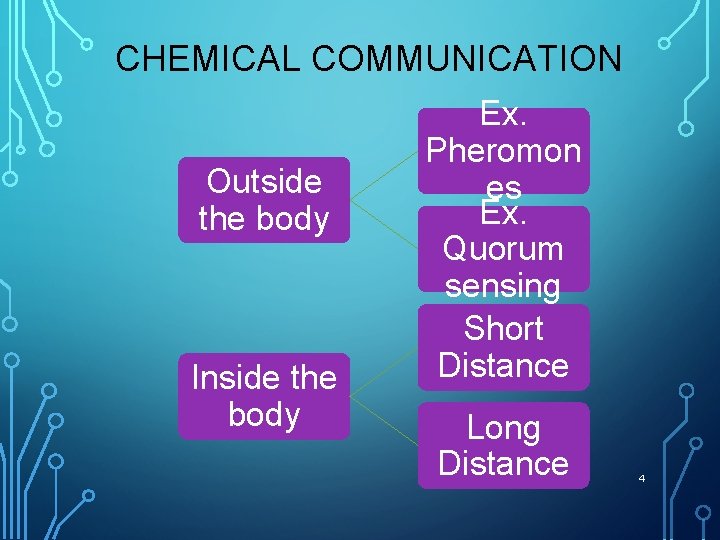
CHEMICAL COMMUNICATION Outside the body Inside the body Ex. Pheromon es Ex. Quorum sensing Short Distance Long Distance 4
PHEROMONES • Members of the same animal species sometimes communicate with pheromones, chemicals that are released into the environment. • Pheromones serve many functions, including marking trails leading to food, defining territories, warning of predators, and attracting potential mates. • Here’s an example of a termite following a “manmade” trail: http: //edutube. org/en/video/termites -and-pheromones-ink-trails 5
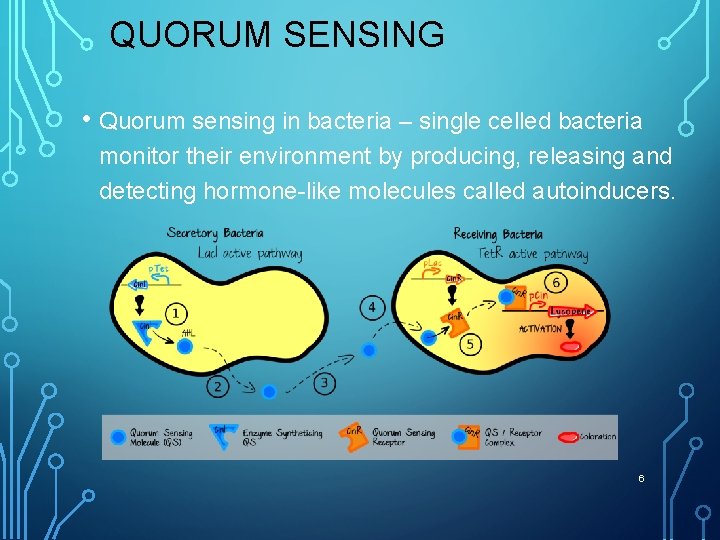
QUORUM SENSING • Quorum sensing in bacteria – single celled bacteria monitor their environment by producing, releasing and detecting hormone-like molecules called autoinducers. 6
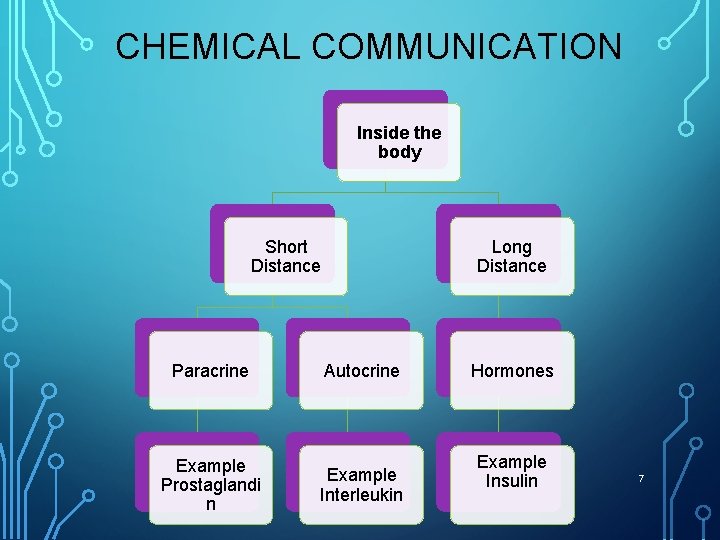
CHEMICAL COMMUNICATION Inside the body Short Distance Paracrine Example Prostaglandi n Long Distance Autocrine Example Interleukin Hormones Example Insulin 7
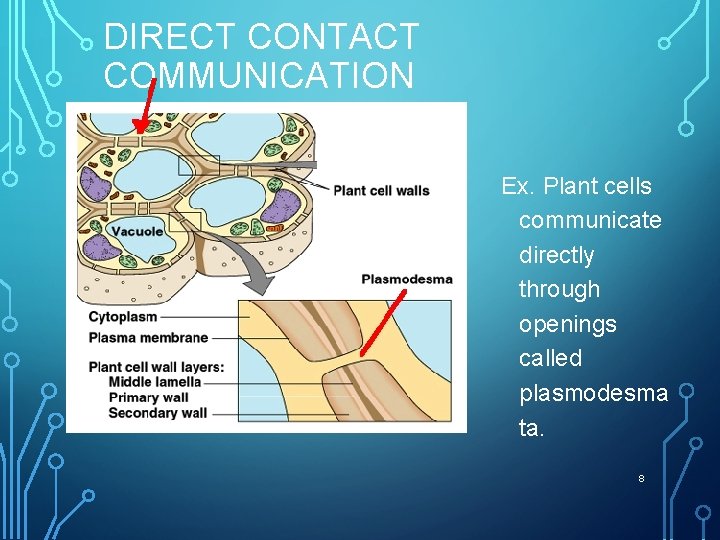
DIRECT CONTACT COMMUNICATION Ex. Plant cells communicate directly through openings called plasmodesma ta. 8
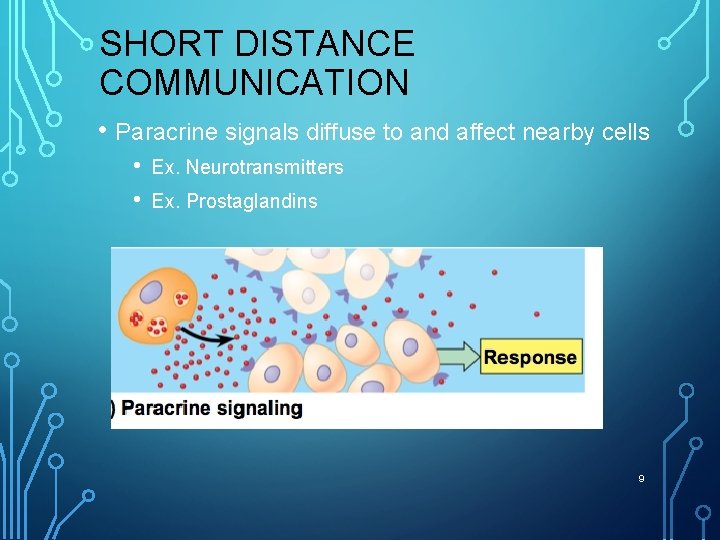
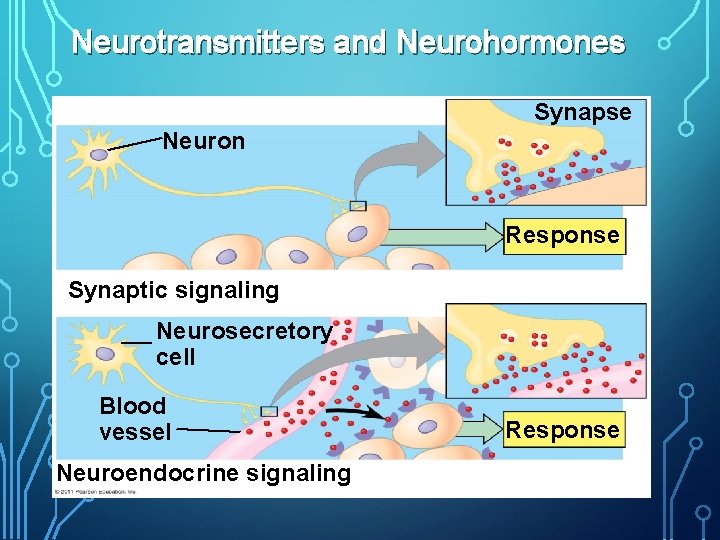
SHORT DISTANCE COMMUNICATION • Paracrine signals diffuse to and affect nearby cells • • Ex. Neurotransmitters Ex. Prostaglandins 9
Neurotransmitters and Neurohormones Synapse Neuron Response Synaptic signaling Neurosecretory cell Blood vessel Neuroendocrine signaling Response
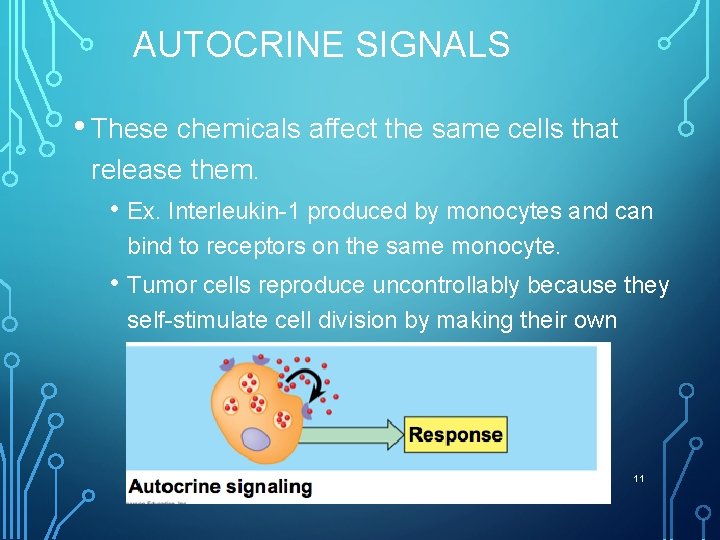
AUTOCRINE SIGNALS • These chemicals affect the same cells that release them. • Ex. Interleukin-1 produced by monocytes and can bind to receptors on the same monocyte. • Tumor cells reproduce uncontrollably because they self-stimulate cell division by making their own division signals. 11
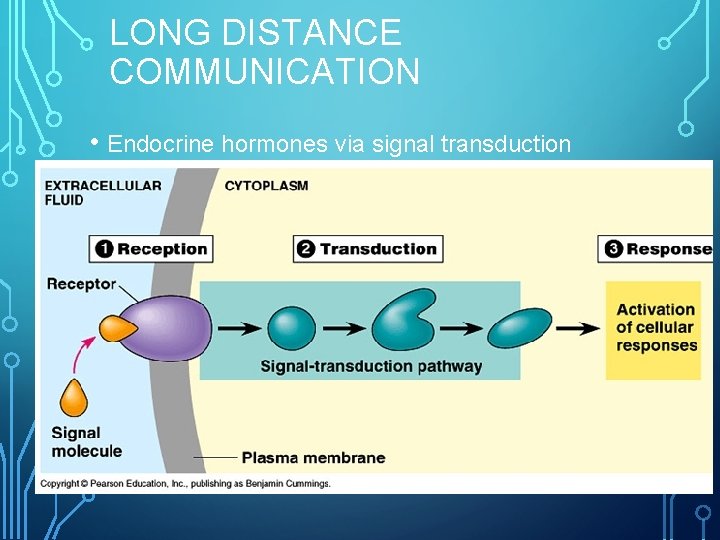
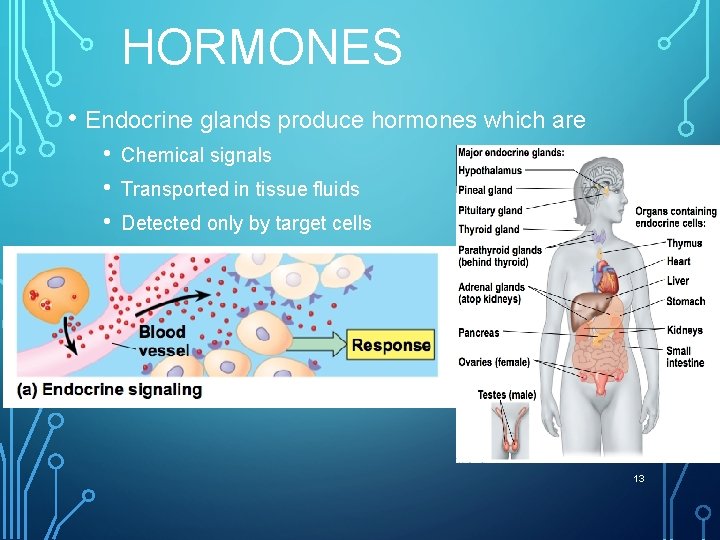
LONG DISTANCE COMMUNICATION • Endocrine hormones via signal transduction pathway: 12
HORMONES • Endocrine glands produce hormones which are • • • Chemical signals Transported in tissue fluids Detected only by target cells 13
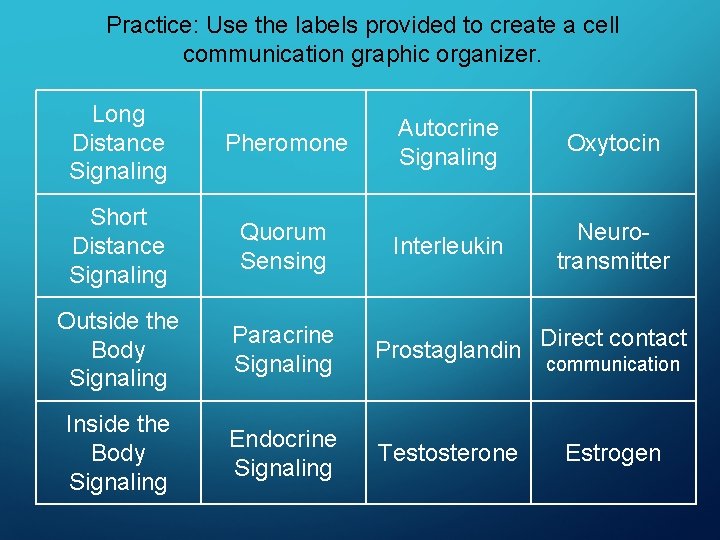
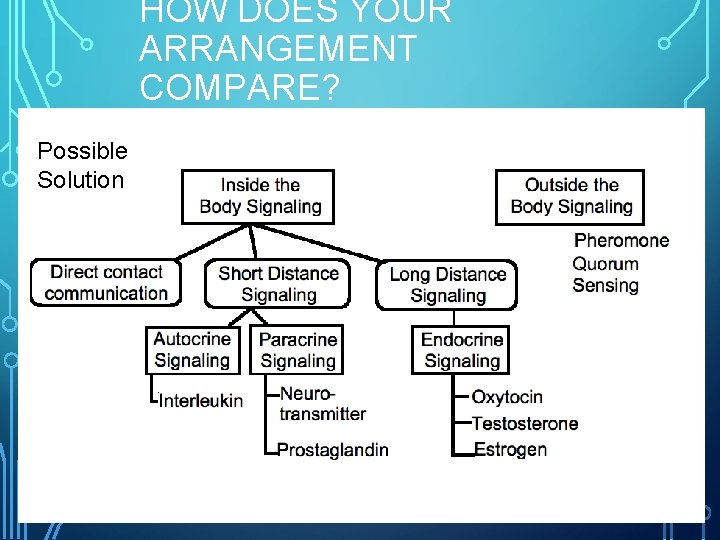
Practice: Use the labels provided to create a cell communication graphic organizer. Long Distance Signaling Pheromone Short Distance Signaling Quorum Sensing Outside the Body Signaling Paracrine Signaling Prostaglandin Direct contact Inside the Body Signaling Endocrine Signaling Testosterone Autocrine Signaling Oxytocin Interleukin Neurotransmitter communication Estrogen
HOW DOES YOUR ARRANGEMENT COMPARE? Possible Solution 15
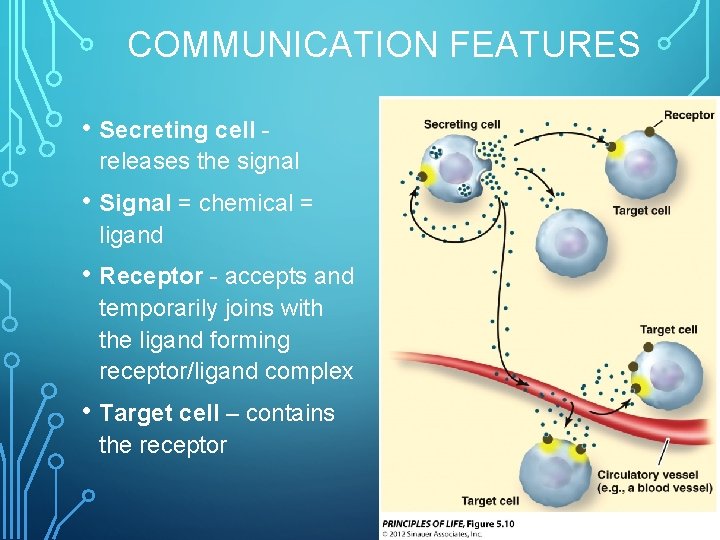
COMMUNICATION FEATURES • Secreting cell releases the signal • Signal = chemical = ligand • Receptor - accepts and temporarily joins with the ligand forming receptor/ligand complex • Target cell – contains the receptor 16
APPLY THE FEATURES • Insulin is secreted by beta cells of the pancreas. Once secreted, insulin travels around the body. When insulin docks with an integral protein on the membrane of a muscle cell, glucose can enter the cell. • What is the secreting cell, the target cell, ligand, and the receptor? 17