
Endo Part 3 Can Males Lactate Yes In
- Slides: 39
Endo Part 3
Can Males Lactate? • Yes, – In humans, some men can breastfeed – In rats, some males breastfeed their young. – Receptors for both are similar – Hormones are similar in size and chemical makeup – Have similar functions – ______ can induce both to be secreted
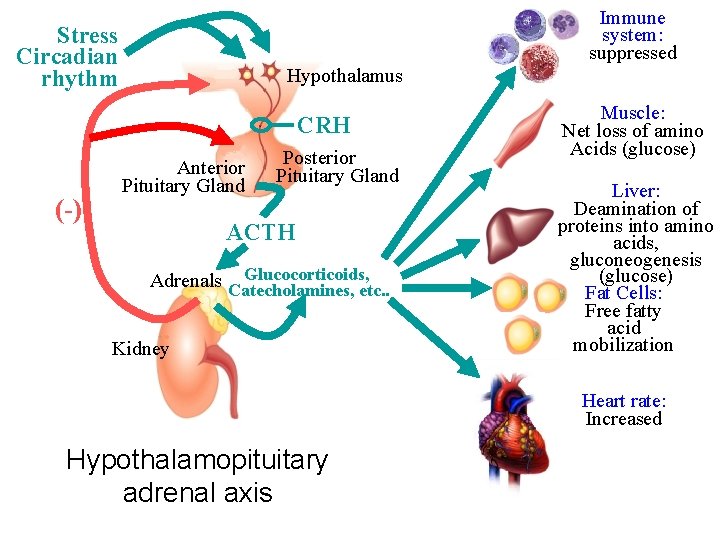
Feedback Control of the Anterior Pituitary • Anterior pituitary and hypothalamic secretions are controlled by the _______organs they regulate. – Secretions are controlled by ______ feedback inhibition by target gland hormones. • _______ feedback at 2 levels: – The target gland hormone can act on the hypothalamus and inhibit secretion of ______ hormones. – The target gland hormone can act on the anterior pituitary and inhibit _____ to the releasing hormone.
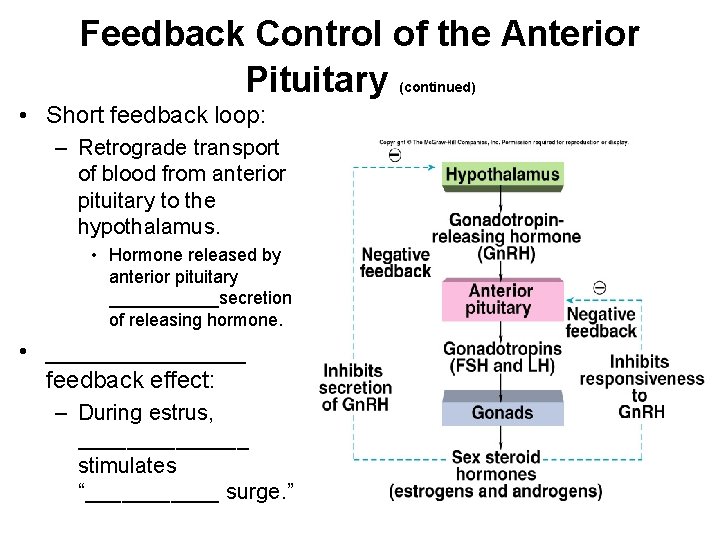
Feedback Control of the Anterior Pituitary (continued) • Short feedback loop: – Retrograde transport of blood from anterior pituitary to the hypothalamus. • Hormone released by anterior pituitary ______secretion of releasing hormone. • ________ feedback effect: – During estrus, _______ stimulates “______ surge. ”
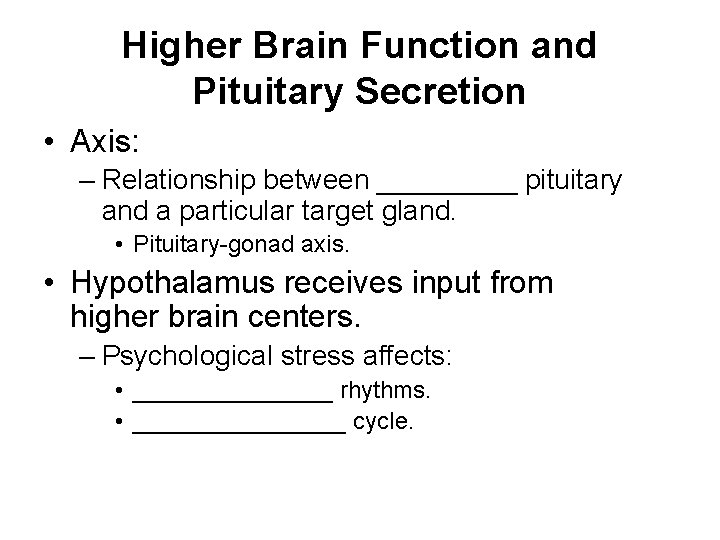
Higher Brain Function and Pituitary Secretion • Axis: – Relationship between _____ pituitary and a particular target gland. • Pituitary-gonad axis. • Hypothalamus receives input from higher brain centers. – Psychological stress affects: • ________ rhythms. • ________ cycle.
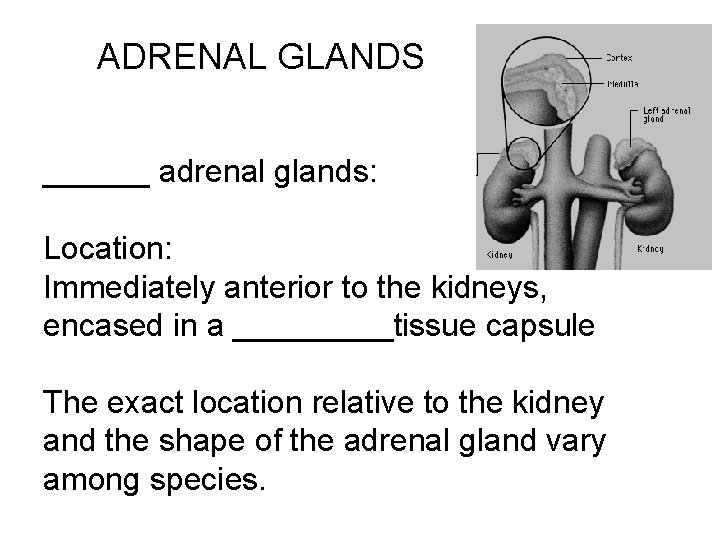
ADRENAL GLANDS ______ adrenal glands: Location: Immediately anterior to the kidneys, encased in a _____tissue capsule The exact location relative to the kidney and the shape of the adrenal gland vary among species.
Adrenal Glands • History – – Brown-Sequard (1856) adrenalectomy – fatal to dog – Cannon (1929) – fight or flight – adrenomedulla • Paired organs that cap the kidneys. • Each gland consists of an outer _______ and inner ________. • In ______ – no distinct cortex or medulla
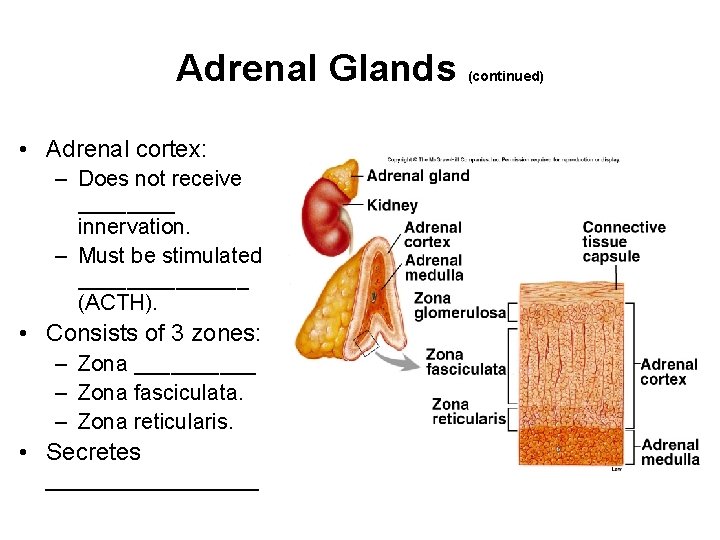
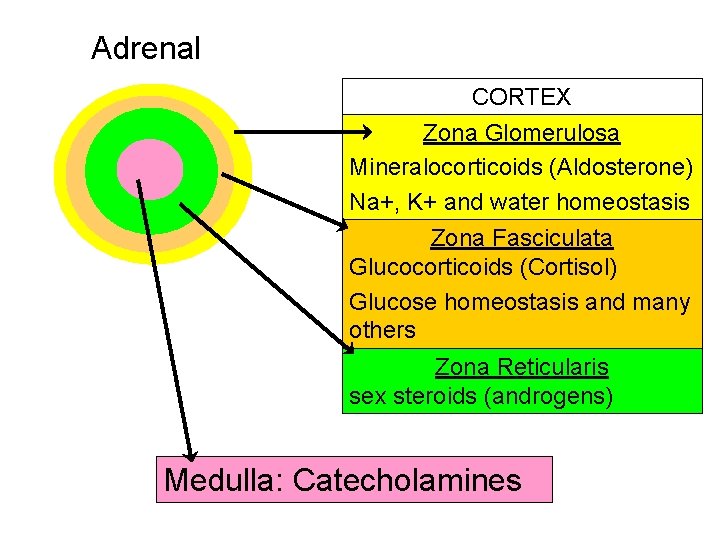
Adrenal Glands • Adrenal cortex: – Does not receive ____ innervation. – Must be stimulated _______ (ACTH). • Consists of 3 zones: – Zona _____ – Zona fasciculata. – Zona reticularis. • Secretes ________ (continued)
Immune system: suppressed Stress Circadian rhythm Hypothalamus CRH (-) Anterior Pituitary Gland Posterior Pituitary Gland ACTH Glucocorticoids, Adrenals Catecholamines, etc. . Kidney Muscle: Net loss of amino Acids (glucose) Liver: Deamination of proteins into amino acids, gluconeogenesis (glucose) Fat Cells: Free fatty acid mobilization Heart rate: Increased Hypothalamopituitary adrenal axis
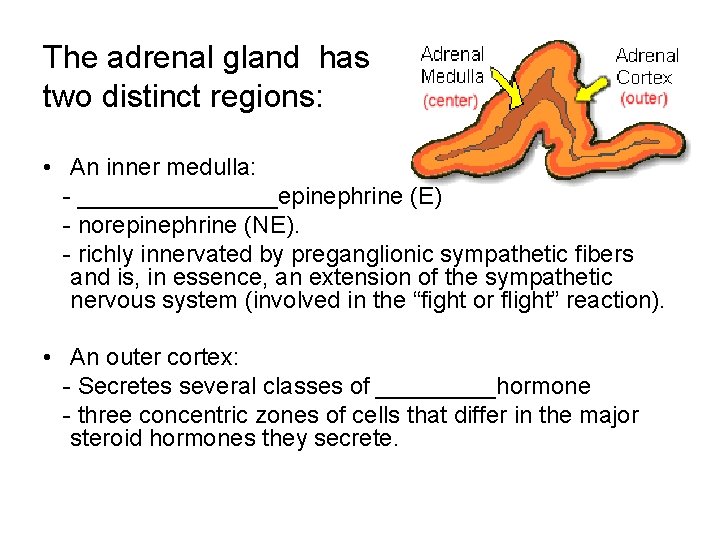
The adrenal gland has two distinct regions: • An inner medulla: - ________epinephrine (E) - norepinephrine (NE). - richly innervated by preganglionic sympathetic fibers and is, in essence, an extension of the sympathetic nervous system (involved in the “fight or flight” reaction). • An outer cortex: - Secretes several classes of _____hormone - three concentric zones of cells that differ in the major steroid hormones they secrete.
Adrenal CORTEX Zona Glomerulosa Mineralocorticoids (Aldosterone) Na+, K+ and water homeostasis Zona Fasciculata Glucocorticoids (Cortisol) Glucose homeostasis and many others Zona Reticularis sex steroids (androgens) Medulla: Catecholamines
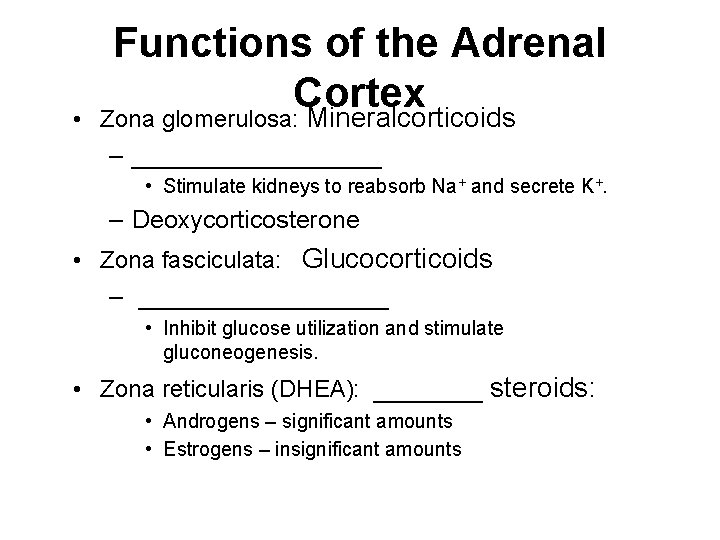
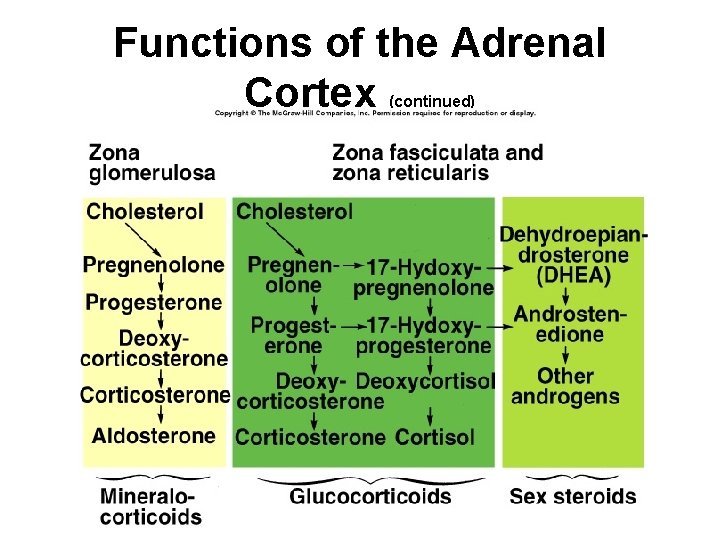
• Functions of the Adrenal Cortex Zona glomerulosa: Mineralcorticoids – _________ • Stimulate kidneys to reabsorb Na+ and secrete K+. – Deoxycorticosterone • Zona fasciculata: Glucocorticoids – _________ • Inhibit glucose utilization and stimulate gluconeogenesis. • Zona reticularis (DHEA): _______ steroids: • Androgens – significant amounts • Estrogens – insignificant amounts
Functions of the Adrenal Cortex (continued)
Functions of the Adrenal Cortex (continued) • Carried by plasma specific – binding globulins • Mechanism of action – Enters cell, ______receptor, enters nucleus, increases m. RNA, increases _____ formation
Adrenal Glands • Adrenal medulla: – Derived from ________ neural crest ectoderm (same tissue that produces the sympathetic ganglia). • Synthesizes and secretes: – __________ (mainly Epi but some NE).
Functions of the Adrenal Medulla • Actions – _______ respiratory rate. – Increase HR and cardiac output. – _________ blood vessels, thus increasing venous return. – Stimulate glycogenolysis. – Stimulate __________ – Increases BMR – Stimulates spleen contraction – increased RBC’s in blood
Functions of the Adrenal Medulla • Stimuli – Hypoglycemia – Emergency situation
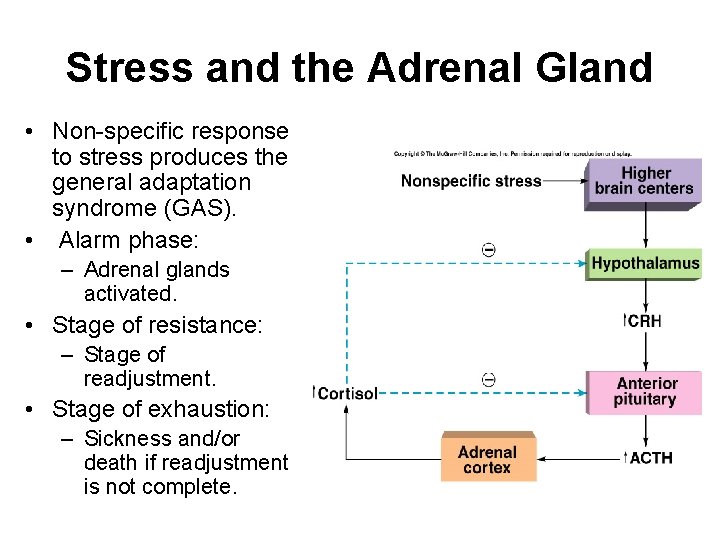
Stress and the Adrenal Gland • Non-specific response to stress produces the general adaptation syndrome (GAS). • Alarm phase: – Adrenal glands activated. • Stage of resistance: – Stage of readjustment. • Stage of exhaustion: – Sickness and/or death if readjustment is not complete.
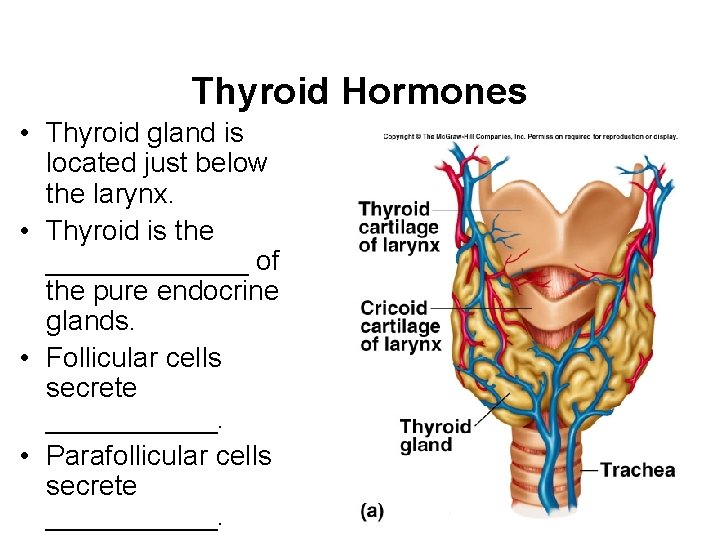
Thyroid Hormones • Thyroid gland is located just below the larynx. • Thyroid is the _______ of the pure endocrine glands. • Follicular cells secrete ______. • Parafollicular cells secrete ______.
Thyroid Hormones • Different activity in different animals – Fish – no specific organs, follicles scattered – Birds – 2 lobes – widely separated, no isthmus – Snakes – 1 gland, anterior to heart
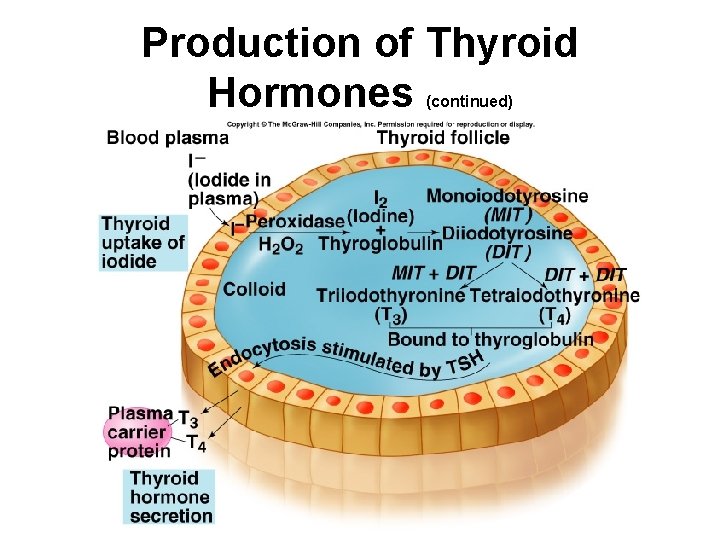
Production of Thyroid Hormones • ______ (I-) actively transported into the follicle and secreted into the colloid. • Oxidized to iodine (Io). • Iodine attached to tyrosine within thyroglobulin chain. – Attachment of 1 iodine produces monoiodotyrosine (MIT). – Attachment of 2 iodines produces diiodotyrosine (DIT).
Production of Thyroid Hormones (continued) • _______ and ____ produced. • TSH stimulates pinocytosis into the follicular cell. – Enzymes hydrolyze T 3 and T 4 from thyroglobulin. • Attached to TBG and released into blood.
Production of Thyroid Hormones (continued)
Actions of T 3 • Stimulates ____synthesis. • Promotes maturation of nervous system. • Stimulates rate of cellular respiration by: – Production of uncoupling proteins. – ______ active transport by Na+/K+ pumps. – Lower cellular [ATP]. • Increases ______ heat. • Increases _______ rate. – Stimulates increased consumption of glucose, fatty acids and other molecules.
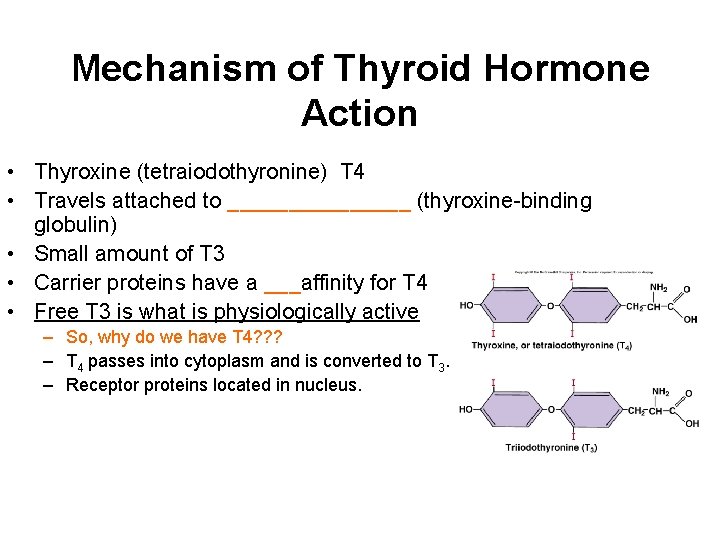
Mechanism of Thyroid Hormone Action • Thyroxine (tetraiodothyronine) T 4 • Travels attached to ________ (thyroxine-binding globulin) • Small amount of T 3 • Carrier proteins have a ___affinity for T 4 • Free T 3 is what is physiologically active – So, why do we have T 4? ? ? – T 4 passes into cytoplasm and is converted to T 3. – Receptor proteins located in nucleus.
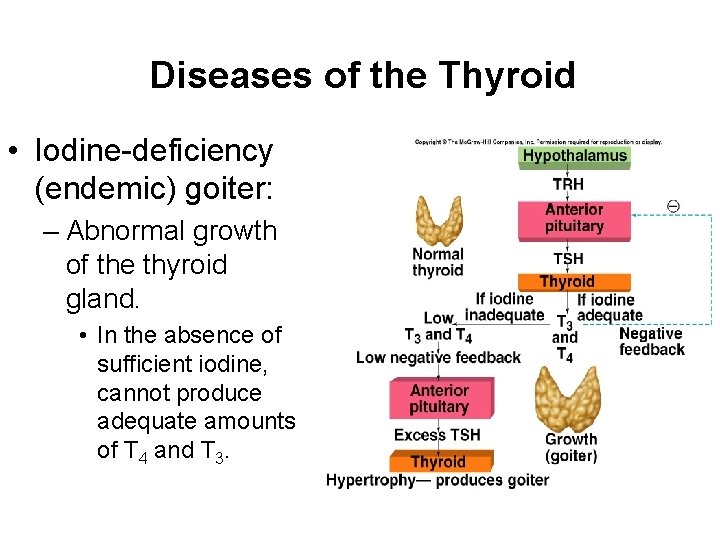
Diseases of the Thyroid • Iodine-deficiency (endemic) goiter: – Abnormal growth of the thyroid gland. • In the absence of sufficient iodine, cannot produce adequate amounts of T 4 and T 3.
Diseases of the Thyroid (continued) – Adult myxedema: – Symptoms: • • Decreased metabolic rate. Weight gain. Decreased ability to adapt to cold. Lethargy. • Grave’s disease: – Autoimmune disorder: • Cretinism: – Hypothyroid from end of 1 st trimester to 6 months postnatally. • Severe mental retardation.
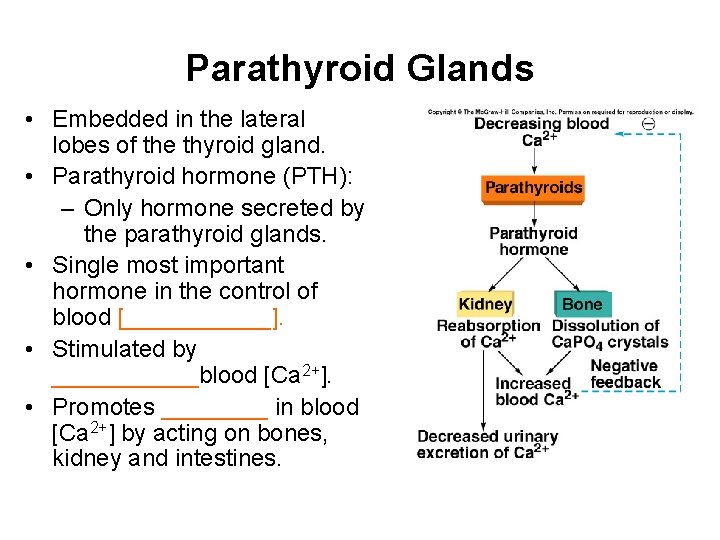
Parathyroid Glands • Embedded in the lateral lobes of the thyroid gland. • Parathyroid hormone (PTH): – Only hormone secreted by the parathyroid glands. • Single most important hormone in the control of blood [______]. • Stimulated by ______blood [Ca 2+]. • Promotes ____ in blood [Ca 2+] by acting on bones, kidney and intestines.
Actions of Calcitonin • Secreted by _____ cells • Works with parathyroid cells to regulate Ca levels • Stimulates secretion of ____ in urine • Actions work to lower blood Ca levels
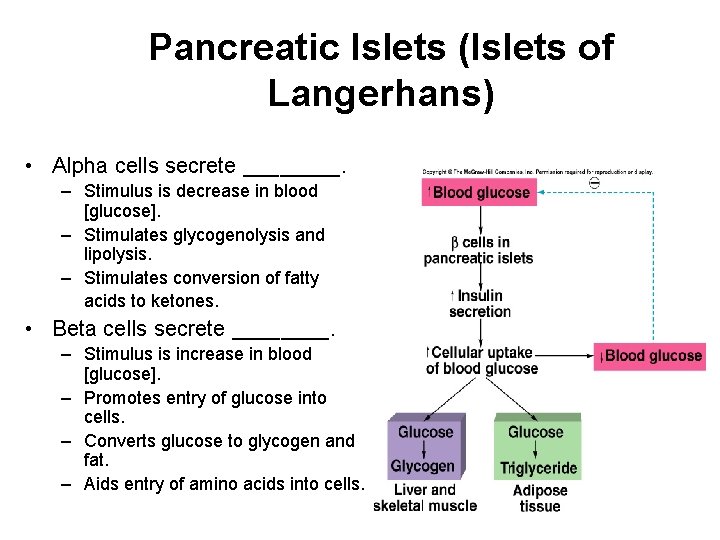
Pancreatic Islets (Islets of Langerhans) • Alpha cells secrete ____. – Stimulus is decrease in blood [glucose]. – Stimulates glycogenolysis and lipolysis. – Stimulates conversion of fatty acids to ketones. • Beta cells secrete ____. – Stimulus is increase in blood [glucose]. – Promotes entry of glucose into cells. – Converts glucose to glycogen and fat. – Aids entry of amino acids into cells.
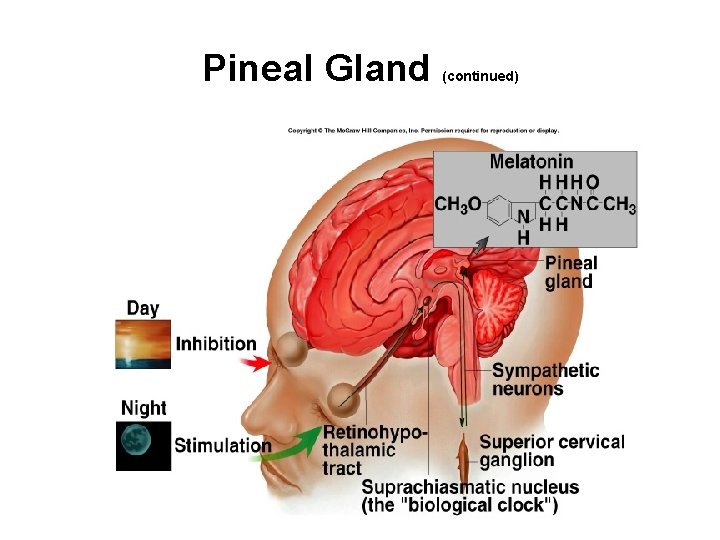
Pineal Gland • Secretes _________: – Production stimulated by the suprachiasmatic nucleus (SCN) in hypothalamus. • SCN is primary center for circadian rhythms. • Light/dark changes required to synchronize. • Melatonin secretion increases with darkness and peaks in middle of night. – May inhibit _________. – May function in the _____ of puberty (controversial). – Controls estrus in sheep, goats, and horses
Pineal Gland (continued)
Thymus • Site of production of ____ cells (thymusdependent cells), which are lymphocytes. – Lymphocytes are involved in cell-mediated immunity. • Secretes hormones that are believed to stimulate T cells after leave thymus. – Thymus gland size is large in newborns and children. • _______ after puberty and becomes infiltrated with strands of fibrous tissue.
Gonads and Placenta • Gonads (testes and ovaries): – Secrete sex hormones. • Testosterone. • Estradiol 17 -b. • Progesterone. • Placenta: – Secretes large amounts of _______, progesterone
Autocrine and Paracrine Regulation • Autocrine: – Produced and act within the same tissue of an organ. • All autocrine regulators control gene expression in target cells. • Paracrine: – Produced within one tissue and regulate a different tissue of the same organ. • Cytokines (lymphokines): – Regulate different cells (interleukins). • Growth factors: – Promote growth and cell division in any organ. • Neutrophins: – Guide regenerating peripheral neurons.
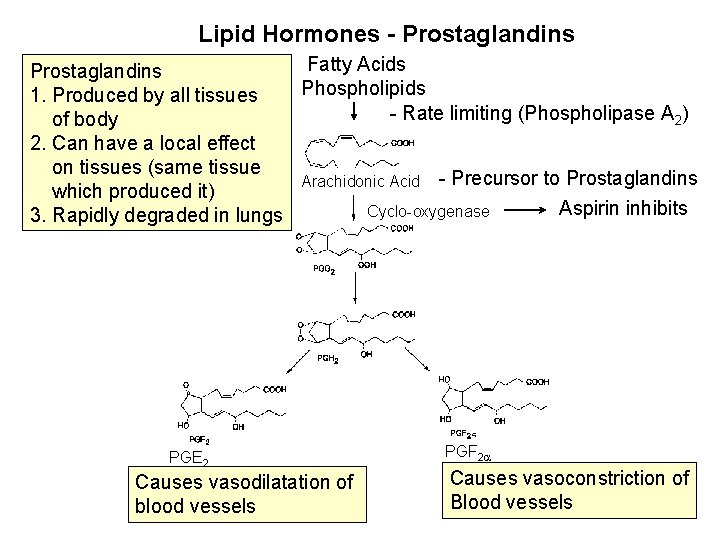
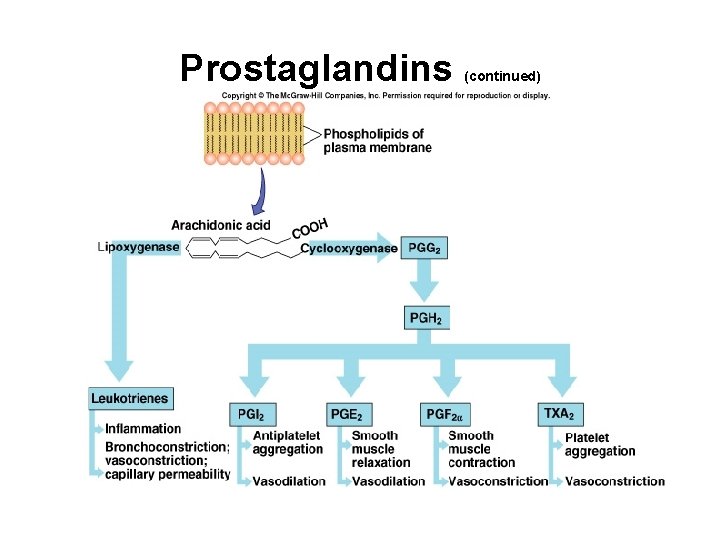
Prostaglandins • • Most diverse group of ____ regulators. Produced in almost every organ. Wide variety of functions. Different prostaglandins may exert antagonistic effects in some tissues. – Immune system: • __________________. – Reproductive system: • ________________. – Digestive system: • _______________
Lipid Hormones - Prostaglandins Fatty Acids Prostaglandins Phospholipids 1. Produced by all tissues - Rate limiting (Phospholipase A 2) of body 2. Can have a local effect on tissues (same tissue Arachidonic Acid - Precursor to Prostaglandins which produced it) Aspirin inhibits Cyclo-oxygenase 3. Rapidly degraded in lungs PGE 2 Causes vasodilatation of blood vessels PGF 2 a Causes vasoconstriction of Blood vessels
Prostaglandins (continued)
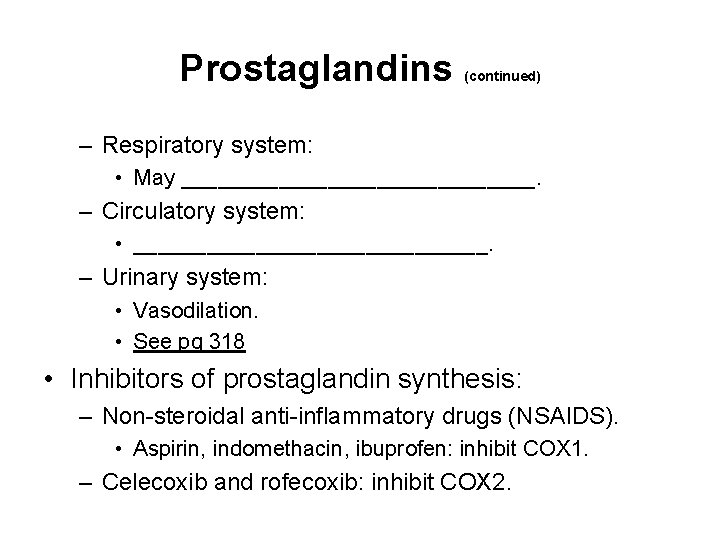
Prostaglandins (continued) – Respiratory system: • May _______________. – Circulatory system: • _______________. – Urinary system: • Vasodilation. • See pg 318 • Inhibitors of prostaglandin synthesis: – Non-steroidal anti-inflammatory drugs (NSAIDS). • Aspirin, indomethacin, ibuprofen: inhibit COX 1. – Celecoxib and rofecoxib: inhibit COX 2.