
Endangered Species What are endangered species An endangered
- Slides: 33
Endangered Species
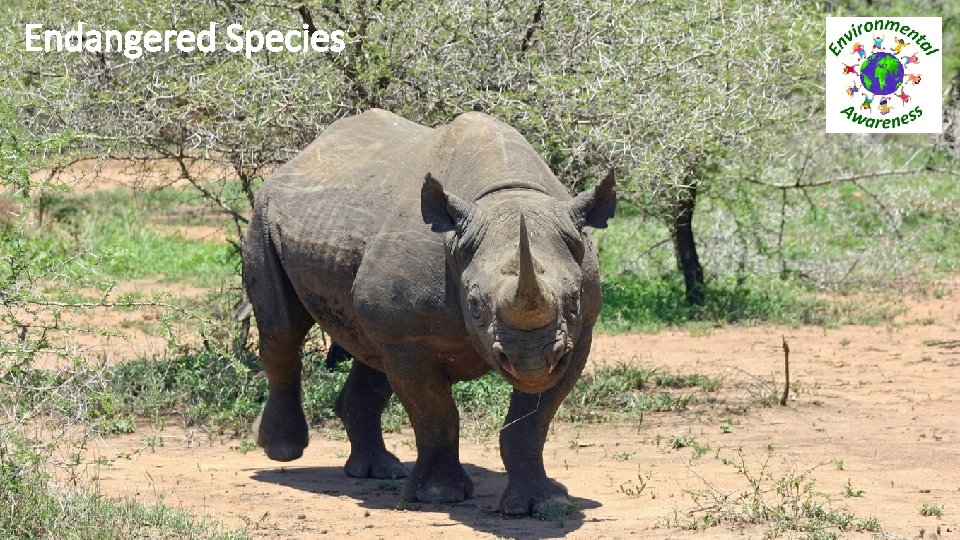
What are endangered species? • An endangered species can be defined as species which is very likely to be extinct in the near future. • The number of endangered species has dramatically risen over time. • According to the International Union for Conservation of Nature, while in 1998, 1102 animals and 1197 plants have been categorized as endangered, these numbers increased to 3079 animals and 2655 plants until 2012. • If this trend continues, we will lose many species in the near future. • To prevent this, governments and other institutions all over the world try to save the endangered species by measures like creating protected areas or forbidding hunting. • In the following, reasons, effects, examples and also solutions concerning the endangered species problems are analyzed.
Causes • Destruction of habitats • Changes in natural living conditions • Hunting • Fishing • Pollution • Insufficient reproduction rate • Invasive species • Genetics • Diseases • Degree of specialization • Conflicts between wildlife and humans
Destruction of habitats • Humanity expands its infrastructure in order to create more settlement space and also to extract precious materials from the ground. • However, by doing so, many animals and plants which lived in untouched nature are now adversely influenced by human behavior since their natural environments are altered or even destroyed. • Thus, many animals and plants have to look out for new homes or they will be in danger of becoming extinct.
Changes in natural living conditions • Due to changes in natural living conditions, animals and plants may not be able to adapt to these new conditions in a proper way and therefore become endangered and eventually may even become extinct. • For instance, due to global warming, the water temperature in lakes and rivers is likely to increase. • Thus, oxygen levels are likely to decrease and animals and plants may die off because of a lack of oxygen.
Hunting • Hunting still is a big problem and can cause the extinction of whole species. • Since people are greedy and often want to make as much money as possible, they kill animals just to get their precious parts like their ivory or fur. • If these animals are not properly protected by governments or other agencies, they will be an easy target and will eventually become extinct.
Fishing • Another cause that can lead to the endangerment of species is excessive fishing. • Since our world population consumes large amounts of fish, many fish have to be caught in order to meet this demand. • Especially for fishes people love to consume, this could lead them to become an endangered species. • For example, the Atlantic Cod is on the IUCN red list.
Pollution • The industrial revolution and our increased need for consumption has led to an increase in many different forms of pollution. • Acid rain, water pollution, air pollution and other kinds of pollution can harm many species in an extremely adverse way. • If they are not able to adapt to the higher levels of pollution, they will be in danger to die out.
Insufficient reproduction rate • Some species are quite eager to reproduce, others are just lazy to do so. • Especially for animals that have a low reproduction rate, this can cause big problem since they may likely not be able to sustain their species. • Moreover, for some species, it takes quite a long time until they are able to reproduce at all. • This can also lead to a species to become endangered or even extinct.
Invasive species • Invasive species can affect local species in an adverse way since on the one hand, they can carry diseases that local species are not able to fight. • On the other hand, invasive species may displace the local species and thus the local species may be in danger of becoming extinct.
Genetics • Animals which have a low genetic variation are at greater risk for extinction than animals with a high genetic variation. • The rationale for this is that animals with low genetic variations could potentially be wiped out by one big epidemic. • Due to low genetic variation, all animals of this species will be hit by the disease and they will likely not be able to fight it at all. • Moreover, also the adaption to new living conditions will be harder if animals have low genetic variation since they will be more sensitive to altered living conditions.
Diseases • Not only people suffer from epidemic diseases, also animals can be adversely affected. • Diseases like Ebola can cause thousands of death among certain species like monkeys and therefore diminish their numbers dramatically. • In the worst case, epidemics can cause whole species to become extinct if the animals only occur in one region and thus can be all affected by the deadly threat.
Degree of specialization • Highly specialized animals or plants are more likely to become endangered or extinct since they are not flexible at all in their living conditions. • Changes in living conditions may be due to global warming or further adverse effects which may happen over time. • Small changes in their natural habitats may force animals to move or they may even die since they are likely not able to adopt to the new circumstances.
Conflicts between wildlife and humans • Since our world population is growing, we need more and more settlement space in order to build houses and other infrastructure. • To gain this settlement space, it is often necessary to cut down forests or invade other habitats which are currently used by animals. • These animals will lose their living space, which may force them to move to other areas. • If they do not find another suitable habitat, chances are that the animal population drops. • Moreover, in areas where animals like wolves or bears live, people are often scared to meet these kind of animals. • They often advocate to shoot these animals since in peoples‘ eyes, they pose a serious threat to humans.
Effects • Biodiversity and chain reactions • Diseases • Decrease in crop yields • Loss of medicine sources • Economic effects
Biodiversity and chain reactions • Since nature is a big system in which species depend upon each other and function as a whole, the extinction of a small number of animals or plants can cause chain reactions to the whole ecosystem and thus have a big effect on the environment. • For example, if a species A which eats another species B goes extinct, the number of species B would increase dramatically. • Since species B will also eat other species C, species C will now be endangered. • This circle continues and will often have profound effects on the ecosystem.
Diseases • Some animals can serve as buffers between pathogens and humans. • Animals can thus lower the probability that humans get infected by certain diseases. • Thus, if species become extinct, this buffer is lost and humans can be more likely hit by diseases.
Decrease in crop yields • Since insects like bees play an important role in the crop growing process, losing these species would be extremely harmful to the crop yields of farmers and could also cause global famine.
Loss of medical sources • Many components which are contained in drugs are extracted from plants. • If these plants become endangered or even extinct, we will not be able to use the plant ingredients for medical purposes anymore.
Economic effects • Animals often are popular attractions for tourists. • Countries which can provide these animals can often make significant amounts of money with touristic activities. • However, if certain animal species become extinct, these countries will suffer from severe adverse economic effects since tourists may not come to their countries anymore after the animals vanished.
Solutions • Recycling and sustainable products • Education • Reduction in water consumption • Grow native plants • Reduce your footprint • Donations • Avoid plastic products • Do not buy products from endangered species • Support companies which protect species • Reduction in the use of fertilizer and pesticides
Recycling and sustainable products • In order to use our natural resources in an effective way, we should recycle our products on a regular basis. • Since for an increased production of consumption products, more and more forests and other natural environments have to be infiltrated by humans, reducing consumption will lead to a contribution to the saving of endangered species. • Moreover, we should not buy products for which rainforests or other endangered trees have been used.
Education • A big part of the endangered species problem is that people usually are unaware or simply do not care too much in their daily lifes about our animals and plants. • We have to change their attitude in a way that they are ready to reduce their consumption behavior in order to protect animals and plants. • We have to make them clear that their daily behavior has a significant impact on how their children will be able to enjoy the world in the future.
Reduction in water consumption • Since water is essential for life not only for humans but also for animals and plants, we should save water whenever we can. • Through the global warming issue, water will become an even more important resource in the future. • If we are not able to reduce our water demand, there will not be enough water left for all animals and plants and the probability for them to extinct will increase.
Grow native plants • By growing native plants, it will be easy for us to contribute to the preservation of local species. • For example, growing local plants can help bees and other insects to sustain their population while they will also improve your crop yield.
Reduce your footprint • Everyone talks about saving our environment, but many people lack actions when they have to make actual sacrifices. • Everyone should contribute their part in order to save our native species and thus to ensure a livable future.
Donations • Instead of spending lots of money on beer, you should consider giving part of that budget to institutions which have the mission to protect endangered species.
Avoid plastic products • Since large amounts of plastic will end up in our oceans which in turn will harm sea animals and plants, you should save plastic by reusing your bags as often as possible. • You should also consider using fabric bags instead of plastic bags. • Moreover, avoiding coffee-to-go cups will also contribute to reduce the amount of plastic produced.
Do not buy products from endangered species • We are often unaware that we are able to frequently buy souvenirs from endangered species. • We should avoid this at all costs since endangered animals often have to die because of that. • An example is the killing of elephants just for their ivory.
Support companies which protect species • There is a big difference on how companies value environmental standards. • You should support and buy from companies which contribute their part to the protection of animals and plants. • Thus, you should also not buy products from companies which do not care about the environment at all. • You can often see if a product is made from renewable resources. • Moreover, you can research products on the internet to see how they have been produced and make your decision if the company cares enough about the environment.
Reduction in the use of fertilizer and pesticides • A big concentration of pesticides or by-products of fertilizers can contaminate plants which in turn are consumed by animals. • These animals will suffer from the contamination and can even die from contaminated plants. • Thus, species may become endangered from an excessive use of pesticides and fertilizer. • This problem can be mitigated by raising the awareness of farmers that their behavior has a significant effect on the population of local species.
Conclusion • Through human intervention, an increasing number of species is endangered of becoming extinct in the near future. • In order to stop this process, we have to raise the awareness of industries and also change our daily life consumption behavior. • We have to make sacrifices in order to protect our environment and therefore ensure a livable future for our children.
Sources • https: //www. iucnredlist. org/ • https: //en. wikipedia. org/wiki/Endangered_species • https: //www. nationalgeographic. com/news/2017/05/endangered_speciesact/