
END USER COMPUTING Critical Issues Key Issues in
- Slides: 20
END USER COMPUTING Critical Issues
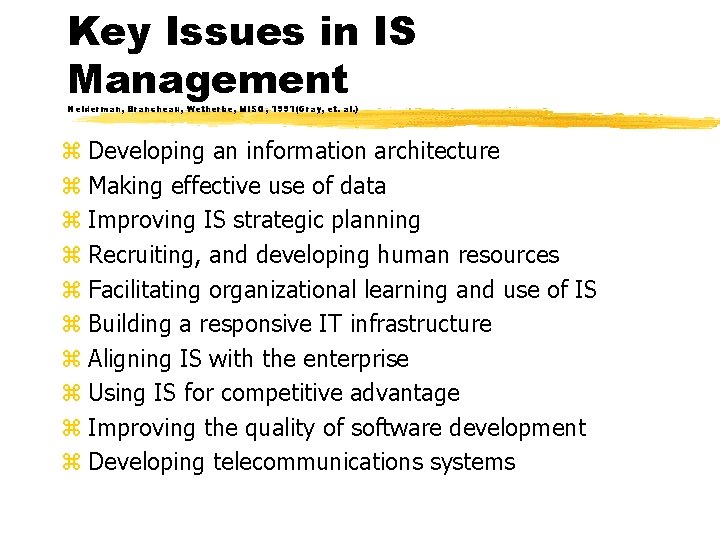
Key Issues in IS Management Neiderman, Brancheau, Wetherbe, MISQ, 1991(Gray, et. al. ) z Developing an information architecture z Making effective use of data z Improving IS strategic planning z Recruiting, and developing human resources z Facilitating organizational learning and use of IS z Building a responsive IT infrastructure z Aligning IS with the enterprise z Using IS for competitive advantage z Improving the quality of software development z Developing telecommunications systems
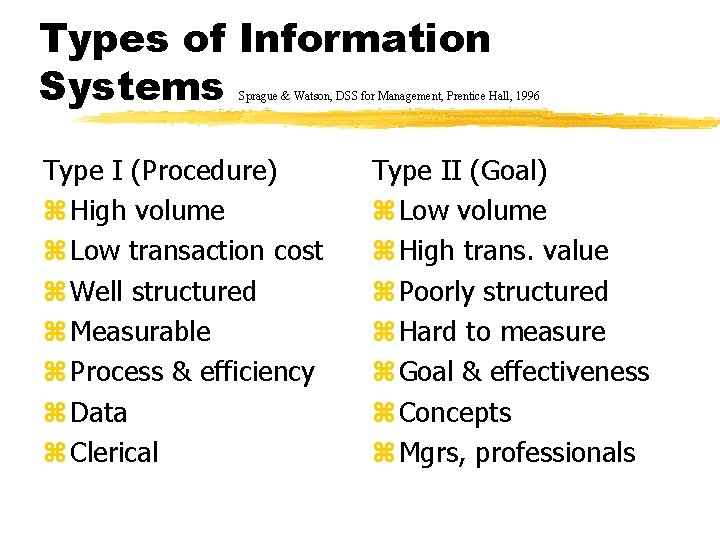
Types of Information Systems Sprague & Watson, DSS for Management, Prentice Hall, 1996 Type I (Procedure) z High volume z Low transaction cost z Well structured z Measurable z Process & efficiency z Data z Clerical Type II (Goal) z Low volume z High trans. value z Poorly structured z Hard to measure z Goal & effectiveness z Concepts z Mgrs, professionals
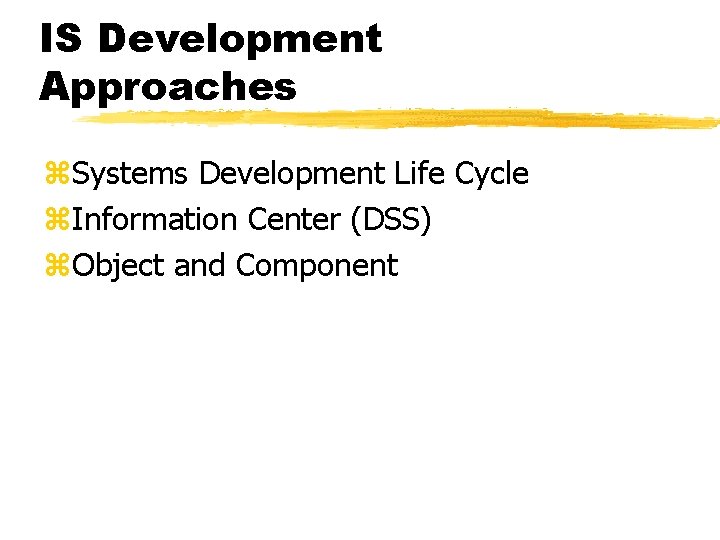
IS Development Approaches z. Systems Development Life Cycle z. Information Center (DSS) z. Object and Component
Type I Large Systems z. Intercommunications among applications z. Formal methodologies z. CASE technologies z. Purchased products z. Outsourcing
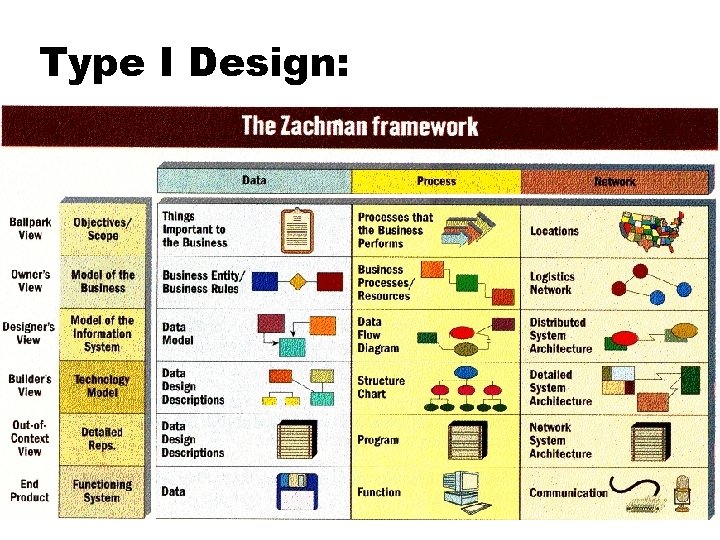
Type I SDLC z. Type I systems z. Large and Costly z. Cost justified z. Formal stages of evaluation z. Stages carefully reviewed and formally approved z. Data, Process, Communications
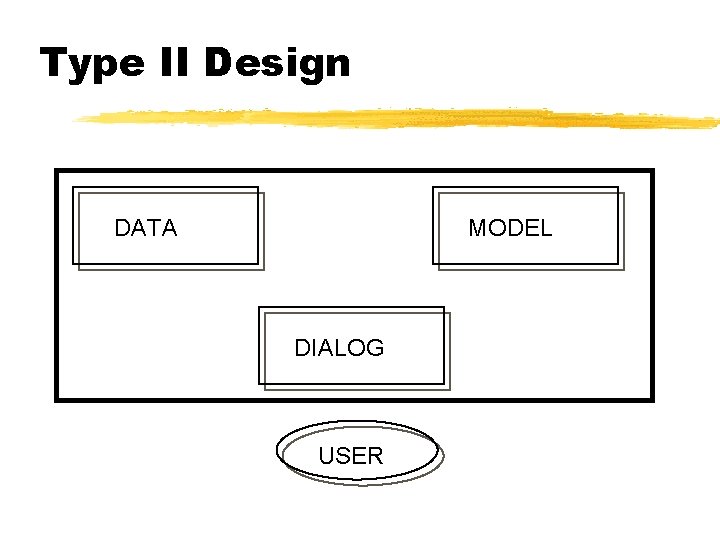
Type II Information Center (DSS) z. Type II systems z. Relatively small and inexpensive z. Value justified z. Prototyping and evolutionary design z. Data, Dialog, Model
End User Computing (EUC) End User Computing refers to systems in which the user does some of the programming. Arises from: z. Capacity of Computers z. Cost of Hardware z. Friendly Software z. Data Communications
EUC Issues z. Data extraction (warehouses) and availability z. System design and development z. Management and control z. New technologies: EIS, GDSS and Artificial Intelligence, Expert Systems and Groupware
Prototyping & Iterative Design z. Data z. Trial Solution z. User Experimentation z. Revised Solution
Object Oriented (Event Driven) z. User owned z. Small and experimental z. Dialog driven, reusable code z. Combines data and process
Object Issues z. Reliability of tools and software z. Design methodologies z. Standards and portability z. Extent of value
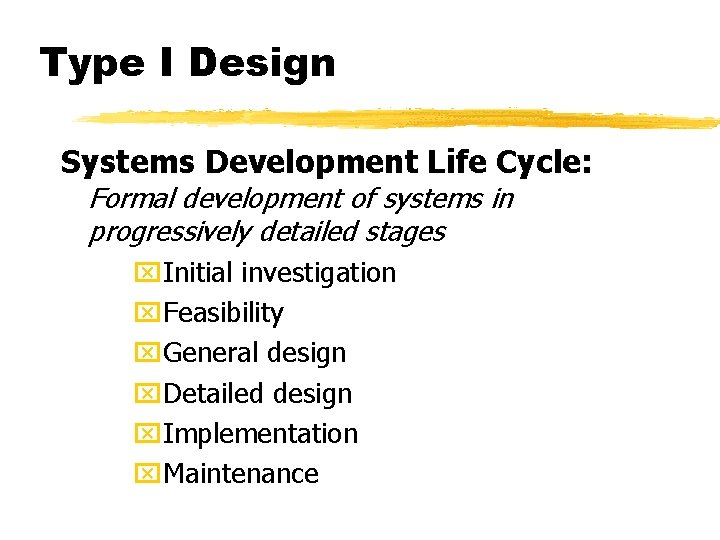
Type I Design Systems Development Life Cycle: Formal development of systems in progressively detailed stages x. Initial investigation x. Feasibility x. General design x. Detailed design x. Implementation x. Maintenance
Type I Design:
Type II Design DATA MODEL DIALOG USER
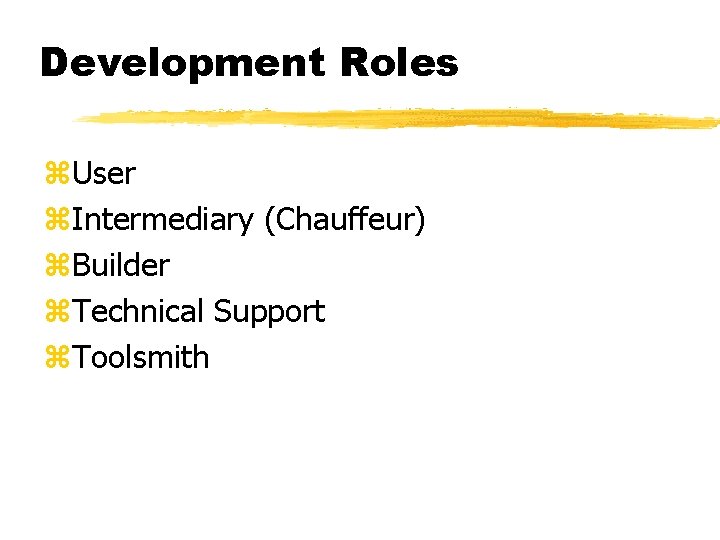
Development Roles z. User z. Intermediary (Chauffeur) z. Builder z. Technical Support z. Toolsmith
Design Philosophy z. Functional z. Entity z. Dialogue z. Event
Distributed Management z. Business within a business z. IS internal partnerships z. Virtual organizations z. Outsourcing and consultants z. Personnel management
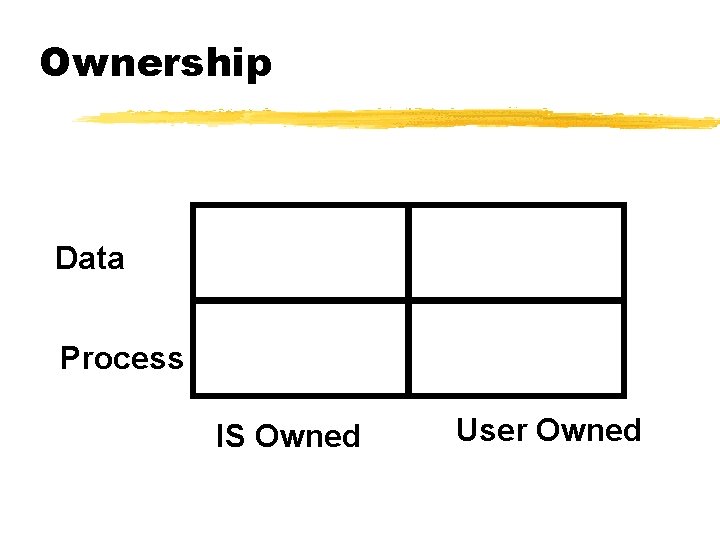
Ownership Data Process IS Owned User Owned
Information Access: IT User Partnership