
End of WWII Beginning of Cold War Europe
End of WWII / Beginning of Cold War
Europe u. Germany surrenders May 1945 u. Potsdam Conference: v. Germany divided, occupied by Allies v. Germany de-Nazified u. Nuremberg Trials: v. War Criminals, Holocaust collaborators tried v. Crimes Against Humanity developed
Europe u. European countries largely bankrupted by war u. USA and USSR new world superpowers
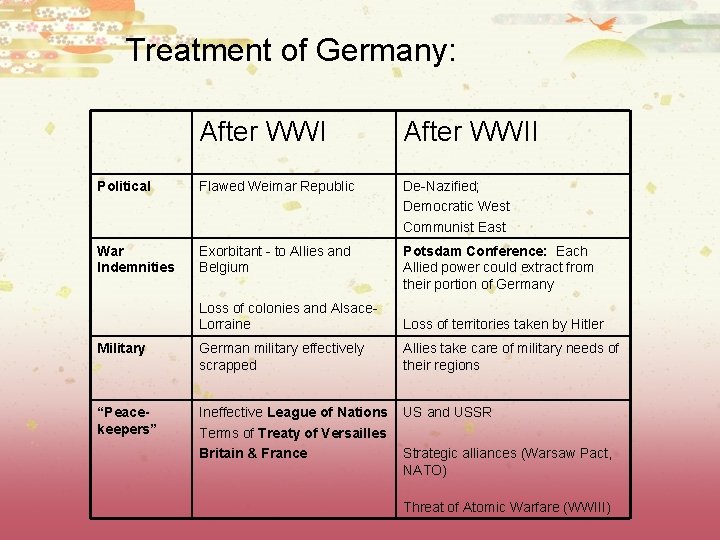
Treatment of Germany: After WWII Political Flawed Weimar Republic De-Nazified; Democratic West Communist East War Indemnities Exorbitant - to Allies and Belgium Potsdam Conference: Each Allied power could extract from their portion of Germany Loss of colonies and Alsace. Lorraine Loss of territories taken by Hitler Military German military effectively scrapped Allies take care of military needs of their regions “Peacekeepers” Ineffective League of Nations Terms of Treaty of Versailles Britain & France US and USSR Strategic alliances (Warsaw Pact, NATO) Threat of Atomic Warfare (WWIII)
Leads to Origins of the Cold War u. Soviets want to rebuild economy using German industry u. Allies agreed to divide Germany temporarily u. Soviets wanted a “buffer” u. Americans wanted “self-determination”
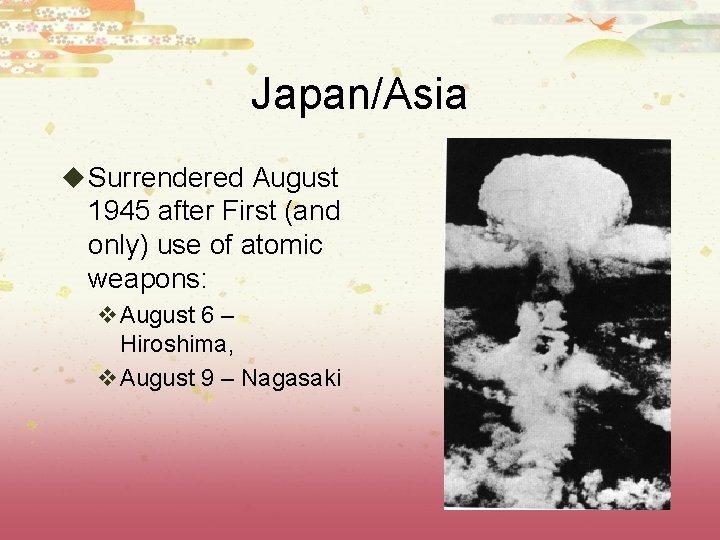
Japan/Asia u Surrendered August 1945 after First (and only) use of atomic weapons: v. August 6 – Hiroshima, v. August 9 – Nagasaki
Japan/Asia u. Loses all territories since 1895 u. General Mac. Arthur oversees drafting of new constitution v Emperor looses god-like status (though not war criminal) v. Japan demilitarized v. Minimal war crimes (compare to Germany) u 1951 - Regains independence
Long-standing changes u. Difference between the west and east would quickly start the Cold War v. Nuclear weapons complicate issue u. United Nations: works for world peace & improve the lives of the people of the world. (Replaces League of Nations)
Long-standing changes u Nationalism and anti-colonialism = desires for independence and self-determination v India, Africa, Asia u Advances in science and technology (synthetic rubber, radar, synthetic materials, jet engines, atomic weapons/energy) u New world powers, new threats, new rules lead to … COLD WAR
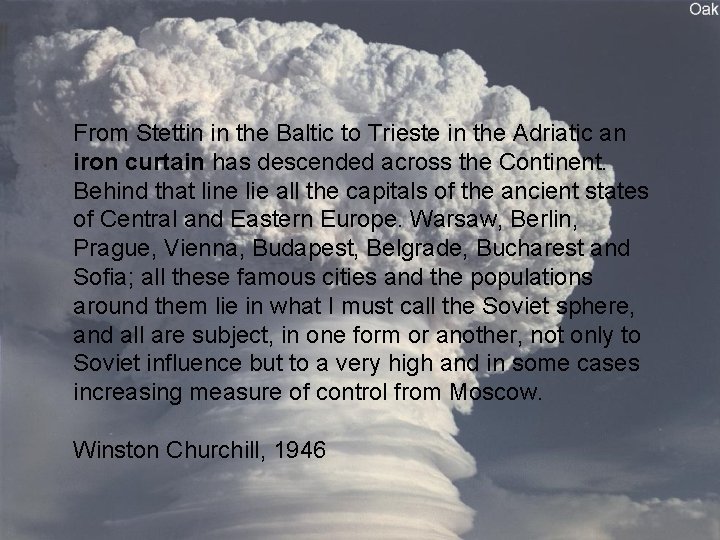
From Stettin in the Baltic to Trieste in the Adriatic an iron curtain has descended across the Continent. Behind that line lie all the capitals of the ancient states of Central and Eastern Europe. Warsaw, Berlin, Prague, Vienna, Budapest, Belgrade, Bucharest and Sofia; all these famous cities and the populations around them lie in what I must call the Soviet sphere, and all are subject, in one form or another, not only to Soviet influence but to a very high and in some cases increasing measure of control from Moscow. Winston Churchill, 1946
What was the Cold War? u. A state of economic, diplomatic, and ideological discord among nations without armed conflict after World War II. u. But, no direct fighting (“hot war”) between superpowers v. Why?
Similarities u. Both the US & USSR: vwanted to defeat Hitler vwanted their values and economic and political systems to prevail vwanted a sphere of influence vagreed that capitalism and communism could not coexist vbelieved the other to be a threat to their own existence
Differences u. Soviets thought capitalism brought imperialism and war u. Americans thought communism was totalitarian and bent on subjugating other nations
u. Soviets needed communism to triumph in order to justify bloody dictatorship u. Lead to American notion of containment - keep communism from spreading
Cold War Battles u Diplomatic wars span the Americans, Asia, Africa, and Europe u Wars fought through other nations u No direct fighting u Rule of Thumb: “The enemy of my enemy is my friend” u For the US: If your not a communist, it’s all good.
New World Classifications u “First World” Countries: Industrialized, wealthy countries (Western Europe, Canada, US, Australia) u “Second World” Countries: Communist / Communist-controlled countries (USSR, Soviet-bloc countries, China) u “Third World” Countries: Poor, unindustrialized countries that have some sort of natural resource to exploit. (Congo, Iraq) u “Fourth World” Countries: Poor, unindustrialized countries that have little- to no resources to exploit (Haiti)
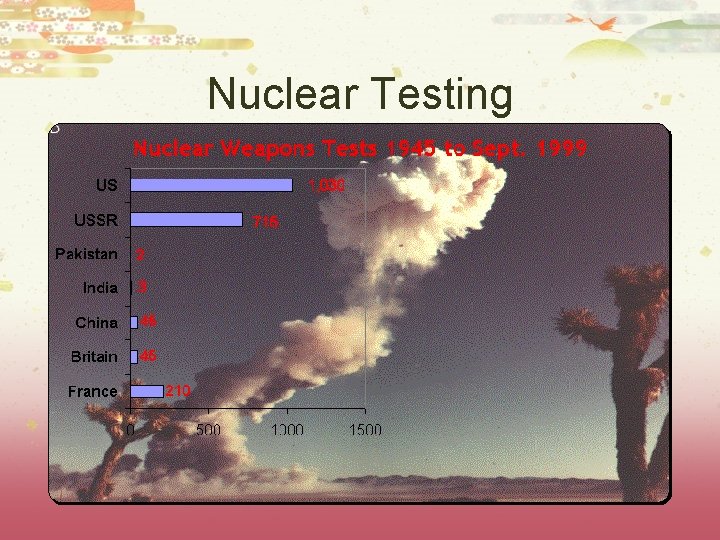
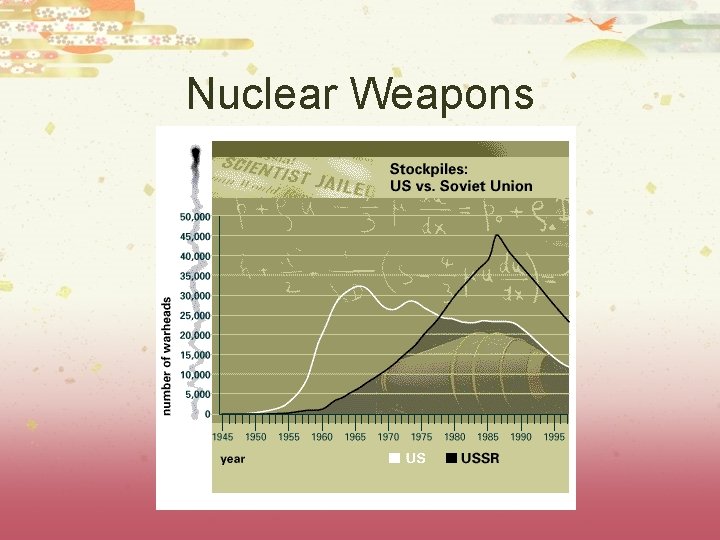
Nuclear Weapons u. Soviets began their nuclear program in 1943 u. US hoped to regulate nuclear arms after WWII - but clearly held the advantage u. Soviets refused to participate, started arms race
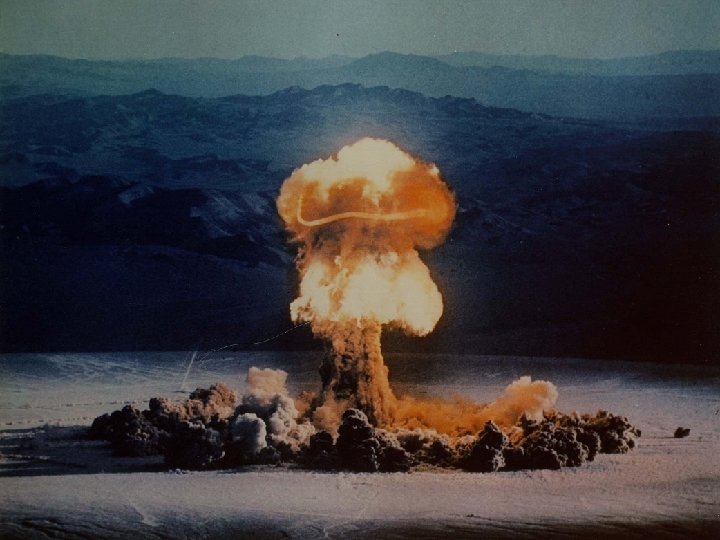
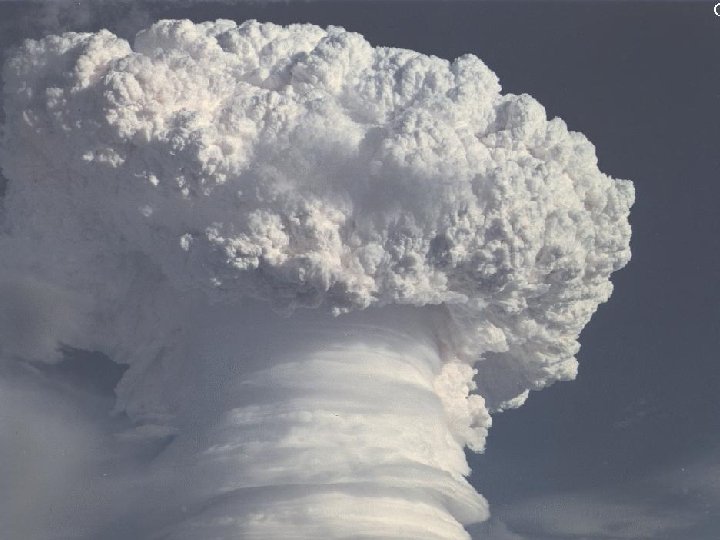
Nuclear Testing
Nuclear Weapons
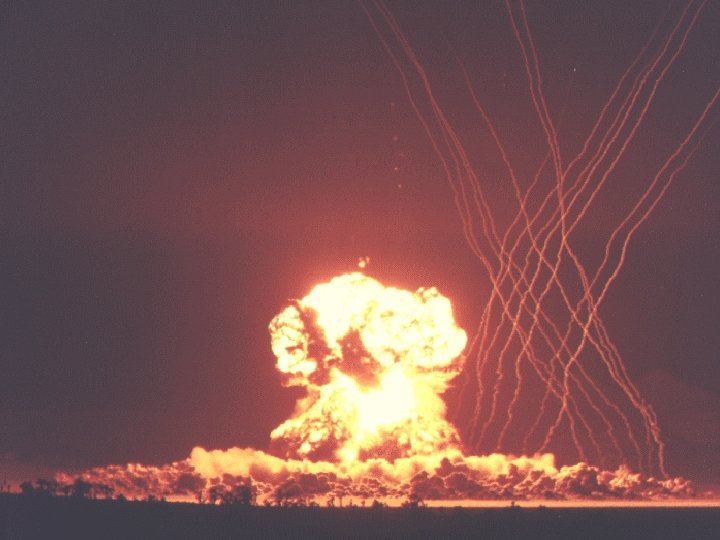
What’s at stake? u. Mutually Assured Destruction (MAD)
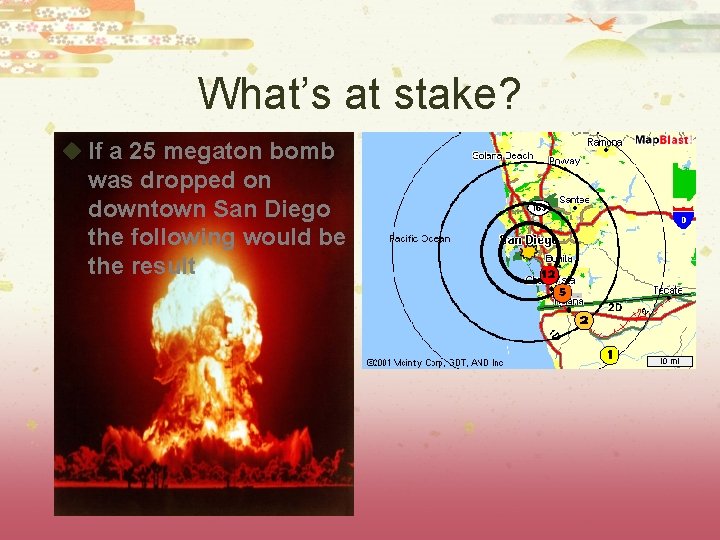
What’s at stake? u If a 25 megaton bomb was dropped on downtown San Diego the following would be the result
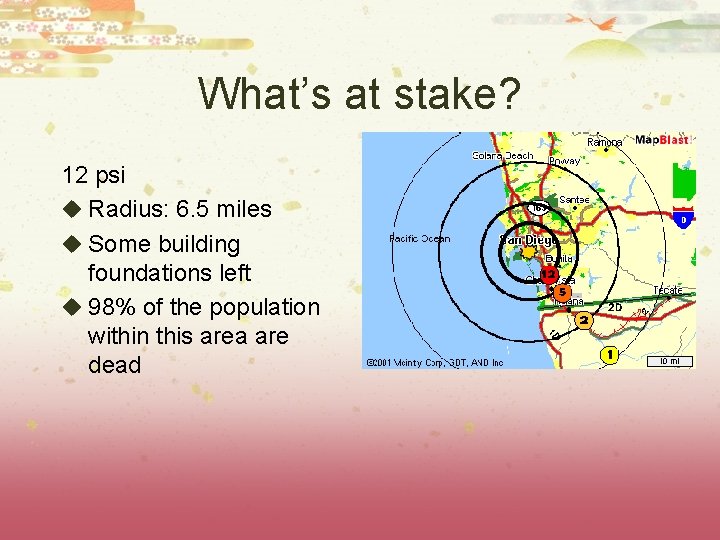
What’s at stake? 12 psi u Radius: 6. 5 miles u Some building foundations left u 98% of the population within this area are dead
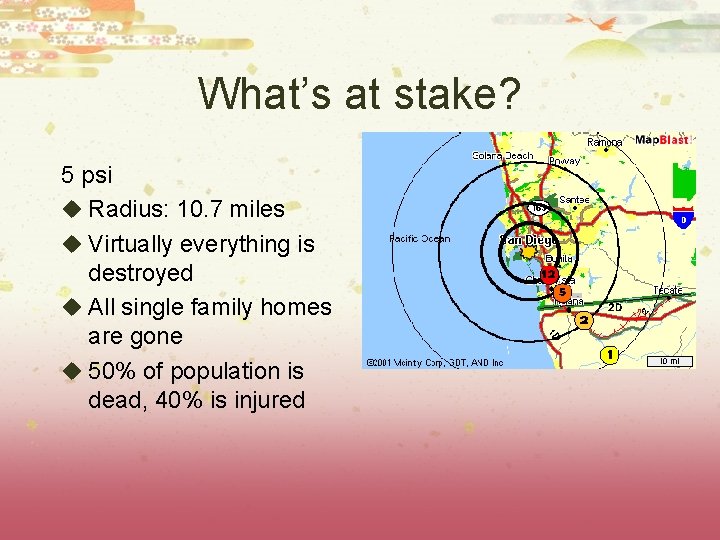
What’s at stake? 5 psi u Radius: 10. 7 miles u Virtually everything is destroyed u All single family homes are gone u 50% of population is dead, 40% is injured
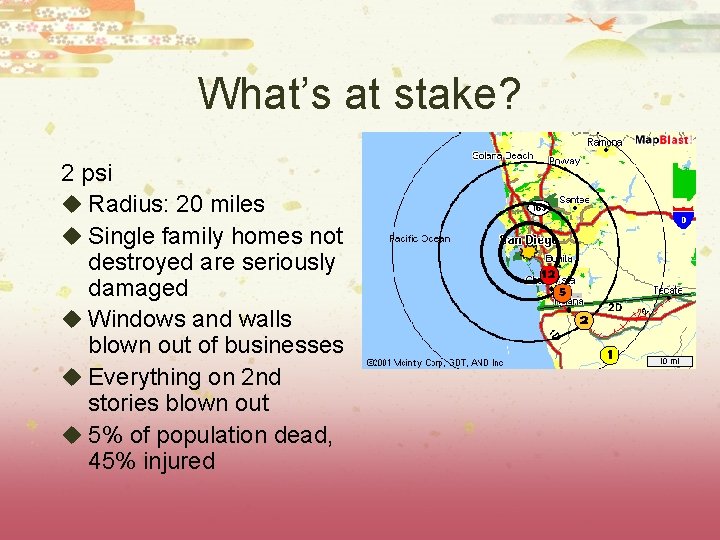
What’s at stake? 2 psi u Radius: 20 miles u Single family homes not destroyed are seriously damaged u Windows and walls blown out of businesses u Everything on 2 nd stories blown out u 5% of population dead, 45% injured
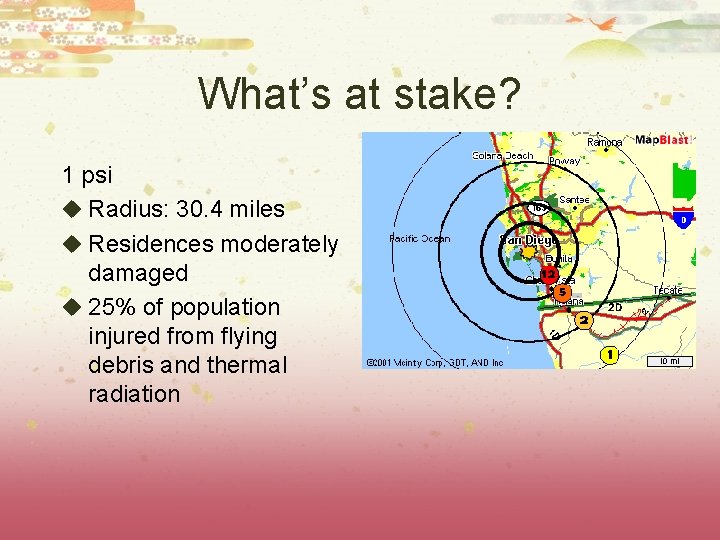
What’s at stake? 1 psi u Radius: 30. 4 miles u Residences moderately damaged u 25% of population injured from flying debris and thermal radiation
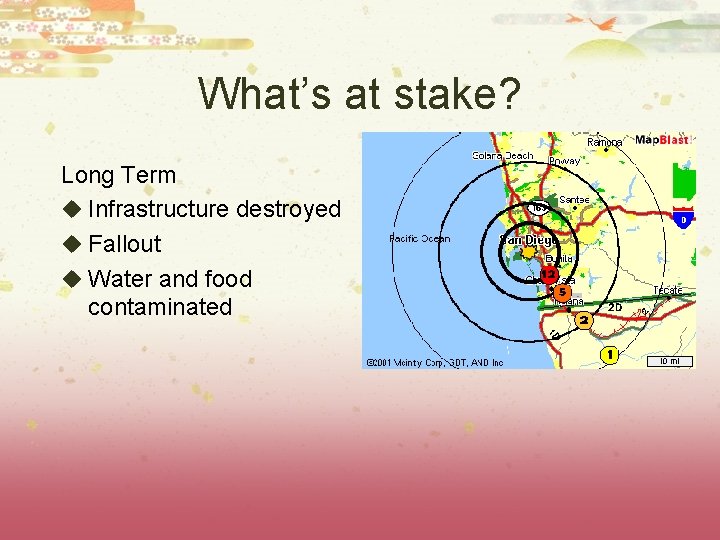
What’s at stake? Long Term u Infrastructure destroyed u Fallout u Water and food contaminated
- Slides: 29