
End of WW 1 November 1918 Central Powers
End of WW 1
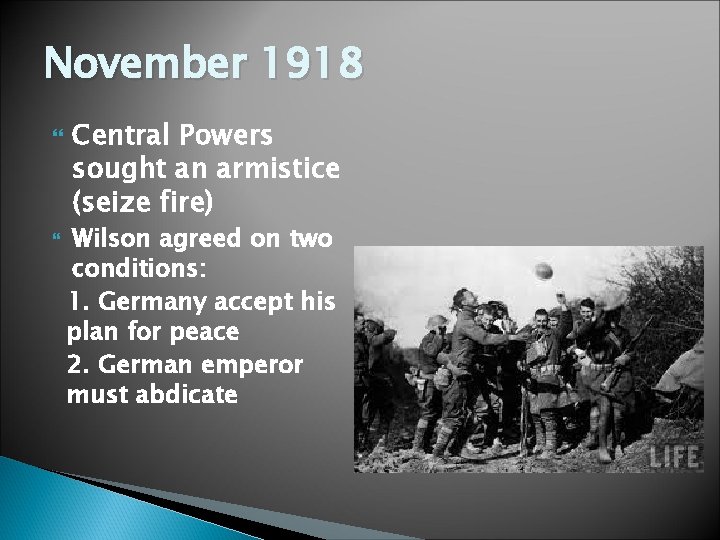
November 1918 Central Powers sought an armistice (seize fire) Wilson agreed on two conditions: 1. Germany accept his plan for peace 2. German emperor must abdicate
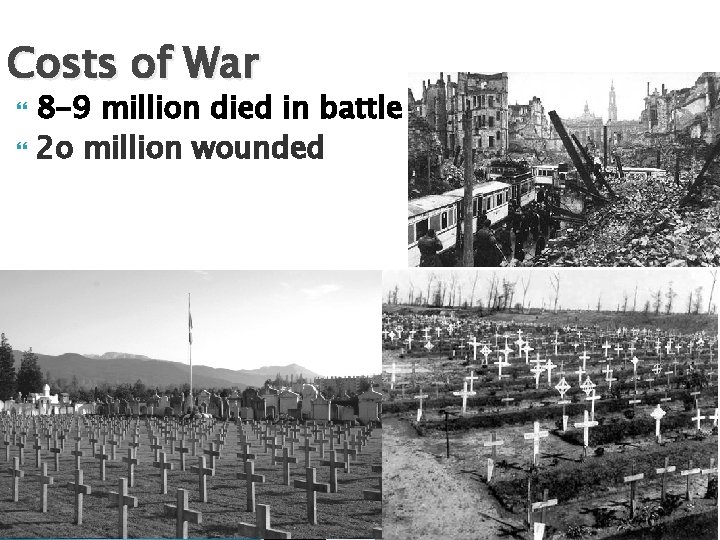
Costs of War 8 -9 million died in battle 2 o million wounded
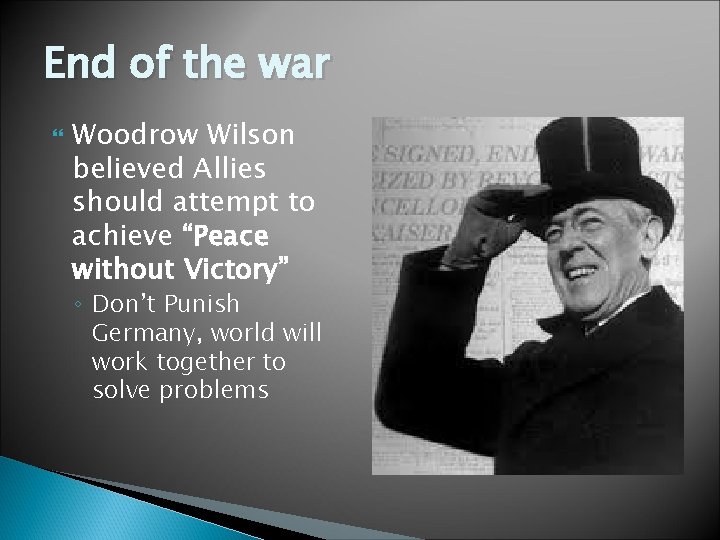
End of the war Woodrow Wilson believed Allies should attempt to achieve “Peace without Victory” ◦ Don’t Punish Germany, world will work together to solve problems
Fourteen Points Wilson’s plan to eliminate the causes of war and bring peace to the world ◦ Points 1 -5 dealt with eliminating the causes of war ◦ Points 8 -13 dealt with selfdetermination (the right of nations to be free and govern themselves) 14 th Point – called for the creation of the global body to preserve peace and prevent future wars called the League of Nations
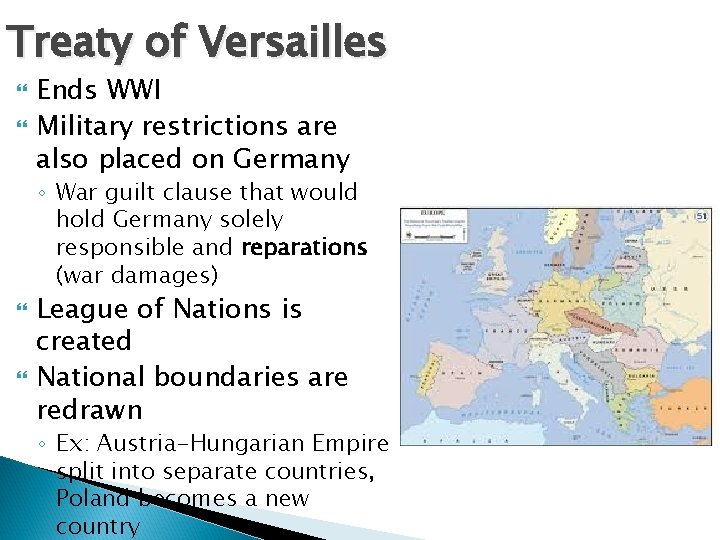
Treaty of Versailles Ends WWI Military restrictions are also placed on Germany ◦ War guilt clause that would hold Germany solely responsible and reparations (war damages) League of Nations is created National boundaries are redrawn ◦ Ex: Austria-Hungarian Empire split into separate countries, Poland becomes a new country

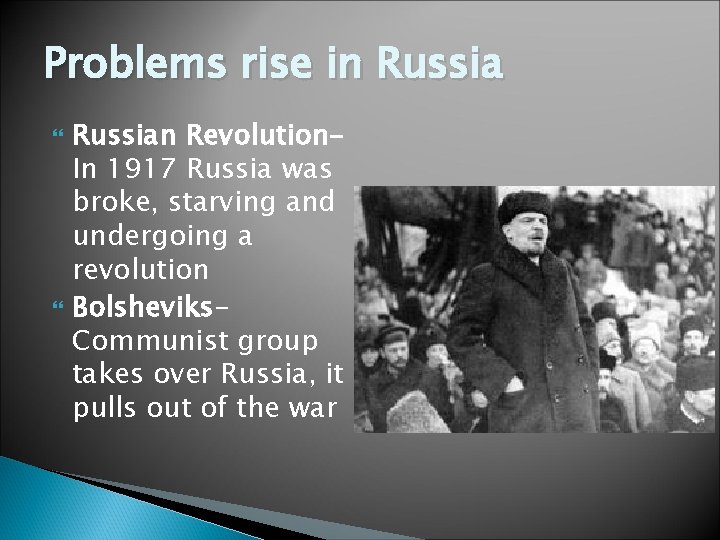
Problems rise in Russian Revolution. In 1917 Russia was broke, starving and undergoing a revolution Bolsheviks. Communist group takes over Russia, it pulls out of the war
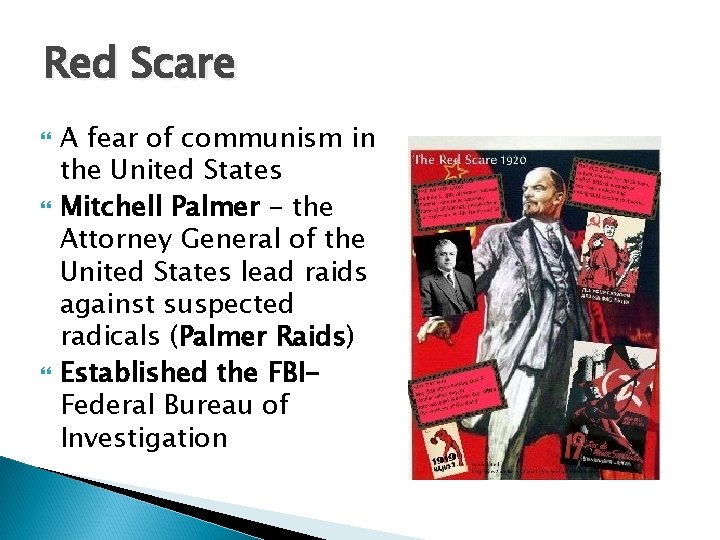
Red Scare A fear of communism in the United States Mitchell Palmer - the Attorney General of the United States lead raids against suspected radicals (Palmer Raids) Established the FBIFederal Bureau of Investigation
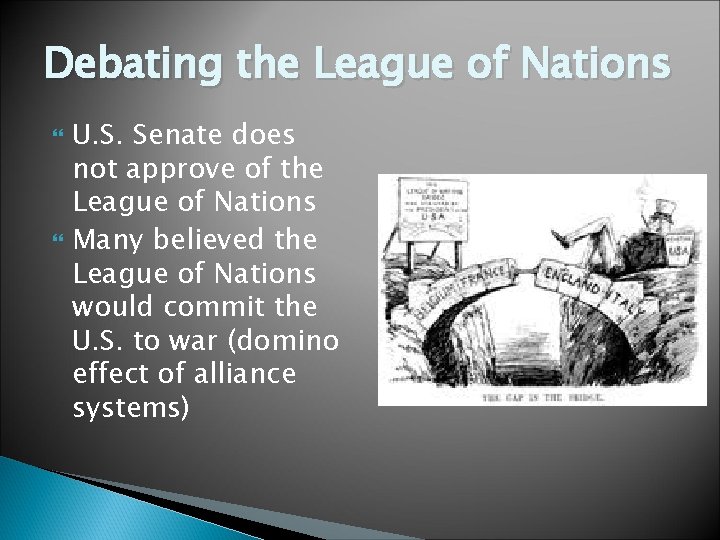
Debating the League of Nations U. S. Senate does not approve of the League of Nations Many believed the League of Nations would commit the U. S. to war (domino effect of alliance systems)
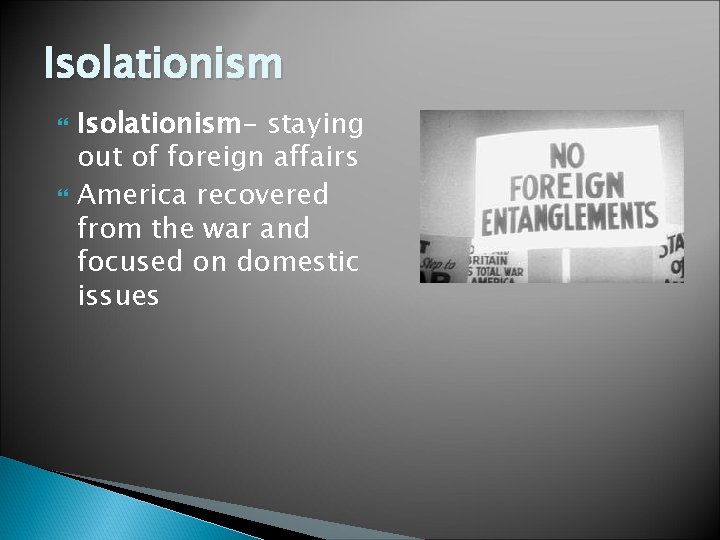
Isolationism Isolationism- staying out of foreign affairs America recovered from the war and focused on domestic issues
Unit 4 Test Format 30 multiple choice 5 IDs ◦ Words from your notecards) ◦ Given 20, you choose 5 1 essay ◦ Given 2 prompts, you choose 1
- Slides: 12