
END OF WAR IN Pacific List Major Event
- Slides: 42
END OF WAR IN Pacific List Major Event : Description/significance:
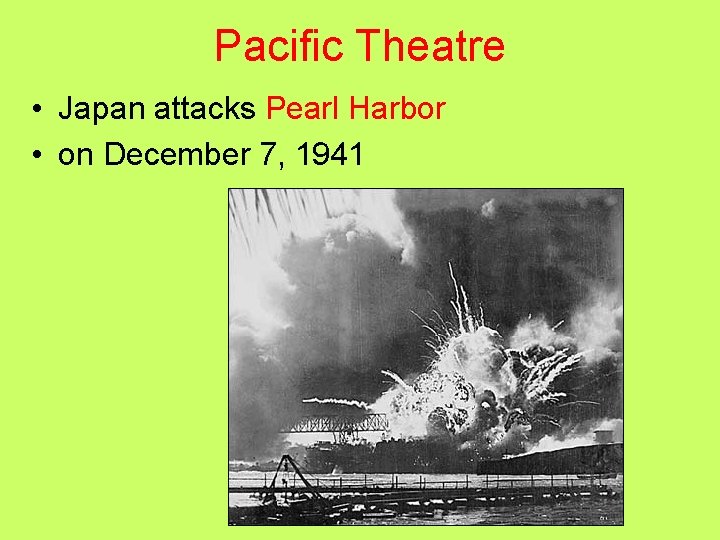
Pacific Theatre • Japan attacks Pearl Harbor • on December 7, 1941
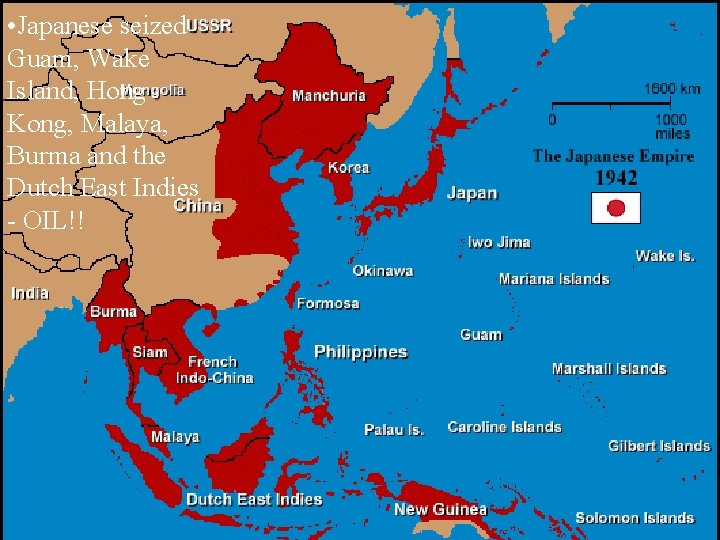
• Japanese seized Guam, Wake Island, Hong Kong, Malaya, Burma and the Dutch East Indies - OIL!!
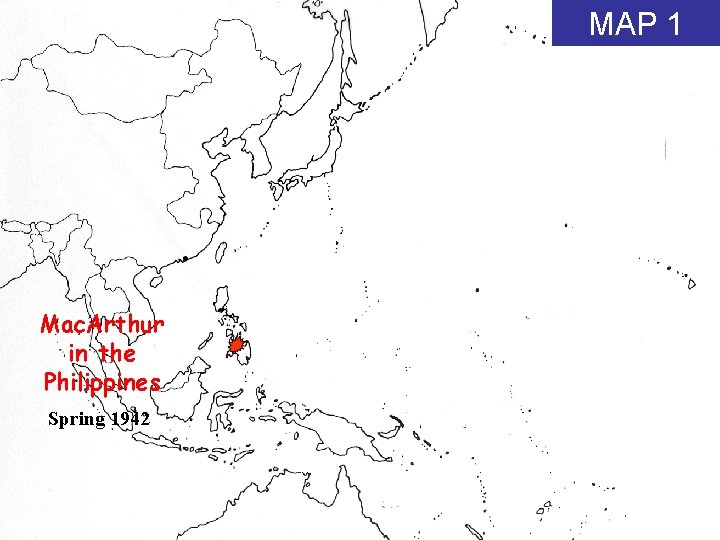
MAP 1 Mac. Arthur in the Philippines Spring 1942
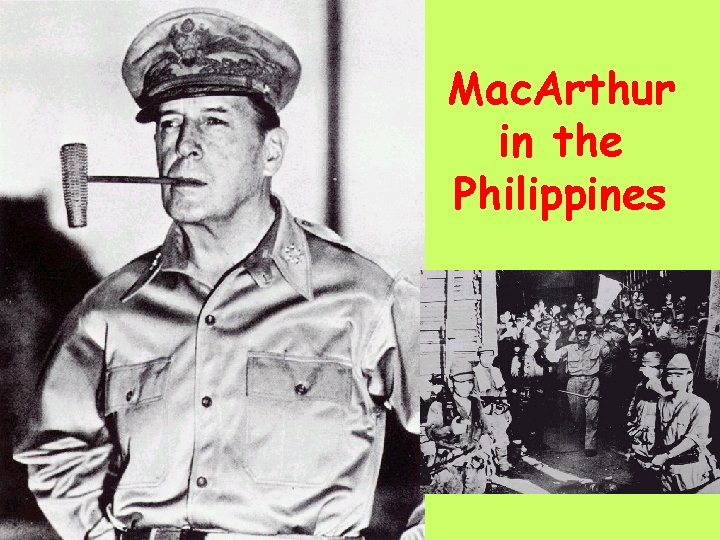
Mac. Arthur in the Philippines
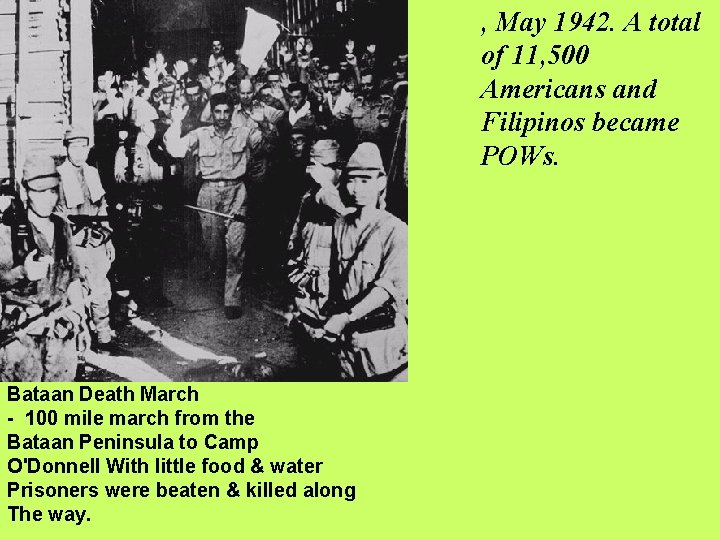
, May 1942. A total of 11, 500 Americans and Filipinos became POWs. Bataan Death March - 100 mile march from the Bataan Peninsula to Camp O'Donnell With little food & water Prisoners were beaten & killed along The way.
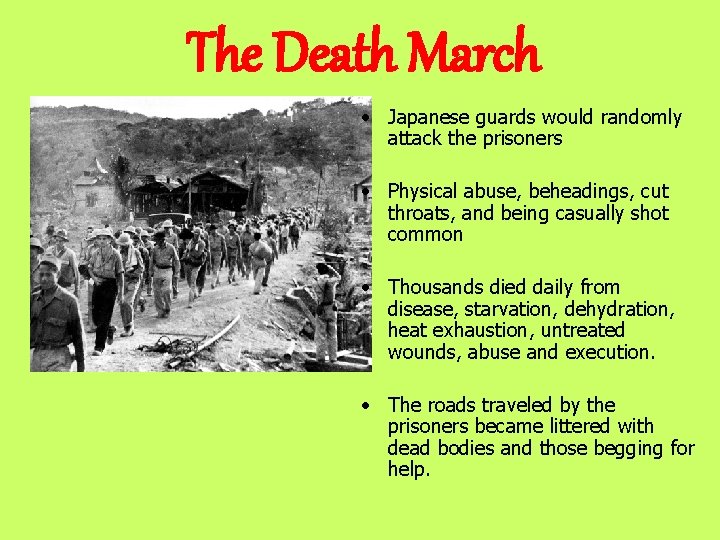
The Death March • Japanese guards would randomly attack the prisoners • Physical abuse, beheadings, cut throats, and being casually shot common • Thousands died daily from disease, starvation, dehydration, heat exhaustion, untreated wounds, abuse and execution. • The roads traveled by the prisoners became littered with dead bodies and those begging for help.
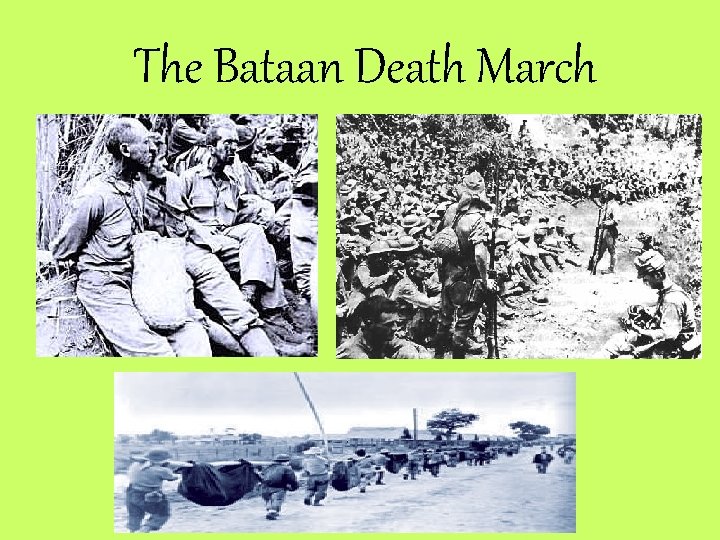
The Bataan Death March
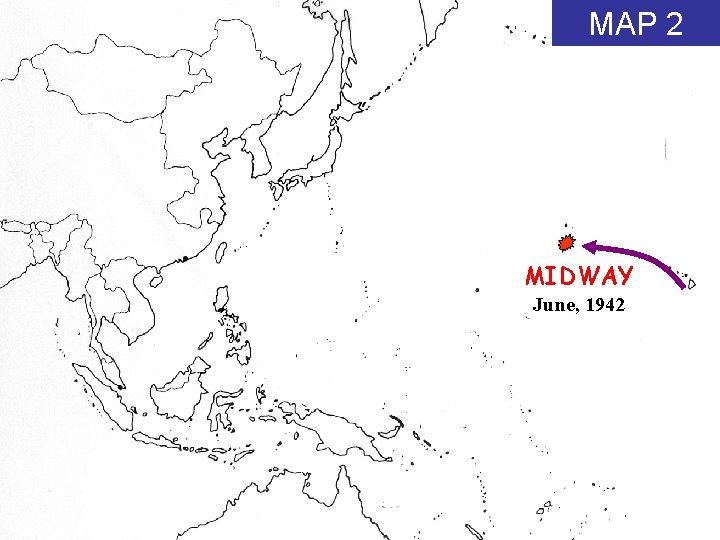
MAP 2 MIDWAY June, 1942
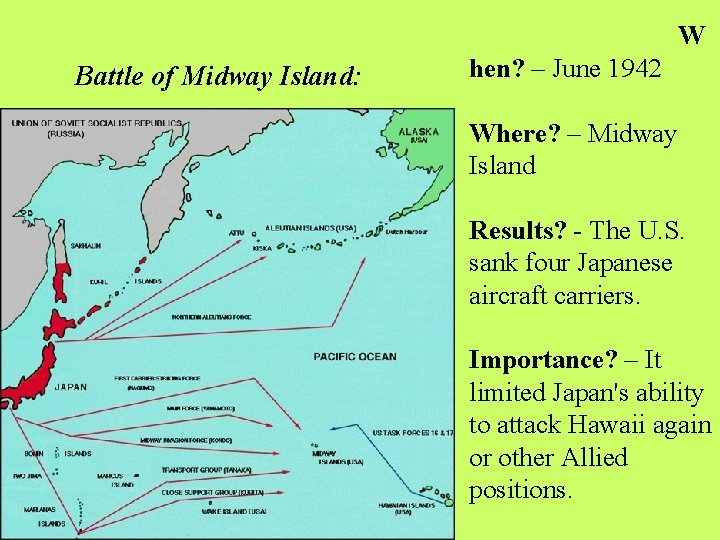
W Battle of Midway Island: hen? – June 1942 Where? – Midway Island Results? - The U. S. sank four Japanese aircraft carriers. Importance? – It limited Japan's ability to attack Hawaii again or other Allied positions.
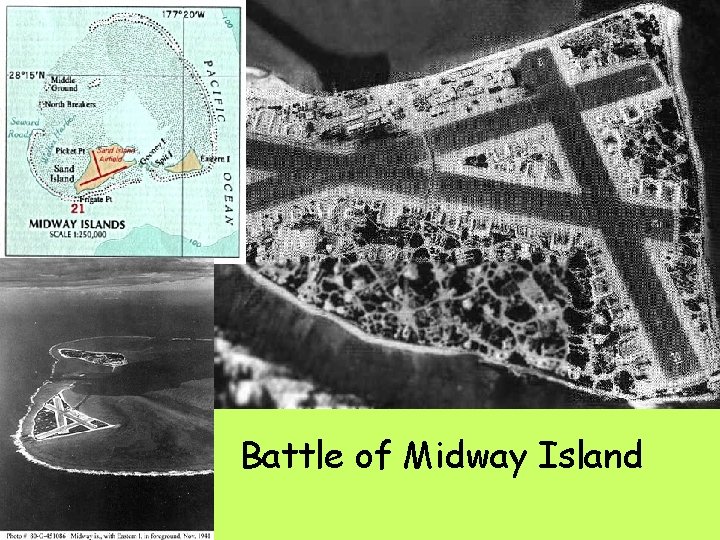
Battle of Midway Island
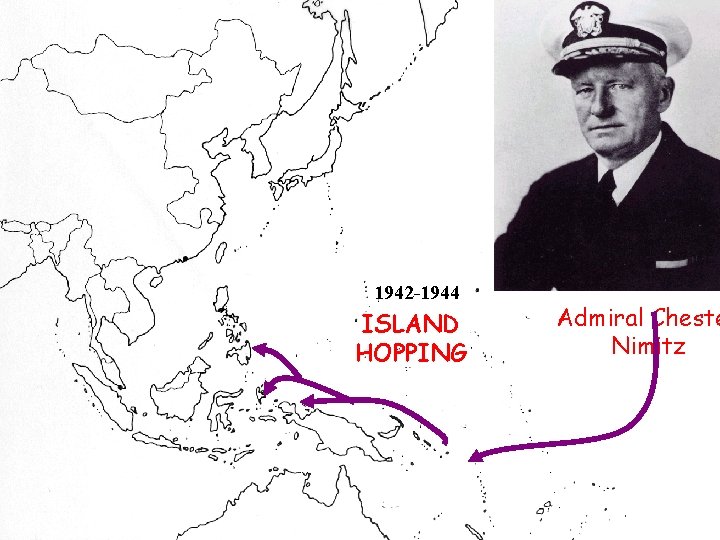
MAP 2 1942 -1944 ISLAND HOPPING Admiral Cheste Nimitz
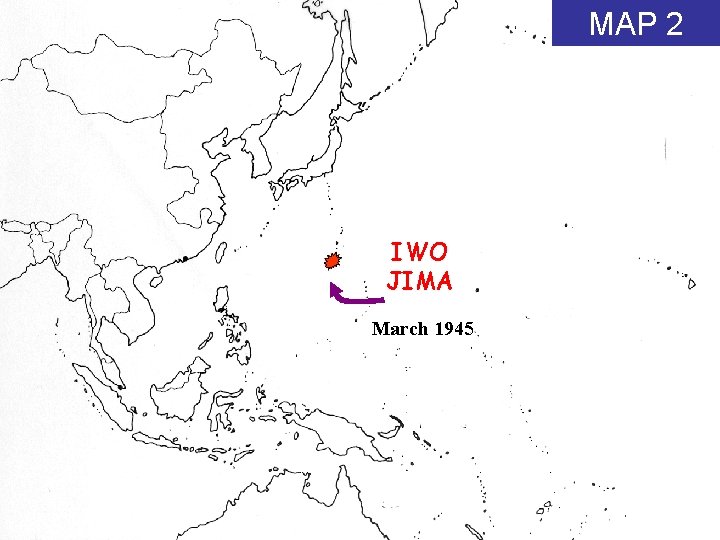
MAP 2 IWO JIMA March 1945
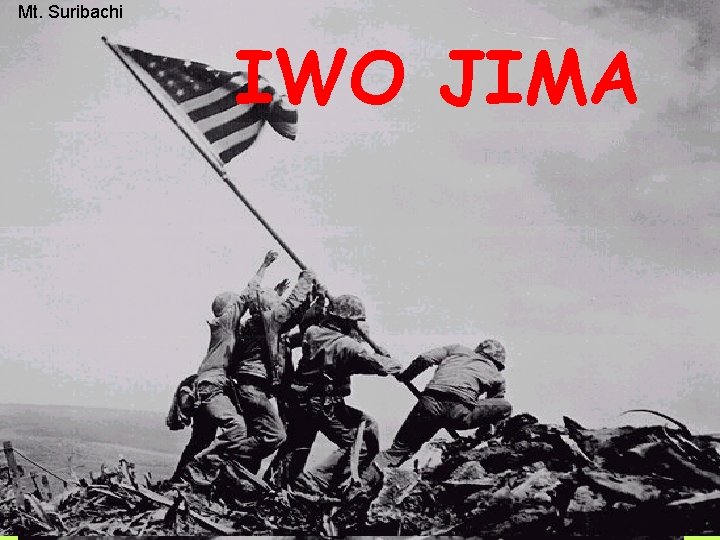
Mt. Suribachi IWO JIMA
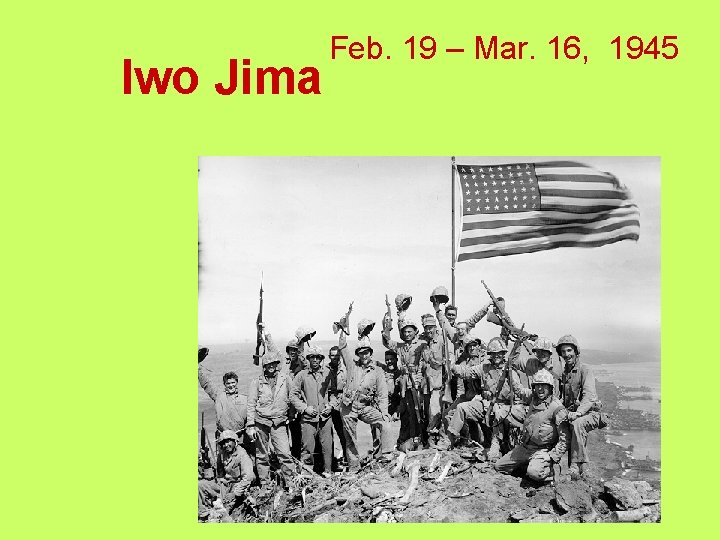
Iwo Jima Feb. 19 – Mar. 16, 1945
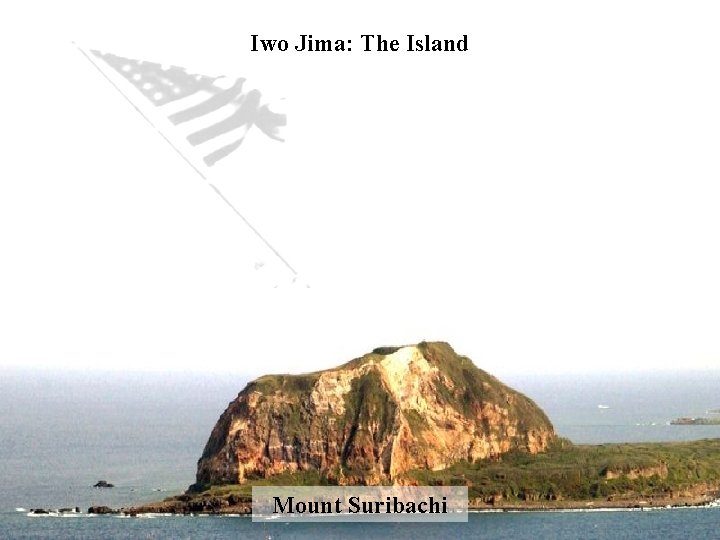
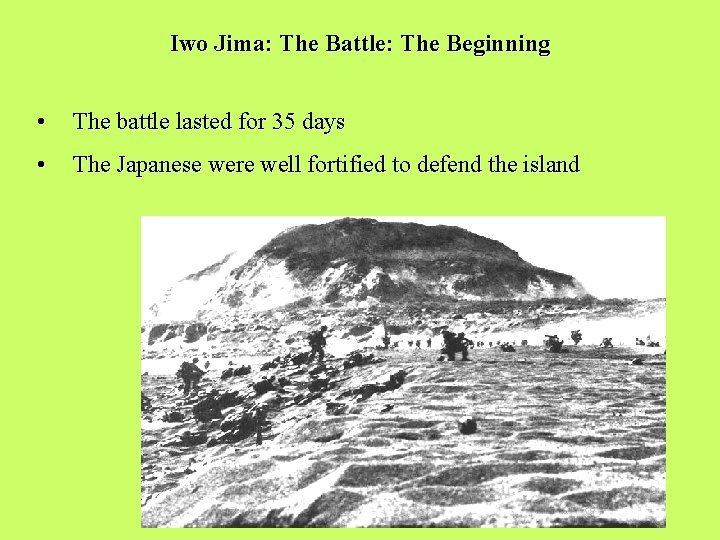
Iwo Jima: The Island Mount Suribachi
Iwo Jima: The Battle: The Beginning • The battle lasted for 35 days • The Japanese were well fortified to defend the island
Iwo Jima: The Battle: Aftermath • The number of US casualties was 27, 909; greater than D-Day • Some of the 3, 000 Japanese left in the caves committed suicide • More than 25% of Medals of Honor awarded in WWII were for the Battle of Iwo Jima
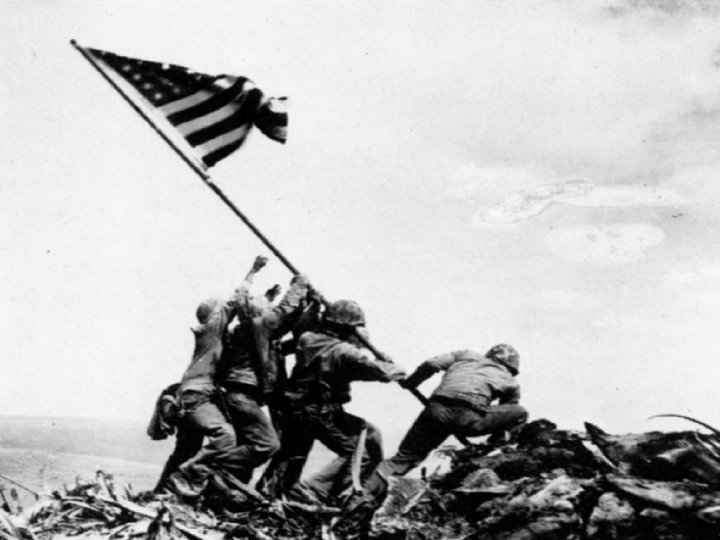
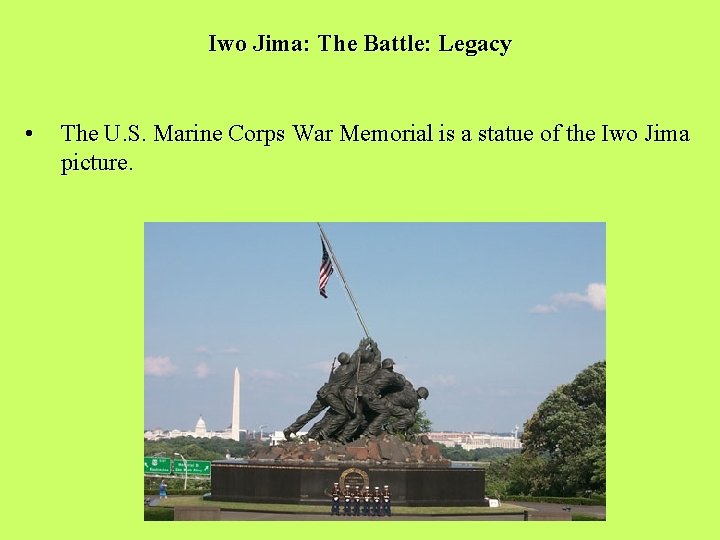
Iwo Jima: The Battle: Legacy • The U. S. Marine Corps War Memorial is a statue of the Iwo Jima picture.
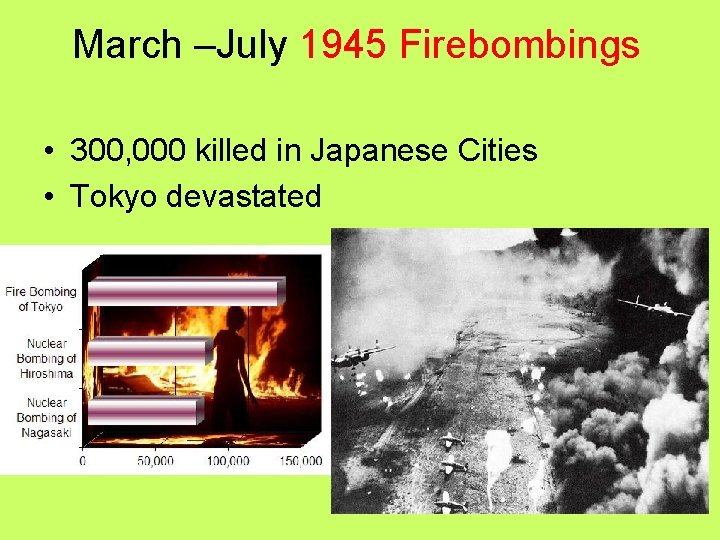
March –July 1945 Firebombings • 300, 000 killed in Japanese Cities • Tokyo devastated
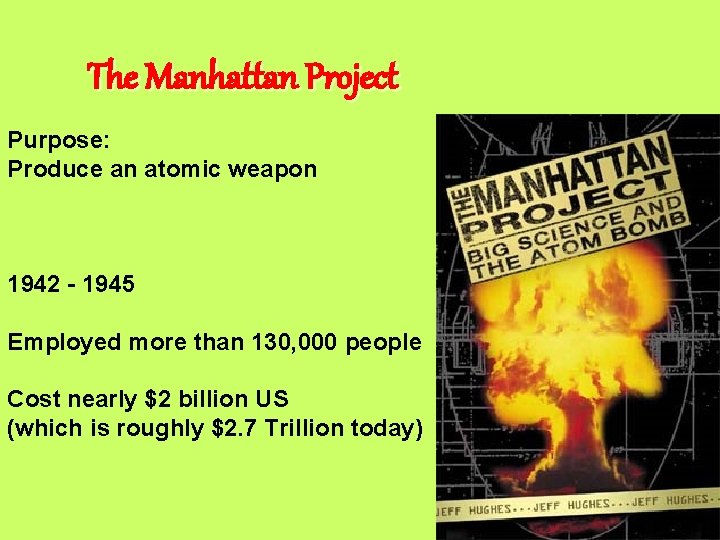
The Manhattan Project Purpose: Produce an atomic weapon 1942 - 1945 Employed more than 130, 000 people Cost nearly $2 billion US (which is roughly $2. 7 Trillion today)
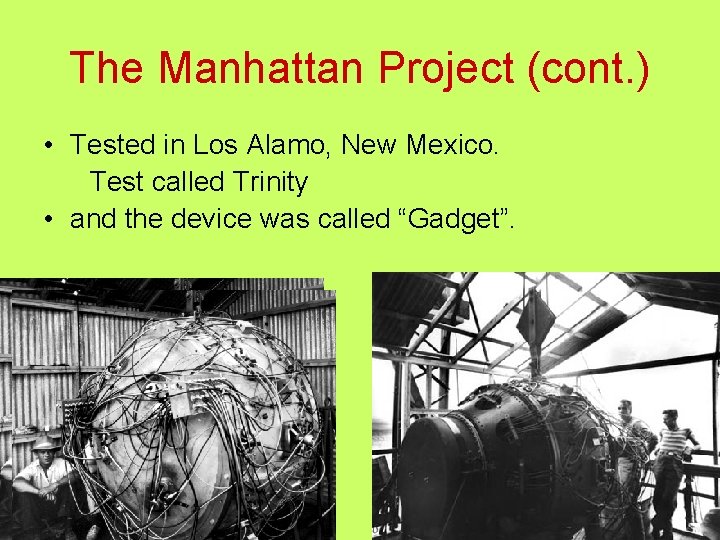
The Manhattan Project (cont. ) • Tested in Los Alamo, New Mexico. Test called Trinity • and the device was called “Gadget”.
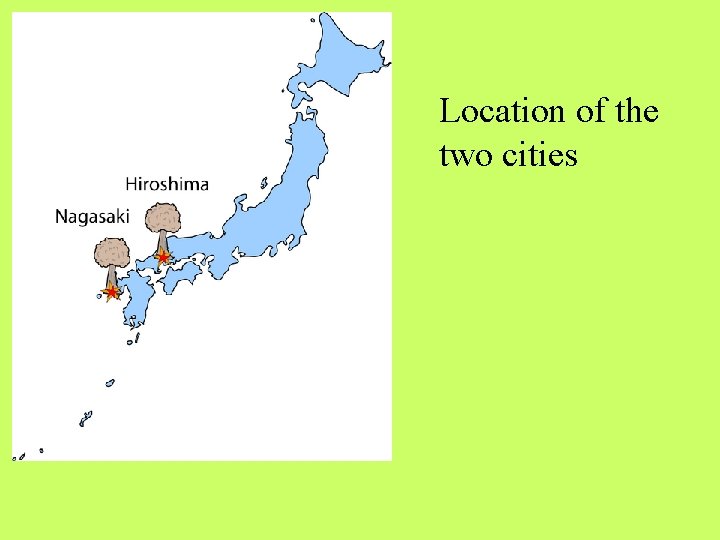
Location of the two cities
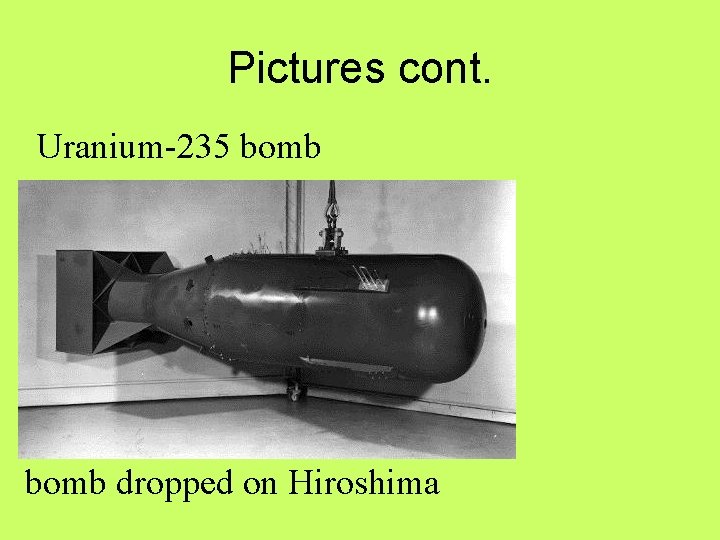
Pictures cont. Uranium-235 bomb dropped on Hiroshima
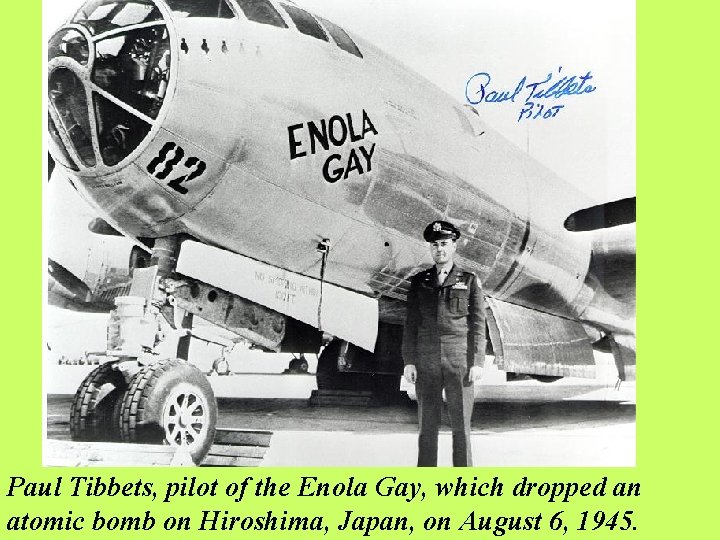
Paul Tibbets, pilot of the Enola Gay, which dropped an atomic bomb on Hiroshima, Japan, on August 6, 1945.
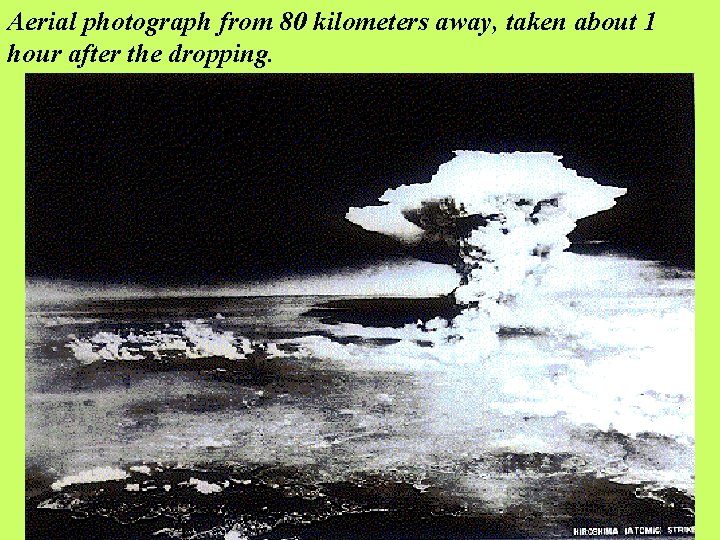
Aerial photograph from 80 kilometers away, taken about 1 hour after the dropping.
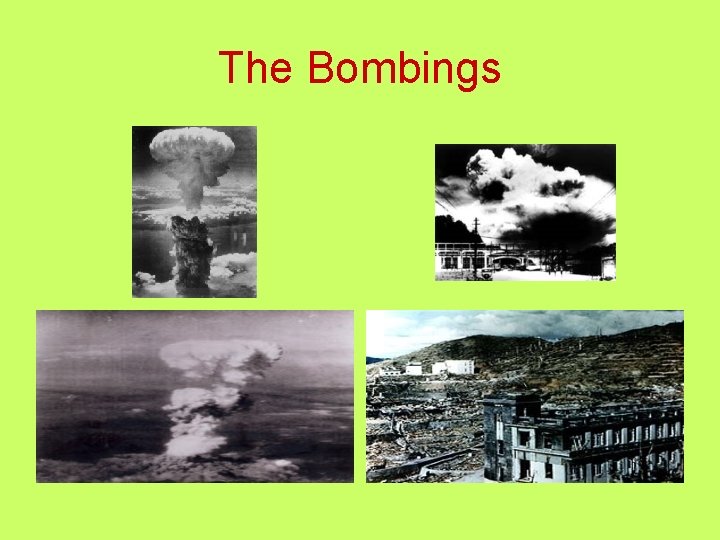
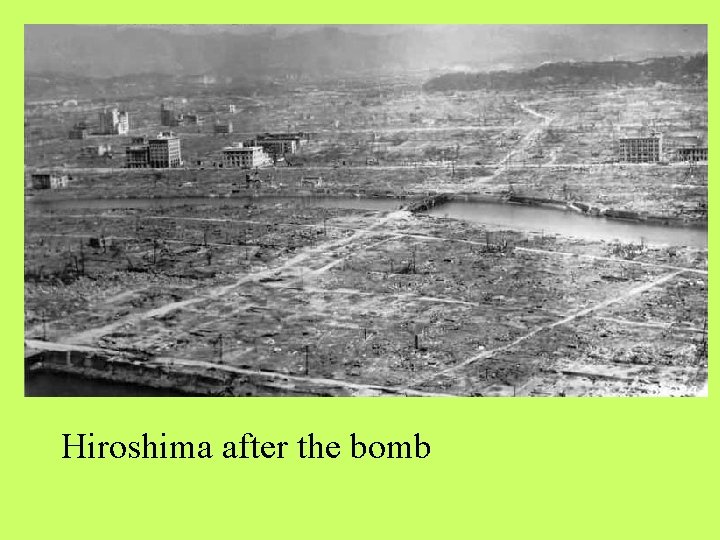
The Bombings
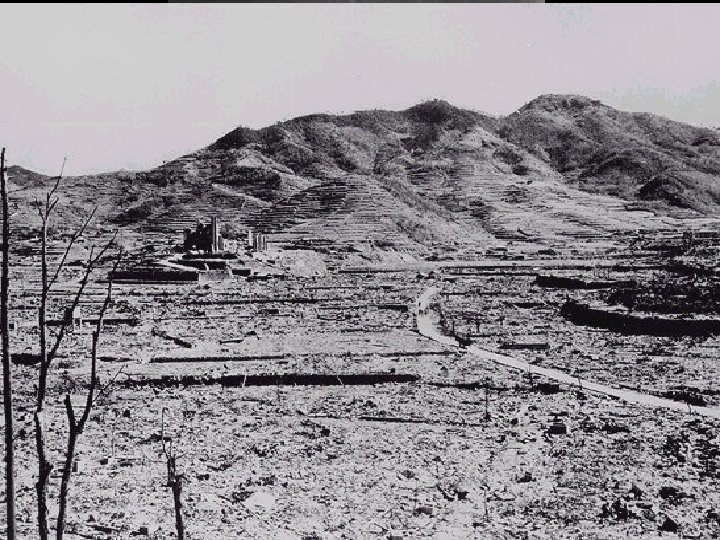
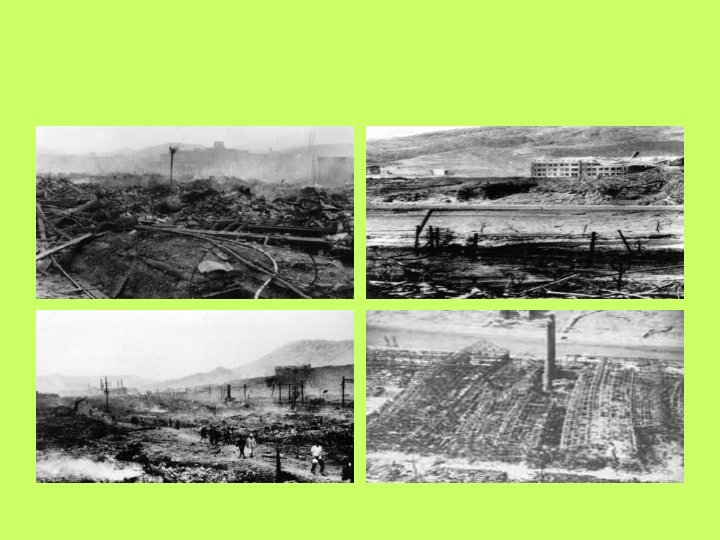
Hiroshima after the bomb
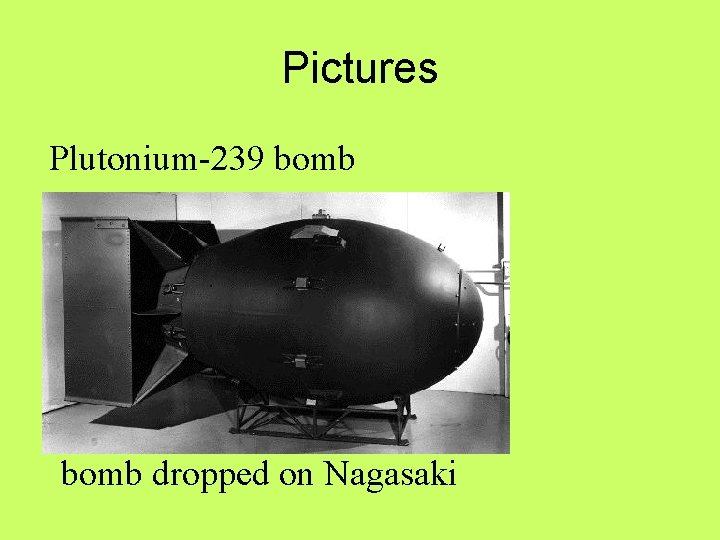
Pictures Plutonium-239 bomb dropped on Nagasaki
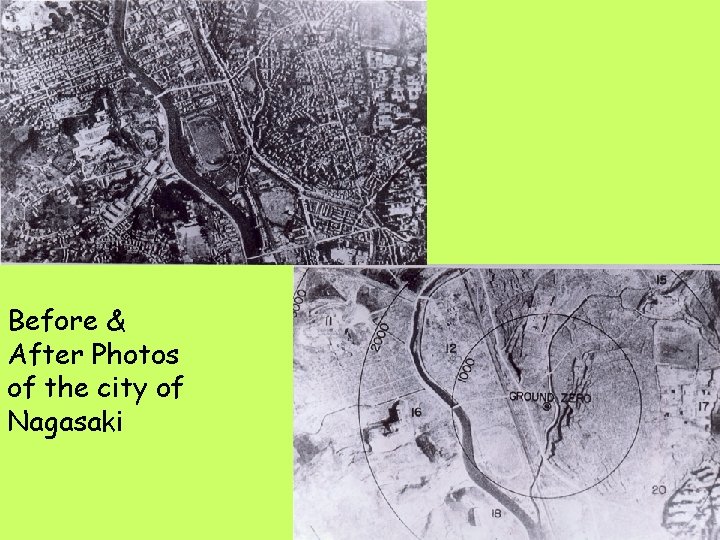
Before & After Photos of the city of Nagasaki
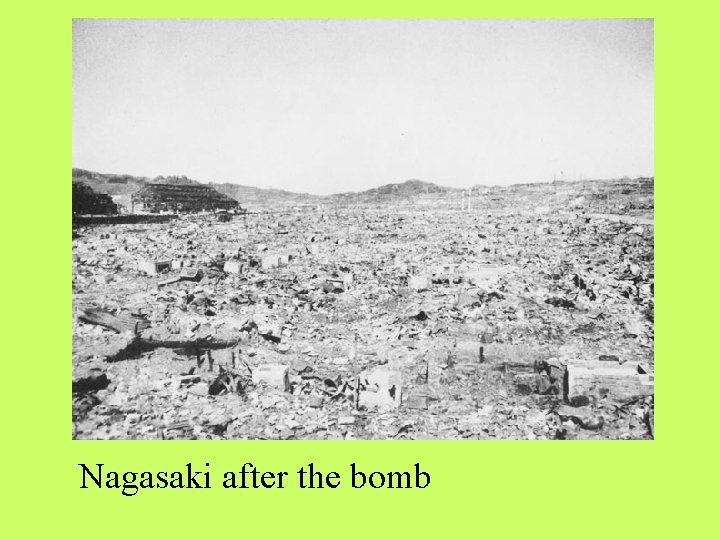
Nagasaki after the bomb
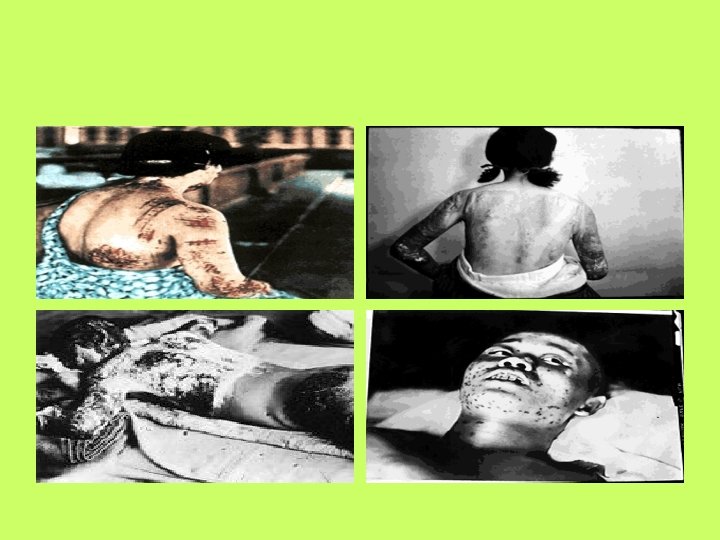
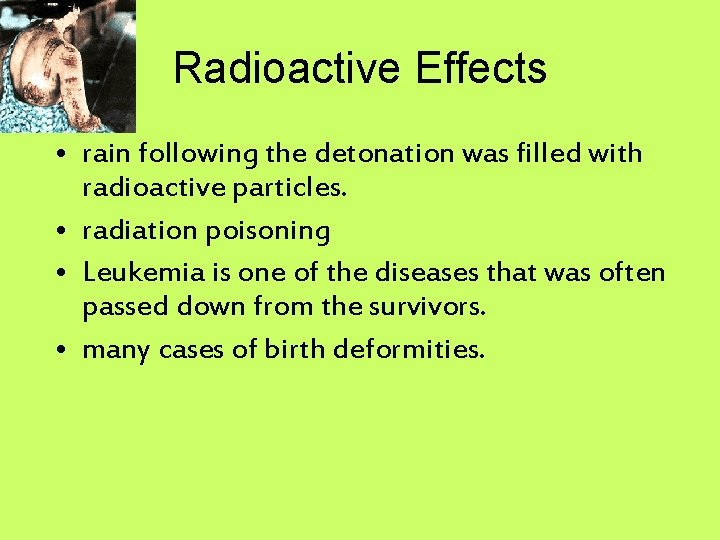
Radioactive Effects • rain following the detonation was filled with radioactive particles. • radiation poisoning • Leukemia is one of the diseases that was often passed down from the survivors. • many cases of birth deformities.
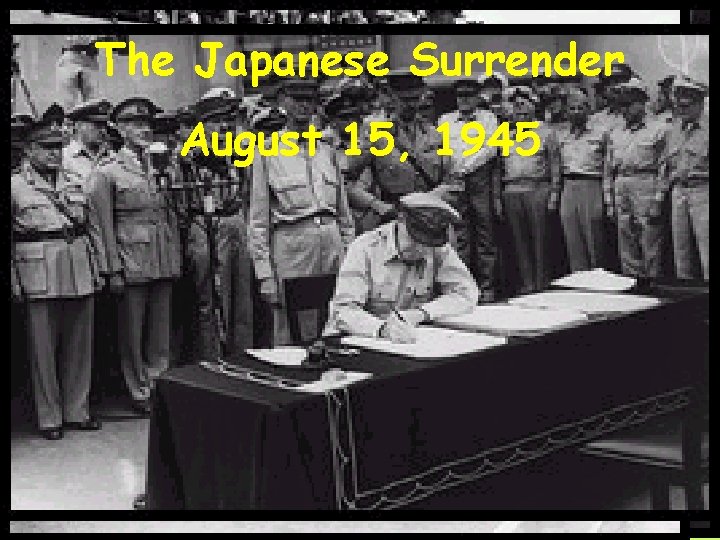
The Japanese Surrender August 15, 1945
Japanese Surrender • Japan announced “unconditional surrender” • Allies allow Japan to keep its emperor. • Signing in Tokyo Bay aboard the battleship Missouri. • The Allied delegation was headed by General Mac. Arthur, who became the military governor of occupied Japan.
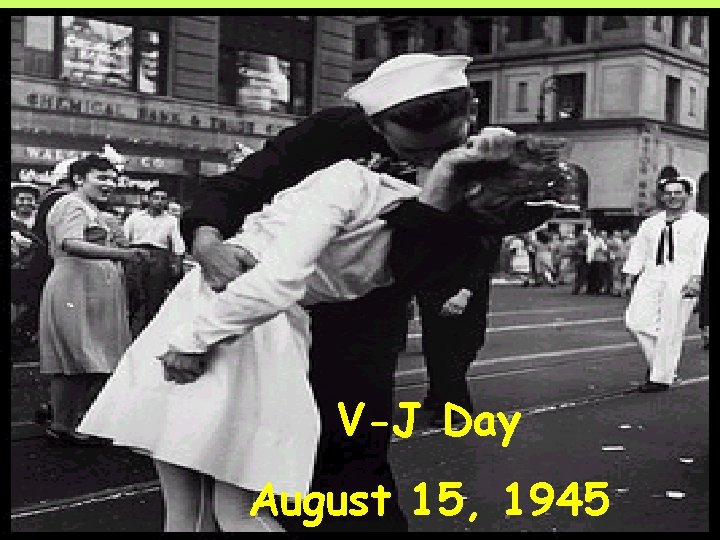
V-J Day August 15, 1945
Many Changes in Technology • Airplanes became a major weapon. • Drones, planes that flew without pilots dropped bombs on cities. • Transport planes parachuted soldiers into battle. • Aircraft carriers launched planes from the sea. • Anti-aircraft guns, special cannons, etc. • Radio detection and ranging RADAR, could located planes and ships in bad weather or at night. • Helicopters, jets, missiles, sonar, dehydrated food, large scale use of antibiotics
America, the Superpower • America became the world’s strongest nation • Helped other nations rebuild • Trouble on the horizon – Soviet Union becomes a rival <COLD WAR>