
End of the Cold War End of the
- Slides: 12
End of the Cold War
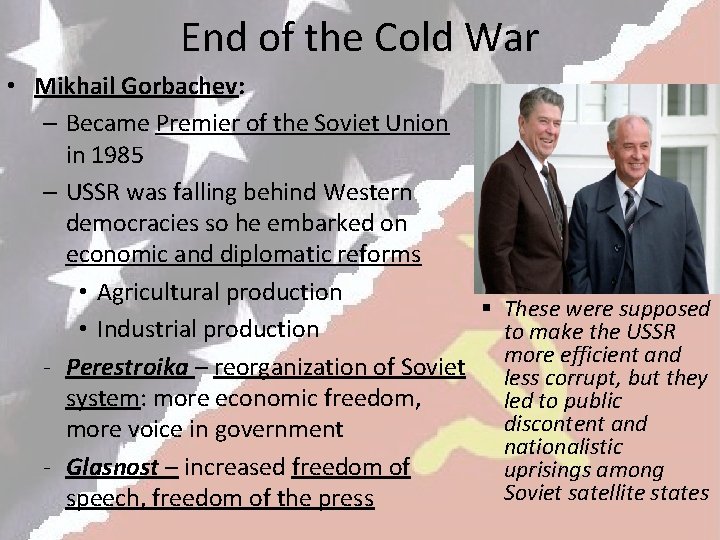
End of the Cold War • Mikhail Gorbachev: – Became Premier of the Soviet Union in 1985 – USSR was falling behind Western democracies so he embarked on economic and diplomatic reforms • Agricultural production § These were supposed • Industrial production to make the USSR efficient and - Perestroika – reorganization of Soviet more less corrupt, but they system: more economic freedom, led to public discontent and more voice in government nationalistic - Glasnost – increased freedom of uprisings among Soviet satellite states speech, freedom of the press
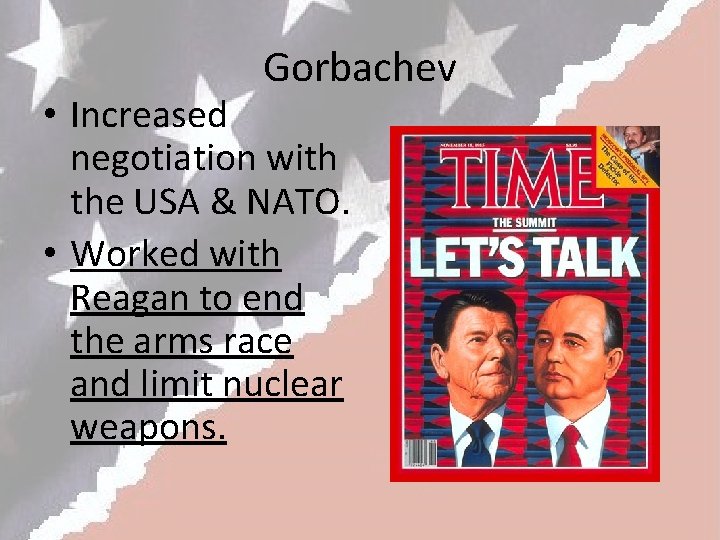
Gorbachev • Increased negotiation with the USA & NATO. • Worked with Reagan to end the arms race and limit nuclear weapons.
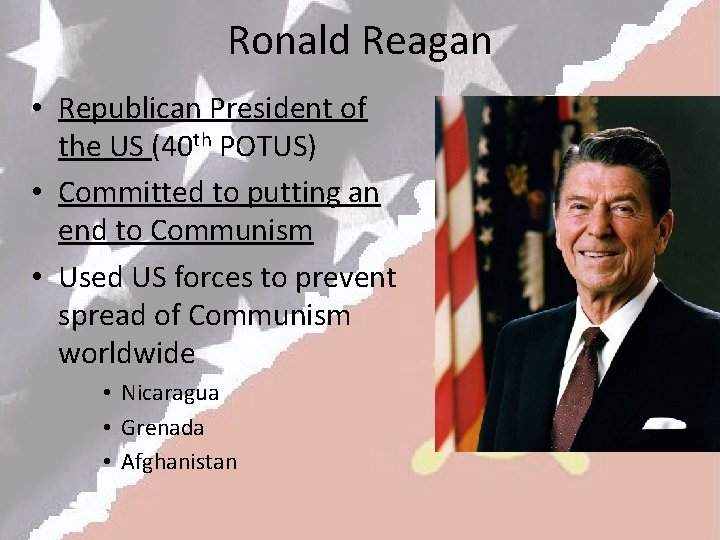
Ronald Reagan • Republican President of the US (40 th POTUS) • Committed to putting an end to Communism • Used US forces to prevent spread of Communism worldwide • Nicaragua • Grenada • Afghanistan
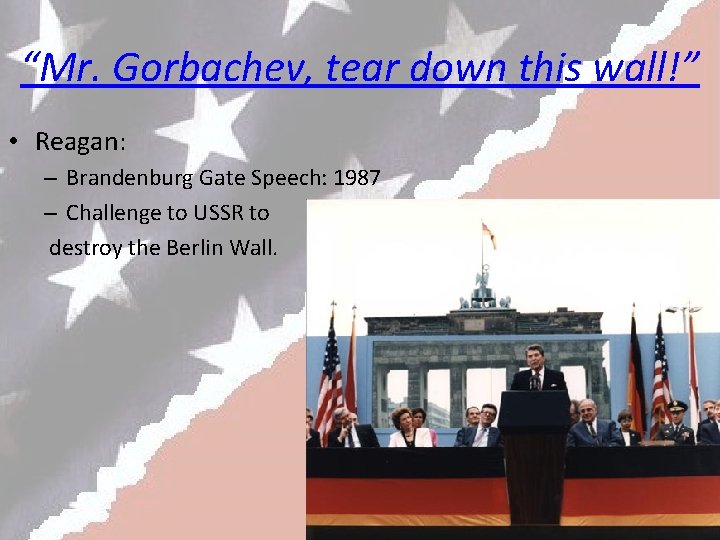
“Mr. Gorbachev, tear down this wall!” • Reagan: – Brandenburg Gate Speech: 1987 – Challenge to USSR to destroy the Berlin Wall.
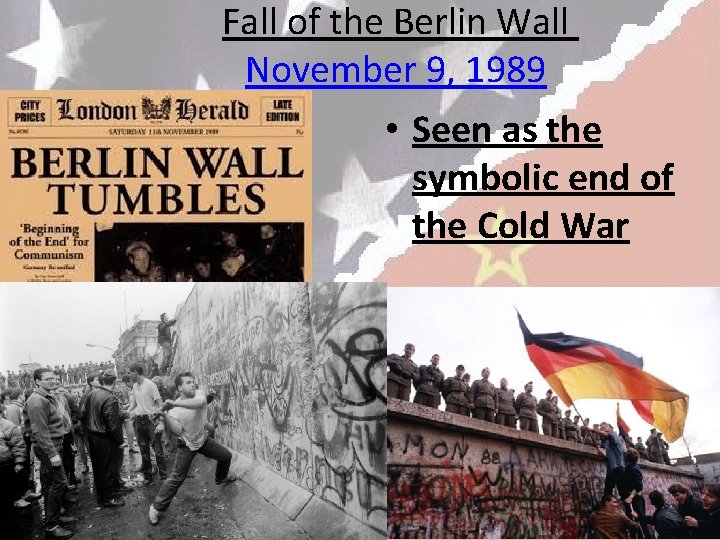
Fall of the Berlin Wall November 9, 1989 • Seen as the symbolic end of the Cold War
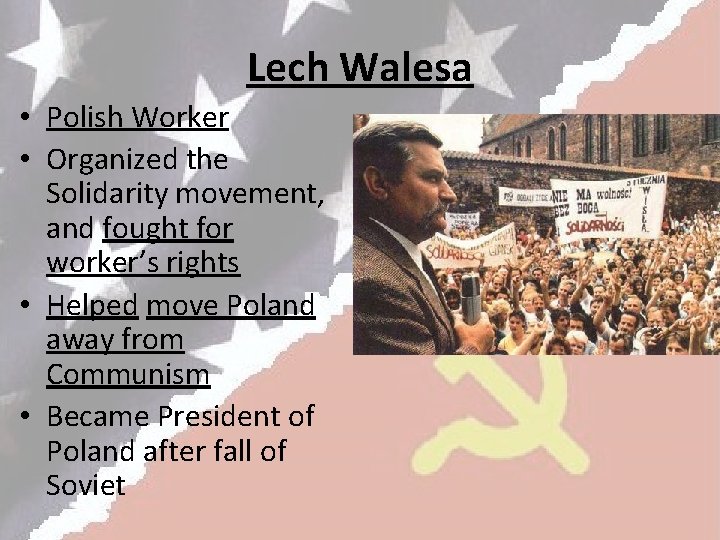
Lech Walesa • Polish Worker • Organized the Solidarity movement, and fought for worker’s rights • Helped move Poland away from Communism • Became President of Poland after fall of Soviet
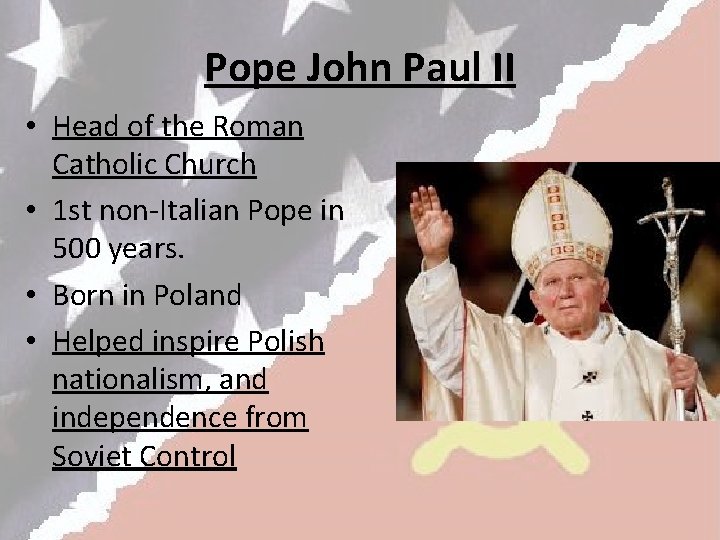
Pope John Paul II • Head of the Roman Catholic Church • 1 st non-Italian Pope in 500 years. • Born in Poland • Helped inspire Polish nationalism, and independence from Soviet Control
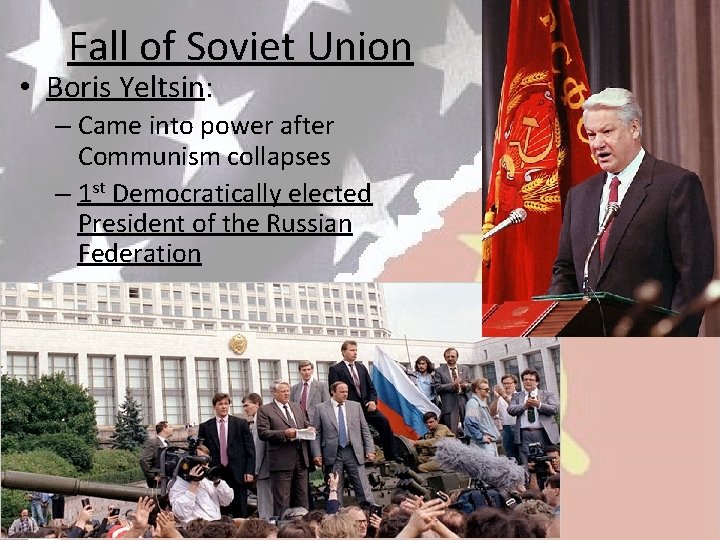
Fall of Soviet Union • Boris Yeltsin: – Came into power after Communism collapses – 1 st Democratically elected President of the Russian Federation
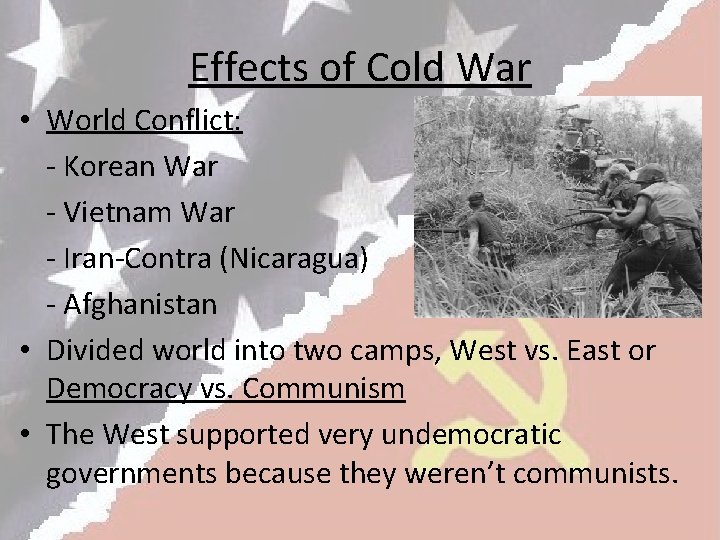
Effects of Cold War • World Conflict: - Korean War - Vietnam War - Iran-Contra (Nicaragua) - Afghanistan • Divided world into two camps, West vs. East or Democracy vs. Communism • The West supported very undemocratic governments because they weren’t communists.
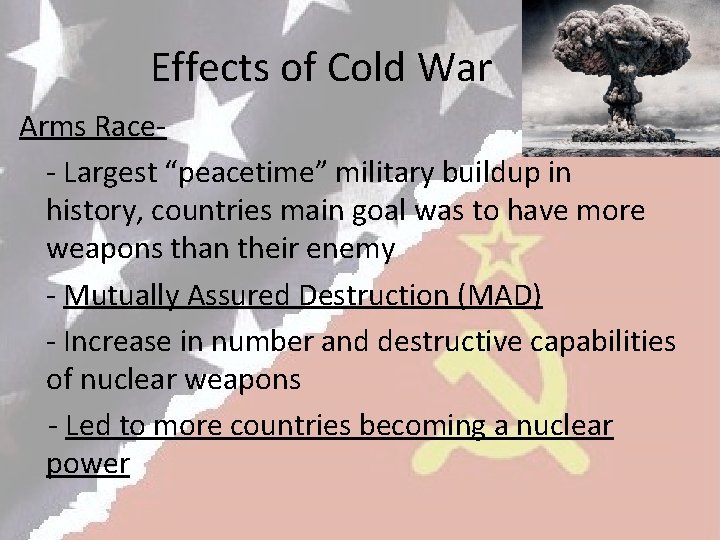
Effects of Cold War Arms Race- Largest “peacetime” military buildup in history, countries main goal was to have more weapons than their enemy - Mutually Assured Destruction (MAD) - Increase in number and destructive capabilities of nuclear weapons - Led to more countries becoming a nuclear power
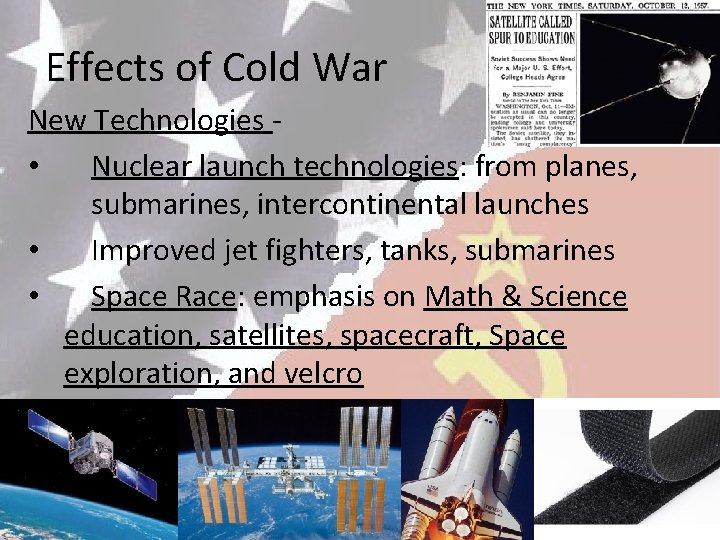
Effects of Cold War New Technologies • Nuclear launch technologies: from planes, submarines, intercontinental launches • Improved jet fighters, tanks, submarines • Space Race: emphasis on Math & Science education, satellites, spacecraft, Space exploration, and velcro