
End of the Cold War By the 1980s
End of the Cold War
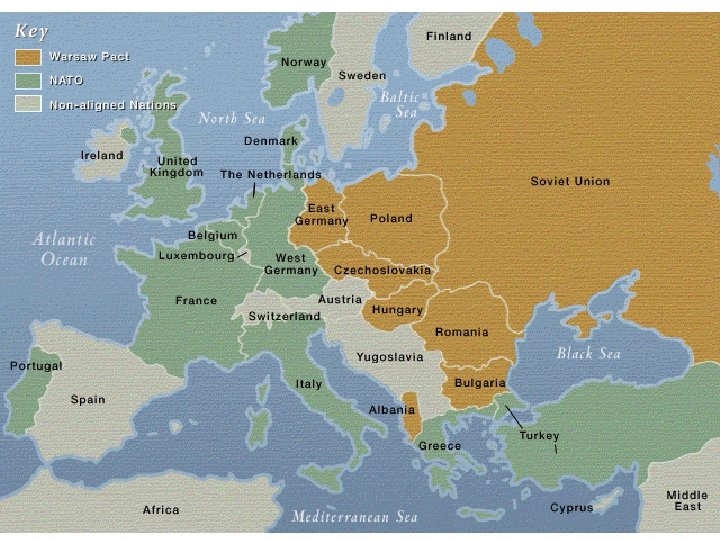
By the 1980’s • The Soviet economy is struggling, partially due to military involvement in Warsaw Pact countries and outside of Europe (Afghanistan). • Mikhail Gorbachav takes power in the USSR in 1985 and implements reforms: – Glasnost (openness): more open government and wider dissemination of information – Perestroika (restructuring): initiated economic reforms to decentralize planning and end price controls – Also, allowed for some democratic elements and would reduce the use of military presence in Warsaw Pact countries
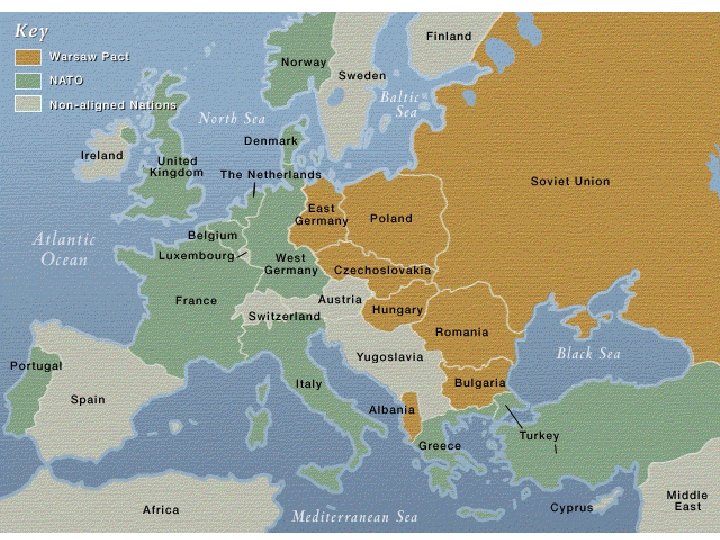
1989 -1990 • Warsaw Pact countries seek independence from Soviet control: – July 1989—elections held in Poland – Nov 9 1989—Fall of the Berlin Wall – Dec 28 1989—Havel elected President of Czechoslovakia – Oct 3 1990—GDR incorporated in to FRG – 1990—Soviet military forces out of Hungary – May 1990—free elections in Romania – June 1990—free elections in Bulgaria
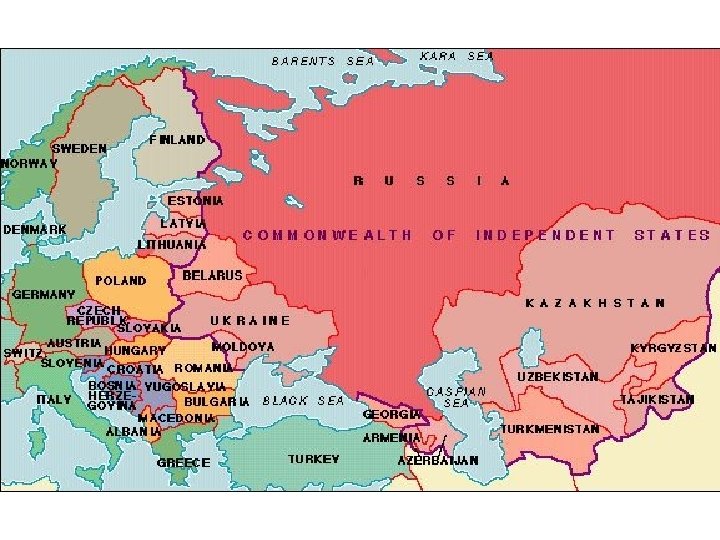
Collapse of the Soviet Union • With independence of Warsaw Pact countries, non-Russian Soviet Socialist Republics sought independence. – Baltic countries had been incorporated through agreements with Nazi Germany • Government lacked strength to stop them • August 1991 communist hardliners kidnap Gorbachev and announce he is too ill to govern and leadership under KGB and Communist party.
• Population protests. • Attempts to suppress public led to military mutiny—the military refused to use force against Soviet citizens. • After three days the coup collapsed. • August 24 Gorbachev dissolved Central Committee of the Communist Party and resigned as General Secretary. • Shortly after, the communist elements of the government were dissolved creating a power vacuum.
• December 25 1991 Gorbachev resigned as president and the Soviet Union was replaced by the Commonwealth of Independent States in January 1992. – 15 independent but related countries; the largest and most powerful was Russia under President Boris Yeltsin.
- Slides: 9