
encourage My parents always nkrd encouraged me to














- Slides: 56
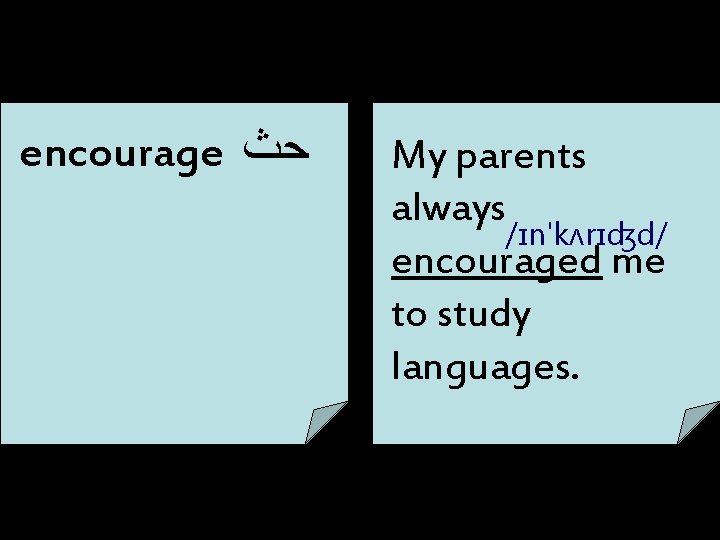
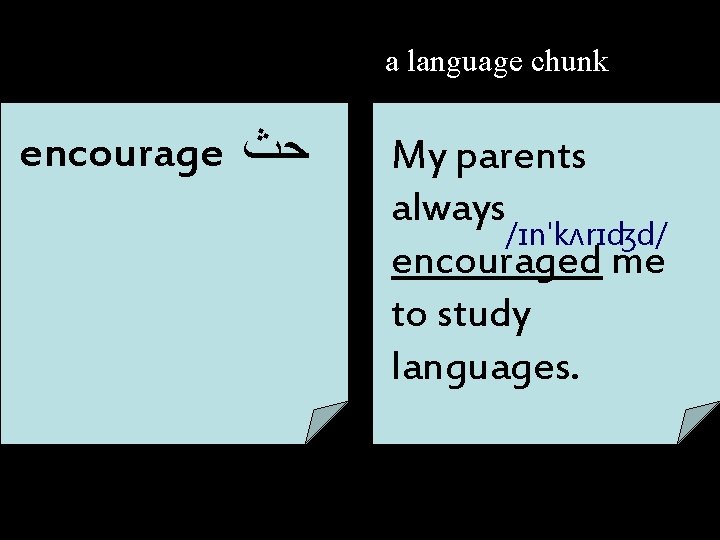
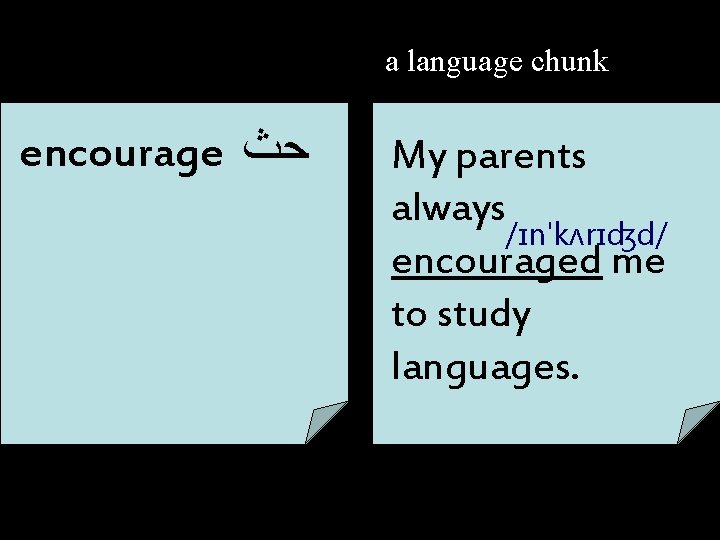
encourage ﺣﺚ My parents always /ɪn'kʌrɪʤd/ encouraged me to study languages.
Why is 6 afraid of 7? Because 7 ate 9.
Study Skills: Teaching Learners How To Learn Sebastian Lesniewski
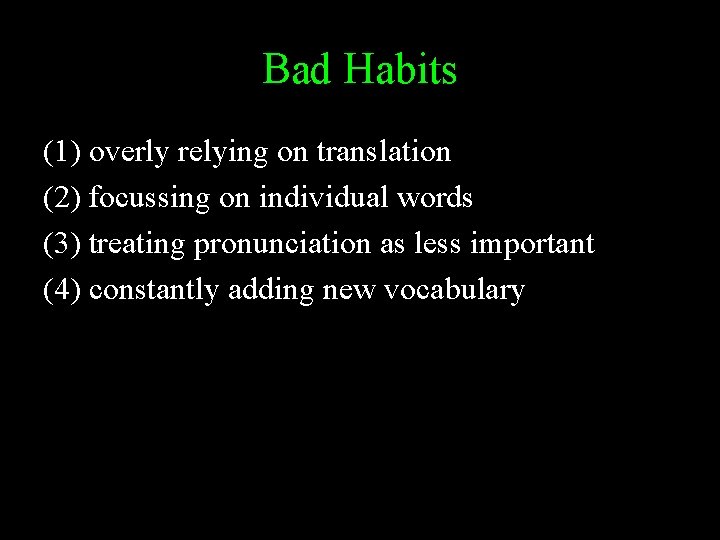
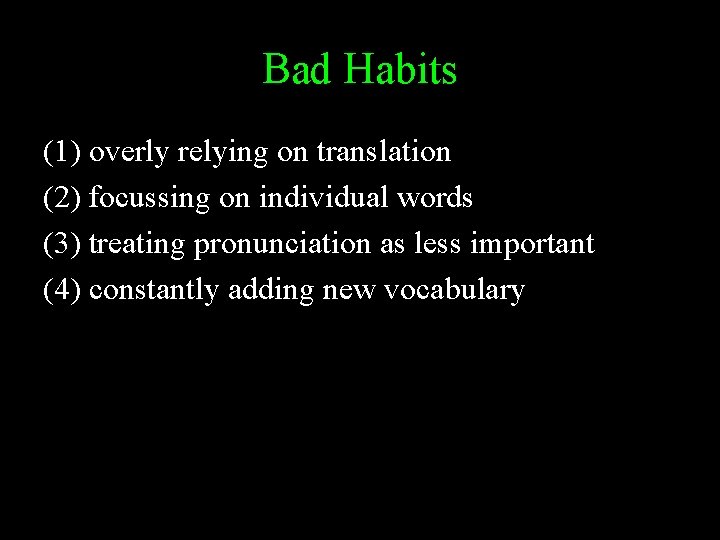
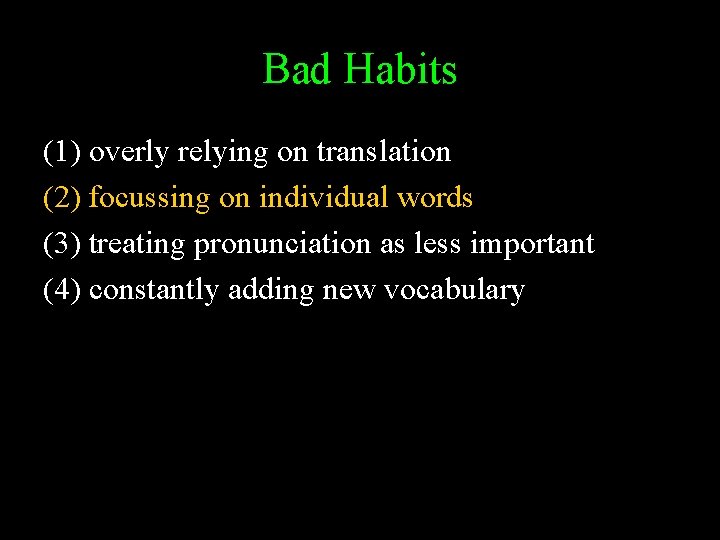
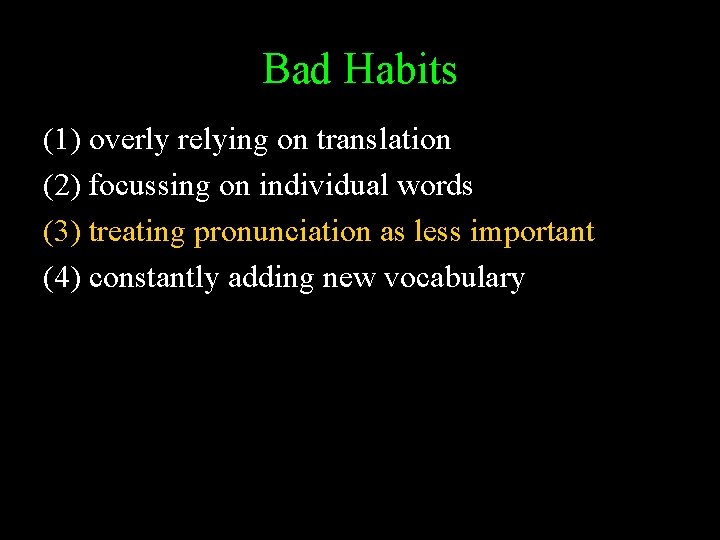
Bad Habits (1) overly relying on translation (2) focussing on individual words (3) treating pronunciation as less important (4) constantly adding new vocabulary
II need learnto 100 get words 7. 5 in a. IELTS. day.
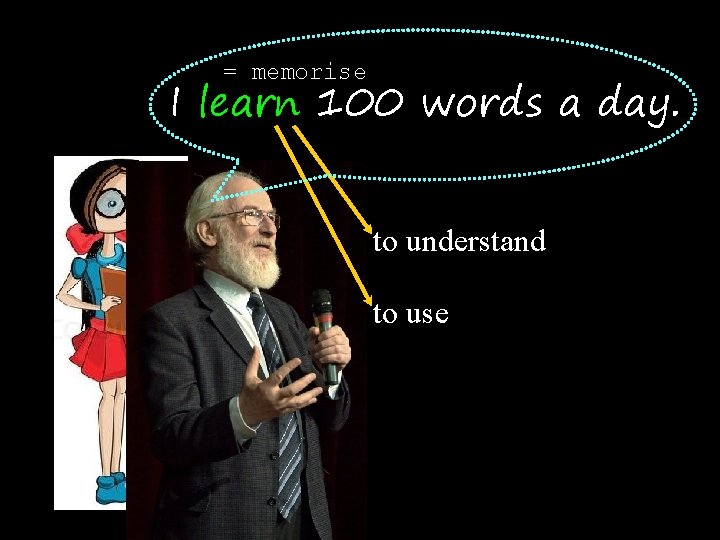
= memorise I learn 100 words a day. to understand to use
a language chunk encourage ﺣﺚ My parents always /ɪn'kʌrɪʤd/ encouraged me to study languages.
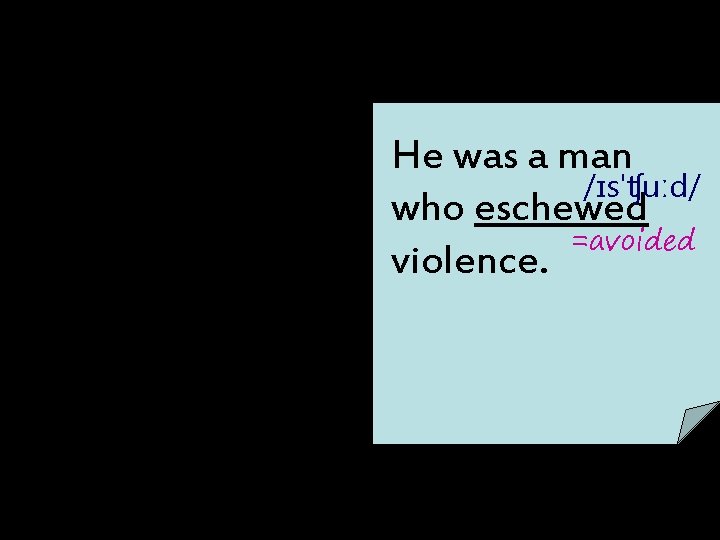
He was a man /ɪs'ʧuːd/ who eschewed =avoided violence.
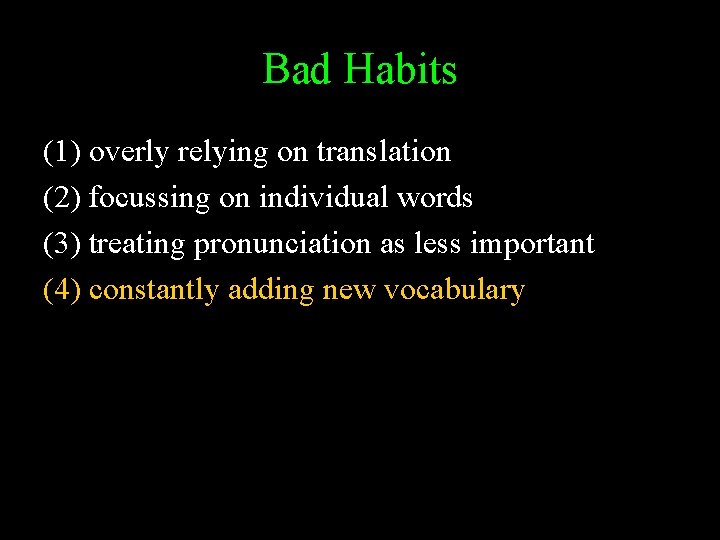
Bad Habits (1) overly relying on translation (2) focussing on individual words (3) treating pronunciation as less important (4) constantly adding new vocabulary
Bad Habits (1) overly relying on translation - leads to errors
I listen radio. I went in London. lexical priming – Michael Hoey
Bad Habits (1) overly relying on translation - leads to errors - prevents thinking in English
- Why isn't there any aspirin in the jungle? - Because parrots eat'em all.
Bad Habits (1) overly relying on translation - leads to errors - prevents thinking in English
Bad Habits (1) overly relying on translation (2) focussing on individual words (3) treating pronunciation as less important (4) constantly adding new vocabulary
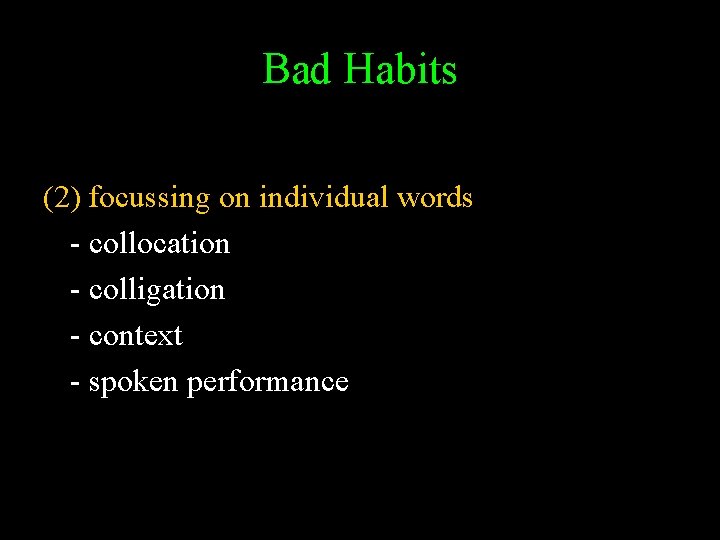
Bad Habits (2) focussing on individual words - collocation - colligation - context - spoken performance
Learning a foreign language has become a common thing, which is accepted by generally people that it can represent learner obtain a useful skill. . it is generally accepted. . .
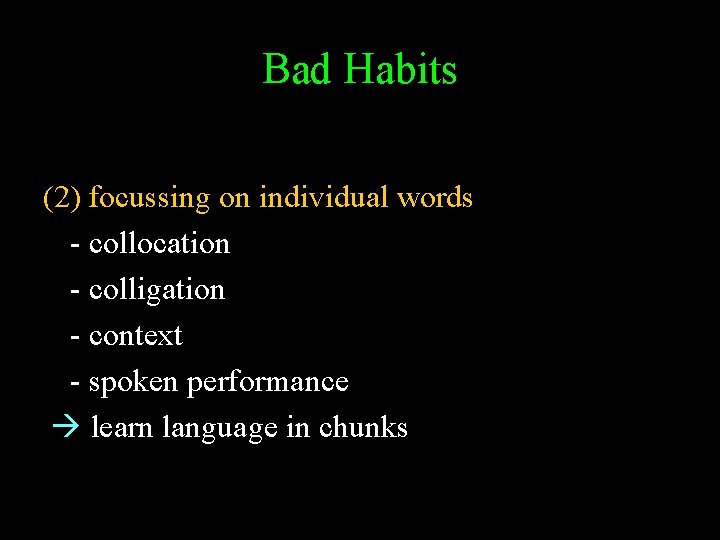
Bad Habits (2) focussing on individual words - collocation - colligation - context - spoken performance learn language in chunks
a language chunk encourage ﺣﺚ My parents always /ɪn'kʌrɪʤd/ encouraged me to study languages.
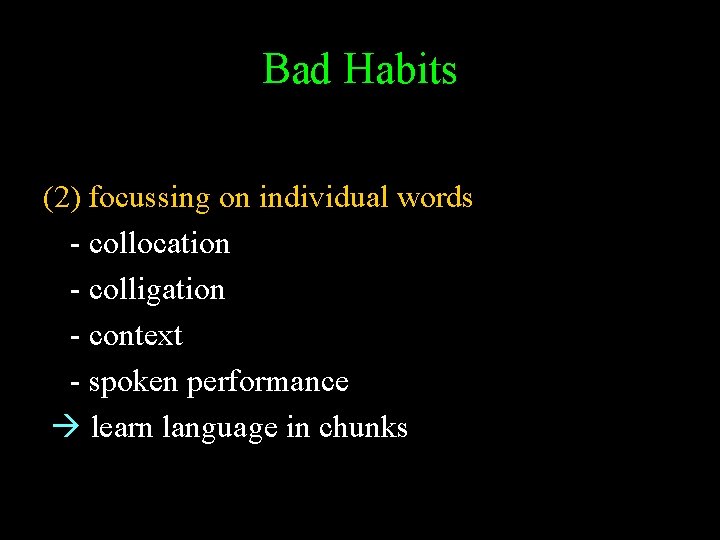
Bad Habits (2) focussing on individual words - collocation - colligation - context - spoken performance learn language in chunks
Bad Habits (1) overly relying on translation (2) focussing on individual words (3) treating pronunciation as less important (4) constantly adding new vocabulary
Bad Habits (3) treating pronunciation as less important
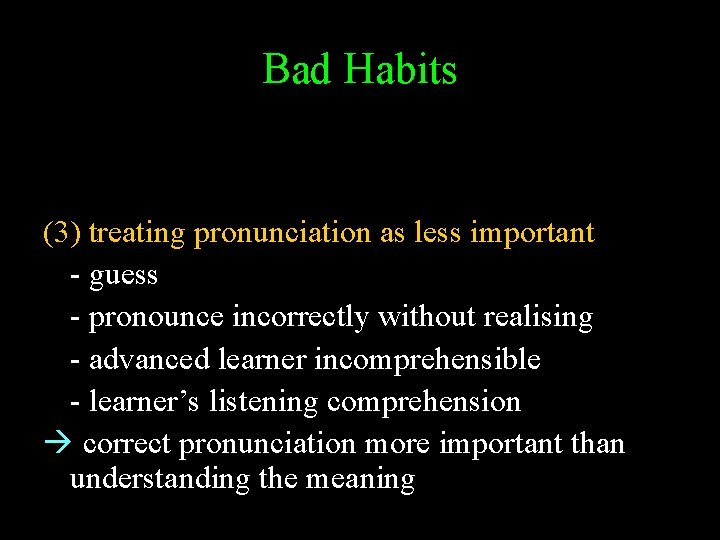
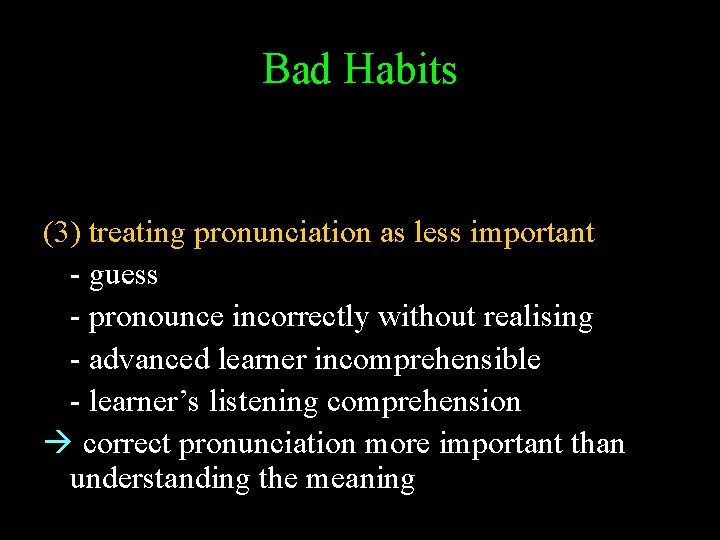
Bad Habits (3) treating pronunciation as less important - guess - pronounce incorrectly without realising - advanced learner incomprehensible - learner’s listening comprehension correct pronunciation more important than understanding the meaning
query /'kwɪəri/ Do you have any queries?
query /'kwɪəri/ Do you have any queries about the timetable?
Bad Habits (3) treating pronunciation as less important - guess - pronounce incorrectly without realising - advanced learner incomprehensible - learner’s listening comprehension correct pronunciation more important than understanding the meaning
Bad Habits (1) overly relying on translation (2) focussing on individual words (3) treating pronunciation as less important (4) constantly adding new vocabulary
Bad Habits (4) constantly adding new vocabulary make better use of vocabulary you know
Take That were different from other boybands before and after them, in that they wrote their own material. The building is nowhere near finished. He will make a good husband.
Bad Habits (4) constantly adding new vocabulary make better use of vocabulary you know
Bad Habits (1) overly relying on translation (2) focussing on individual words (3) treating pronunciation as less important (4) constantly adding new vocabulary
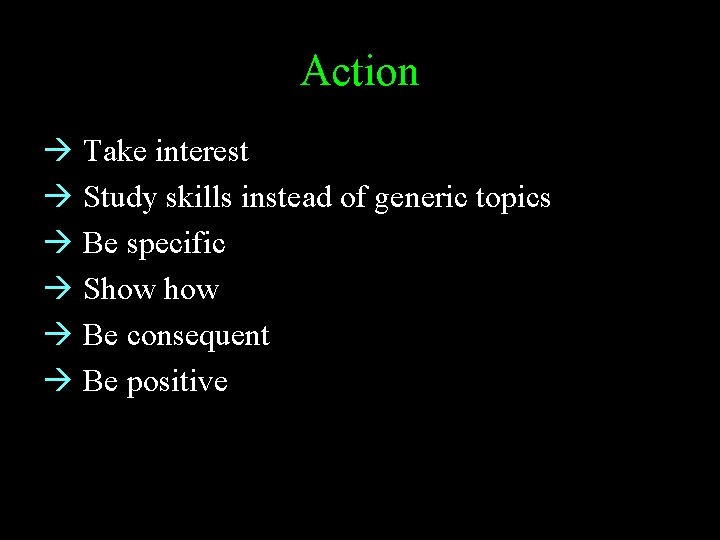
Action Take interest Study skills instead of generic topics Be specific Show Be consequent Be positive
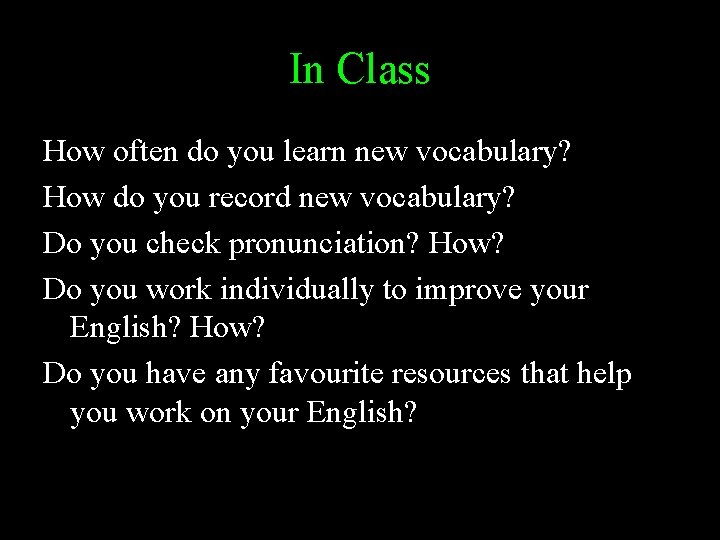
In Class How often do you learn new vocabulary? How do you record new vocabulary? Do you check pronunciation? How? Do you work individually to improve your English? How? Do you have any favourite resources that help you work on your English?
Action Take interest Study skills instead of generic topics Be specific
Good Habits Start your day by watching BBC News channel for 20 minutes. bbc. co. uk
Action Take interest Study skills instead of generic topics Be specific Show
Good Habits Start your day by watching BBC News channel for 20 minutes. bbc. co. uk
Good Habits Start your day by watching BBC News channel for 20 minutes. Read for pleasure.
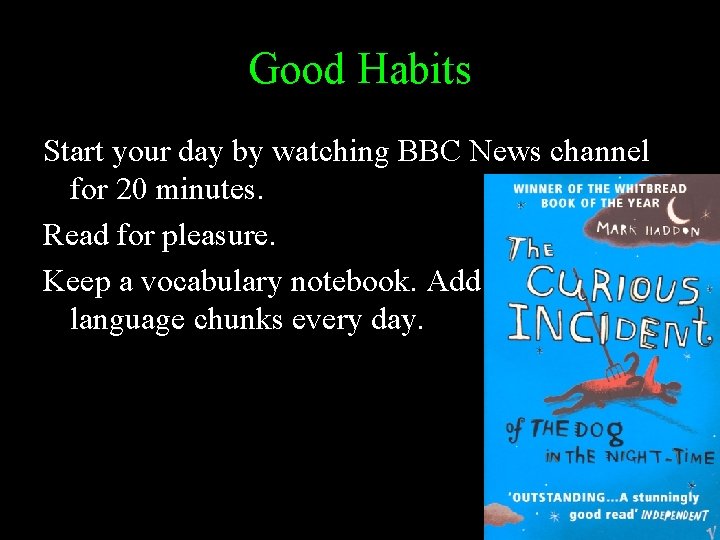
Good Habits Start your day by watching BBC News channel for 20 minutes. Read for pleasure. Keep a vocabulary notebook. Add 3 new language chunks every day.
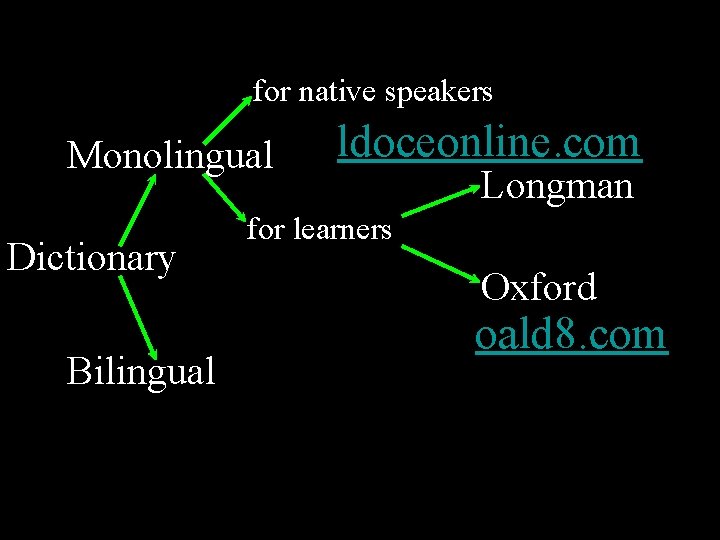
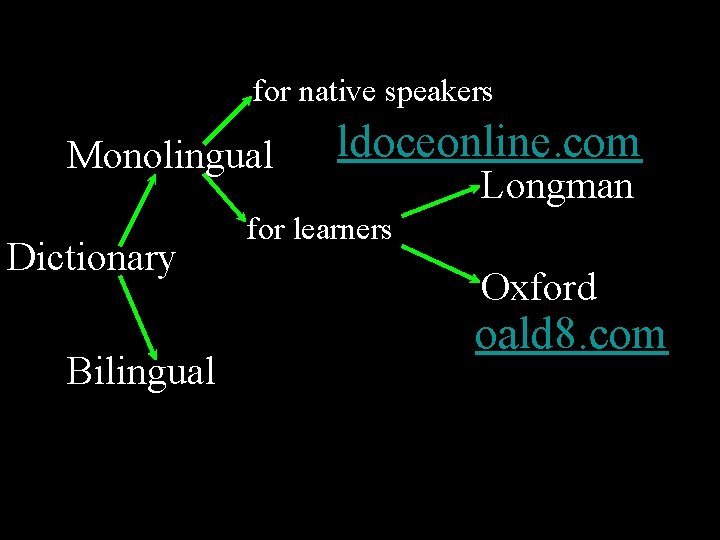
for native speakers Monolingual Dictionary Bilingual ldoceonline. com Longman for learners Oxford oald 8. com
for native speakers Monolingual Dictionary Bilingual ldoceonline. com Longman for learners Oxford oald 8. com
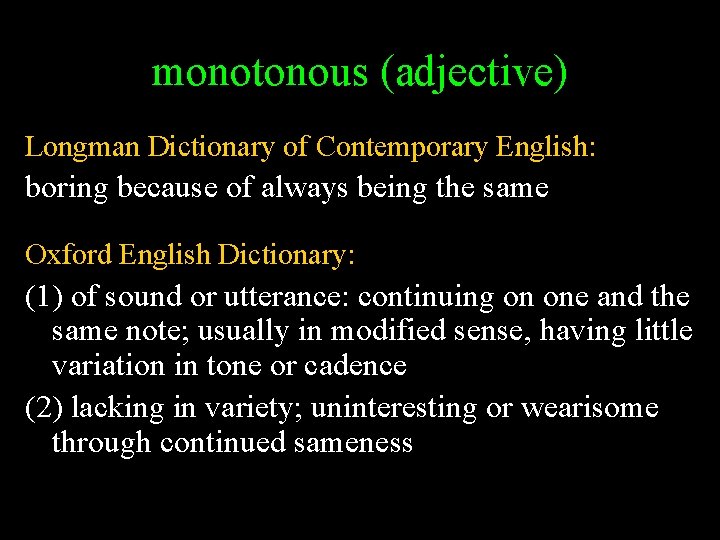
monotonous (adjective) Longman Dictionary of Contemporary English: boring because of always being the same Oxford English Dictionary: (1) of sound or utterance: continuing on one and the same note; usually in modified sense, having little variation in tone or cadence (2) lacking in variety; uninteresting or wearisome through continued sameness
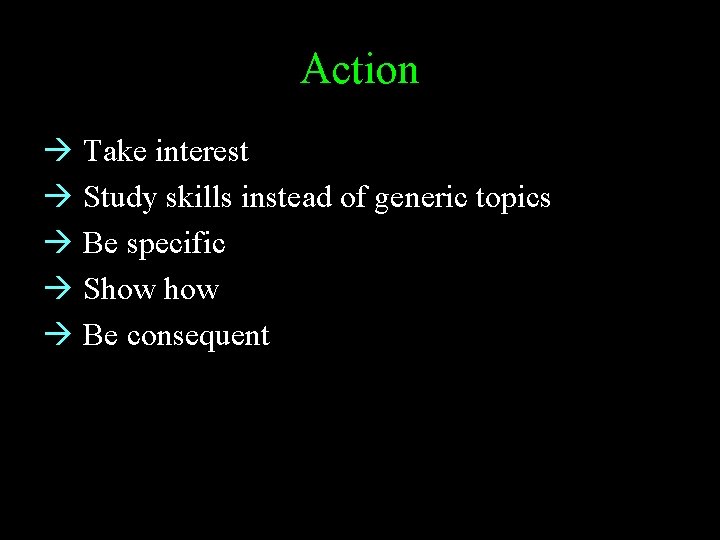
Action Take interest Study skills instead of generic topics Be specific Show Be consequent
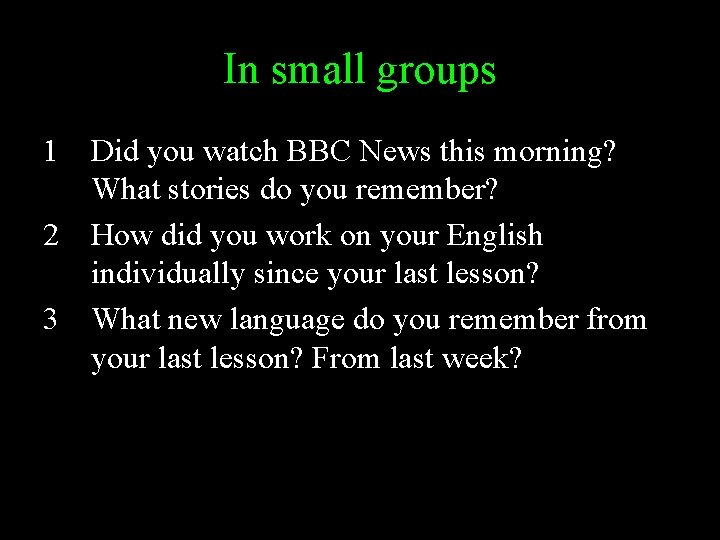
In small groups 1 Did you watch BBC News this morning? What stories do you remember? 2 How did you work on your English individually since your last lesson? 3 What new language do you remember from your last lesson? From last week?
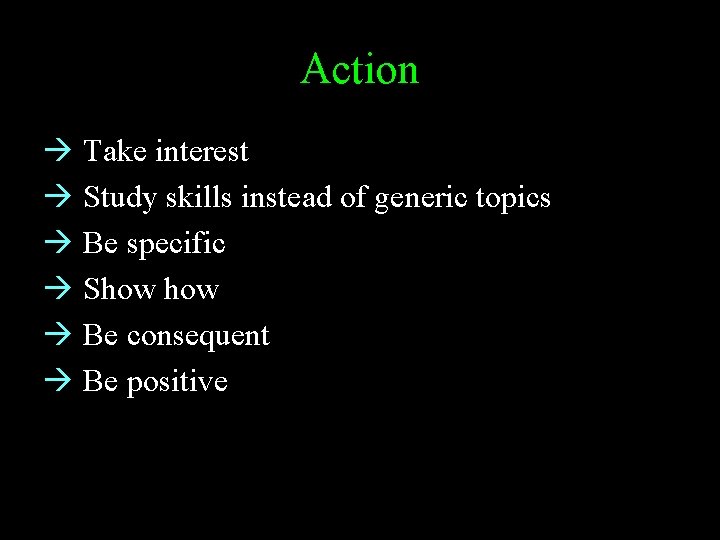
Action Take interest Study skills instead of generic topics Be specific Show Be consequent Be positive
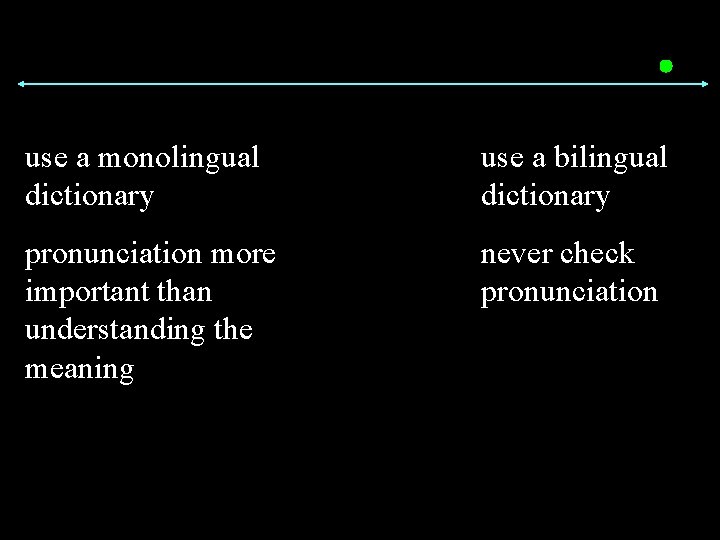
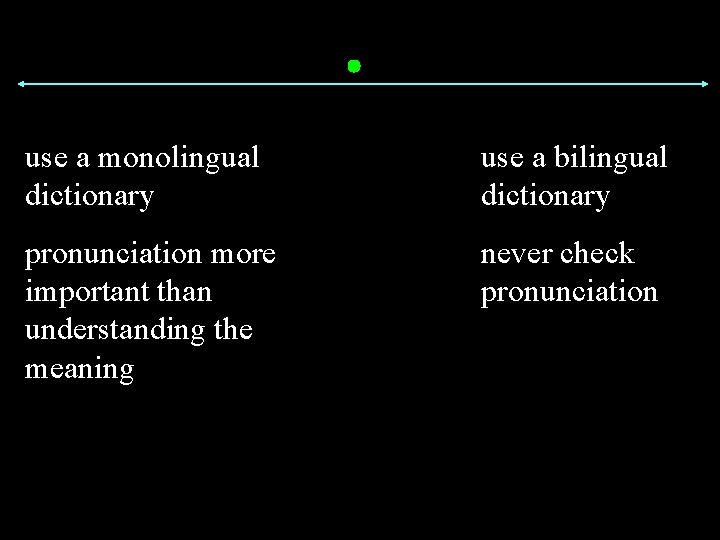
use a monolingual dictionary use a bilingual dictionary pronunciation more important than understanding the meaning never check pronunciation
use a monolingual dictionary use a bilingual dictionary pronunciation more important than understanding the meaning never check pronunciation
use a monolingual dictionary use a bilingual dictionary pronunciation more important than understanding the meaning never check pronunciation
Study Skills: Teaching Learners How To Learn Sebastian Lesniewski
Study Skills: Teaching Learners How To Learn Sebastian Lesniewski. com