
Encoded Archival Context Corporate Bodies Persons and Families
Encoded Archival Context – Corporate Bodies, Persons and Families New SAA Standard September/October 2014 Katherine M. Wisser
Agenda ISAAR(CPF) and EAC-CPF n Entities and Identities n Overview of the standard n Overview of existing data n Implementations of EAC-CPF n Discussion n 2
ISAAR (CPF) and EAC-CPF
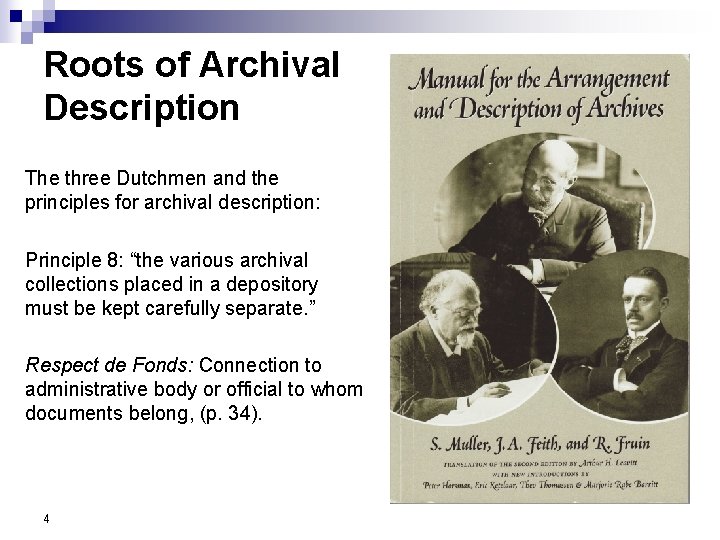
Roots of Archival Description The three Dutchmen and the principles for archival description: Principle 8: “the various archival collections placed in a depository must be kept carefully separate. ” Respect de Fonds: Connection to administrative body or official to whom documents belong, (p. 34). 4

Contextual information and archival description DACS Principle 2: The principle of respect des fonds is the basis of archival arrangement and description. Principle 8: The creators of archival materials, as well as the materials themselves, must be described. 2. 7: Administrative/Biographical History 5
Why EAC-CPF? n ISAD(G) and 3. 2 Context Area ¨ 3. 2. 1: Name of creator(s) ¨ 3. 2. 2: Administrative/Biographical history n ISAAR(CPF) “a separate ICA standard, International Standard Archival Authority Record for Corporate Bodies, Persons and Families: ISAAR(CPF), has been developed. ISAAR(CPF) gives general rules for the establishment of archival authority records that describe the corporate bodies, persons, and families that may be named as creators in descriptions of archival documents. ” ISAD(G) I. 14 6
ISAAR (CPF) 5. 1 Identity Area n 5. 2 Description Area n 5. 3 Relationships Area n 5. 4 Control Area n 6 Relating corporate bodies, persons and families to archival materials and other resources [DACS 2 nd ed. : Chapters 10 -14] n
Entities and Identities
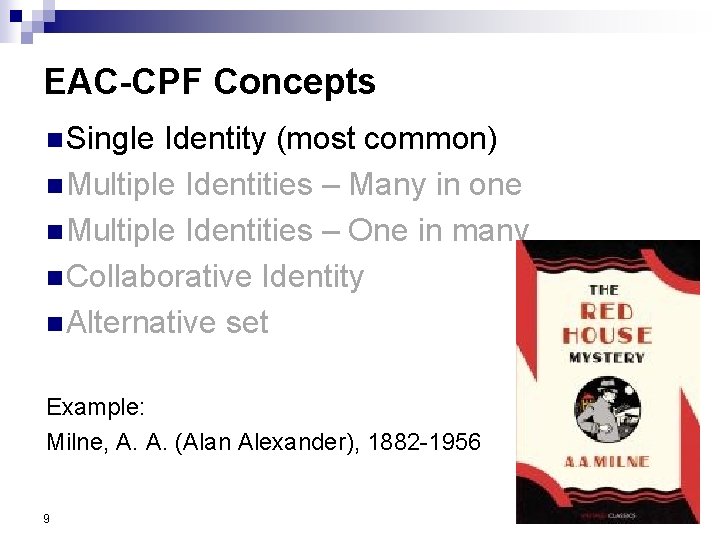
EAC-CPF Concepts n Single Identity (most common) n Multiple Identities – Many in one n Multiple Identities – One in many n Collaborative Identity n Alternative set Example: Milne, A. A. (Alan Alexander), 1882 -1956 9
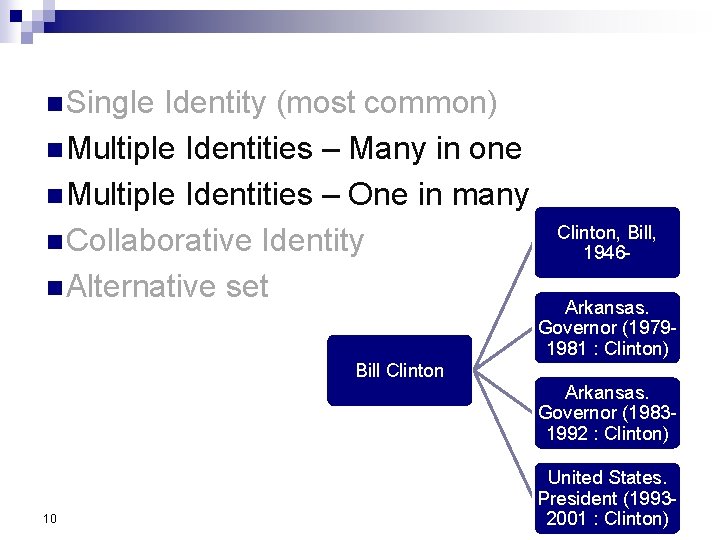
EAC-CPF Concepts n Single Identity (most common) n Multiple Identities – Many in one n Multiple Identities – One in many n Collaborative Identity n Alternative set Clinton, Bill, 1946 Arkansas. Governor (19791981 : Clinton) Bill Clinton Arkansas. Governor (19831992 : Clinton) 10 United States. President (19932001 : Clinton)
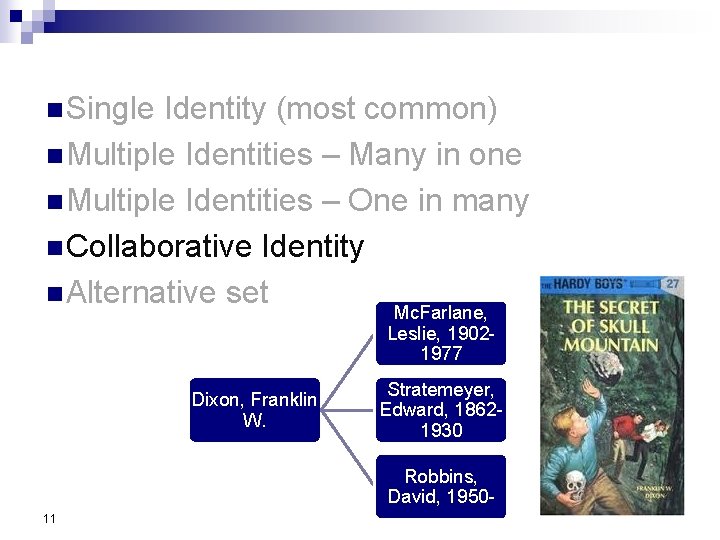
EAC-CPF Concepts n Single Identity (most common) n Multiple Identities – Many in one n Multiple Identities – One in many n Collaborative Identity n Alternative set Mc. Farlane, Leslie, 19021977 Dixon, Franklin W. Stratemeyer, Edward, 18621930 Robbins, David, 1950 - 11
EAC-CPF Concepts n Single Identity (most common) n Multiple Identities – Many in one n Multiple Identities – One in many n Collaborative Identity n Alternative set 12
Overview of the Standard
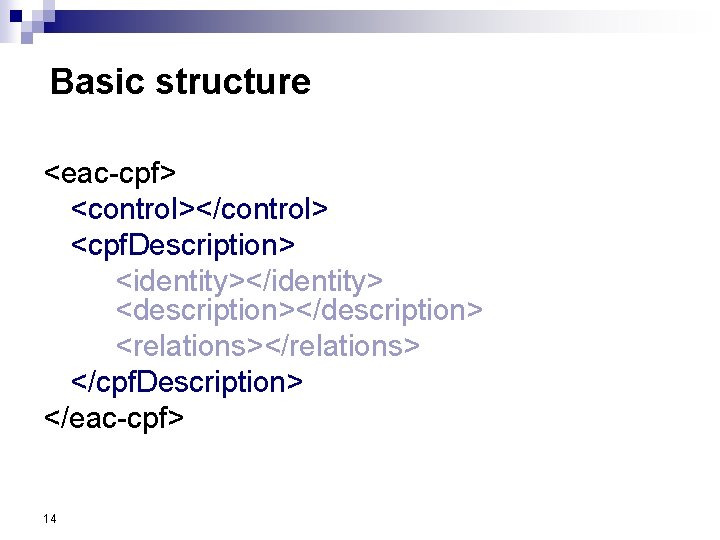
Basic structure <eac-cpf> <control></control> <cpf. Description> <identity></identity> <description></description> <relations></relations> </cpf. Description> </eac-cpf> 14
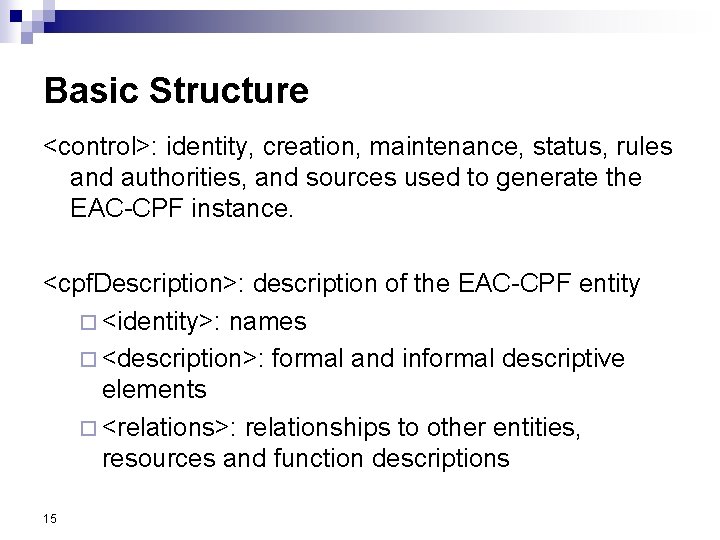
Basic Structure <control>: identity, creation, maintenance, status, rules and authorities, and sources used to generate the EAC-CPF instance. <cpf. Description>: description of the EAC-CPF entity ¨ <identity>: names ¨ <description>: formal and informal descriptive elements ¨ <relations>: relationships to other entities, resources and function descriptions 15
<control>
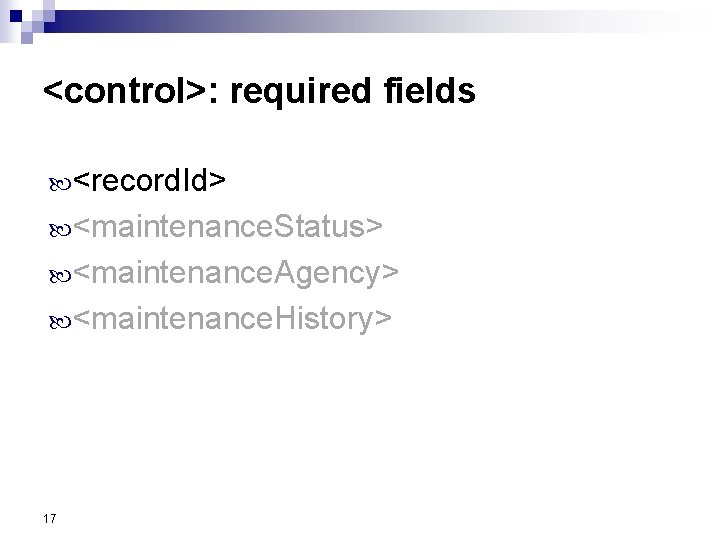
<control>: required fields <record. Id> <maintenance. Status> <maintenance. Agency> <maintenance. History> 17
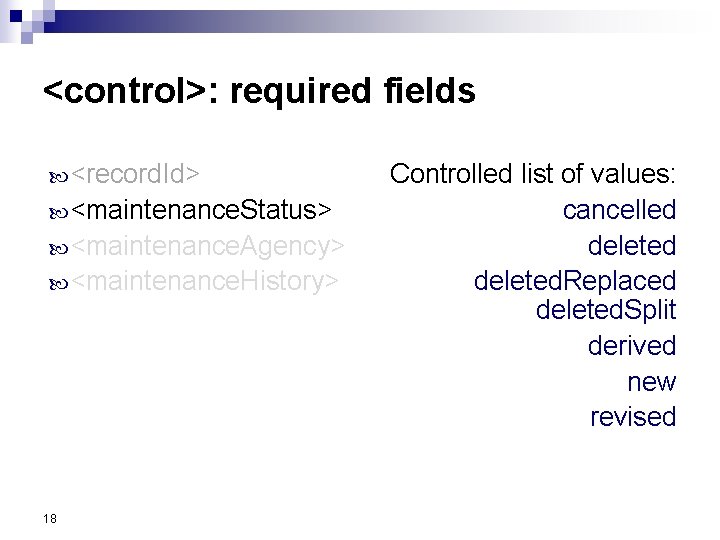
<control>: required fields <record. Id> <maintenance. Status> <maintenance. Agency> <maintenance. History> 18 Controlled list of values: cancelled deleted. Replaced deleted. Split derived new revised
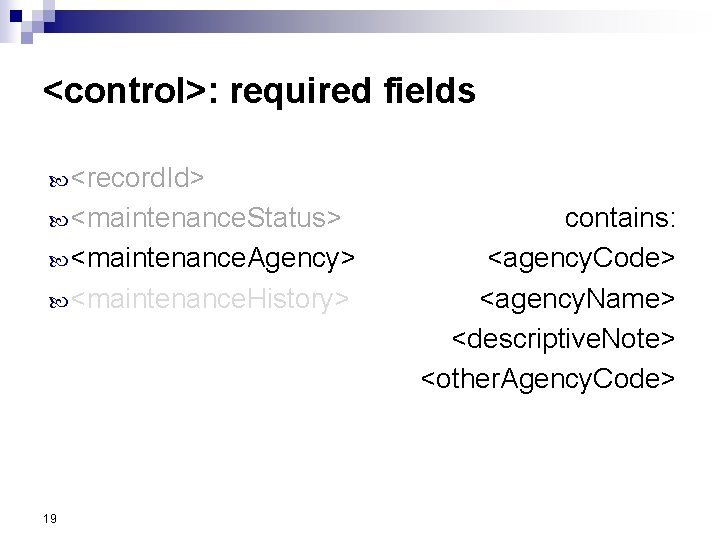
<control>: required fields <record. Id> <maintenance. Status> <maintenance. Agency> <maintenance. History> 19 contains: <agency. Code> <agency. Name> <descriptive. Note> <other. Agency. Code>
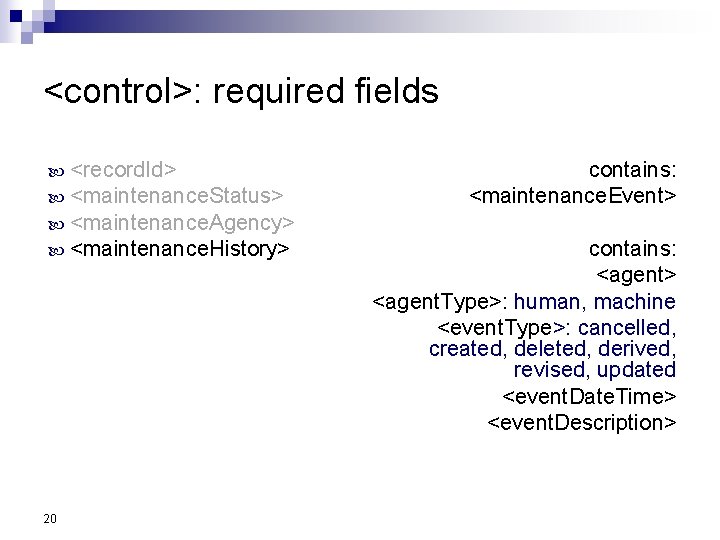
<control>: required fields <record. Id> <maintenance. Status> <maintenance. Agency> <maintenance. History> 20 contains: <maintenance. Event> contains: <agent> <agent. Type>: human, machine <event. Type>: cancelled, created, deleted, derived, revised, updated <event. Date. Time> <event. Description>
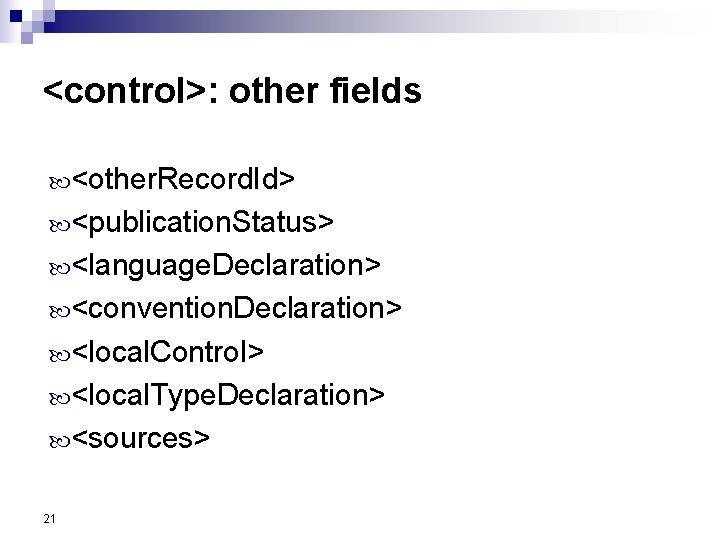
<control>: other fields>: optional fields <other. Record. Id> <publication. Status> <language. Declaration> <convention. Declaration> <local. Control> <local. Type. Declaration> <sources> 21
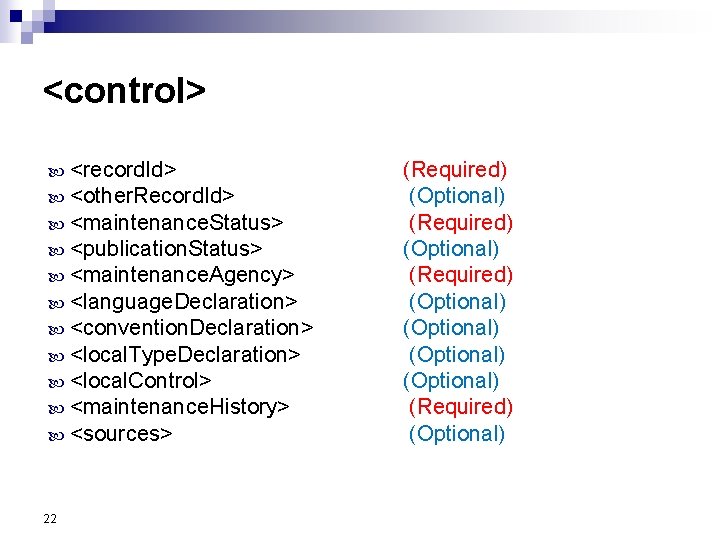
<control>all fields <record. Id> <other. Record. Id> <maintenance. Status> <publication. Status> <maintenance. Agency> <language. Declaration> <convention. Declaration> <local. Type. Declaration> <local. Control> <maintenance. History> <sources> 22 (Required) (Optional) (Optional) (Required) (Optional)
<cpf. Description>
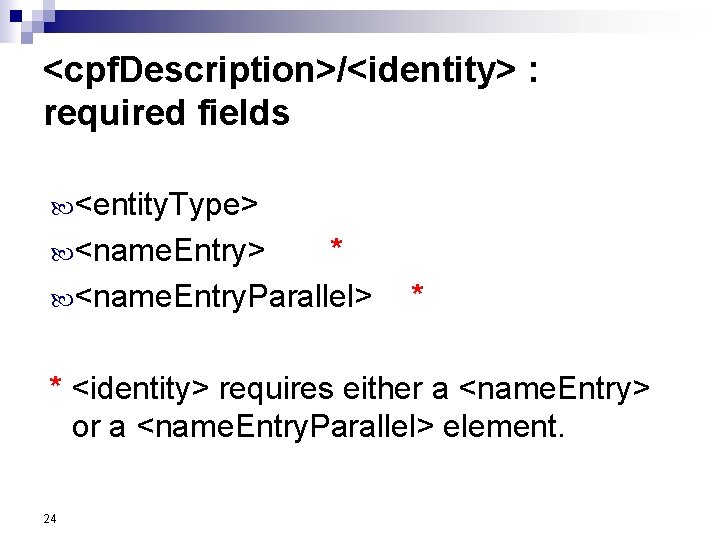
<cpf. Description>/<identity> : required fields <entity. Type> <name. Entry> * <name. Entry. Parallel> * * <identity> requires either a <name. Entry> or a <name. Entry. Parallel> element. 24
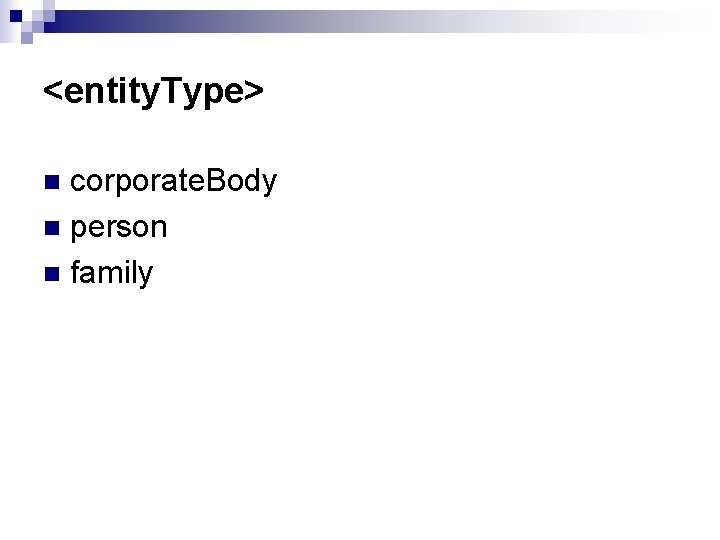
<entity. Type> corporate. Body n person n family n
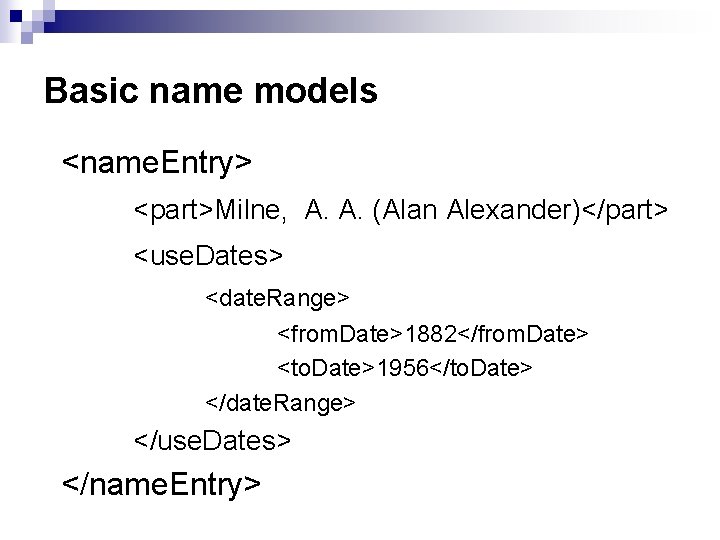
Basic name models <name. Entry> <part>Milne, A. A. (Alan Alexander)</part> <use. Dates> <date. Range> <from. Date>1882</from. Date> <to. Date>1956</to. Date> </date. Range> </use. Dates> </name. Entry>
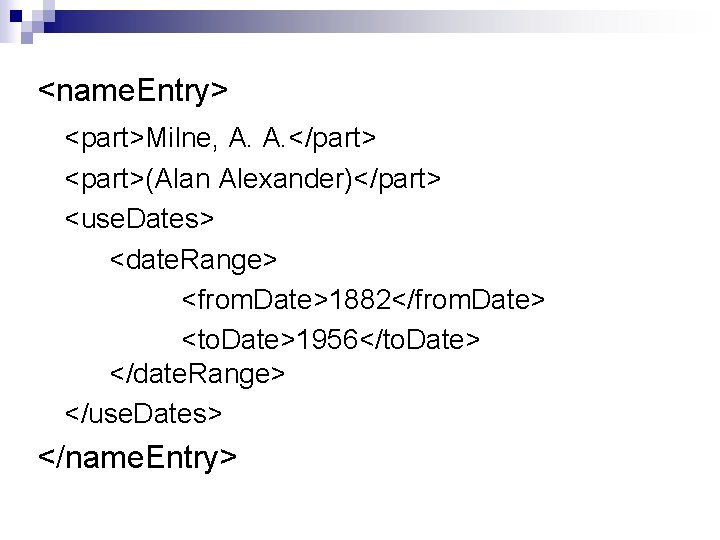
<name. Entry> <part>Milne, A. A. </part> <part>(Alan Alexander)</part> <use. Dates> <date. Range> <from. Date>1882</from. Date> <to. Date>1956</to. Date> </date. Range> </use. Dates> </name. Entry>
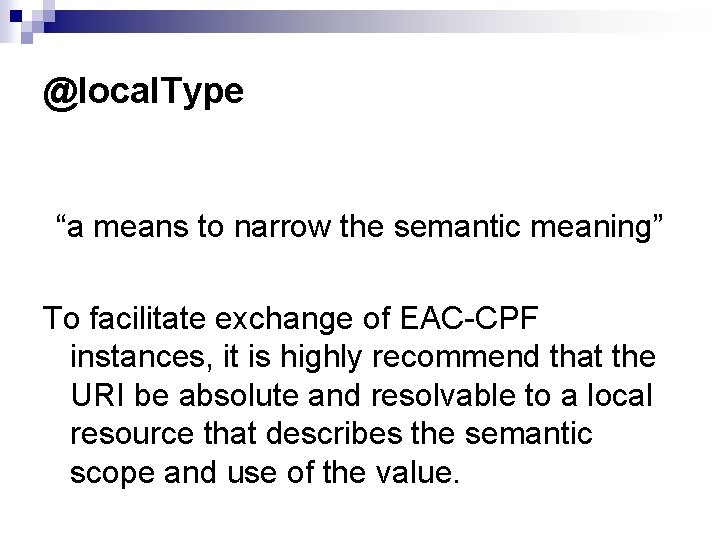
@local. Type “a means to narrow the semantic meaning” To facilitate exchange of EAC-CPF instances, it is highly recommend that the URI be absolute and resolvable to a local resource that describes the semantic scope and use of the value.
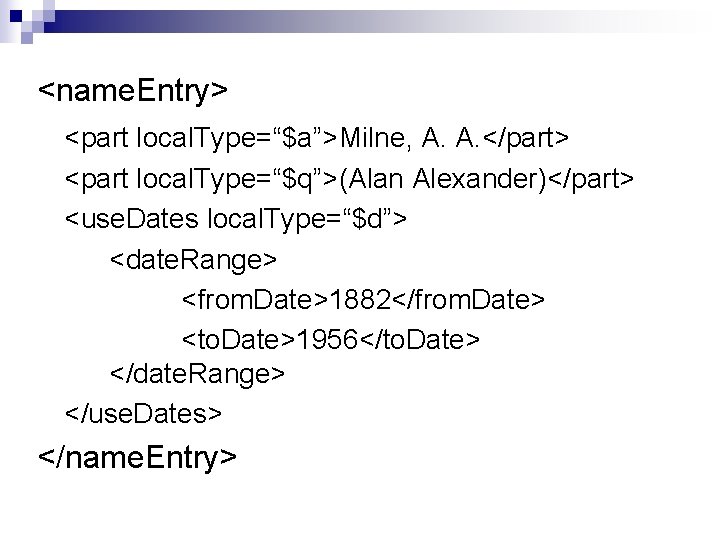
<name. Entry> <part local. Type=“$a”>Milne, A. A. </part> <part local. Type=“$q”>(Alan Alexander)</part> <use. Dates local. Type=“$d”> <date. Range> <from. Date>1882</from. Date> <to. Date>1956</to. Date> </date. Range> </use. Dates> </name. Entry>
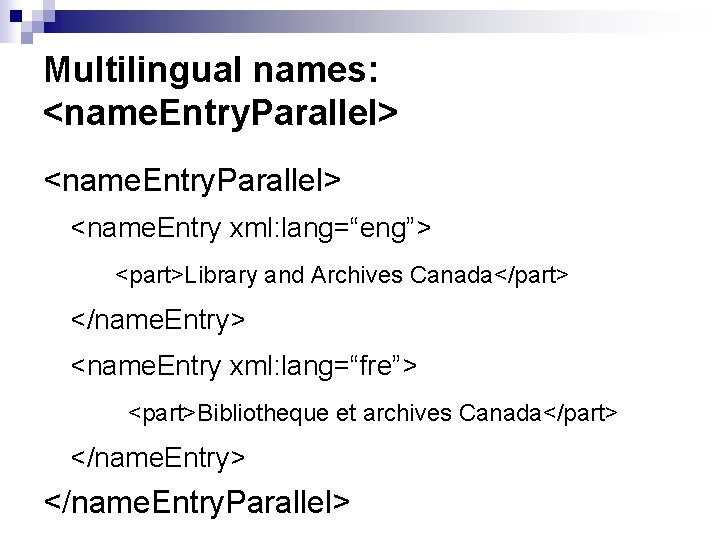
Multilingual names: <name. Entry. Parallel> <name. Entry xml: lang=“eng”> <part>Library and Archives Canada</part> </name. Entry> <name. Entry xml: lang=“fre”> <part>Bibliotheque et archives Canada</part> </name. Entry. Parallel>
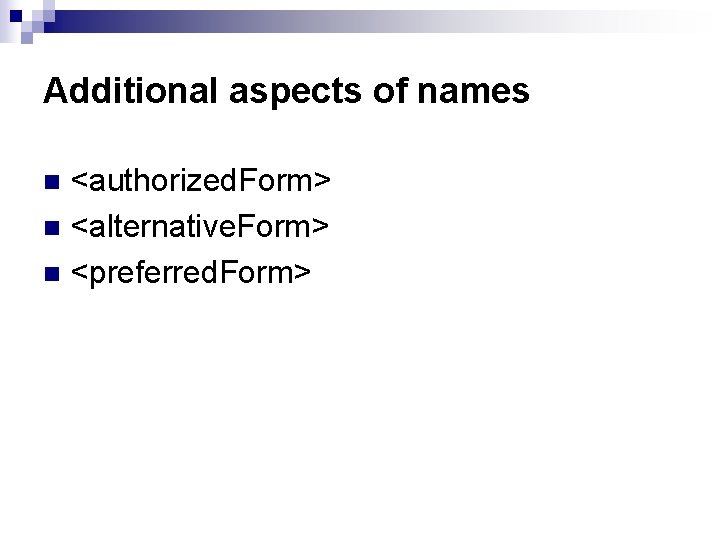
Additional aspects of names <authorized. Form> n <alternative. Form> n <preferred. Form> n
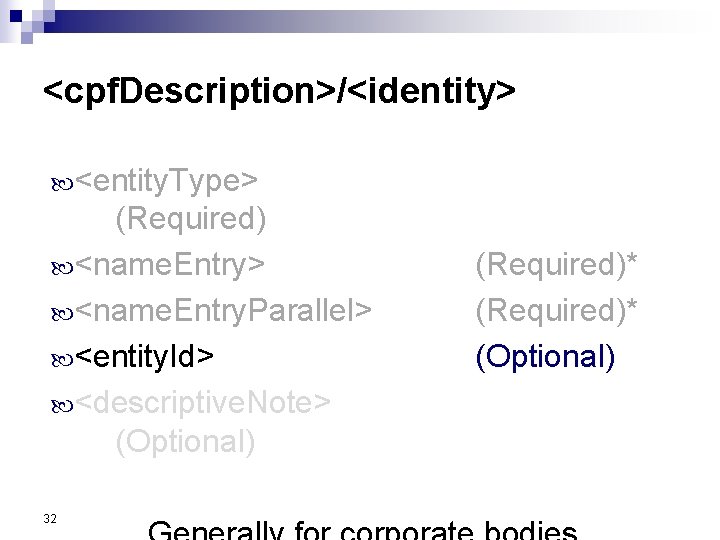
<cpf. Description>/<identity> <entity. Type> (Required) <name. Entry> <name. Entry. Parallel> <entity. Id> <descriptive. Note> (Optional) 32 (Required)* (Optional)
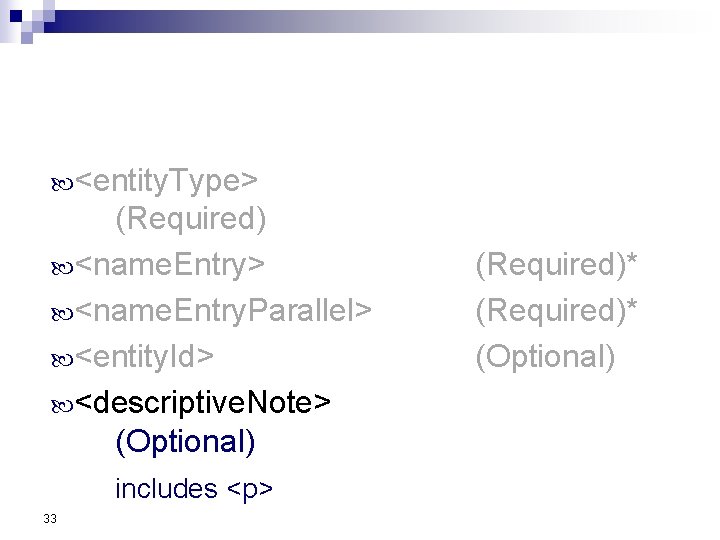
<cpf. Description>/<identity> <entity. Type> (Required) <name. Entry> <name. Entry. Parallel> <entity. Id> <descriptive. Note> (Optional) includes <p> 33 (Required)* (Optional)
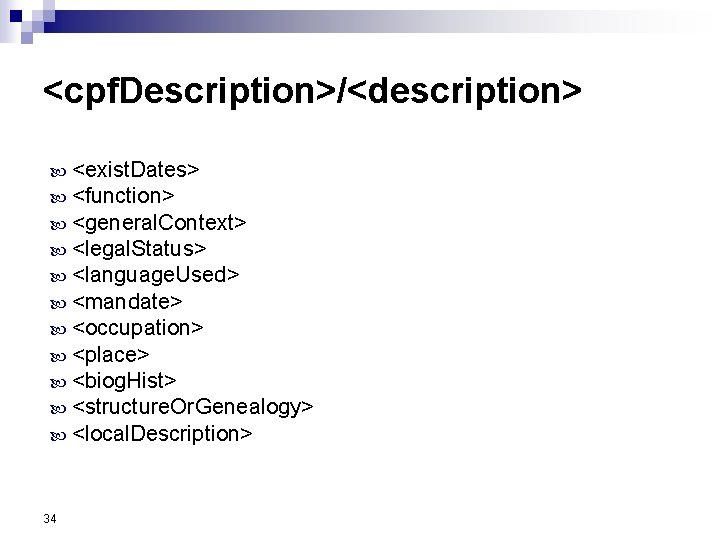
<cpf. Description>/<description> <exist. Dates> <function> <general. Context> <legal. Status> <language. Used> <mandate> <occupation> <place> <biog. Hist> <structure. Or. Genealogy> <local. Description> 34
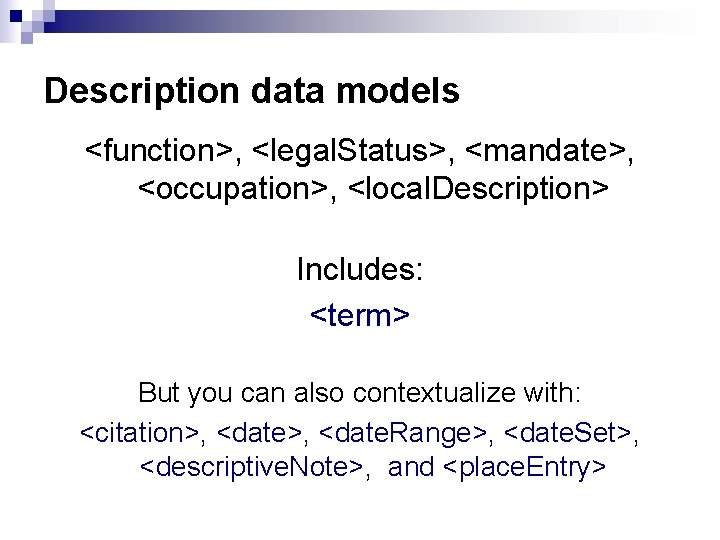
Description data models <function>, <legal. Status>, <mandate>, <occupation>, <local. Description> Includes: <term> But you can also contextualize with: <citation>, <date. Range>, <date. Set>, <descriptive. Note>, and <place. Entry>
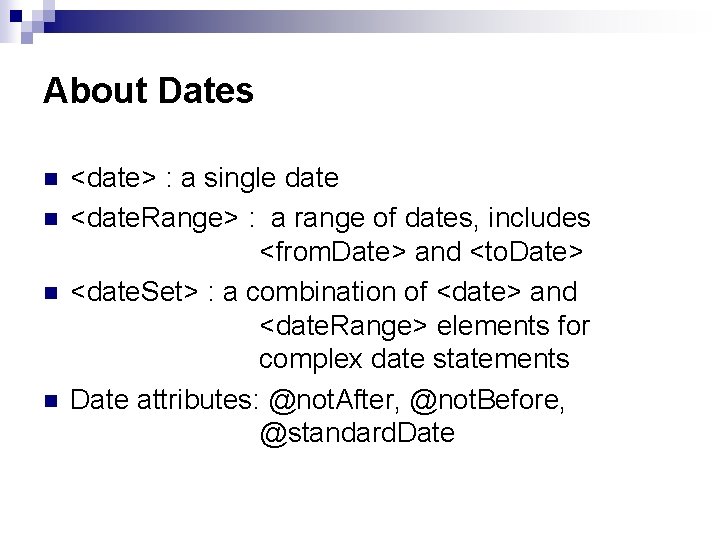
About Dates n n <date> : a single date <date. Range> : a range of dates, includes <from. Date> and <to. Date> <date. Set> : a combination of <date> and <date. Range> elements for complex date statements Date attributes: @not. After, @not. Before, @standard. Date
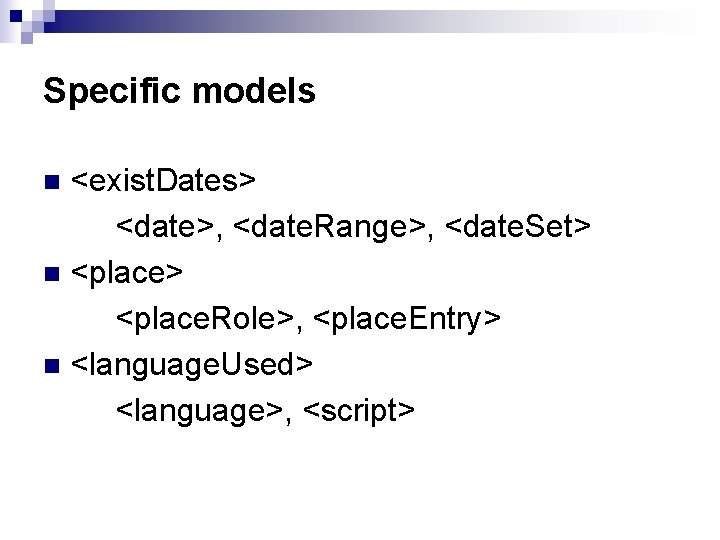
Specific models <exist. Dates> <date>, <date. Range>, <date. Set> n <place> <place. Role>, <place. Entry> n <language. Used> <language>, <script> n
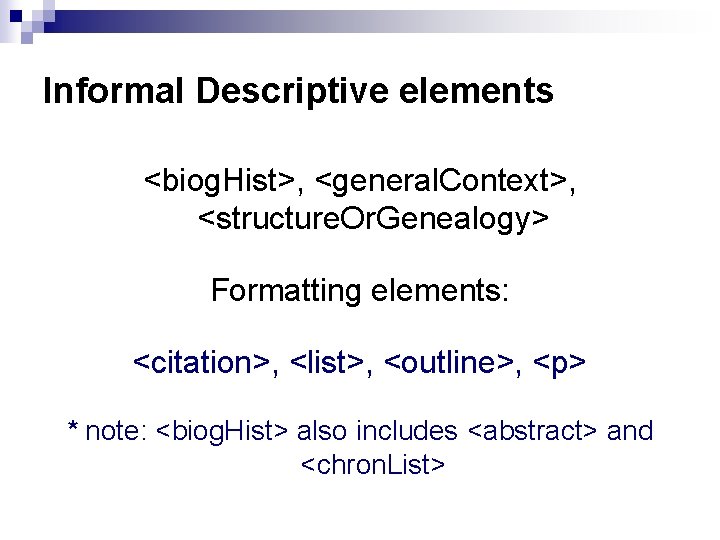
Informal Descriptive elements <biog. Hist>, <general. Context>, <structure. Or. Genealogy> Formatting elements: <citation>, <list>, <outline>, <p> * note: <biog. Hist> also includes <abstract> and <chron. List>
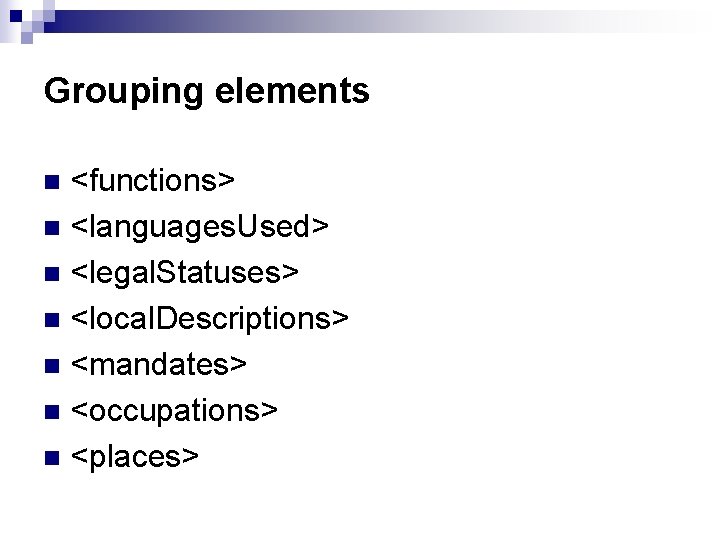
Grouping elements <functions> n <languages. Used> n <legal. Statuses> n <local. Descriptions> n <mandates> n <occupations> n <places> n
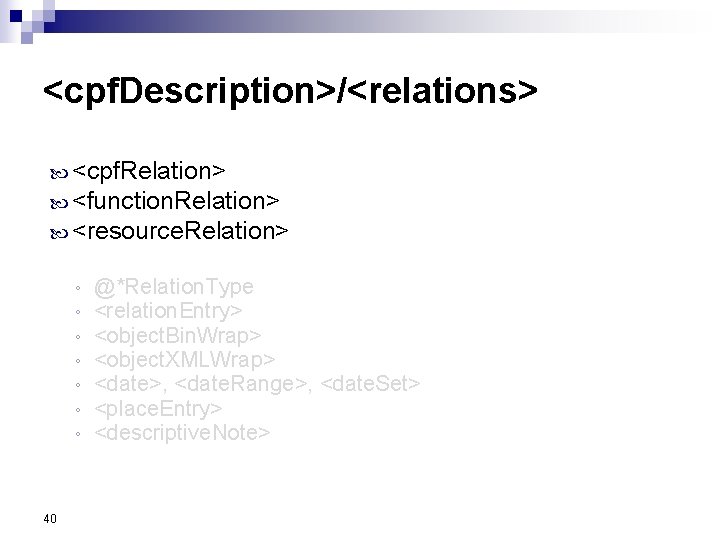
<cpf. Description>/<relations> <cpf. Relation> <function. Relation> <resource. Relation> ◦ ◦ ◦ ◦ 40 @*Relation. Type <relation. Entry> <object. Bin. Wrap> <object. XMLWrap> <date>, <date. Range>, <date. Set> <place. Entry> <descriptive. Note>
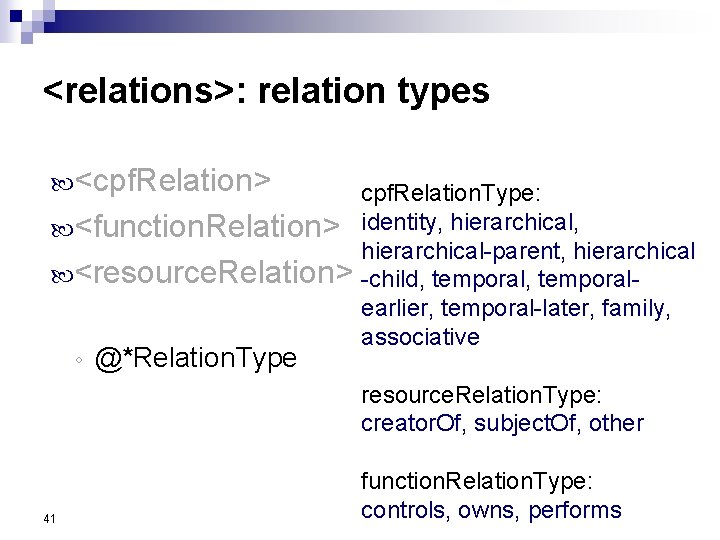
<relations>: relation types <cpf. Relation> <function. Relation> <resource. Relation> ◦ @*Relation. Type cpf. Relation. Type: identity, hierarchical-parent, hierarchical -child, temporalearlier, temporal-later, family, associative resource. Relation. Type: creator. Of, subject. Of, other 41 function. Relation. Type: controls, owns, performs
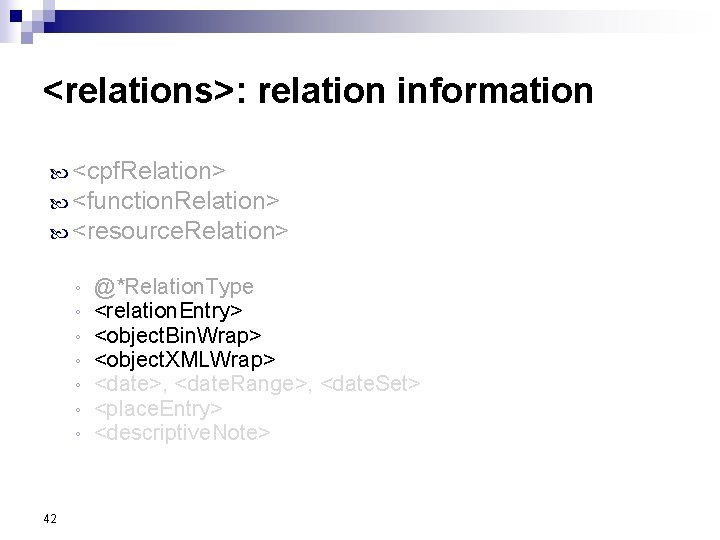
<relations>: relation information <cpf. Relation> <function. Relation> <resource. Relation> ◦ ◦ ◦ ◦ 42 @*Relation. Type <relation. Entry> <object. Bin. Wrap> <object. XMLWrap> <date>, <date. Range>, <date. Set> <place. Entry> <descriptive. Note>
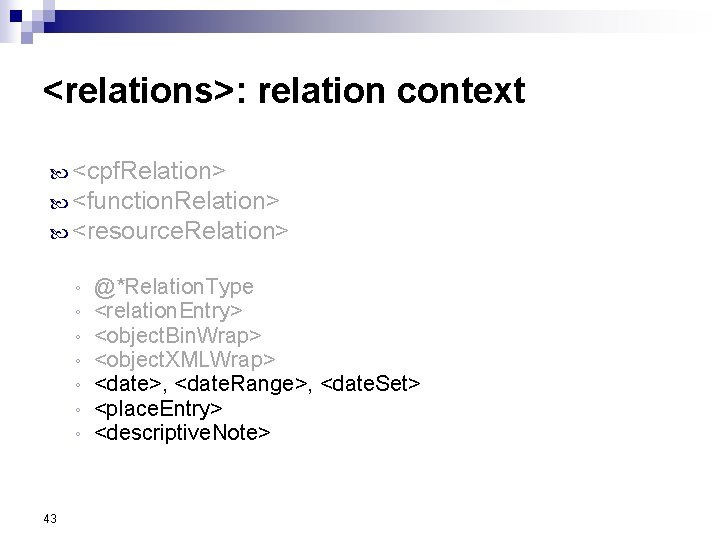
<relations>: relation context <cpf. Relation> <function. Relation> <resource. Relation> ◦ ◦ ◦ ◦ 43 @*Relation. Type <relation. Entry> <object. Bin. Wrap> <object. XMLWrap> <date>, <date. Range>, <date. Set> <place. Entry> <descriptive. Note>
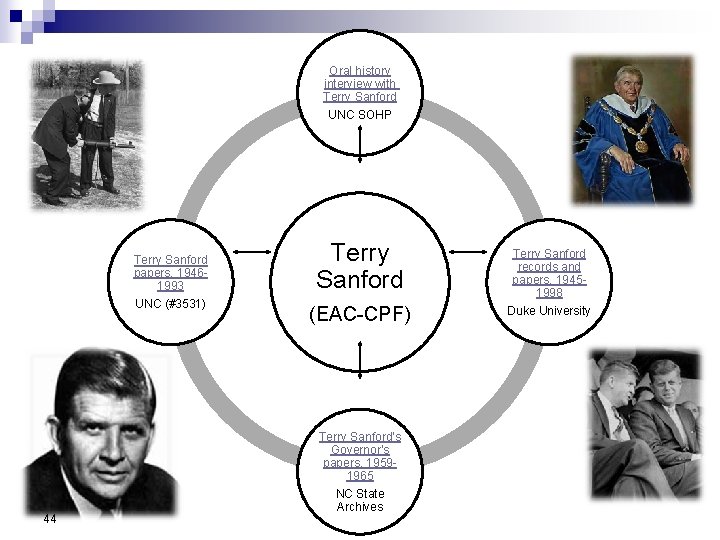
Oral history interview with Terry Sanford UNC SOHP Terry Sanford papers, 19461993 UNC (#3531) 44 Terry Sanford (EAC-CPF) Terry Sanford’s Governor’s papers, 19591965 NC State Archives Terry Sanford records and papers, 19451998 Duke University
Extensible Design <descriptive. Note> n <local. Description> n <local. Control> n @local. Type n 45
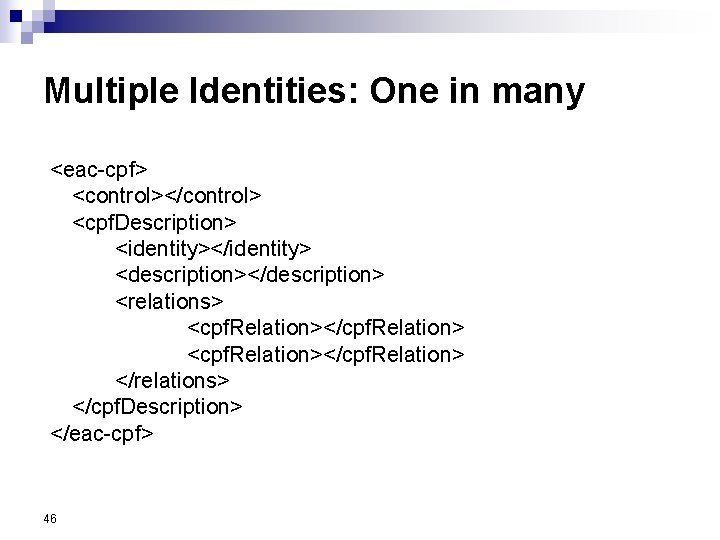
Multiple Identities: One in many <eac-cpf> <control></control> <cpf. Description> <identity></identity> <description></description> <relations> <cpf. Relation></cpf. Relation> </relations> </cpf. Description> </eac-cpf> 46
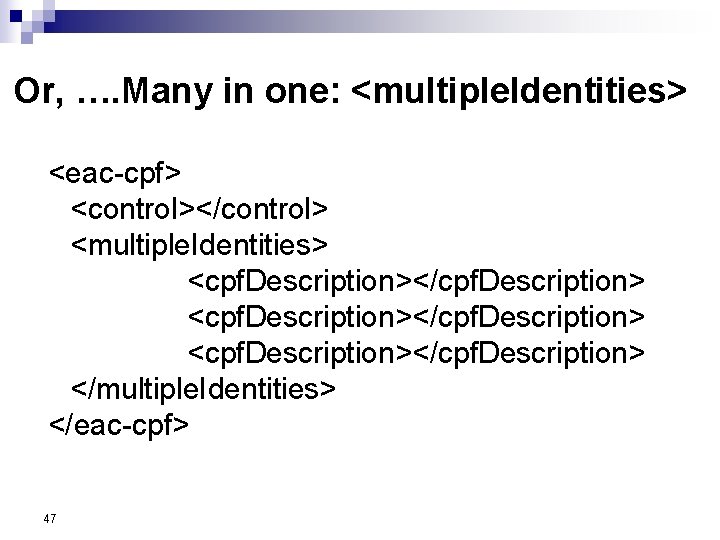
Or, …. Many in one: <multiple. Identities> <eac-cpf> <control></control> <multiple. Identities> <cpf. Description></cpf. Description> </multiple. Identities> </eac-cpf> 47
Finding the Standard
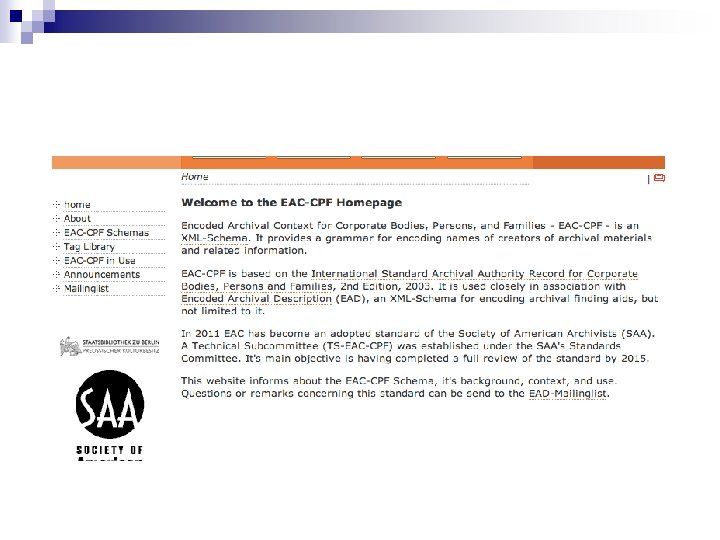
http: //eac. staatsbibliothek-berlin. de/
Data Sources
Sources for EAC-CPF records n Authority files: ¨ LCAF ¨ ULAN Existing archival description – biographical and historical notes, chronologies n Biographical reference sources n
Sample projects
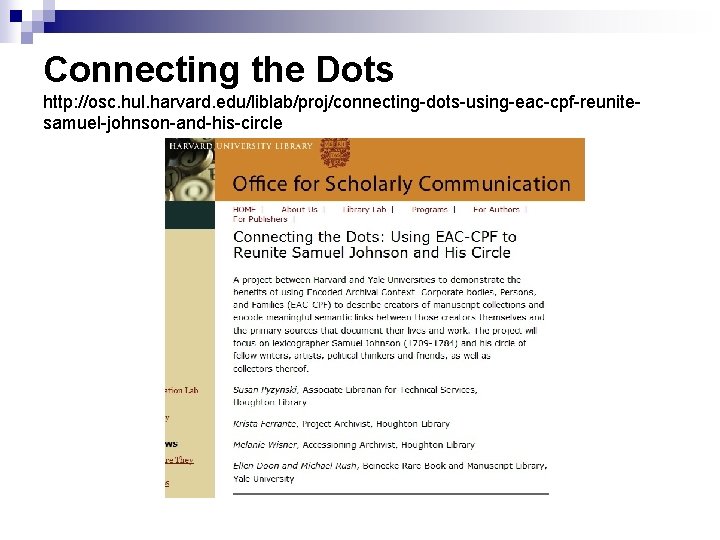
Connecting the Dots http: //osc. hul. harvard. edu/liblab/proj/connecting-dots-using-eac-cpf-reunitesamuel-johnson-and-his-circle
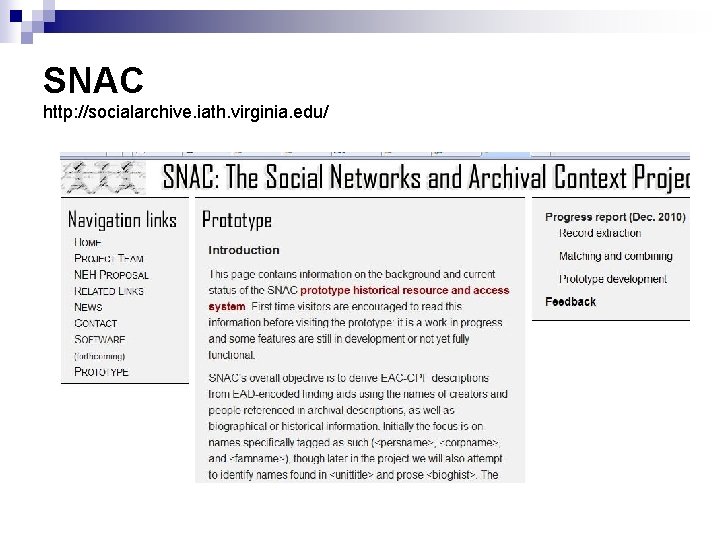
SNAC http: //socialarchive. iath. virginia. edu/
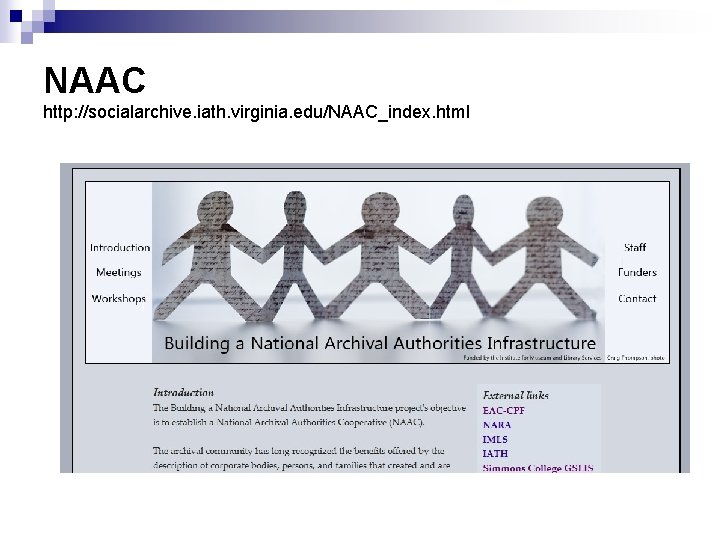
NAAC http: //socialarchive. iath. virginia. edu/NAAC_index. html
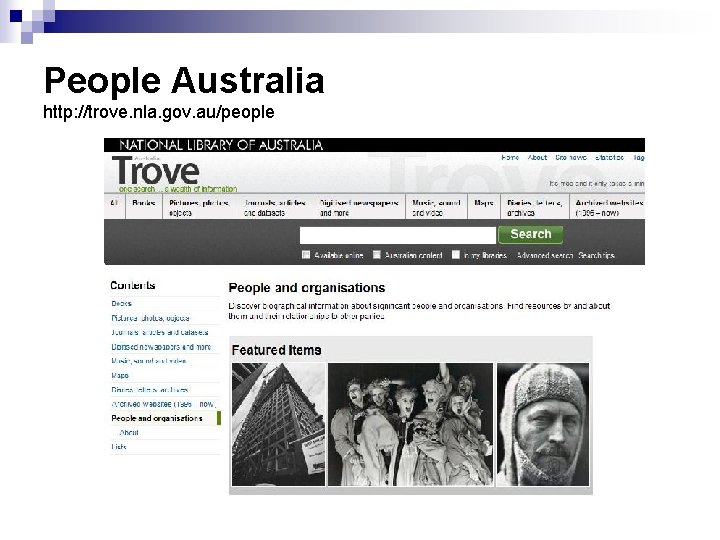
People Australia http: //trove. nla. gov. au/people
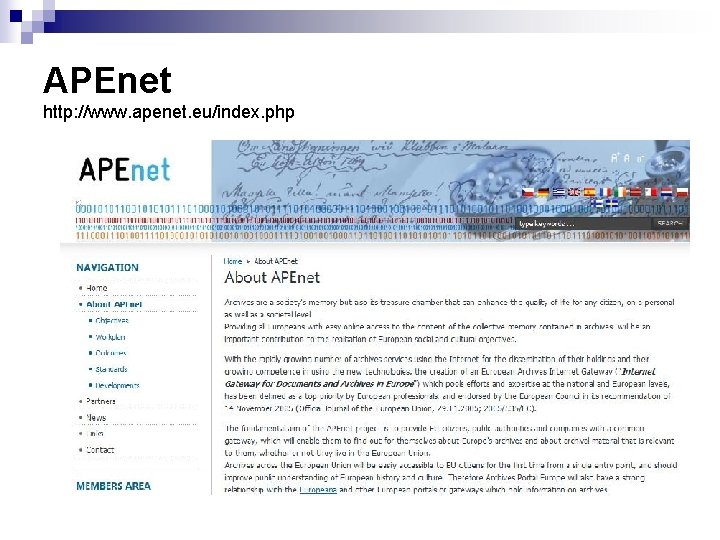
APEnet http: //www. apenet. eu/index. php
- Slides: 58