
Enclosure Fire Dynamics Chapter 1 Introduction Chapter 2

- Slides: 32
Enclosure Fire Dynamics ¢ ¢ ¢ ¢ ¢ Chapter 1: Introduction Chapter 2: Qualitative description of enclosure fires Chapter 3: Energy release rates, Design fires Chapter 4: Plumes and flames Chapter 5: Pressure and vent flows Chapter 6: Gas temperatures (Chapter 7: Heat transfer) Chapter 8: Smoke filling (Chapter 9: Products of combustion) Chapter 10: Computer modeling
Goals and expectations ¢ ¢ ¢ Account for MLR and HRR including time dependance. Get a feel for the size of HRR Account for different test metods, weaknesses, strenghts and results Account for the t-squared fire and its limitations Account for enclosure effects on the HRR Be able to produce a HRR-time curve
Your challenge… ¢ There an infinite number of fire scenarios possible for a building l ¢ ¢ ¢ What are some for this room? When evaluating fire safety, a limited (small) number of fire scenarios can actually be reviewed and tested Fire safety requires the selection of the most severe fires With natural fires, we do not know the fuel in advance => assumed design fire
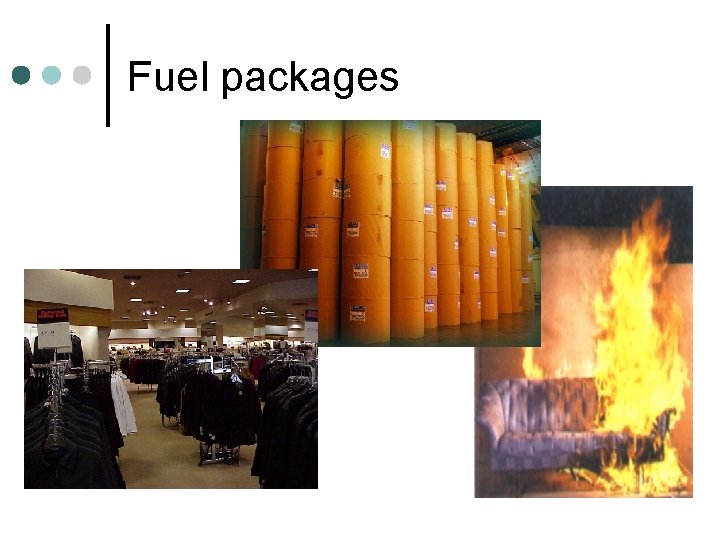
Fuel packages
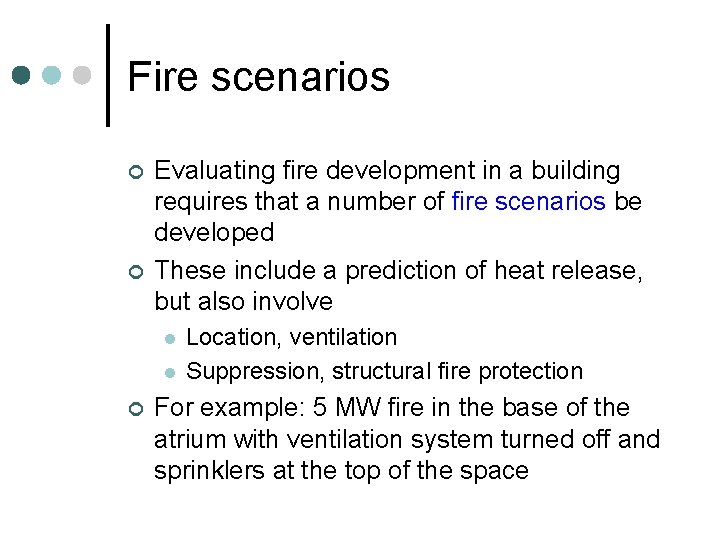
Fire scenarios ¢ ¢ Evaluating fire development in a building requires that a number of fire scenarios be developed These include a prediction of heat release, but also involve l l ¢ Location, ventilation Suppression, structural fire protection For example: 5 MW fire in the base of the atrium with ventilation system turned off and sprinklers at the top of the space
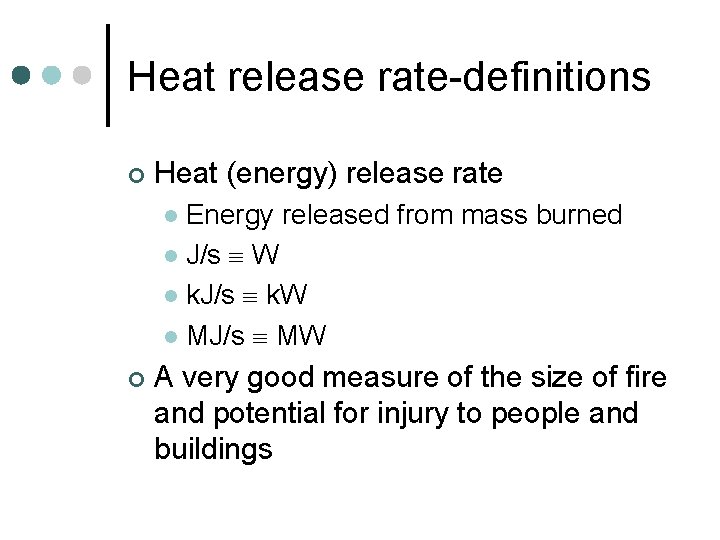
Heat release rate-definitions ¢ Heat (energy) release rate Energy released from mass burned l J/s W l k. J/s k. W l MJ/s MW l ¢ A very good measure of the size of fire and potential for injury to people and buildings
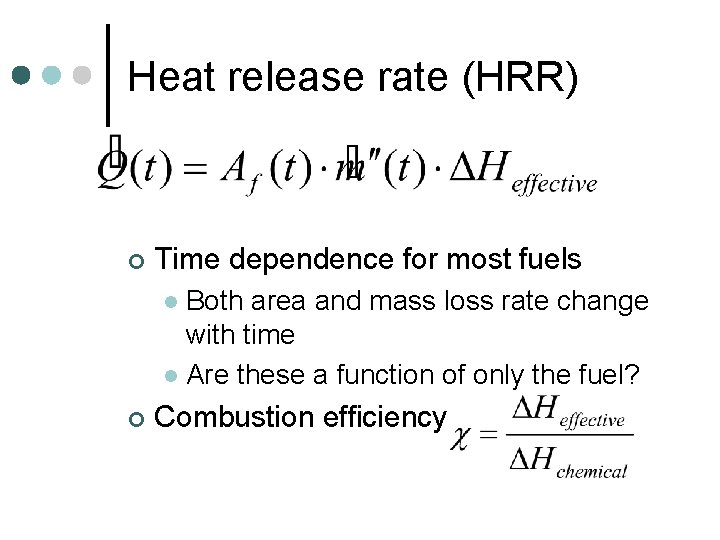
Heat release rate (HRR) ¢ Time dependence for most fuels Both area and mass loss rate change with time l Are these a function of only the fuel? l ¢ Combustion efficiency
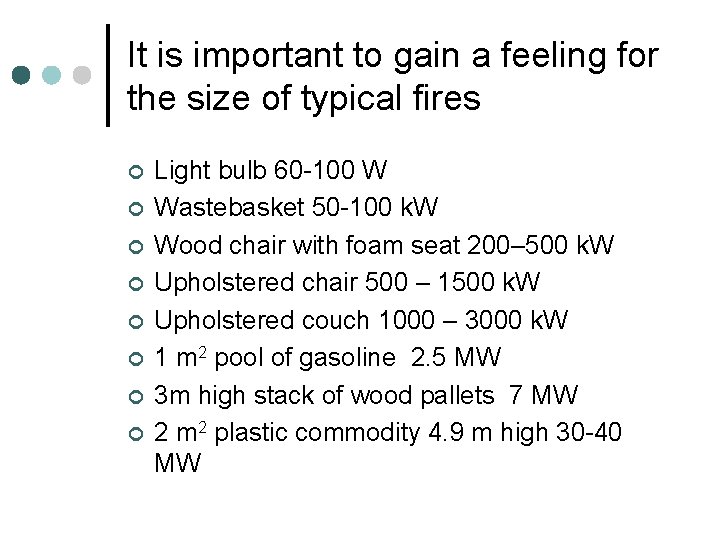
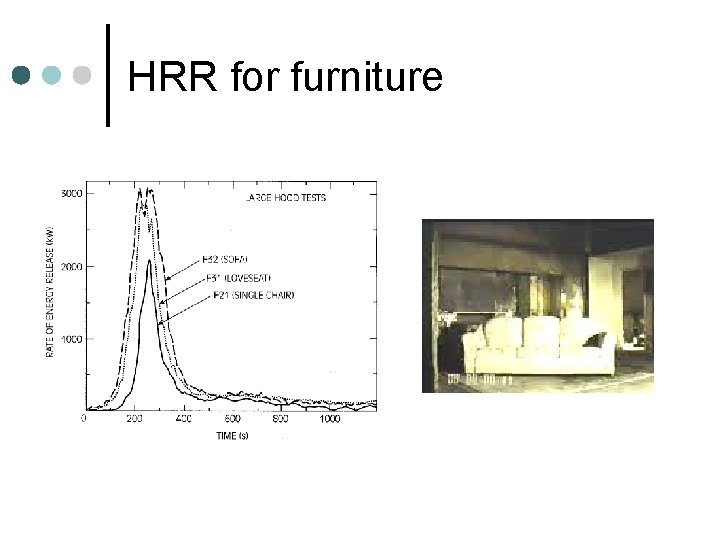
It is important to gain a feeling for the size of typical fires ¢ ¢ ¢ ¢ Light bulb 60 -100 W Wastebasket 50 -100 k. W Wood chair with foam seat 200– 500 k. W Upholstered chair 500 – 1500 k. W Upholstered couch 1000 – 3000 k. W 1 m 2 pool of gasoline 2. 5 MW 3 m high stack of wood pallets 7 MW 2 m 2 plastic commodity 4. 9 m high 30 -40 MW
Fire testing Measure how much oxygen is used while material burns ¢ For every kg O 2 used 13. 000 k. J of energy are formed ¢ Enormous amounts of data are available showing Heat Release Rate for very many materials ¢ Databases ¢
Cone calorimeter Measure heat release and mass loss at different flux levels ¢ Almost constant 13 k. J/g O 2 consumed ¢
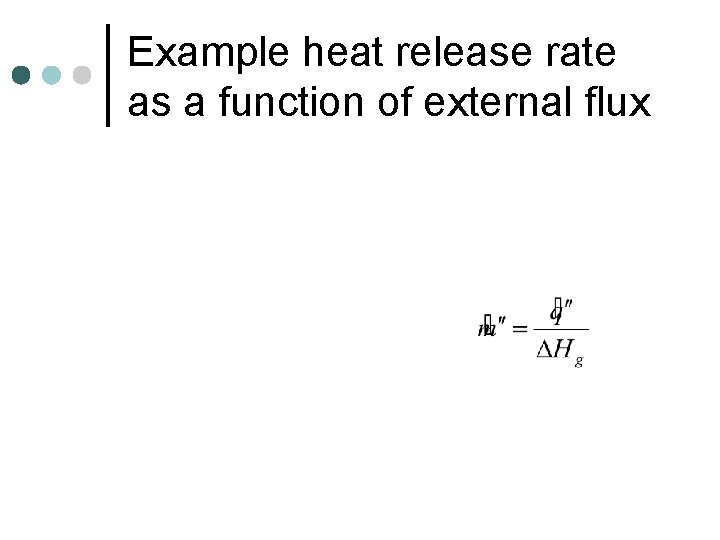
Example heat release rate as a function of external flux
Furniture calorimeter Results represent burning in open ¢ Cone calorimeter data can be used to predict performance ¢
HRR for furniture
HRR for mattress
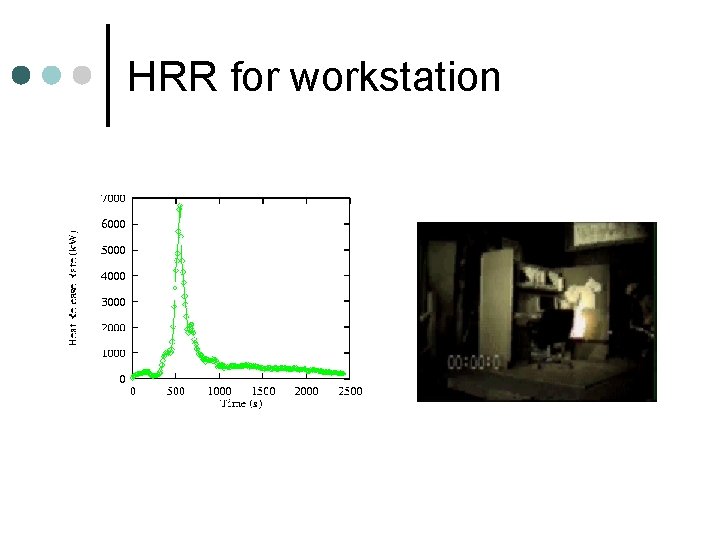
HRR for workstation
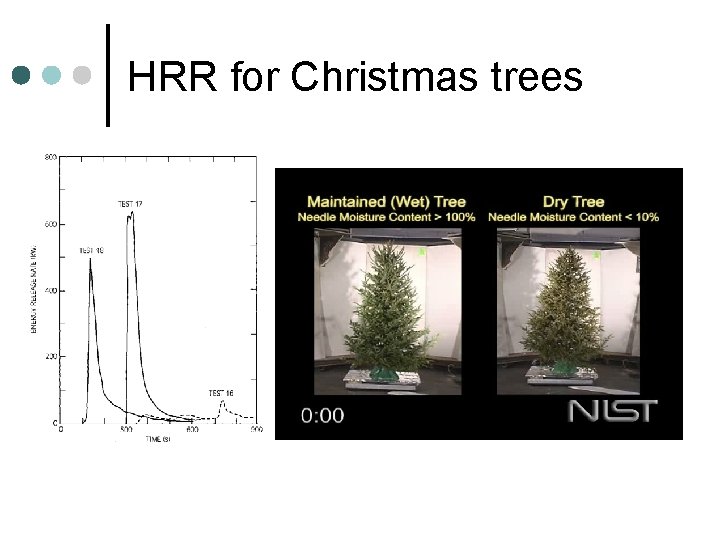
HRR for Christmas trees
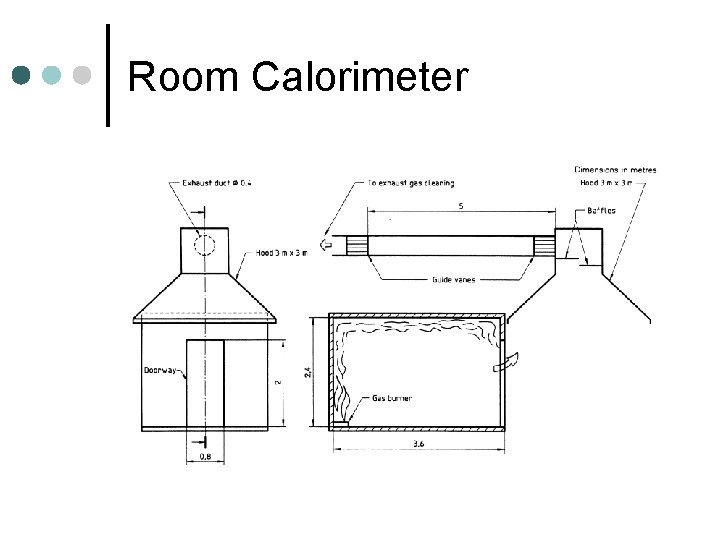
Room Calorimeter
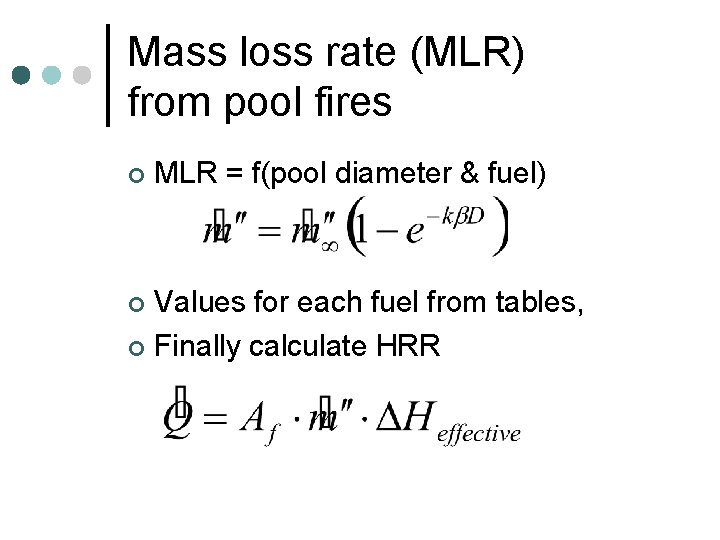
Mass loss rate (MLR) from pool fires ¢ MLR = f(pool diameter & fuel) Values for each fuel from tables, ¢ Finally calculate HRR ¢
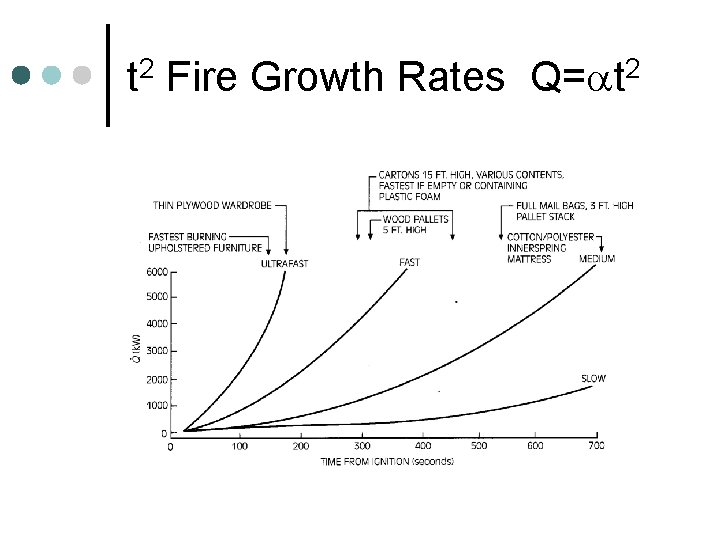
t 2 Fire Growth Rates Q= t 2
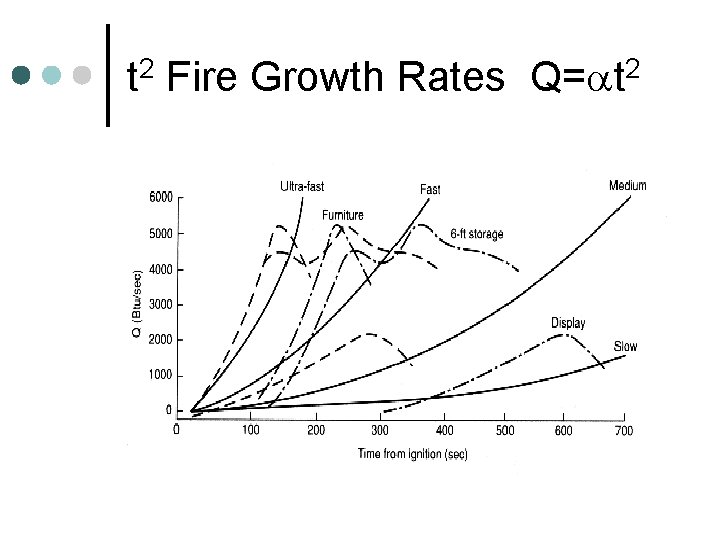
t 2 Fire Growth Rates Q= t 2
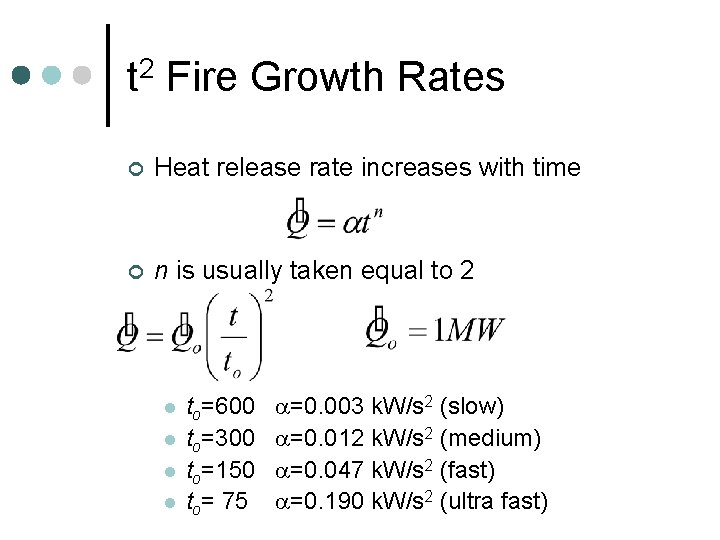
t 2 Fire Growth Rates ¢ Heat release rate increases with time ¢ n is usually taken equal to 2 =0. 003 k. W/s 2 (slow) =0. 012 k. W/s 2 (medium) to=150 =0. 047 k. W/s 2 (fast) to= 75 =0. 190 k. W/s 2 (ultra fast) l to=600 l to=300 l l
Use of t 2 fires Simplification to a complicated problem ¢ Appear to match some test results ¢ Represents a constant flame spread velocity ¢ l Increase in area of a circle with radius
Examples given in the literature: Ultra fast fire growth Upholstered furniture ¢ Stacked furniture ¢ Packing materials in rubbish pile ¢ Non-fire retarded foam plastics ¢ Boxes in vertical storage arrangement ¢
Examples given in the literature: Fast fire growth Displays and padded work stations ¢ Bedding ¢ Hotels ¢ Schools, offices ¢
Examples given in the literature: Medium fire growth Shop counters ¢ Office furniture ¢ Dwellings ¢
Examples given in the literature: Slow fire growth Floor coverings ¢ Fire retardant mattress ¢
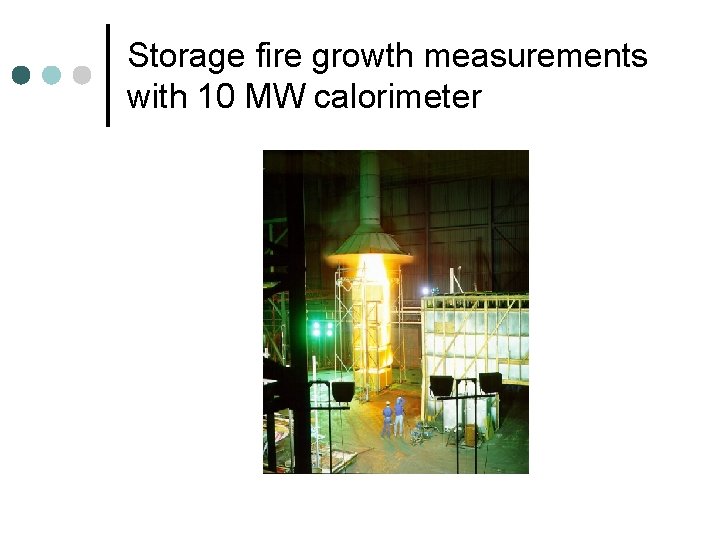
Storage fire growth measurements with 10 MW calorimeter
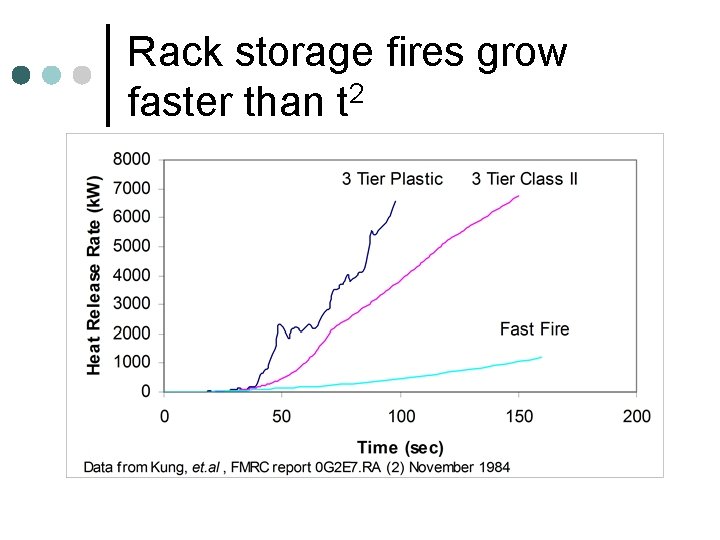
Rack storage fires grow faster than t 2
Creating a design fire ¢ Decide growth rate using knowledge of l l ¢ Type of building or occupancy (industry, discotek, school, office) => decide growth rate Or use knowledge combustible material (stack of pallets, mattreses, etc) Decide maximum Heat Relesase Rate (HRR) l l Use data or calculations or both Sprinkler? Then often use 5 MW
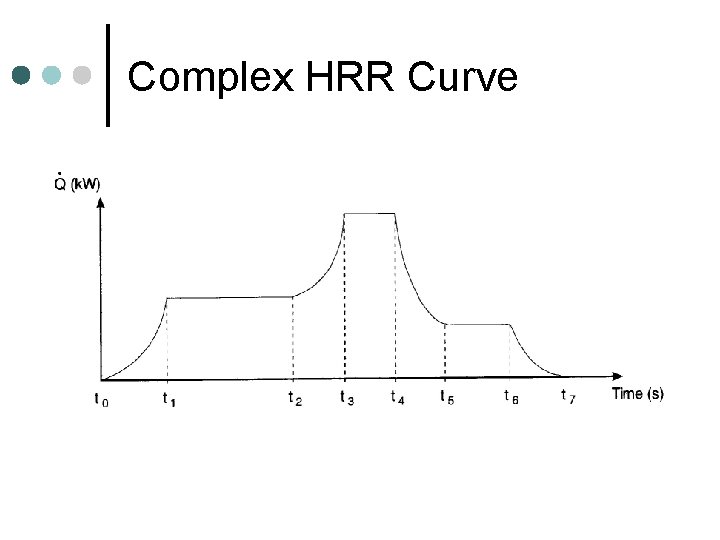
Complex HRR Curve
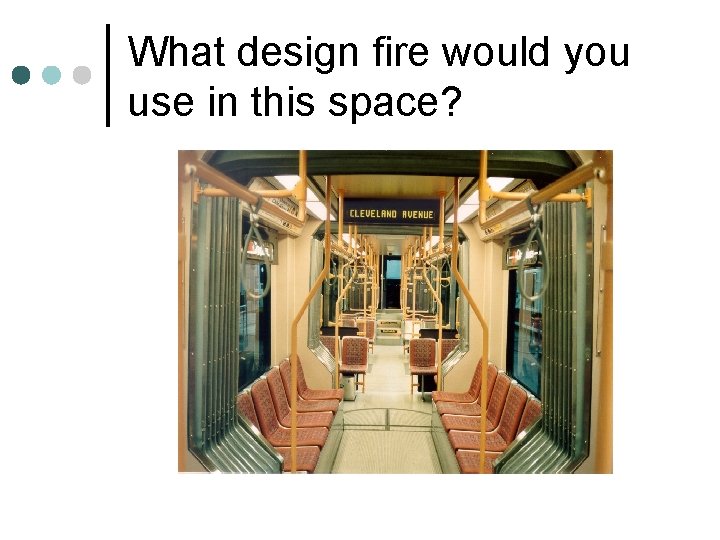
What design fire would you use in this space?
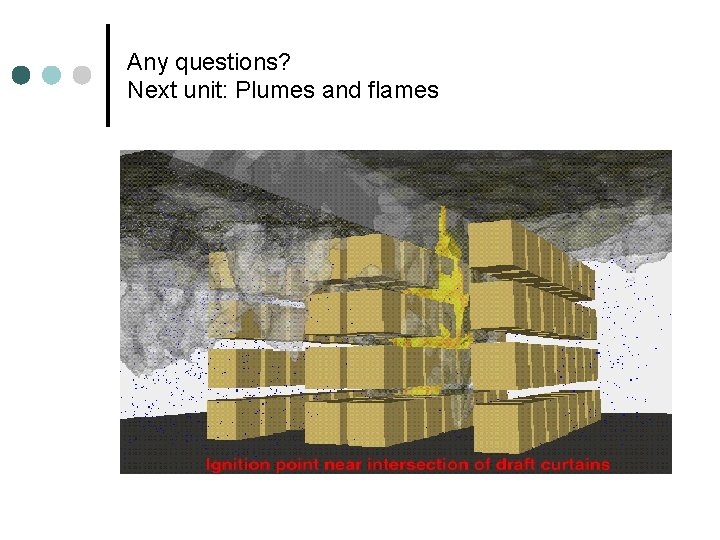
Any questions? Next unit: Plumes and flames