
Enabling Users to Guide the Design of Robust
Enabling Users to Guide the Design of Robust Model Fitting Algorithms Matthias Wimmer, Freek Stulp and Bernd Radig matthias. wimmer@cs. tum. edu Technische Universität München
Outline Model-based image interpretation Model fitting, objective function Designing objective functions Our 5 -step approach Learning objective functions Partly automated Evaluation Accuracy Runtime Technische Universität München Matthias Wimmer Interactive Computer Vision, 2007, October 15 th Rio de Janeiro slide 2/18
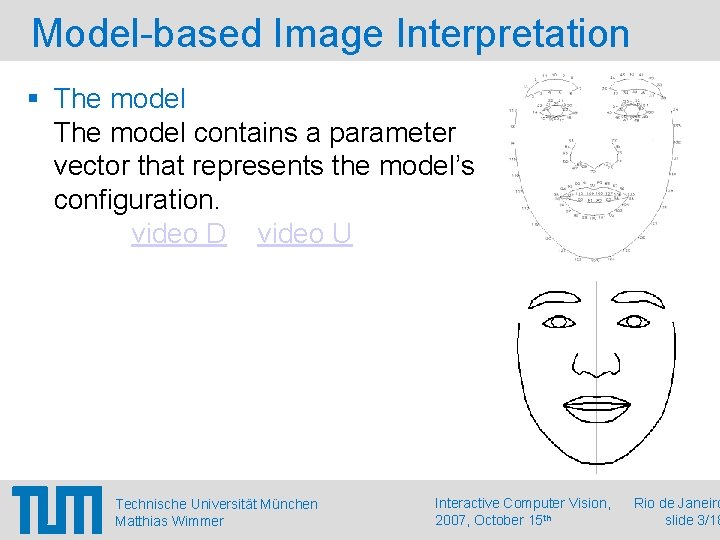
Model-based Image Interpretation The model contains a parameter vector that represents the model’s configuration. video D video U Technische Universität München Matthias Wimmer Interactive Computer Vision, 2007, October 15 th Rio de Janeiro slide 3/18
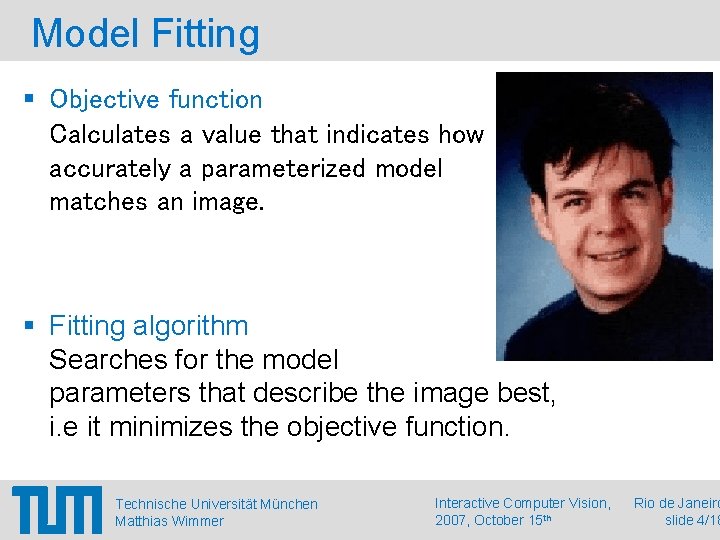
Model Fitting Objective function Calculates a value that indicates how accurately a parameterized model matches an image. Fitting algorithm Searches for the model parameters that describe the image best, i. e it minimizes the objective function. Technische Universität München Matthias Wimmer Interactive Computer Vision, 2007, October 15 th Rio de Janeiro slide 4/18
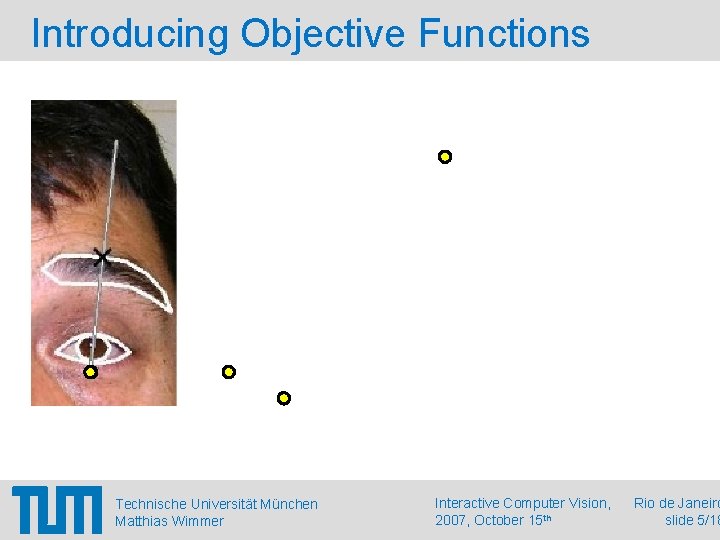
Introducing Objective Functions Technische Universität München Matthias Wimmer Interactive Computer Vision, 2007, October 15 th Rio de Janeiro slide 5/18
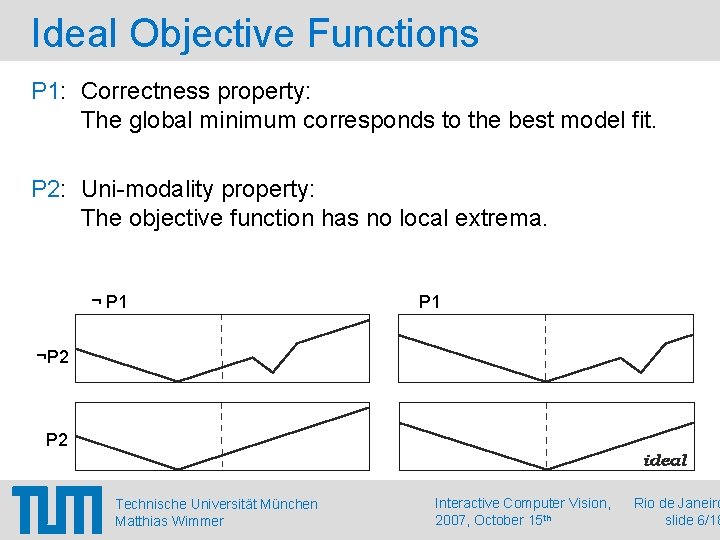
Ideal Objective Functions P 1: Correctness property: The global minimum corresponds to the best model fit. P 2: Uni-modality property: The objective function has no local extrema. ¬ P 1 ¬P 2 Technische Universität München Matthias Wimmer Interactive Computer Vision, 2007, October 15 th Rio de Janeiro slide 6/18
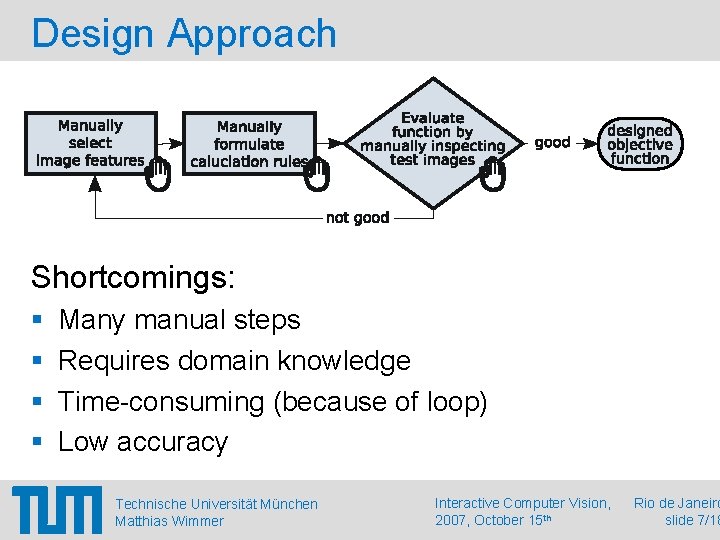
Design Approach Shortcomings: Many manual steps Requires domain knowledge Time-consuming (because of loop) Low accuracy Technische Universität München Matthias Wimmer Interactive Computer Vision, 2007, October 15 th Rio de Janeiro slide 7/18
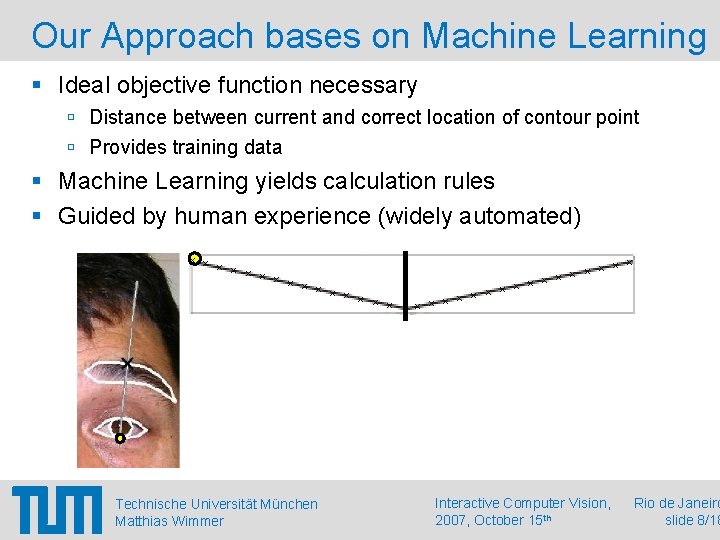
Our Approach bases on Machine Learning Ideal objective function necessary Distance between current and correct location of contour point Provides training data Machine Learning yields calculation rules Guided by human experience (widely automated) x x x x Technische Universität München Matthias Wimmer x x x x x Interactive Computer Vision, 2007, October 15 th Rio de Janeiro slide 8/18
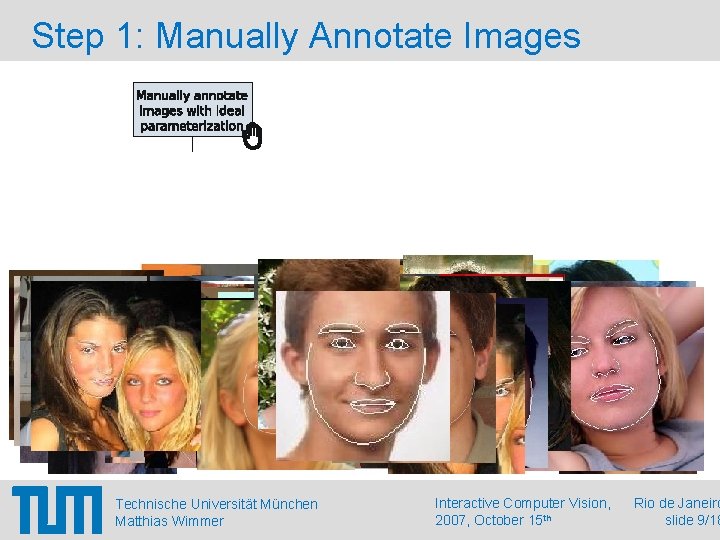
Step 1: Manually Annotate Images Technische Universität München Matthias Wimmer Interactive Computer Vision, 2007, October 15 th Rio de Janeiro slide 9/18
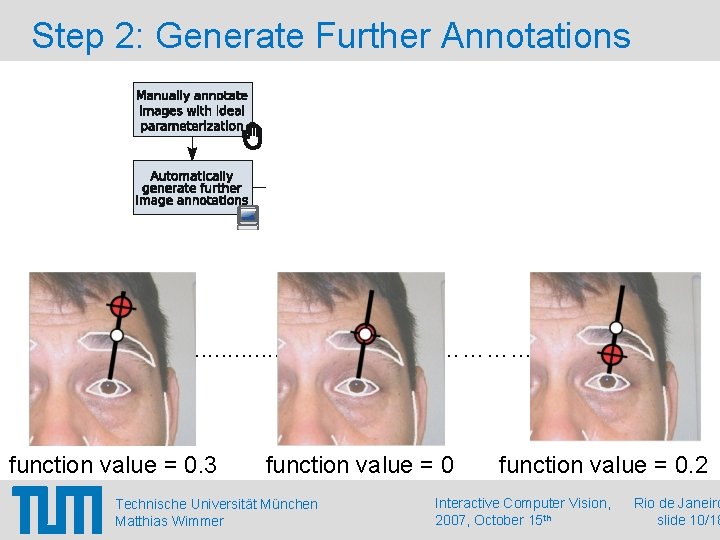
Step 2: Generate Further Annotations ……. . . . ……………. . function value = 0. 3 function value = 0 Technische Universität München Matthias Wimmer function value = 0. 2 Interactive Computer Vision, 2007, October 15 th Rio de Janeiro slide 10/18
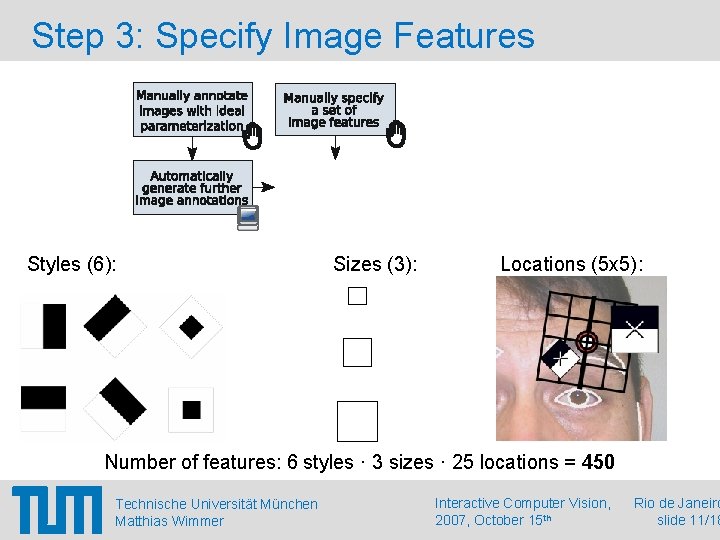
Step 3: Specify Image Features Styles (6): Sizes (3): Locations (5 x 5): Number of features: 6 styles · 3 sizes · 25 locations = 450 Technische Universität München Matthias Wimmer Interactive Computer Vision, 2007, October 15 th Rio de Janeiro slide 11/18
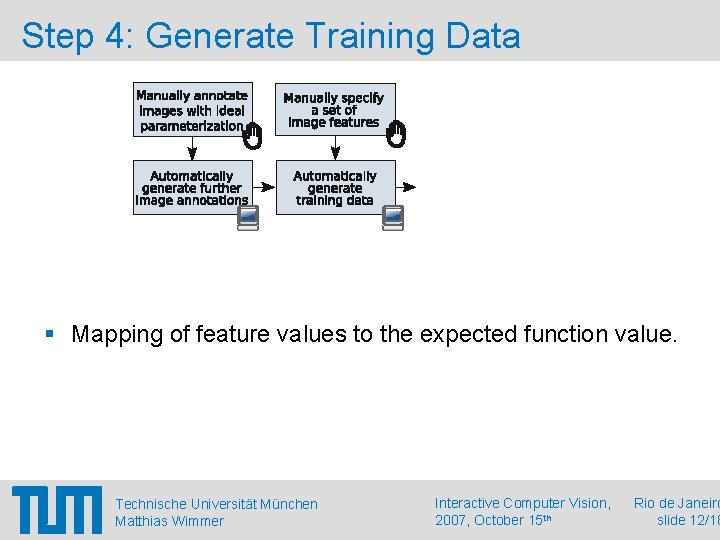
Step 4: Generate Training Data Mapping of feature values to the expected function value. Technische Universität München Matthias Wimmer Interactive Computer Vision, 2007, October 15 th Rio de Janeiro slide 12/18
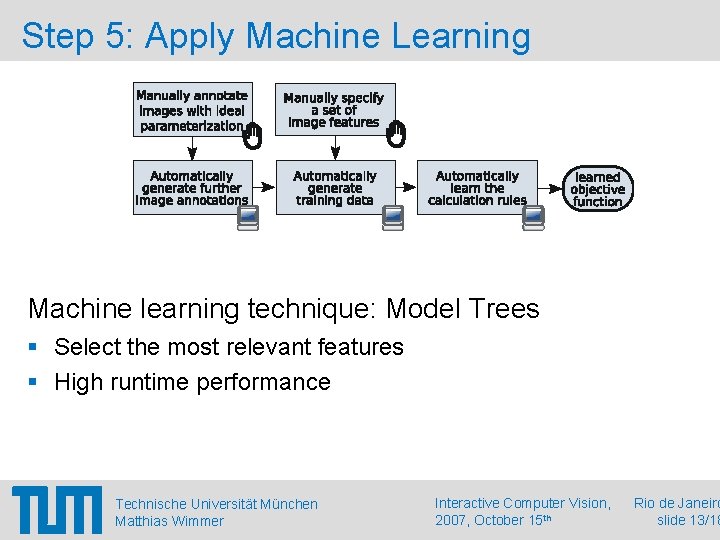
Step 5: Apply Machine Learning Machine learning technique: Model Trees Select the most relevant features High runtime performance Technische Universität München Matthias Wimmer Interactive Computer Vision, 2007, October 15 th Rio de Janeiro slide 13/18
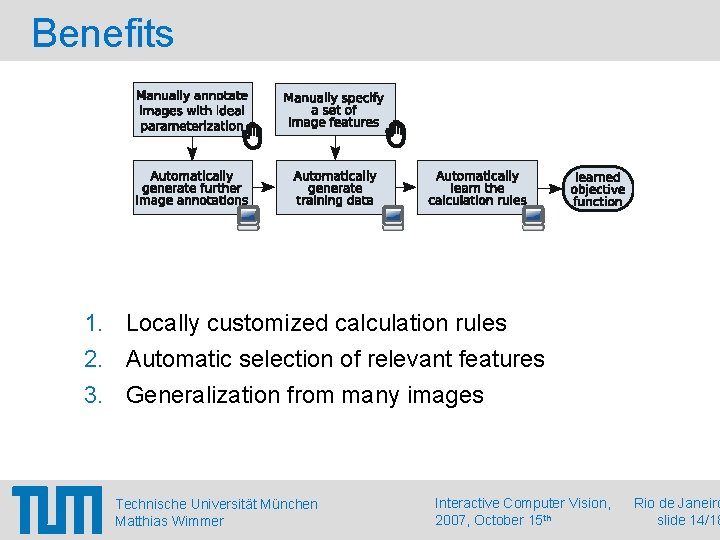
Benefits 1. Locally customized calculation rules 2. Automatic selection of relevant features 3. Generalization from many images Technische Universität München Matthias Wimmer Interactive Computer Vision, 2007, October 15 th Rio de Janeiro slide 14/18
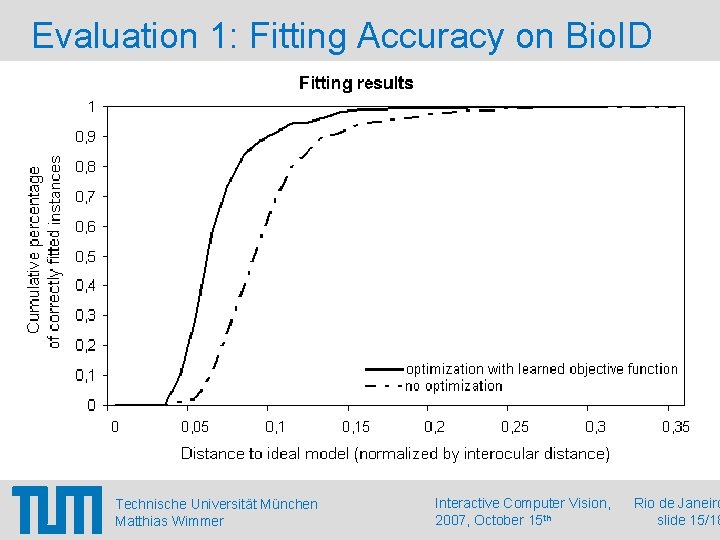
Evaluation 1: Fitting Accuracy on Bio. ID Technische Universität München Matthias Wimmer Interactive Computer Vision, 2007, October 15 th Rio de Janeiro slide 15/18
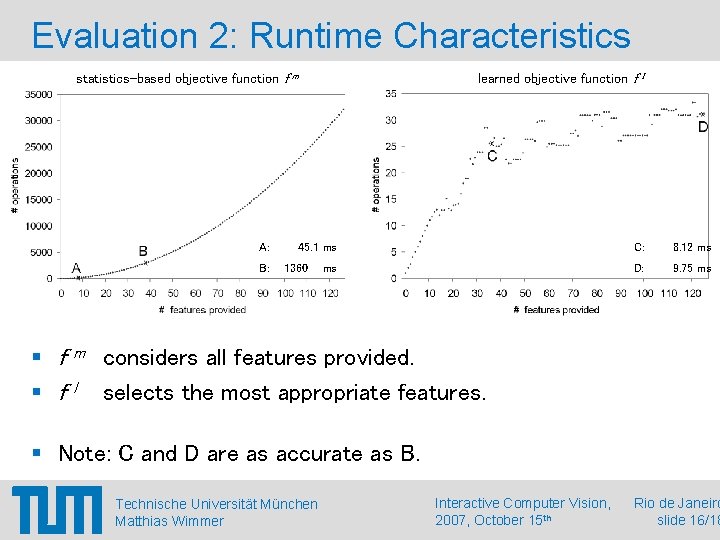
Evaluation 2: Runtime Characteristics statistics-based objective function f A: B: learned objective function f m 45. 1 ms 1360 ms l C: 8. 12 ms D: 9. 75 ms f m considers all features provided. f l selects the most appropriate features. Note: C and D are as accurate as B. Technische Universität München Matthias Wimmer Interactive Computer Vision, 2007, October 15 th Rio de Janeiro slide 16/18
Ongoing Research and Outlook Integration of further image features Compute the image features on the fly Learning objective functions for 3 D models Application to different scenario Medical scenario Robot scenario: Model of indoor environment Self localization Technische Universität München Matthias Wimmer Interactive Computer Vision, 2007, October 15 th Rio de Janeiro slide 17/18

Thank you! ありがとう Online-Demonstration: http: //www 9. cs. tum. edu/people/wimmerm Technische Universität München Matthias Wimmer Interactive Computer Vision, 2007, October 15 th Rio de Janeiro slide 18/18
- Slides: 18