
Enabling Shallow Water Flight on Slocum Gliders Chip
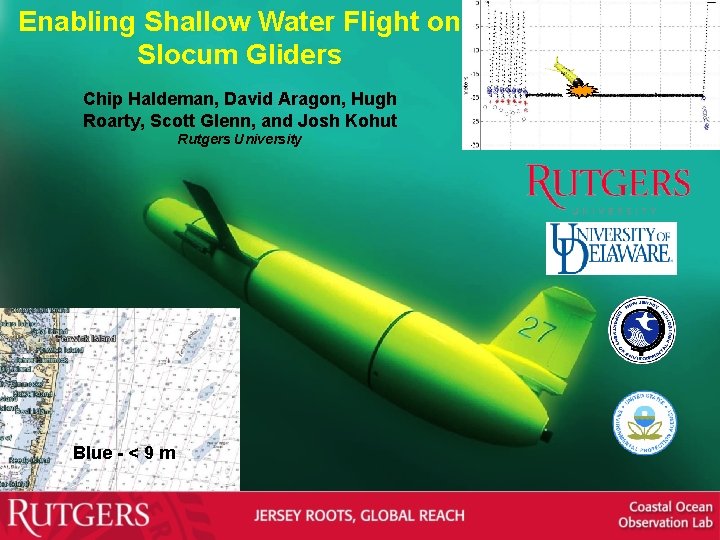
Enabling Shallow Water Flight on Slocum Gliders Chip Haldeman, David Aragon, Hugh Roarty, Scott Glenn, and Josh Kohut Rutgers University Blue - < 9 m
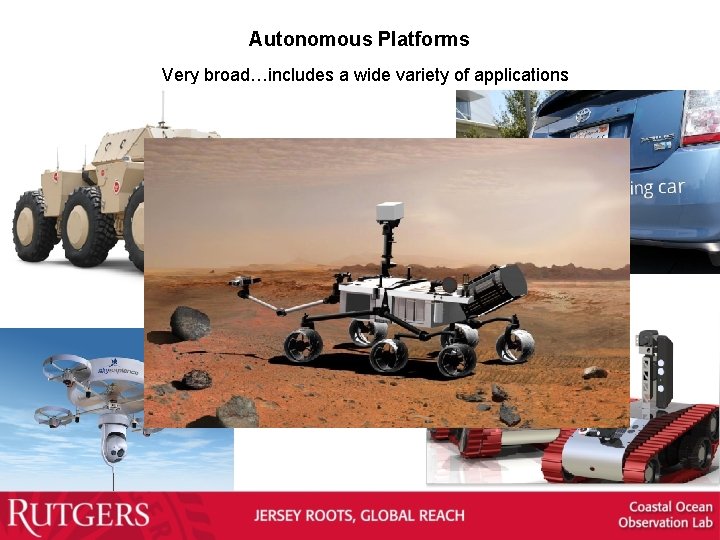
Autonomous Platforms Very broad…includes a wide variety of applications
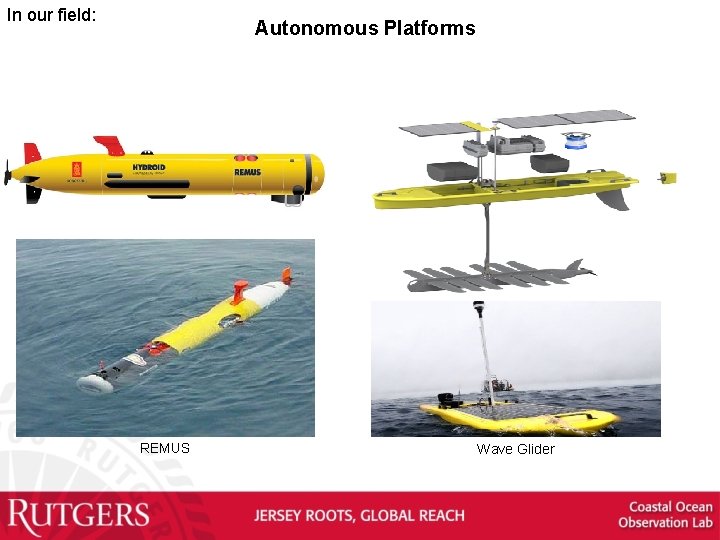
In our field: Autonomous Platforms REMUS Wave Glider
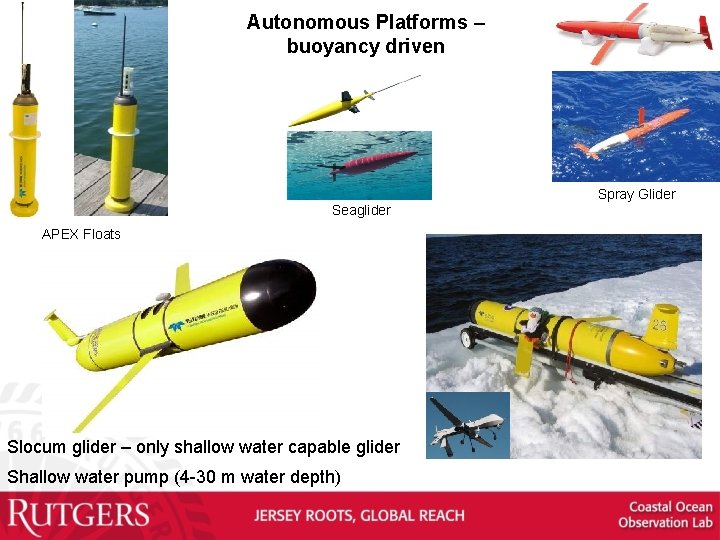
Autonomous Platforms – buoyancy driven Spray Glider Seaglider APEX Floats Slocum glider – only shallow water capable glider Shallow water pump (4 -30 m water depth)
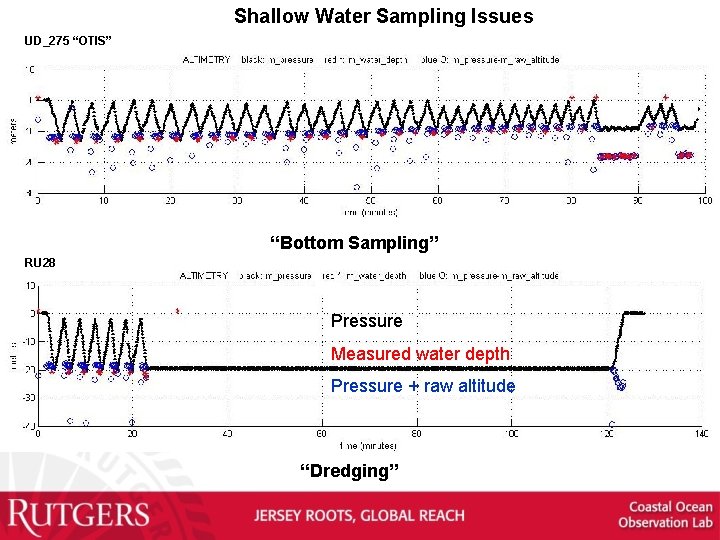
Shallow Water Sampling Issues UD_275 “OTIS” “Bottom Sampling” RU 28 Pressure Measured water depth Pressure + raw altitude “Dredging”
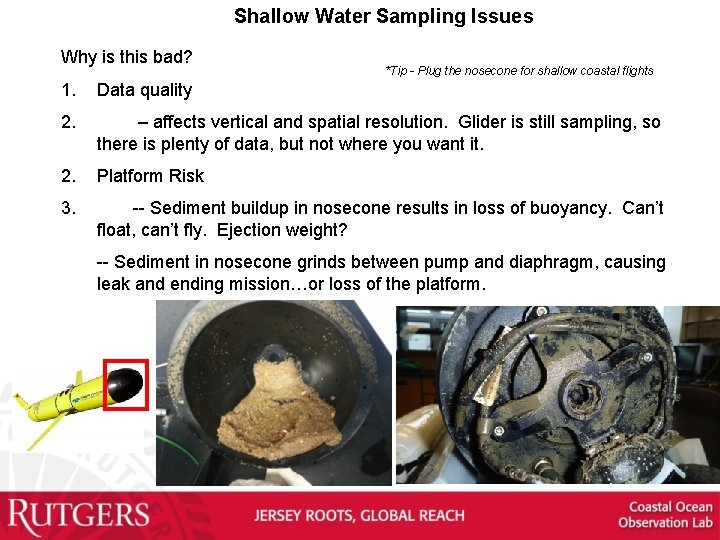
Shallow Water Sampling Issues Why is this bad? *Tip - Plug the nosecone for shallow coastal flights 1. Data quality 2. – affects vertical and spatial resolution. Glider is still sampling, so there is plenty of data, but not where you want it. 2. Platform Risk 3. -- Sediment buildup in nosecone results in loss of buoyancy. Can’t float, can’t fly. Ejection weight? -- Sediment in nosecone grinds between pump and diaphragm, causing leak and ending mission…or loss of the platform.
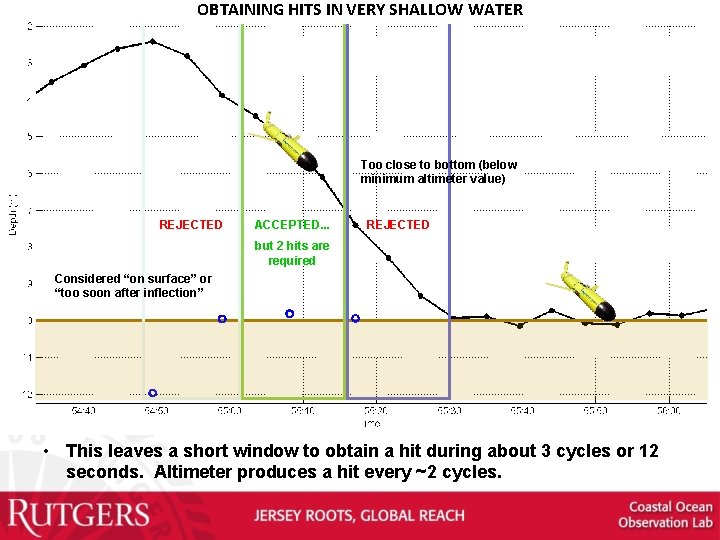
OBTAINING HITS IN VERY SHALLOW WATER Too close to bottom (below minimum altimeter value) REJECTED ACCEPTED. . . REJECTED but 2 hits are required Considered “on surface” or “too soon after inflection” • This leaves a short window to obtain a hit during about 3 cycles or 12 seconds. Altimeter produces a hit every ~2 cycles.
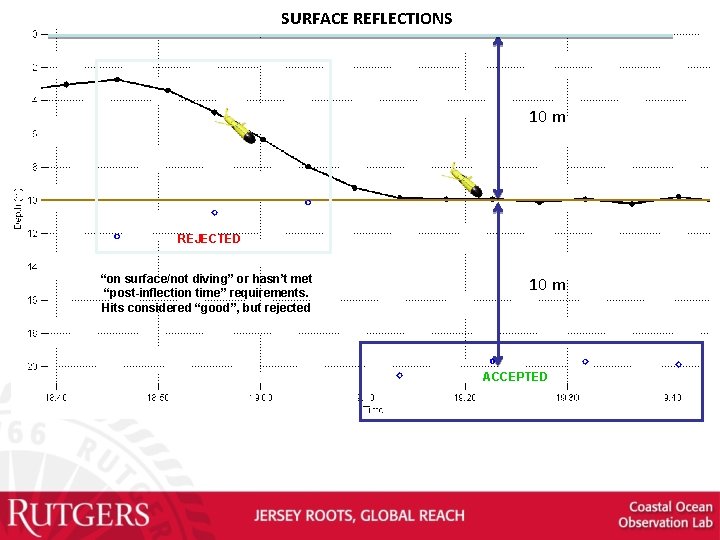
SURFACE REFLECTIONS 10 m REJECTED “on surface/not diving” or hasn’t met “post-inflection time” requirements. Hits considered “good”, but rejected 10 m ACCEPTED
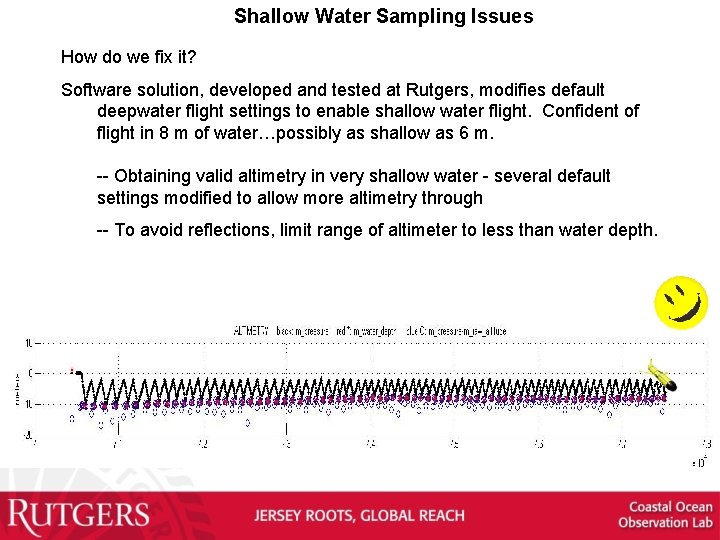
Shallow Water Sampling Issues How do we fix it? Software solution, developed and tested at Rutgers, modifies default deepwater flight settings to enable shallow water flight. Confident of flight in 8 m of water…possibly as shallow as 6 m. -- Obtaining valid altimetry in very shallow water - several default settings modified to allow more altimetry through -- To avoid reflections, limit range of altimeter to less than water depth.
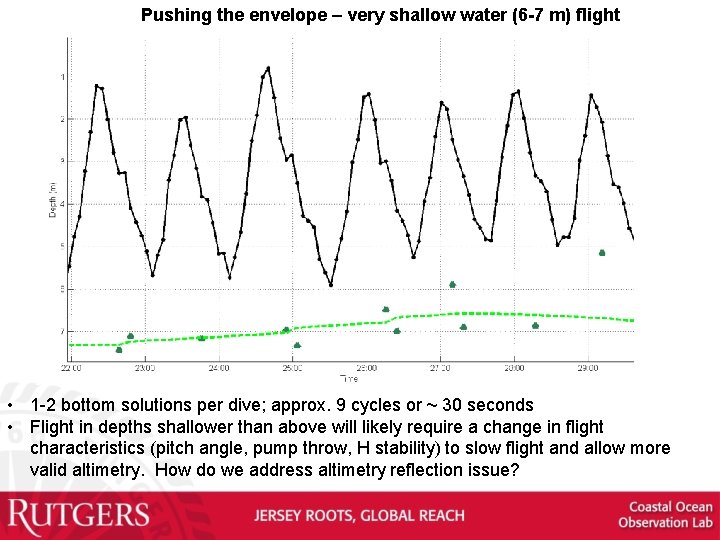
Pushing the envelope – very shallow water (6 -7 m) flight • 1 -2 bottom solutions per dive; approx. 9 cycles or ~ 30 seconds • Flight in depths shallower than above will likely require a change in flight characteristics (pitch angle, pump throw, H stability) to slow flight and allow more valid altimetry. How do we address altimetry reflection issue?
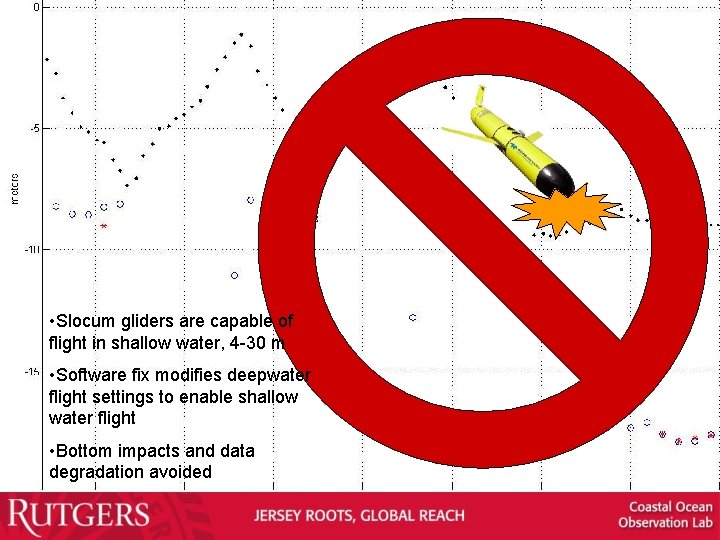
• Slocum gliders are capable of flight in shallow water, 4 -30 m • Software fix modifies deepwater flight settings to enable shallow water flight • Bottom impacts and data degradation avoided
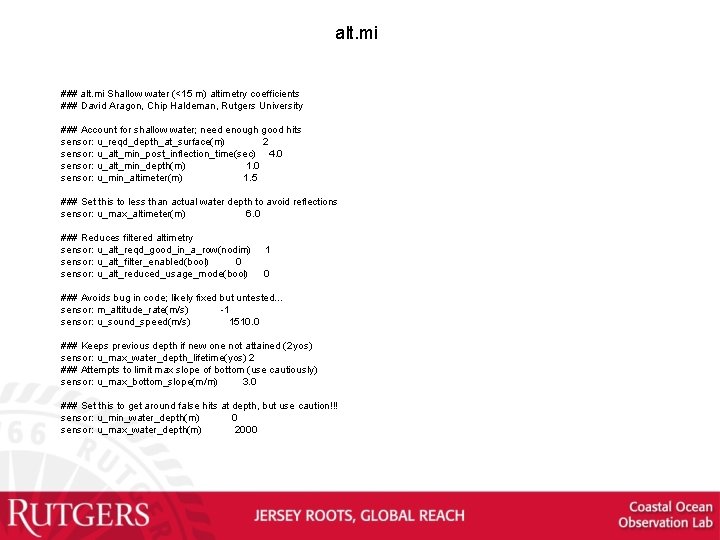
alt. mi ### alt. mi Shallow water (<15 m) altimetry coefficients ### David Aragon, Chip Haldeman, Rutgers University ### Account for shallow water; need enough good hits sensor: u_reqd_depth_at_surface(m) 2 sensor: u_alt_min_post_inflection_time(sec) 4. 0 sensor: u_alt_min_depth(m) 1. 0 sensor: u_min_altimeter(m) 1. 5 ### Set this to less than actual water depth to avoid reflections sensor: u_max_altimeter(m) 6. 0 ### Reduces filtered altimetry sensor: u_alt_reqd_good_in_a_row(nodim) sensor: u_alt_filter_enabled(bool) 0 sensor: u_alt_reduced_usage_mode(bool) 1 0 ### Avoids bug in code; likely fixed but untested. . . sensor: m_altitude_rate(m/s) -1 sensor: u_sound_speed(m/s) 1510. 0 ### Keeps previous depth if new one not attained (2 yos) sensor: u_max_water_depth_lifetime(yos) 2 ### Attempts to limit max slope of bottom (use cautiously) sensor: u_max_bottom_slope(m/m) 3. 0 ### Set this to get around false hits at depth, but use caution!!! sensor: u_min_water_depth(m) 0 sensor: u_max_water_depth(m) 2000
- Slides: 12