
EN 16931 1 Semantic data model of the

- Slides: 13
EN 16931 -1 Semantic data model of the core elements of an electronic invoice E-invoicing Training conference Nicosia, October 30, 2017 Fred van Blommestein This presentation expresses the position of the above mentioned presenter. Not of CEN.
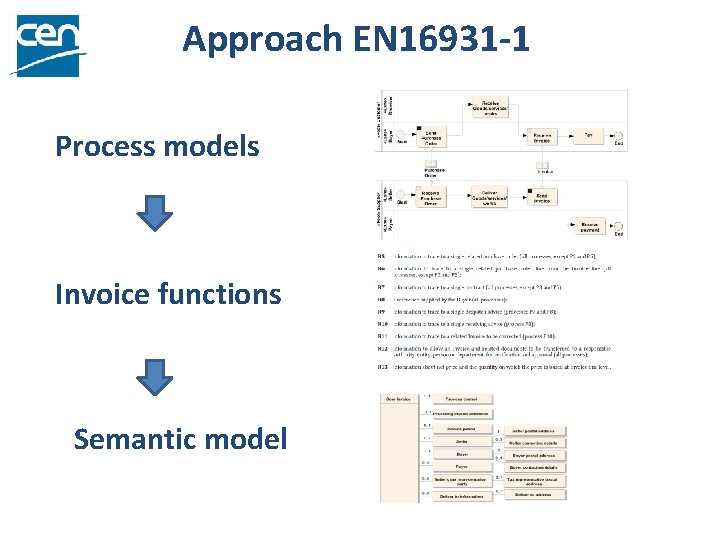
Approach EN 16931 -1 Process models Invoice functions Semantic model
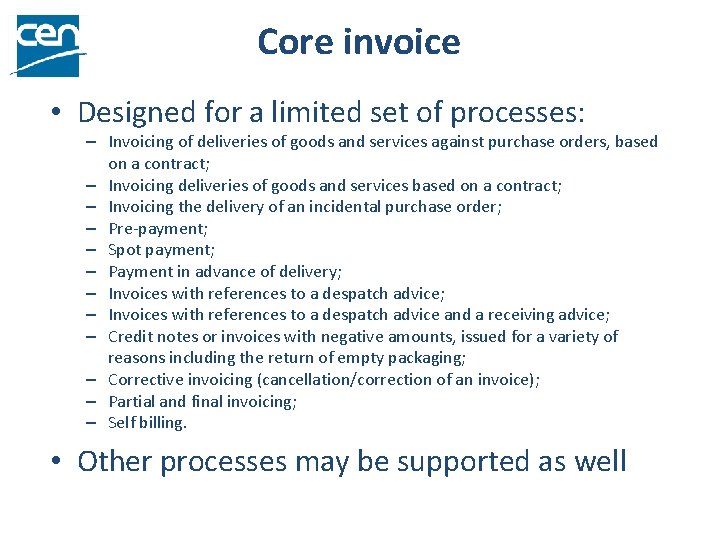
Core invoice • Designed for a limited set of processes: – Invoicing of deliveries of goods and services against purchase orders, based on a contract; – Invoicing deliveries of goods and services based on a contract; – Invoicing the delivery of an incidental purchase order; – Pre-payment; – Spot payment; – Payment in advance of delivery; – Invoices with references to a despatch advice and a receiving advice; – Credit notes or invoices with negative amounts, issued for a variety of reasons including the return of empty packaging; – Corrective invoicing (cancellation/correction of an invoice); – Partial and final invoicing; – Self billing. • Other processes may be supported as well
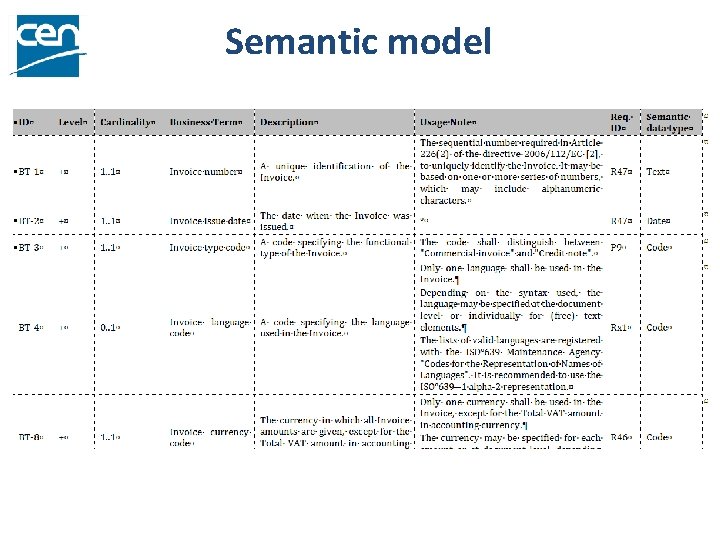
Semantic model
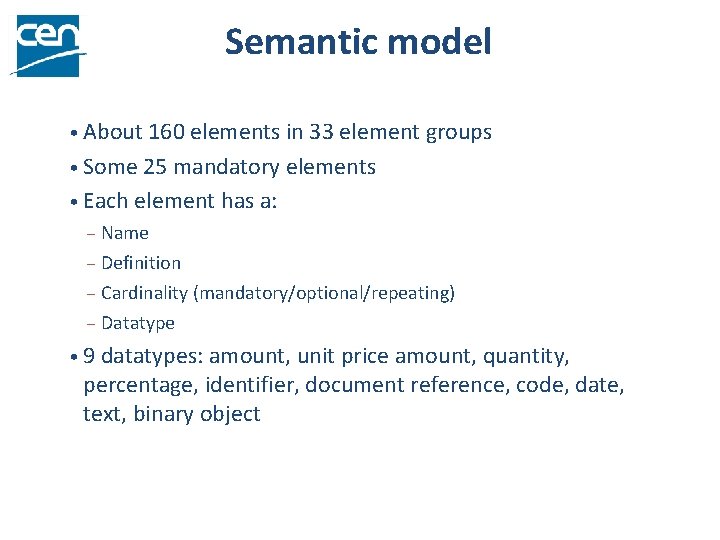
Semantic model • About 160 elements in 33 element groups • Some 25 mandatory elements • Each element has a: Name – Definition – Cardinality (mandatory/optional/repeating) – Datatype – • 9 datatypes: amount, unit price amount, quantity, percentage, identifier, document reference, code, date, text, binary object
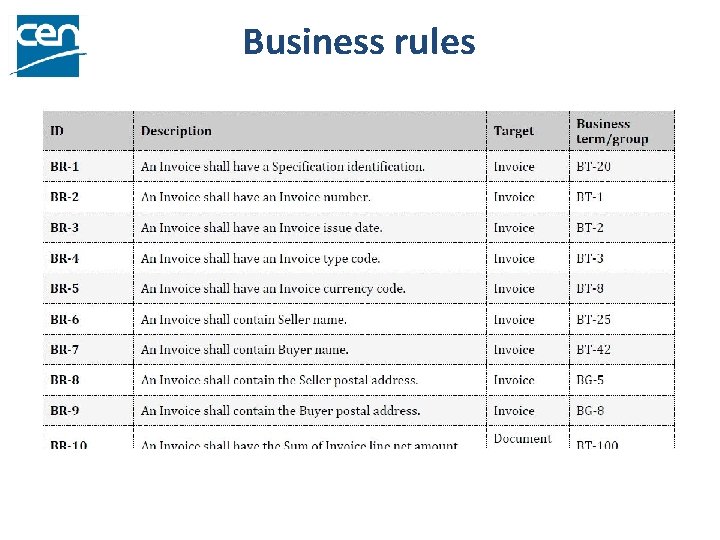
Business rules
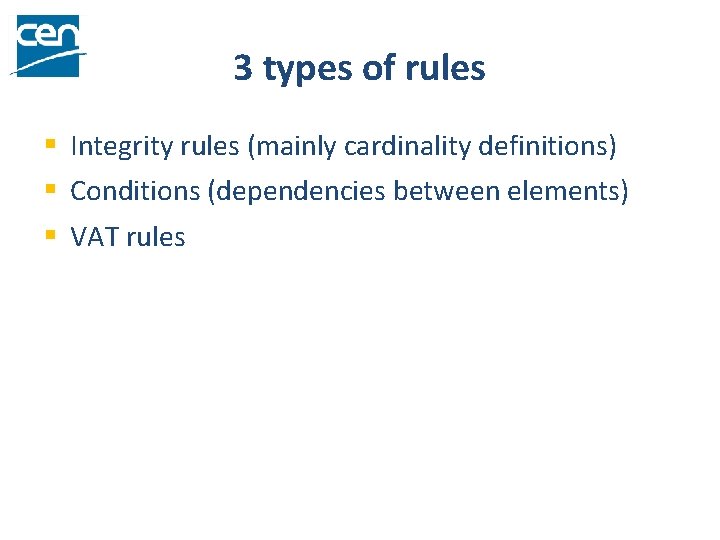
3 types of rules § Integrity rules (mainly cardinality definitions) § Conditions (dependencies between elements) § VAT rules
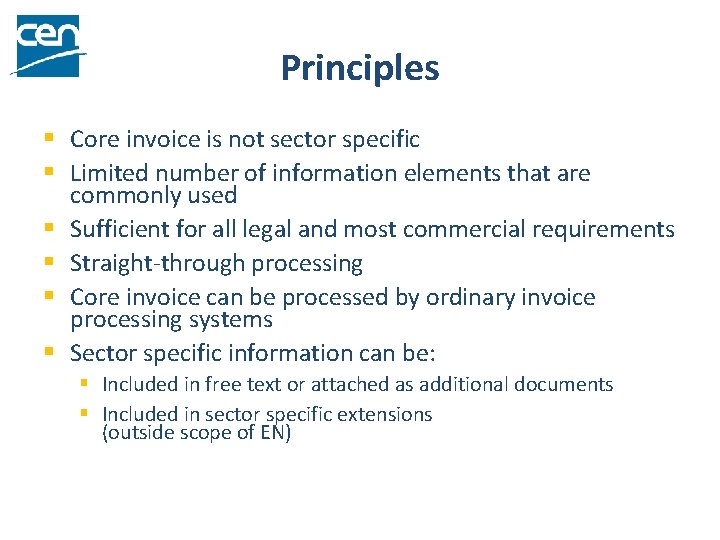
Principles § Core invoice is not sector specific § Limited number of information elements that are commonly used § Sufficient for all legal and most commercial requirements § Straight-through processing § Core invoice can be processed by ordinary invoice processing systems § Sector specific information can be: § Included in free text or attached as additional documents § Included in sector specific extensions (outside scope of EN)
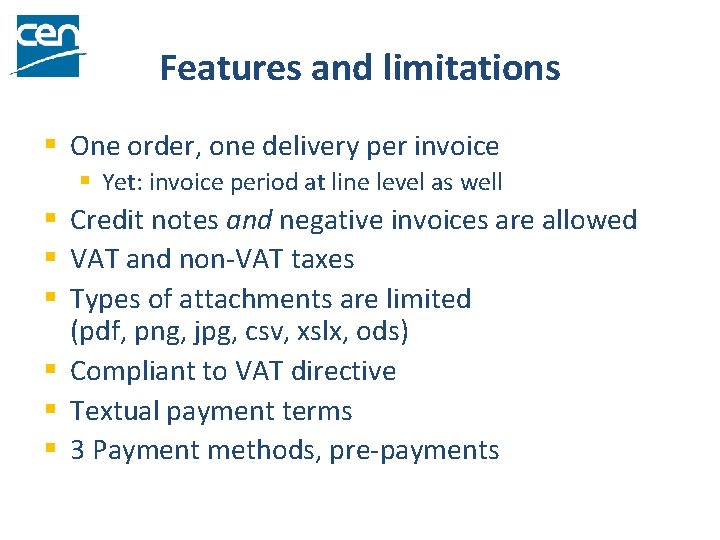
Features and limitations § One order, one delivery per invoice § Yet: invoice period at line level as well § Credit notes and negative invoices are allowed § VAT and non-VAT taxes § Types of attachments are limited (pdf, png, jpg, csv, xslx, ods) § Compliant to VAT directive § Textual payment terms § 3 Payment methods, pre-payments
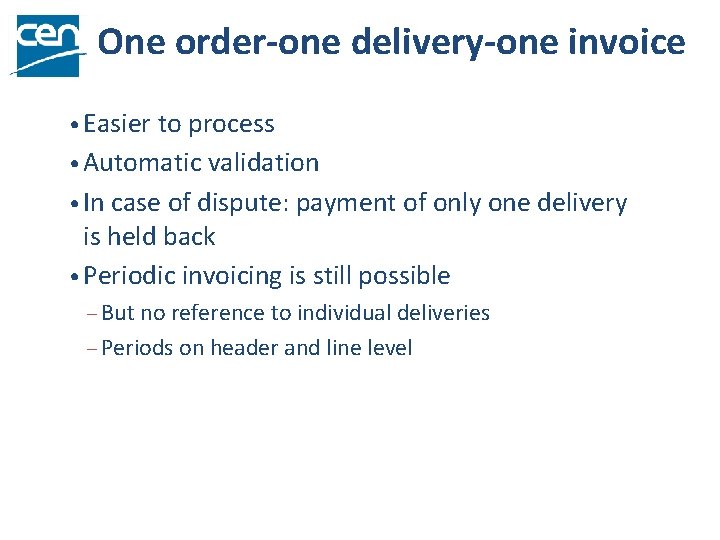
One order-one delivery-one invoice • Easier to process • Automatic validation • In case of dispute: payment of only one delivery is held back • Periodic invoicing is still possible – But no reference to individual deliveries – Periods on header and line level
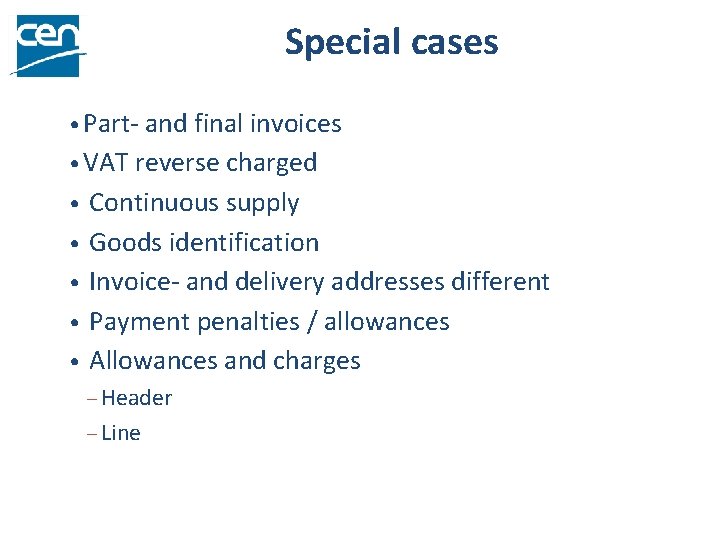
Special cases • Part- and final invoices • VAT reverse charged • • • Continuous supply Goods identification Invoice- and delivery addresses different Payment penalties / allowances Allowances and charges – Header – Line
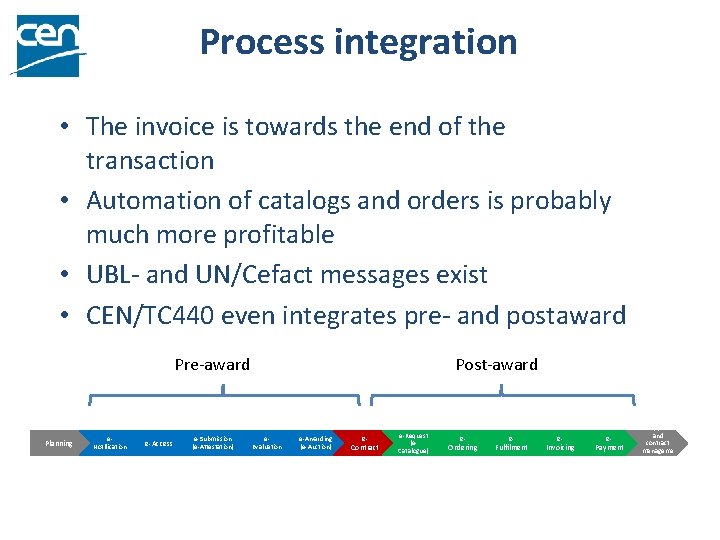
Process integration • The invoice is towards the end of the transaction • Automation of catalogs and orders is probably much more profitable • UBL- and UN/Cefact messages exist • CEN/TC 440 even integrates pre- and postaward Post-award Pre-award Planning e. Notification e-Access e-Submission (e-Attestation) e. Evaluation e-Awarding (e-Auction) e. Contract e-Request (e. Catalogue) e. Ordering e. Fulfilment e. Invoicing e. Payment Supplier and contract manageme nt
Questions?