
Emulsion Readout Present and Future Toshiyuki Nakano 2008



- Slides: 34
Emulsion Readout -Present and Future- Toshiyuki Nakano 2008. 1. 24 Emulsion Workshop, Nagoya, Japan
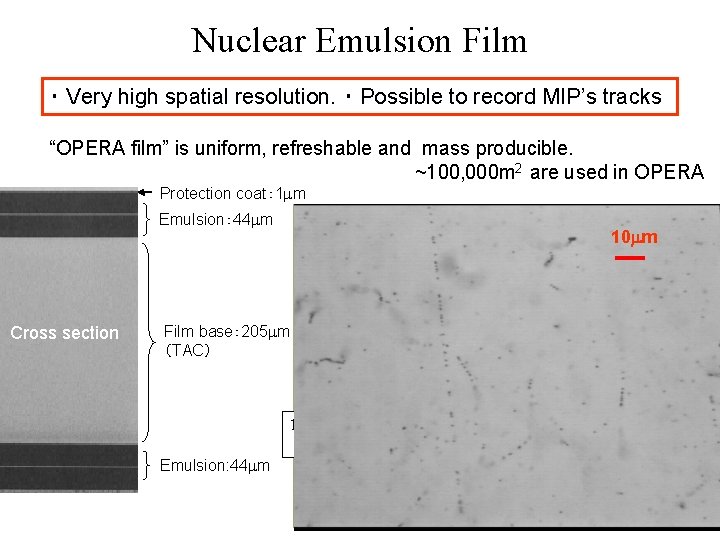
Nuclear Emulsion Film ・ Very high spatial resolution. ・ Possible to record MIP’s tracks “OPERA film” is uniform, refreshable and mass producible. ~100, 000 m 2 are used in OPERA Protection coat: 1 mm Emulsion: 44 mm 10 mm 乾板断面図 (電顕写真) Cross section Film base: 205 mm (TAC) 100 mm Emulsion: 44 mm 125 mm
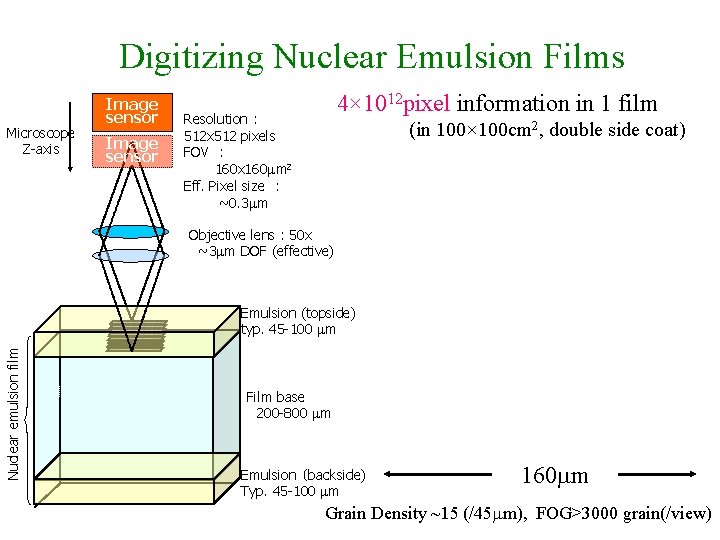
Digitizing Nuclear Emulsion Films Microscope Z-axis Image sensor Resolution : 512 x 512 pixels FOV : 160 x 160 mm 2 Eff. Pixel size : ~0. 3 mm 4× 1012 pixel information in 1 film (in 100× 100 cm 2, double side coat) Objective lens : 50 x ~3 mm DOF (effective) Nuclear emulsion film Emulsion (topside) typ. 45 -100 mm Film base 200 -800 mm Emulsion (backside) Typ. 45 -100 mm 160 mm Grain Density ~15 (/45 mm), FOG>3000 grain(/view)
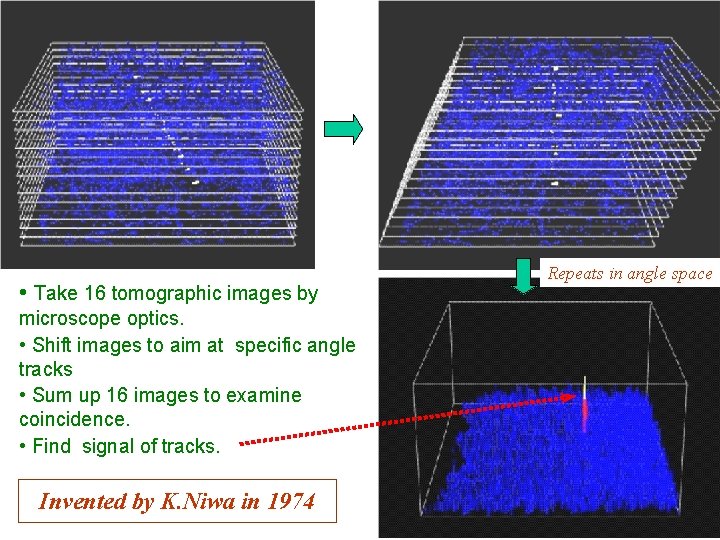
• Take 16 tomographic images by microscope optics. • Shift images to aim at specific angle tracks • Sum up 16 images to examine coincidence. • Find signal of tracks. Invented by K. Niwa in 1974 Repeats in angle space
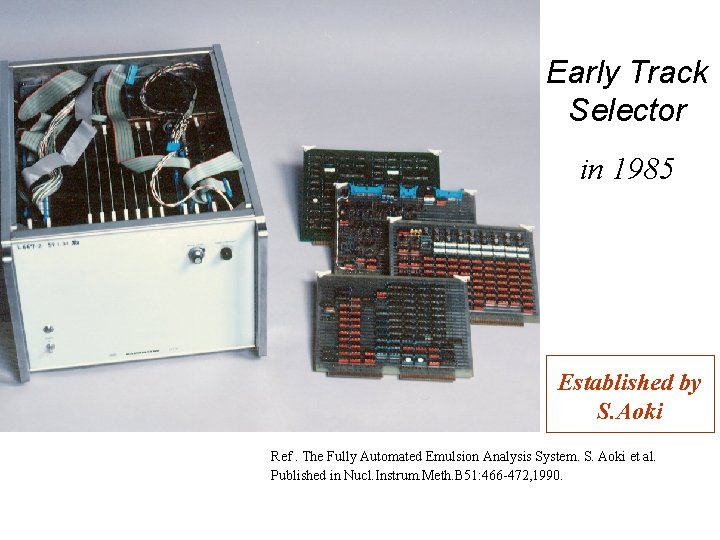
Early Track Selector in 1985 Established by S. Aoki Ref. The Fully Automated Emulsion Analysis System. S. Aoki et al. Published in Nucl. Instrum. Meth. B 51: 466 -472, 1990.
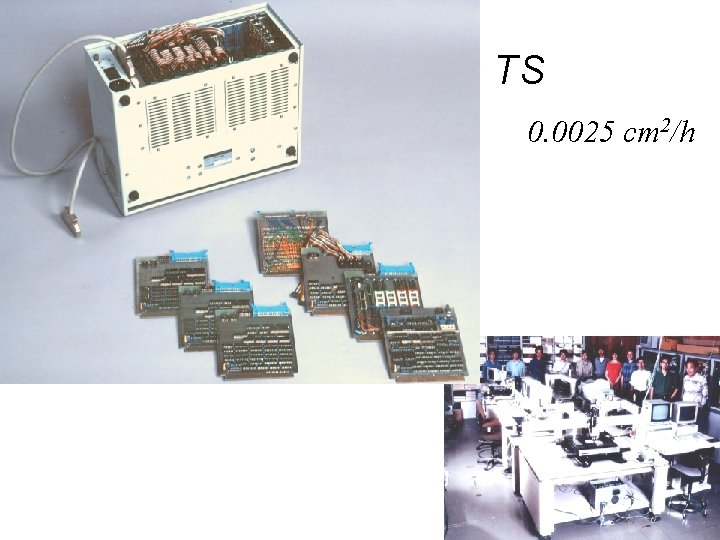
TS 0. 0025 cm 2/h
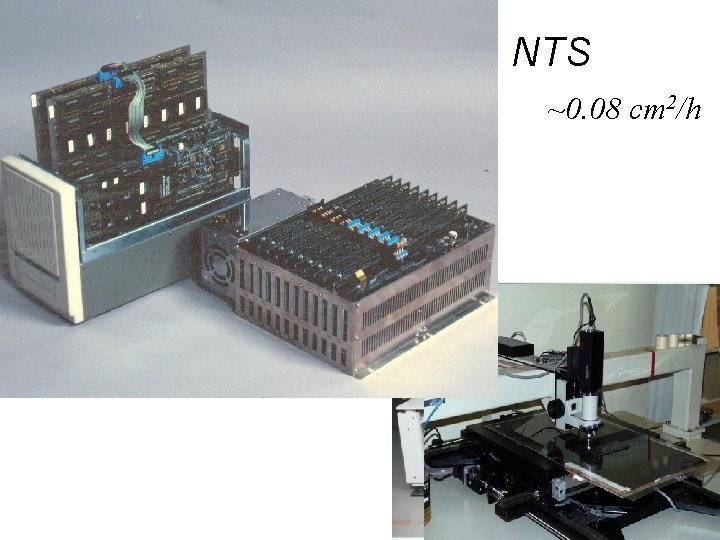
NTS ~0. 08 cm 2/h
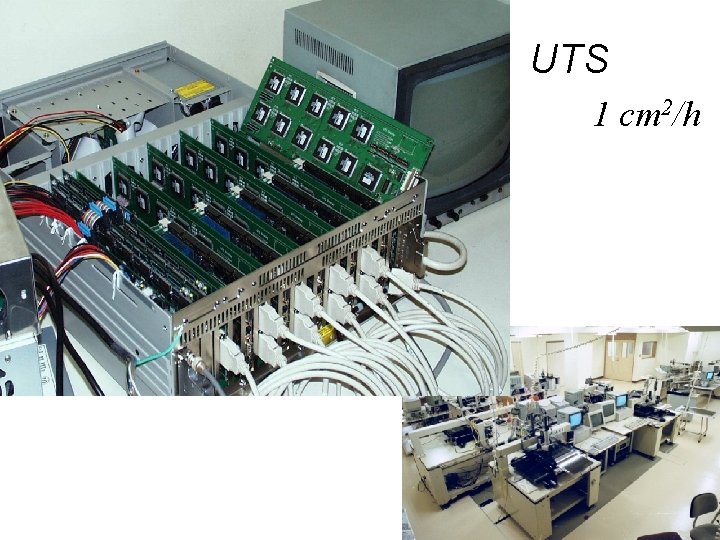
UTS 1 cm 2/h
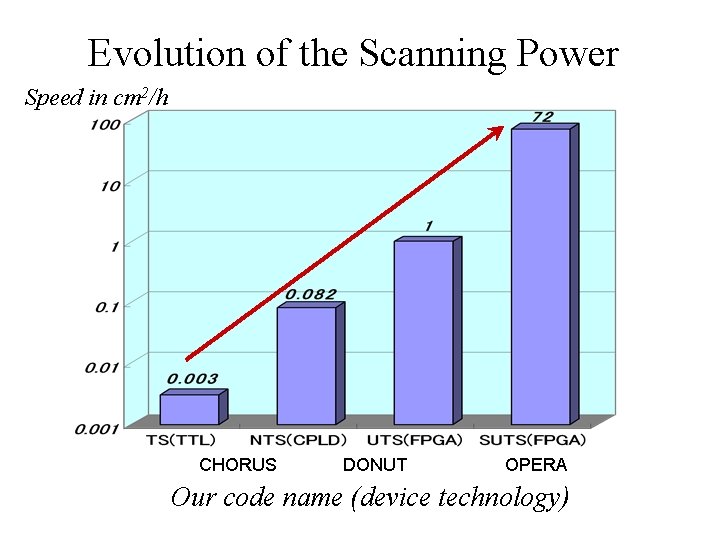
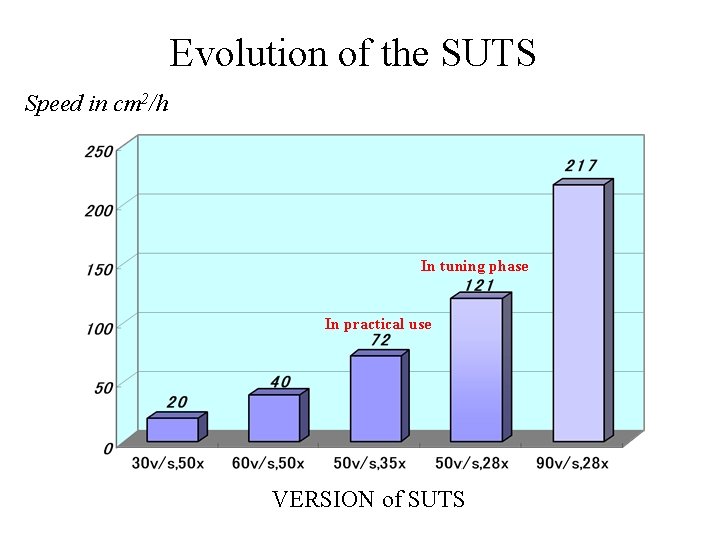
Evolution of the Scanning Power Speed in cm 2/h CHORUS DONUT OPERA Our code name (device technology)
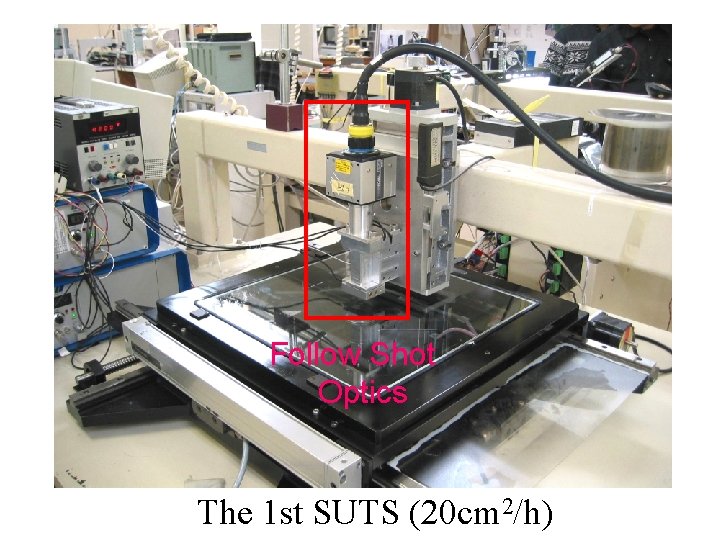
Follow Shot Optics The 1 st SUTS (20 cm 2/h)
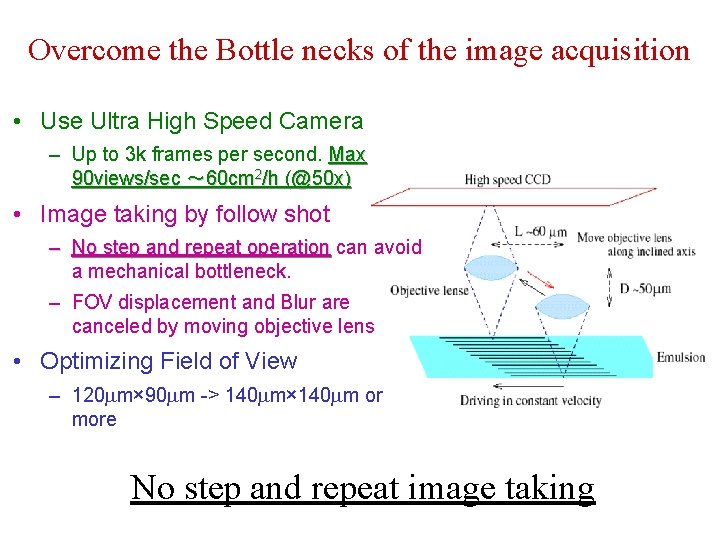
Overcome the Bottle necks of the image acquisition • Use Ultra High Speed Camera – Up to 3 k frames per second. Max 90 views/sec ~ 60 cm 2/h (@50 x) • Image taking by follow shot – No step and repeat operation can avoid a mechanical bottleneck. – FOV displacement and Blur are canceled by moving objective lens • Optimizing Field of View – 120 mm× 90 mm -> 140 mm× 140 mm or more No step and repeat image taking
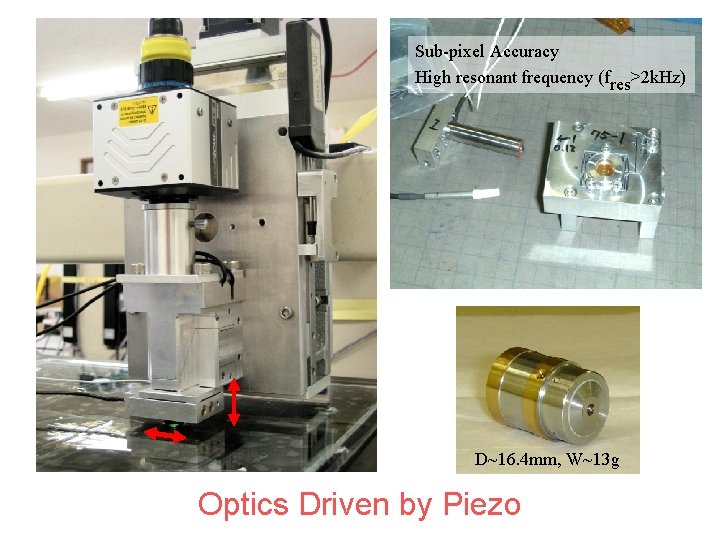
Sub-pixel Accuracy High resonant frequency (fres>2 k. Hz) D~16. 4 mm, W~13 g Optics Driven by Piezo
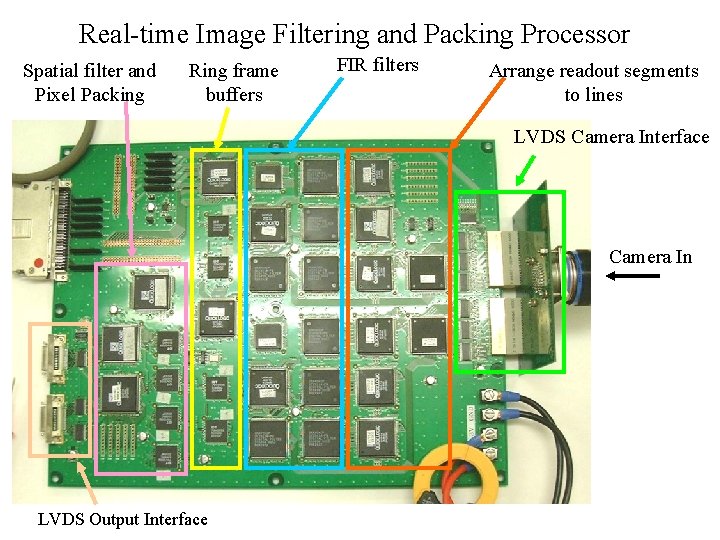
Real-time Image Filtering and Packing Processor Spatial filter and Pixel Packing Ring frame buffers FIR filters Arrange readout segments to lines LVDS Camera Interface Camera In LVDS Output Interface
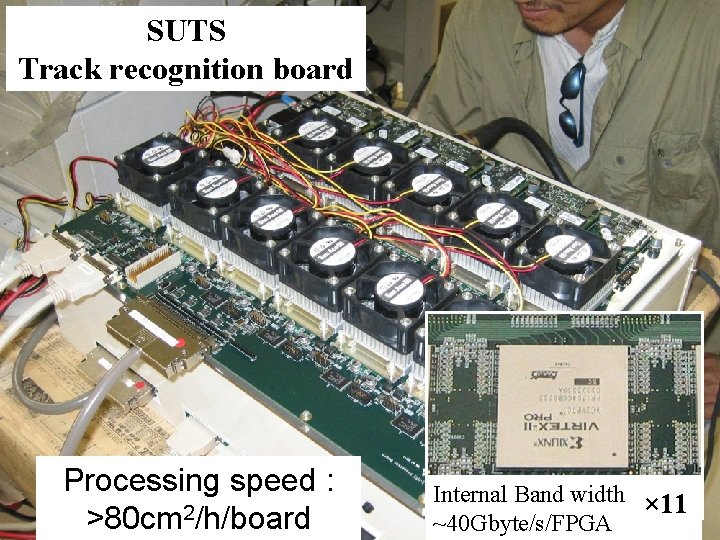
SUTS Track recognition board Processing speed : >80 cm 2/h/board Internal Band width × 11 ~40 Gbyte/s/FPGA
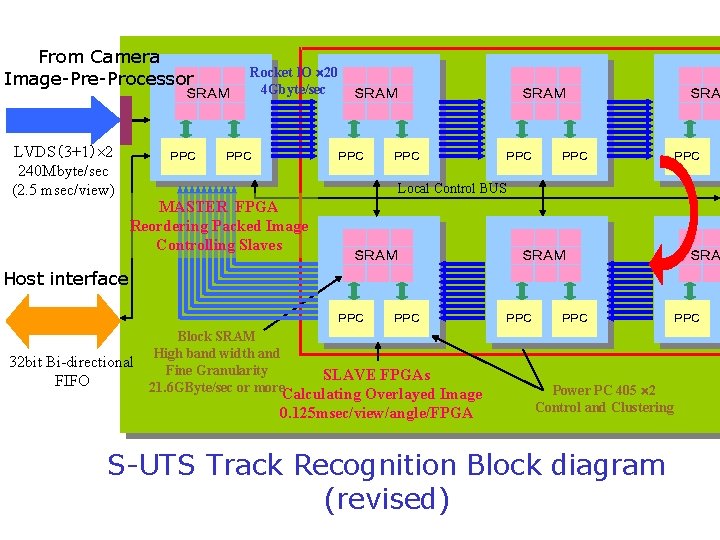
From Camera Image-Processor SRAM LVDS(3+1) 2 240 Mbyte/sec (2. 5 msec/view) PPC Rocket IO 20 4 Gbyte/sec PPC SRAM PPC PPC SRA PPC Local Control BUS MASTER FPGA Reordering Packed Image Controlling Slaves SRAM SRA Host interface PPC Block SRAM High band width and 32 bit Bi-directional Fine Granularity FIFO 21. 6 GByte/sec or more PPC SLAVE FPGAs Calculating Overlayed Image 0. 125 msec/view/angle/FPGA PPC Power PC 405 2 Control and Clustering S-UTS Track Recognition Block diagram (revised) PPC
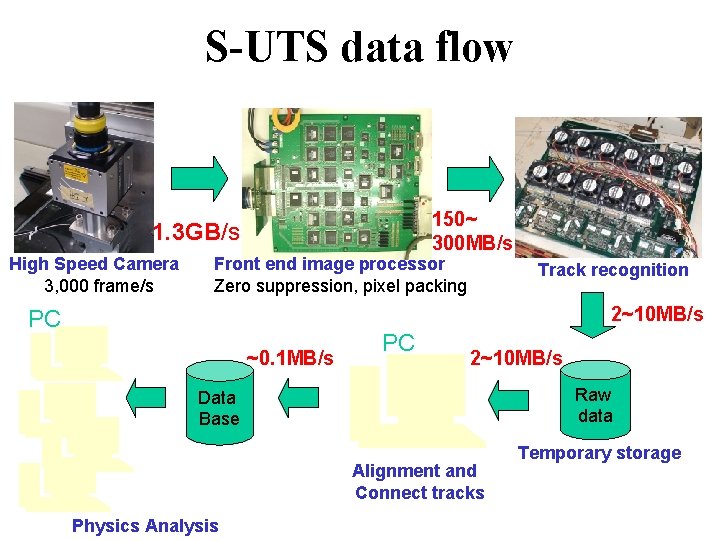
S-UTS data flow 150~ 300 MB/s 1. 3 GB/s High Speed Camera 3, 000 frame/s Front end image processor Zero suppression, pixel packing Track recognition 2~10 MB/s PC ~0. 1 MB/s PC 2~10 MB/s Raw data Data Base Alignment and Connect tracks Physics Analysis Temporary storage
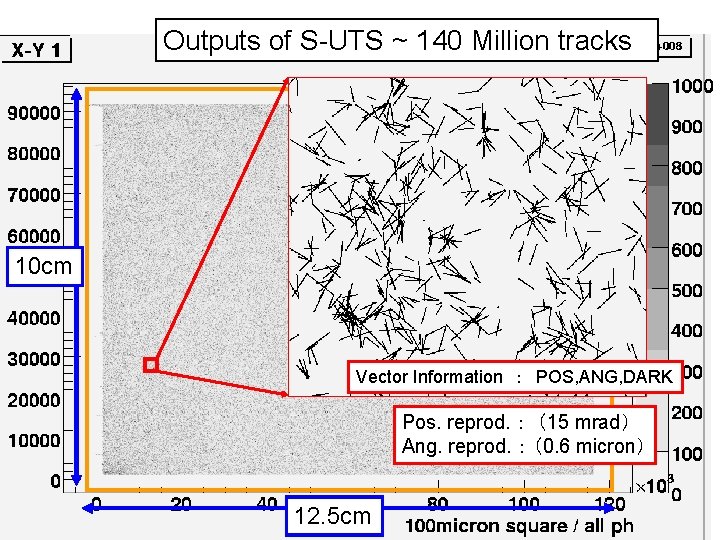
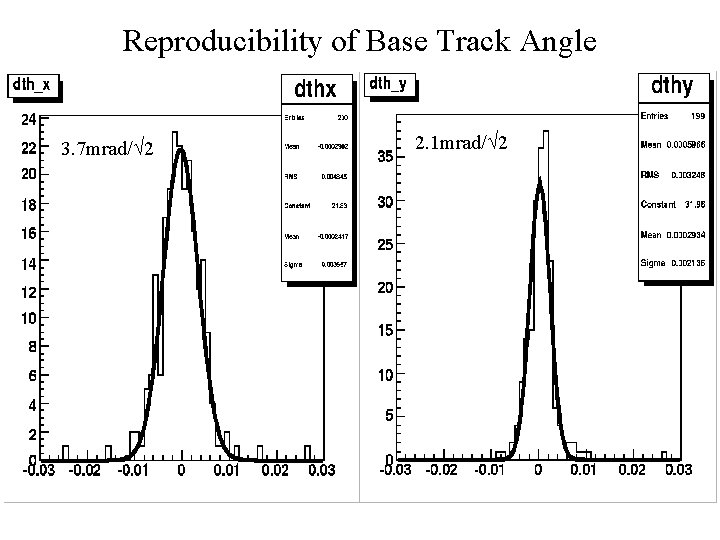
Outputs of S-UTS ~ 140 Million tracks 10 cm Vector Information : POS, ANG, DARK Pos. reprod. : (15 mrad) Ang. reprod. : (0. 6 micron) 12. 5 cm
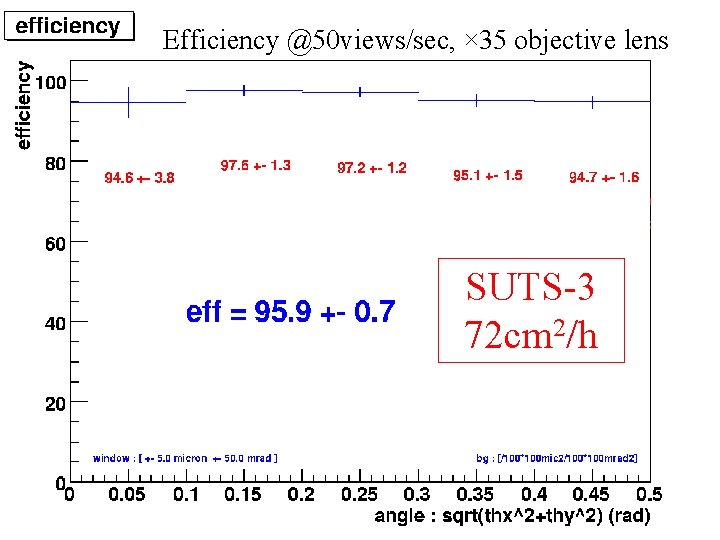
Efficiency @50 views/sec, × 35 objective lens SUTS-3 72 cm 2/h
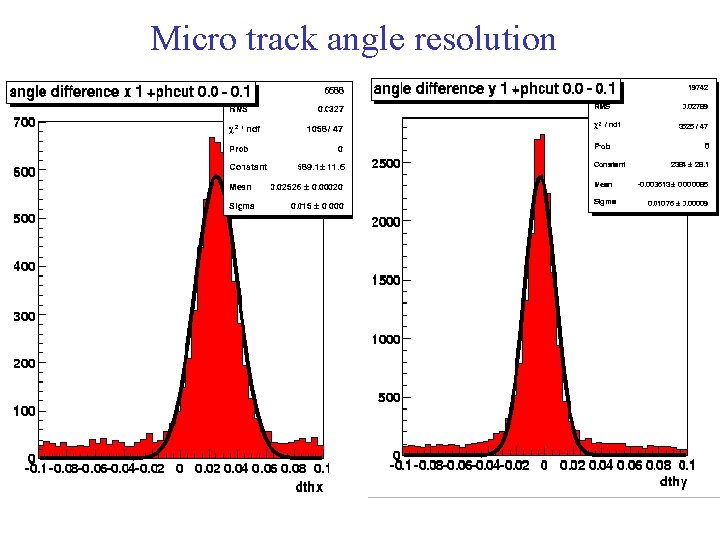
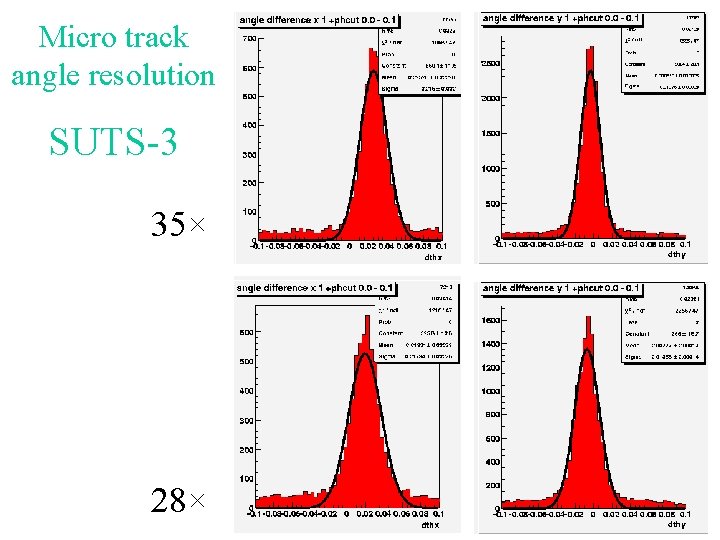
Micro track angle resolution
Reproducibility of Base Track Angle 3. 7 mrad/ 2 2. 1 mrad/ 2
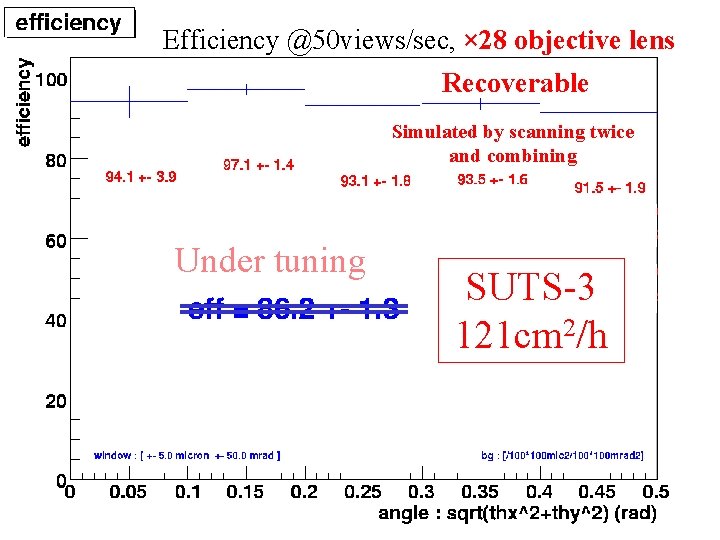
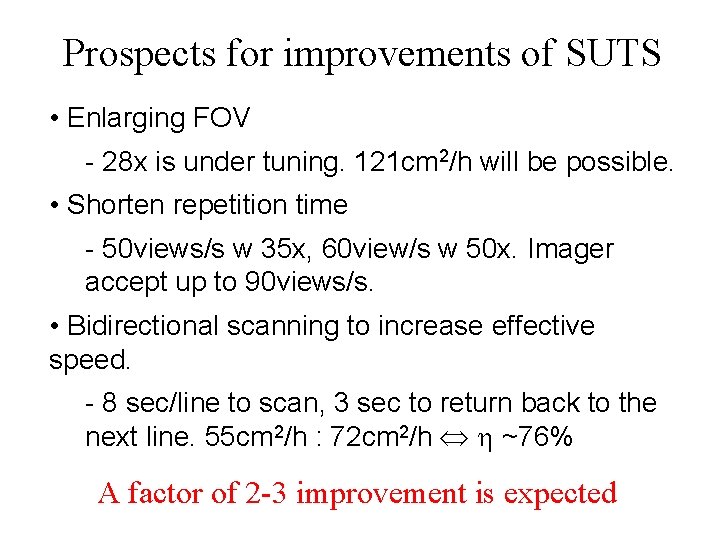
Efficiency @50 views/sec, × 28 objective lens Limited by Recoverable processing power Simulated by scanning twice and combining Under tuning SUTS-3 121 cm 2/h
Micro track angle resolution SUTS-3 35× 28×
Prospects for improvements of SUTS • Enlarging FOV - 28 x is under tuning. 121 cm 2/h will be possible. • Shorten repetition time - 50 views/s w 35 x, 60 view/s w 50 x. Imager accept up to 90 views/s. • Bidirectional scanning to increase effective speed. - 8 sec/line to scan, 3 sec to return back to the next line. 55 cm 2/h : 72 cm 2/h h ~76% A factor of 2 -3 improvement is expected
Evolution of the SUTS Speed in cm 2/h In tuning phase In practical use VERSION of SUTS
Concept to the next evolution of emulsion scanning.
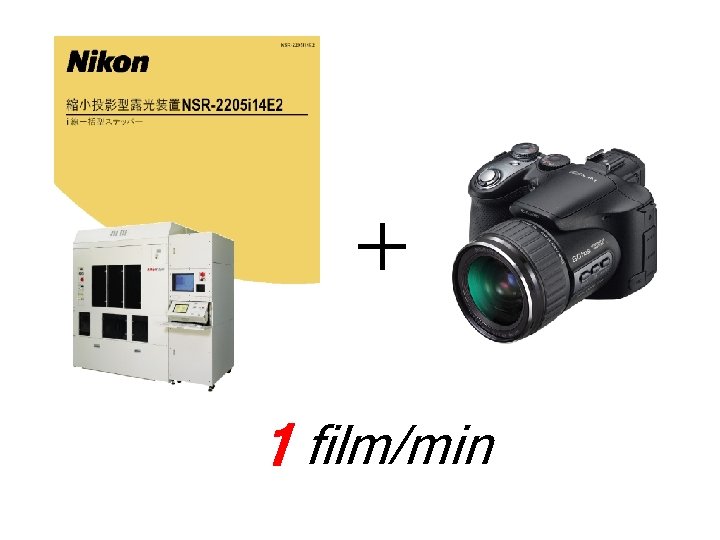
Pricing varies depending upon specifications and options ordered, but ranges between $3. 5 M and $4 M + The EX-F 1 will be available from March 2008 priced at $999. 1 film/min
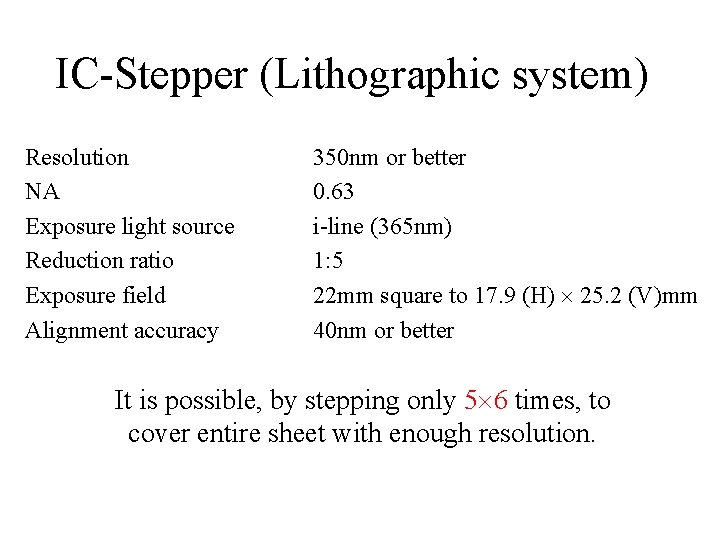
IC-Stepper (Lithographic system) Resolution NA Exposure light source Reduction ratio Exposure field Alignment accuracy 350 nm or better 0. 63 i-line (365 nm) 1: 5 22 mm square to 17. 9 (H) 25. 2 (V)mm 40 nm or better It is possible, by stepping only 5 6 times, to cover entire sheet with enough resolution.
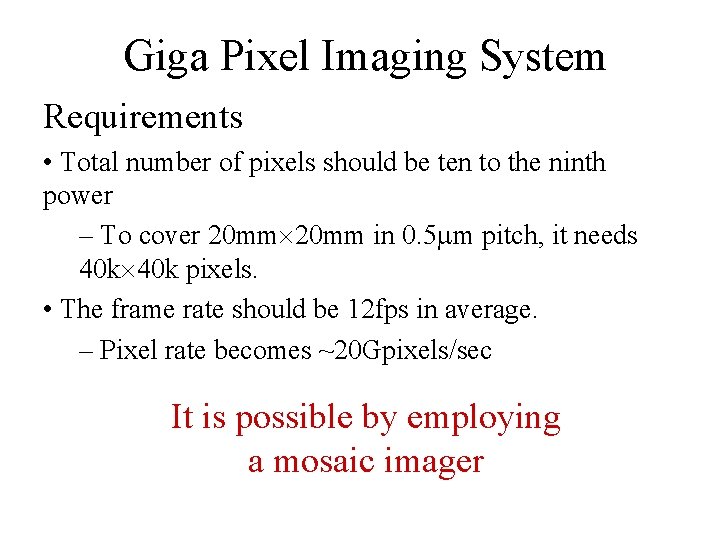
Giga Pixel Imaging System Requirements • Total number of pixels should be ten to the ninth power – To cover 20 mm in 0. 5 mm pitch, it needs 40 k pixels. • The frame rate should be 12 fps in average. – Pixel rate becomes ~20 Gpixels/sec It is possible by employing a mosaic imager
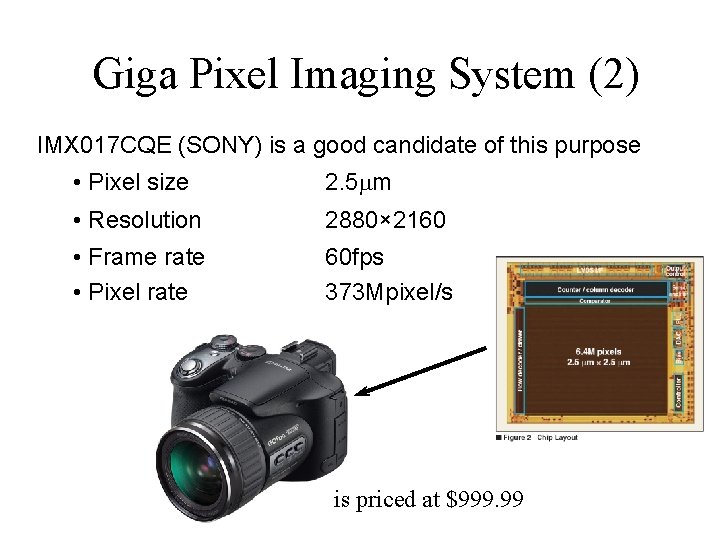
Giga Pixel Imaging System (2) IMX 017 CQE (SONY) is a good candidate of this purpose • Pixel size 2. 5 mm • Resolution 2880× 2160 • Frame rate • Pixel rate 60 fps 373 Mpixel/s is priced at $999. 99
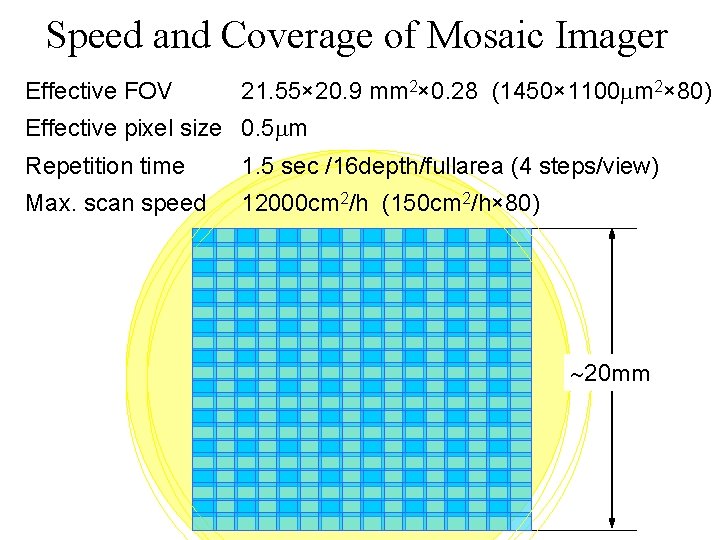
Speed and Coverage of Mosaic Imager Effective FOV 21. 55× 20. 9 mm 2× 0. 28 (1450× 1100 mm 2× 80) Effective pixel size 0. 5 mm Repetition time 1. 5 sec /16 depth/fullarea (4 steps/view) Max. scan speed 12000 cm 2/h (150 cm 2/h× 80) 20 mm
Possibility of track recognition part • An SUTS processor can perform ~100 cm 2/h Its is possible, with ~120 boards, to process emulsion images taken by this optics. • According to Moore’s law, we can expected much better computing technology, which is lower cost, smaller profile and low power consumption. SUTS processor is based on 0. 13 um process. Since 0. 065 um process is popular now, ¼ foot print and 2 times faster speed a unit will be possible. It’s NOT a problem.
Summary • A scanning speed of ~72 cm 2/h has been achieved in practical use. 121 cm 2/h version is under tuning phase. • It is possible, with the popular technologies, to achieve a scanning speed up to 1 film per minute.